How Do You Harvest Soybeans Without Leaving Yield Behind
Harvest is where a good soybean crop pays off or slips through your fingers. So how do you harvest soybeans without leaving yield on the ground? It comes down to timing, seed moisture, and a combine set up right.
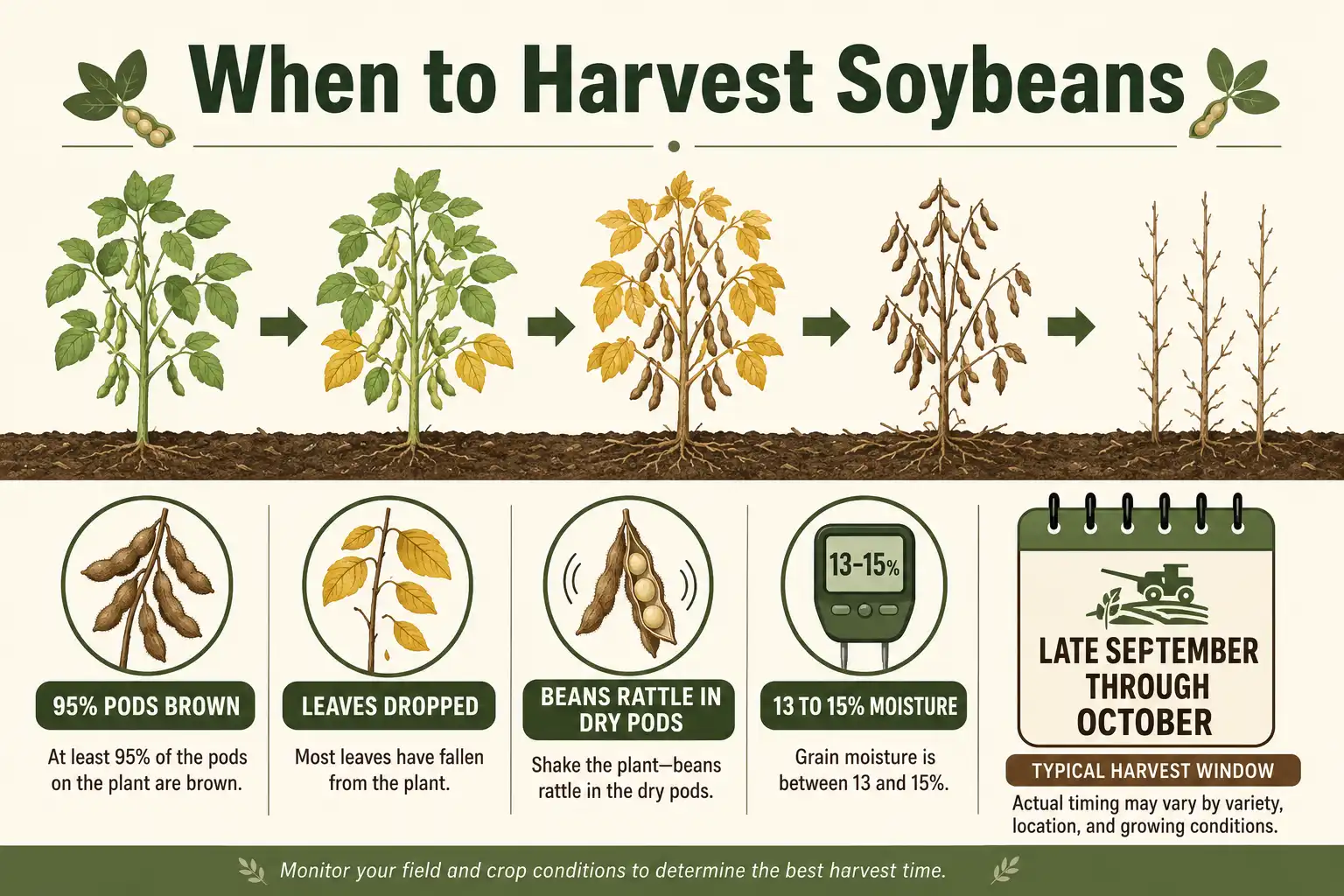
Harvest soybeans at full maturity, when about 95% of pods turn brown and seeds rattle. Aim for 13% seed moisture. Run a sharp, low-cutting header, keep ground speed near 3 mph, and check header loss often.
When Are Soybeans Ready to Harvest?
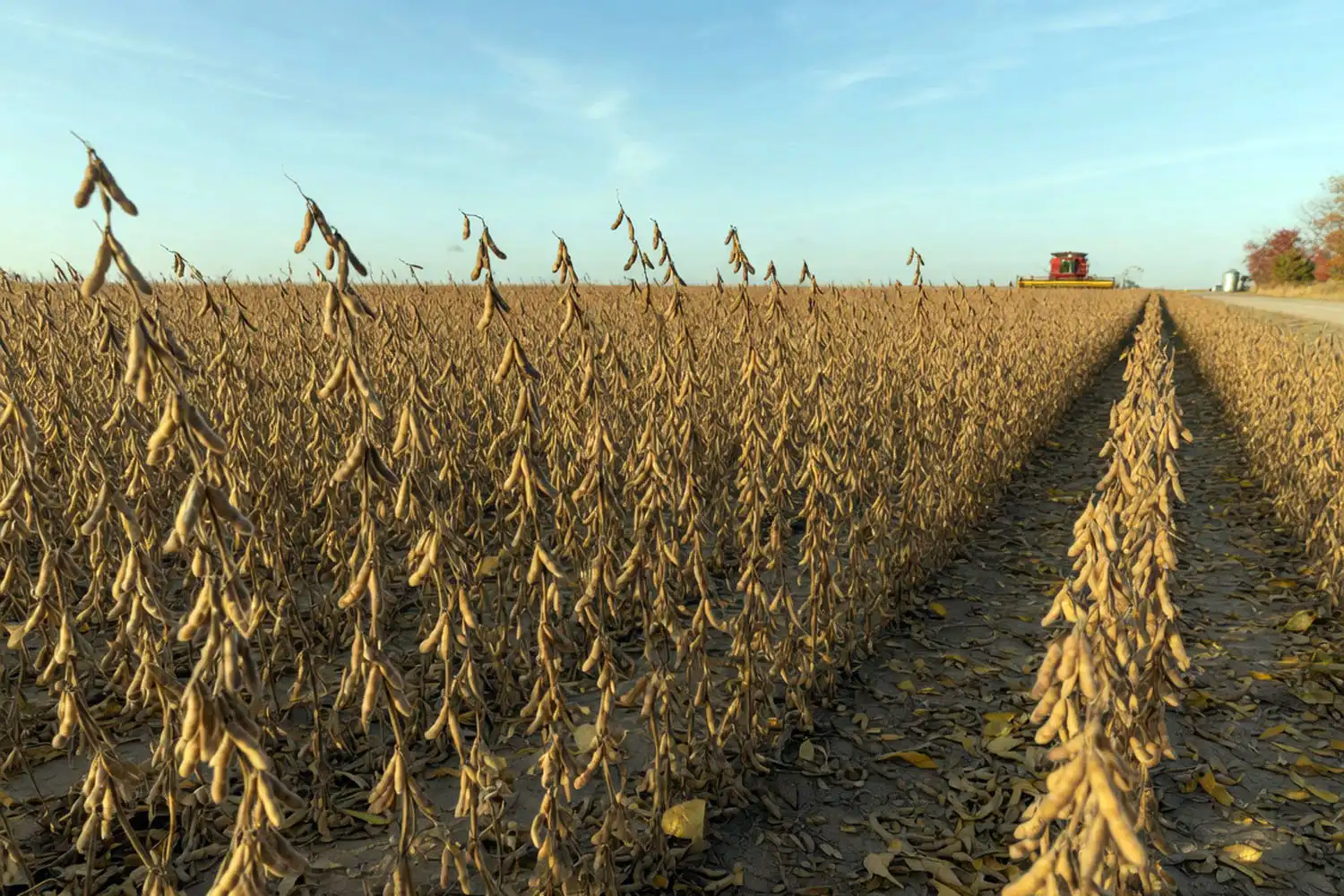
Soybeans are ready at full maturity, the growth stage called R8. By R8, about 95% of the pods have turned their mature tan or brown color. The leaves have dropped off, and the seeds rattle loose inside the pods.
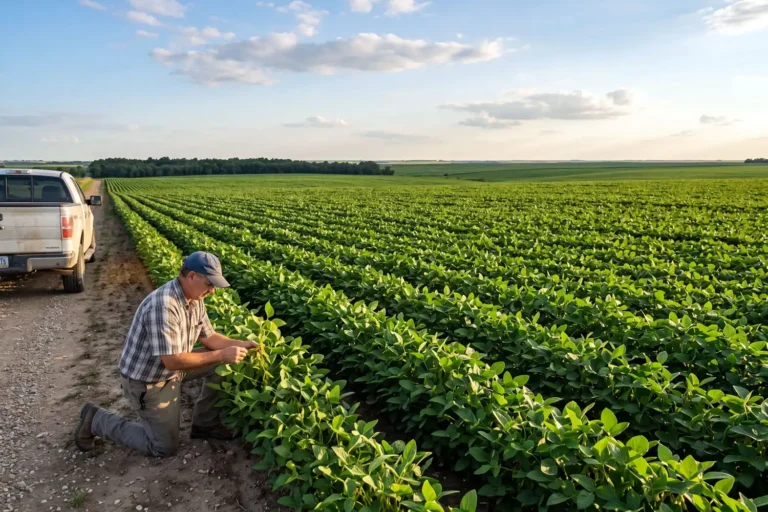
The rattle is the fastest field check. Walk a few rows, pull a plant, and shake it. Dry, loose pods tell me the crop is nearly there. Learning what a mature crop looks like in the field takes the guesswork out of that call, especially in your first season.
Hitting R8 does not mean you combine that afternoon. After full maturity, beans still need roughly 5 to 10 days of dry weather to drop below 15% moisture. Pioneer Seeds and the University of Nebraska both land on that same window. Planning around the full stretch from seed to harvest helps you stage labor and bins for that final push.
Drydown moves fast once it starts. K-State Research and Extension data from Dr. Ignacio Ciampitti shows beans losing close to 3% moisture per day in late September and October. Soybeans dry down quicker than corn, so do not blink.
Scout your earliest fields first. Early-maturing varieties and early-planted ground dry first, so cut those ahead of the rest. Watching each field closely and staging soybeans through the season makes the harvest order obvious when pressure builds.
What Moisture Should Soybeans Be at Harvest?
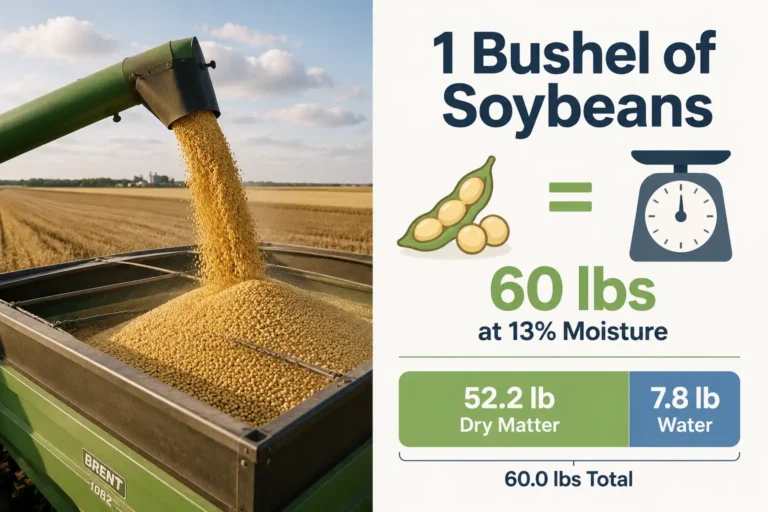
Aim for 13% seed moisture. That is the marketplace standard, and a standard bushel of soybeans weighs 60 pounds at 13% moisture. Deliver above or below that, and you lose money.
Here is why. Above 13%, the elevator docks you for wet beans. Below 13%, you sell fewer “bushels” because the load weight gets divided by 60 pounds. South Dakota State University puts the sweet spot at 13% to 13.5% for the least mechanical damage.
Start combining around 14% and work toward 13% as the day dries out. Do not chase beans down to 9% or 10%. NDSU figures that harvesting at 9% instead of 13% costs about 1.8 bushels per acre on a 40-bushel crop, plus dry beans crack and shatter more.
Check moisture with a reliable moisture tester rather than guessing from the cab. Beans that look wet from the road are often dry enough to run.
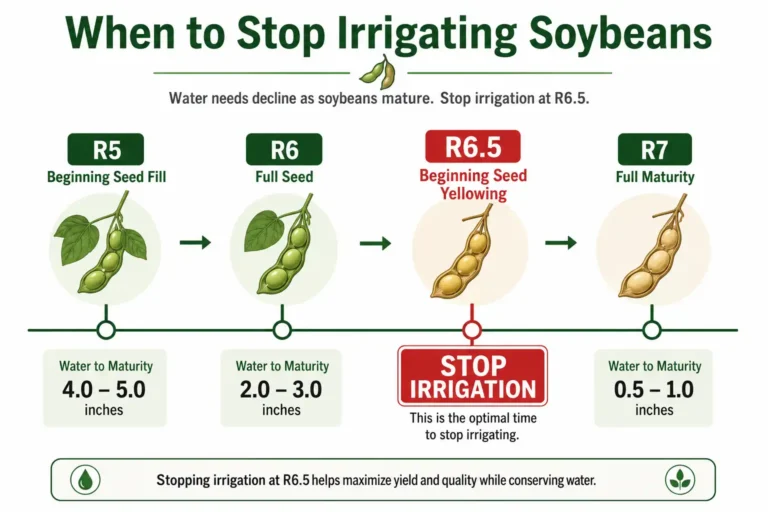
If you have aeration or drying, you get more room. Golden Harvest notes you can start as high as 16% to 18% and aerate down to 13%, which cuts field loss. That early start also ties into cutting off late-season irrigation so the crop dries evenly heading into harvest.
What Equipment Do You Need to Harvest Soybeans?
You need a combine and the right header. The header gathers and cuts the crop, while the combine threshes, separates, and cleans the beans.
For soybeans, the header choice matters most. A flex head or a draper head follows ground contours and cuts low, where the bottom pods sit. Michigan State University and Iowa State University both point to draper platforms for lower, cleaner cutting and less shatter than older auger platforms.
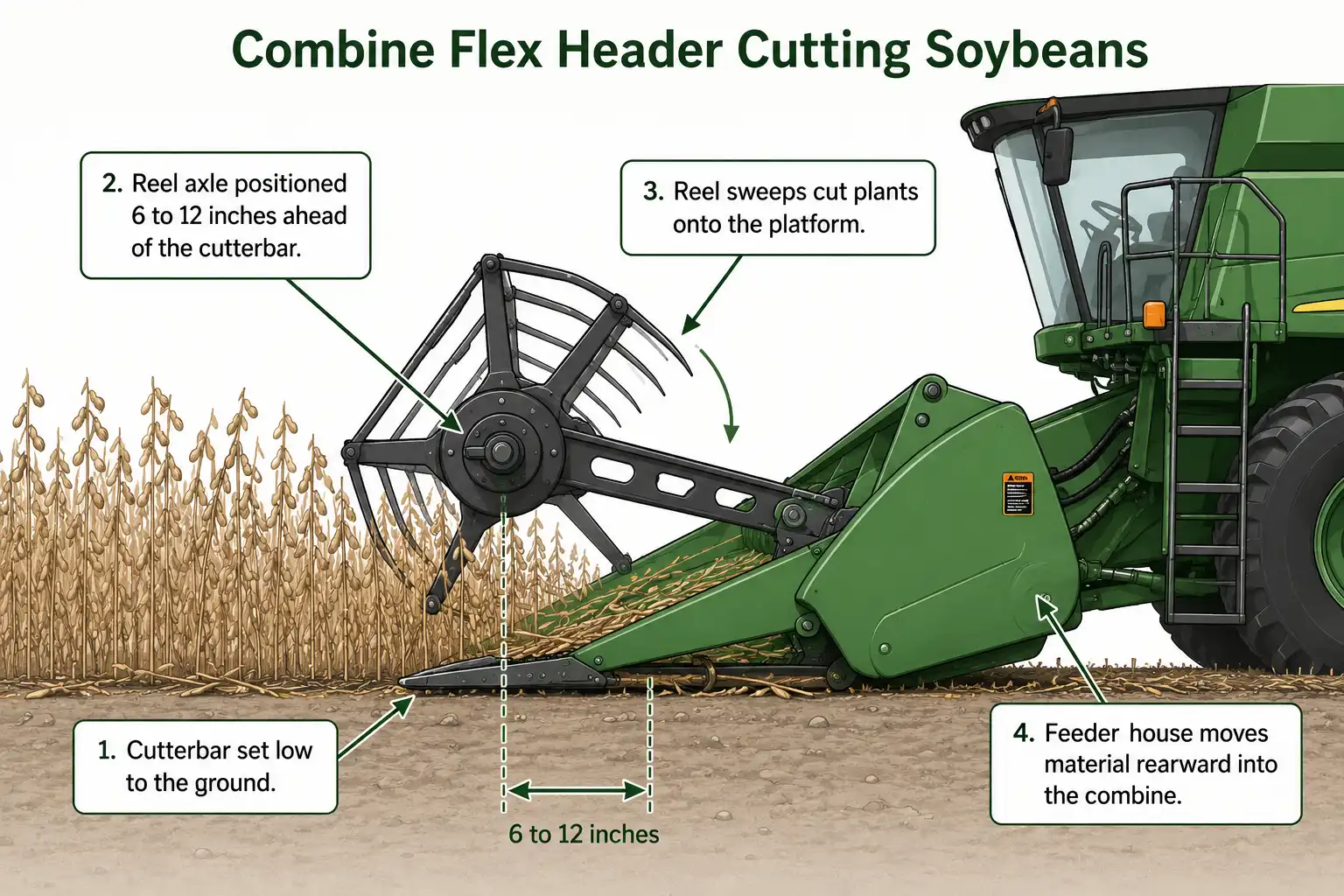
Run a flex head and keep the cutterbar tight to the ground. Pods set just a few inches up the stem. Cut too high, and you leave those bottom pods on the stubble.
Sharp sickle sections are not optional. Replace worn or nicked blades before you start. A clean cut keeps stems flowing and stops the header from tearing pods open.
How Do You Set a Combine for Soybeans?
Set your combine to cut low, feed smoothly, and thresh gently. The goal is moving every bean from the field into the tank without cracking it or dropping it. Most of your gains happen at the header, so start there.
Cutting Height and Reel
Cut as low as the ground allows. Soybean pods grow low on the plant, so every inch of stubble can hide lost beans. A flex head riding the soil surface picks up those bottom pods.
Set reel speed about 10% to 25% faster than ground speed. SDSU recommends keeping the reel just fast enough to sweep cut plants onto the platform. Too fast, and the bats slap pods open. If the crop is lodged, run the reel up to 50% faster to lift tangled plants.
Keep the reel axle 6 to 12 inches ahead of the cutterbar, and as low as the crop needs. The reel should release beans the moment they are cut, not beat on them.
Ground Speed
Hold ground speed near 3 miles per hour with a platform header. That pace keeps the thresher full without overloading it. A loaded thresher actually protects the beans, since they cushion each other.
Slow down for green stems, lodged beans, or thin stands. Adjust speed several times a day as conditions shift from morning to afternoon.
Cylinder Speed and Concave Clearance
Run the lowest cylinder or rotor speed that still threshes clean. K-State Research and Extension calls overly fast cylinder speed the leading cause of grain damage. A simple test works well: raise rotor speed until the first cracked bean shows in the tank, then back off about 10 rpm.
Keep concave clearance fairly wide for dry beans. Dry pods thresh easily, so a wide setting separates beans with little damage. For tough, green-stemmed beans, add concave inserts in the first foot to keep green pods rubbing together and threshing fully.
How Do You Reduce Soybean Harvest Loss?
You reduce soybean harvest loss by cutting low, slowing down, and checking the ground behind the header. Field losses can run 5% to 12% of yield, and most of it never reaches the tank.
Around 80% to 90% of soybean harvest loss happens right at the header. Iowa State University ties the bulk of it to gathering: pods left on stubble, shattered pods, and beans dropped before the reel. Fix the header, and you fix most of the problem.
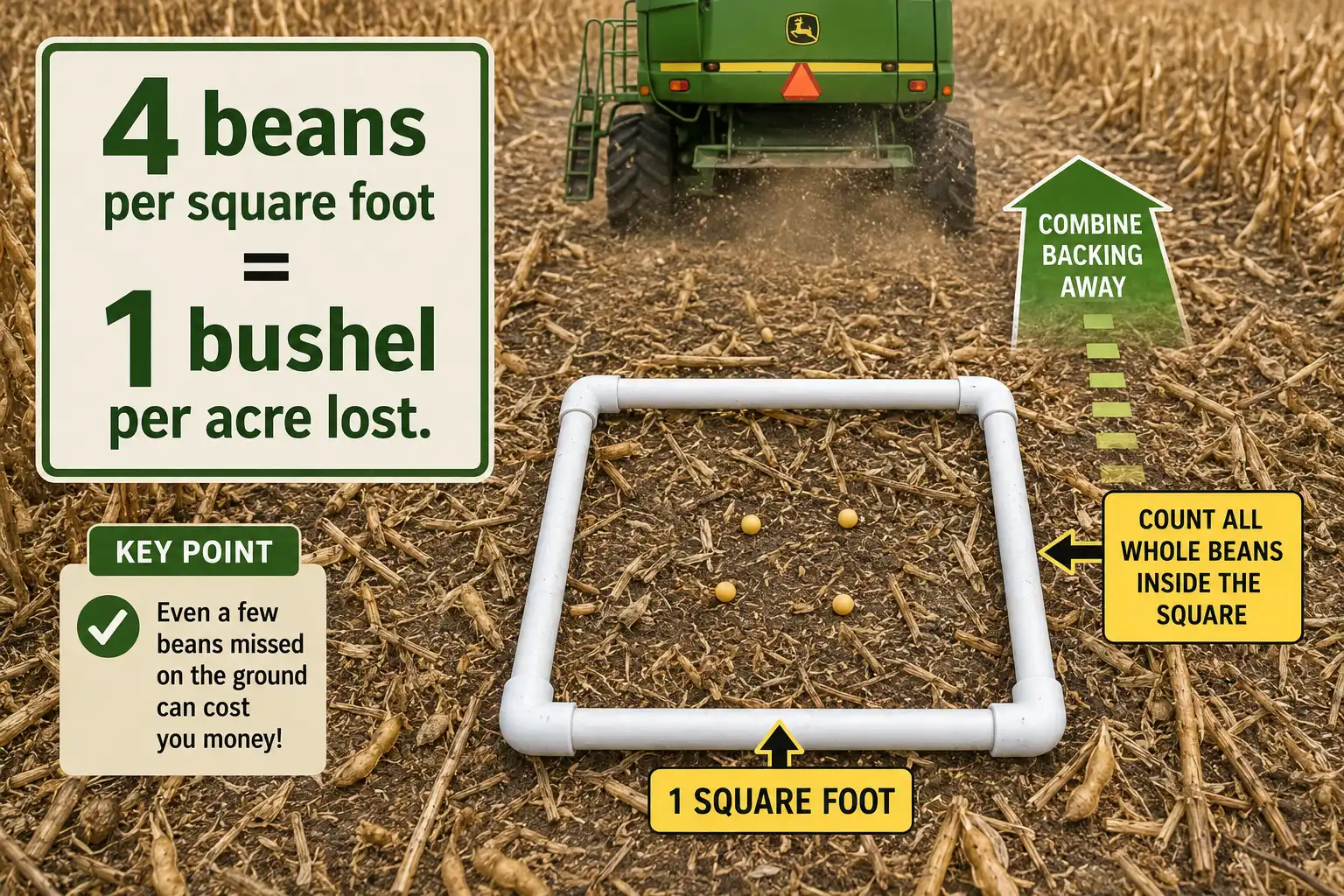
Measure your loss instead of guessing. Build a one-square-foot frame from PVC pipe. Run the combine at full speed long enough to get a moisture reading, then stop and back up 15 to 20 feet. Drop the frame in 10 spots across the header width and count the beans on the ground each time.
Now do the math. Average your counts, then divide by four. Four average beans per square foot equal one bushel per acre lost. Use five if the beans are small, or two if they are large. Michigan State University sets a realistic target of 3% loss or less. If you are over that, change one combine setting at a time and recount.
One more field habit: start on the downwind side. The wind carries straw and any fire away from your standing beans.
What Is the Best Time of Day to Harvest Soybeans?
The best time runs from mid-morning through evening, once any dew burns off but before beans go bone dry. Soybeans pick up overnight moisture, which softens the pods and cuts shatter loss.
Midday is your driest, most brittle window. Beans crack easiest then. Many farmers slow down or take a break during the hottest, driest hours, then push later into the evening as humidity climbs back up.
Watch the tank sample all day. More splits and cracks mean the beans are too dry, so adjust speed and cylinder settings or wait an hour. Capturing that evening and early-morning moisture keeps more whole beans in the bin.
How Do You Store Soybeans After Harvest?
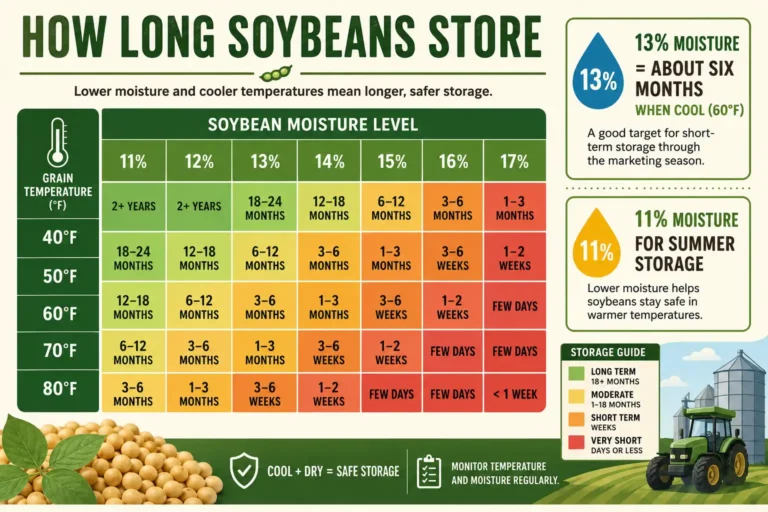
Store soybeans at 13% moisture for safe, long-term holding. At that level, beans resist mold without turning brittle. Most crop goes straight to the elevator, but bin storage gives growers marketing flexibility.
If you started early at 15% or 16%, run aeration to pull moisture down to 13%. Move beans gently, too. Augers running too fast split seed coats and knock down quality.
Do not over-dry. NDSU warns that adding moisture back to too-dry beans makes them swell, which can damage bin walls. It is far easier to dry beans down than to fix beans you dried too far. For the longer haul, matching the crop to the right longer-term storage method protects both quality and price.
Key Points to Carry Into the Field
Harvest comes down to a handful of decisions made well. Wait for R8 and 95% brown pods, then target 13% moisture. Cut low with a sharp header, hold near 3 miles per hour, and keep cylinder speed slow enough to stop cracking. Check the ground behind the header often, and you keep more of the crop you spent all season growing. That is how soybeans get brought home in Kansas.