How Big Do Eggplant Plants Get? Height, Spread, and Root Size
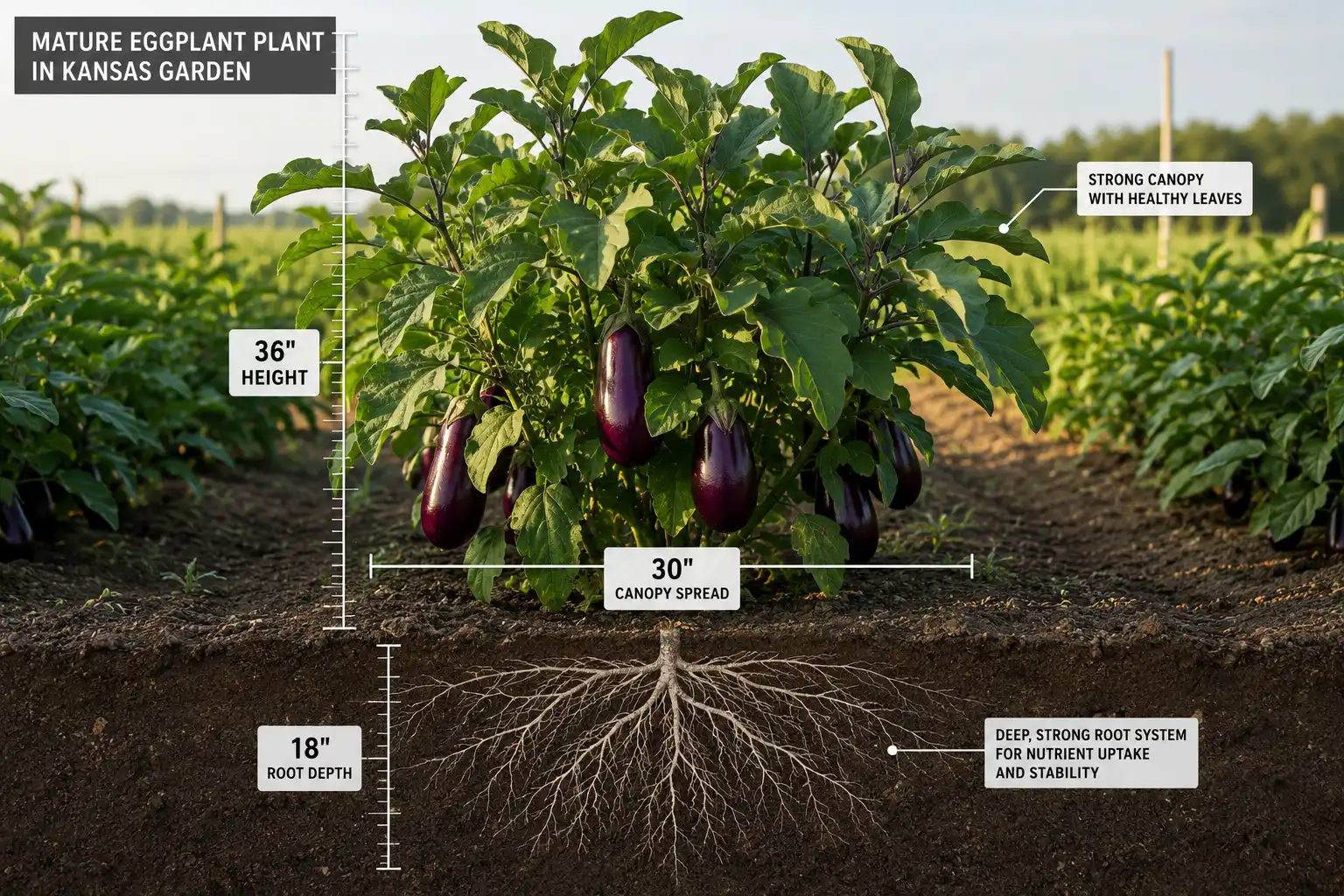
Eggplant claims more row space than most growers plan for. So how big do eggplant plants get? Mature height runs from knee high to chest high depending on variety and season length. Getting this right before transplanting saves you from crowded beds and snapped branches.
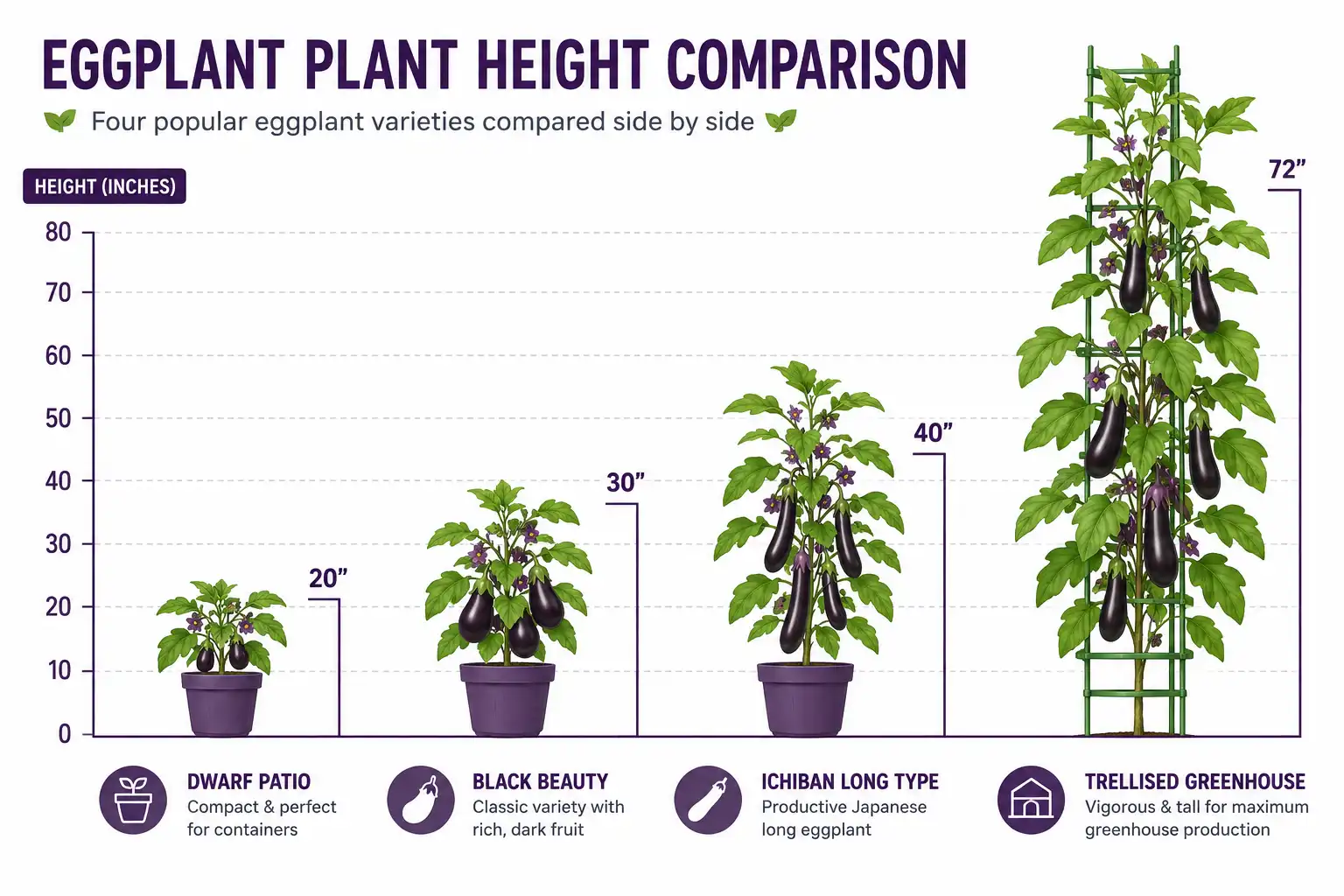
Standard eggplant plants get 24 to 48 inches tall and 24 to 36 inches wide. Dwarf patio types stay near 20 inches. Trained greenhouse plants clear 6 feet. Variety sets the ceiling, and season heat decides the rest.
How Tall Do Eggplant Plants Get?
Standard field eggplant reaches 24 to 36 inches tall in a normal season. That range covers common Italian and American types such as Black Beauty, Nadia, and Traviata. Asian long types run taller. Ichiban and Ping Tung Long often hit 36 to 48 inches once they carry a heavy crop.
Height also shifts with location. Southern growers with 200 frost free days regularly see plants top 4 feet. Roughly 150 frost free days. Plants usually stop near 30 inches.
Solanum melongena grows as a tender perennial in the tropics. Left standing for years, those plants can reach 8 feet. Every grower north of the Gulf treats eggplant as an annual instead. Frost ends the run long before that size arrives.
| Growing situation | Typical mature height |
|---|---|
| Dwarf and patio varieties | 16 to 24 inches |
| Standard varieties, short season (zones 5 to 6) | 24 to 30 inches |
| Standard varieties, long season (zones 8 to 10) | 30 to 48 inches |
| Asian long types | 36 to 48 inches |
| High tunnel, pruned to leaders | 48 to 72 inches |
| Tropical perennial, unpruned | Up to 96 inches |
Learn more: Does Eggplant Need a Trellis? Support Rules for Heavy Fruit
How Wide Does an Eggplant Plant Spread?
Most eggplant plants spread 24 to 36 inches across at full size. Compact Black Beauty plants hold near 16 to 24 inches wide, while vigorous hybrids fill a full 3 feet. As a rule, canopy width lands close to 75 percent of final height on bush types.
The canopy widens fastest right after first fruit set. Branches carry real weight then, so they bow outward rather than standing upright. That extra 6 inches of lean catches new growers off guard every year. Plan your bed width on the leaning canopy, not the upright stem.
Spread is also why crowding shows up late. Two plants look fine in June and tangle badly by August. If you are pairing crops in one bed, check mature width first. The same math applies when you put eggplant and tomatoes in the same bed, since both nightshades claim similar ground.
Eggplant Plant Size by Variety
Variety genetics set the size ceiling, so the seed packet decides more than your fertilizer does. The table below covers the types most American growers plant.
| Variety | Type | Mature height | Spread | Days from transplant |
|---|---|---|---|---|
| Bambino | Dwarf | 12 to 18 in | 12 to 18 in | 45 |
| Patio Baby | Dwarf hybrid | 16 to 20 in | 18 to 22 in | 45 |
| Little Fingers | Compact Asian | 22 to 26 in | 18 to 24 in | 68 |
| Fairy Tale | Compact hybrid | 24 to 30 in | 24 to 30 in | 50 |
| Black Beauty | Standard Italian | 24 to 30 in | 16 to 24 in | 80 |
| Hansel | Compact hybrid | Up to 36 in | 24 to 30 in | 55 |
| Gretel | Compact hybrid | About 36 in | 30 to 36 in | 55 |
| Dusky | Standard hybrid | Up to 36 in | 24 to 30 in | 60 |
| Nadia | Standard Italian | 30 to 36 in | 24 to 30 in | 67 |
| Florida Market | Large standard | About 38 in | 30 to 36 in | 85 |
| Ichiban | Asian long | Up to 40 in | 24 to 36 in | 58 to 70 |
| Ping Tung Long | Asian long | 36 to 48 in | 30 to 36 in | 65 |
| Jaylo and Angela | Greenhouse types | 60 to 84 in trained | 18 to 24 in pruned | 60 |
How Deep Do Eggplant Roots Grow?
Eggplant roots reach 12 to 18 inches deep in most managed field soil. In loose ground the taproot pushes well past 3 feet. Classic root research by Weaver and Bruner traced eggplant taproots close to the 3 foot level. Horizontal laterals spread 12 to 18 inches through the top 3 to 8 inches of soil.
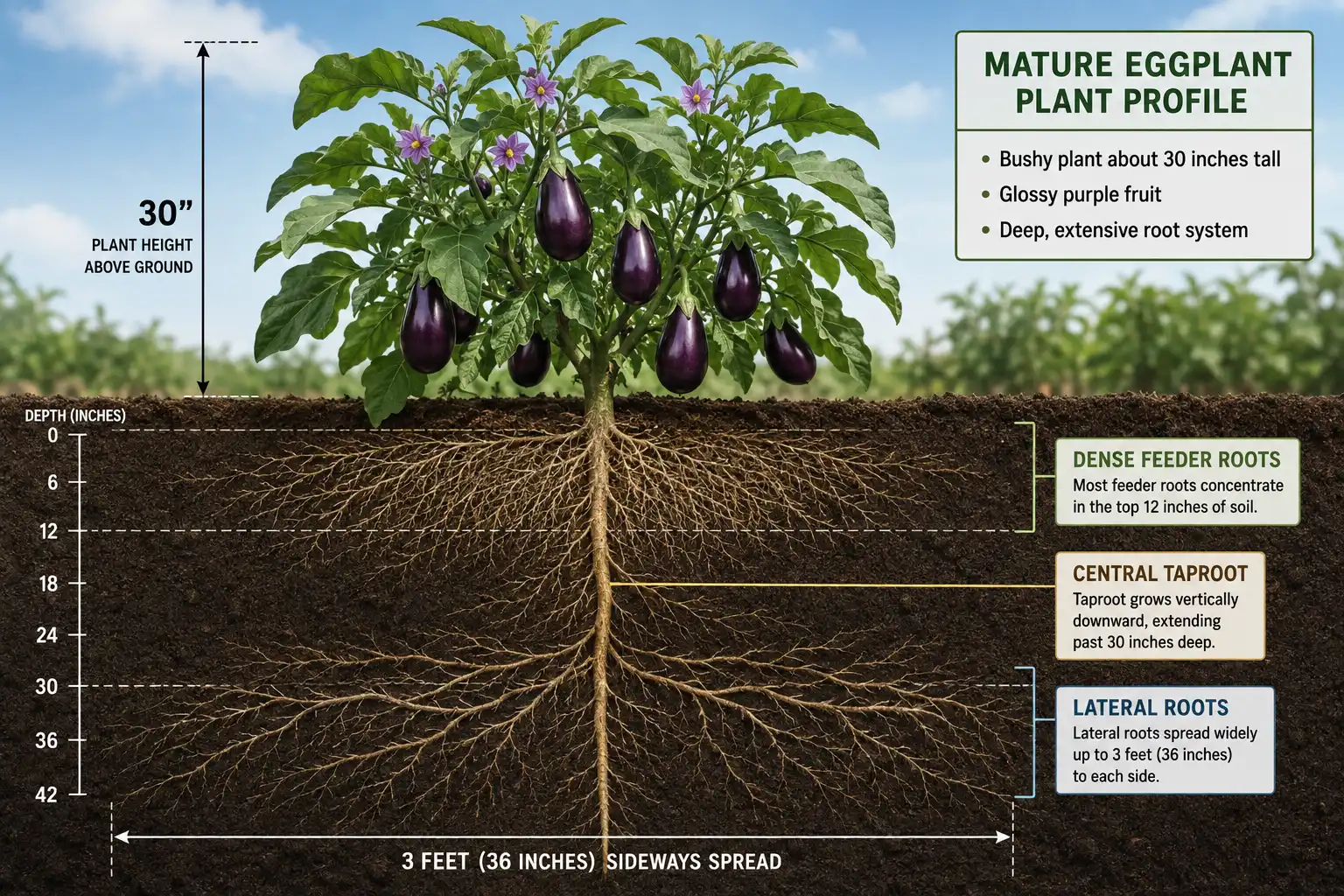
Underground spread often beats the canopy. Deeper laterals carry roots 3 to 4 feet out from the crown. That fact matters for two reasons. First, close cultivation cuts feeder roots and stalls the plant. Second, a neighboring plant competes underground weeks before the leaves ever touch.
Still, the working root zone sits in the top 12 inches. That is where irrigation water and side dress nitrogen need to land. Anything applied deeper mostly misses.
How Long Does It Take an Eggplant to Reach Full Size?
Eggplant reaches full frame size roughly 10 to 12 weeks after transplanting. Growth crawls at first, then accelerates once soil holds above 70°F. Cold soil stalls root and shoot growth together, so an early transplant rarely gains you anything.
| Stage | Weeks from transplant | Plant height |
|---|---|---|
| Transplant set out | 0 | 6 to 8 inches |
| Establishment | 1 to 2 | 8 to 10 inches |
| Rapid vegetative growth | 3 to 5 | 12 to 20 inches |
| First flowers | 5 to 6 | 18 to 24 inches |
| First harvest | 7 to 9 | 24 to 30 inches |
| Full frame size | 10 to 12 | 24 to 40 inches |
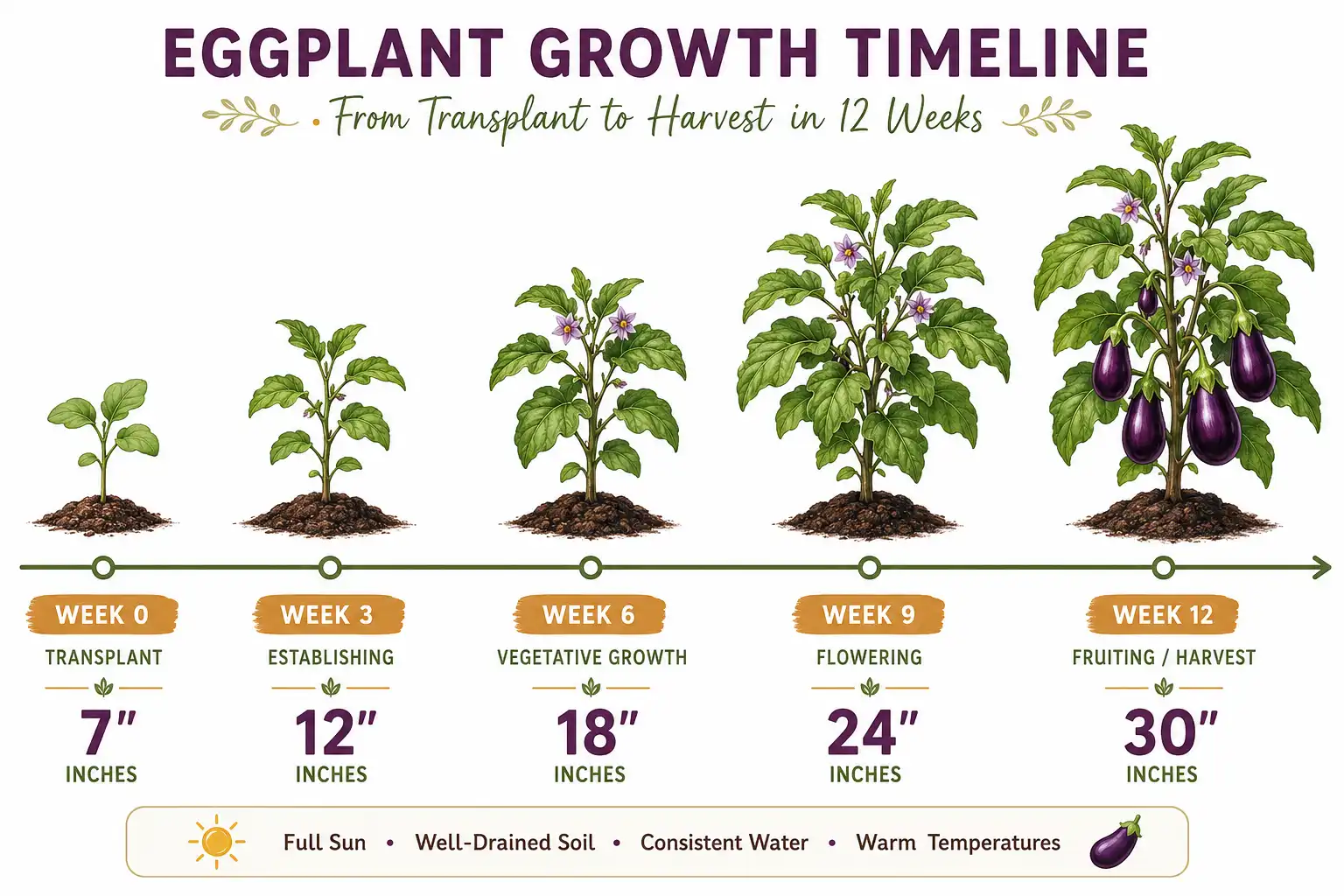
Transplant quality drives that whole schedule. A 7 inch stocky transplant with a full root plug beats a 12 inch leggy one every time. Growers starting eggplant from seed indoors should sow 8 weeks ahead of the set out date. Pinch early flower clusters too, so the plant builds frame instead of fruit.
What Makes Some Eggplant Plants Bigger Than Others?
Six factors decide final size once variety sets the ceiling. Manage these and your plants land at the top of their range instead of the bottom.
- Heat units. Eggplant grows best between 70°F and 85°F. Nights under 60°F slow growth sharply, and nights over 70°F hurt flowering.
- Season length. More frost free days means more nodes on the plant.
- Nitrogen supply. Eggplant is a heavy feeder. A pre plant application plus one side dress after first fruit set keeps the frame expanding.
- Root room. Restricted roots cap the whole plant. A container plant almost always finishes shorter than the same variety in ground.
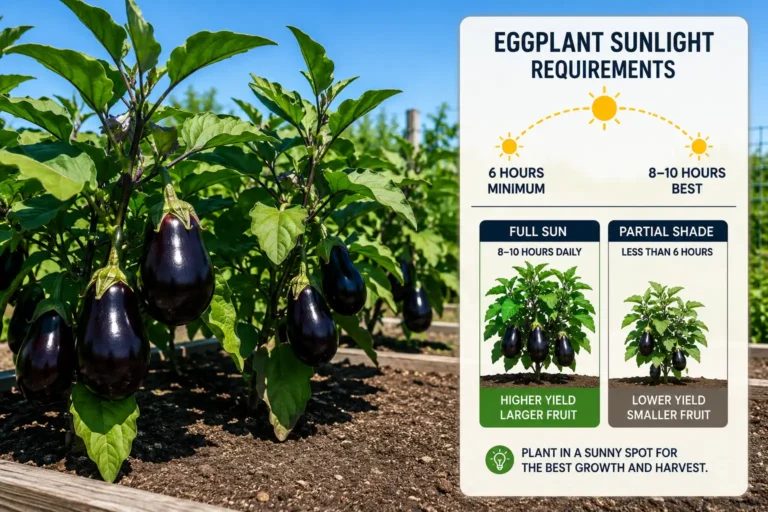
- Sunlight. Six hours of direct sun is the floor. Eight to ten hours produces noticeably larger plants.
- Early pest pressure. Flea beetles shred young leaves and stunt plants permanently. Colorado potato beetle and spider mites cost size later in the season.
Timing drives most of that list. Hitting the eggplant planting window once nights stay above 50°F adds weeks of usable growth at both ends. Fruit load matters too. A plant carrying mature fruit slows vegetative growth. Picking at about two thirds of full fruit size keeps new branches coming.
How Much Space Does One Eggplant Plant Need?
One eggplant plant needs 18 to 24 inches in the row and 30 to 36 inches between rows. University of Maryland Extension and University of Minnesota Extension both publish that spacing for field and garden beds. Raised bed growers should simply allow 18 to 24 inches clear on all sides.
| Type | In row spacing | Between rows | Square feet per plant |
|---|---|---|---|
| Dwarf and patio | 12 to 18 in | 24 in | 2 to 3 |
| Standard field types | 18 to 24 in | 30 to 36 in | 4 to 6 |
| Large and long season types | 24 to 36 in | 36 to 48 in | 6 to 12 |
| High tunnel, pruned | 12 to 18 in | 36 to 48 in | 3 to 6 |
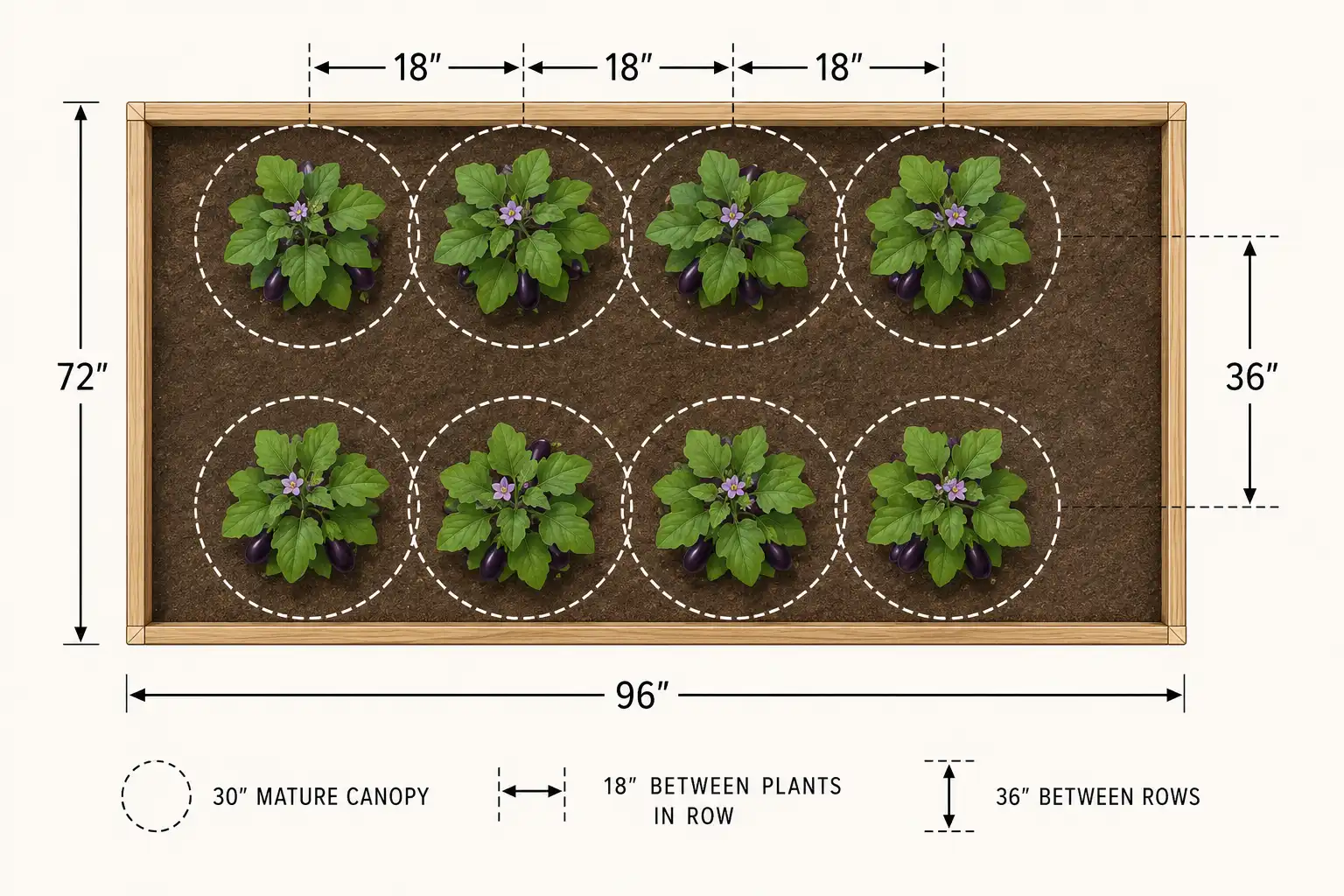
Tight spacing costs yield twice over. Crowded plants trap humidity in the canopy, which invites fungal problems. They also shade each other, so lower branches drop flowers. Before you mark the row, decide on your harvest plan. Growers setting eggplant transplants for one short window can crowd them slightly. A long picking season needs the wider setting.
What Size Container Does a Full Grown Eggplant Need?
A full grown standard eggplant needs at least a 5 gallon container, and 7 to 10 gallons performs better. North Carolina A&T Cooperative Extension sets 5 gallons as the minimum for fruiting vegetables in pots. Dwarf varieties manage fine in 2 to 3 gallons.
- Dwarf types (Bambino, Patio Baby): 2 to 3 gallons, 10 inch diameter
- Compact types (Fairy Tale, Hansel): 5 gallons, 12 inch diameter
- Standard types (Black Beauty, Nadia): 7 to 10 gallons, 14 to 16 inch diameter
- Asian long types (Ichiban): 10 gallons minimum, plus a stake
Depth counts as much as volume. Give the pot at least 12 inches of soil depth so the taproot has somewhere to go. Undersized pots produce visibly smaller plants. A Black Beauty in a 3 gallon bucket often stops near 18 inches instead of 30. Fabric bags help here, because air pruning at the wall builds a denser feeder root network.
Do Eggplant Plants Need Support at Full Size?
Yes, most standard eggplant needs support once fruit sets. University of Maryland Extension lists broken branches and fallen plants among the common eggplant problems. That same guidance recommends cages or a trellis to prevent lodging. A mature plant carrying 4 to 6 fruits turns top heavy quickly.
Support choice follows mature size.
- Under 24 inches: no support needed on dwarf types
- 24 to 30 inches: a standard tomato cage
- 30 to 40 inches: a single 4 foot stake with soft twine ties
- Field rows: basket weave twine run between stakes every third plant
- High tunnel: overhead string trellis with plastic clips
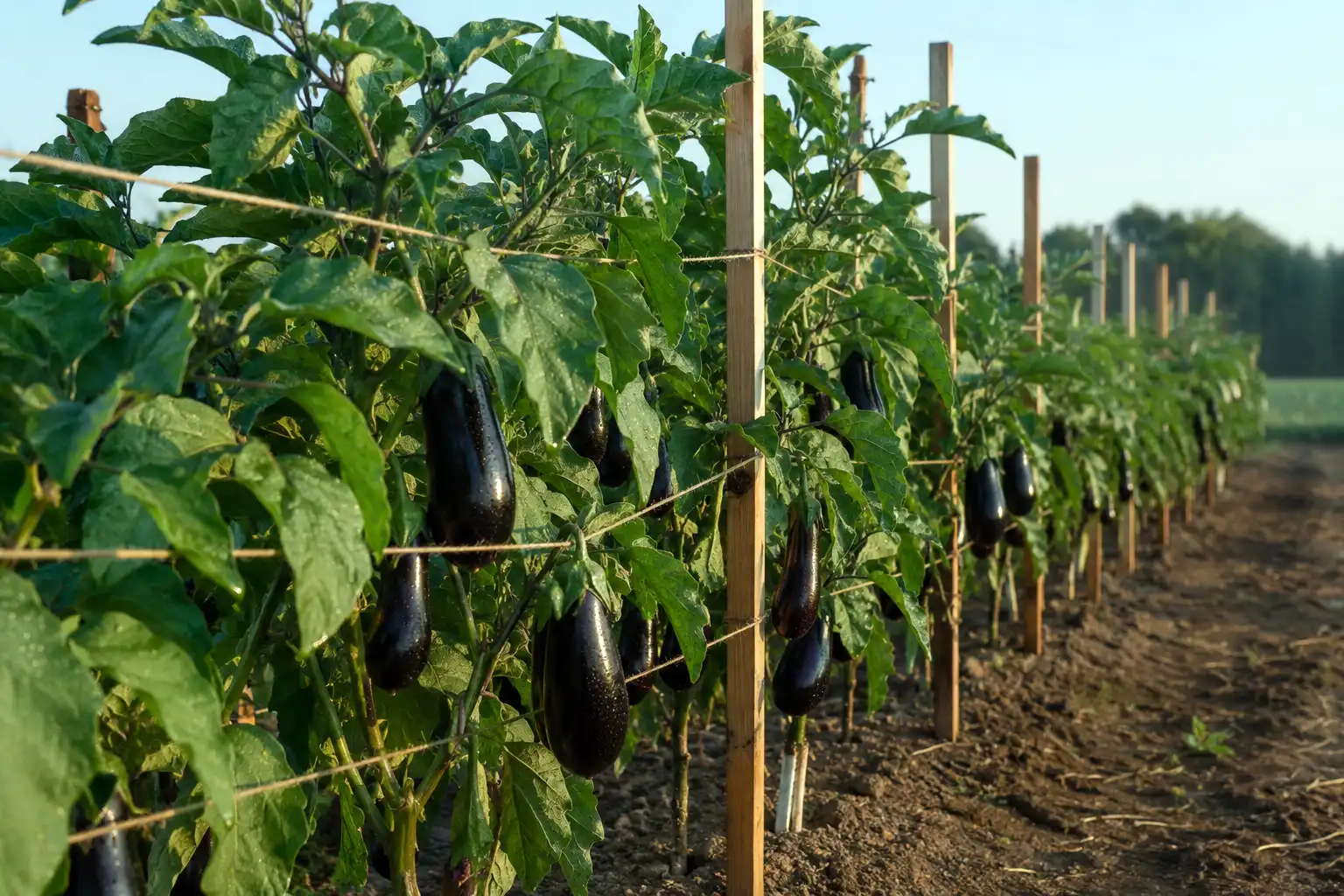
The basket weave method holds a whole row upright and requires relatively little labor. Anyone who prefers a fixed frame can build a trellis frame the same way they would for staked tomatoes. Just space the crossbars to match eggplant height.
How Big Do Eggplant Plants Get in a High Tunnel?
Eggplant plants get 4 to 6 feet tall in a high tunnel, and trained greenhouse plants go higher still. University of New Hampshire Extension trials tested 2 leader and 4 leader systems. Pruned plants grew much taller than unpruned ones. Those same trials pulled over 6 pounds of fruit per plant.
Protected culture changes size for two reasons. Warm soil arrives earlier, so plants start fast. Frost never reaches them, so growth continues into late fall.
Greenhouse practice looks different from field practice. Growers transplant at 10 to 12 inches and space plants about 12 inches apart. Then they prune to 2 to 4 stems and train each stem up a string. Density runs 5 to 8 stems per 9 square feet. Under that system the plant grows tall and narrow rather than short and bushy.
How to Keep Eggplant Plants From Getting Too Big
Four practices hold mature size down without costing much yield.
- Choose a compact variety. Patio Baby and Bambino finish near 20 inches, so you skip pruning entirely.
- Top the plant early. When plants stand about 12 inches tall, nip back the growing tip. University of Maryland Extension recommends this to force branching. You end up with a shorter, wider frame that holds fruit closer to the ground.
- Limit root volume. A 5 gallon pot naturally caps a standard variety near 24 inches.
- Taper nitrogen after fruit set. Excess nitrogen pushes leafy growth ahead of flowering, so shift toward potassium once fruit starts sizing.
Watch that last one carefully. Cutting nitrogen too hard shrinks the plant and the harvest together. Anyone growing eggplant through the season should keep feeding steadily and manage size through variety choice and pruning instead.
Final Words on Eggplant Size by Variety
Plan on 30 inches tall and 30 inches wide for a standard variety, then adjust from there. Dwarf types need about half that room, while Asian long types and tunnel plants need more. Set transplants 18 to 24 inches apart and leave 30 to 36 inches between rows. Have stakes ready before the first fruit sizes up. Get the spacing right in May and the canopy takes care of itself by August.