Does Eggplant Need a Trellis? Support Rules for Heavy Fruit
Eggplant grows tall, sets heavy fruit, and leans hard once the load builds. So one question comes first before you set a row: does eggplant need a trellis? The answer depends on your variety and your structure.
Eggplant does not need a trellis, since the plant grows as a bush rather than a vine. It does need support. Stake each plant at transplanting, or basket weave the row before fruit load builds.
Does Eggplant Need a Trellis or Just a Stake?
Eggplant needs support, but not a trellis in the climbing sense. The plant has no tendrils and no twining habit, so it will never grab a lattice and pull itself upward. Eggplant (Solanum melongena) grows as an upright bush with woody stems, closer to a pepper than a cucumber.
What the crop actually needs is a structure that stops the stem from lodging under fruit weight. That is why growers stake eggplant instead of trellising it.
University of Missouri Extension groups eggplant with tomatoes and peppers for support. Their guidance puts a wooden stake between every other plant in the row. UF/IFAS is blunter about commercial types: every indeterminate eggplant needs some form of staking support.
So the practical answer splits three ways.
- Single stake or wire cage for garden plants and short beds.
- Basket weave, also called the Florida weave, for field rows.
- True string trellis only inside a high tunnel or greenhouse.
Most home growers reach for the second or third option and call it a trellis. The name matters less than the load it carries. Still, build a flat lattice and expect eggplant to climb it. You will end up tying every branch by hand anyway.
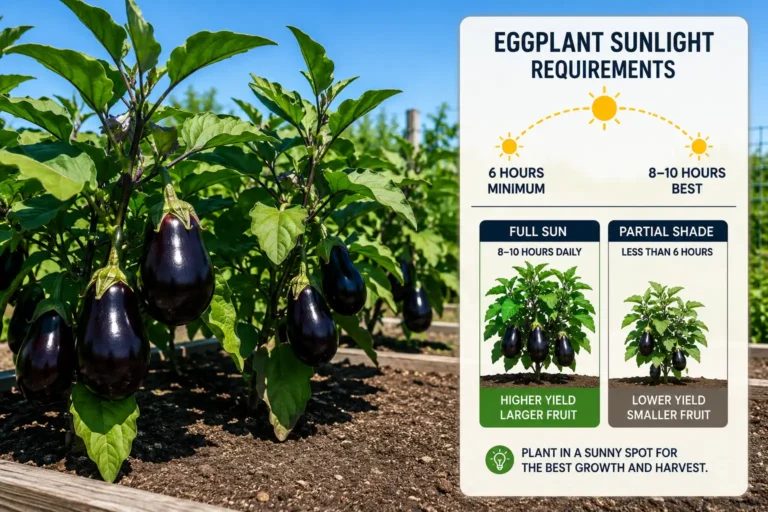
Read next: Does Eggplant Need Full Sun or Partial Shade
Why Eggplant Falls Over Without Support
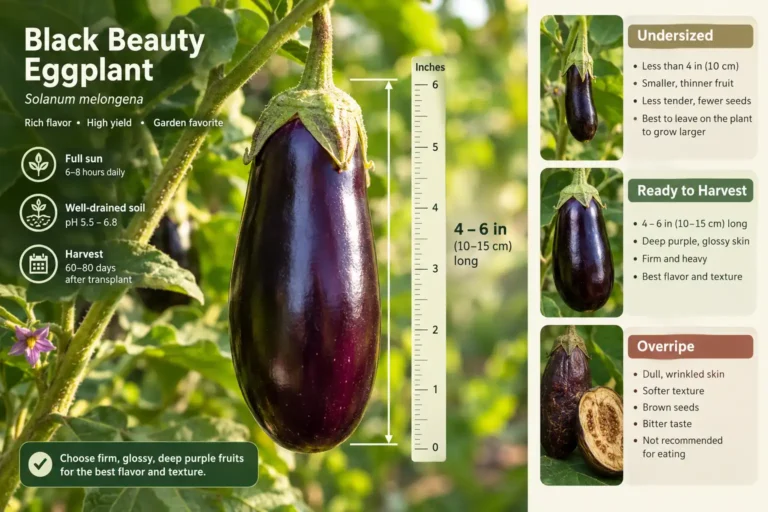
Eggplant falls over because fruit weight outruns stem strength. A globe type such as Black Beauty carries fruit near a pound apiece. A healthy plant holds several at once. Meanwhile the canopy keeps widening, so the plant turns top heavy well before harvest peaks.
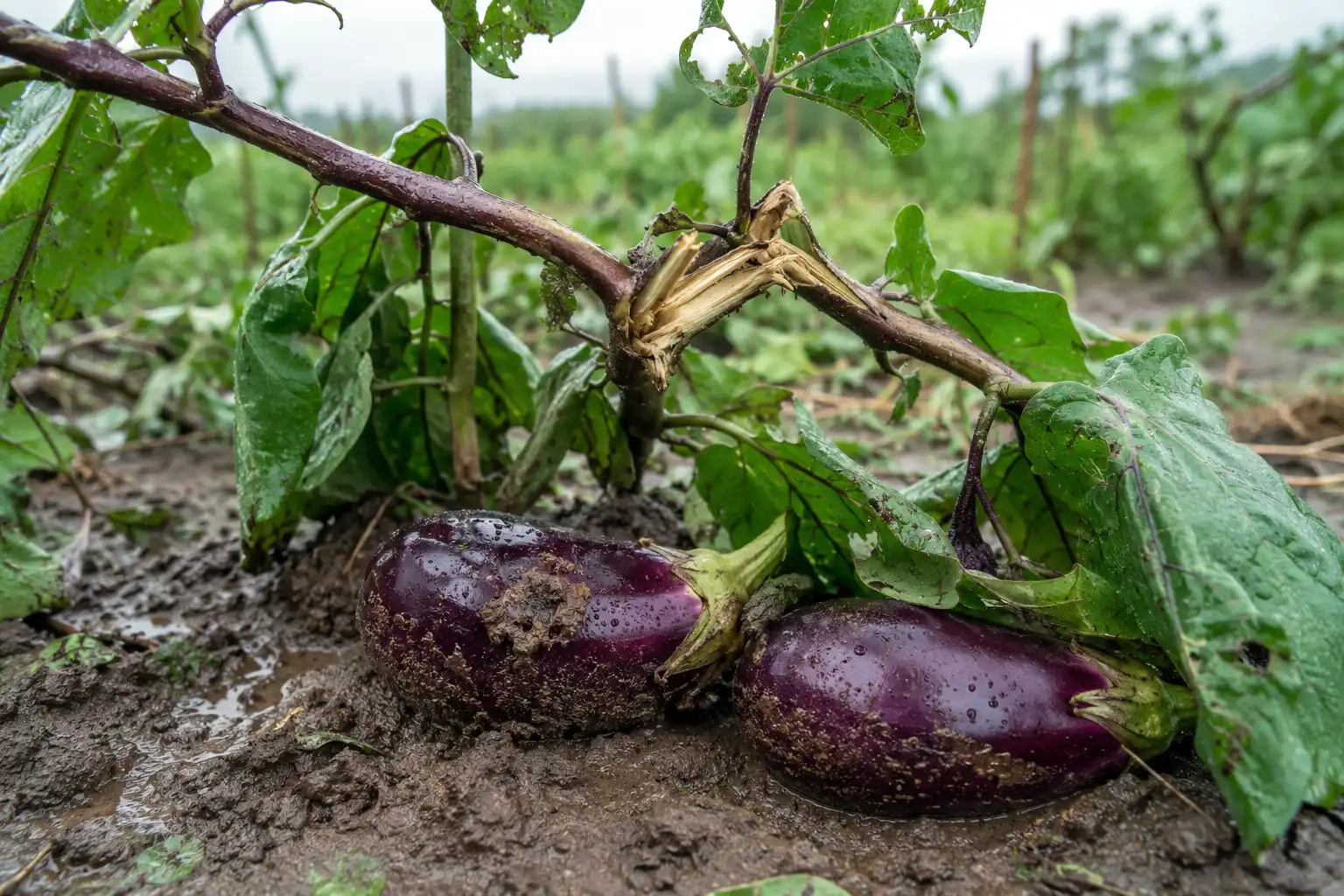
The stems look woody, yet branch crotches split easily. Once a limb cracks, that whole branch stops sizing fruit.
Weather finishes the job. In Kansas, a July thunderstorm gust hits saturated ground, and unsupported plants go flat overnight. Eggplant does hold a deep taproot, so the roots usually stay put. The stem is what gives.
Three costs follow a lodged plant.
- Fruit rot. Fruit resting on wet soil picks up Phomopsis and anthracnose fast.
- Misshapen fruit. Elongated Asian types curve where they press against the ground.
- Scarred skin. Blowing soil and rubbing leaves scratch that glossy surface, and buyers reject it.
Wind also scars fruit directly. Florida growers plant windbreaks around eggplant fields for exactly that reason. Scratched skin drops a fruit out of the fresh market grade.
Which Eggplant Varieties Need Support?
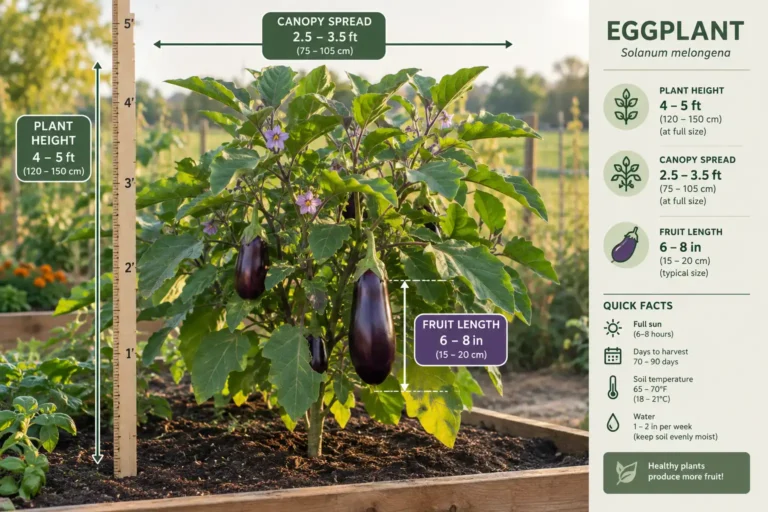
Every eggplant except true dwarf types needs support. Mature height and fruit weight decide which structure fits. Compact patio varieties often stand on their own, while grafted and tunnel-grown plants can reach shoulder height.
| Type | Example cultivars | Mature height | Support that works |
|---|---|---|---|
| Dwarf / patio | Patio Baby, Fairy Tale | 18 to 24 in | Optional; a small cage if fruit set is heavy |
| Asian long | Ichiban, Millionaire, Little Fingers | 30 to 40 in | Stake or basket weave; keeps fruit straight |
| Italian / oval | Nadia, Rosa Bianca, Classic | 36 to 48 in | Stake at every other plant |
| Globe / bell | Black Beauty, Epic, Santana | 36 to 48 in | Stake plus a second twine line |
| Grafted or tunnel | Gaudi and parthenocarpic types | 5 to 6 ft | String trellis with 2 to 4 leaders |
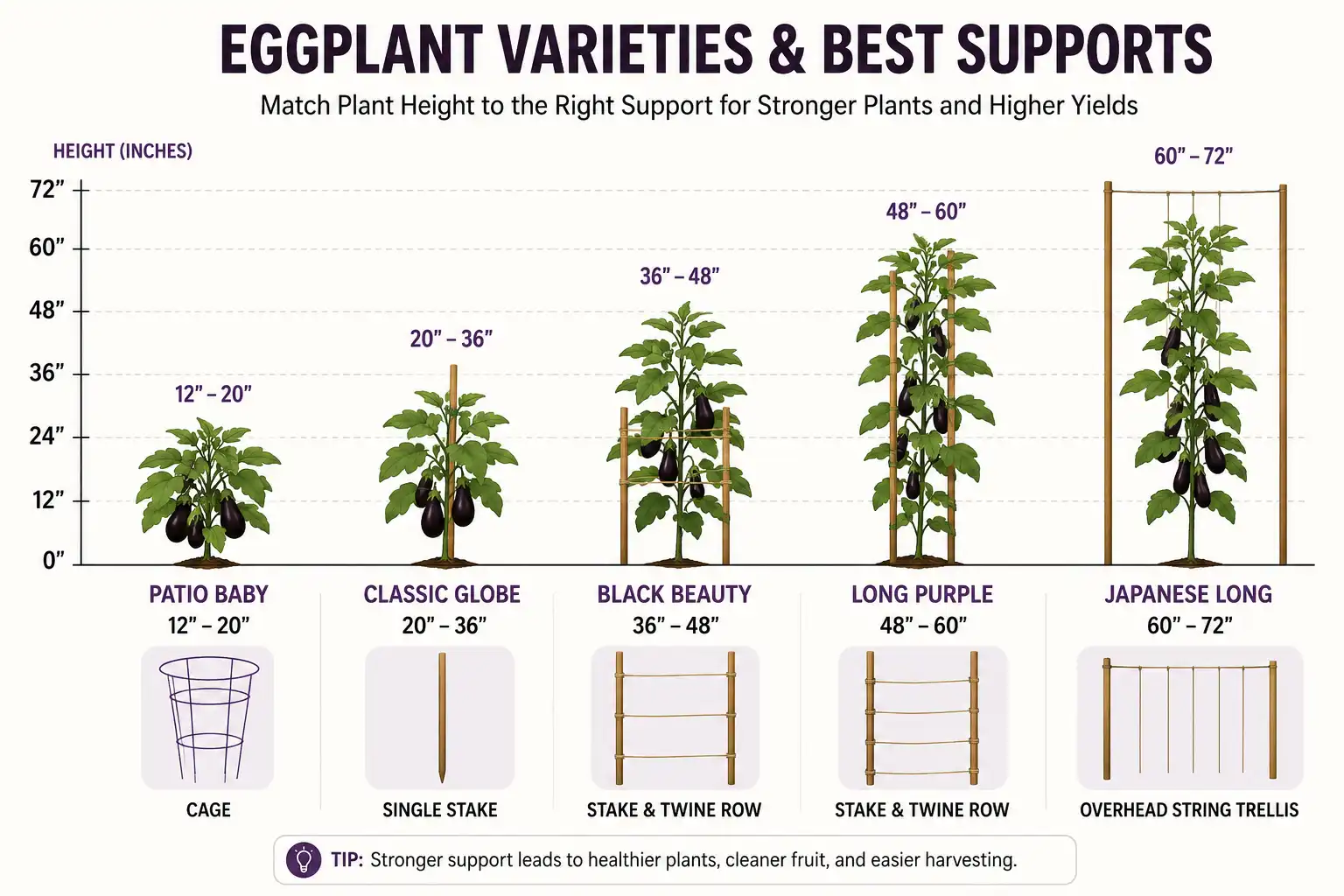
Missouri Extension records cultivars reaching 4.5 feet in the field. Under Florida greenhouse conditions, UF/IFAS notes plants stretching to six feet. Grafted plants run taller still, since the rootstock pushes extra vigor into the top.
Read the seed packet height before you buy stakes. A 36 inch nursery stake looks fine in May and bends by August.
When Should You Stake Eggplant?
Stake eggplant the same day you set transplants, or by the time plants reach 12 inches. Driving a stake later punches through the taproot, and eggplant sulks after root damage.
Timing runs off soil temperature, not the calendar. Wait for 65°F soil at four inches before planting eggplant transplants, which usually lands around mid May near Topeka. The stake goes in first, then the plant sets three inches to the side.
For basket weave rows, drive every stake while plants are still small. Then run the first twine line once plants hit 12 inches tall, about 10 inches off the ground. Waiting past that point means fighting brittle branches into place, and you will snap a few.
Regional eggplant planting dates shift this whole schedule. Southern growers set plants twice a year, so they stake twice.
How to Stake a Single Eggplant Plant
Follow these steps for garden beds and short rows.
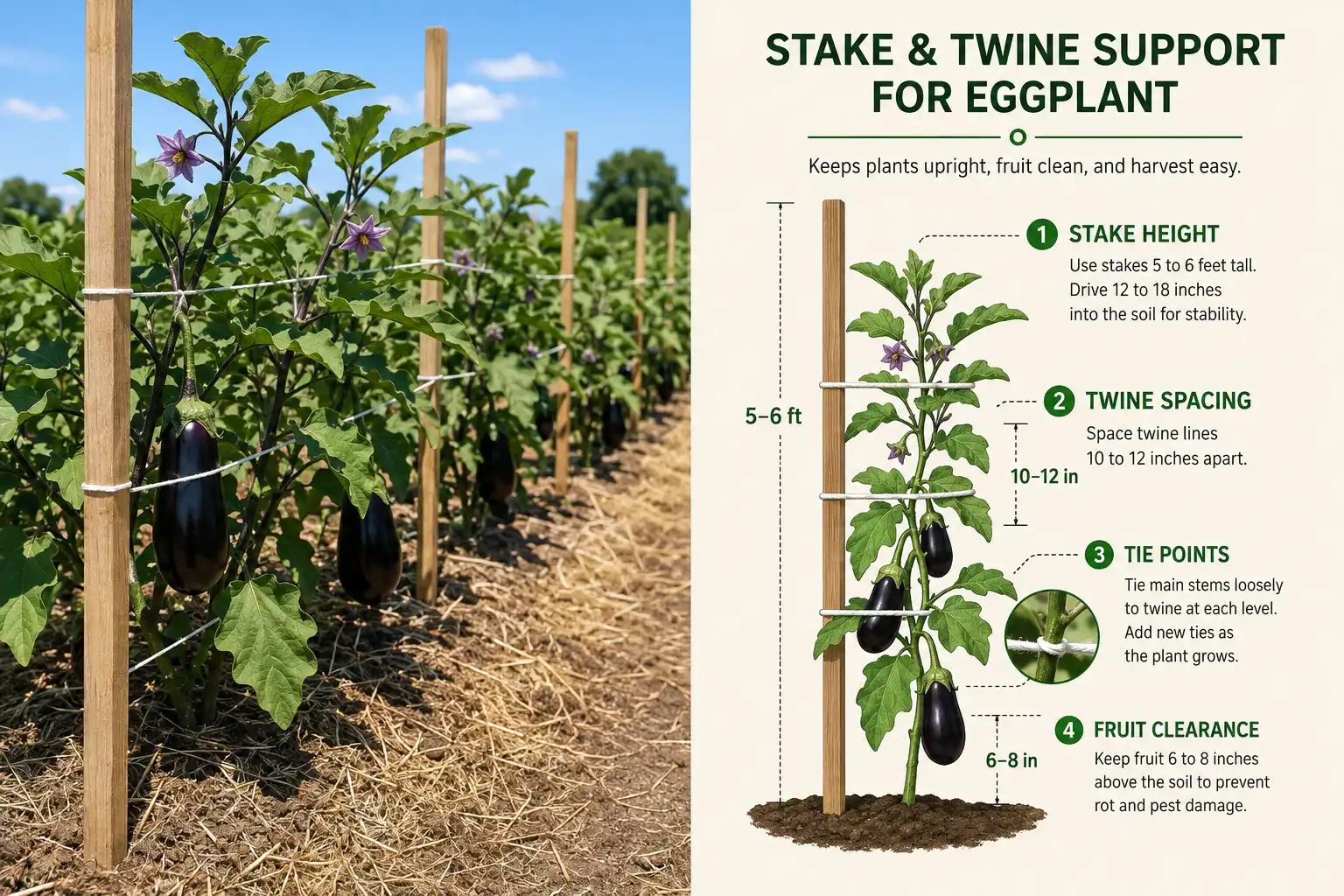
- Pick the right stake. Use hardwood 1 inch thick and 48 to 60 inches long. For grafted plants, switch to a steel T post or half inch rebar.
- Set it deep. Drive the stake 10 to 12 inches into the soil so it does not wiggle. Shallow stakes lever right out under a loaded plant.
- Place it correctly. Position the stake 3 to 4 inches from the stem, on the side away from the first flower cluster. That way fruit never gets pinched between wood and stem.
- Tie low first. Make the first tie at 8 to 10 inches using soft jute twine or a half inch strip of old cloth.
- Use a figure eight. Loop the twine around the stake, cross it, then loop the stem. The cross keeps the stem off the wood.
- Leave slack. Keep a finger of room inside every tie, because eggplant stems thicken fast in July.
- Add ties as it grows. Work up the plant every 8 to 10 inches until harvest starts.
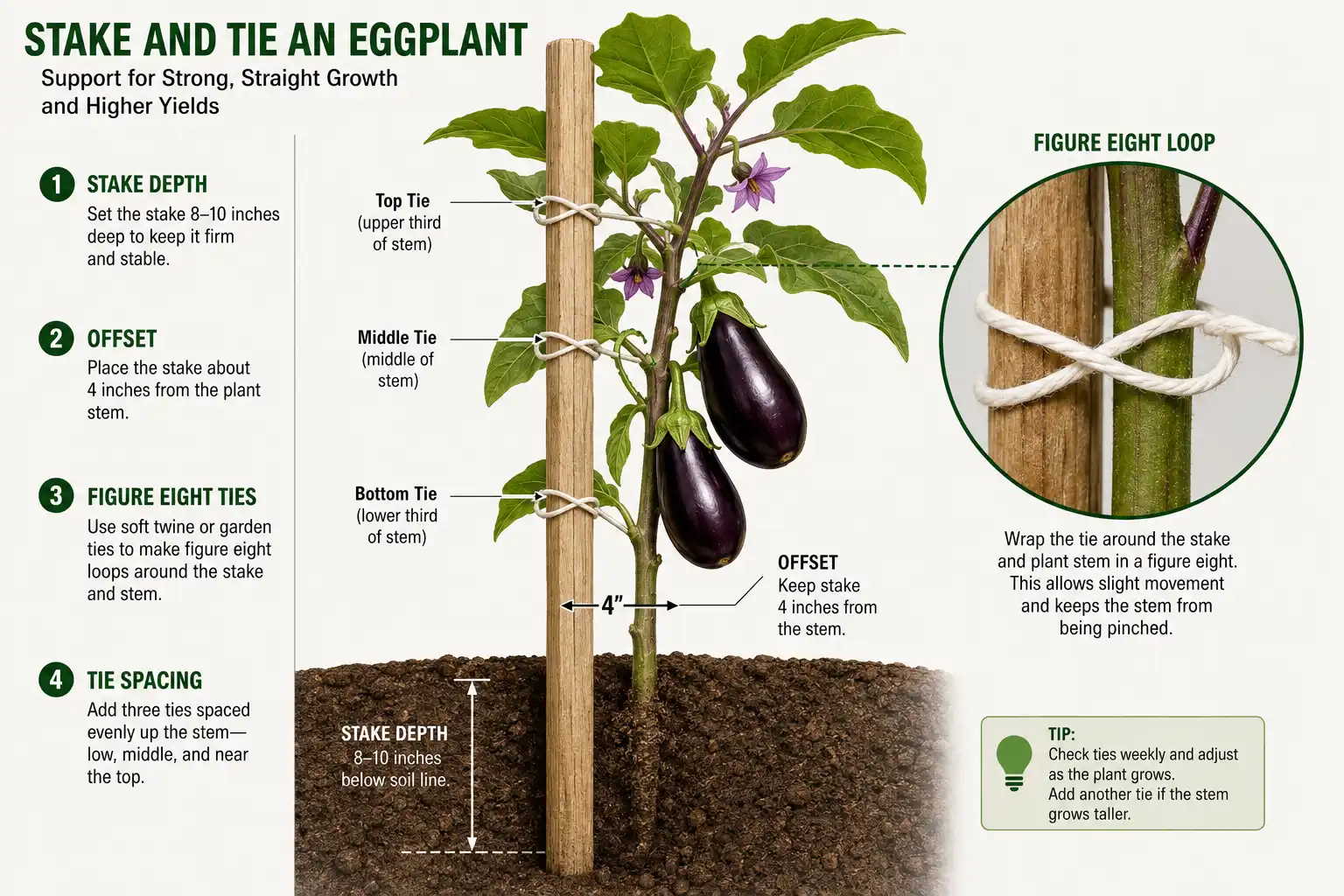
Skip wire and zip ties. Both girdle the stem within weeks, and a girdled plant drops fruit.
How to Basket Weave a Row of Eggplant
The basket weave carries a full row on fewer stakes. Most field growers mean this system when they say eggplant trellis. Rutgers and Virginia Cooperative Extension both document the method for solanaceous crops.
- Set spacing first. Space plants 18 to 24 inches apart with rows 4 to 5 feet apart. Tighter crop spacing decisions crowd the weave and cut airflow.
- Drive stakes early. Use 4 to 4.5 foot stakes between every other plant, sunk 12 inches deep.
- Anchor the ends. Put a steel T post at each row end, plus one every fourth or fifth stake. End posts carry the whole line tension.
- Start the first line at 12 inches. Tie UV treated polypropylene twine to the end post, then run it down one side at 10 inches high, wrapping once at each stake.
- Return on the other side. Come back down the opposite side and tie off. Plants now sit between two twine lines.
- Add lines as they grow. Run a new pair every 6 to 8 inches of new growth. Three or four pairs usually carry the crop to frost.
- Retension midseason. Twine stretches after rain, so pull slack out in late July.
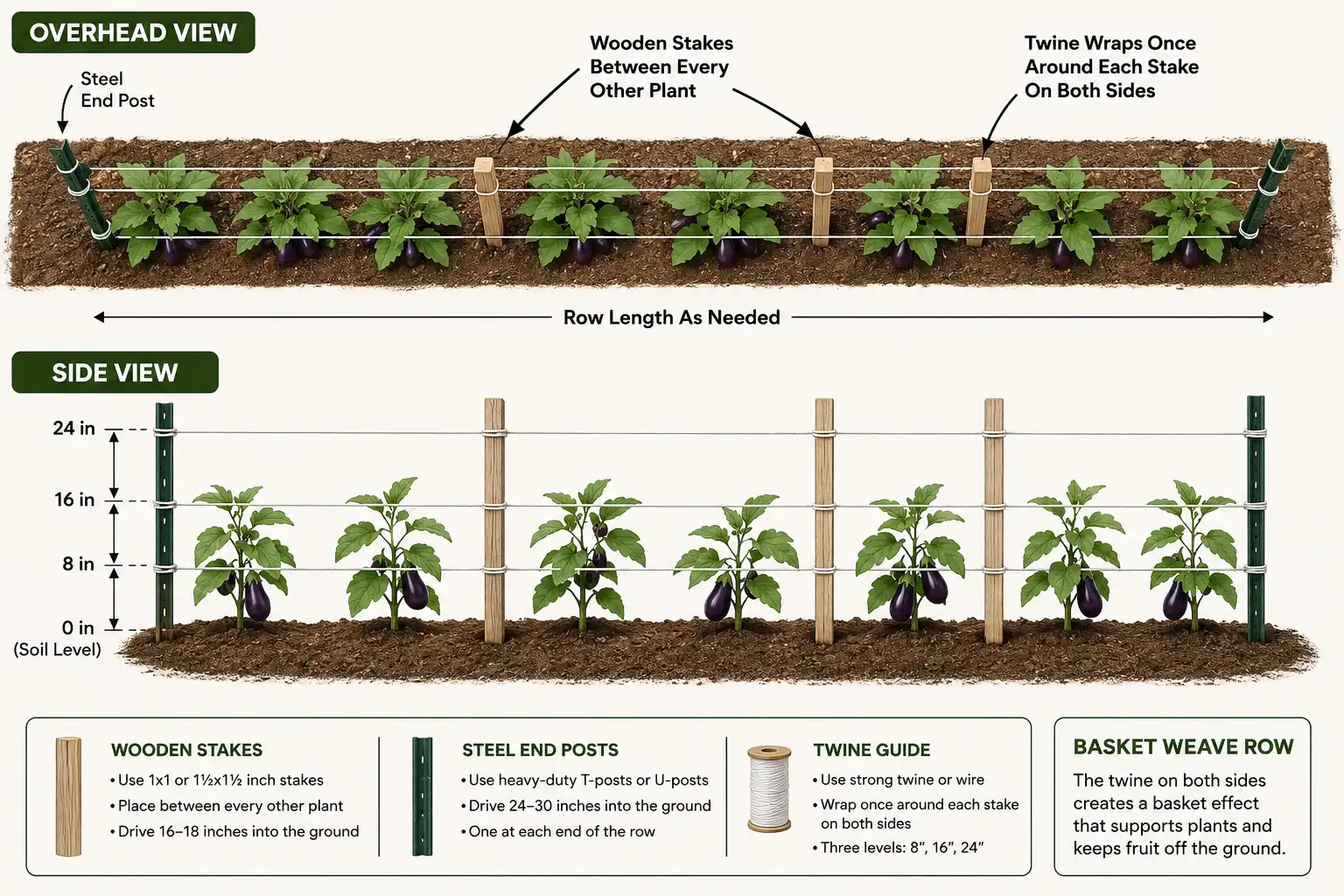
The build logic matches building a tomato trellis, though eggplant needs shorter stakes since the plants stay lower.
Do Container Eggplants Need a Trellis?
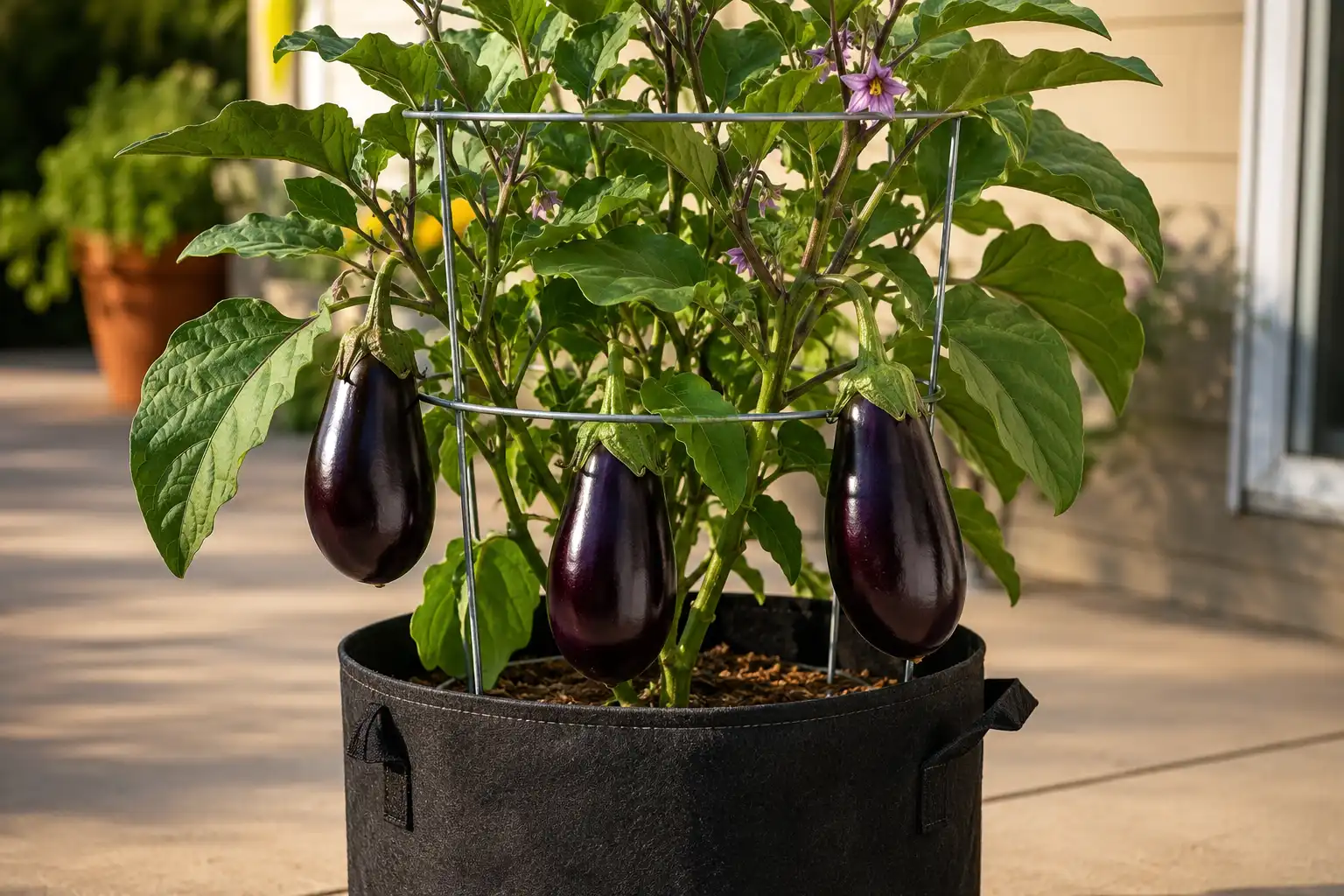
Container eggplant needs a cage or a stake, not a trellis. The pot itself becomes the weak point, because a loaded plant acts like a sail and tips the whole container.
Start with volume. Use a 5 gallon pot as the floor, and a 7 to 10 gallon pot for globe types. Then set a 30 to 42 inch wire cage over the seedling on planting day. That timing protects the roots.
For a single stake in a pot, drive it against the inside wall of the container. Center stakes split the root ball as the plant matures.
Raised beds behave the same way. Bed soil stays looser than field ground, so stakes need the full 12 inch depth to hold. If you already cage or stake tomatoes in the same bed, the identical hardware works for eggplant with no changes.
When a Real Trellis Makes Sense for Eggplant
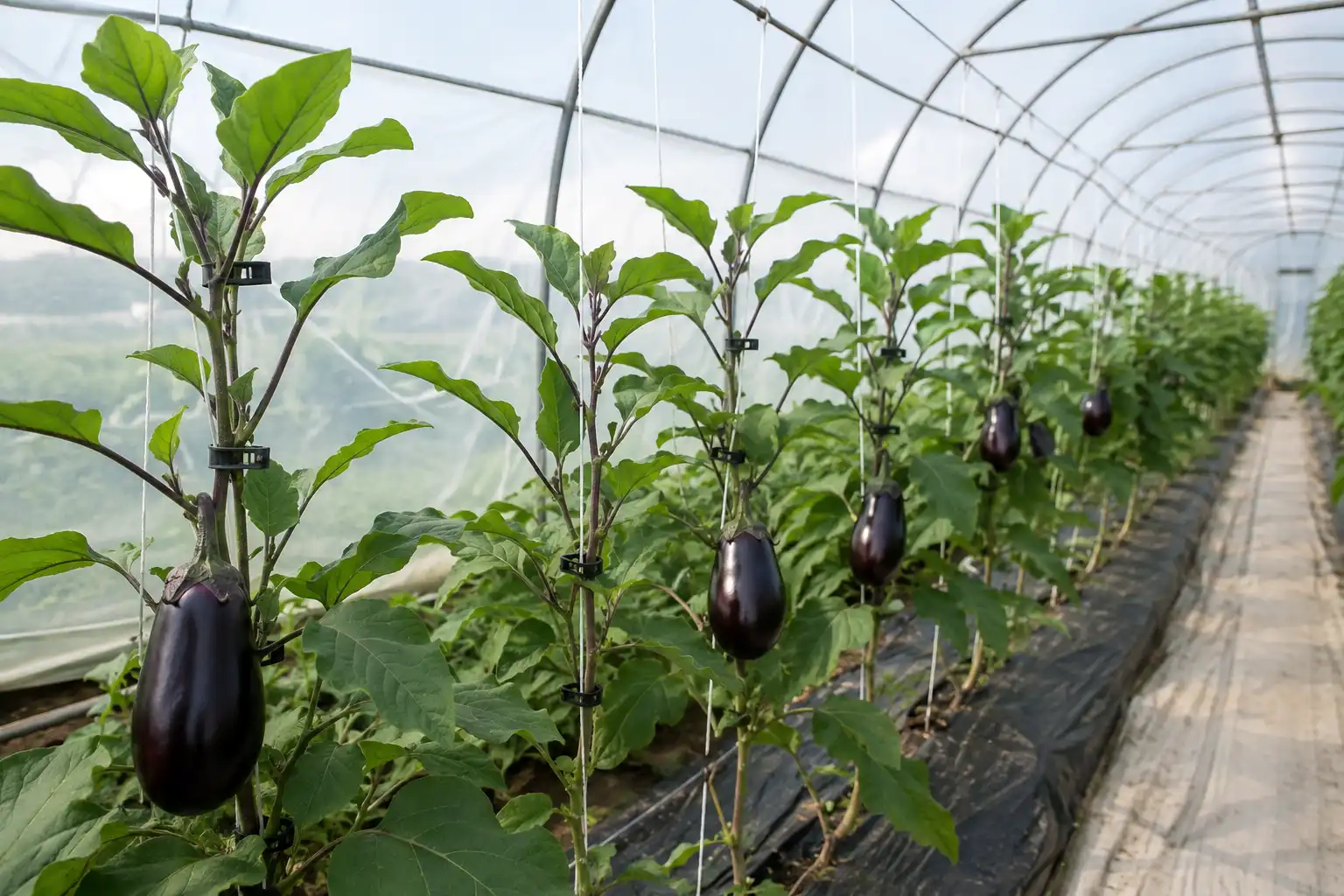
A true trellis makes sense inside a high tunnel or greenhouse. There, growers train eggplant to overhead strings instead of stakes, because vertical space costs nothing and plants run all season.
The system works like greenhouse tomatoes. Prune each plant to two or four leaders, then clip each leader to a string dropped from an overhead wire. Remove side shoots weekly. As plants reach the wire, lower and lean them along the row.
Parthenocarpic varieties bred for protected culture suit this best, since they set fruit without pollinators. A University of New Hampshire tunnel trial recorded over six pounds of fruit per plant. First picking came about five weeks after transplant.
Outdoors, skip it. Wind loads make a tall flat trellis a liability in the Great Plains, and stakes cost far less per acre.
What Staking Does for Yield and Fruit Quality
Staking raises marketable yield, mostly by cutting culls rather than growing more fruit. Missouri Extension reports field eggplant yielding 500 to 700 bushels per acre at 33 pounds per bushel. Support protects that number at grading.
Four gains show up every season.
- Cleaner fruit. Nothing touches soil, so rot pressure drops sharply.
- Straighter shape. Elongated types hang free instead of curving against the ground.
- Better spray coverage. Open canopies let material reach leaf undersides, where flea beetles and spider mites feed.
- Faster picking. Fruit hangs at a consistent height, so crews cut stems without hunting.
Harvest speed matters more than growers expect. Eggplant needs clipping two or three times a week during peak set, since missed fruit shuts down flowering. Supported plants make that pace realistic.
Final Words on Eggplant Support
Eggplant earns its support every year, so plant a row without it. Stakes go in the day transplants do. The first twine line runs at 12 inches. New lines follow every 6 to 8 inches of growth. That single habit keeps fruit off the soil through the worst July storms.
Start with a stake per plant if the row is short. Move to a basket weave once you pass a dozen plants. Either way, get the structure standing before the plant needs it. The rest of growing eggplant through the season gets easier.