How to Plant Eggplant: Soil Temperature, Spacing, and Depth
Eggplant is the fussiest nightshade. It stalls in cold ground and sulks for weeks. Learning how to plant eggplant correctly comes down to soil temperature, spacing, and depth. Get those three right and the crop mostly runs itself.
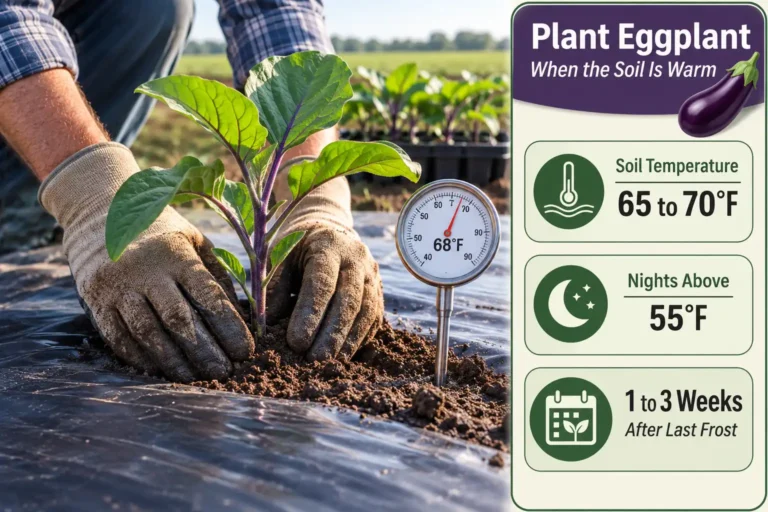
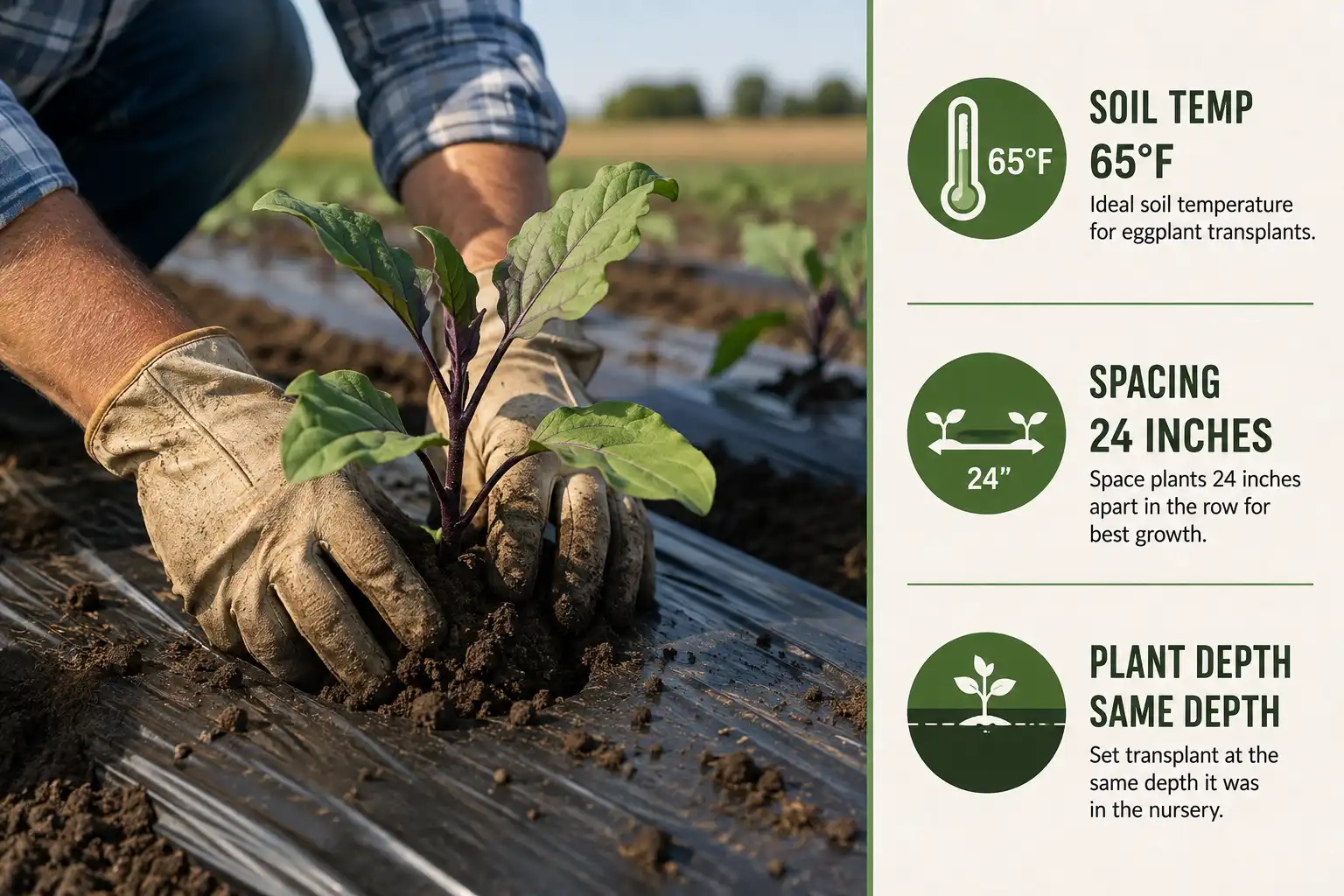
Plant eggplant as transplants once soil hits 65°F and night lows stay above 60°F. Set plants 18 to 24 inches apart in rows 30 to 36 inches wide. Plant them at the same depth they grew in the pot.
When Should You Plant Eggplant?
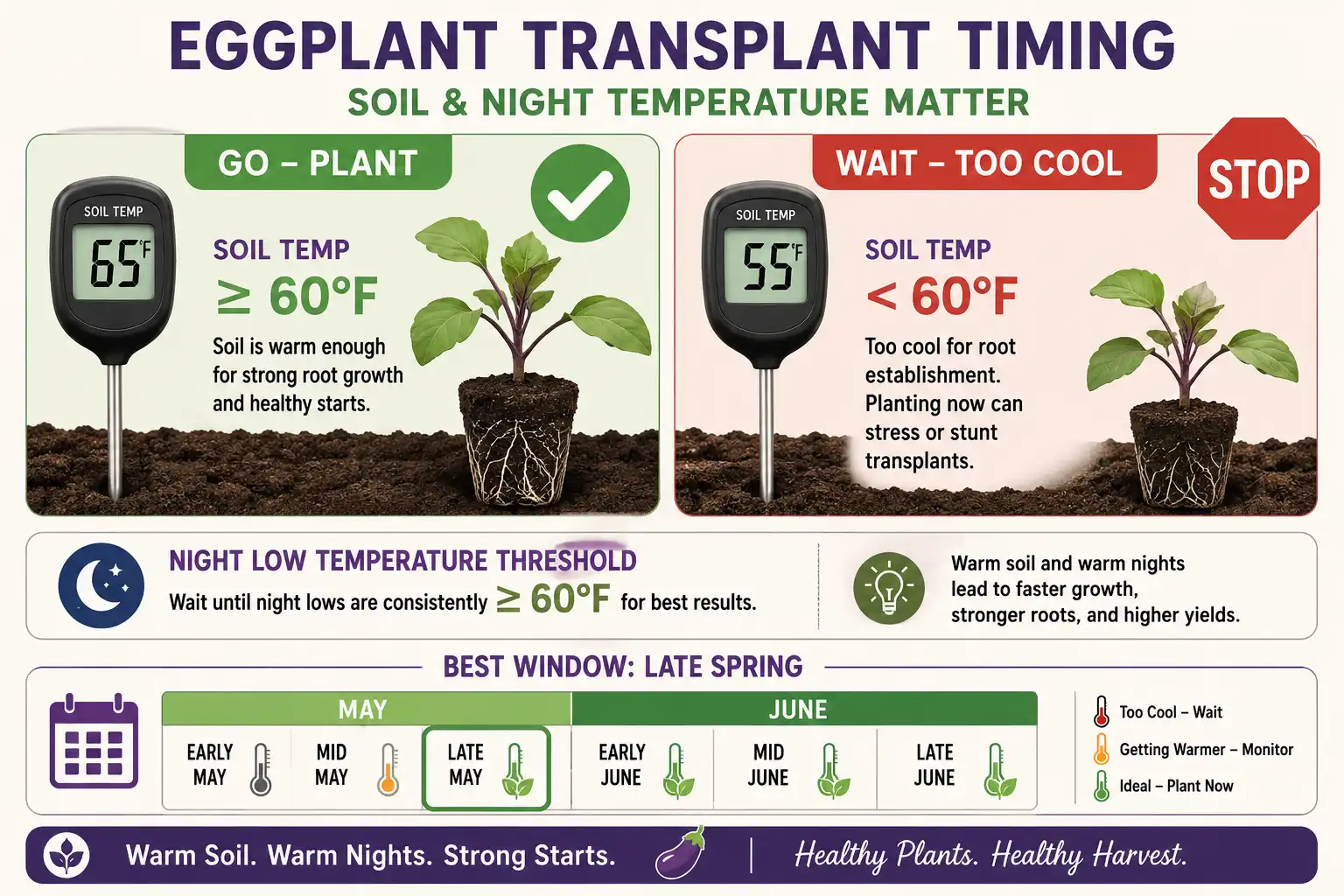
Plant eggplant two to three weeks after your last frost. Wait until soil at 4 inches reads 65°F and nights hold above 60°F. Frost date alone is not enough. Eggplant is more cold sensitive than either tomato or pepper.
Cold soil does not kill the plant. It just stops it. A transplant dropped into 55°F ground will sit unchanged for two to three weeks, then start growing when conditions improve. In zone 6a, that lost time does not come back over the course of the growing season.
This is the recommended window for timing the transplant.
| Region | Start seeds indoors | Set transplants outside |
|---|---|---|
| Zones 3 to 4 (northern Plains, upper Midwest) | Late March to early April | June 5 to June 20 |
| Zones 5 to 6 (Kansas, Iowa, Ohio, Pennsylvania) | Mid to late March | May 15 to June 5 |
| Zone 7 (Virginia, Tennessee, Oklahoma) | Early to mid March | May 1 to May 20 |
| Zone 8 (Georgia, Alabama, north Texas) | Mid February | April 5 to April 25 |
| Zones 9 to 10 (Florida, south Texas, coastal California) | January, then July for fall | February to March, then August |
How Do You Check Soil Temperature Before Planting?
Push a probe 4 inches deep in the middle of the bed. Then read it early on two mornings in a row. Morning readings tell you the low point, which is what the roots actually feel. Afternoon readings run warm and will talk you into planting early.
Take the reading with a probe thermometer pushed 4 inches down, then log it on a calendar to track the trend. If both mornings come in at 65°F or better, the transplants go out that week. Bare ground under a raised bed warms faster, so check each bed separately.
How Do You Start Eggplant Seeds Indoors?
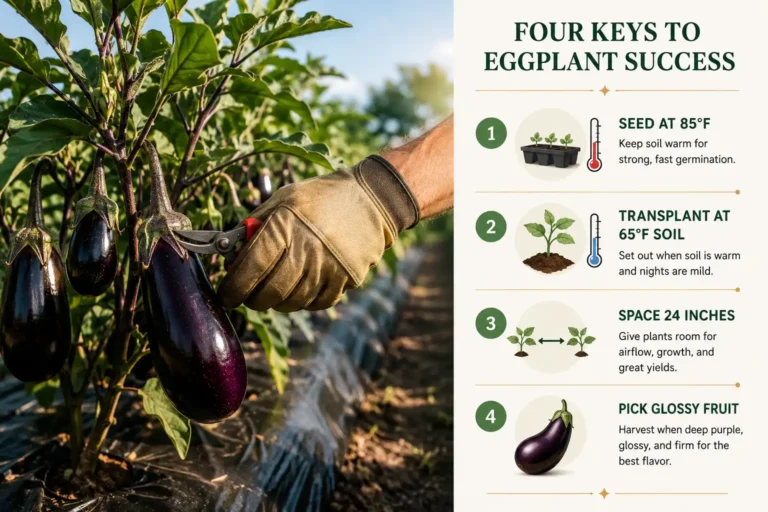
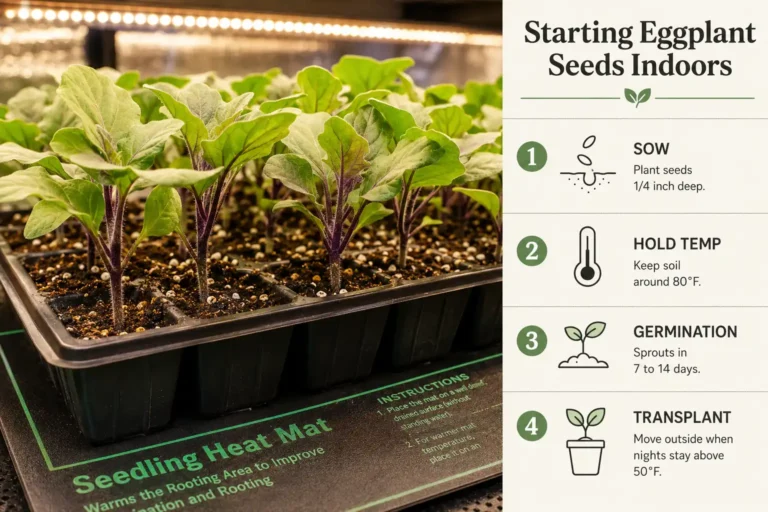
Start eggplant seeds 8 to 10 weeks before your transplant date, sown a quarter inch deep at 80 to 85°F. Eggplant germinates slower than tomato, so it needs the longer head start. Below 60°F, the seed will not sprout at all.
- Fill cells with sterile seed starting mix. Garden soil carries disease and packs too tight for fine eggplant roots.
- Sow two seeds per cell, a quarter inch deep. Never bury deeper than a half inch.
- Set the tray on a heat mat at 80 to 85°F. Bottom heat matters more than room air. Without it, germination drags past three weeks.
- Cover with a dome until the first sprouts break. Then pull the dome so air moves.
- Run lights 14 to 16 hours a day, 2 to 4 inches above the leaves. Windowsills produce leggy plants that never recover.
- Thin to one seedling per cell at the first true leaf. Snip the weaker one instead of pulling it.
- Pot up to 3 or 4 inch pots at two true leaves. Cramped roots stall the plant before it ever reaches the field.
- Feed weekly with soluble fertilizer at quarter strength. Start after the first true leaves appear.
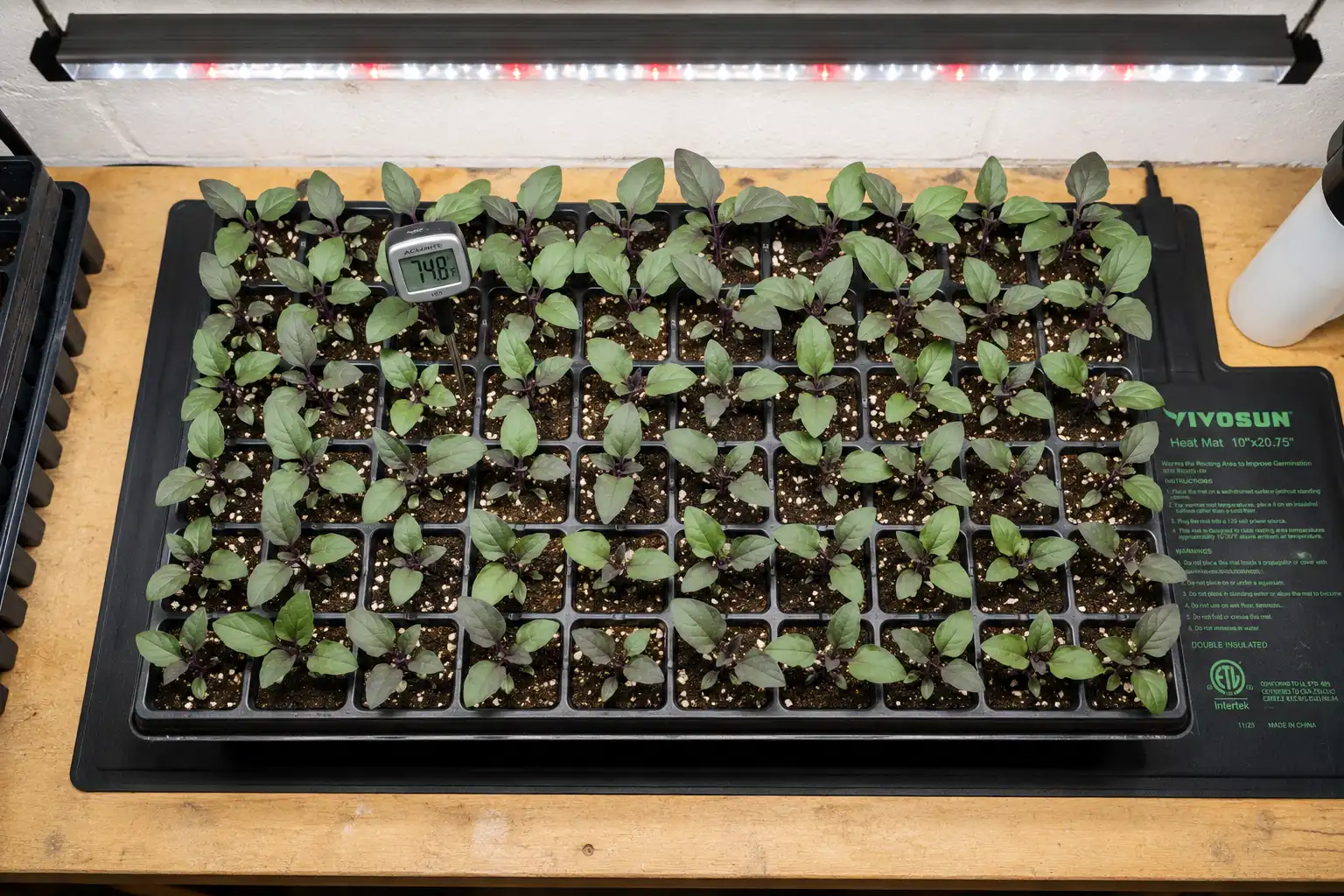
Keep indoor nights at 65 to 70°F. Cold nights indoors stunt eggplant the same way cold field soil does. Also watch moisture closely, because damping off at the seedling stage moves fast in a warm humid tray. Bottom water instead of misting, and let the surface dry between waterings.
Old seed is worth testing first. Germination falls off with age, so sprout ten seeds on a damp paper towel before you commit tray space. Seed starting trays and domes with a vented lid make this easier to manage on a windowsill bench.
What Does a Good Eggplant Transplant Look Like?
A good eggplant transplant stands 5 to 8 inches tall with a pencil thick stem. Look for 6 to 9 dark green leaves. It should look stocky, not stretched. Skip anything taller than a foot or thinner than a pencil.
Never buy or set out a plant that is already flowering. Blooming transplants put energy into that first fruit instead of roots. They establish slowly and yield poorly all season. If a plant does open a flower before planting day, pinch it off.
Also check leaf undersides at the garden center. Spotted leaves point to disease that will follow the plant into your soil.
How Do You Harden Off Eggplant Transplants?
Harden off eggplant over 7 to 10 days. Start with one to two hours in filtered shade, then add time daily. Rushing this step costs you two weeks of growth. Wind does more damage than sun during the first few days.
Keep them above 55°F the whole time. A cold night on the porch undoes the whole process, so bring trays inside when lows dip. Cut back slightly on water near the end, but never let leaves wilt. Run the same hardening off routine for tomato transplants.. Eggplant just needs a few extra days, because it reacts harder to chill.
How Should You Prepare the Bed for Eggplant?
Prepare eggplant ground with full sun, a soil test, and 2 to 3 inches of compost. Target a pH between 5.5 and 6.8. Eggplant wants at least 8 hours of direct sun and well drained sandy loam. Heavy wet clay produces small, seedy fruit.
Work the compost into the top 8 inches. Then apply fertilizer according to your soil test. K-State Research and Extension suggests 3 to 4 pounds of complete garden fertilizer per 100 square feet without a test.
Rotation matters more here than with most vegetables. Verticillium wilt hits eggplant harder than any other nightshade. Verticillium dahliae microsclerotia survive in soil for a decade or longer. So keep eggplant out of ground that grew tomato, pepper, potato, or eggplant within the last three years. Building a rotation plan for the whole garden solves this once instead of every spring.
Black plastic mulch earns its keep on this crop. It warms the root zone, cuts weeds, and reduced verticillium damage in Connecticut trials. Lay it one to two weeks before planting so heat builds. Hold off on straw or grass mulch until the soil reaches 75°F, usually late June.
How to Plant Eggplant Step by Step
Plant eggplant on a calm, overcast afternoon into warm, moist, well prepared soil. Work through these steps in order and the plants barely notice the move.
- Water transplants thoroughly an hour before you pull them. Dry root balls crumble apart.
- Mark spacing before you dig. Guessing crowds the row every time.
- Dig a hole slightly wider than the root ball, not deeper. Loosen the sides so roots spread out.
- Slide the plant out by the root ball, never the stem. Squeeze the cell rather than yanking the top.
- Set the root ball level with the bed surface, or a half inch deeper. Eggplant does not root along a buried stem the way tomatoes do, so deep planting only invites stem rot.
- Strip the lowest pair of leaves if they touch soil. Wet leaves against dirt start disease.
- Pour a high phosphorus starter solution around each plant. About one cup per plant is the standard rate.
- Firm the soil gently and water in with a pint to a quart per plant. Firm, not packed.
- Drive a 36 to 48 inch stake beside each plant now. Staking later tears roots that are already working.
- Cover the row immediately with floating row cover. Flea beetles find new transplants within a day.

Set the whole row before you water anything in. Otherwise the first plants sit exposed while you finish the last ones.
How Far Apart Should Eggplant Be Spaced?
Space eggplant 18 to 24 inches apart in rows 30 to 36 inches wide. Large fruited types need the wide end of that range. Crowding raises humidity in the canopy, which cuts pollination during hot weeks and feeds disease.
| Eggplant type | In-row spacing | Row spacing |
|---|---|---|
| Italian globe (Black Beauty, Rosa Bianca) | 24 inches | 30 to 36 inches |
| Asian slender (Ichiban, Orient Express, Ping Tung Long) | 18 to 24 inches | 30 inches |
| Dwarf and container (Patio Baby, Fairy Tale, Hansel) | 12 to 18 inches | 24 inches |
| Single row in a raised bed | 18 to 20 inches | one row per 24 inch bed |
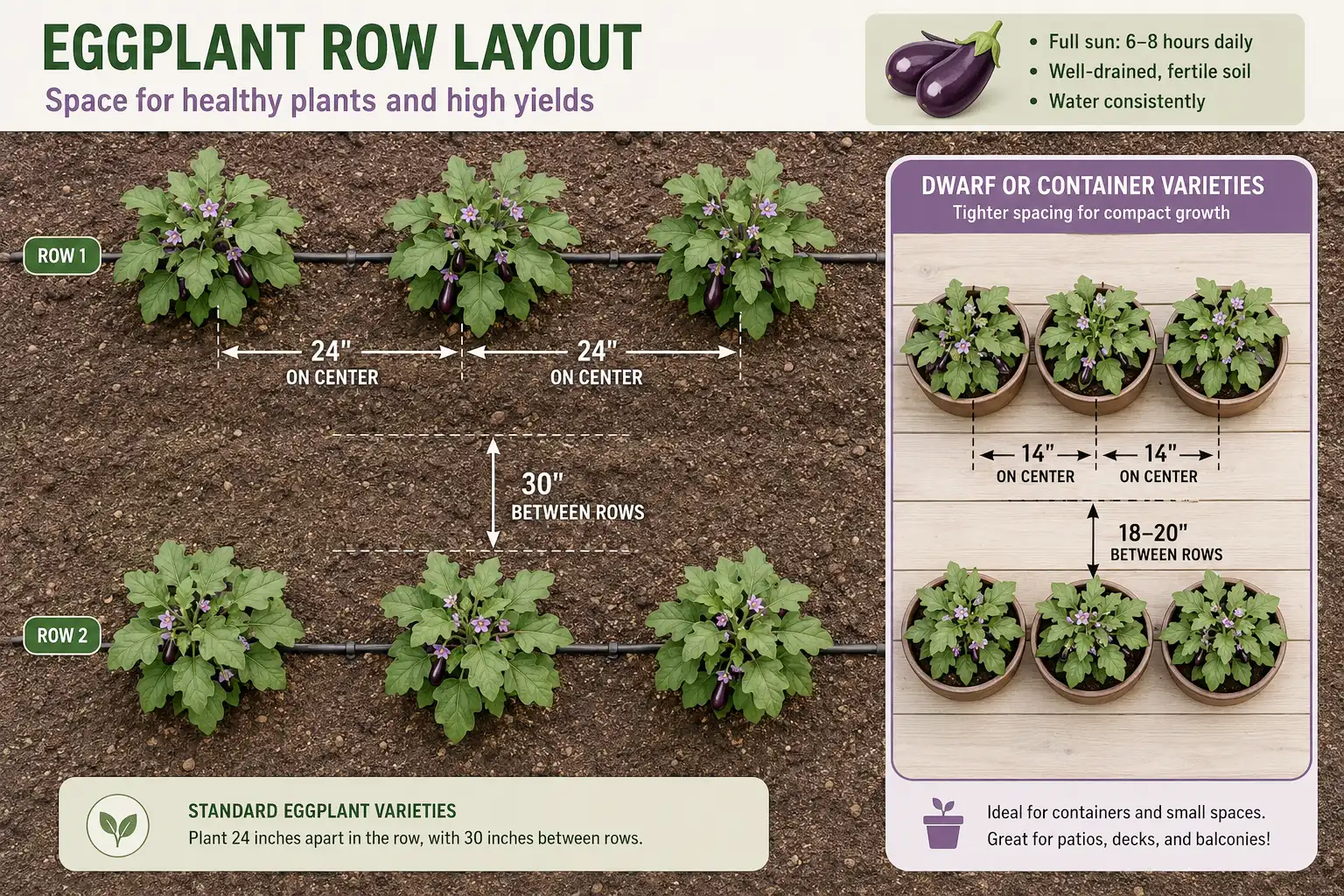
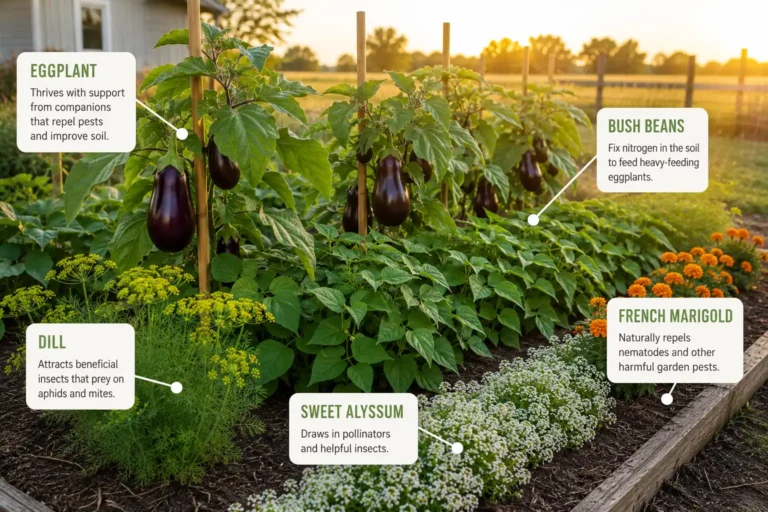
Two plants per person covers fresh eating. Plan on four to six per person if you freeze or can. In a mixed bed, spacing tightens fast. Disease pressure also rises when setting eggplant next to tomatoes, since both share the same wilt pathogens.
How Deep Should You Plant Eggplant?
Plant eggplant seed a quarter inch deep and set transplants at the same depth they grew in the pot. A half inch deeper is fine on sandy ground. Anything more buries the stem and raises rot risk.
This is where tomato habits cause trouble. Tomatoes root freely along a buried stem, so growers bury them deep on purpose. Eggplant does not do that. A deeply buried eggplant stem tends to rot at the soil line instead of rooting.
For direct seeding in the South, sow a half inch deep. Then thin to final spacing once plants reach 3 inches.
Can You Plant Eggplant Seeds Directly in the Garden?
Direct seeding eggplant works only in zone 8 and warmer, where soil holds above 70°F and the season runs long. Elsewhere, transplants are the practical choice. Eggplant seed takes 14 to 21 days to emerge, and weeds win that race.
Even across the Gulf states, most commercial growers still transplant. The head start is worth more than the labor saved. Direct seeded eggplant would not set fruit before frost.
How Do You Plant Eggplant in Containers?
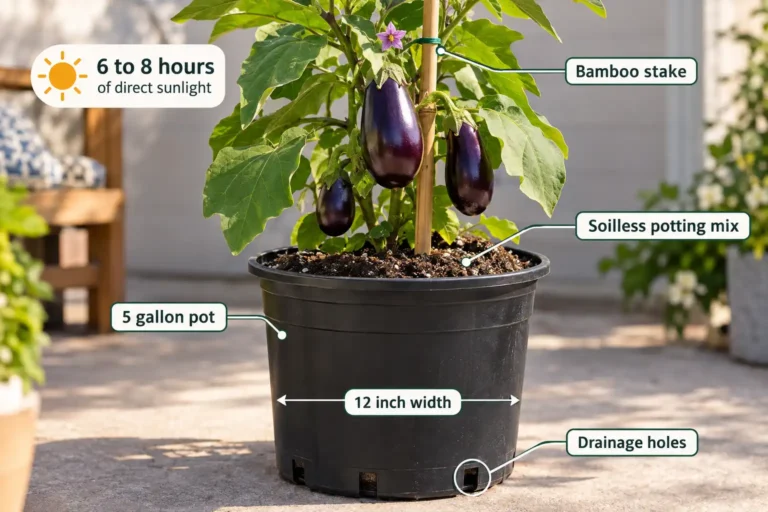
Plant one eggplant per 5 gallon container for dwarf types and 7 to 10 gallons for standard varieties. Use potting mix, never garden soil. Confirm the pot drains freely before you fill it.
Container plants dry out fast, and water stress is the main cause of bitter, seedy fruit. So check moisture daily once July heat arrives. Feed with a soluble fertilizer every 10 to 14 days, since frequent watering flushes nutrients out the bottom.
Choose compact varieties for pots. Patio Baby, Fairy Tale, Hansel, Gretel, and Bambino all stay under two feet and set fruit heavily. Dark pots also cook roots in full sun. So shade the pot in peak heat, or use a light colored container.
Which Eggplant Varieties Should You Plant?
Choose eggplant varieties by days to maturity first, then by fruit type. Short season growers need something under 60 days. Long, hot summers open up the big Italian heirlooms.
| Variety | Type | Days from transplant | Why plant it |
|---|---|---|---|
| Patio Baby | Mini purple hybrid | 45 | Fastest to fruit, spineless, best for pots |
| Fairy Tale | Mini striped hybrid | 50 to 55 | Sweet and never bitter, All-America Selections winner |
| Ichiban | Japanese slender hybrid | 50 to 60 | Heavy set, thin skin, no peeling needed |
| Orient Express | Asian slender hybrid | 58 | Sets fruit through cool spells |
| Ping Tung Long | Taiwanese heirloom | 70 | Long fruit, holds up to heat and disease |
| Black Beauty | Italian globe, open pollinated | 74 to 80 | Classic slicing fruit, needs a stake |
| Rosa Bianca | Italian heirloom | 75 to 85 | Mild and creamy, wants a long hot season |
Plant two rows here. One row of Ichiban for early picking, then one row of Black Beauty for the late slicing crop. That split keeps fruit coming from mid July until frost.
How Do You Feed and Water Eggplant After Planting?
Feed eggplant with a phosphorus rich starter at planting, then sidedress nitrogen once the first fruits reach an inch across. Repeat three to four weeks later. Water steadily at 1 to 1.5 inches per week.
Too much nitrogen is the classic mistake. Heavy nitrogen gives you a tall, dark, beautiful plant with almost no fruit on it. Balanced blends work better here. Illinois Extension recommends balanced or higher phosphorus fertilizer on ground with a verticillium history. Ammonium sulfate as the nitrogen source has also improved eggplant yields where wilt is present.
If you planted on black plastic, cut your sidedress nitrogen rate. Plastic holds nutrients in place, so less leaches away. Drip lines under the plastic handle both water and feed cleanly.
Water deep and less often rather than shallow and daily. Then tighten up during flowering and fruit set, because moisture stress at that stage cuts yield sharply. Uneven watering also drives bitterness, so consistency beats volume.
How Do You Protect New Eggplant Transplants From Pests?
Cover new eggplant transplants with floating row cover on planting day, because flea beetles hit small plants hardest. Two beetles can shred a 3 inch transplant. Plants over 6 inches tolerate feeding with little yield loss.
Keep the cover on until plants clear 6 inches, then pull it before summer heat builds underneath. Eggplant is self pollinating, so a cover does not block fruit set. Heat under the fabric in July becomes the bigger problem.
- Flea beetles: row cover at planting, then scout twice weekly after removal
- Colorado potato beetle: check leaf undersides and crush orange egg masses on sight
- Cutworms: set cardboard collars if you have a history of clipped stems
- Spider mites: watch for stippled leaves during hot dry August stretches
- Verticillium wilt: look for one sided wilting and brown streaking inside a cut stem
Verticillium has no rescue treatment once a plant shows symptoms. Prevention is the whole plan. Rotate, use plastic mulch, and keep plants unstressed. On infested ground, consider grafting onto resistant tomato rootstock.
What Planting Mistakes Cost the Most Yield?
Planting into cold soil costs more yield than any other mistake. The rest follow close behind.
- Setting transplants at 55°F soil, which stalls growth for weeks
- Buying transplants that already carry flowers or fruit
- Burying the stem deep like a tomato
- Skipping the stake and losing loaded plants to wind
- Spreading straw mulch before soil reaches 75°F
- Following tomatoes or potatoes in the same bed
- Pushing nitrogen and getting leaves instead of fruit
- Letting soil dry out during flowering
Each one is cheap to avoid on planting day and expensive to fix in August.
How Soon After Planting Will Eggplant Produce?
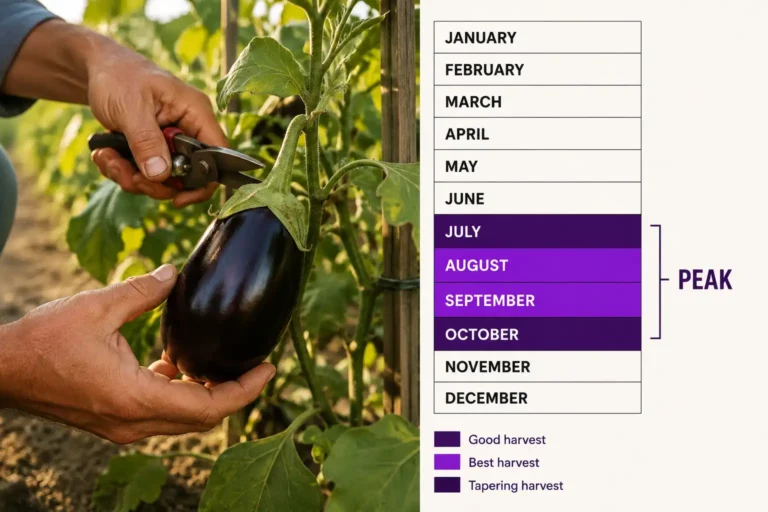
Expect first fruit 45 to 85 days after transplanting, depending on variety. Flower buds usually appear four to six weeks after planting. Fruit follows within another two to three weeks.
Harvest when the skin is glossy and springs back under light thumb pressure. Dull skin means the fruit went past prime, and past prime eggplant turns bitter and seedy. Cut with shears, leaving the green cap and a short piece of stem attached.
Watch the thermometer during fruit set. Day temperatures above 95°F or nights below 60°F cause flower drop. That explains the gap most Kansas growers see in early August.
Final Thoughts on Planting Eggplant
Start seed the second week of March. Plants go out around May 20, after two morning readings clear 65°F. Everything goes through black plastic on 24 inch centers with a stake and a row cover on day one. First picking lands in mid July, and the rows keep producing until October frost. The whole crop turns on soil temperature at planting, so wait out a cold spring rather than fight it.