How to Pollinate Eggplant by Hand: 3 Methods That Set More Fruit
Eggplant flowers carry their own pollen, but the anthers release it only through tiny pores when something shakes them. Bumble bees usually do the shaking with a fast buzz. When bees are scarce, learning how to pollinate eggplant by hand keeps flowers turning into fruit.
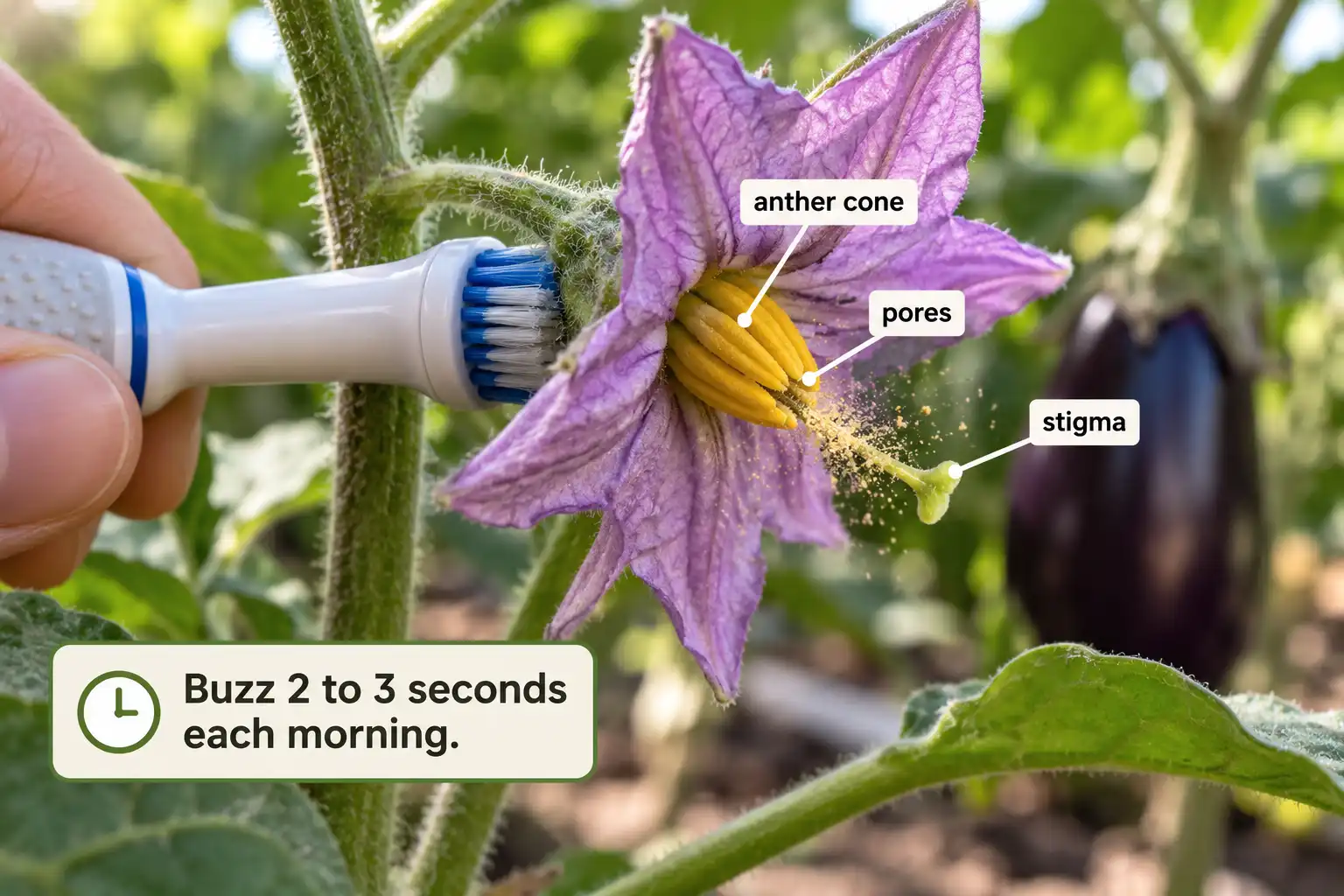
To pollinate eggplant, vibrate each open flower every morning so pollen drops from the anther pores onto the stigma. Hold a running electric toothbrush against the flower stem for 2 to 3 seconds, or tap the blossom several times.
Do Eggplants Need Pollination?
Yes. Without pollination, most eggplant flowers drop instead of setting fruit. Each flower supplies its own pollen, though.
Eggplant (Solanum melongena) produces perfect flowers, with pollen-bearing anthers and a pistil in every blossom. According to UC ANR’s Master Gardener program, a light breeze or a passing insect moves pollen inside the flower.
Even so, bees raise yields. A 2015 study in the Journal of Economic Entomology tested bumble bee visits on eggplant. Fruit set peaked with open pollination and with 12 visits, and open-pollinated fruit grew larger with more seeds.
So hand pollination pays off wherever wind and bees fall short. That includes greenhouses, high tunnels, covered beds, and long cool or rainy stretches.
Why Do Eggplant Flowers Need Vibration?
Eggplant flowers need vibration because their pollen leaves the anthers only through small pores at the tips. According to NC State Extension, these poricidal anthers make buzz pollination necessary.
Bumble bees are the classic buzz pollinators. A breeze jostles the flower a little, but a bumble bee shakes it hard. The bee grips the yellow anther cone and vibrates its flight muscles without flapping its wings. That vibration knocks pollen out of the pores, and some lands on the stigma near the cone’s tip. Scientists call this behavior sonication.
For that reason, a running electric toothbrush makes a good stand-in: its vibration copies the bee’s buzz.
Long-Styled vs. Short-Styled Eggplant Flowers
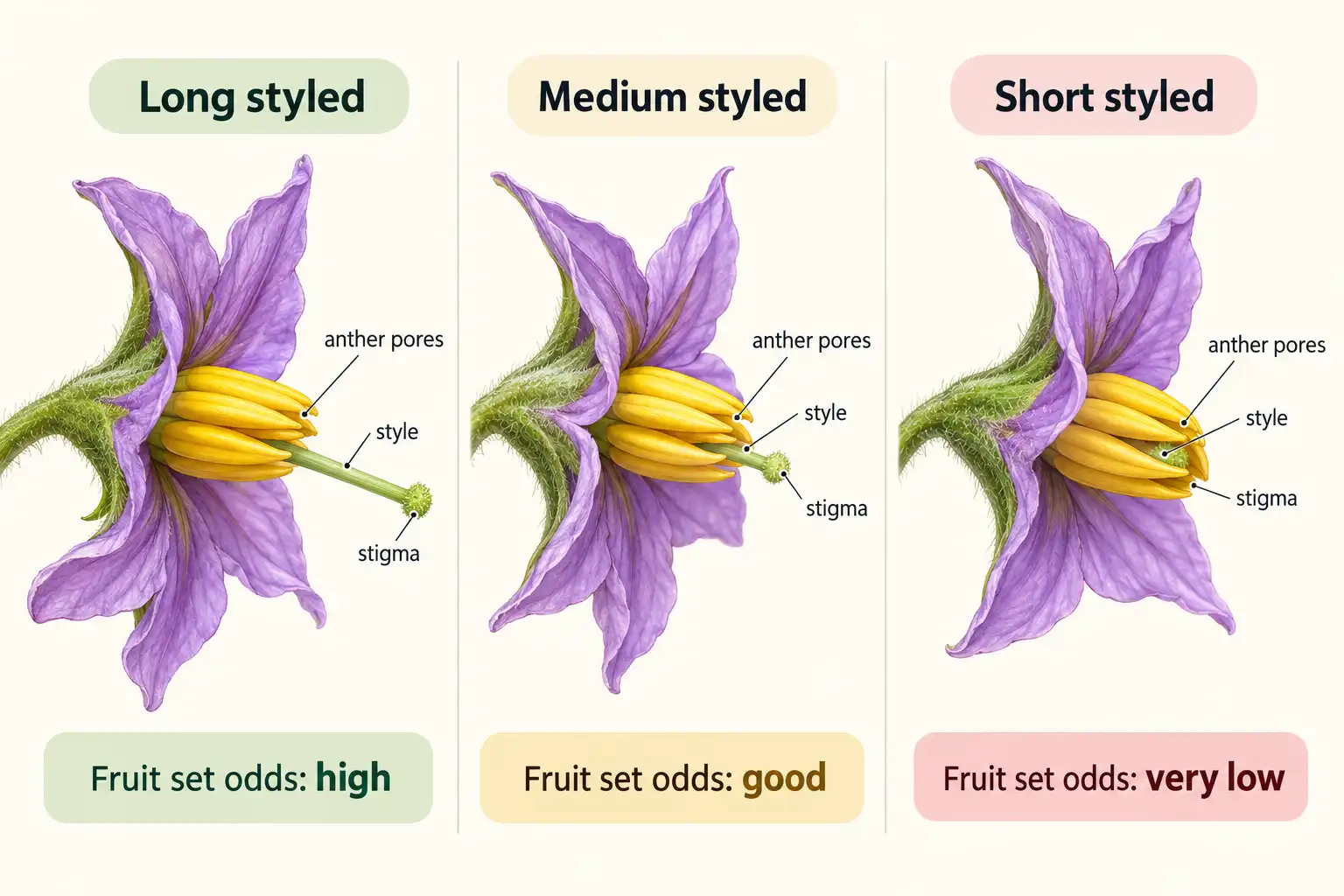
Eggplant flowers vary in style length, a trait botanists call heterostyly. Where the green stigma sits, compared with the yellow anther tips, shows which flowers are likely to set fruit.
| Flower type | Stigma position | Odds of fruit set | What to do |
|---|---|---|---|
| Long-styled | Extends past the anther tips | High | Pollinate every morning |
| Medium-styled | Level with the anther tips | Good | Pollinate every morning |
| Short-styled | Hidden below the anther tips | Very low | Don’t count on fruit; ease plant stress |
Research from the University of Agriculture in Kraków, Poland, found short-styled flowers had much lower pollination and fruit set. Their small stigma sits apart from the anther pores, so little pollen reaches it. The same research group found the mix of flower types shifts with variety, plant age, and fruit load. That helps explain why a plant loaded with fruit sets fewer new ones until you harvest.
When to Pollinate Eggplant Flowers
Pollinate in the morning, once flowers open fully. UC Master Gardeners advise tapping blossoms daily throughout bloom. Since each flower stays open only a few days, daily rounds give every blossom more than one pass.
Temperature Range for Fruit Set
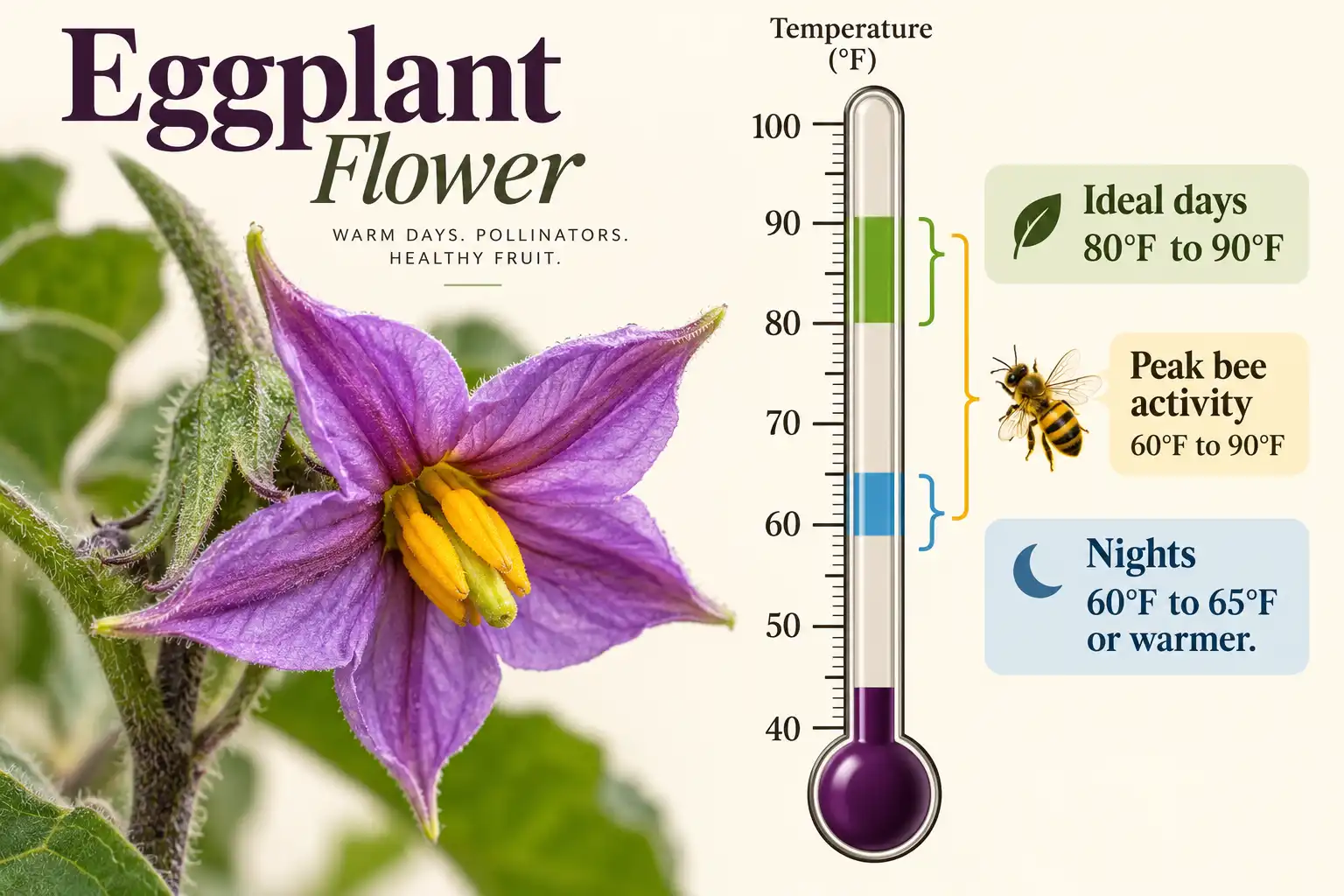
Temperature decides whether pollen works at all. UC IPM, part of UC ANR, puts ideal daytime temperatures at 80°F to 90°F. Nights need to stay at 60°F to 65°F or warmer. Once plants bloom, cool weather and weak light make pollen nonviable, and fruit rarely sets. So check eggplant’s sun requirements if a shaded bed keeps dropping flowers.
Regional patterns follow from those limits:
- Northern states: Cool nights early and late in the season stall fruit set. Texas A&M AgriLife notes eggplant responds well to plastic mulch and row covers because of its cold sensitivity. Lift the covers once flowers open.
- Southern states: Midsummer heat slows bee activity. University of Minnesota Extension notes many bees pollinate best between 60°F and 90°F. Texas A&M AgriLife adds that long-fruited cultivars handle extreme heat better than small egg-shaped or oval types. Long Asian cultivars such as ‘Ichiban’ and ‘Pingtung Long’ fit that group.
How to Pollinate Eggplant by Hand: 5 Steps
Hand pollination takes only a few seconds per flower. Work through the plants each morning during bloom.
- Find open flowers. Look for blossoms with fully spread petals and a bright yellow anther cone.
- Check the stigma. Focus on long-styled and medium-styled flowers, where the stigma reaches the anther tips or beyond.
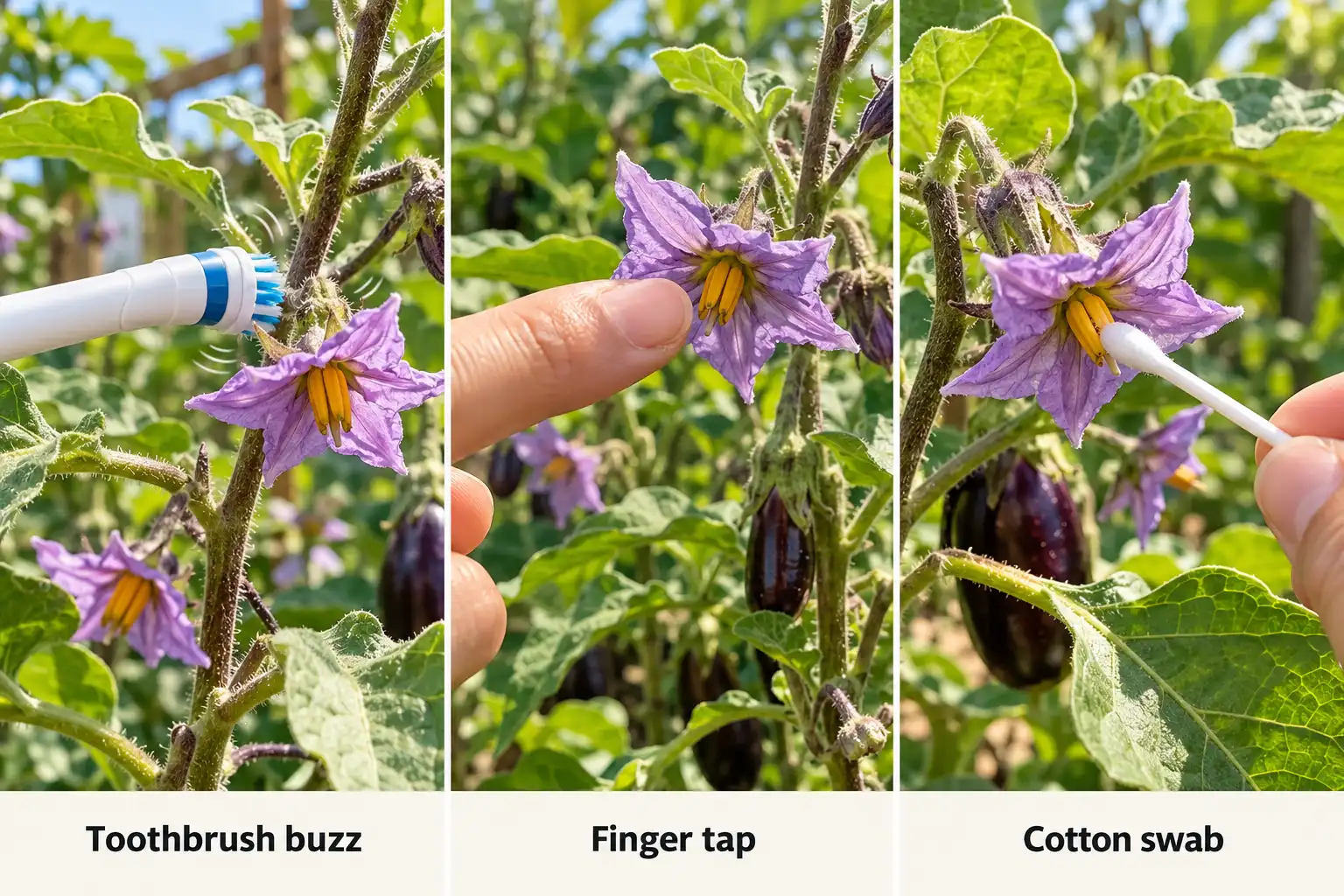
- Buzz the flower stem. Touch a running electric toothbrush to the stem just behind the blossom for 2 to 3 seconds. A faint puff of pale pollen means it worked.
- Switch methods if needed. Tap the flower or its stem several times with a fingertip. Or swirl a cotton swab or fine artist’s brush inside the flower. UC Master Gardeners call tapping the easiest method and swabbing another easy one.
- Repeat and track. Return every morning while flowers stay open. Tie a loose thread around each buzzed stem to see which flowers set fruit.
Which Hand Pollination Method Works Best?
An electric toothbrush is the closest match to a bumble bee’s buzz, so it suits most growers. The other methods fill specific gaps.
| Method | Tool | Best for | Speed | Drawback |
|---|---|---|---|---|
| Toothbrush buzz | Old electric toothbrush | Most gardens and greenhouses | Fast | Needs a charged battery |
| Finger tap | None | A few plants | Fast | Releases less pollen |
| Swab or brush | Cotton swab or fine artist’s brush | Seed saving and bagged flowers | Slow | Tedious on big plantings |
| Fan or plant shake | Small fan or your hands | Indoor rows and greenhouses | Whole plant at once | Least precise; pair it with another method |
Do Greenhouse and Container Eggplants Need Hand Pollination?
Yes. Eggplant under cover or on a high balcony needs your help most, since wind and bees reach it less often.
In greenhouses and high tunnels, buzz flowers every morning and run a small fan for gentle air movement. Commercial greenhouses often bring in hives of the common eastern bumble bee (Bombus impatiens) instead. The Journal of Economic Entomology study confirmed this species as an efficient eggplant pollinator.
Row covers and insect netting block bees, too. Remove covers when the first flowers open, or pollinate by hand underneath each morning.
Indoors, plants under grow lights need daily buzzing plus strong light. Likewise, container-grown eggplant on a patio often sits far from bee forage, so add each pot to your morning rounds.
How to Attract Bumble Bees to Eggplant
Give bumble bees food, nesting sites, and spray-free flowers, and they do much of the outdoor pollinating for you.
Start with forage. University of Minnesota Extension notes that wild bees need flowers all season, not just while a crop blooms. Borage, bee balm, salvia, and catmint draw bumble bees through summer. Planted among your eggplant companion plants, they keep bees close to the crop.
Next, protect nesting sites. The same Extension guide lists bare ground, leaf litter, plant stems, and dead logs as key bee habitat. Leave those spots undisturbed through fall and winter, since many bees overwinter there.
Finally, keep sprays away from foraging bees. Follow an integrated pest management approach: scout first, and spray only when pests justify it. Mow flowering ground cover nearby before a spray, so fewer bees are foraging. Then follow the label’s pollinator precautions and apply in the evening, after bees stop flying.
How to Tell If Eggplant Pollination Worked
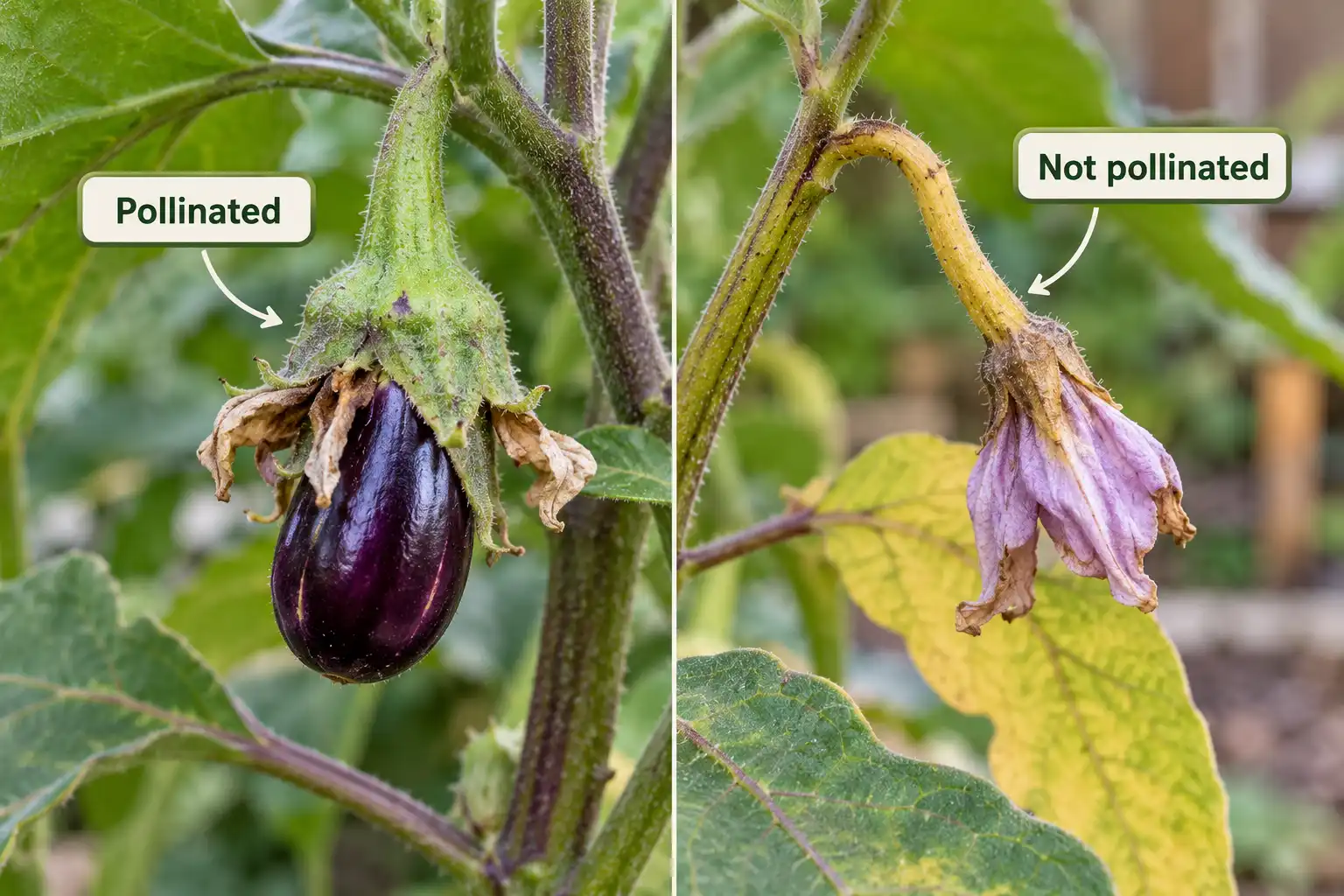
Within a few days, a pollinated flower closes and stays on the plant. A small fruit then pushes out of the green calyx. UC Master Gardeners describe this pattern after daily tapping: flowers closed, held on, and formed small fruit buds.
An unpollinated flower behaves differently. Its stem turns yellow, and the blossom drops soon after the petals fade.
Fruit shape tells the rest of the story. UC IPM reports that poorly pollinated fruit keeps normal color but stays small or flattened. Cut one open, and it holds few or no eggplant seeds.
| Stage | What you see | What to do |
|---|---|---|
| Flower opens | Spread petals, yellow anther cone | Buzz or tap each morning |
| Within a few days | Petals close; flower stays attached | Keep soil evenly moist |
| Following weeks | Glossy fruit grows past the calyx | Support heavy branches |
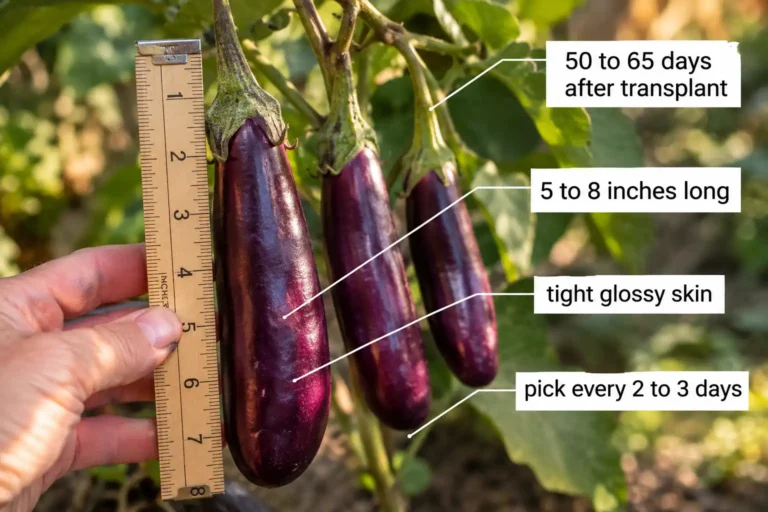
| Harvest stage | Fruit 5 to 8 inches, still glossy | Clip with shears, leaving the calyx |
Texas A&M AgriLife places peak harvest at 5 to 8 inches long, before the seeds change color. Prompt picking matters, too: University of Minnesota Extension notes that continued harvest keeps plants flowering and setting fruit. So good eggplant harvest timing protects both flavor and future yield.
Why Do Eggplant Flowers Drop Without Fruit?
Most eggplant blossom drop traces back to stress or missed pollination. UC IPM lists poor pollination, extreme heat or cold, dry soil, and smog as triggers.
| Symptom | Likely cause | Fix |
|---|---|---|
| Flowers drop after cool nights | Nights below 60°F weaken pollen | Buzz flowers on warm mornings; mulch to hold soil heat |
| Flowers drop during heat waves | Heat stress and fewer active bees | Pollinate early, water deeply, and grow long-fruited types |
| Flowers drop when soil dries | Water stress at bloom | Keep soil evenly moist |
| Stigma hidden inside the anther cone | Short-styled flowers | Harvest mature fruit and ease plant stress |
| Lush leaves but few flowers | Too much nitrogen | Cut back nitrogen once plants bloom |
| Small, flat, seedless fruit | Poor pollination from low light or cool weather | Give full sun and buzz flowers daily |
Water deserves extra attention. Texas A&M AgriLife names bloom through fruit set as the critical irrigation period. Dry soil during this window is a common reason flowers fall.
FAQs about Eggplant Pollination
Do you need two eggplant plants to get fruit?
No, each eggplant flower carries its own pollen and stigma, so one plant sets fruit by itself. It still needs vibration from bees, wind, or your hand to release that pollen.
Do honey bees pollinate eggplant?
Not well, because honey bees don’t buzz pollinate, so little pollen leaves the anthers during their visits. Bumble bees, carpenter bees, and some sweat bees vibrate the flowers and pollinate far better.
Do eggplants have male and female flowers?
No, every eggplant flower is perfect, with both pollen-bearing anthers and a stigma. Short-styled flowers rarely set fruit, though, because their stigma sits below the anther pores where little pollen lands.
Does an electric toothbrush really work on eggplant?
Yes, a running electric toothbrush shakes pollen out of the anther pores much like a bumble bee’s buzz. Touch an old brush to the flower stem for 2 to 3 seconds each morning.
Do different eggplant varieties cross-pollinate?
Yes, insects carry pollen between nearby varieties, but crossing changes only the seeds, not this year’s fruit. For seed saving, UC ANR Master Gardeners list 50 feet of separation between eggplant varieties.
Putting This Into Practice
Make a quick pollination round part of every summer morning. Buzz each open flower with a visible stigma, keep soil evenly moist, and pick fruit before it overgrows. When flowers keep dropping, check night temperatures and light before changing your technique. Outdoors, flowering companions and careful spraying bring bumble bees in to share the work.