Skip to content
crop farming
  • About
  • GuidesExpand
    • Crop Guides

      Grains & Cereals
      Corn
      Oats
      Rice
      Sorghum
      Wheat
      Root & Tuber Crops
      Carrots
      Potatoes
      Sugar Beets
      Vine Crops
      Grapes
      Legumes
      Peanuts
      Soybeans
      Sugar Crops
      Sugarcane
      Vegetables
      Lettuce
      Onions
      Tomatoes
  • Practices
  • Tools
  • Contact
Search
crop farming

Crop Guides

Home » Crop Guides » Page 5
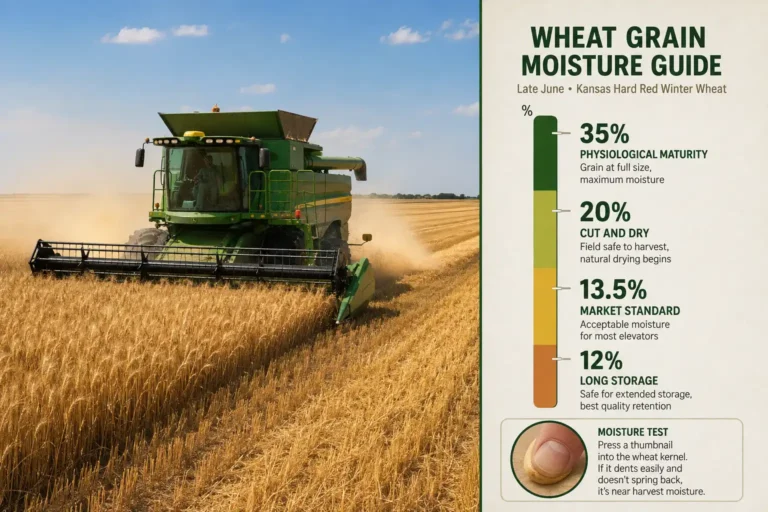
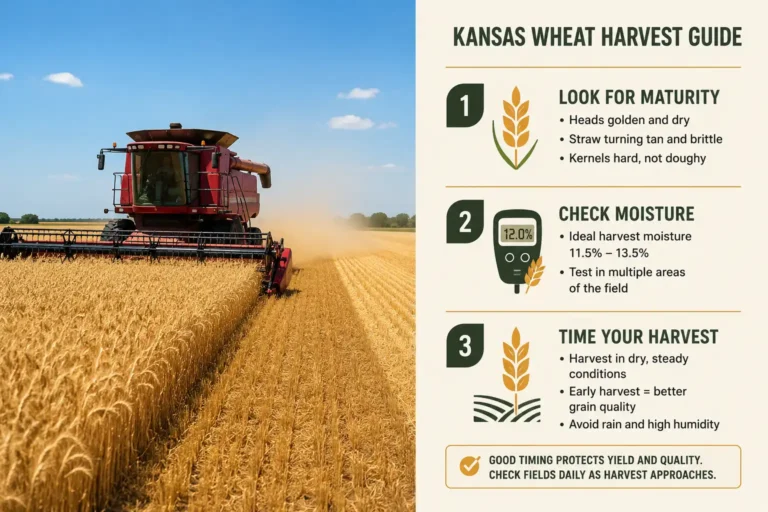
  • Combine cutting ripe Kansas wheat next to a scale marking 35 percent moisture at maturity, 20 percent for cut and dry, 13.5 percent market standard, and 12 percent for long storage

    When to Cut Wheat: Moisture, Stage, and Timing That Protect Yield

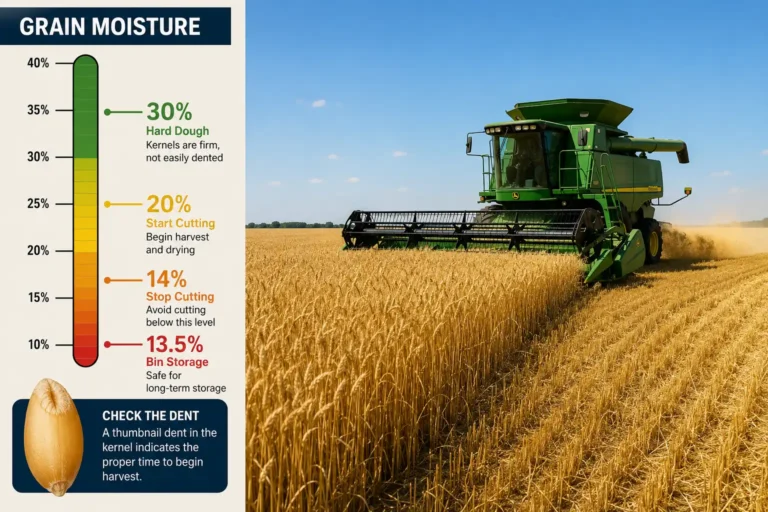
  • Spring wheat is fit to cut between 20 percent and 14 percent grain moisture, after hard dough near 30 percent, and stores safely at 13.5 percent.

    When to Harvest Spring Wheat: Moisture, Stage, and Timing

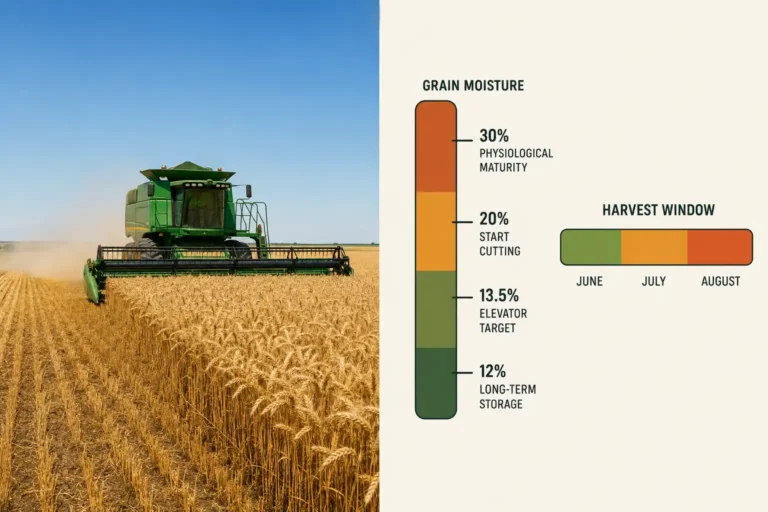
  • Combine cutting ripe golden wheat next to a chart showing grain moisture dropping from 30% at maturity to 20% at cutting and 12% for storage, with harvest spread across June, July, and August.

    When Do You Harvest Wheat: Moisture, Stages, and Timing

  • Winter wheat comes off from late May through July and spring wheat from August into September, cut near 13 percent grain moisture

    When Is Wheat Harvested? Timing, Stages, and Moisture Targets

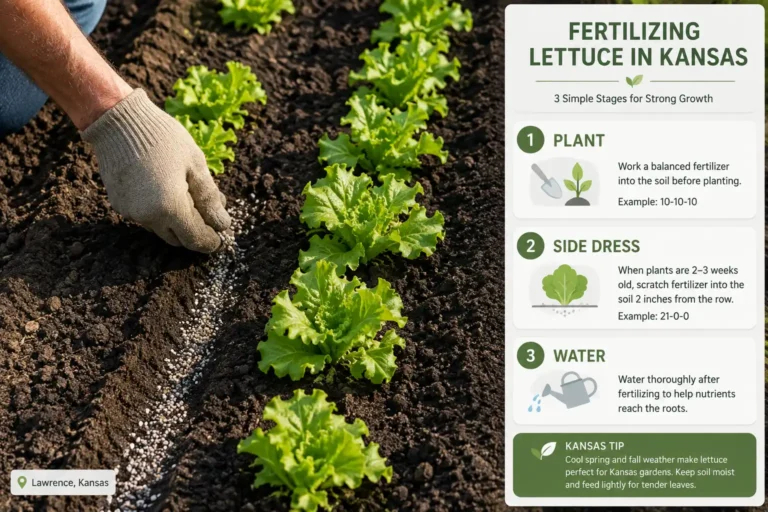
  • Balanced granular fertilizer raked into a lettuce bed before seeding, with panels marking a nitrogen sidedress at 3 to 4 inches of growth and light repeat feeding every three weeks

    How to Fertilize Lettuce: Rates, Timing, and Placement

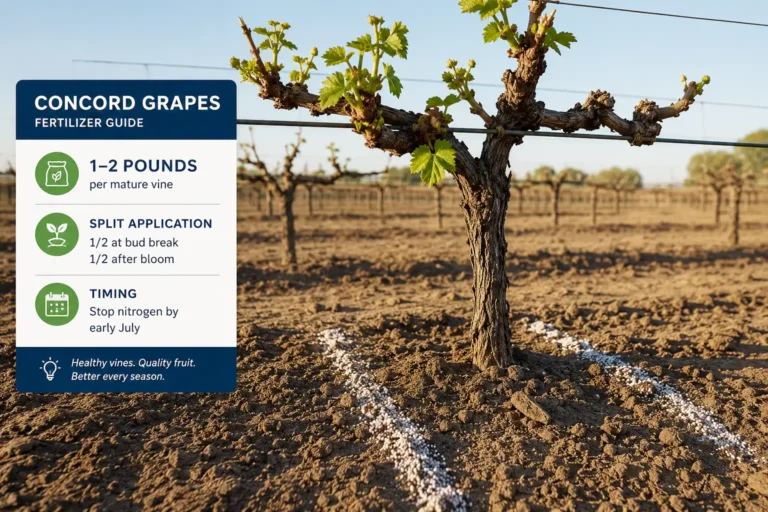
  • One to two pounds of balanced granular fertilizer banded sixteen inches out from a mature grape vine trunk at bud break, split with a second feeding after bloom and nitrogen stopped by early July

    How to Fertilize Grape Vines: Rates, Timing, and Placement

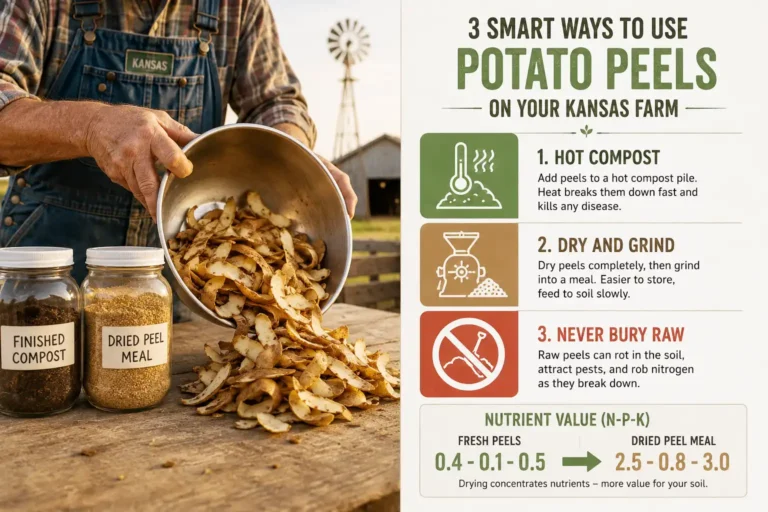
  • Fresh potato peels split into two useful routes, hot composting and drying into ground peel meal, with fresh peels testing near 0.4-0.1-0.5 and dried peels near 2.5-0.8-3.0

    How to Use Potato Peels as Fertilizer

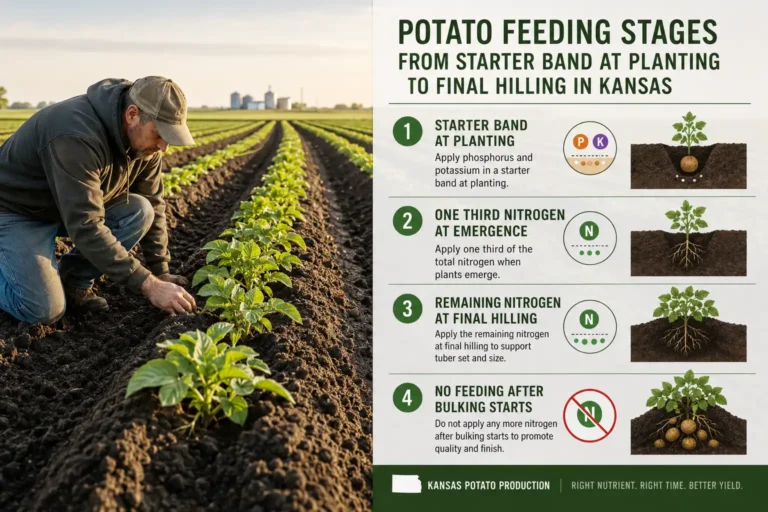
  • Starter phosphorus and potassium band at planting, a third of the nitrogen at emergence, the rest at final hilling, then no more nitrogen.

    How to Fertilize Potatoes: Rates, Timing, and Placement

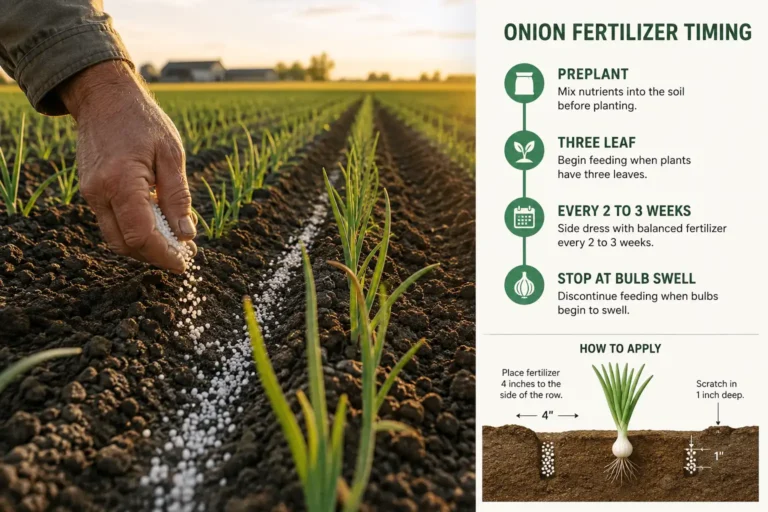
  • Granular nitrogen banded four inches beside an onion row with a season feeding timeline

    How to Fertilize Onions: Timing, Placement, and Rates

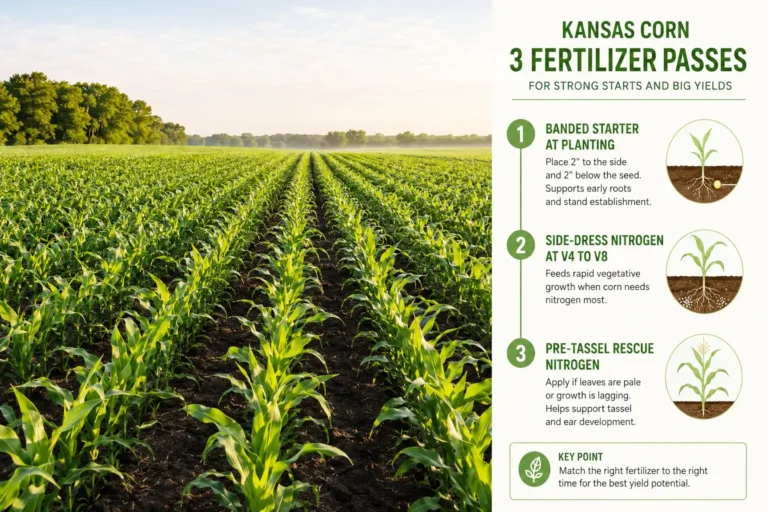
  • Corn fertilizer schedule showing banded starter at planting, the main nitrogen side-dress at V4 to V8, and a pre-tassel rescue application

    How to Fertilize Corn: A Stage by Stage Plan for Higher Yields

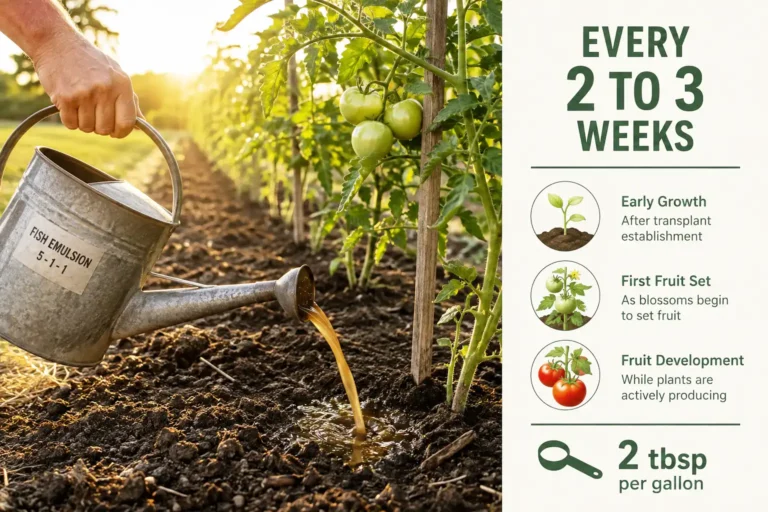
  • Fish emulsion watered into soil at a tomato plant base next to a panel showing a two to three week interval at two tablespoons per gallon.

    How Often to Use Fish Fertilizer on Tomatoes (2026 Schedule)

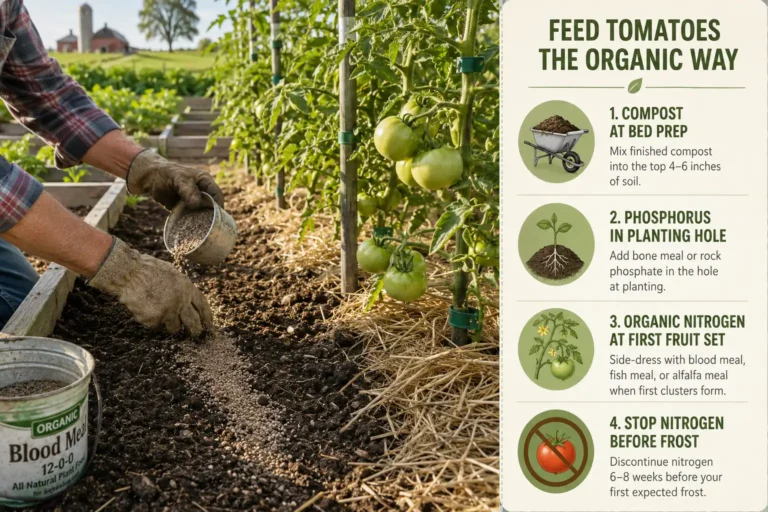
  • Compost worked into a tomato bed plus organic meal side-dressed beside the row, with the four stage natural feeding sequence from bed prep to the final nitrogen cutoff

    How to Fertilize Tomato Plants Naturally: A Full Season Plan

Page navigation

Previous PagePrevious 1 … 3 4 5 6 7 … 46 Next PageNext
Crop Farming

CropFarming.org

Grow · Harvest · Learn
Practical crop guides, planting and fertility recommendations, and equipment know-how, compiled from university extension research and USDA data.

Crop Guides

Grains & Cereals
Legumes
Root & Tuber Crops
Sugar Crops
Vegetables
Vine Crops

Crop Practices

Planting & Seeding
Soil & Fertility
Irrigation & Water
Pest & Disease
Weed Control
Harvest & Storage

Support

FAQs & Help
About Us
Contact
HTML Sitemap
XML Sitemap
Popular crop guides:
Corn Wheat Rice Oats Sorghum Soybeans Peanuts Potatoes Carrots Sugar Beets Sugarcane Tomatoes Onions Lettuce Grapes
© 2026 Crop Farming. All Rights Reserved. CropFarming.org participates in the Amazon Services LLC Associates Program. If you buy through our Amazon links, we may earn a small commission at no extra cost to you.
Policies: Affiliate Disclosure | Disclaimer | Review Policy | Privacy Policy | Cookie Policy | Newsletter Policy | Terms of Use
  • Home
  • About
  • Guides
  • Practices
  • Tools
  • Contact

Welcome to

Crop Farming

Subscribe and grow with us and become a member of CropFarming.org

click below to see contents