When Is Wheat Harvested? Timing, Stages, and Moisture Targets
Wheat ripens fast, and the window to cut it clean is short. Miss it and you give up test weight and bushels. When wheat is harvested depends on kernel stage and grain moisture, not a calendar date.
Most US winter wheat is harvested from late May through July, and spring wheat from August into September. Cut when kernels are hard, straw is golden, and grain moisture sits between 13 and 20 percent.
When Is Wheat Harvested Across the United States?
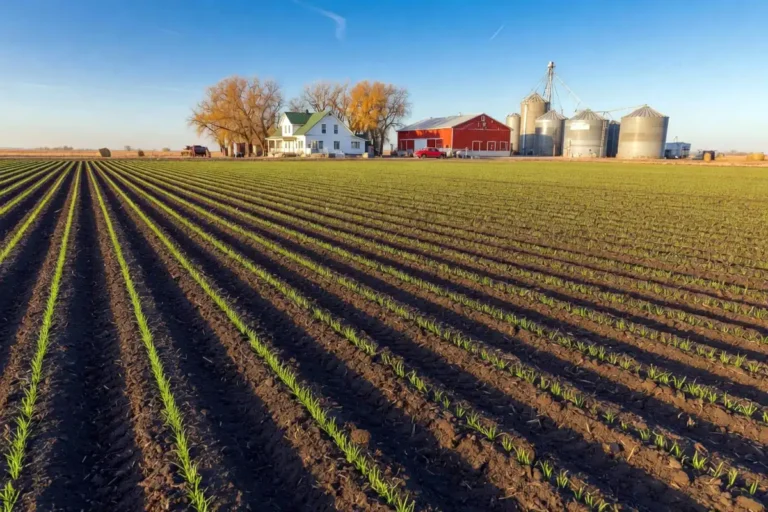
Winter wheat harvest opens in late May in Texas and wraps up in early September in Montana and the Pacific Northwest. The run moves south to north as heat units stack up. Custom crews follow that same line every summer.
Spring wheat runs later because it goes in the ground in April and May. North Dakota, Montana, and Minnesota growers usually start combining in early August.
| State | Typical winter wheat harvest |
|---|---|
| Texas | May 25 to July 7 |
| Oklahoma | June 5 to July 5 |
| Kansas | June 15 to July 25 |
| Missouri | June 15 to July 20 |
| Nebraska | June 26 to August 8 |
| Ohio | July 1 to August 4 |
| South Dakota | July 6 to August 12 |
| Washington | July 15 to September 5 |
| Montana | July 28 to September 8 |
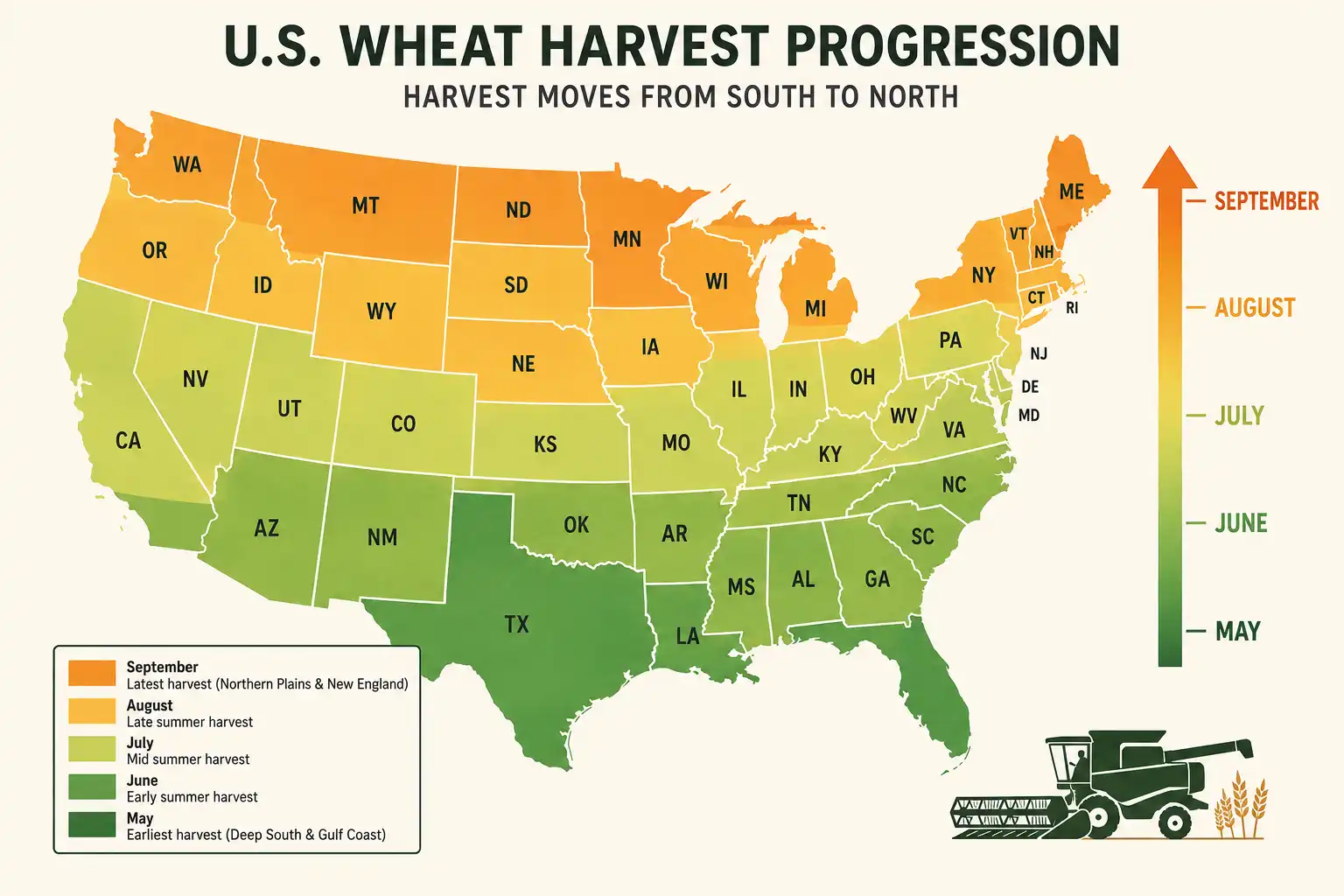
These USDA windows are averages. Actual dates shift a week or two either way, so treat them as a planning guide rather than a schedule. Fall seeding drives part of that spread, which is why the timing of planting winter wheat matters to your harvest date. Spring wheat behaves differently, and spring wheat seeding dates set an August start in most northern counties.
What Growth Stage Means Wheat Is Ready to Cut?
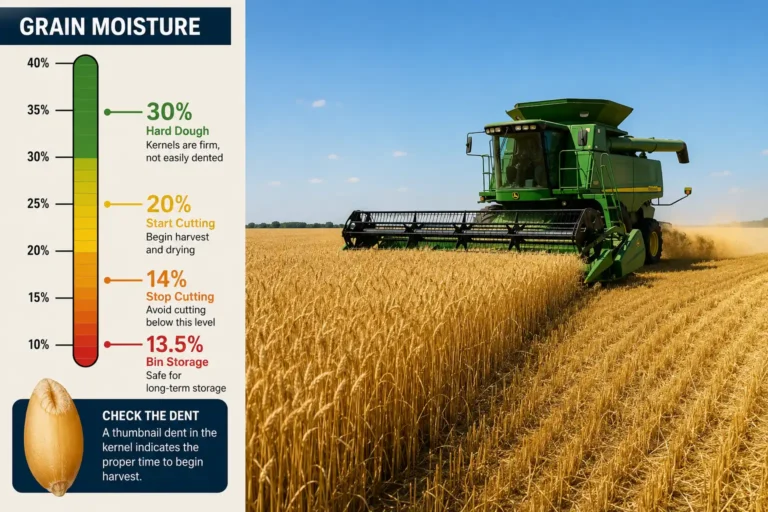
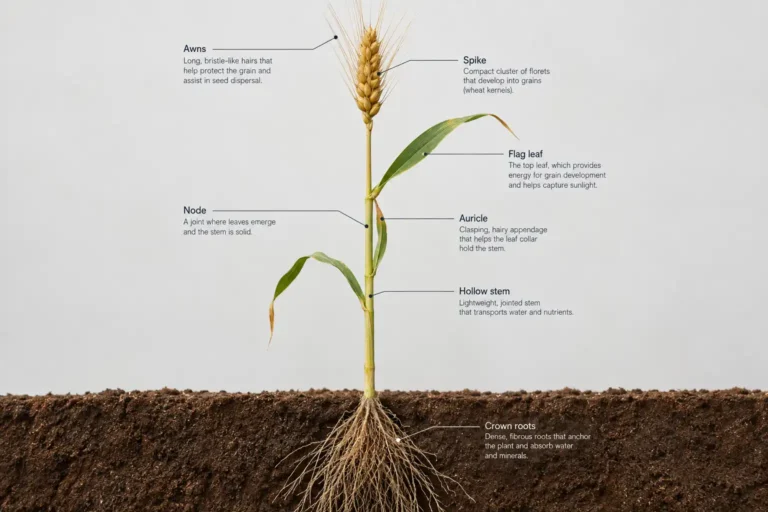
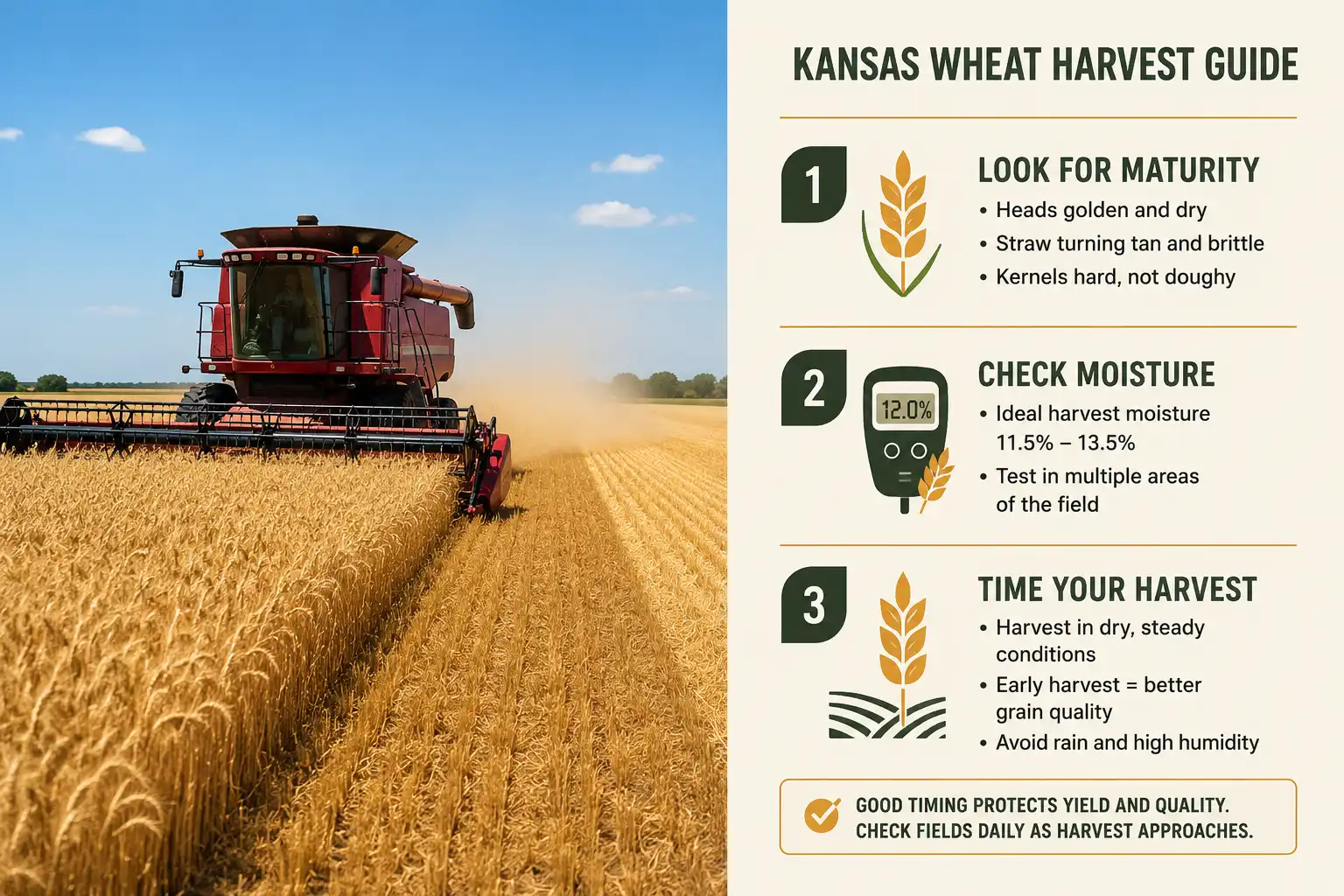
Wheat is ready to cut at Feekes 11.4, also written as Zadoks 92. At that point the kernel is hard and a thumbnail leaves no dent. The whole plant has gone golden, and the head tips downward.
Back up one stage and the picture changes. At Feekes 11.3 the kernel is hard but still splits under a thumbnail, and moisture runs near 30 percent. That is physiological maturity. Grain fill has stopped, so yield is already locked in.
Two field checks confirm maturity:
- Peduncle color. The short stem section just below the head loses green and turns pale yellow or brown. Water and sugar movement into the head has stopped.
- Pigment strand. Cut a kernel lengthwise. A dark line along the crease means the kernel has reached maximum dry weight.
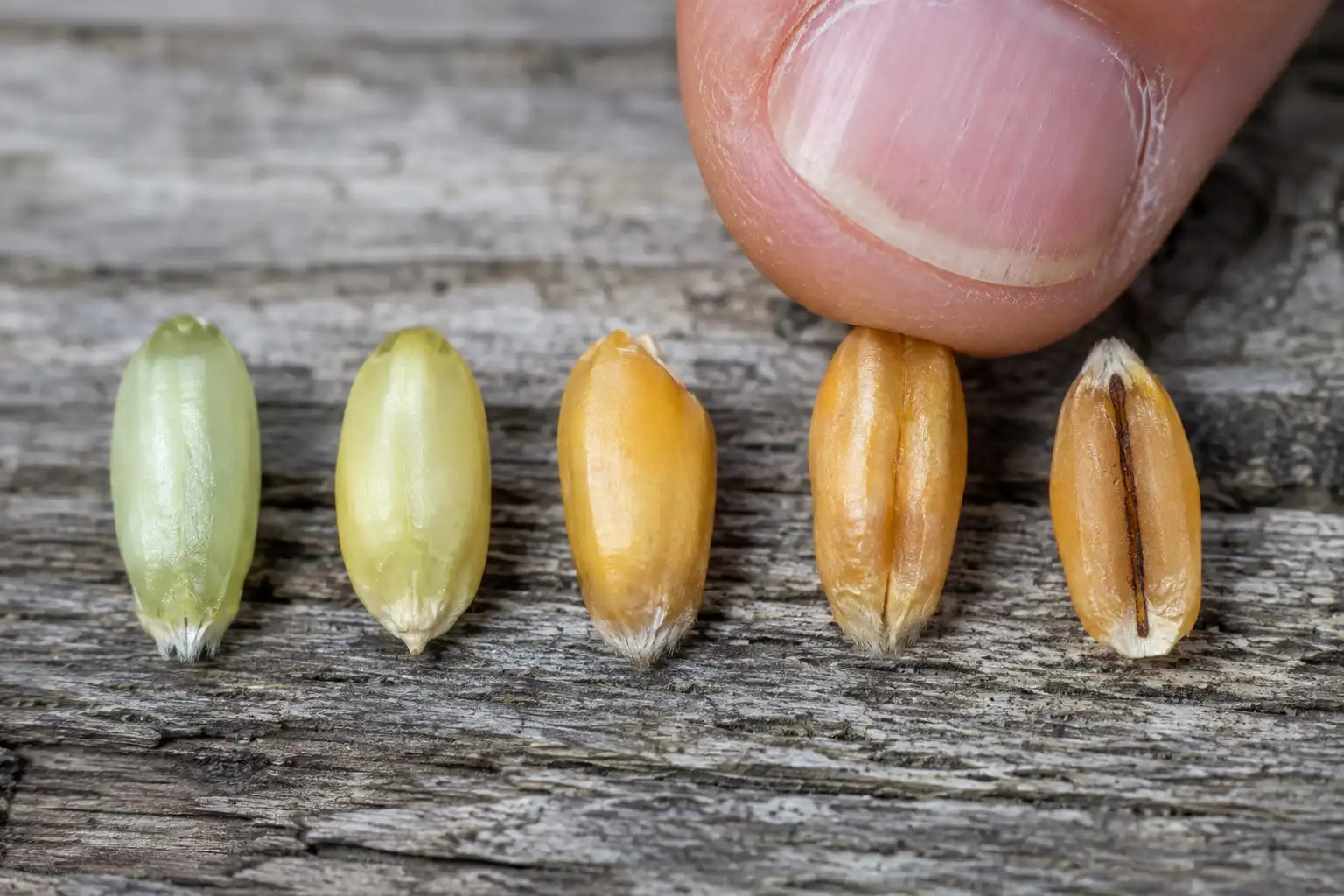
Sample 20 heads from at least five spots. Tillers ripen unevenly, and low spots in the field lag behind ridges by several days. Judge the whole field on the least mature area, not the driest corner.
What Moisture Should Wheat Be at Harvest?
Cut wheat between 13 and 20 percent moisture. Grain going into long term storage needs 13 percent, while 14 percent holds for under nine months. Both figures come from NDSU Extension and align with typical elevator dockage standards.
Ripe wheat sheds about 2.5 percent moisture per day in dry weather. So a field at 20 percent on Monday can sit near 14 percent by Wednesday afternoon. That speed is exactly why you scout daily once straw turns.
Starting at 20 percent buys real protection. Test weight holds higher, sprouting risk drops, and the bin fan finishes the job. Below 14 percent, though, the cylinder starts cracking kernels and shatter losses climb at the header.
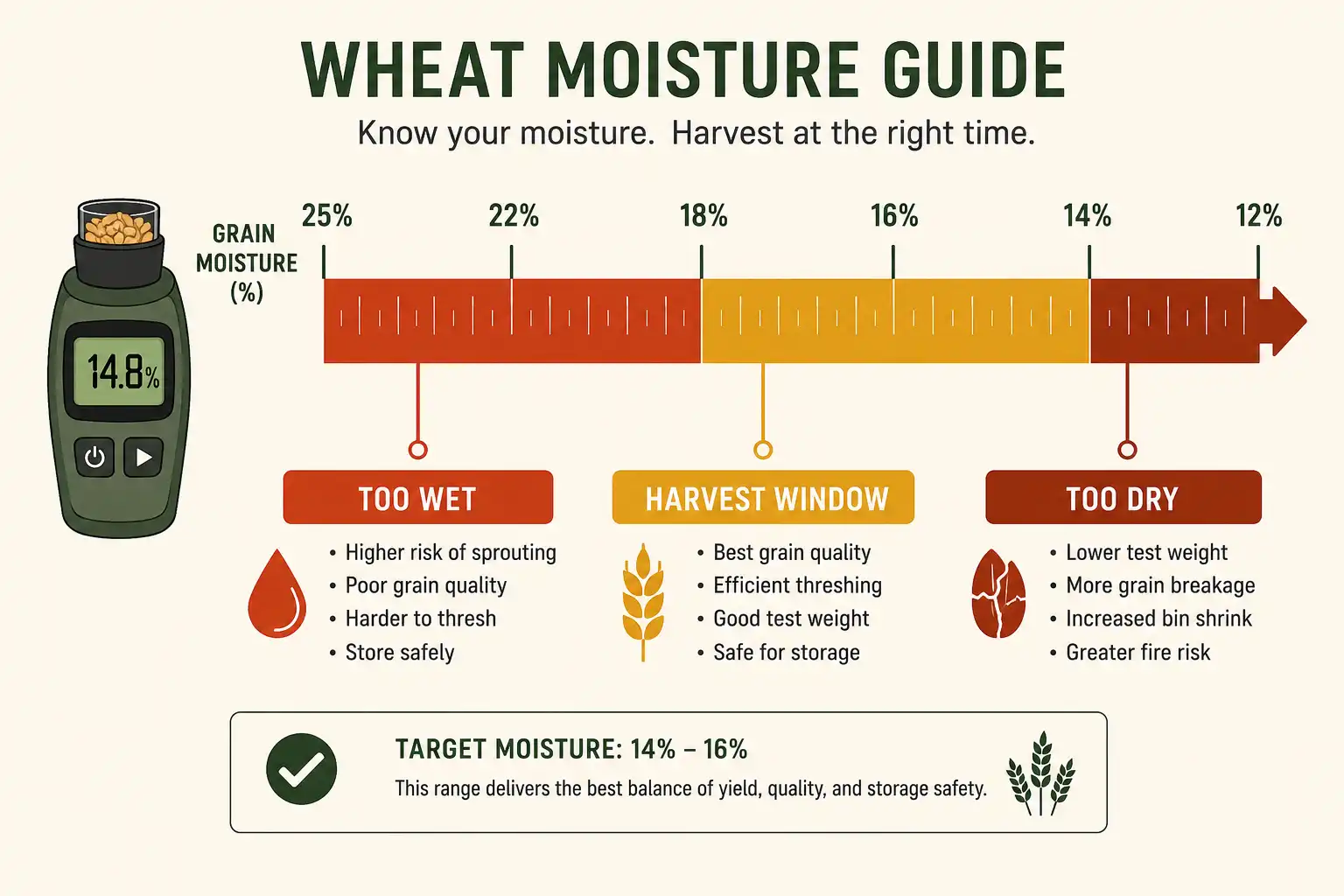
Keep a handheld grain moisture tester in the truck and pull samples from three spots before dropping the header.. Elevator readings arrive too late to change a decision. Check your buyer’s discount schedule above 14 percent first, because drying charges sometimes beat the dockage and sometimes do not.
How Long After Flowering Is Wheat Ready?
Wheat reaches harvest maturity roughly four to six weeks after flowering. Heat compresses that span and cool weather stretches it. A hot, dry June can pull harvest ahead by ten days, which is what much of the Great Plains saw in 2026.
Growing degree days explain the swing better than dates do. Wheat needs a set amount of accumulated heat between bloom and ripeness. So a warm spring pushes bloom early, and then a warm June shortens grain fill on top of that.
Track your own fields instead of the county average. Mark the date heading finishes, count forward five weeks, and start walking the field then. Knowing when crops are ready to cut always comes down to field checks over averages.
When Is Wheat Harvest in Kansas?
Kansas wheat harvest usually opens in early to mid June in the south central counties and finishes by mid July. It starts near the Oklahoma line, then moves north and west toward Nebraska. Kansas Wheat publishes daily progress reports through the run.
In northeast Kansas, wheat harvest generally runs the last week of June into early July. Southern counties beat me by two weeks most years.
The 2026 season ran early and rough. Warm, dry winter weather pushed the crop ahead, and by mid May much of the state was near maturity. First loads moved in Barton County on June 5. By June 28 the state hit 72 percent complete against a five year average of 52 percent, according to USDA National Agricultural Statistics Service progress reports.
Drought cut yields hard that year. Test weights held at 59 to 60 pounds in Sumner County, but farm averages ranged from 14 to 30 bushels per acre. Wheat comes off well before Kansas corn harvest, which gives you a clean shot at bin space and repairs.
How Do I Check a Field for Harvest Readiness?
Walk the field with a moisture meter, a pocket knife, and a one foot square frame. Follow these steps before the combine ever rolls:
- Pull heads from five locations. Include low ground and headlands, since those ripen last.
- Thumbnail 20 kernels per spot. No dent means harvest ready. A dent that holds means about 30 percent moisture.
- Test moisture on a combined sample. Mix the spots, then read it twice.
- Check the peduncle. Green under the head means grain fill continues.
- Scout for disease. Black kernel tips, white heads, or scabby florets change your storage plan.
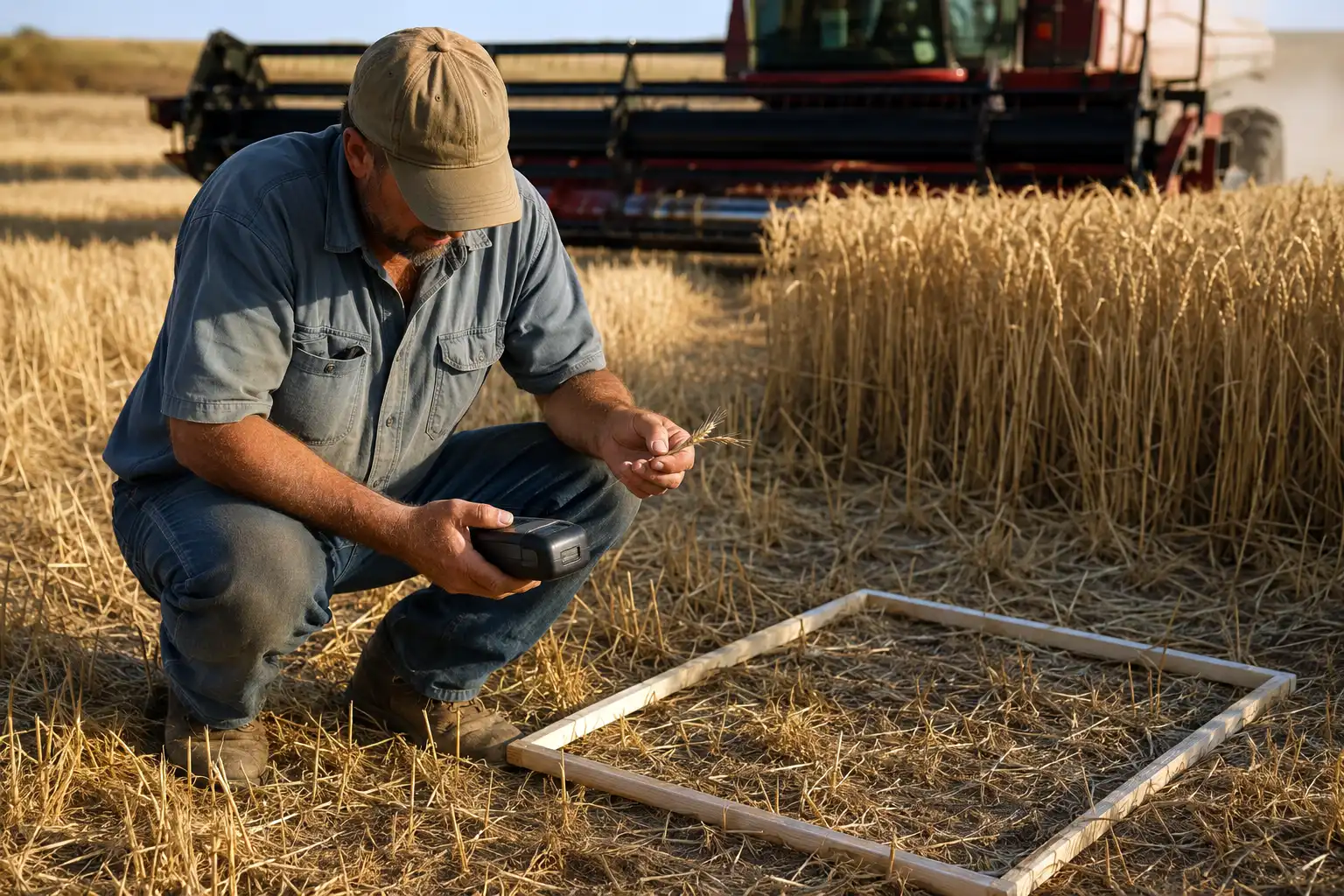
Once you start cutting, stop after 200 feet and measure loss. Count kernels in the square frame ahead of the header, then behind it. Twenty kernels per square foot equals one bushel per acre. Keep total losses under 2 percent of yield, and adjust ground speed and header height before you cover more acres.
What Happens If Wheat Harvest Is Delayed?
Delayed harvest costs quality first and bushels second. Standing ripe wheat loses value with every rain event, so the loss compounds instead of holding steady.
Four problems show up in order:
- Test weight slides. Each wetting and drying cycle knocks 1 to 3 pounds per bushel off test weight.
- Pre harvest sprouting starts. Rain on mature grain breaks dormancy and fires up alpha amylase. Falling numbers under 300 seconds trigger discounts, and milling buyers walk away.
- Lodging increases. Down wheat forces slow ground speed and a low header, which raises dirt and loss.
- Weeds green up. Late escapes clog the feederhouse and add moisture to the tank.
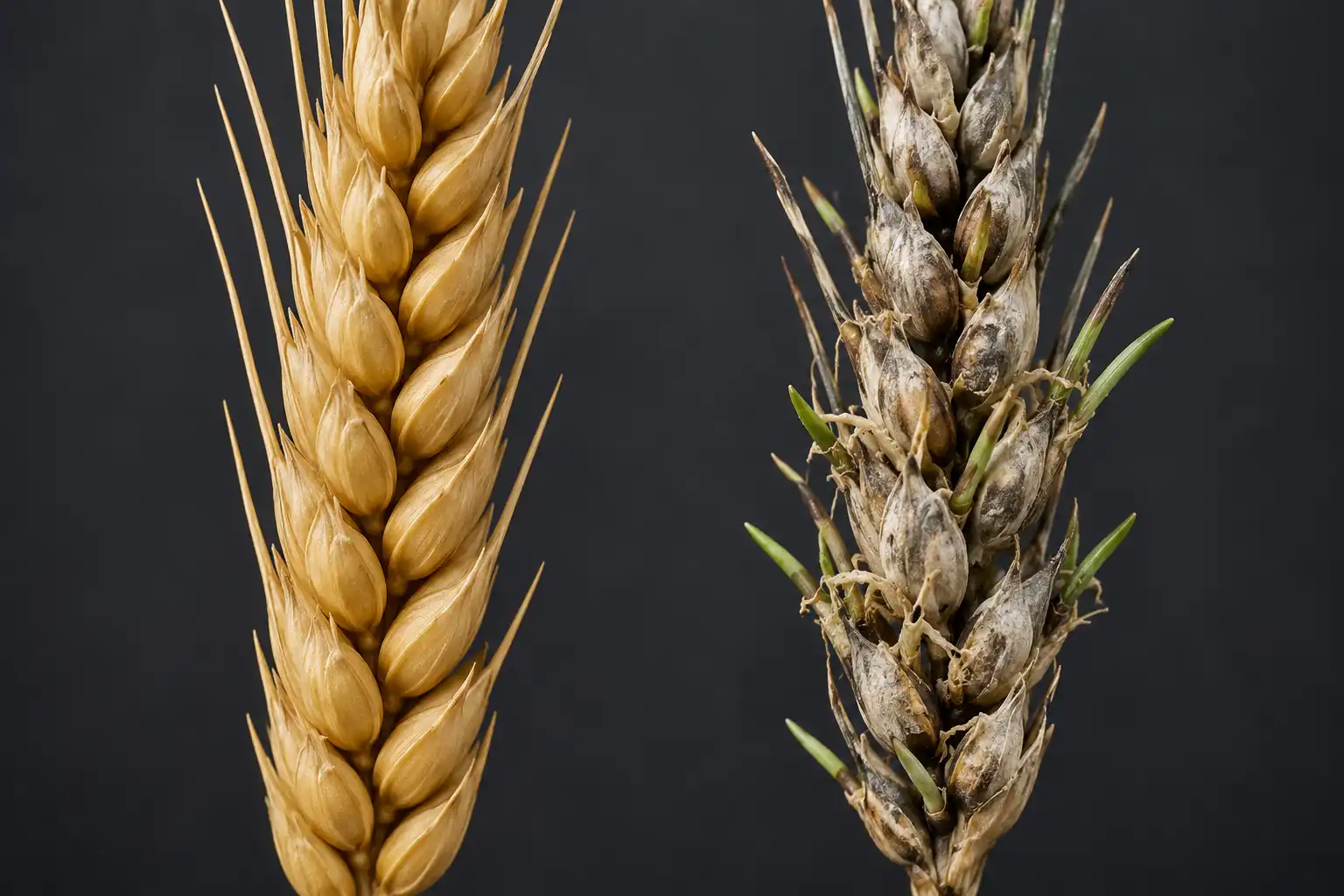
Variety matters here. Some hard red winter and hard red spring lines resist sprouting far better than others. Check that trait when you order seed, especially if late June storms are normal for your area. Head scab also worsens the longer a mature crop stands.
Should You Speed Dry Down With a Pre Harvest Herbicide?
Only after the crop passes hard dough at 30 percent moisture or less. Apply earlier and you cut yield, drop test weight, and leave green kernels in the tank. NDSU work found termination at 45 percent moisture cost 1 to 2 pounds of test weight and about 10 percent of yield.
Glyphosate at that stage targets perennial weeds like Canada thistle and field bindweed. It does not dry wheat much faster on its own, so expect a couple of days at best. Most labels require seven days between application and harvest.
Two hard limits apply. Never treat wheat grown for seed, and stage on the least mature part of the field. Early applications risk residues above tolerance, which creates real marketing trouble. Fewer than 3 percent of US wheat acres get a pre harvest treatment, so this stays a rescue tool for weedy fields, not routine practice.
Swathing is the other option, mostly in the northern Plains. Swath at or just after physiological maturity, and do it in early morning or late evening when dew reduces shattering.
What to Do Right After the Wheat Comes Off
Get grain cooled and get residue decisions made in the same week. Both jobs pay better than they look.
Clean and inspect bins before the first load. Then run aeration until grain temperature sits within 10 degrees of average outdoor air. Wheat entering the bin in July often reads 90 degrees or higher, and warm grain invites insects. If you binned at 16 to 17 percent, keep fill depth under nine feet so natural air drying actually works. Sound crop storage practices decide whether that grain grades the same in January.
Stubble decisions come next. Southern and eastern growers plant double crop soybeans right behind the combine. Across the central Plains, standing stubble catches snow and holds moisture for the next crop, so many growers leave stubble tall and skip tillage. Careful handling in those first two weeks protects the test weight you worked for all season.
Bottom Lines
Around the third week of June, it’s time to stop watching the calendar and start walking fields daily. Thumbnail test first, moisture meter second, forecast third. If a five-day rain event is in the forecast and the wheat reads 19 percent moisture, cutting it and drying it down afterward is the safer call. Falling number is not worth risking.
Start when the least mature part of the field says go. That single habit protects more grain quality than any combine setting.