When to Cut Wheat: Moisture, Stage, and Timing That Protect Yield
Cutting too early costs you drying money. Cutting too late costs you test weight and grain on the ground. Knowing when to cut wheat comes down to three things: grain moisture, kernel stage, and the forecast.
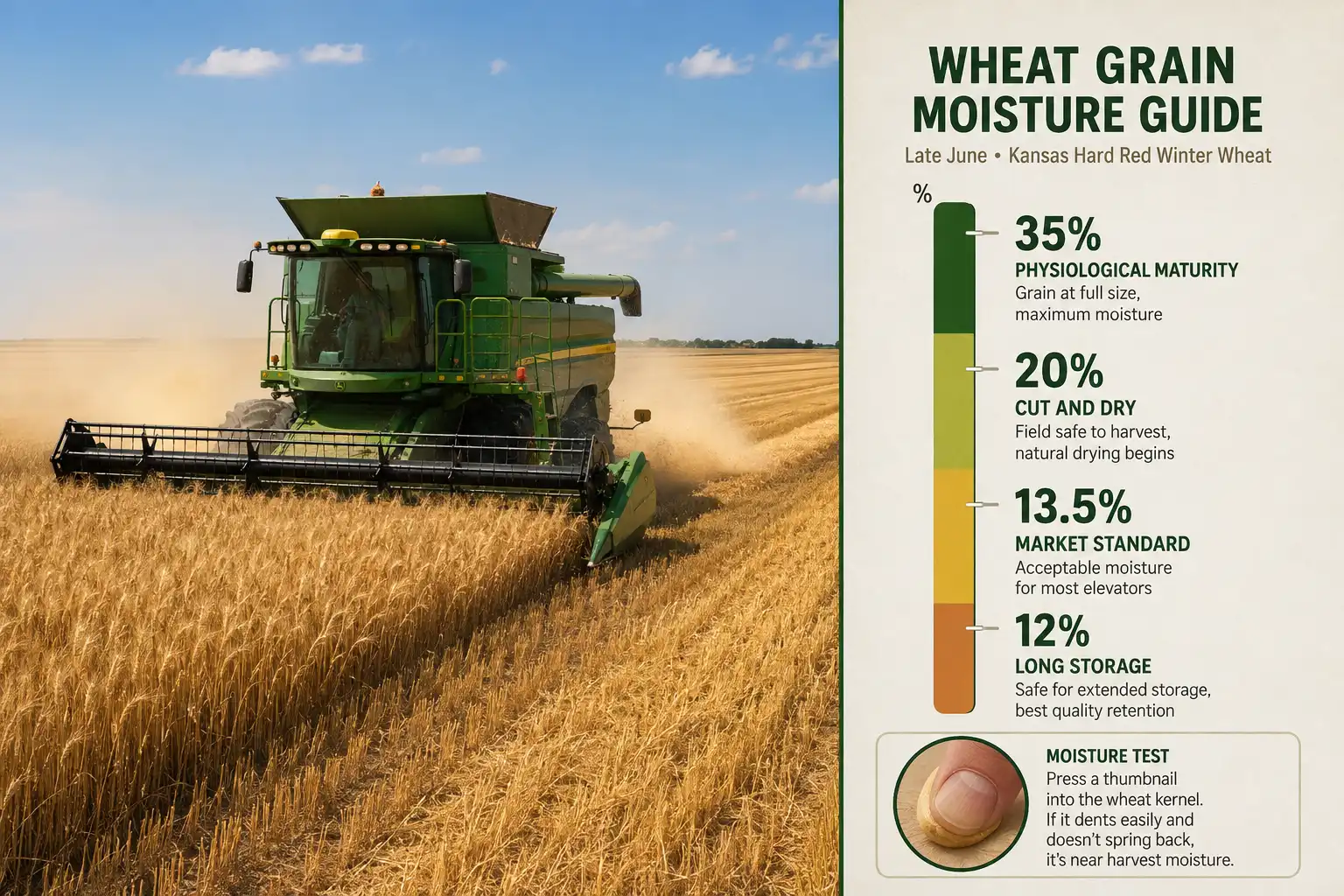
The time to cut wheat for grain is at 13 to 14 percent moisture, which is combine ripe. Start at 18 to 20 percent when you can dry the grain. For hay, cut between boot and soft dough.
Learn more: Spring Wheat Harvest Timing
What Moisture Should Wheat Be When You Cut It?
Cut wheat for grain at 13 to 14 percent moisture when the load goes straight to the bin. That range threshes clean and stores without a dryer.
The market standard sits at 13.5 percent. Above that number, the elevator docks you. Some delivery points turn wet loads away when they have no drying capacity. Below 13 percent, you give away weight, because drier grain takes more kernels to fill a 60 pound bushel.
Planning to hold grain past next summer? Then push down to 12 to 12.5 percent and cool the bin with aeration.
Keep a grain moisture tester in the truck and check three spots per field before the header drops. Meter readings beat eyeballing straw color every time.
Anything above 20 percent turns rough in a hurry. Cylinder impact cracks kernels, the sample grades worse, and drying charges climb with every point you pull out.
How Do You Tell Wheat Is Ready to Cut?
Check the kernel, not the calendar. Four field tests place the crop for you:
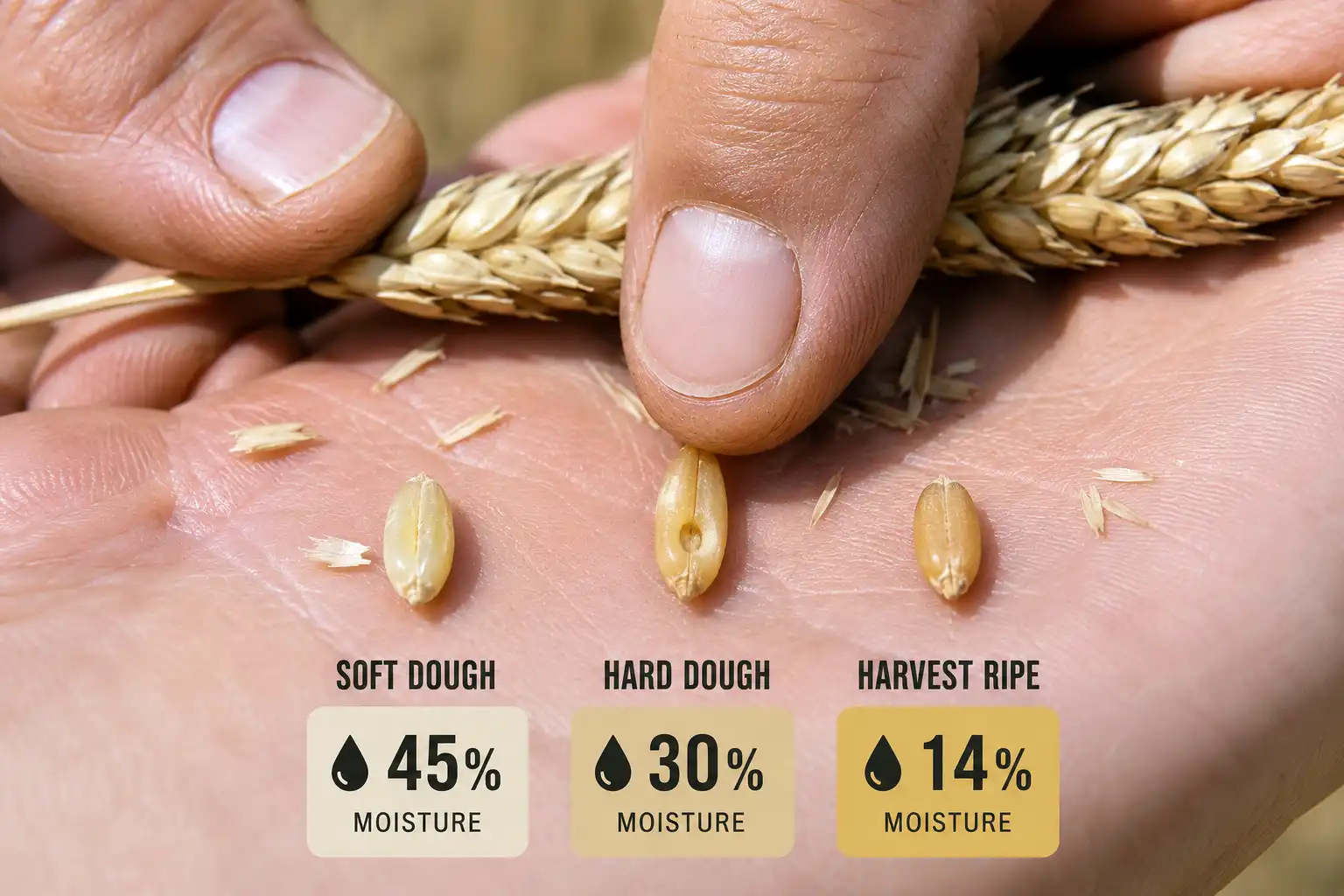
- Thumbnail test. Press a nail into a kernel. At hard dough the dent holds. At harvest ripe the kernel turns too hard to mark.
- Bite test. A combine ripe kernel cracks between your teeth. If it mashes or feels doughy, wait.
- Peduncle color. The short stem right under the head fades from green to tan at maturity.
- Pigment strand. Slice kernels crosswise. A dark strand along the crease means grain fill has stopped.
Then confirm with a meter. Kernels in one head finish at different times, and the middle of the spike matures first. So pull heads from several spots before deciding.
Walk the low ground and the hilltops separately. Thin, drought stressed areas ripen days ahead of thick stands, and that spread decides which field you cut first.
When Does Wheat Reach Physiological Maturity?
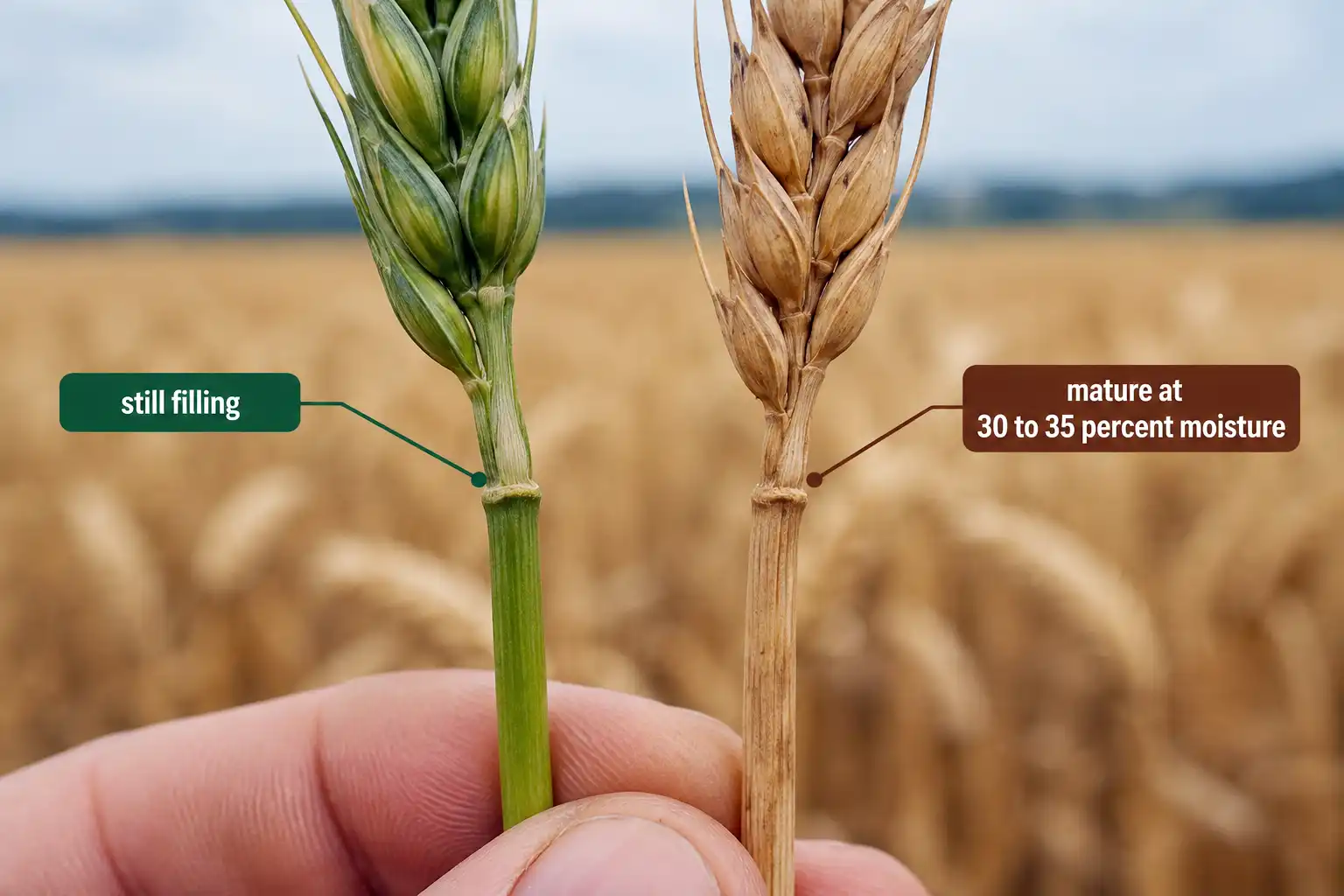
Wheat reaches physiological maturity at 30 to 35 percent grain moisture. That figure comes from the K-State Research and Extension wheat production handbook. Grain fill stops at that point. The crop has already fixed its yield and kernel weight, so no pass across the field adds bushels after that.
Color tells you first. Green leaves the glumes and the peduncle, then the whole head fades to tan. On the Feekes scale, that puts you at 11.3 heading into 11.4.
Past maturity, wheat sheds moisture fast, near 2.5 points per day in hot, dry Great Plains weather. Ten to fourteen days usually separates maturity from combine ripe grain. One 100 degree afternoon with a south wind can shorten that stretch.
From maturity forward, your job changes. You quit building yield and start defending it.
What Month Do You Cut Wheat?
Most US winter wheat comes off between mid May and mid July. Spring wheat follows from late July into early September.
| Region | Typical cutting window |
|---|---|
| Texas, southern Oklahoma | Mid May to early June |
| Kansas, central Oklahoma | Early June to mid July |
| Missouri, Illinois, Ohio (soft red) | Late June to mid July |
| Colorado, Nebraska, Wyoming | Early to late July |
| North Dakota, South Dakota, Montana (spring wheat) | Late July to early September |
| Pacific Northwest | August |
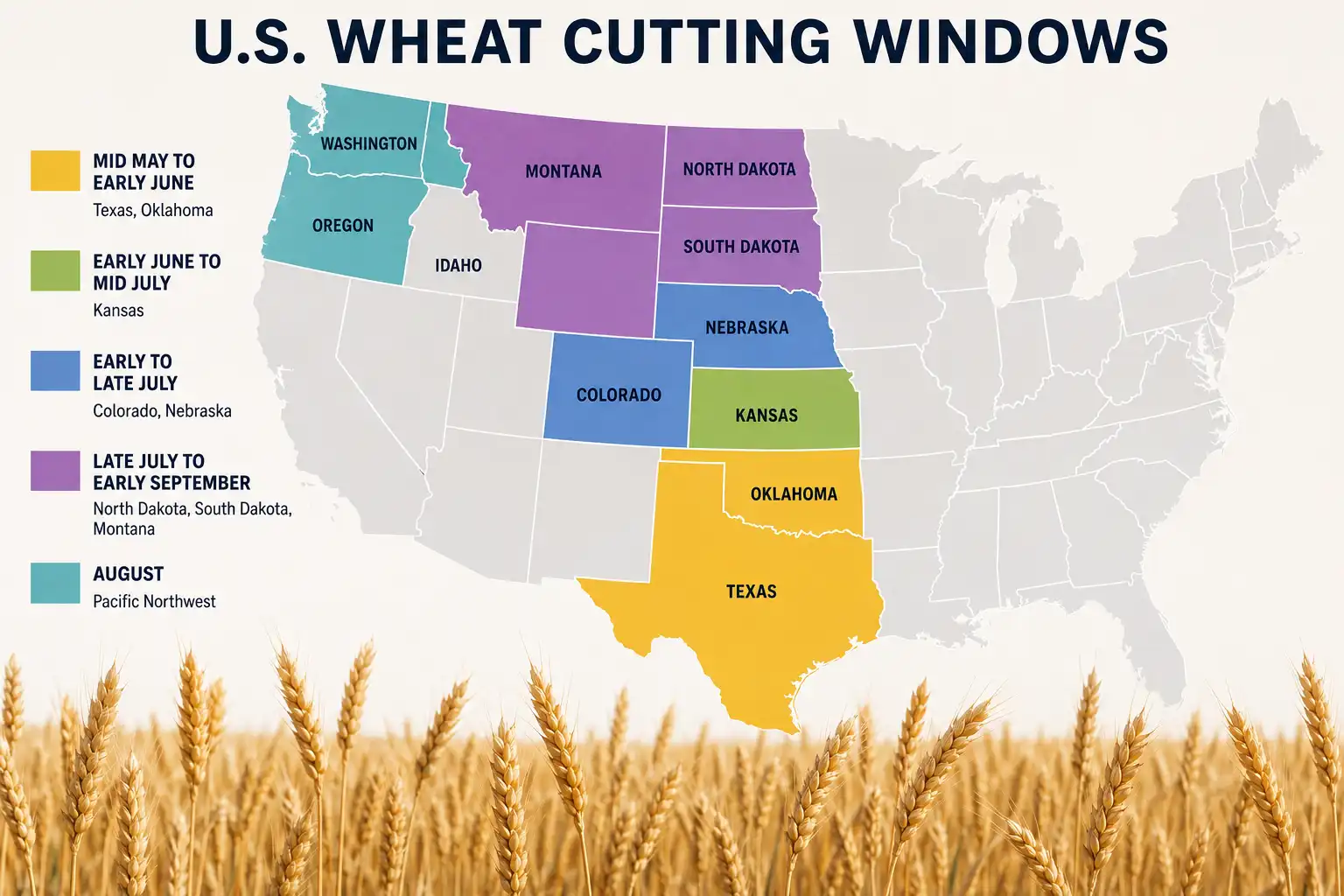
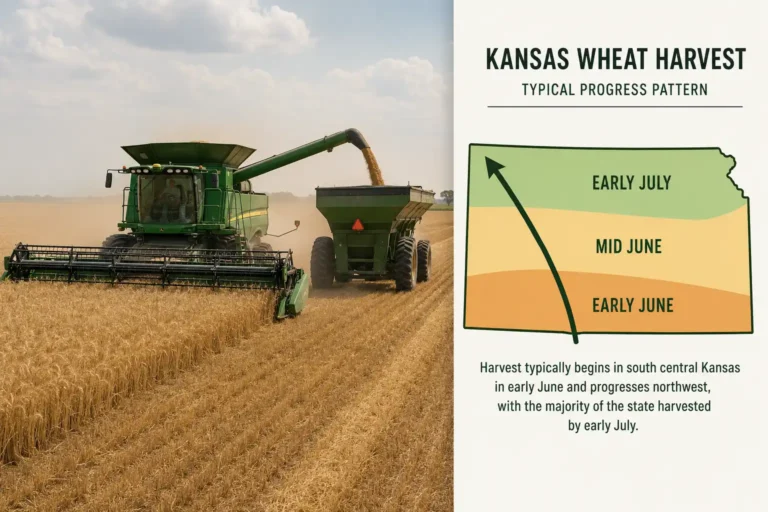
Kansas harvest opens in the south central counties, then moves north and west as the crop ripens. On ground, roll the third week of June.
Seasons shift that window hard. In 2026, a warm winter and a dry, windy spring pushed the Kansas crop weeks ahead of normal. Farmers were test cutting in late May before mid June rains stalled everything.
Your fall seeding date matters too. Fields drilled early in the winter wheat planting window head sooner. They also ripen ahead of late drilled acres, so set the cutting order by the drill calendar.
Should You Cut Wheat Early and Dry It?
Yes, when weather or disease threatens the crop. Ohio State research compared harvest moistures. Cutting near 20 percent and drying the grain returned about the same profit as waiting for 13 percent. Above 23 percent, drying cost and lower test weight ate the advantage.
Cut early and dry when:
- Rain sits in the forecast on mature grain
- Fusarium head blight showed up, since vomitoxin builds in wet wheat left standing
- You planted a sprout prone variety
- Double crop acres need the field cleared
Growers running beans behind wheat gain yield for every day earlier they drill. Meanwhile, planting soybeans late pulls that yield down once the calendar slides into July. So cutting at 18 percent and running the dryer often pays better than a clean sample two weeks later.
Run the math on your own dryer, though. Fuel, shrink, and handling cost real money per point removed.
What Happens If You Cut Wheat Too Late?
You lose grain, quality, and price. Ripe wheat standing in the field faces five problems:
- Shattering and header loss. Brittle heads drop kernels ahead of the cutterbar.
- Lodging. Storms flatten dry straw, and downed wheat slows the combine to a crawl.
- Test weight decline. Each wetting and drying cycle knocks 1 to 3 pounds per bushel off the sample.
- Preharvest sprouting. Rain on mature grain triggers alpha amylase, which breaks starch down into sugar.
- Vomitoxin. In scabby fields, toxin levels climb the longer wet grain waits.
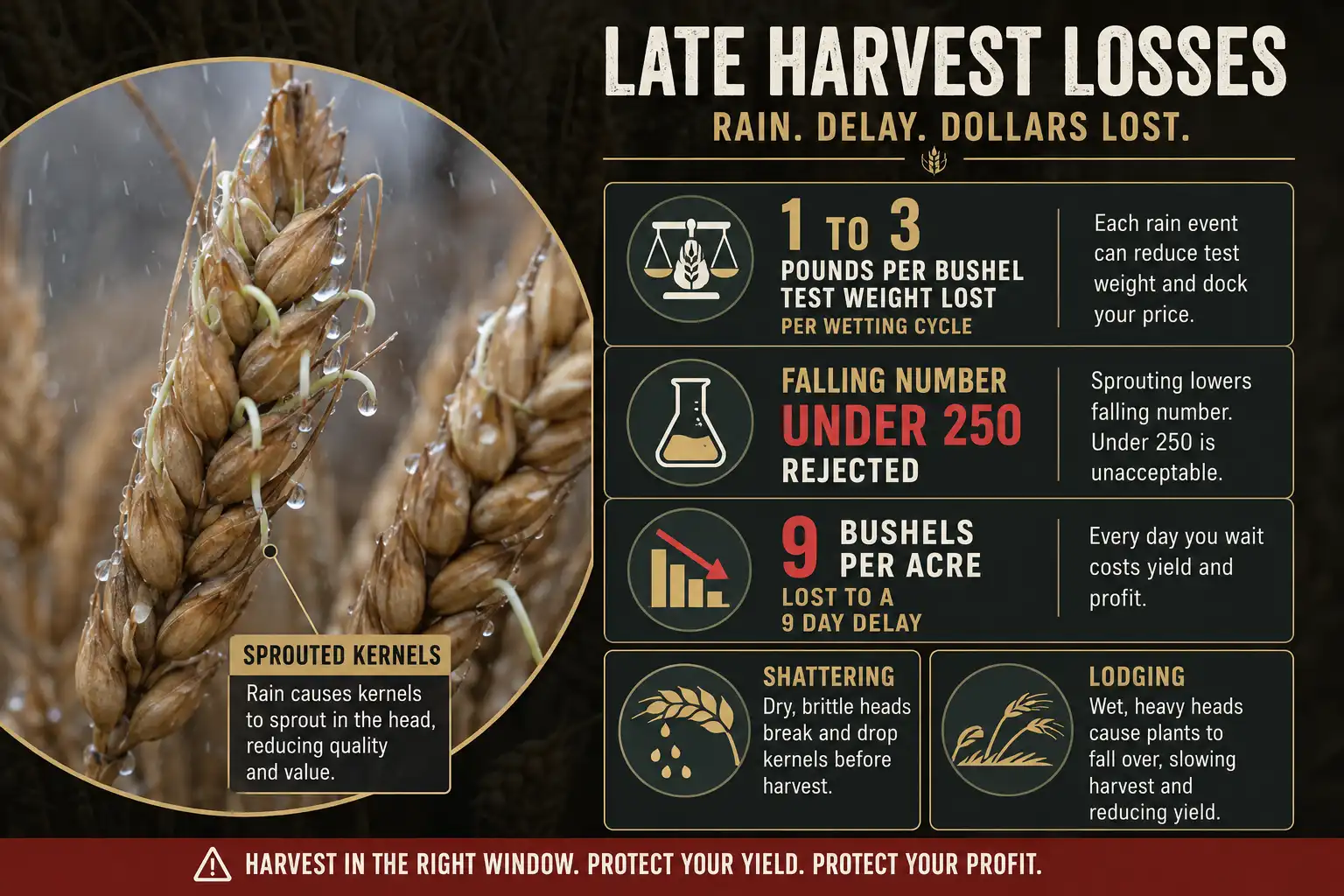
Falling number measures sprout damage in seconds. Millers want 300 or better, and scores under 250 draw heavy dockage or flat rejection. Combine settings cannot repair it, because the damage happens out in the field.
Ohio State compared a June 29 harvest with a July 8 harvest after half an inch of rain fell between them. The later cut gave up 9 bushels per acre and 2.9 pounds per bushel of test weight.
Hard red winter wheat holds up against sprouting better than soft white classes. Still, no variety survives repeated soaking, so timeliness beats genetics here.
When Should You Swath Wheat Instead of Straight Cutting?
Swath wheat when the crop matures unevenly or green weeds keep the sample tough. Northern spring wheat growers lean on it most.
Lay the swath down at or just after physiological maturity, near 30 to 35 percent kernel moisture. Yield, test weight, and protein all hold at that stage. Then combine the windrows once grain reaches 13 to 14 percent, usually four to ten days later.
Swathing carries its own risk. Grain in a windrow sprouts more readily than standing grain when rain or heavy dew settles in. Wind rolls light swaths across the field. You also add a pass and burn the fuel that goes with it.
When to spray a preharvest herbicide
Spray after hard dough, with grain at 30 percent moisture or less, and at least seven days ahead of cutting. The thumbnail test confirms the stage. Spray earlier and you cut grain fill short, drop test weight and protein, and risk glyphosate residue above market limits. Skip preharvest glyphosate on seed wheat entirely, because germination suffers.
When to Cut Wheat for Hay or Silage
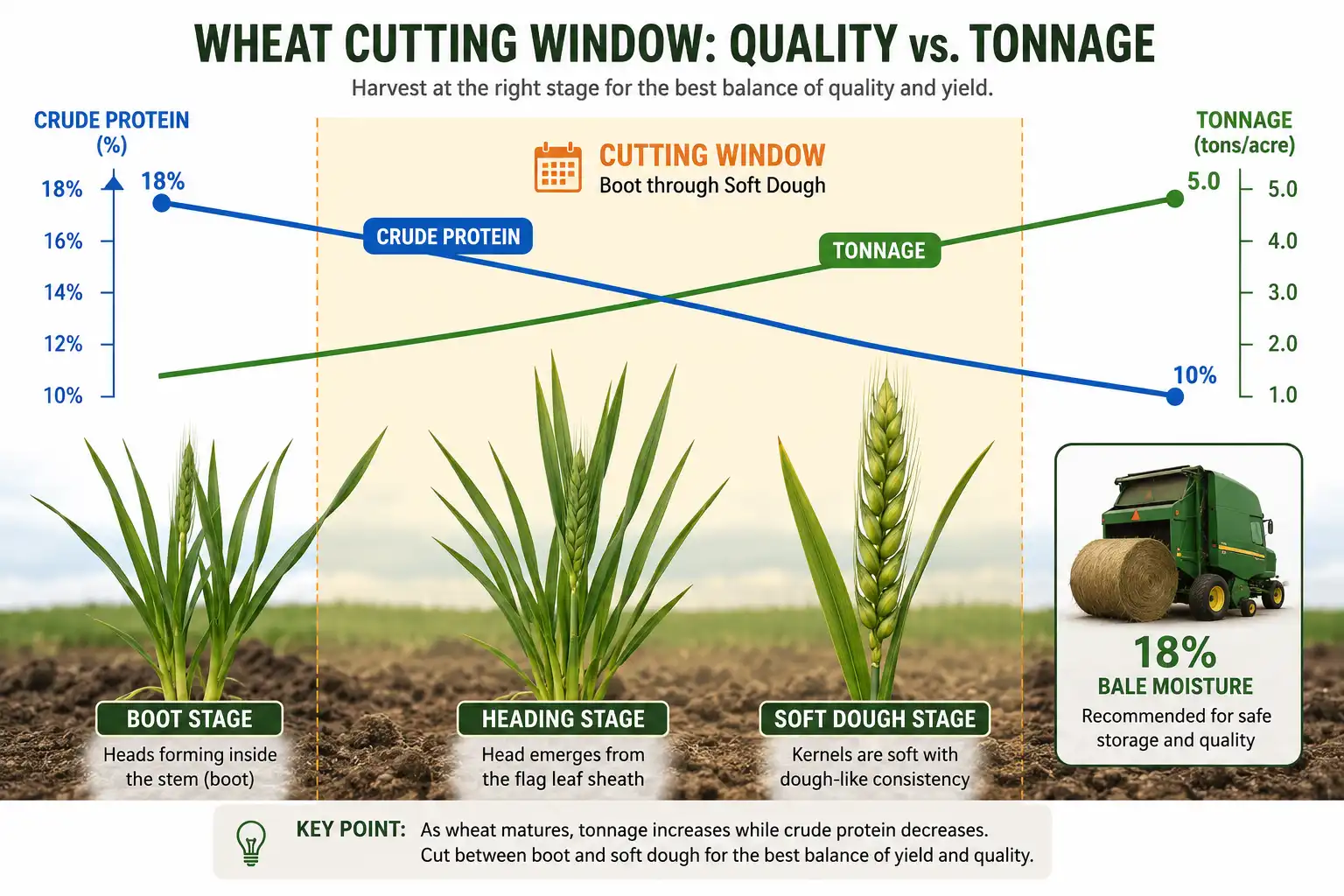
Cut wheat hay between boot and soft dough. Let the livestock class decide where in that window the mower drops.
Boot stage delivers the best feed value. Crude protein runs near 18 percent, fiber stays low, and growing calves or horses do well on it. Tonnage comes in light, and hollow stems hold a lot of water.
Soft dough roughly doubles tonnage. Protein slides to about 10 percent, which suits dry cows and feedlot rations better than young stock. Nebraska Extension forage trials show that tradeoff clearly across both wheat and rye.
Rules on forage acres:
- Pick beardless varieties if you plan to cut past full heading, since awns irritate mouths
- Bale round bales at 18 percent moisture or less, small squares at 20 percent or less
- Wilt to 50 to 60 percent moisture for baleage and 60 to 65 percent for chopped silage
- Direct chop at soft dough when field moisture cooperates
- Test drought or frost stressed wheat for nitrates before feeding it free choice
- Read every herbicide label for hay and grazing restrictions before the mower runs
Curing takes longer than alfalfa, so build in an extra day. Conditioner rolls crimp those hollow stems, which is what actually moves water out. Oats behave the same way, and stage targets for cutting oats for hay line up closely with wheat.
When to Cut Wheat Grown as a Cover Crop
Terminate cover crop wheat before jointing if you need to bank soil moisture for the cash crop. Boot stage gives you the most biomass for residue cover and weed suppression.
Cut, roll, or spray before pollen shed finishes. Once kernels hit the milk stage, that seed turns viable. Then volunteer wheat shows up in your corn or beans next season.
On dry ground, termination comes early. Every extra week of green growth pulls water the row crop will want in July.
What Time of Day Should You Cut Wheat?
Start after the dew lifts, usually mid morning, and expect grain moisture to swing 2 to 3 points across the day.
Humidity drives that swing more than air temperature. During a wet stretch with foggy mornings, wheat stays tough until late afternoon. Kansas crews in those years often cut from four in the afternoon until close to midnight.
Watch the sample, not the clock. Once evening moisture climbs back past 14 percent, shut down instead of binning grain that will heat.
The Bottom Lines
Wheat cutting comes down to three checks. Watch the peduncle for color, test kernels with a meter, then read the seven day forecast.
If the week looks dry, wait for 13 to 14 percent and haul straight in. If rain sits on top of ripe grain, start at 18 to 20 percent and dry it down. Either way, the crop moves into crop storage cool and dry, which protects the quality built over the course of the season.