Skip to content
crop farming
  • About
  • GuidesExpand
    • Crop Guides

      Grains & Cereals
      Corn
      Oats
      Rice
      Sorghum
      Wheat
      Root & Tuber Crops
      Carrots
      Potatoes
      Sugar Beets
      Vine Crops
      Grapes
      Legumes
      Peanuts
      Soybeans
      Sugar Crops
      Sugarcane
      Vegetables
      Lettuce
      Onions
      Tomatoes
  • Practices
  • Tools
  • Contact
Search
crop farming

Crop Guides

Home » Crop Guides » Page 3
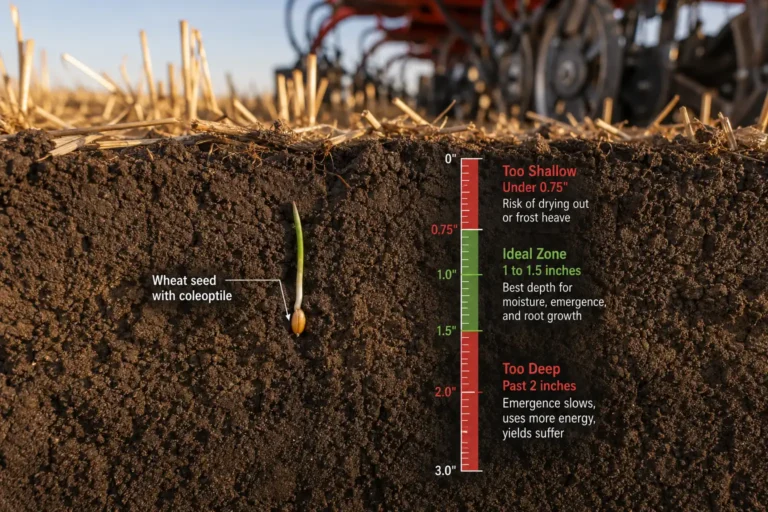
  • Wheat goes 1 to 1.5 inches deep in moist soil, shown in a soil profile where a ruler marks the shallow, correct, and too deep placement zones.

    How Deep to Plant Wheat: Depth Chart by Soil and Moisture

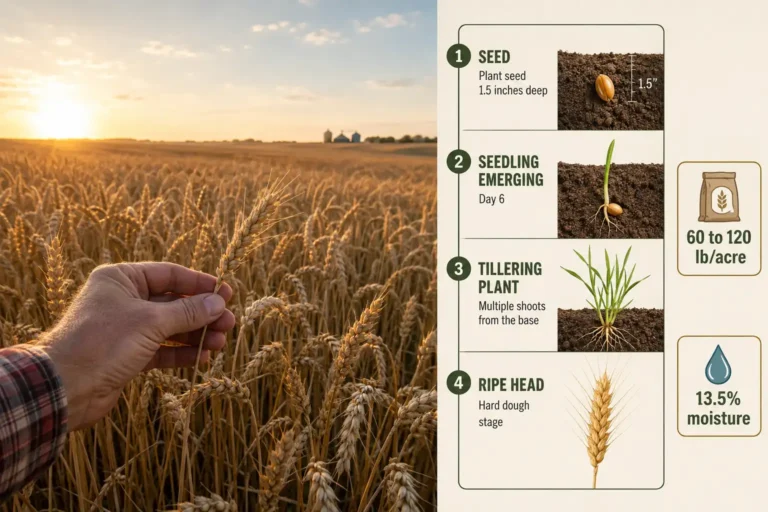
  • Wheat grows from seed drilled 1.5 inches deep into a firm seedbed, emerging in about six days, tillering through fall, then ripening to golden heads ready to cut near 13.5 percent moisture

    How to Grow Wheat From Seed: A Complete Guide for 2026

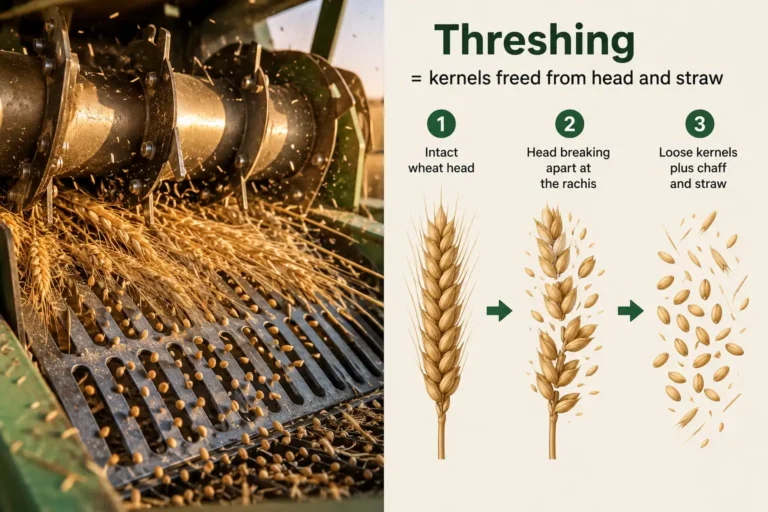
  • Threshing frees wheat kernels from the head and straw by rubbing the crop between a spinning rotor and a fixed concave, shown with the three stages of a wheat head breaking apart

    What Is Threshing Wheat? How Grain Comes Loose From the Head

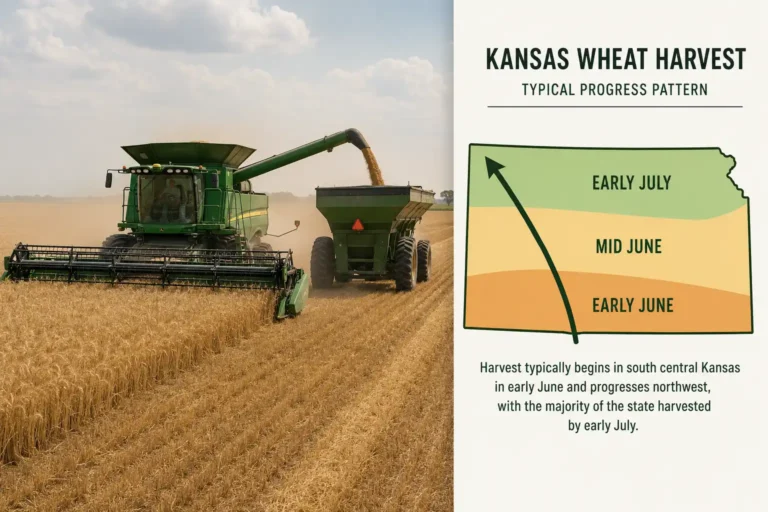
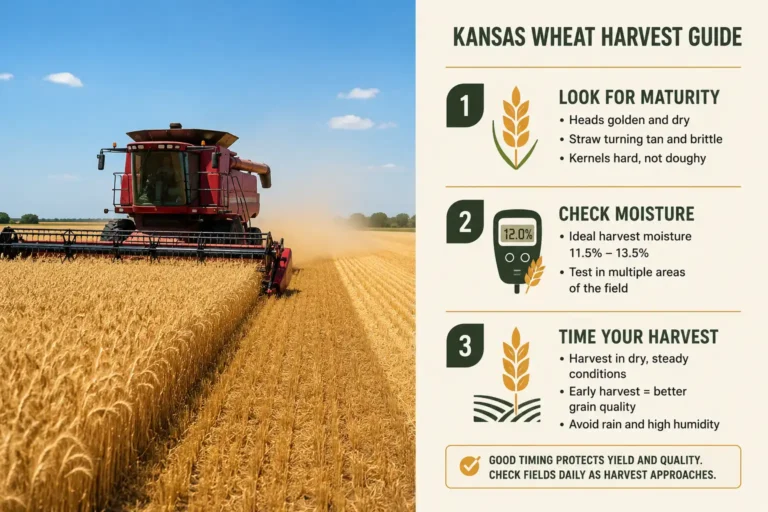
  • Wheat harvest in Kansas begins in early June in south central counties and finishes by mid July, shown as a shaded state map beside a combine cutting ripe hard red winter wheat

    When Is Wheat Harvest in Kansas? Dates, Counties, and Moisture

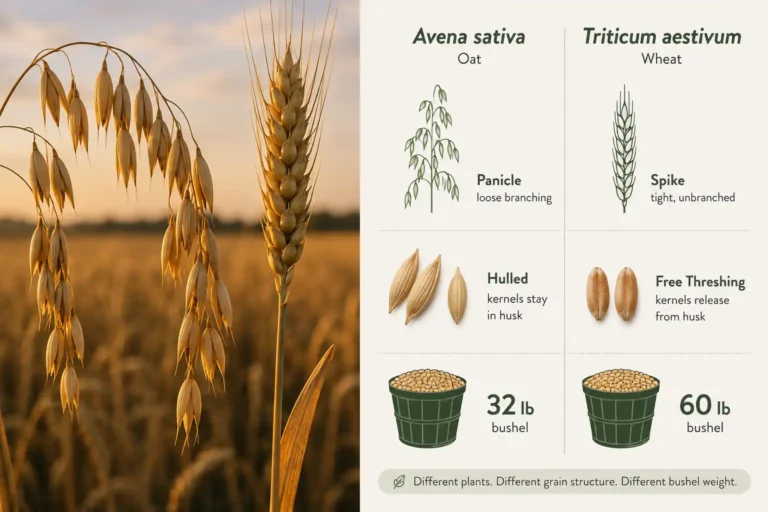
  • Oats are a separate crop from wheat, shown as a drooping oat panicle next to a tight bearded wheat spike with Avena sativa and Triticum aestivum labels and 32 pound and 60 pound bushel weights

    Are Oats Wheat? Field, Bushel, and Label Differences

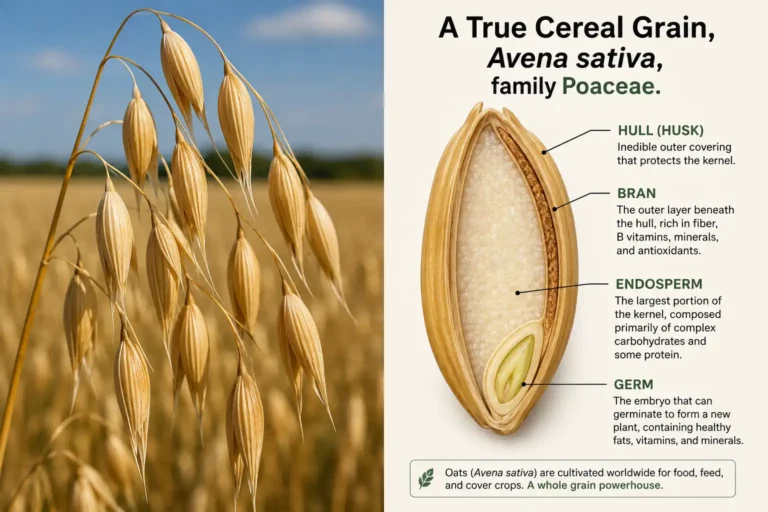
  • Oats are a true cereal grain from the grass family Poaceae, shown as a ripe field panicle beside a labeled kernel cross section with hull, bran, endosperm, and germ

    Are Oats a Grain? Whole Grain, Gluten, and Grain-Free

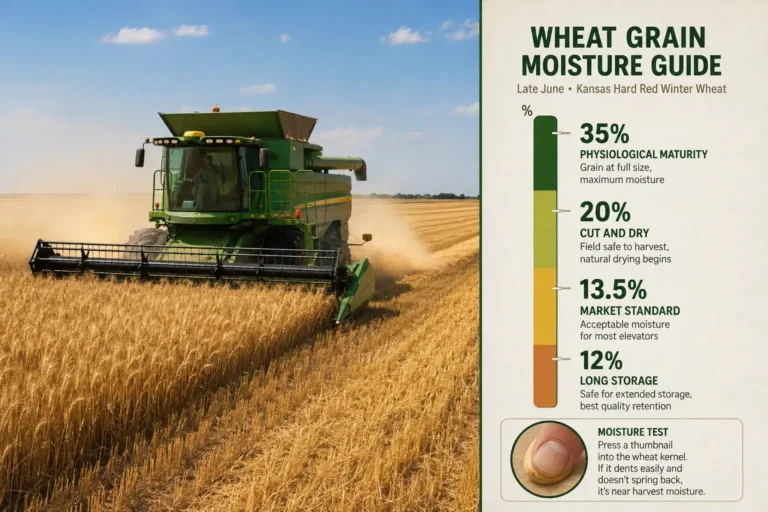
  • Combine cutting ripe Kansas wheat next to a scale marking 35 percent moisture at maturity, 20 percent for cut and dry, 13.5 percent market standard, and 12 percent for long storage

    When to Cut Wheat: Moisture, Stage, and Timing That Protect Yield

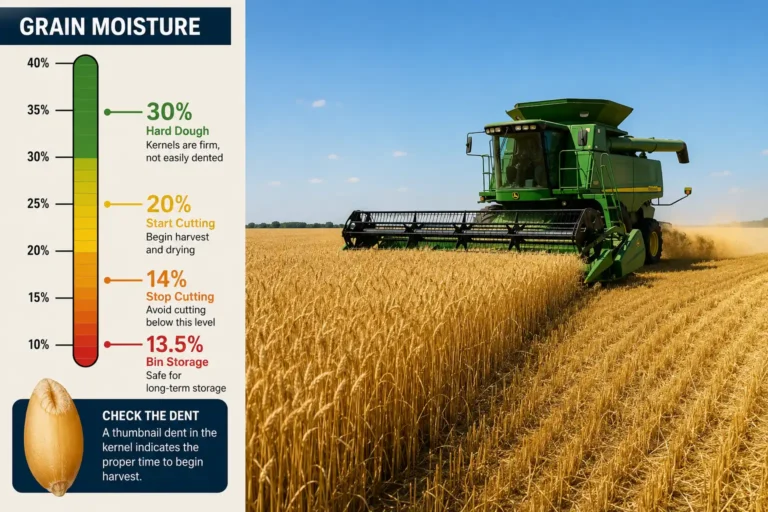
  • Spring wheat is fit to cut between 20 percent and 14 percent grain moisture, after hard dough near 30 percent, and stores safely at 13.5 percent.

    When to Harvest Spring Wheat: Moisture, Stage, and Timing

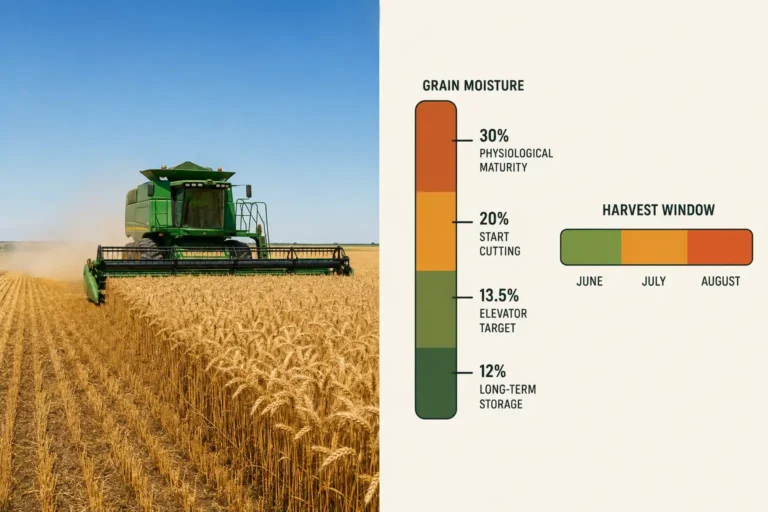
  • Combine cutting ripe golden wheat next to a chart showing grain moisture dropping from 30% at maturity to 20% at cutting and 12% for storage, with harvest spread across June, July, and August.

    When Do You Harvest Wheat: Moisture, Stages, and Timing

  • Winter wheat comes off from late May through July and spring wheat from August into September, cut near 13 percent grain moisture

    When Is Wheat Harvested? Timing, Stages, and Moisture Targets

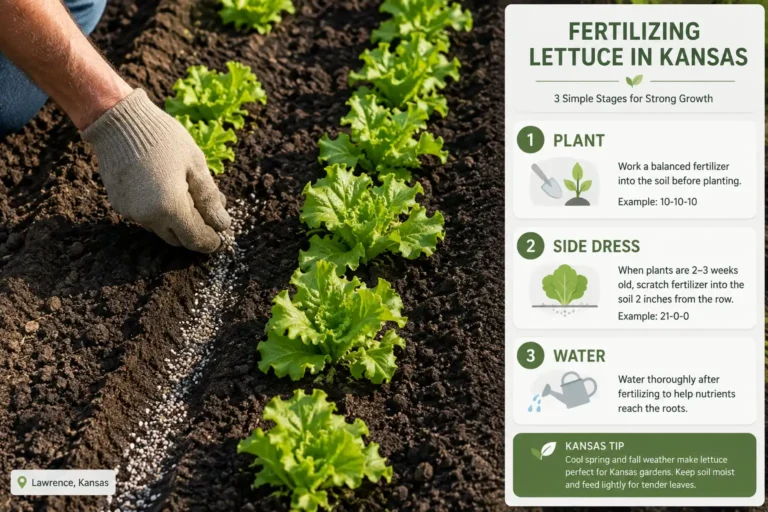
  • Balanced granular fertilizer raked into a lettuce bed before seeding, with panels marking a nitrogen sidedress at 3 to 4 inches of growth and light repeat feeding every three weeks

    How to Fertilize Lettuce: Rates, Timing, and Placement

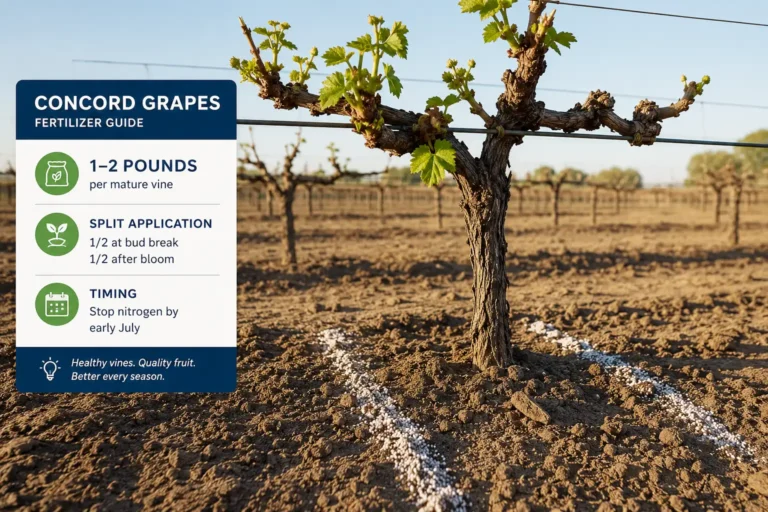
  • One to two pounds of balanced granular fertilizer banded sixteen inches out from a mature grape vine trunk at bud break, split with a second feeding after bloom and nitrogen stopped by early July

    How to Fertilize Grape Vines: Rates, Timing, and Placement

Page navigation

Previous PagePrevious 1 2 3 4 5 … 45 Next PageNext
Crop Farming

CropFarming.org

Grow · Harvest · Learn
Practical crop guides, planting and fertility recommendations, and equipment know-how, compiled from university extension research and USDA data.

Crop Guides

Grains & Cereals
Legumes
Root & Tuber Crops
Sugar Crops
Vegetables
Vine Crops

Crop Practices

Planting & Seeding
Soil & Fertility
Irrigation & Water
Pest & Disease
Weed Control
Harvest & Storage

Support

FAQs & Help
About Us
Contact
HTML Sitemap
XML Sitemap
Popular crop guides:
Corn Wheat Rice Oats Sorghum Soybeans Peanuts Potatoes Carrots Sugar Beets Sugarcane Tomatoes Onions Lettuce Grapes
© 2026 Crop Farming. All Rights Reserved. CropFarming.org participates in the Amazon Services LLC Associates Program. If you buy through our Amazon links, we may earn a small commission at no extra cost to you.
Policies: Affiliate Disclosure | Disclaimer | Review Policy | Privacy Policy | Cookie Policy | Newsletter Policy | Terms of Use
  • Home
  • About
  • Guides
  • Practices
  • Tools
  • Contact