Can Onions and Beans Be Planted Together? What Works Instead
Garden space runs short fast, and a row of onions beside a row of beans looks like an easy way to stretch one bed. But these two crops work against each other above ground and below.
Onions and beans can be planted together in one garden, but not in the same row. Bean plants shade onion tops, which cuts bulb size. Keep three feet between them, or plant beans after onions come out.
Can Onions and Beans Be Planted Together in the Same Bed?
Not in the same bed, and not in touching rows. Both crops will finish the season alive. Still, you give up onion bulb size, and you often give up bean pod set too.
The loss shows up at harvest instead of in June. That timing is why most gardeners never connect the small bulbs to the bean row next to them.
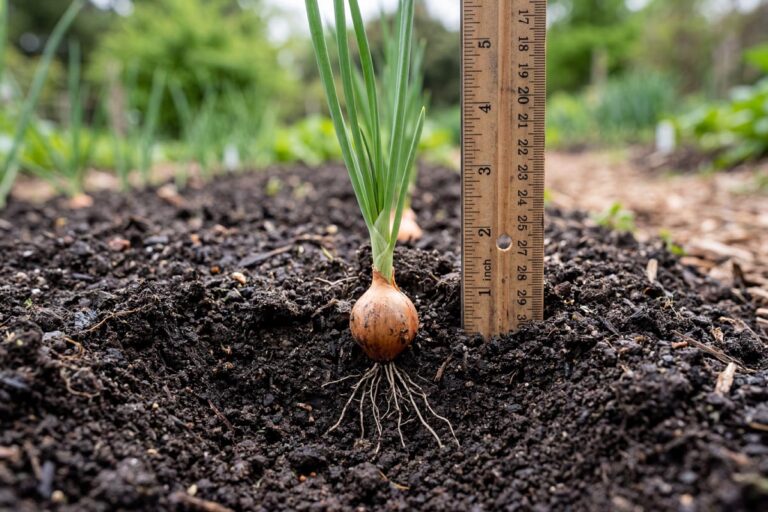
Onions pay the price first. K-State Research and Extension describes the onion root system as shallow and inefficient. So onions cannot chase water or nutrients away from a neighbor. Beans root deeper and spread wider, and they win nearly every contest for the same moisture.
Bulb size is the part people notice. Each healthy onion leaf builds one ring in the bulb. Fewer leaves means a smaller onion, every time.
Beans take a hit too, though a smaller one. Pale lower leaves and thin pod set show up on the row closest to the onions.
Also know: Onions and Potatoes Plant Together in One Bed
Why Onions and Beans Fight Each Other in One Bed
Four separate conflicts stack up here. None of them involve the folklore chemistry most charts point to.
Onions Lose the Light They Need for Bulbs
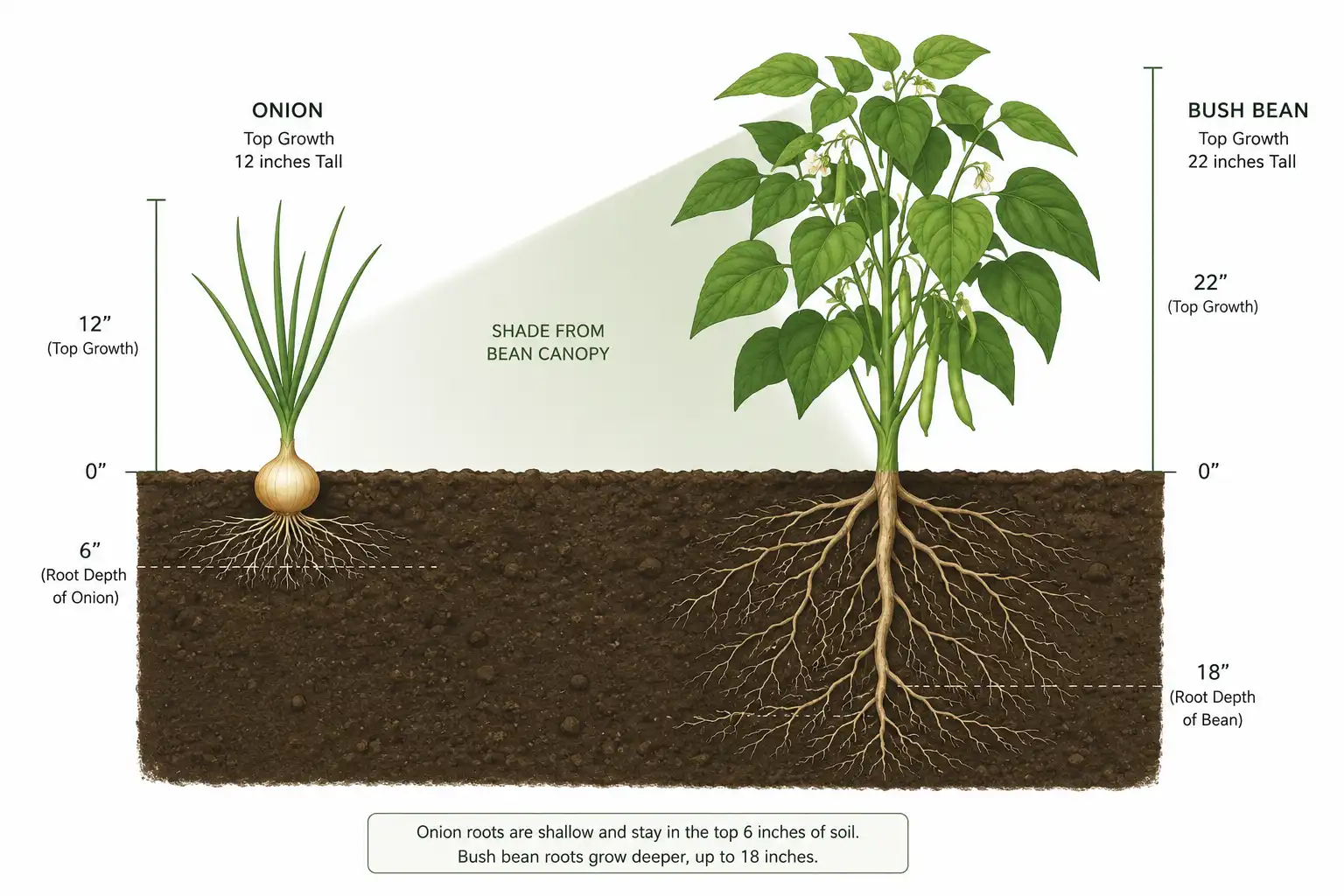
Onions need full sun all season, and bean plants take it away. Because bulbing onions build one ring per leaf, leaf count sets bulb size before bulbing ever starts. Shade cuts leaf count directly.
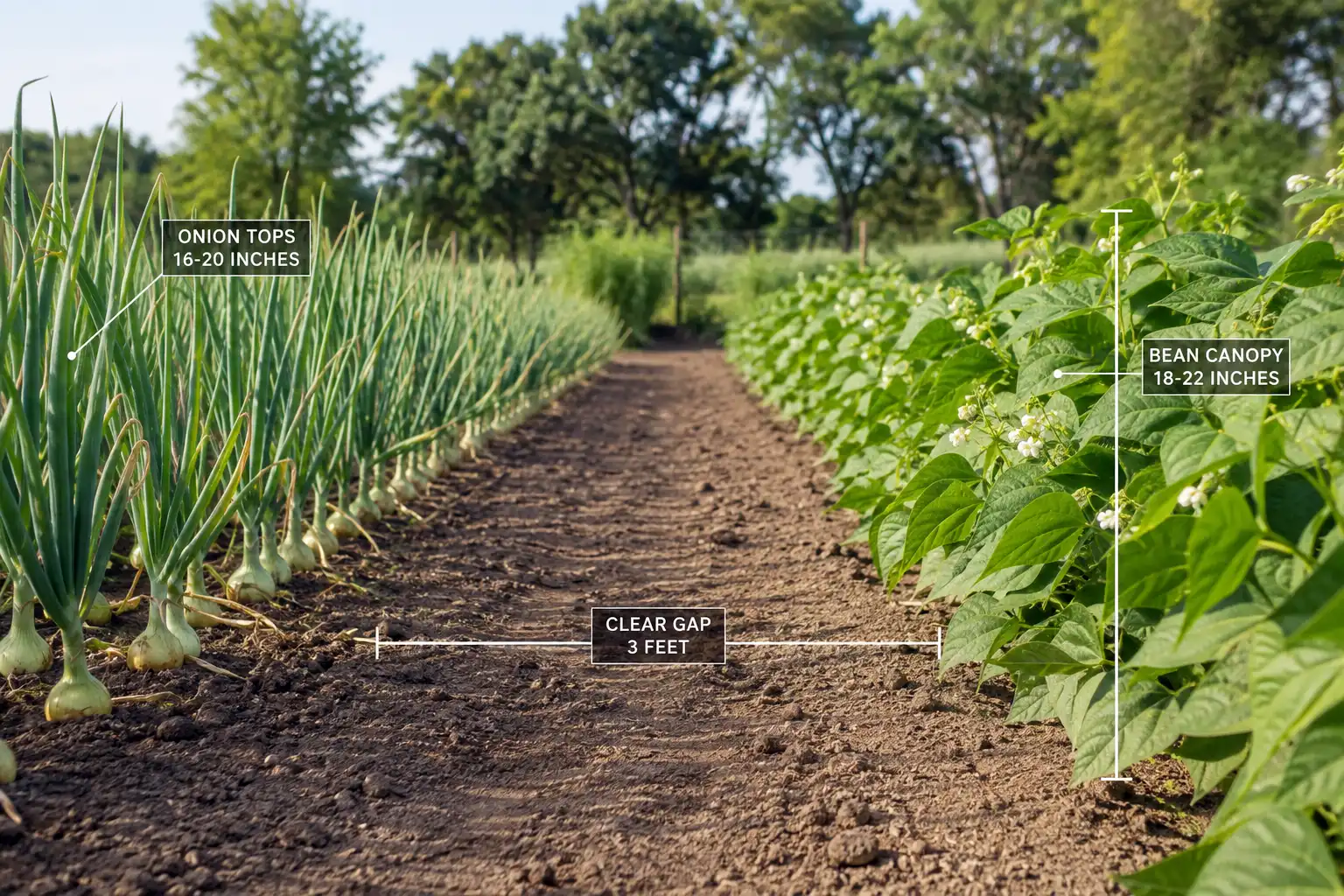
Bush beans reach 18 to 24 inches tall. Pole beans climb 6 to 8 feet. Both stand well above an onion top by mid June, which is exactly when onions should be building leaves.
Onions also lose the ground contest. NC State Extension lists slow emergence, upright growth habit, and shallow roots as the reasons onions compete so poorly. A bean seedling out-roots an onion transplant within about three weeks. Tight spacing makes it worse, so count the onions per square foot you already have before crowding another crop beside them.
The Two Crops Need Opposite Nitrogen Programs
Onions want steady nitrogen, and beans want almost none. That single split is the strongest reason to keep these rows apart.
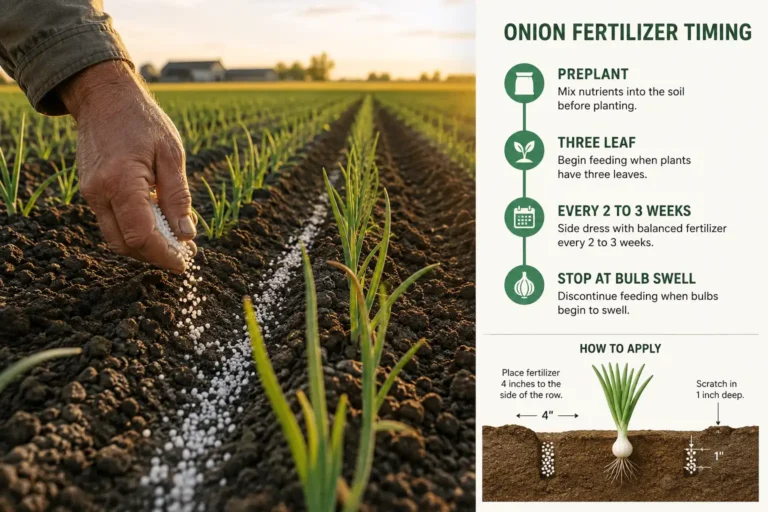
Onions need a good supply of available nitrogen through leaf growth. K-State also warns that too much nitrogen brings late maturity, thick necks that will not cure, soft bulbs, and green flesh. So the onion program runs moderate nitrogen early, then nothing once bulbs swell.
Beans supply their own nitrogen through Rhizobium bacteria in root nodules. Extra soil nitrogen shuts that partnership down and pushes leafy growth with fewer pods. A bean row wants no side dress at all.
One bed cannot run both programs. Feed for the onions and you flatten bean pod set. Feed for the beans and your onions stay small. Splitting the rows lets you pick the right fertilizer for onions on one side and skip it entirely on the other.
Water and Curing Needs Split Right at Harvest
Onions need water cut back as tops fall over, while beans need steady moisture through pod fill. Both happen in July on Kansas ground.
Onion bulb size tracks the water applied across the season. Then the plant needs a dry finish. Dry soil at the end gives tight necks and firm bulbs that store well. Wet soil at the end gives soft bulbs and storage rot.
Beans work the opposite way. Pods fill in July here, and a dry stretch during bloom drops blossoms outright.
You cannot irrigate one row without wetting the other. So one crop always gets the wrong water at the worst possible week.
The Planting Calendars Do Not Line Up
Onions go in the ground about six weeks before beans can be seeded. in zone 6a, set onion transplants in late March. Beans wait until soil holds 60°F at four inches, which usually means mid May.
That gap creates two problems. First, seeding beans means working soil right where onion roots already sit an inch or two down. Onion roots are shallow, so a hoe or a seed furrow cuts them. Second, onions are half grown by the time beans emerge, and that is when they most need open sun.
Harvest splits the two again. Onions come out in early to mid July. Beans pick from late June into September. Walking a bean row every three days packs soil over shallow onion roots and knocks tops down early.
Does Onion Root Chemistry Really Block Bean Nitrogen Fixation?
Probably not the way companion charts claim. West Virginia University Extension does list onions and beans as a pair to keep apart, and it says alliums hinder bean growth. That guidance is worth following. The usual explanation behind it, though, holds up poorly.
The popular story says sulfur compounds from onion roots kill the rhizobia beans depend on. Research on sulfur and nodulation points the other direction. Sulfur is required for nitrogen fixation, and sulfur shortage is what reduces nodule number and nodule activity. Higher sulfur supply raises nodulation instead.
Allium allelopathy on legumes does show up in lab work. Field effects stay small and hard to repeat. Treat the chemistry claim as unproven, and treat the light, fertility, and water conflicts as real.
The practical answer never changes. Keep the rows apart. If strong nodules matter to you, focus on what actually moves the needle, the same way growers weigh inoculant on soybeans rather than trusting a chart.
What Poor Onion and Bean Placement Looks Like in the Row
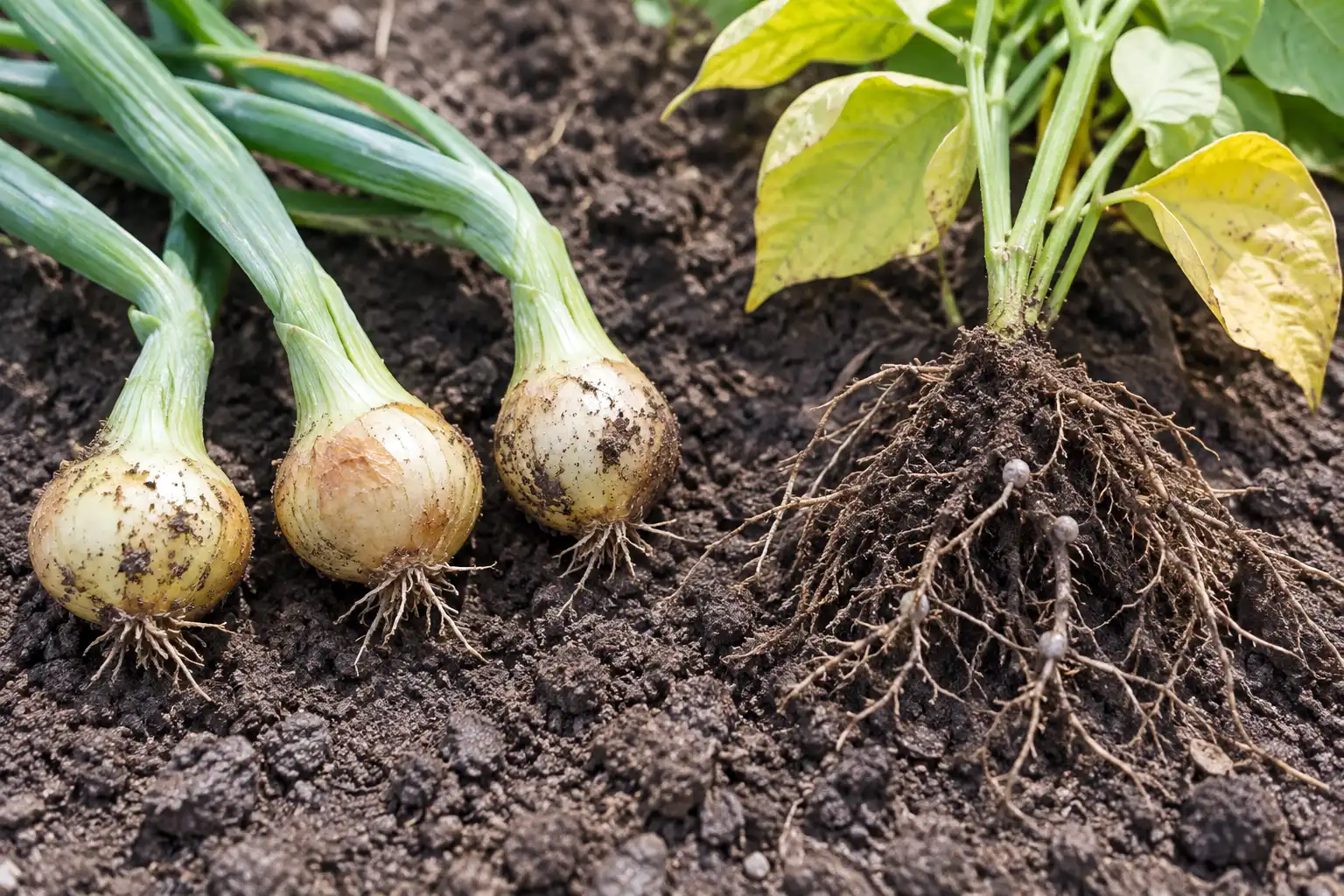
Symptoms arrive late, so learn to read them before harvest day.
On the onions:
- Tops lean toward open ground instead of standing upright
- Fewer than eight or nine healthy leaves by mid June
- Bulbs under two inches when half the tops fall over
- Thick necks that never dry tight during curing
On the beans:
- Pale lower leaves on the row nearest the onions
- Few nodules on pulled roots, and gray inside instead of pink
- Pods setting only on the outer side of the plant
- Blossom drop during the first hot, dry stretch
Pull one bean plant and split a nodule with your thumbnail. Pink or red inside means that nodule is fixing nitrogen. Gray or green means it is not. That ten second check tells you more than any companion chart will.
How Far Apart Should Onions and Beans Be Planted?
Three feet between the outer rows is the working minimum, and four feet suits pole beans better. That gap keeps bean shade off onion tops. It also lets you water and fertilize each crop on its own schedule.
| Bean type | Mature height | Minimum gap from onions | Reason |
|---|---|---|---|
| Bush snap beans | 18 to 24 in | 3 ft | Blocks morning and evening sun at onion leaf height |
| Bush lima beans | 20 to 30 in | 3 to 4 ft | Longer season overlaps onion bulbing |
| Pole beans on trellis | 6 to 8 ft | 4 to 6 ft | Casts a moving shade band all afternoon |
| Runner beans | 6 to 15 ft | 6 ft | Heaviest canopy and widest root spread |
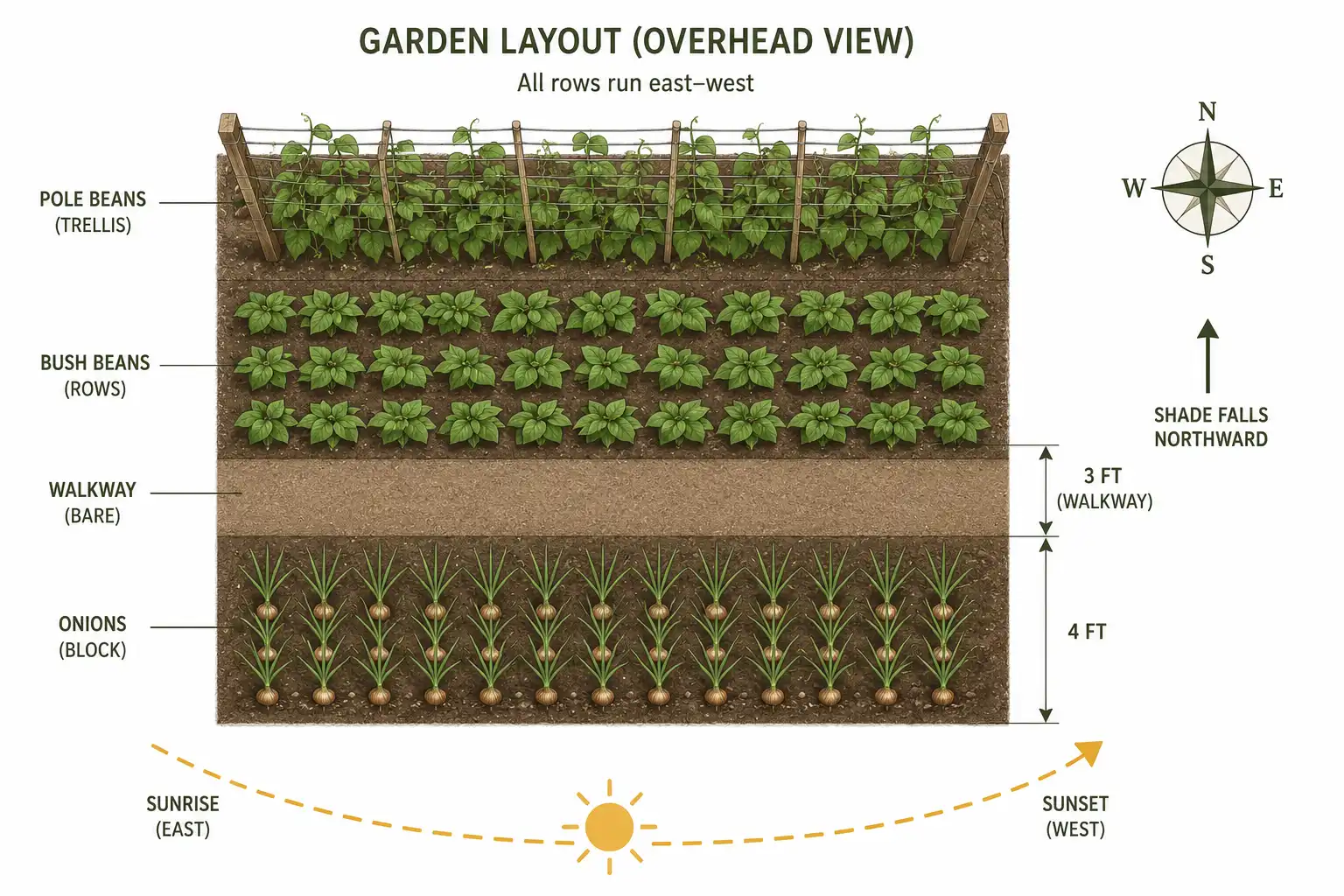
Put onions on the south side of the garden and beans on the north side. Shade falls north of the tall crop here, so onions stay in open sun all day. Reverse that and your onions sit in an afternoon shade band from June onward.
Raised beds change the math slightly. A separate bed with its own edge stops root overlap, so a two foot walkway between beds works about as well as three feet of open row.
Can You Plant Onions With Beans If They Are Green Onions?
Yes, green onions and beans work together, because scallions never need to build a bulb. Bulb size is the whole reason bulbing onions struggle beside beans. Remove that goal and most of the conflict disappears.
Green onions pull in about 60 to 70 days from seed. So they clear the ground before bush beans reach full canopy. They also take far less nitrogen than a bulbing crop, and that means you are not feeding one row at the other’s expense.
Here is how to run it:
- Seed bunching onions or scallions in a 4 inch band, 18 inches off the bean row.
- Sow the beans the same day, once soil holds 60°F at four inches.
- Start pulling scallions at pencil thickness, around eight weeks in.
- Clear the band before the beans close over it.
Leeks and shallots do not get this pass. Both hold ground into late summer, and both need the same open sun a bulbing onion does. Keep them in the allium block instead.
Plant Beans After Onions Instead of Beside Them
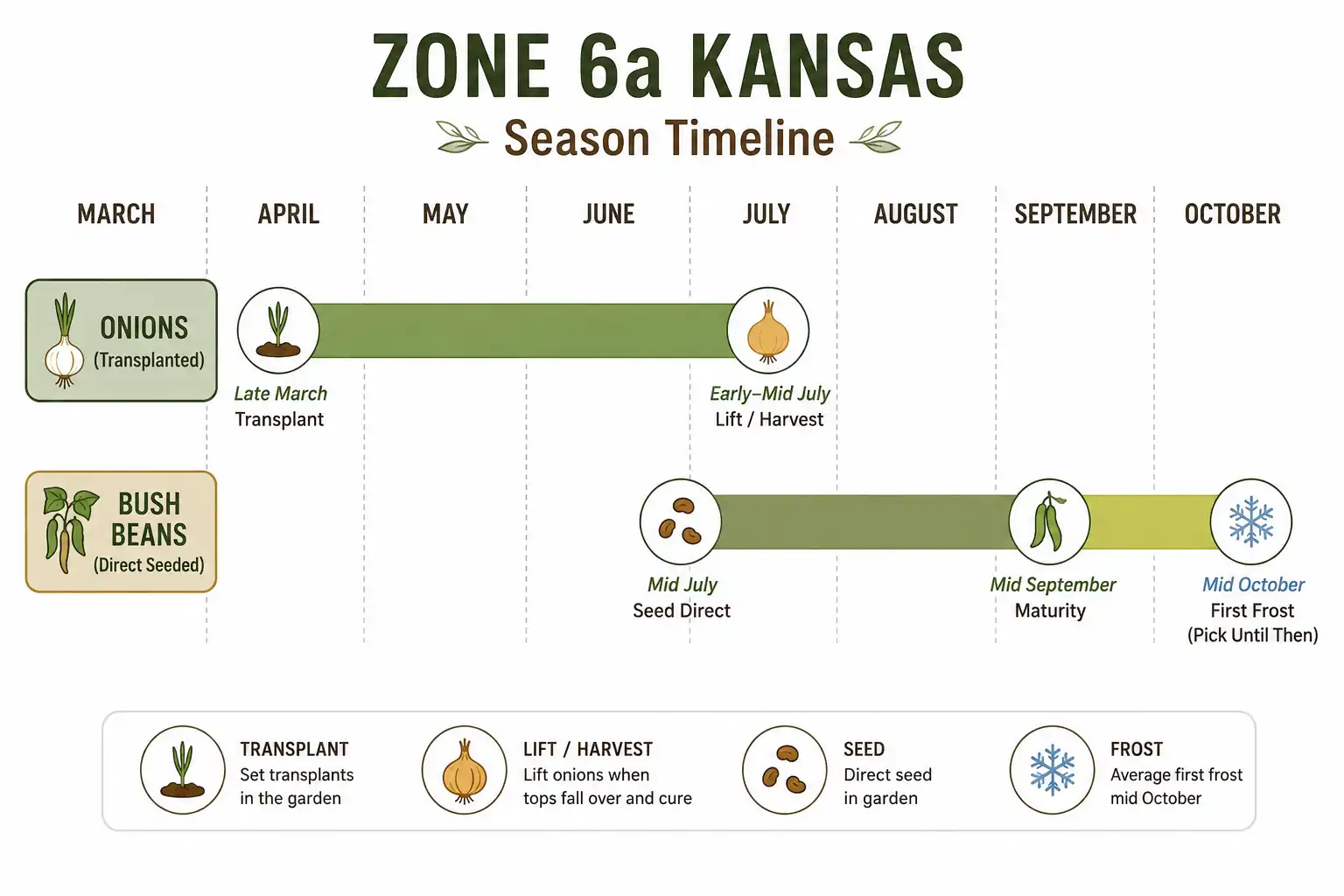
Succession beats side by side every time on this pair. Onions clear the bed in July, and bush snap beans need only 50 to 60 days. That leaves room for a full second crop on the same ground.
- Lift onions when half the tops have fallen, usually early to mid July in Topeka.
- Cure the bulbs somewhere else, never in the bed.
- Rake the bed level, then water it in if the soil has dried out.
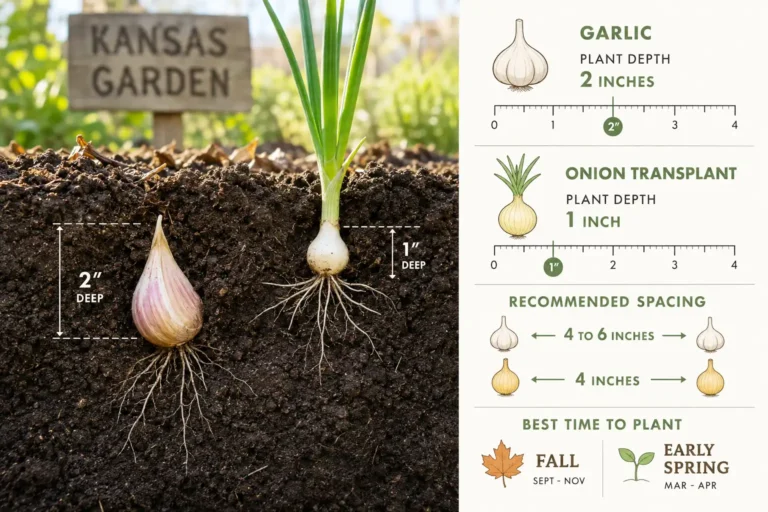
- Sow bush snap beans one inch deep, two to four inches apart in the row.
- Pick from about mid September until first frost.
Topeka averages first frost near mid October. A July 20 seeding at 55 days matures around September 13, which still leaves a month of picking. Onion beds also come out clean and weed free, and that suits a crop that hates early competition.
One caution applies. Beans and onions carry different diseases, so the sequence itself is fine. Still, running the same two crops on one bed year after year builds trouble, so fold it into a wider rotation plan.
Better Partners for Onions and for Beans
Both crops have partners that genuinely work, and neither list includes the other.
| Crop | Works well with | Why it works |
|---|---|---|
| Bulb onions | Carrots, beets, lettuce | Different root depths, no shade at onion leaf height |
| Bulb onions | Tomatoes, strawberries | Deep rooted neighbors, no early canopy conflict |
| Bulb onions | Cabbage, broccoli | Matching cool season timing, similar planting window |
| Bush beans | Corn, squash, cucumbers | Beans climb or fill low, and fertility needs agree |
| Bush beans | Potatoes, celery, lettuce | Low canopy fits between rows, and no allium nearby |
Carrots are the strongest onion partner listed. Onion volatiles interfere with carrot rust fly host finding, and that is one of the few companion effects with real field data behind it. Growers who set onions next to carrots see a measurable drop in fly damage.
Tomatoes work well too. Run onions in with tomatoes along the bed edge most seasons. Onions stay short, tomato roots run deeper, and neither one shades the other during the weeks that matter.
For beans, corn remains the classic match. Three Sisters plantings gave the Iroquois, Cherokee, and Hopi a working polyculture long before extension bulletins existed, and the vertical layering still holds up.
Bottom Lines
Onions go in the south block, beans go in the north block, and a walkway sits between them. Transplants set in late March, and bulbs come out in July. Beans follow in mid May, then a second bush planting goes into the cleared onion ground. Both crops yield better apart than they ever did together.