How to Get Seeds From Onions (Guide for 2026)
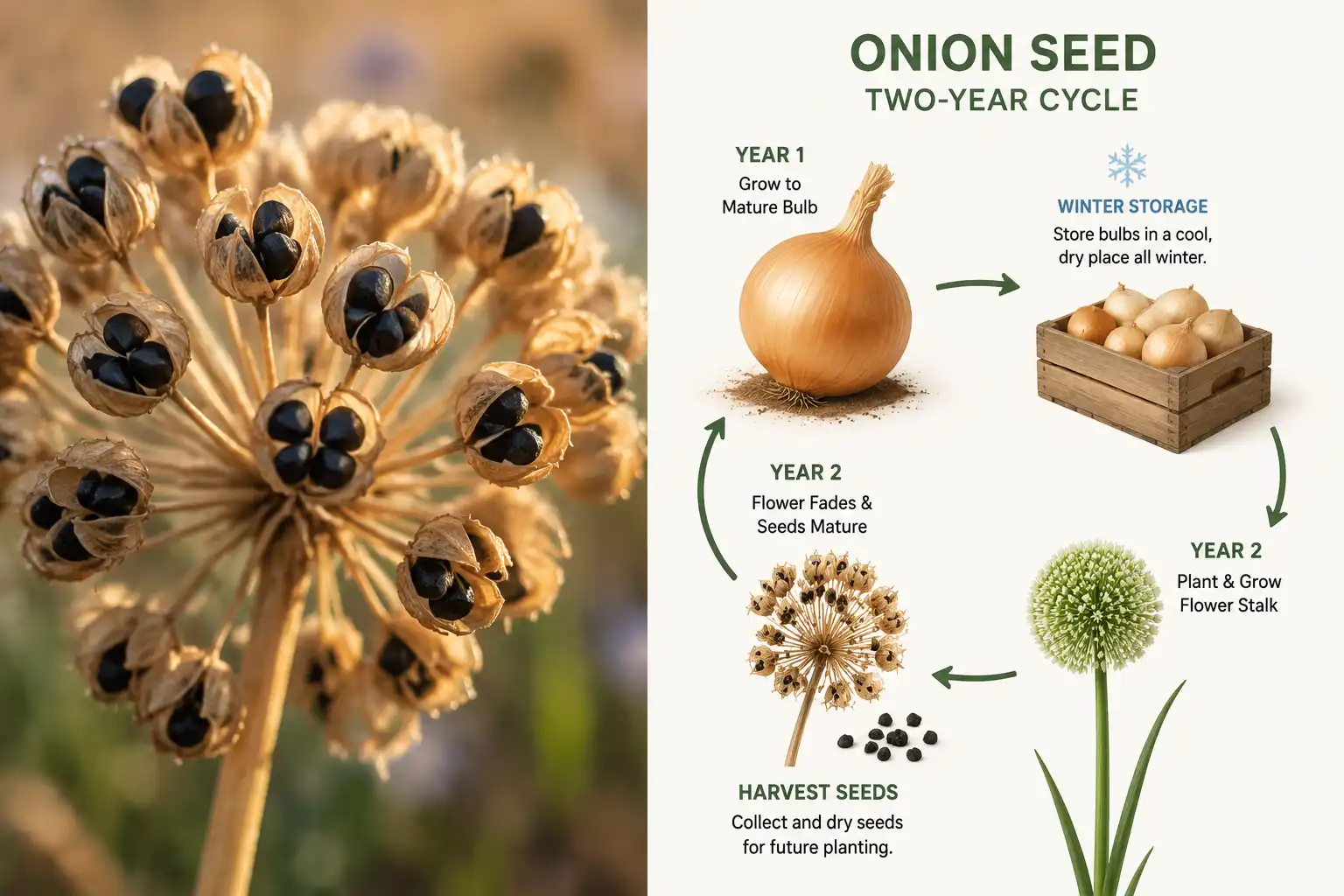
Onions make seed only in their second year. Getting there means growing a solid bulb, giving it a cold winter, and letting it flower the next spring. Learning how to get seeds from onions is simple. You just follow that two-year rhythm and time each step.
To get seeds from onions, grow a healthy bulb in year one. Chill it through winter, then replant it in spring. The plant bolts, flowers, and forms seed heads that you harvest, dry, and clean.
Do Onions Even Produce Seeds?
Yes, every common onion produces seed, but only in its second year of growth. Onions (Allium cepa) are biennials. In year one, the plant pours its energy into building a bulb. In year two, that same bulb sends up a flower stalk, sets seed, and then dies off. A few types, like potato and multiplier onions, act more like perennials. Standard bulb onions, though, stick to this two-year clock. So you cannot pull seed the same season you plant. You have to carry a bulb through a full winter first.
Which Onions Should You Save Seed From?
Save seed only from open-pollinated or heirloom onions, never from an F1 hybrid. Hybrid onions do not grow true from seed. Their seedlings come out mixed, and you rarely get the onion you started with. Open-pollinated varieties pass their traits down cleanly, year after year. That same rule guides recommendations when people ask about heirloom and hybrid seeds for any crop on the farm.
Start with bulbs you grew from seed, not from sets. Seed-grown plants stay more vigorous, and they keep the gene pool wider. Then pick your best bulbs for replanting. Choose firm, well-shaped bulbs that match the variety, with no soft spots, disease, or early sprouting. Bigger, fully mature bulbs also bolt more reliably, so they give you more seed.
One more point on numbers. Save from at least 5 plants to get viable seed. To keep a variety healthy over the years, save from 20 to 50 plants or more. Wider populations hold more genetic diversity, and that keeps your line strong.
How Do You Get Seeds From Onions?
You get seeds from onions by carrying one variety through a full two-year cycle. First, grow a strong bulb and cure it. Next, give that bulb a cold winter to trigger flowering. Then replant it in spring and let it bolt. Finally, harvest the dried seed heads, thresh them, and store the black seeds. The rest of this guide walks through each step in order.
Step 1: Grow Strong Bulbs in the First Year
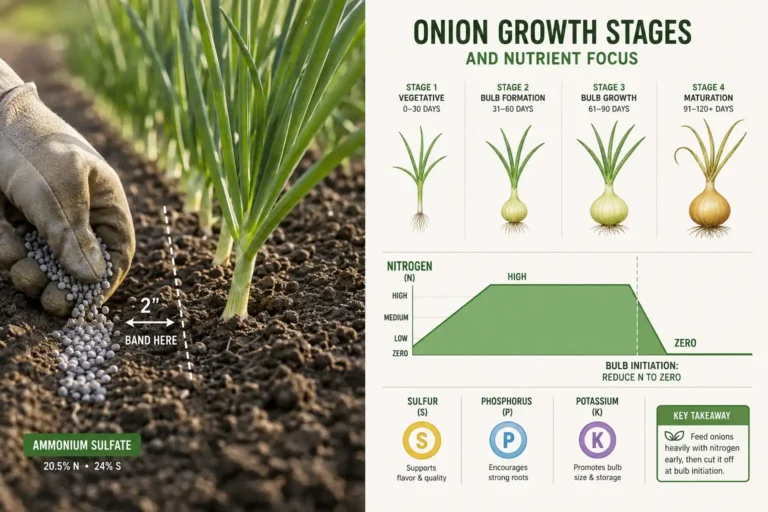
Your seed crop starts with a healthy, full-size bulb, so treat year one like any good onion year. Plant your onions on time for your region. In USDA zone 6a, set out long-day onion transplants in early spring. Long summer days trigger good bulbing in the North. Give them loose, well-drained soil and steady moisture. Feed them, but go easy on nitrogen, because too much pushes leafy top growth and smaller bulbs.
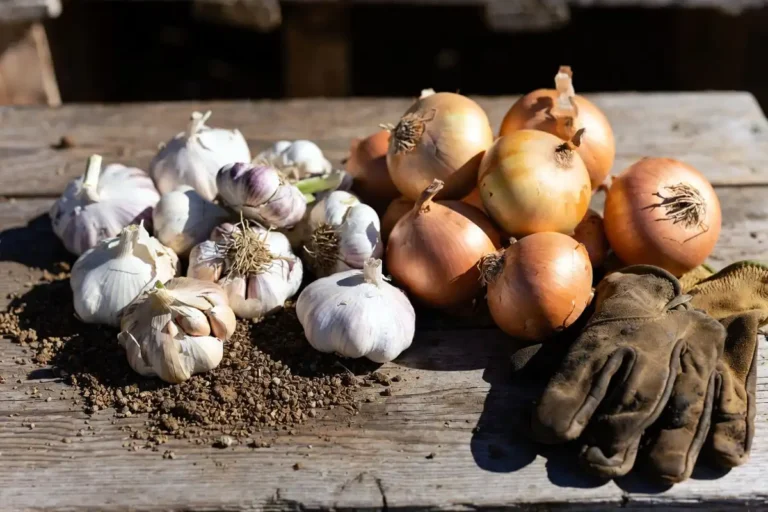
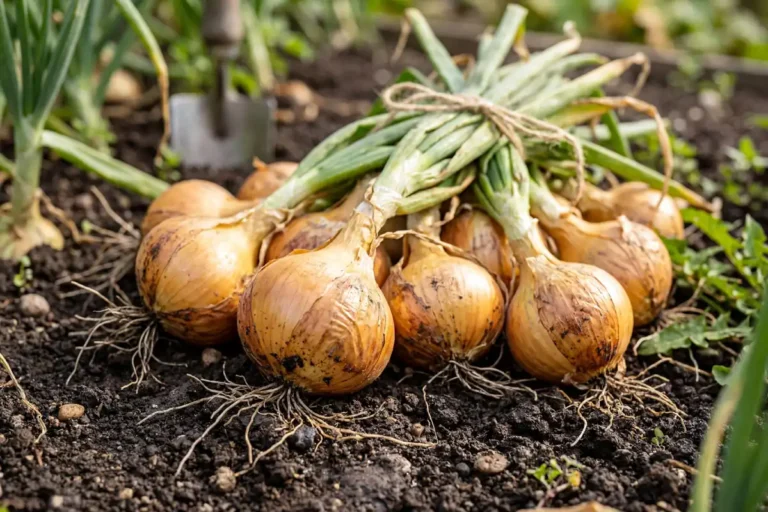
Let the bulbs mature fully. When about half the tops fall over, bend the rest down. Wait a few days, then dig on a dry day. Cure the bulbs in a warm, airy spot for one to two weeks until the necks dry down. Good curing matters here, because only sound, well-cured bulbs survive winter storage for replanting.
Step 2: Overwinter the Bulbs to Trigger Bolting
Onions need a stretch of cold before they will flower, a process called vernalization. Without that chill, the bulb just sits and never bolts. So overwintering is the step that makes seed possible. Select your best cured bulbs for this stage, and set the rest aside for the kitchen.
How Cold, and for How Long?
Aim for roughly 8 to 10 weeks of cool temperatures, ideally in the 45 to 55°F range. Onion bulbs read that steady chill as a passing winter. Once spring warmth and longer days follow, the plant shifts into flowering. Colder is fine to a point. But wet, freezing soil rots bulbs fast, and that is the main risk in a Kansas winter.
Should You Leave Them in the Ground or Lift Them?
In most of Kansas, lift the bulbs and store them cool rather than risk them in the ground. Cold, soggy winters here can rot bulbs before spring. Selected bulbs should be cured first. Hold them in mesh crates or paper bags at about 35 to 40°F, somewhere dark and dry. In milder, well-drained gardens, you can leave onions in place under a thick mulch. That is the same way planting onions in the fall is described elsewhere. Either path gives the bulb its cold signal. Just keep the bulbs dry and firm until spring.
Step 3: Replant and Let the Onions Flower
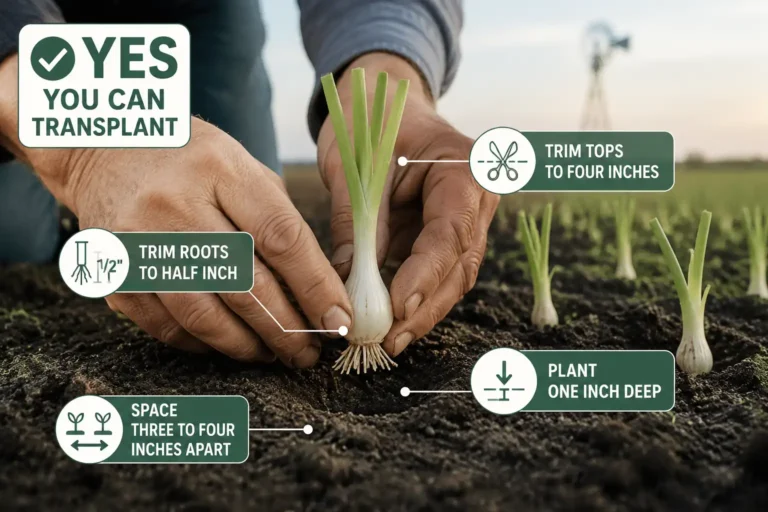
In early spring, replant your chilled bulbs as soon as the soil can be worked. Push each bulb into loose soil with the top near the surface, spaced about 6 inches apart. Water them in. Within a few weeks, each bulb sends up a leafless flower stalk called a scape. A papery sheath opens at the top, and a round flower head, the umbel, appears.
Each umbel holds hundreds of small white flowers. They open from the outside in over about four weeks. Insects do the pollinating here, mostly honeybees and hover flies, so let them work. Warm, clear days in the 65 to 95°F range give the best seed set. Skip overhead watering while the plants flower, since wet blooms invite disease. The stalks can top 3 feet, so stake tall ones to keep them from toppling in Great Plains wind.
How Do You Keep the Seed True to Type?
Grow only one onion variety for seed in a given year, and cross-pollination stops being a worry. Onions cross readily, because insects move pollen from plant to plant. Two bulb onion varieties flowering nearby will mix. Since first-year onions do not flower, you can still grow other varieties for eating without hurting your seed line. If you must flower two types at once, separate them by 800 feet up to half a mile. You can also cover them with insect cages and let flies pollinate inside.
When Are Onion Seeds Ready to Harvest?
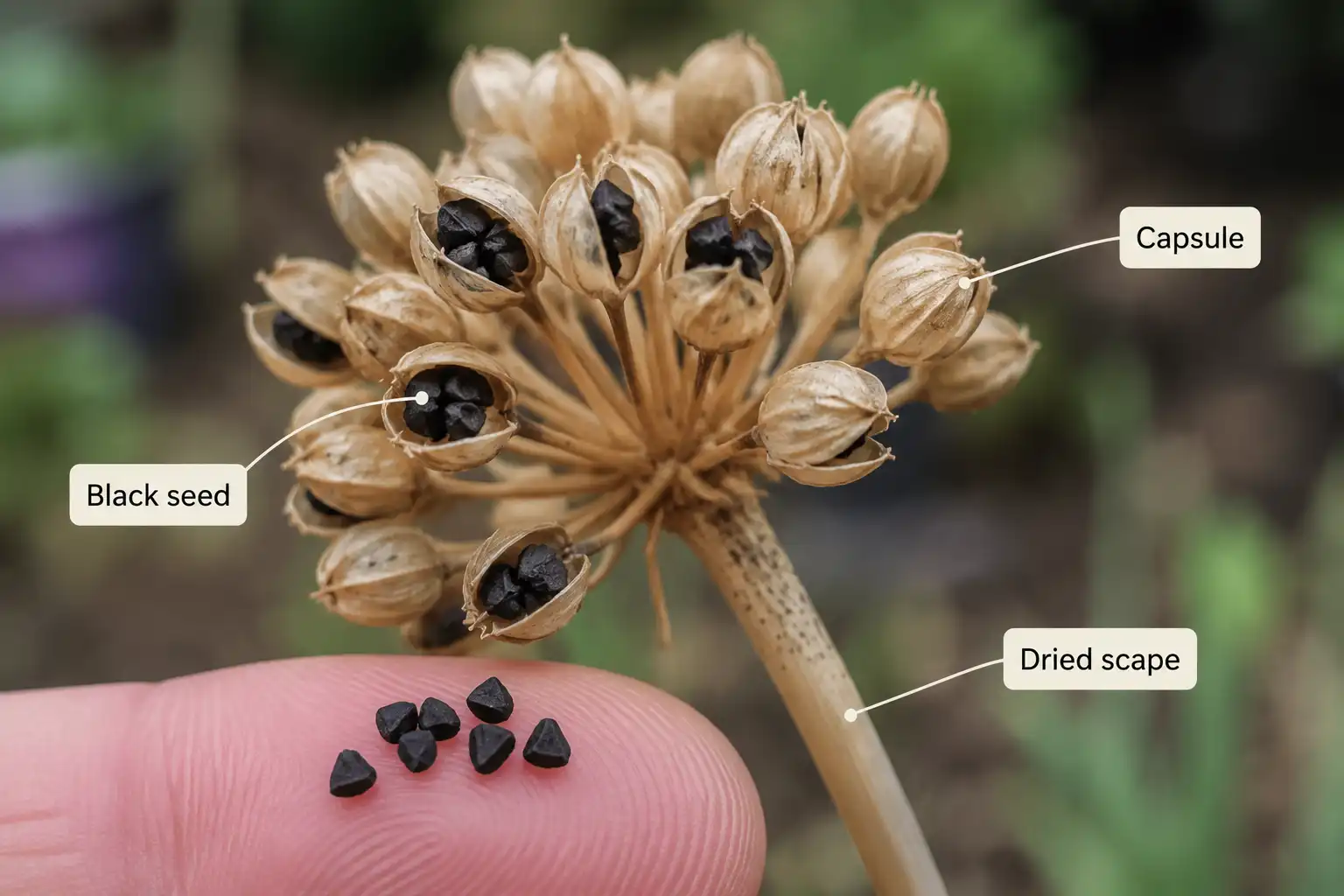
Onion seeds are ready when the seed capsules dry, split open at the top, and show shiny black seeds inside. Each little capsule holds three or four seeds. The heads mature roughly 45 days after the flowers get pollinated. Watch each umbel change from green and full to tan and papery. Once about 20% of the capsules on a head crack open, the black seeds show. That is harvest time. In a wet spell, harvest a little earlier, because ripe capsules shatter and drop seed fast.
How Do You Harvest and Dry the Seed Heads?
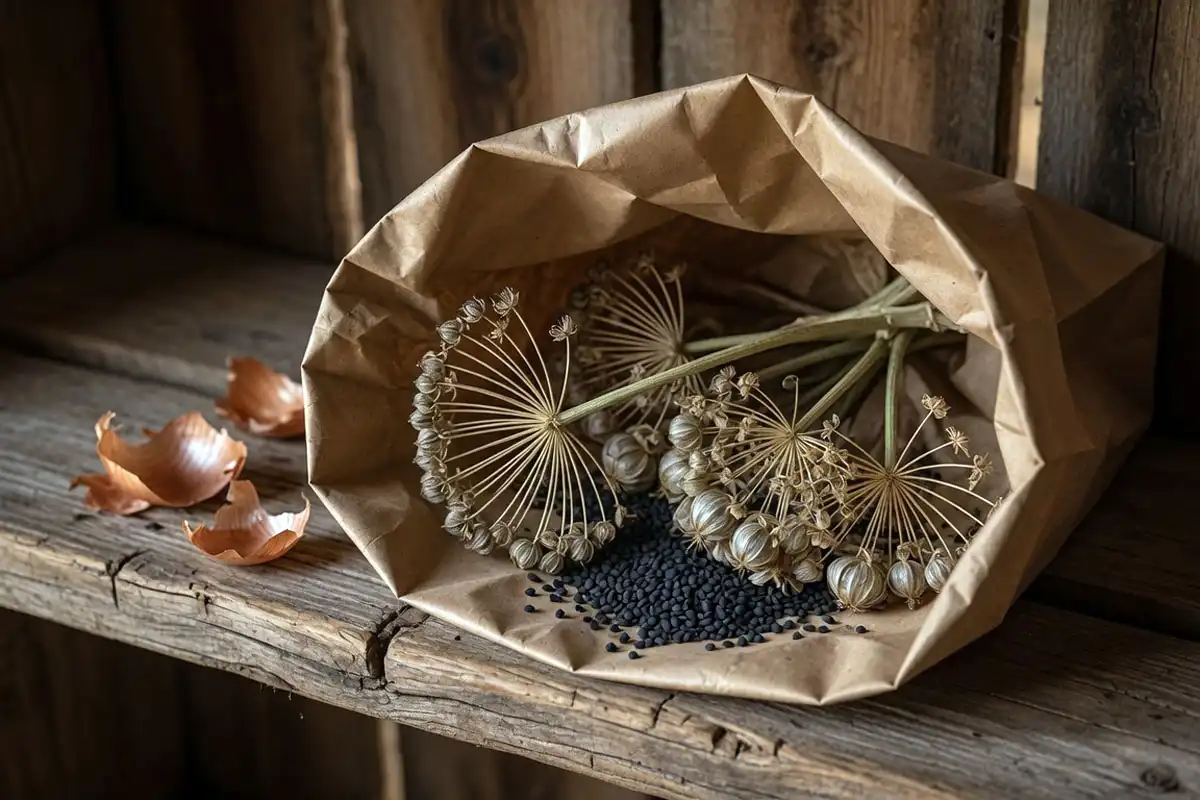
Cut the whole seed head off with about 4 to 6 inches of stalk attached. Drop it straight into a solid container or paper bag. Never harvest into a loose-weave basket, since the tiny seeds slip right through. Because flowering is uneven, plan to cut heads over two to three weeks as each one ripens.
Then dry the heads fully. Spread them on a screen, or set them upside down inside a paper bag. Keep them in a dry, airy spot out of direct sun. Turn them if any sun hits them, so they do not scorch. Over one to two weeks, the capsules keep splitting and release their seed. Onion seed gets the same slow, thorough drying used when drying corn for seed. Seed that goes into storage damp will not keep.
How Do You Thresh and Clean Onion Seeds?
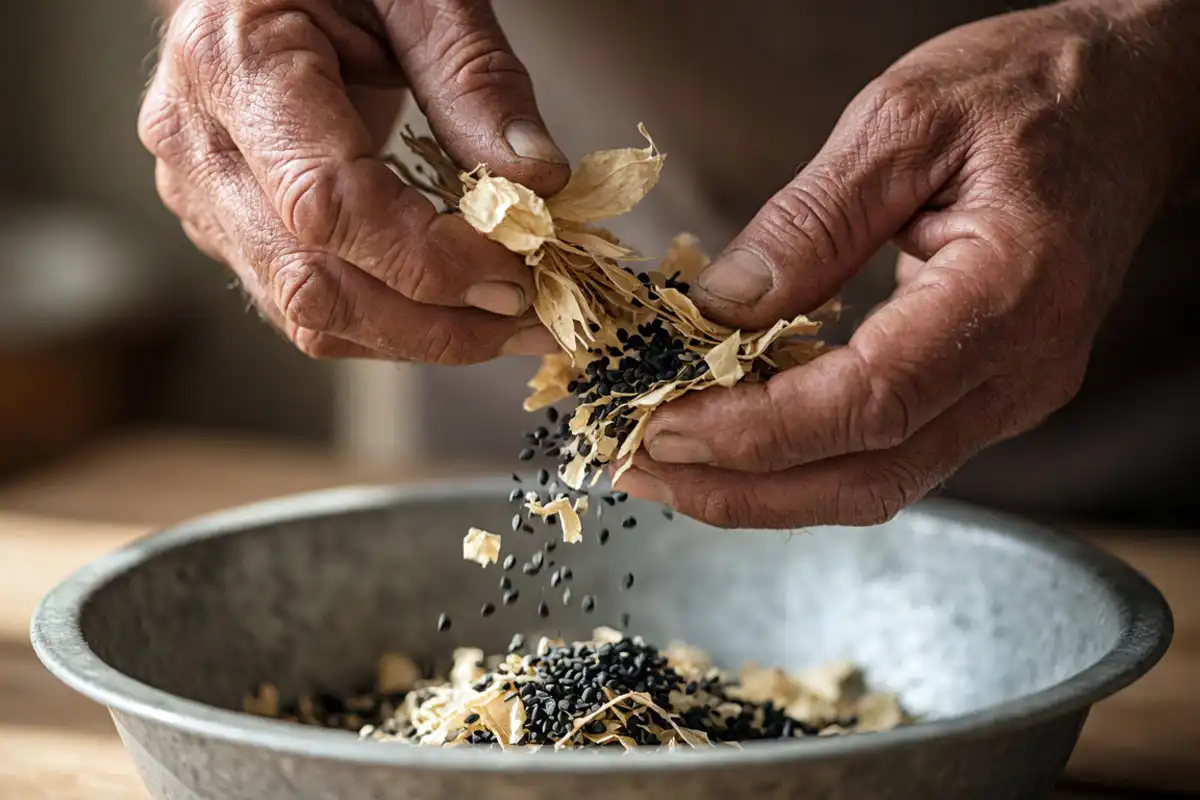
Thresh onion seed by rubbing the dried heads between your hands to break the seeds loose. Work over a bowl or bucket, so nothing scatters. The capsules crumble into a mix of black seeds and light, papery chaff. Next, clean that mix. Winnow it by pouring the seed between two containers in a light breeze, or in front of a fan. The chaff blows away, while the heavier seeds fall straight down. A kitchen sieve helps catch the last bits of stem and hull.
For a quick quality check, drop the seeds in water. Good, filled seeds sink, and empty seeds and chaff float, so you can skim the floaters off. Do this only right before you dry and store, since wet seed must dry again fast. Spread the sinkers on a plate or screen until they are bone dry.
How Long Do Saved Onion Seeds Stay Good?
Onion seed is short-lived, so plan to use it within one to two years. It ranks among the shortest-lived vegetable seeds around. Heat and humidity cut that window even shorter, sometimes down to a single season. Store your dry seed in an airtight jar or envelope, kept cool, dark, and dry. A refrigerator or freezer stretches viability further. Label each batch with the variety and the year. Before you count on last year’s seed, run a quick germination test on a damp paper towel. That habit pays off with saving lettuce seed and other short-lived crops.
Bottom Lines
Treat onion seed as a two-year project, and keep it simple. That means one variety at a time, the best bulbs, and a cold winter in storage. That way, growers always know exactly what they are growing the next season. Start with a good open-pollinated onion, save from your strongest plants, and dry the seed well. Do that, and you will have your own seed ready for growing onions from seed next spring. No packet to buy.