20 10 10 Fertilizer: What It Is, Uses, and How to Apply It
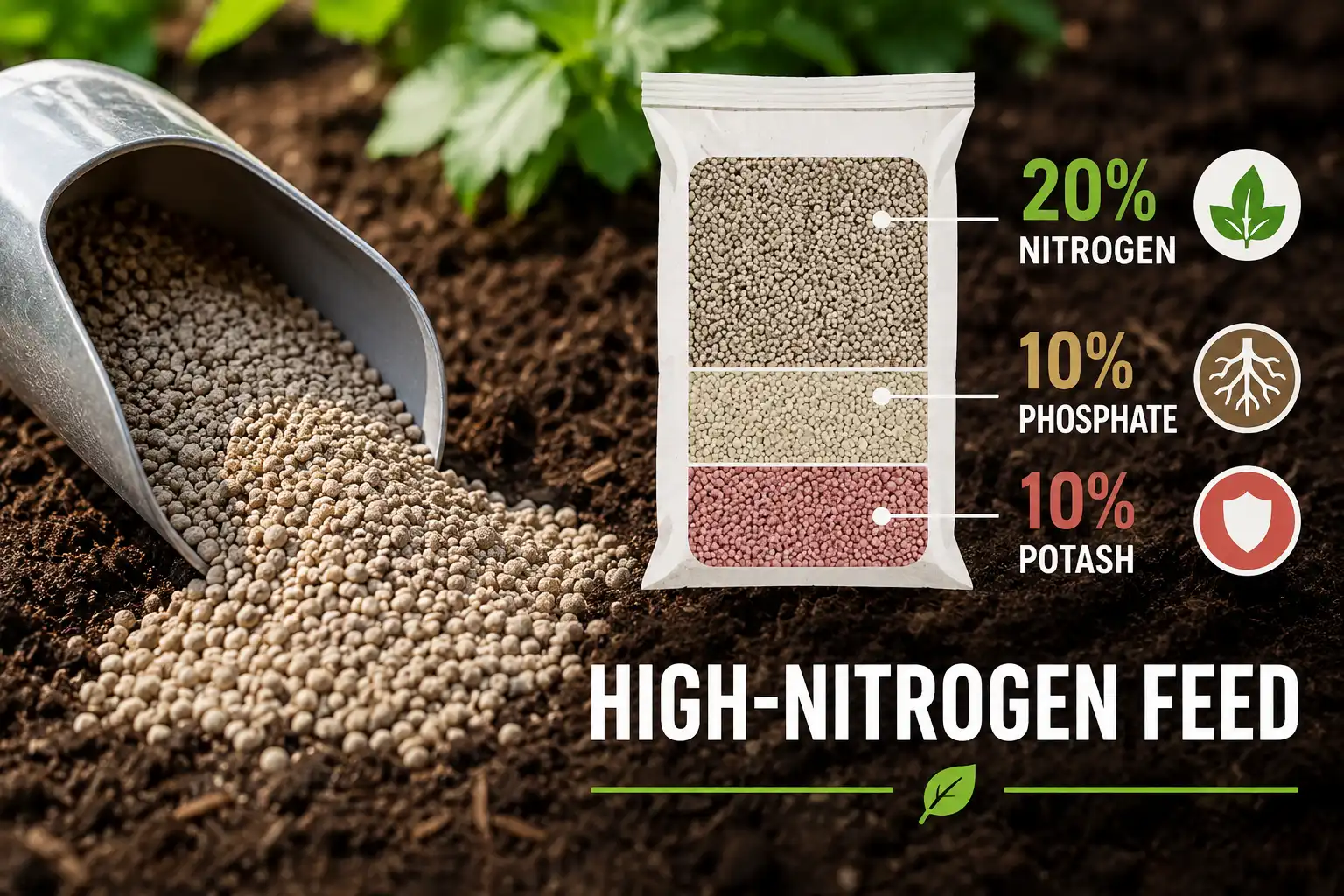
20-10-10 fertilizer is a high-nitrogen feed that pushes green, leafy growth fast. The three numbers tell you the nutrient mix inside the bag. Below is an explanation of what it is, what it feeds best, when to spread it, and exactly how much to use.
20-10-10 fertilizer is a dry blend of 20% nitrogen, 10% phosphate, and 10% potash. That heavy nitrogen load drives lush foliage, so it suits lawns, leafy greens, corn, and any plant grown for green leaves.
What Is 20-10-10 Fertilizer?
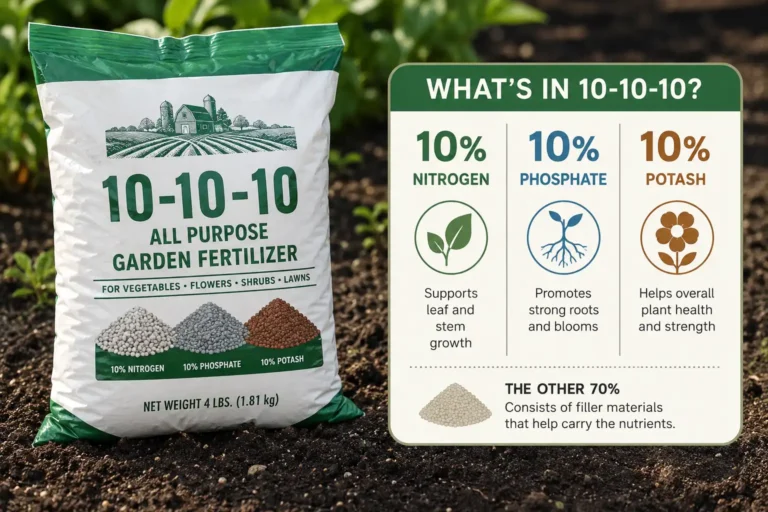
20-10-10 fertilizer is a plant food with 20% nitrogen, 10% phosphate, and 10% potash by weight. The other 60% is filler that carries the nutrients and helps them spread evenly. So a 100-pound bag holds 20 pounds of nitrogen, 10 pounds of phosphate, and 10 pounds of potash.
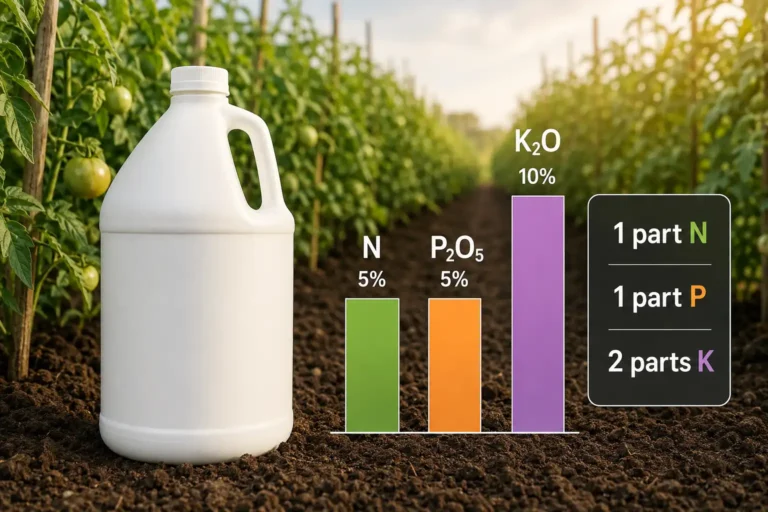
That works out to a 2:1:1 ratio. Nitrogen sits at double the phosphate and potash, so this is a nitrogen-forward feed. It drives leaves and shoots far more than it builds roots or fruit. For the full breakdown of how the NPK numbers work on any bag, our guide covers that in its own guide.
What Do the Numbers on 20-10-10 Mean?
The three numbers show the percentage of nitrogen, phosphate, and potash, always in that order. Nitrogen comes first at 20%. Phosphate sits next at 10%. Potash lands last at 10%. Every fertilizer label follows this same N-P-K order. Once you know the pattern, you can read any bag in seconds.
| Number | Nutrient | Amount | Main job |
|---|---|---|---|
| 20 | Nitrogen (N) | 20% | Leaf and shoot growth, deep green color |
| 10 | Phosphate (P2O5) | 10% | Root growth and flowering |
| 10 | Potash (K2O) | 10% | Vigor plus stress and disease resistance |
Nitrogen moves fast through both soil and plant tissue. Because of that, a shortage shows up first on the older, lower leaves as a pale, washed-out green. A high-nitrogen blend fixes that quickly.
What Is 20-10-10 Fertilizer Used For?
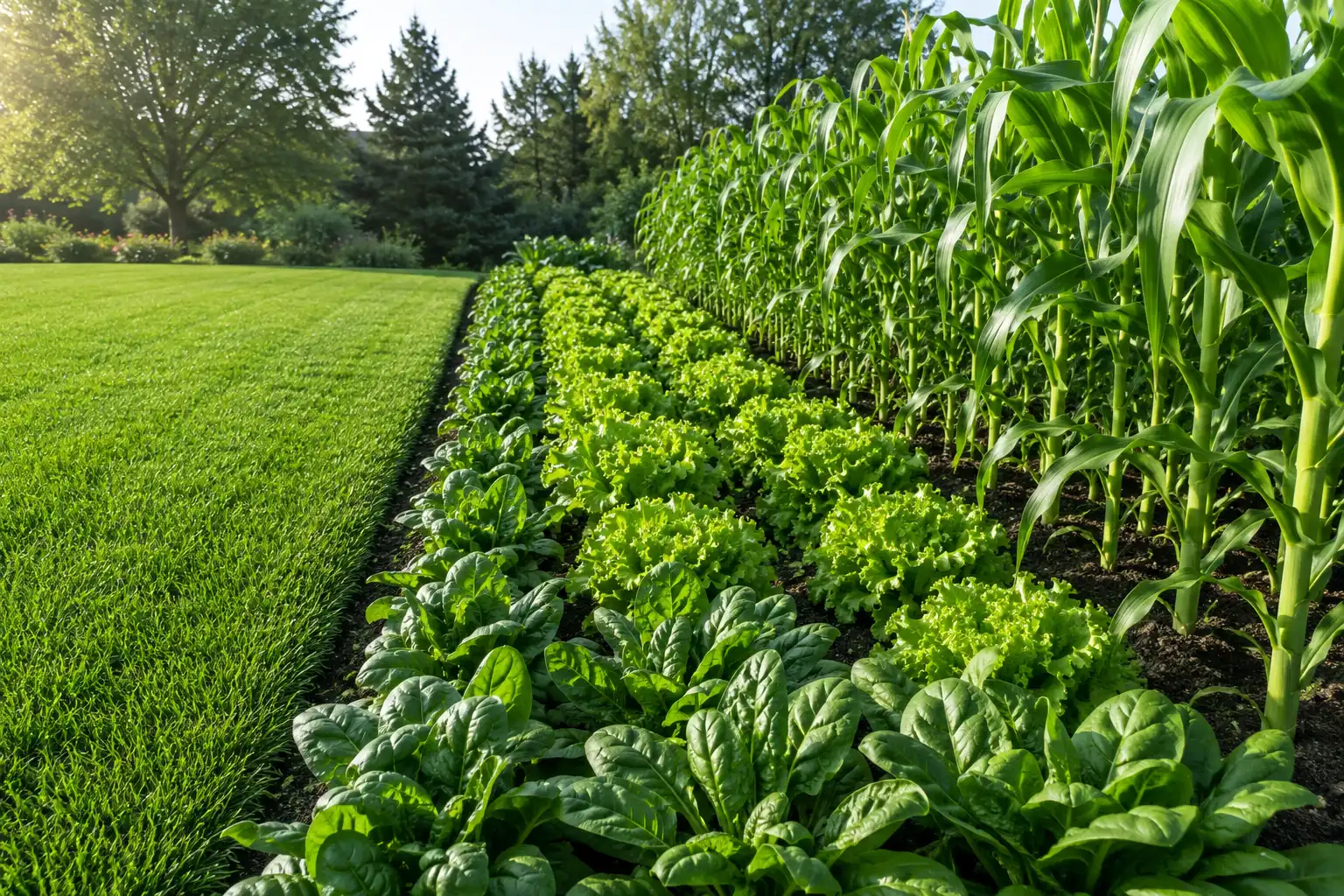
20-10-10 fertilizer is used to push quick green growth on plants that feed heavily on nitrogen. Lawns, leafy vegetables, corn, and grasses gain the most from it.
Here is where it earns its keep:
- Lawns and turf. Nitrogen deepens the color and thickens thin, patchy grass.
- Leafy greens. Lettuce, spinach, kale, and cabbage reward you in leaves, so extra nitrogen makes sense.
- Corn and grasses. These crops pull heavy nitrogen through their fast growth stretch.
- Young trees and shrubs. A spring feeding greens up tired, slow foliage.
- Pasture and food plots. Grass forage jumps after a nitrogen green-up.
Still, it is the wrong tool once plants start flowering and setting fruit. At that point they want more phosphate and potash, not nitrogen. Push nitrogen on tomatoes or peppers then, and you get tall, leafy plants with light fruit. Legumes such as soybeans and peanuts make their own nitrogen, so they skip a high-N feed too. For even, all-season feeding, a balanced 10-10-10 blend is the safer pick. When corn is your crop, this guide on feeding sweet corn walks through the timing.
When Should You Apply 20-10-10 Fertilizer?
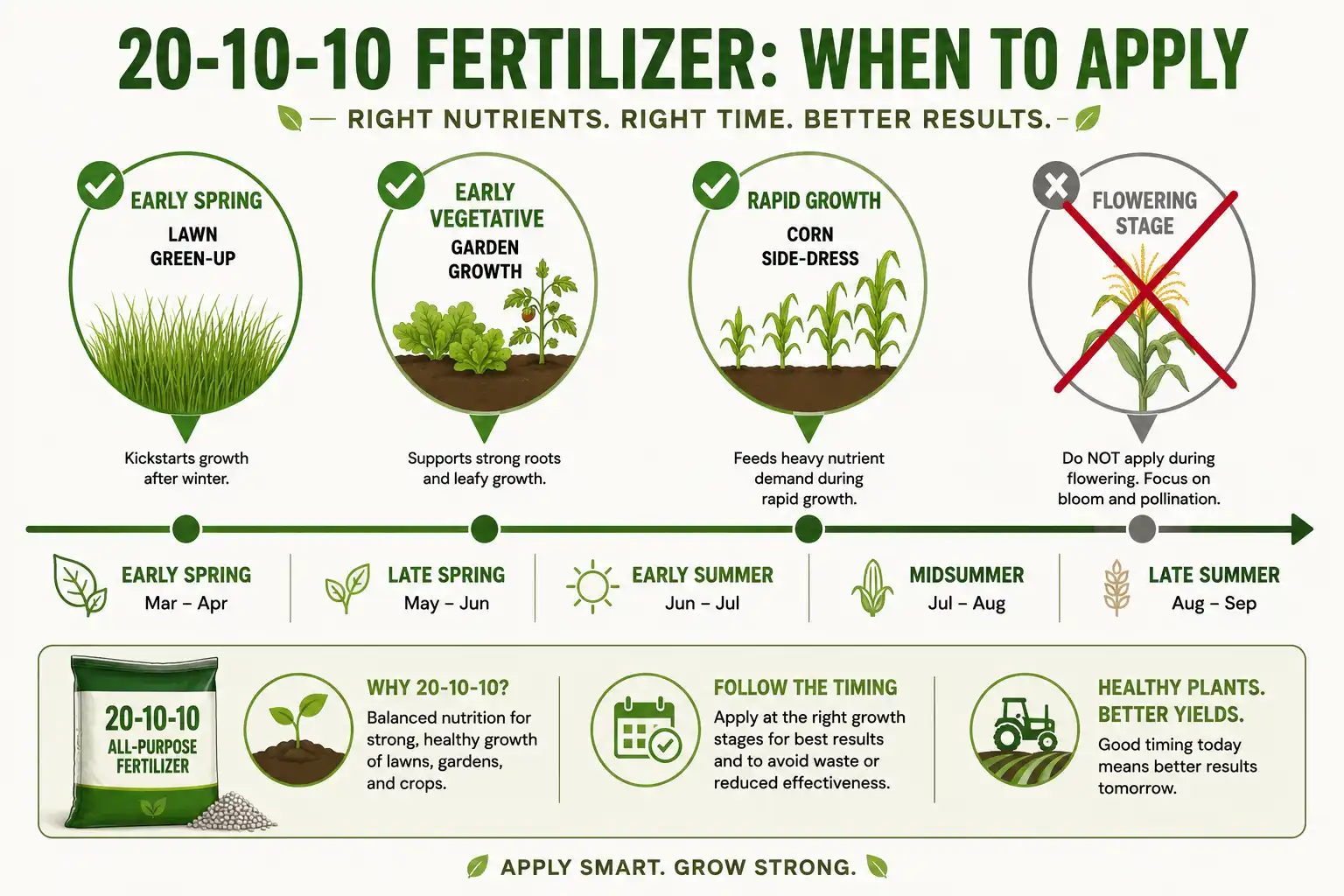
Apply 20-10-10 during active growth, when plants push leaves and stems the hardest. That is when they use nitrogen fastest and waste the least.
- Lawns: early spring for green-up, and again in early fall for cool-season grass.
- Vegetables: at the early leafy stage, before the first flowers open.
- Corn: at planting, then as a side-dress when the crop hits its fast growth window.
Reapply every 4 to 6 weeks while plants are still growing hard. Then stop once crops flower or fruit. Nitrogen leaches quickly, so spreading it too early wastes it below the roots. Split feedings also beat one heavy dose, because they hold color steadier and cut runoff.
How to Apply 20-10-10 Fertilizer Step by Step
Follow these steps for even feeding and no burn:
- Soil test first. Send a sample to your county extension office, or use a reliable soil test kit, to confirm the ground actually needs nitrogen.
- Measure the area. Get the square footage of the lawn or bed so you can weigh the right amount.
- Weigh the product. Use 5 pounds per 1,000 square feet on lawns, or about 1 pound per 100 square feet in garden beds.
- Spread it evenly. An accurate drop spreader or a broadcast spreader lays granules down uniformly. Split the load into two passes at right angles for full coverage.
- Keep it off the leaves. Brush any stray granules off wet foliage so they do not scorch the plant.
- Water it in. Add a quarter to a half inch of water to carry the nitrogen down to the roots.
That is the whole routine. The watering step matters most, because dry nitrogen left on the surface can scorch leaves and drift off target.
How Much 20-10-10 Fertilizer Should You Apply?
Apply 5 pounds of 20-10-10 per 1,000 square feet on lawns, which supplies about 1 pound of actual nitrogen. Keep every lawn feeding at or under that 1-pound nitrogen mark, since more than that risks burning the grass.
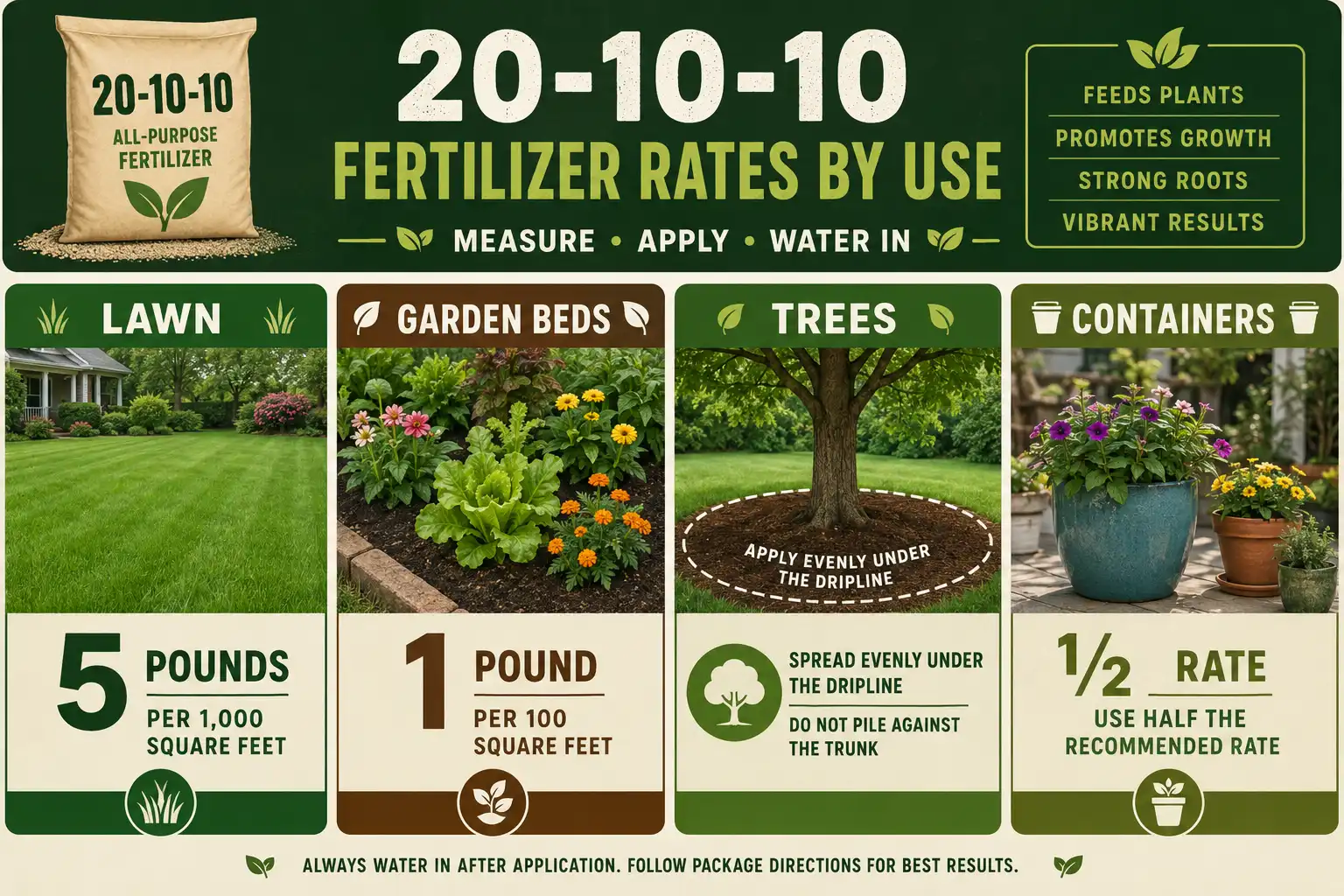
The math is simple: 1 pound of nitrogen divided by 0.20 equals 5 pounds of product. For gardens, trees, and containers, match the rate to the plant and always follow the label. Here are solid starting points by use.
| Use | Amount | Method | How often |
|---|---|---|---|
| Lawns | 5 lb per 1,000 sq ft | Broadcast, then water in | Every 4 to 6 weeks in active growth |
| Vegetable beds | About 1 lb per 100 sq ft | Work into the top 3 to 4 inches | Light side-dress every 4 to 6 weeks |
| Trees and shrubs | Per label, by size | Spread under the dripline, water in | Once in early spring |
| Containers | Half the label rate | Light and even, then water | Sparingly, and watch for burn |
On corn ground in Kansas, bulk nitrogen is the typical choice, not bagged 20-10-10. A bagged blend fits lawns, gardens, food plots, and smaller plots far better than field acres. For big acreage, growers reach for straight nitrogen like 46-0-0 or other bulk sources.
Is 20-10-10 Fertilizer Safe for Plants?
20-10-10 is safe at the label rate, but its high nitrogen can burn plants when you overdo it. High-analysis nitrogen carries a heavier salt load, and salt is what scorches roots and leaf tips.
Keep these habits and you stay out of trouble.
- Never top 1 pound of actual nitrogen per 1,000 square feet in one lawn feeding.
- Water granules in, and brush them off wet leaves.
- Hold off right before heavy rain to limit nitrogen runoff.
- Go light near seedlings and container plants, since both burn fast.
Nitrate leaching is a real worry on sandy ground and under heavy watering. So feed to the plant’s need and no further. That protects both your crop and the water table under it.
How Does 20-10-10 Compare to Other NPK Blends?
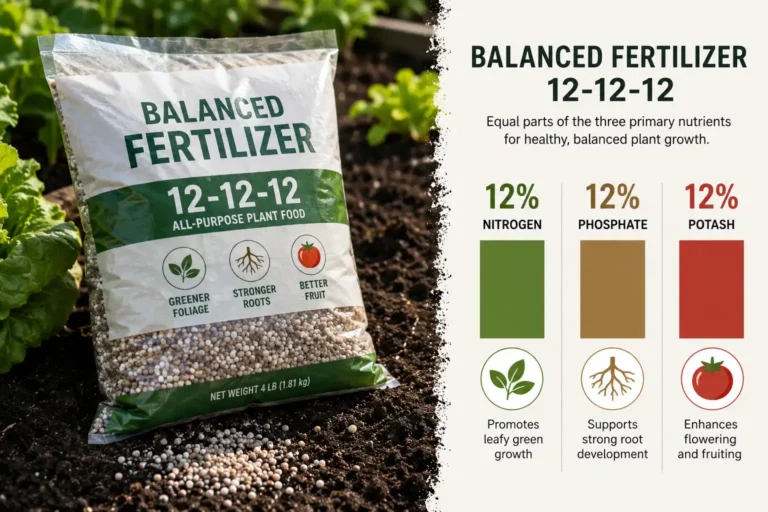
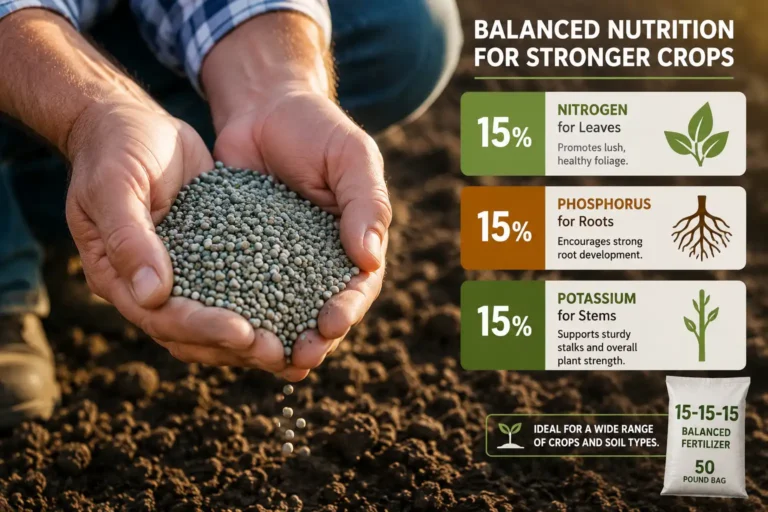
20-10-10 runs nitrogen-heavy, while balanced blends carry equal parts of each nutrient. Pick the ratio that matches your plant’s stage, not a single all-purpose number.
| Blend | Ratio | Best for |
|---|---|---|
| 20-10-10 | 2:1:1, high nitrogen | Green leafy growth, lawns, corn |
| 10-10-10 | 1:1:1, balanced | Steady all-around feeding |
| 5-10-10 | Low N, higher P and K | Roots, flowers, fruit set |
| 46-0-0 (urea) | Straight nitrogen | Nitrogen-only boost on big acres |
| 18-46-0 (DAP) | High phosphate starter | Root startup at planting |
So reach for 20-10-10 when you want leaves and deep color. Then switch to a balanced or low-nitrogen blend once the plant turns toward flowers and fruit.
What Is the Best 20-10-10 Fertilizer to Buy?
Supply Solutions NitroPlus 20-10-10 Fertilizer
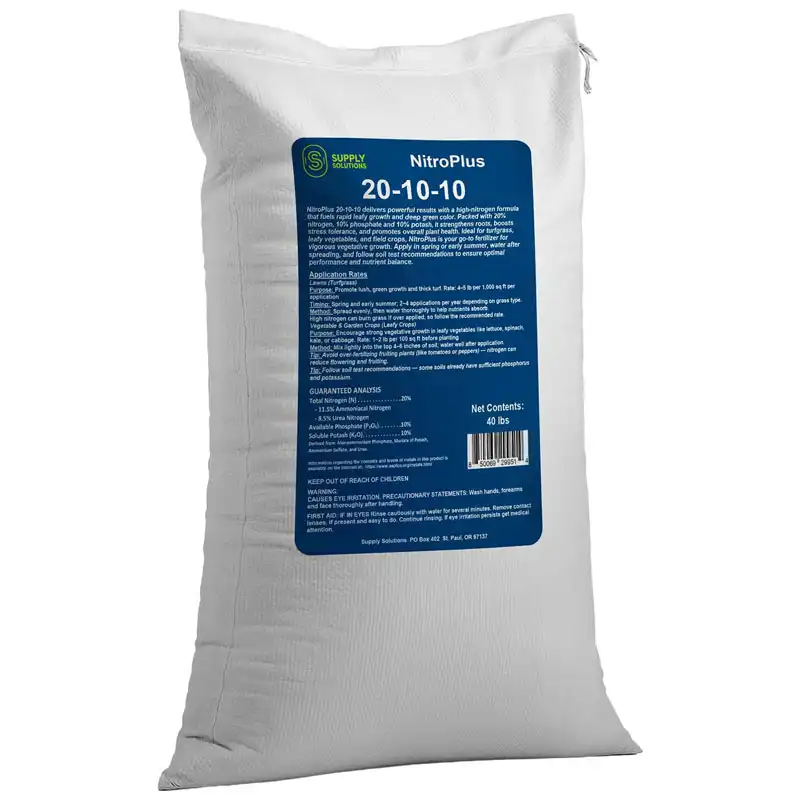
The Supply Solutions NitroPlus 20-10-10 is a strong all-purpose pick. It spreads as an easy dry powder and comes in four sizes, from 5 to 40 pounds.
Supply Solutions NitroPlus carries the standard 20-10-10 ratio in a fine dry powder. The maker positions it for lawns, gardens, shrubs, and trees. It also credits the potash share for added vigor and disease resistance. The fine powder is made for easy dry application over lawns and beds. Four sizes let you match the bag to the job instead of overbuying.
PROS
- Easy dry application
- Four sizes offered
- High nitrogen for green growth
- All-purpose yard use
CONS
- Burns if overapplied
Specs:
- Form: fine dry powder
- NPK: 20-10-10
- Sizes: 5, 10, 25, and 40 pounds
- Use: lawns, gardens, shrubs, and trees
Not sure which size to grab? The 5- and 10-pound bags suit raised beds and small gardens. The 25- and 40-pound bags cover full lawns and repeat feedings through the season.
Bottom Line for Your Field
20-10-10 shines when you want fast, green, leafy growth. Use it on lawns, leafy greens, corn, and young foliage while they grow hard, then stop at flowering. Soil test first, keep each lawn feeding under 1 pound of nitrogen, and water it in. Match the ratio to the stage, and your plants feed clean all season.