How to Plant Sweet Corn for Full, Sweet Ears Every Time
Fresh sweet corn from your own patch beats anything from a store. Getting the planting right is what fills every ear with kernels. Learning how to plant sweet corn comes down to warm soil, the right type, and a block that pollinates well.
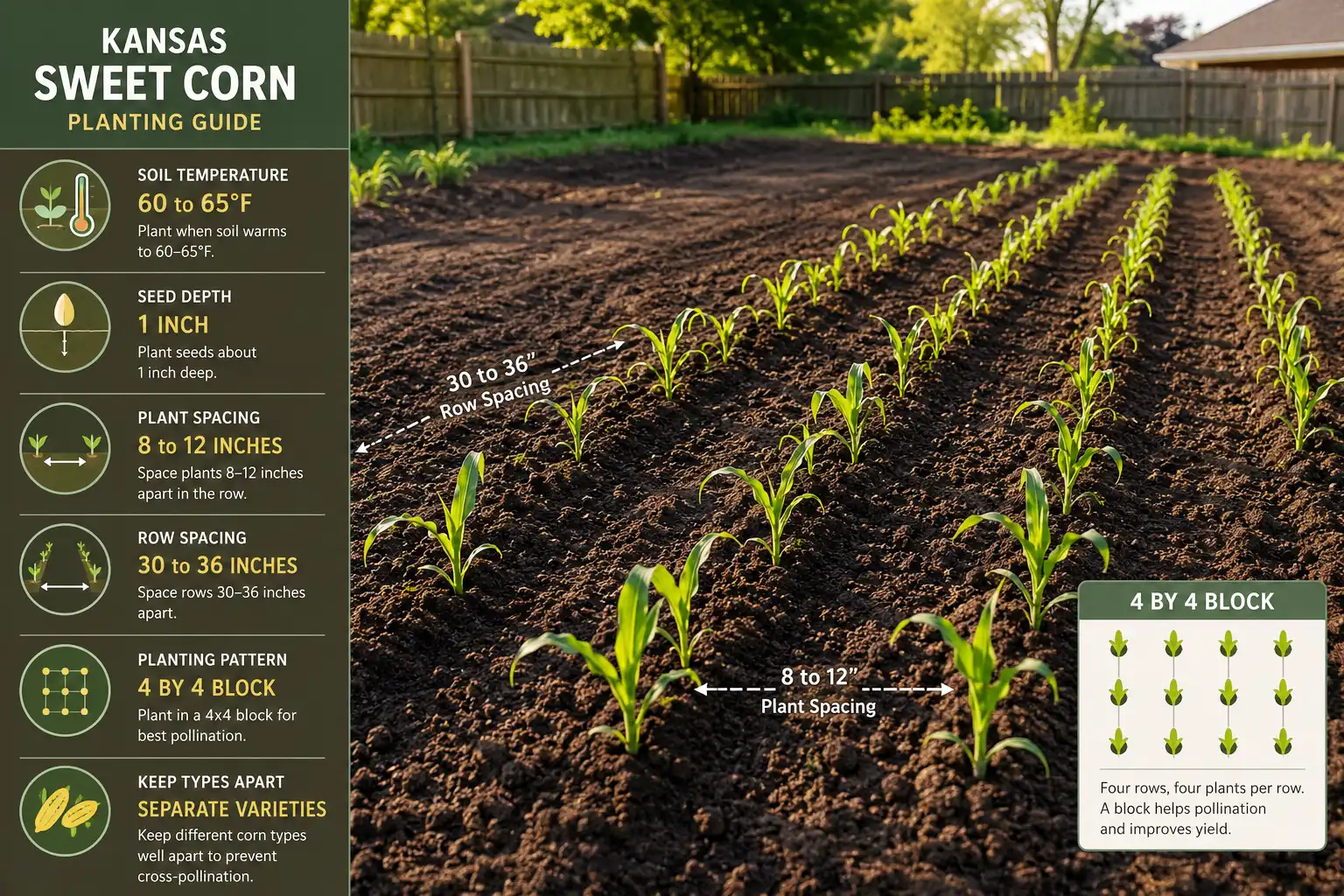
Plant sweet corn once soil hits 60°F, or 65°F for supersweet types. Sow seed 1 inch deep and 8 to 12 inches apart, in a block of four or more rows. Keep types apart to protect sweetness.
Start by Choosing Your Sweet Corn Type
The sugar type you pick changes how you plant, so choose it first. Seed catalogs sort varieties by a sweetness gene. Each type wants slightly different soil and handling. Five kinds show up most often, from old-fashioned to candy sweet.
| Type | Sweetness and holding | Plant when soil is | Keep apart from |
|---|---|---|---|
| Standard sugary (su) | Classic corn flavor, holds 1 to 2 days | 55°F or warmer | Field corn and popcorn |
| Sugary enhanced (se) | Sweeter and tender, holds 2 to 4 days | 60°F or warmer | Field corn and popcorn |
| Supersweet (sh2) | About three times as sweet, holds up to a week | 65°F or warmer | su, se, field corn, popcorn |
| Synergistic (sy) | Sweet, creamy, tender, great holding | 60°F or warmer | sh2 and augmented types |
| Augmented supersweet (shA) | Supersweet with added tenderness | 65°F or warmer | su, se, and synergistic |
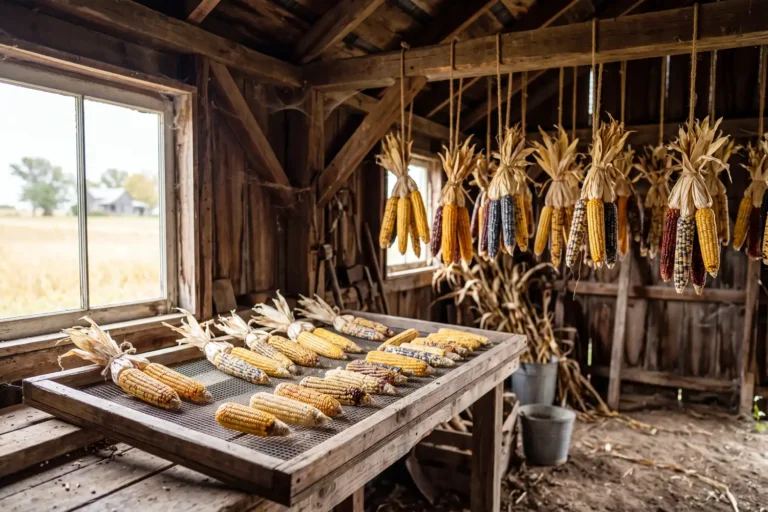
Supersweet keeps market growers in business, because it holds its sugar longest and ships without turning starchy. Synergistic types give you that sweetness with a creamier bite. One point trips people up. The sweetness itself comes from ordinary crossbreeding, never from lab engineering. A few varieties do carry an added GMO trait for insect resistance. Those are labeled and aimed at commercial fields, so nearly all garden seed is non-GMO.
When to Plant Sweet Corn
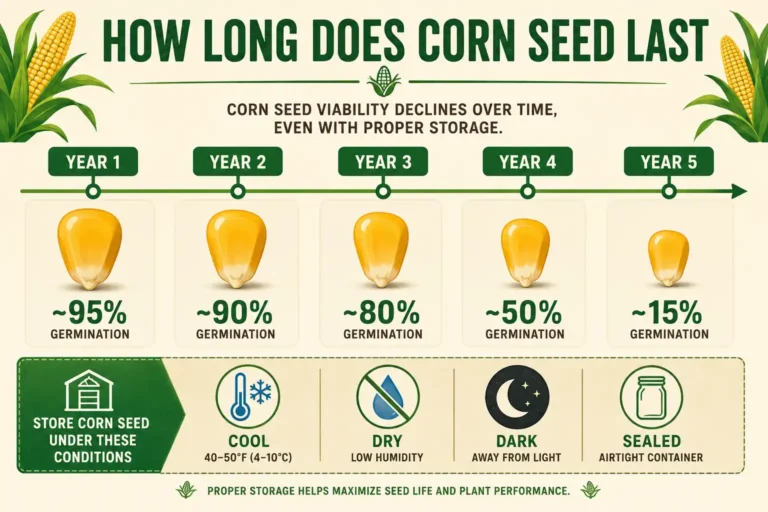
Plant sweet corn when the soil warms to the mark your type needs, not by the calendar. Standard (su) types go in at 55°F. Sugary enhanced and synergistic want 60°F. Supersweet and augmented types want 65°F. Their seed rots in cold ground and sprouts poorly below that. Iowa State puts the ideal range for growth at 60 to 85°F.
Guess at this. Instead, the ground should be read with a good soil thermometer at planting depth, before the bag is opened. In USDA zone 6a near Topeka, sweet corn typically goes in during late April. Hold the supersweet until mid-May.
Frost scares new growers more than it should. Once sweet corn sprouts, a light frost rarely kills it. The growing point sits below the soil until the plants reach about knee-high. Still, never rush cold soil. Seed dropped into a cold, wet bed just sits and rots. For a short-season variety, the last practical planting runs around July 1. That way it finishes before fall frost.
How to Plant Sweet Corn Step by Step
Follow the same order each time and your stand comes up even. Here is how to plant sweet corn from the ground up.
- Pick a full-sun spot. Sweet corn needs at least 6 to 8 hours of direct sun. Full-day sun is best.
- Prep the soil. Aim for a pH of 6.0 to 6.8. Work in compost or aged manure. A soil test tells you what to feed.
- Wait for warm soil. Check the temperature at planting depth. Hit the mark your type needs.
- Lay out a block. Set rows 30 to 36 inches apart. Plant at least four rows side by side.
- Sow the seed. Drop seed about 1 inch deep, spaced 8 to 12 inches apart. Set two seeds per spot for insurance.
- Firm and water. Press soil over each seed. Then water gently so you do not wash seed out of place.
- Thin to one. When seedlings hit 4 to 6 inches, keep the strongest plant at each spot. Crowded plants never catch up.
The mechanics carry over to every kind of corn. For those also growing field corn or popcorn, step-by-step corn planting guide walks through the shared basics.
How Deep to Plant Sweet Corn Seed
Plant sweet corn seed 1 inch deep in most soils. In light, sandy ground that dries fast, you can go up to 2 inches. Keep it shallower in cool spring soil. That keeps the seed from sitting cold too long.
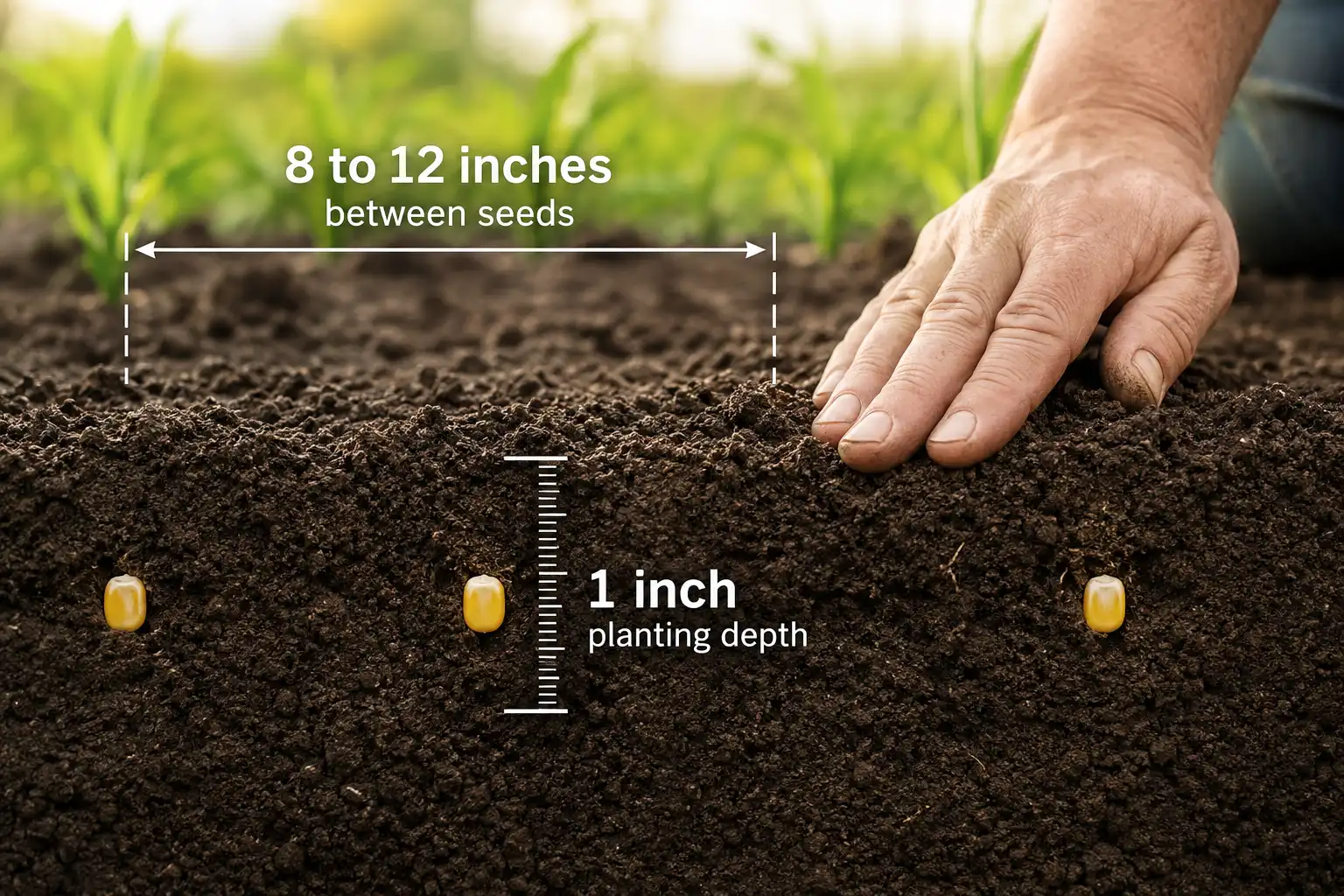
Supersweet (sh2) seed needs the most care. Never set it deeper than three-fourths to 1 inch. The kernels are shrunken and short on stored energy. A deep-set supersweet seed often never reaches the top. Supersweet also drinks about twice the water before it sprouts. So keep the seedbed moist until the shoots break through. Most supersweet seed comes treated with fungicide, which helps it survive cool soil.
How Far Apart to Space Sweet Corn
Space sweet corn 8 to 12 inches apart in the row. Keep rows 30 to 36 inches apart. That spacing gives each stalk room for a full ear and good airflow. Crowd them and you get small, gap-toothed ears and more disease. Short on space? Plant in hills instead. Drop four or five seeds per hill, and set hills about 3 feet apart.
Why Sweet Corn Grows in a Block, Not a Row
Corn pollinates by wind, so a single long row lets half the pollen blow off into open air. Plant sweet corn in a block of at least four short rows instead. A 4 by 4 square is the smallest block for solid pollination. More rows only make it better.
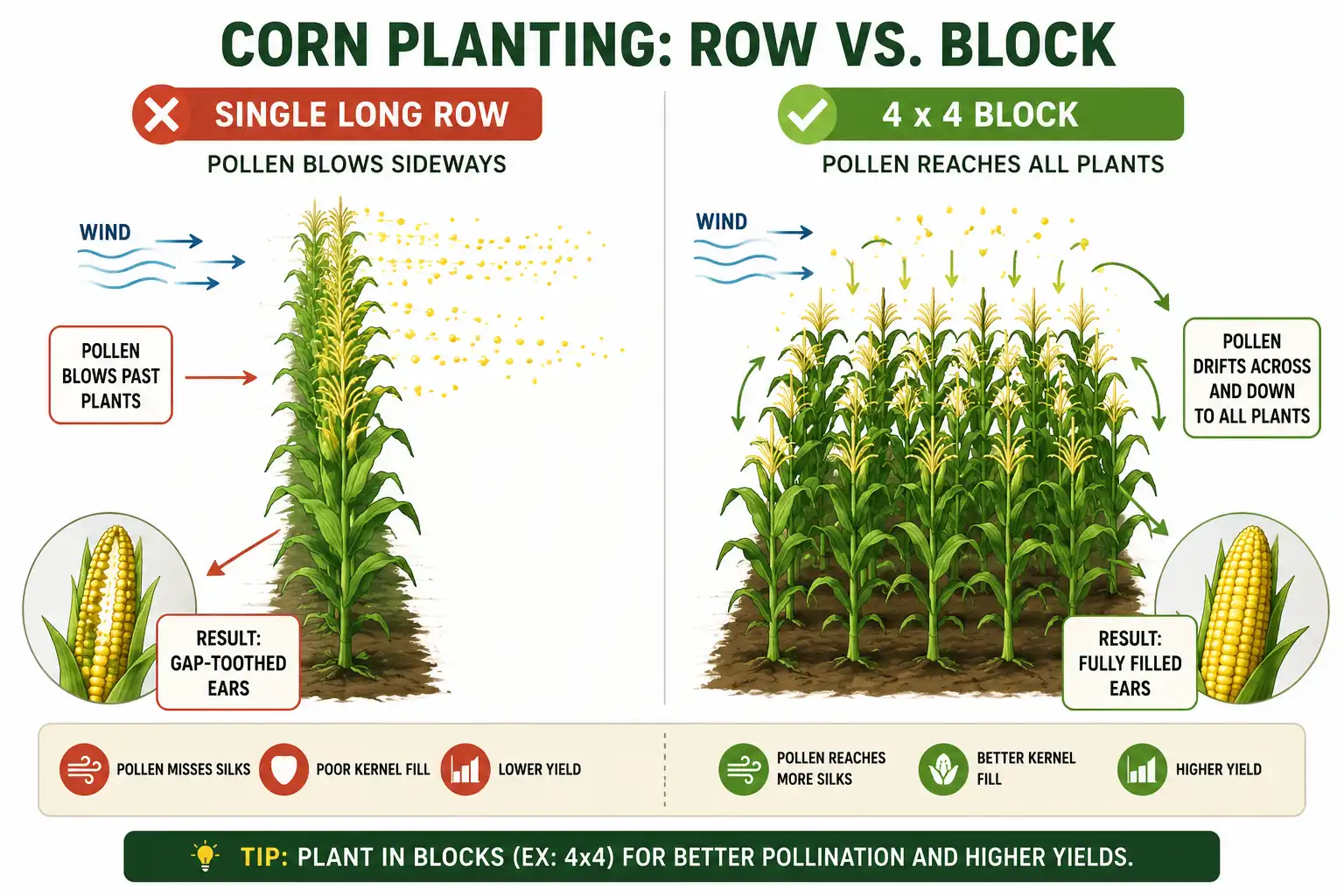
The reason is simple. The tassel on top is the male flower. It sheds pollen that drifts down on the breeze. The silks on each young ear are the female side. Every silk feeds one kernel. A pollen grain has to land on a silk for that kernel to fill. Miss it, and you get a blank spot on the cob. A block surrounds each plant with pollen on all sides.
A block also holds up better in weather. A lone row catches a Kansas thunderstorm and goes flat. Four rows lean on each other and stand. Want the layout and plant counts worked out? Go deeper in our guide to planting corn in blocks for full ears.
How to Keep Sweet Corn Types From Crossing
Keep each corn type at least 250 feet from the others. Or stagger planting so they tassel at least 14 days apart. Skip this, and cross-pollination turns your crop starchy and tough.
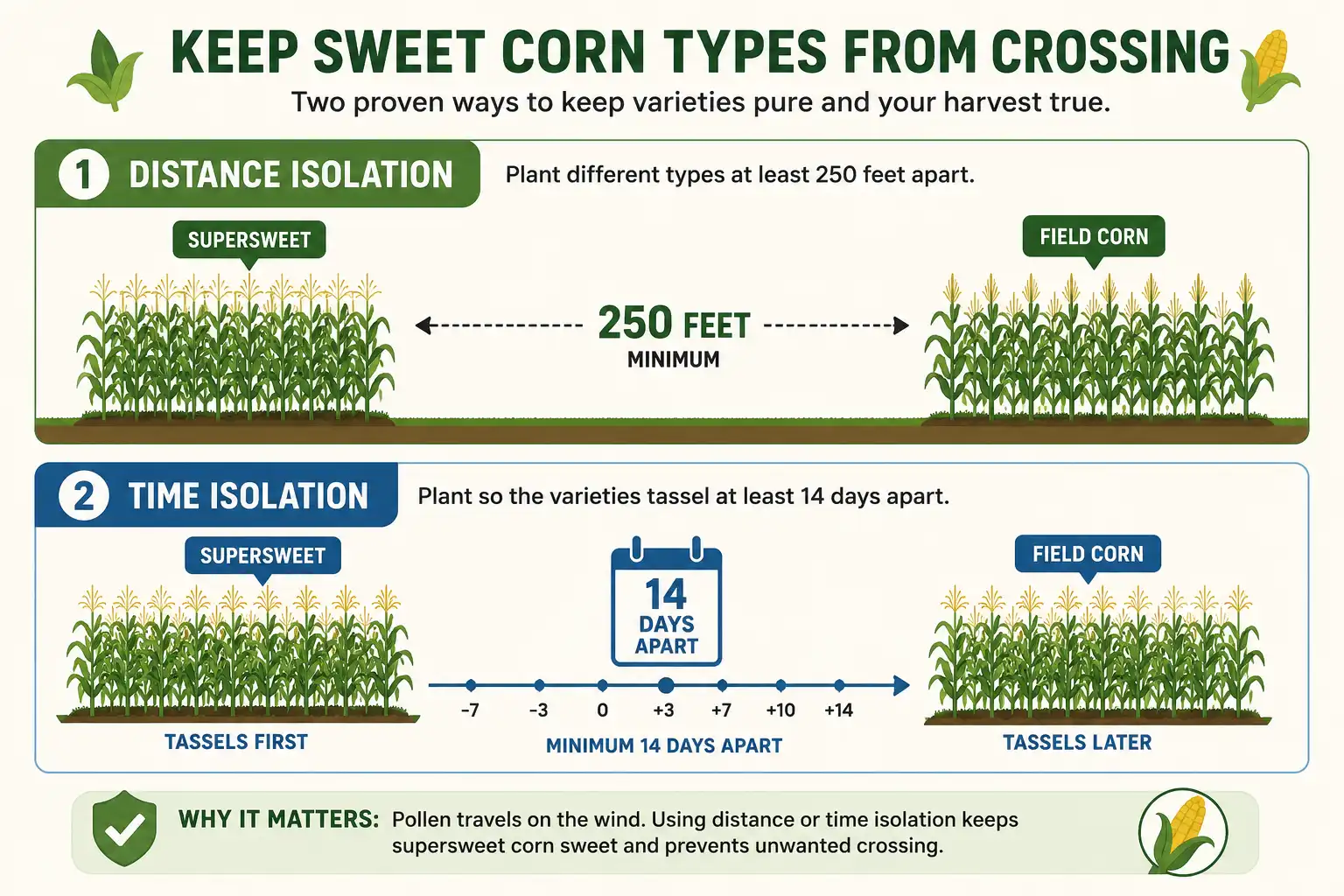
This catches a lot of new growers. Corn pollen does not care about variety. Picture a supersweet block shedding pollen next to a sugary block at the same time. The cross ruins the sweetness in both. All sweet corn also needs distance from field corn, popcorn, and ornamental corn. Near big fields, leave 300 feet or more to the nearest field corn. Those acres throw off a huge cloud of pollen.
Not every pair needs separating. Standard (su) and sugary enhanced (se) can grow side by side just fine. White types do need to stay clear of yellow and bicolor, though. Cross those, and you get speckled kernels.
How to Protect Sweet Corn Seedlings
Two things threaten a young sweet corn stand: birds and crusted soil. Both hit right after planting, so get ahead of them.
Crows and blackbirds pull seedlings to eat the seed still attached below. They can strip a row in a morning. A lightweight row cover over the bed stops them cold. Leave it on until the plants reach a few inches tall, then pull it.
Crusting is the other trap. A hard rain on bare soil can bake into a crust that weak seedlings cannot punch through. Supersweet struggles the most. A thin mulch, or a light watering to soften the surface, helps the shoots break out.
Planting in Waves for Corn All Summer
Plant a fresh block every two weeks. Or set out early, mid, and late varieties on the same day. Either way, ears keep coming instead of one big flush you cannot eat fast enough.
Each planting stays at eating stage for only about 7 to 10 days. So one giant block ripens all at once, and half goes to waste. Drop a new short block every couple of weeks until early July. Timing the waves gets easier once you know how long sweet corn takes to sprout in your soil. For an early jump, you can start a few plants in cells and transplant them young, before the roots circle. Direct sowing into warm soil is still the standard, though.
Watering and Feeding a New Planting
Give sweet corn 1 to 1.5 inches of water a week. Never let a new planting dry out. Feed it light at planting, then heavier once it is up and growing. The make-or-break stretch runs from tassel through ear fill, about three weeks. So keep the water steady through pollination.
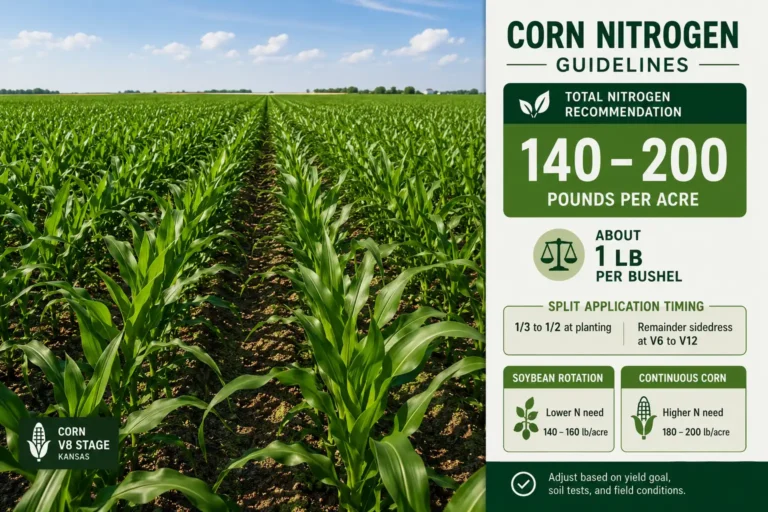
Corn is a heavy nitrogen feeder, but it takes up little early on. A small band of starter fertilizer near the seed helps roots in cool soil. Nitrogen should be side-dressed once when plants stand about a foot tall. Then nitrogen should be side-dressed again when the tassels show. Match your rates to a soil test. Most ground already holds plenty of phosphorus, so do not overdo it. The amounts and timing are laid out in this guide to feeding sweet corn.
Sweet Corn Planting Mistakes to Avoid
A few slips at planting show up later as thin stands or half-empty cobs. Watch for these:
- Planting in cold, wet soil. The seed rots before it sprouts. Wait for the temperature your type needs.
- Planting one or two rows. Poor pollination leaves gap-toothed ears. Block it up, four rows at least.
- Mixing supersweet with other types. The cross turns kernels starchy. Separate them by distance or timing.
- Setting supersweet seed too deep. Keep it to three-fourths to 1 inch so the weak seed can surface.
- Letting the seedbed dry out. Steady moisture is what pulls the shoots up, supersweet most of all.
- Skipping the soil test. You end up guessing on feed and pH, and it usually costs yield.
How Long Until You Pick Sweet Corn
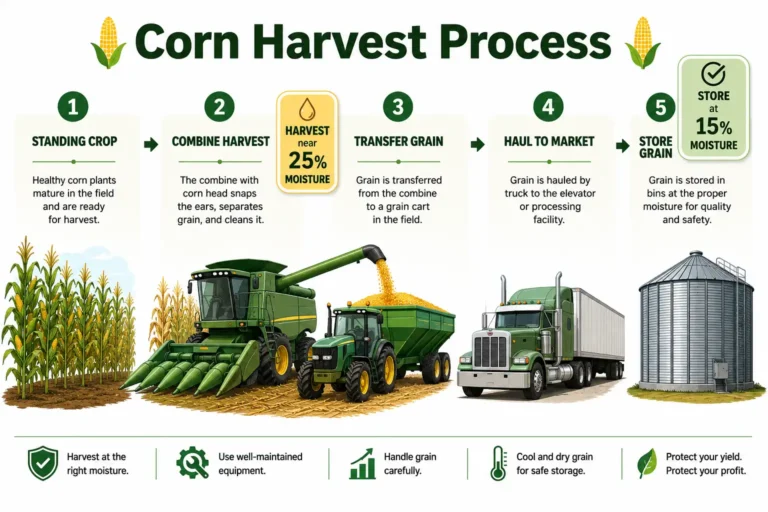
Sweet corn runs about 60 to 100 days from planting to harvest, depending on the variety. Early types finish fastest. Each block gives you roughly a 7 to 10 day picking window. Keep an eye on the silks. Once they turn brown and dry, and the ears feel full and firm, you are close. For the full rundown, here is how to tell when the ears are ready to pick.
Bottom Lines
Sweet corn goes in only after the soil clears the mark for that type. Choose the sugar type first. Then it should be blocked up, four rows at least. Keep the supersweet well away from anything that would cross it. After that, in waves so we eat fresh corn for weeks. Nail the soil temperature, the block, and the isolation, and your ears fill out end to end.