14 14 14 Fertilizer: Rates, Timing, and Best Bags
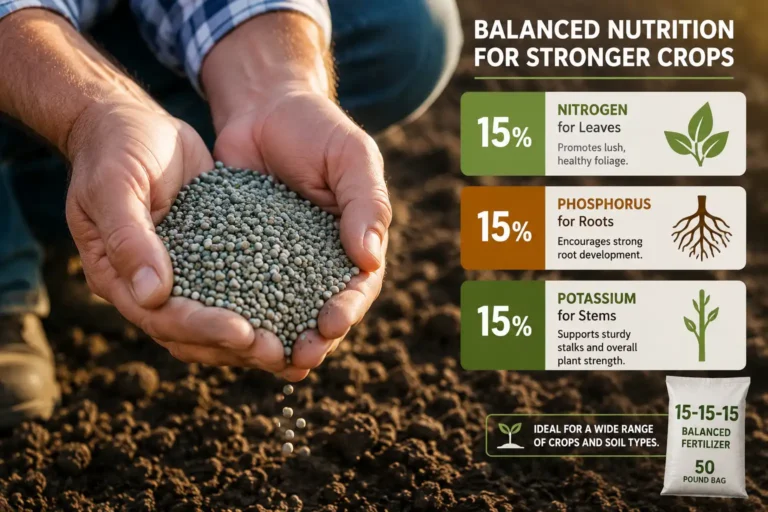
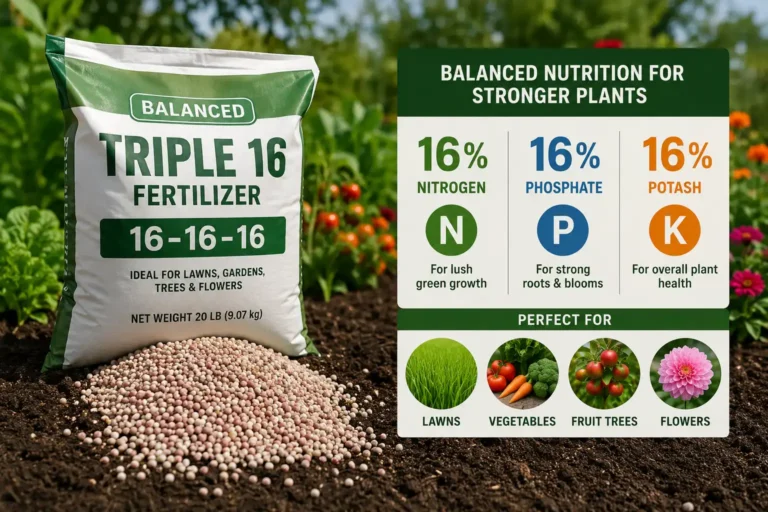
14-14-14 fertilizer is a balanced grade that supplies equal nitrogen, phosphate, and potash. Most bags on US shelves carry a slow release coating. That changes how much you apply, how often, and which crops actually gain from it.
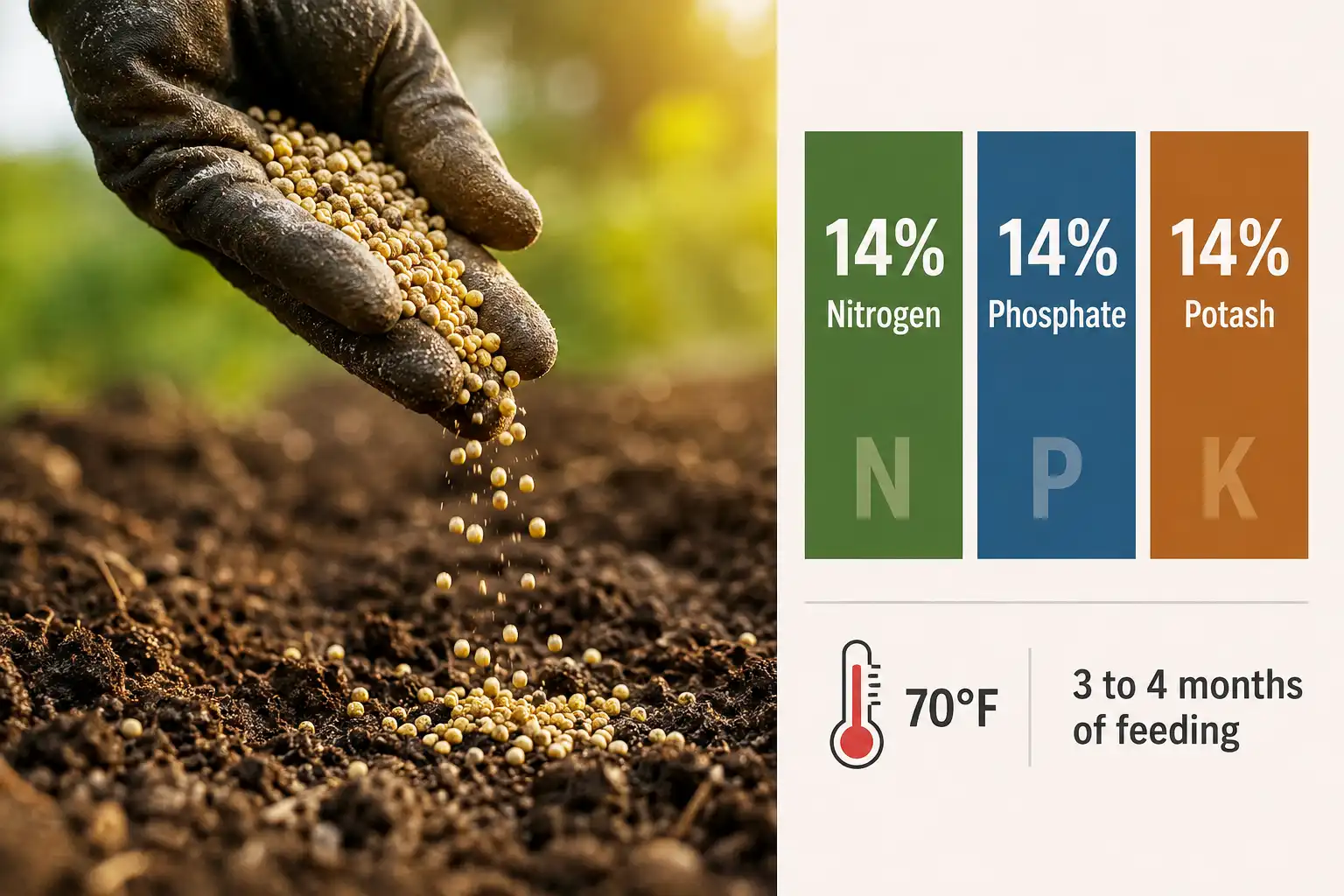
14-14-14 fertilizer supplies 14% nitrogen, 14% phosphate, and 14% potash by weight. Most US products carry a resin coating and feed for three to four months. Soil temperature, not watering, controls the release rate.
What Is 14-14-14 Fertilizer?
14-14-14 fertilizer is a complete, balanced grade carrying 14 percent nitrogen, 14 percent available phosphate, and 14 percent soluble potash. Those three numbers report percent by weight. So a 50 pound bag holds 7 pounds of each nutrient.
The other 58 percent is not dead weight. Coated products spend part of it on the resin shell. Many blends also carry sulfur, magnesium, and trace elements. A carrier material fills the rest so granules spread evenly.
Always read the guarantee panel instead of the front of the bag. It lists every nutrient and the source material behind it. These three figures line up with crop demand in a specific way. Our guide to what the NPK numbers mean for crops walks through it.
Read next: 10 20 20 Fertilizer Guide
What a Bag Actually Supplies
| Product weight | Nitrogen (N) | Phosphate (P₂O₅) | Potash (K₂O) |
|---|---|---|---|
| 1 lb | 0.14 lb | 0.14 lb | 0.14 lb |
| 5 lb | 0.70 lb | 0.70 lb | 0.70 lb |
| 8 lb | 1.12 lb | 1.12 lb | 1.12 lb |
| 15 lb | 2.10 lb | 2.10 lb | 2.10 lb |
| 40 lb | 5.60 lb | 5.60 lb | 5.60 lb |
| 50 lb | 7.00 lb | 7.00 lb | 7.00 lb |
What Is 14-14-14 Fertilizer Used For?
14-14-14 fertilizer works best on annual vegetables, bedding plants, perennials, container crops, and young ornamental trees and shrubs. It suits ground where a soil test shows all three nutrients sitting low or moderate. That situation is common in new beds, sandy ground, and fresh potting mix.
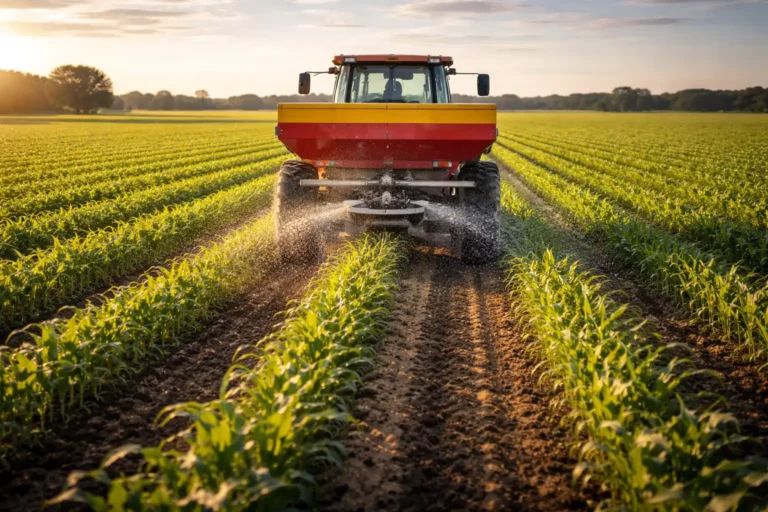
It is not a row crop product. For corn and soybean acres, buying nitrogen, phosphate, and potash separately is a common approach. Match each rate to the soil test. Coated balanced grades cost far too much per pound of nutrient at field scale.
| Where it fits | Why it works |
|---|---|
| Raised beds and new garden ground | Low starting fertility across all three nutrients |
| Containers and hanging baskets | Frequent watering flushes soluble nutrients out fast |
| Transplants and bedding plants | Steady feeding beats a heavy salt hit at the root ball |
| Young trees and shrubs | One spring pass covers the whole flush of growth |
| High tunnels and greenhouse benches | Warm soil, tight root zones, no rain leaching |
| Sandy or coarse soils | Coating holds nutrients against leaching |
How Does 14-14-14 Slow Release Fertilizer Work?
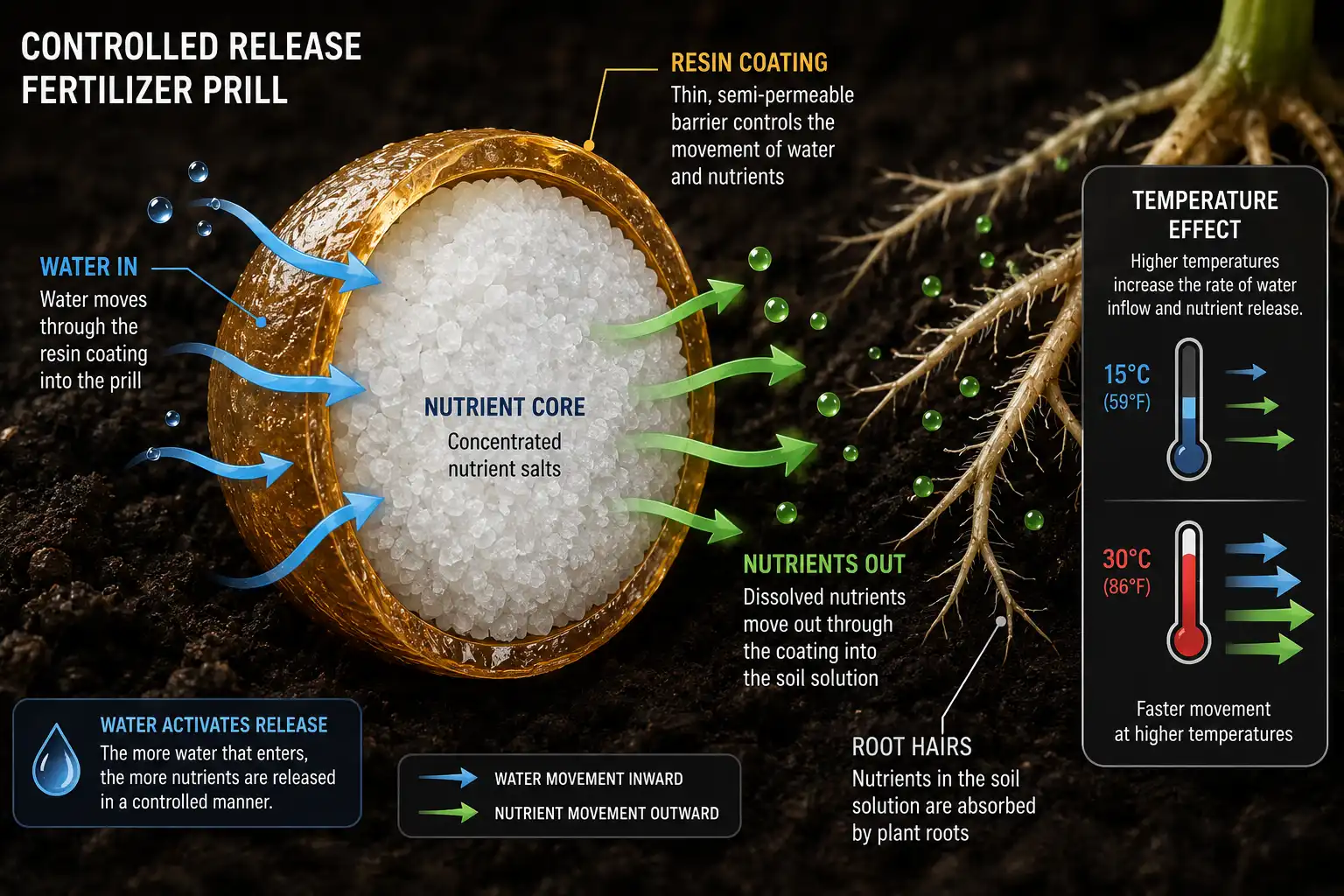
A 14-14-14 slow release fertilizer holds soluble nutrients inside a semi-permeable shell, then meters them out as soil warms. Soil moisture soaks through the coating and dissolves the core. Osmotic pressure then pushes that solution back out through tiny pores.
Ohio State University Extension explains the mechanics clearly. Coating thickness and temperature set the release speed. Once the core empties, the shell breaks down in the soil.
The Osmocote slow release coating uses an alkyd resin derived from linseed oil. ICL, the manufacturer, states that pH, salinity, microbial activity, and rainfall do not change the release rate. Only temperature does.
That single fact matters more than anything else on the bag. Cool spring soil stretches the feeding window. Hot July soil burns through it fast.
How Long Does One Application Last?
One application lasts three to four months at an average soil temperature of 70°F. That reading is the reference point printed on most labels. Warmer ground shortens it. Cooler ground stretches it.
| Average soil temperature | Feeding window for a 14-14-14 coated product |
|---|---|
| 60°F | 4 to 5 months |
| 70°F | 3 to 4 months |
| 80°F | 1 to 2 months |
In Topeka, 4-inch soil crosses 60°F in early May. By mid-July it runs past 80°F. So a May application in USDA zone 6a often runs thin by early August. Plan around that instead of trusting the “up to 4 months” claim on the front panel.
What the Osmocote 14-14-14 Label Tells You
The Osmocote 14-14-14 label lists the guaranteed analysis, the derived-from statement, and the application rate. All three matter. The consumer bag guarantees 14 percent total nitrogen, 14 percent available phosphate, and 14 percent soluble potash.
The derived-from line names polymer-coated ammonium nitrate, ammonium phosphate, calcium phosphate, and potassium sulfate. That tells you two useful things. Nitrogen comes in both nitrate and ammonium form, so plants get an immediate-use source and a slower one. Potassium sulfate also brings sulfur along, which many Great Plains soils need.
The label rate reads 1 scoop (about 3 tablespoons) per 4 square feet. That equals 1 pound per 40 square feet. Mix it into the top 1 to 3 inches of soil. Scotts also states the product will not burn plants even at three times that rate.
Professional bags print a lighter landscape rate, often near 7 pounds per 1,000 square feet. Both numbers are correct. They target different jobs, so match the rate to the planting rather than the brand.
How Much 14-14-14 Fertilizer Do You Need?
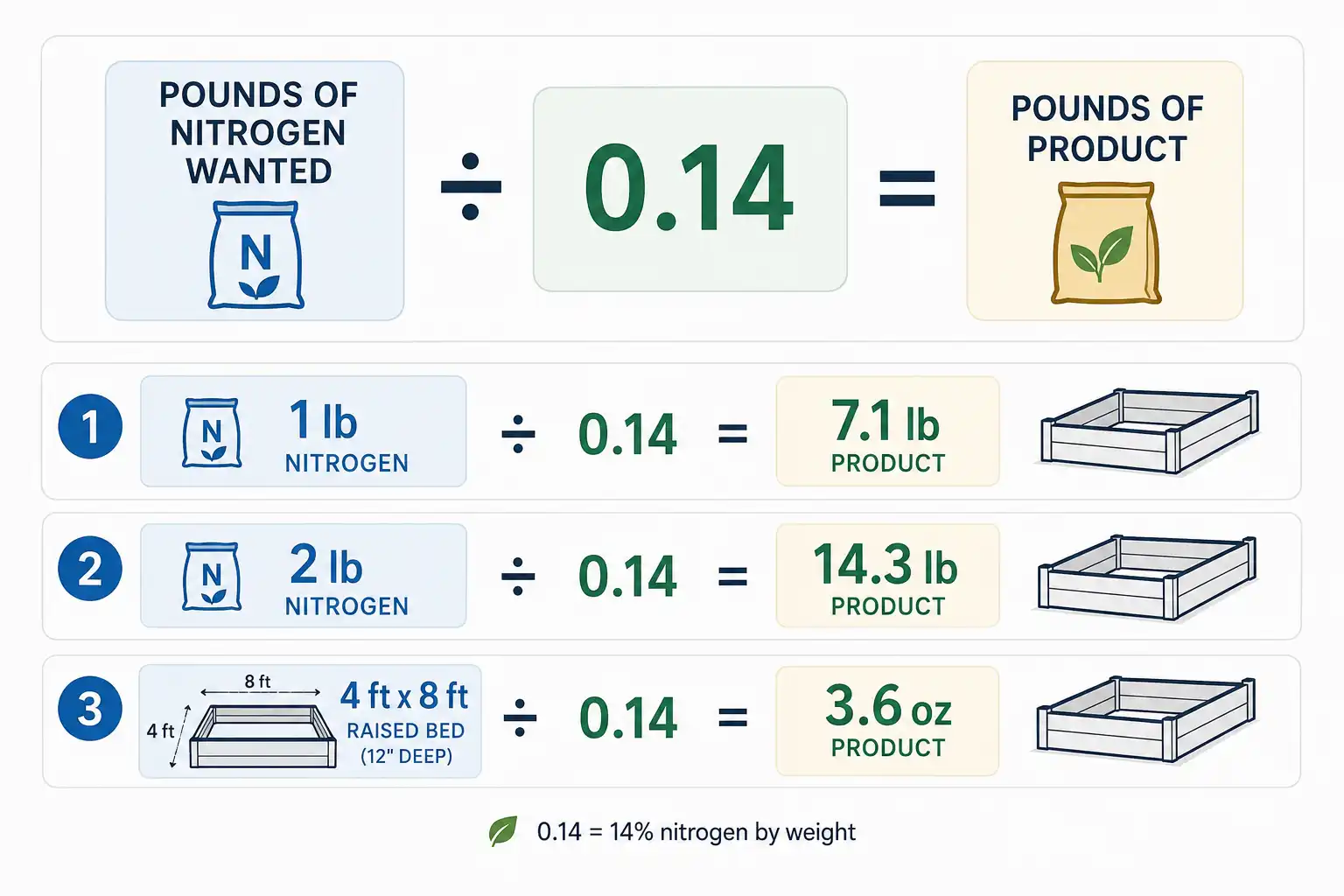
Divide the pounds of nitrogen you want by 0.14. That gives you pounds of product. Iowa State University Extension teaches this same method for any grade.
Worked examples:
- Goal: 1 lb nitrogen per 1,000 sq ft. 1 ÷ 0.14 = 7.1 lb of 14-14-14 per 1,000 sq ft.
- Goal: 2 lb nitrogen per 1,000 sq ft. 2 ÷ 0.14 = 14.3 lb of product.
- A 4 ft x 8 ft raised bed (32 sq ft) at 1 lb N per 1,000 sq ft. 7.1 × (32 ÷ 1,000) = 0.23 lb, or roughly 3.6 ounces.
Utah State University Extension suggests 2 to 4 pounds of nitrogen per 1,000 square feet. That range covers a vegetable garden with no soil test on file. The consumer Osmocote rate of 1 pound per 40 square feet equals 25 pounds per 1,000 square feet. That delivers 3.5 pounds of nitrogen. That sits at the top of the range, so treat it as a full-season budget rather than a monthly feeding.
A soil test settles the question in about two weeks and costs less than one bag. Our article on testing soil before you fertilize covers sampling depth and timing.
How to Apply 14-14-14 Fertilizer
Work coated granules into the root zone before planting, then water them in. Surface granules on bare, dry ground release poorly and wash off in a hard rain.
Step by step for garden beds:
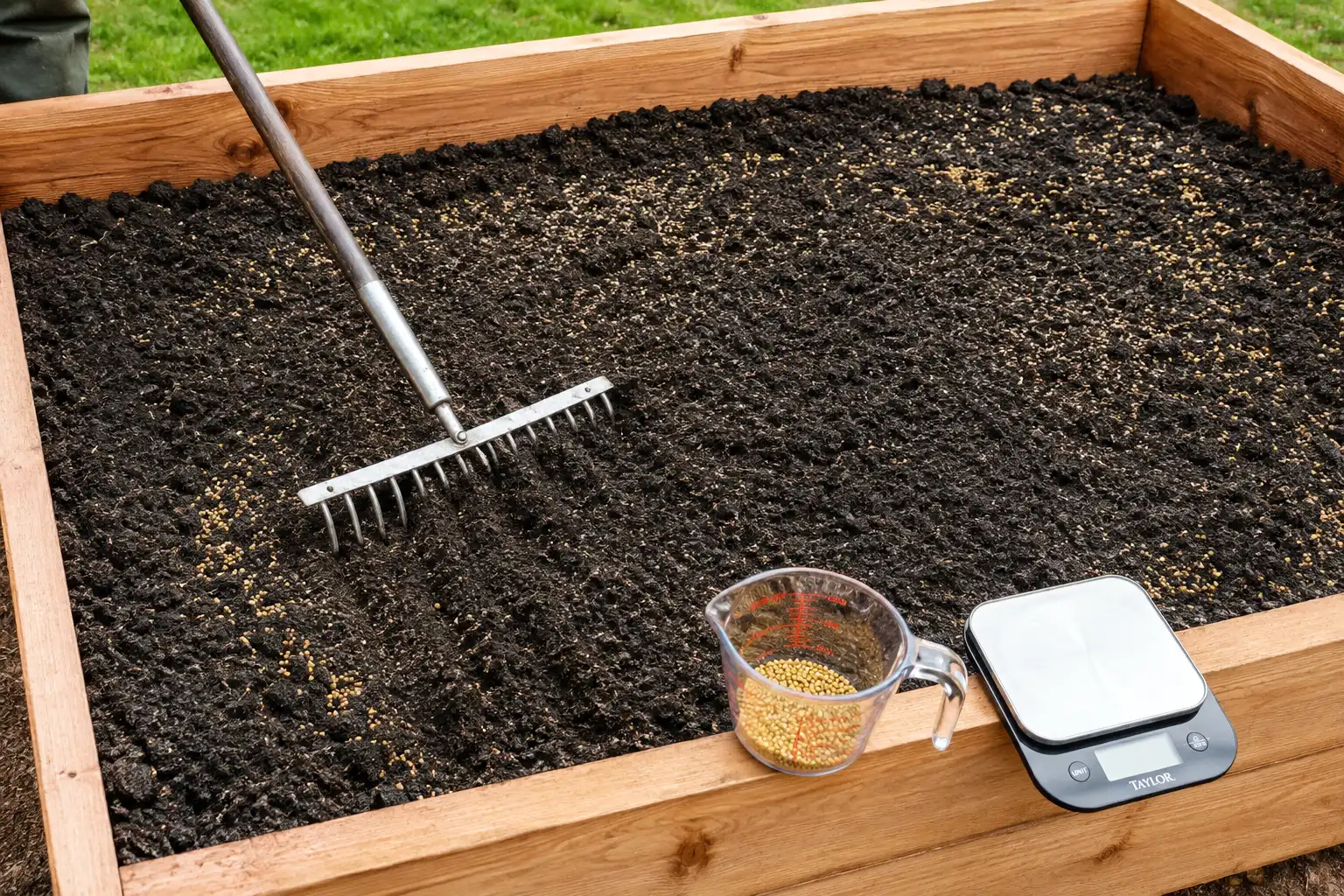
- Weigh the product for your bed size. Do not eyeball it.
- Broadcast it evenly across the soil surface.
- Rake or till it into the top 1 to 3 inches.
- Water the bed until the top few inches are moist.
- Plant, then leave it alone for the rest of the release window.
For containers and potting mix:
- Mix 0.25 to 0.5 cups per cubic foot of media before filling pots.
- For finished pots, top-dress about 0.5 teaspoon in a 4-inch pot, 1 teaspoon in a 5-inch pot, and 1.5 teaspoons in a 6-inch pot.
- Scratch it into the surface, then water.
For established trees and shrubs: spread the granules across the root zone out to the drip line. Skip the trunk collar. Water afterward.
A calibrated spreader beats hand scattering on anything over a few hundred square feet. Our rundown of spreader options for granular fertilizer covers the settings that matter.
How Often Should You Use 14-14-14 Fertilizer?
Apply a coated 14-14-14 product once per release window, not on a weekly or monthly schedule. For most gardens that means one application at planting each spring. Reapply only after the window closes.
| Situation | Reapplication timing |
|---|---|
| Cool-season beds, soil under 60°F | Once per season |
| Northern gardens, average soil near 70°F | Once at planting, then reassess in late summer |
| Southern gardens or high tunnels above 80°F | Every 6 to 8 weeks through the heat |
| Containers watered daily | Every 3 months, since flushing accelerates loss |
| Fall plantings after soil cools | Once, and expect it to carry into spring |
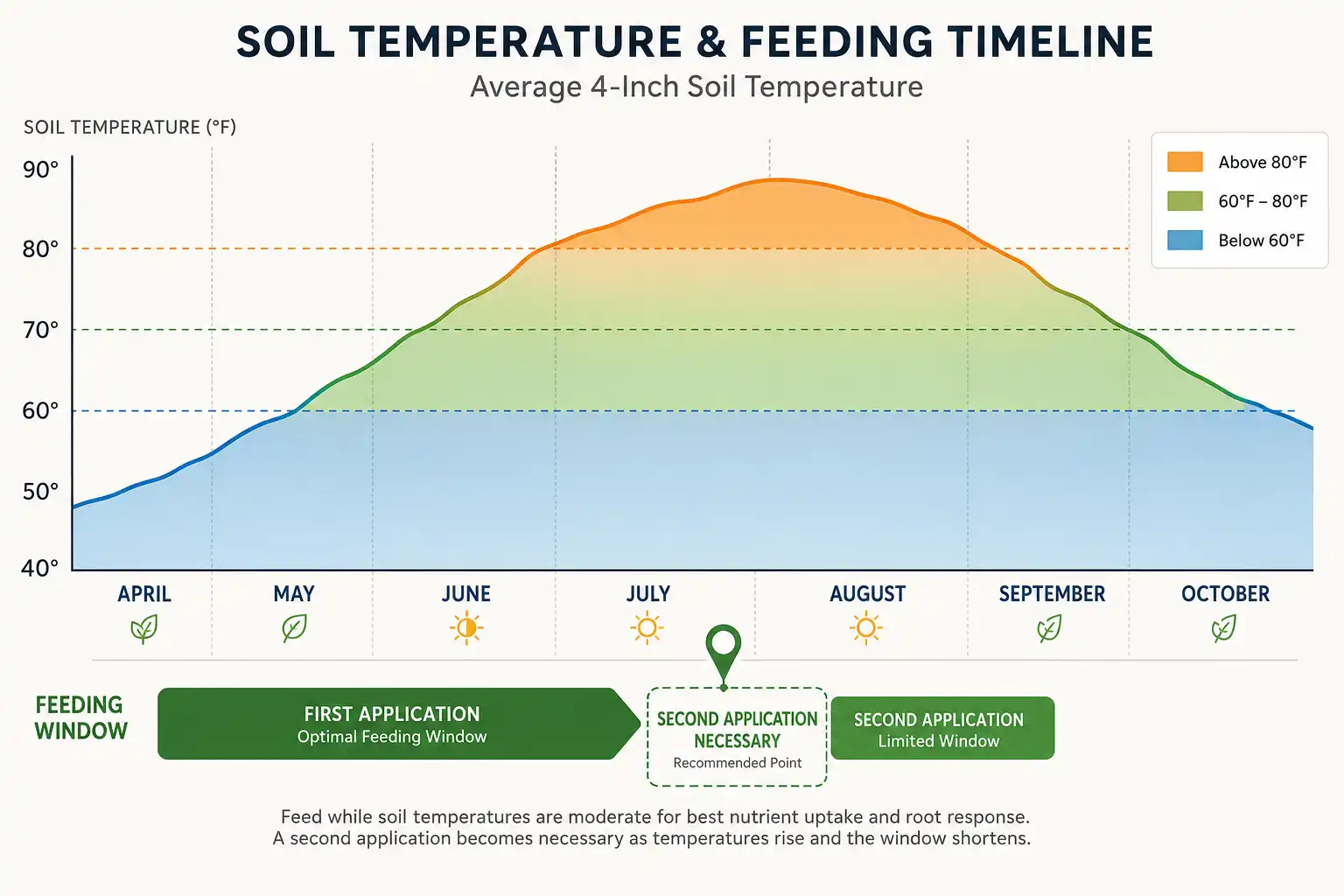
Reapplying early stacks salts and wastes money. Reapplying too late starves the crop mid-season. So watch soil temperature rather than the calendar.
How Do You Dilute 14-14-14 Fertilizer in Water?
You do not dilute coated 14-14-14 fertilizer in water. The resin shell exists to stop the nutrients from dissolving all at once. Soaking the prills defeats the design and gives you an unmeasurable, unbalanced solution.
The manufacturer says so directly. Scotts positions Osmocote and similar controlled release products for soil and growing media, not for hydroponics or liquid feeding.
If you want liquid feeding, buy a water-soluble grade instead. UF/IFAS extension guidance for home gardens suggests about 2 tablespoons per gallon of water. Then pour roughly 1 cup of that solution around each transplant. A soluble 20-20-20 balanced blend handles that job properly.
Uncoated 14-14-14 blends do exist, mostly in agricultural bulk. Those still dissolve unevenly, since granular blends separate into different particles. Stick with a product labeled for solution use.
4 Best 14-14-14 Fertilizers
| Product | Bag size | Feeding window | Stated application rate |
|---|---|---|---|
| Osmocote Smart-Release Flower & Vegetable | 8 lb | Up to 4 months | 1 lb per 40 sq ft |
| Elite Nutrition 14-14-14 | 15 lb | 120 days | 6.4 lb per 1,000 sq ft |
| Lesco 14-14-14 Landscape and Ornamental | 40 lb | 3 to 4 months | Per label, spreader applied |
| Southern Ag Controlled Release 14-14-14 | 5 lb | Up to 4 months | 0.25 to 0.5 cups per cubic foot of mix |
1. Osmocote Smart-Release Plant Food Flower & Vegetable
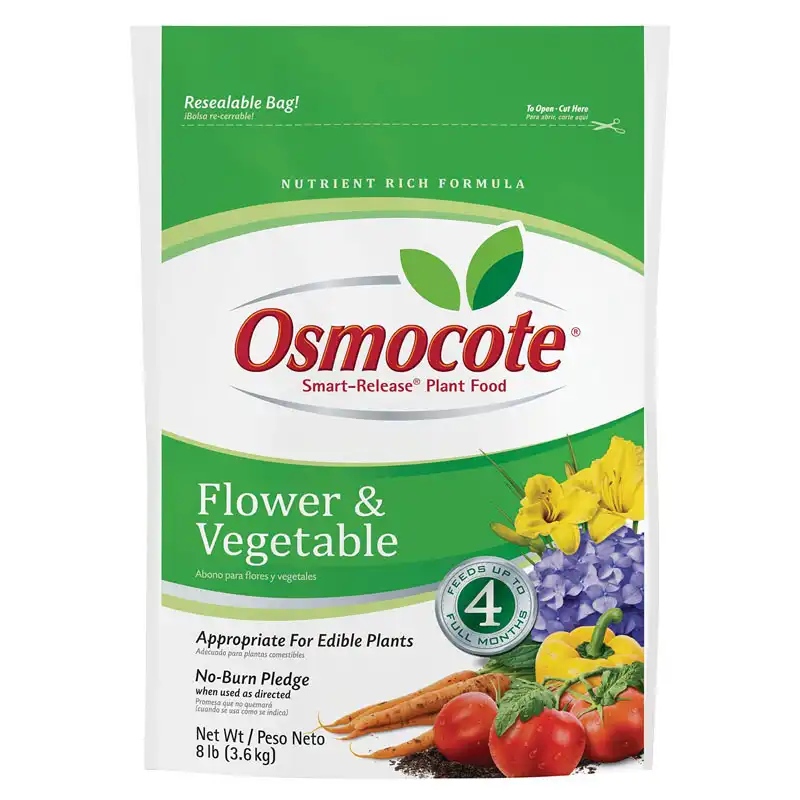
This is the bag best suited to kitchen gardens and transplant benches. The 8 pound container covers 320 square feet at the label rate, which handles a decent home plot. Granules go down easy with the included scoop, and one pass carries the bed through most of a Kansas summer. Scotts states it will not burn even at triple rate. The nutrient source list is honest and specific. Main gripe is the release window. In July heat it runs out earlier than the front panel suggests.
Specs
- NPK: 14-14-14
- Size: 8 lb, covers 320 sq ft
- Release: up to 4 months
- Form: coated granules
2. Elite Nutrition 14-14-14 Plant Fertilizer
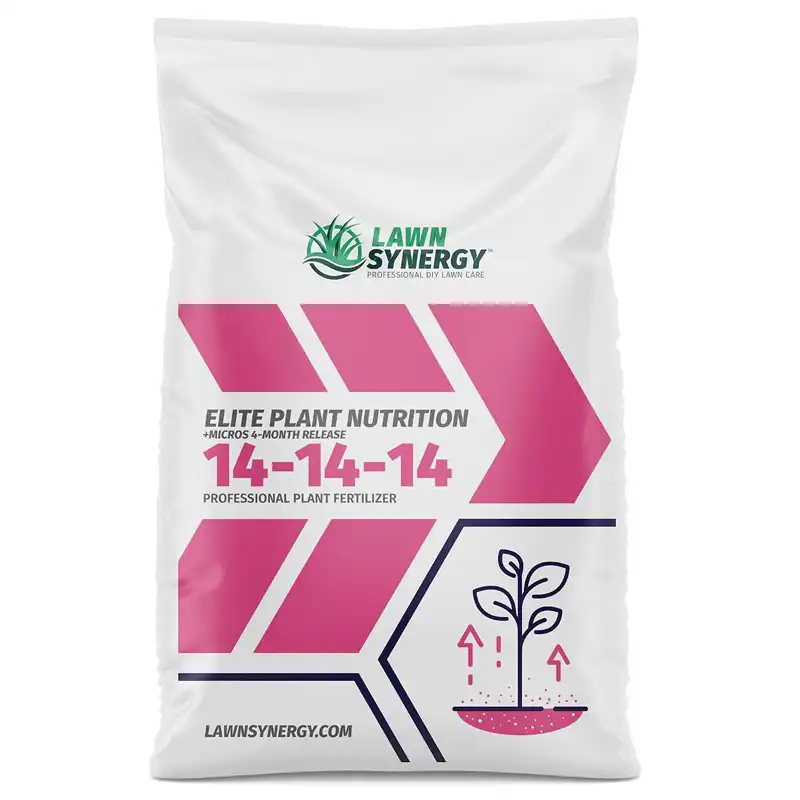
This one earns its spot because of what it adds beyond the big three. The blend carries boron, iron, zinc, and manganese, which matters on high-pH ground where those tie up. The 120-day AccuBlu polymer coating on the urea gives a longer, steadier window than most consumer bags. At 6.4 pounds per 1,000 square feet, a 15 pound bag treats roughly 2,340 square feet. So it covers a real yard, not a single bed. Application is straightforward with a spreader, or a handful around each 3-gallon plant. The rate is lighter than garden-grade products, so read carefully before switching.
Specs
- NPK: 14-14-14 plus micros
- Size: 15 lb
- Release: 120 days
- Rate: 6.4 lb per 1,000 sq ft
3. Lesco 14-14-14 Landscape and Ornamental Fertilizer
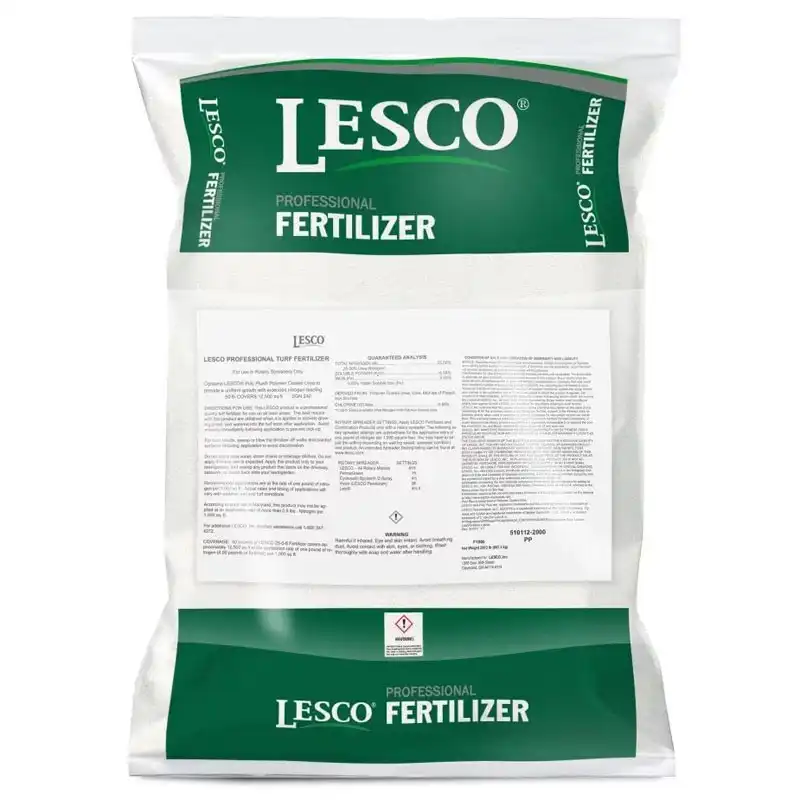
If you are feeding an acre of shrub beds or a nursery block, small bags stop making sense. This 40 pound professional bag solves that. The polymer-coated nutrients meter out over three to four months. That lines up with a single spring pass on woody plants. Lesco has a long track record with landscape crews, and the granule sizing runs consistently enough for even spreader throw. Note that Lesco aims this one at trees, shrubs, and flowering plants rather than food crops. Coverage depends entirely on the rate you choose, so calibrate before you start.
Specs
- NPK: 14-14-14
- Size: 40 lb
- Release: 3 to 4 months
- Application: spreader, then water in
4. Southern Ag Osmocote Controlled Release Fertilizer
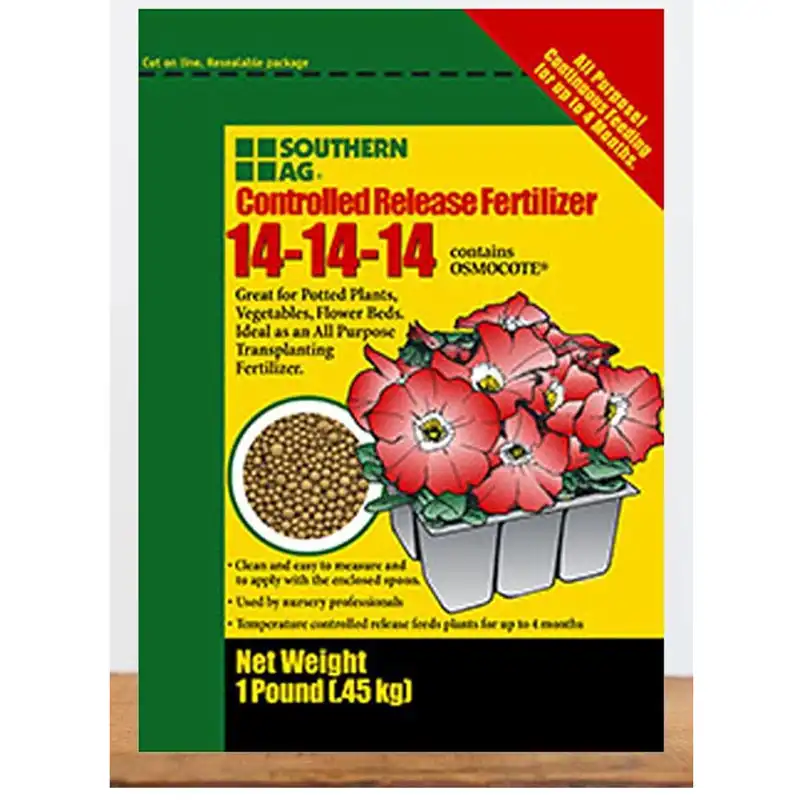
For potting mix and hanging baskets, this 5 pound bag is the right size. It uses the same controlled release approach and meters nutrients for up to four months. What sets it apart is the label detail. It prints separate rates for soil mix, bedding plants, and individual pot sizes. That detail removes the guesswork that trips up container growers. Mix it into media before filling pots rather than top-dressing later. Serious growers will burn through 5 pounds quickly, so buy accordingly. For anyone potting up a few dozen plants a year, the size fits.
Specs
- NPK: 14-14-14
- Size: 5 lb
- Release: up to 4 months
- Rate: 0.5 tsp per 4-inch pot
Where to Buy 14-14-14 Fertilizer
You will find 14-14-14 fertilizer at garden centers, farm and ranch supply stores, local co-ops, greenhouse and nursery supply distributors, and online retailers. Consumer bags run 1 to 15 pounds. Professional bags run 40 to 50 pounds and usually move through landscape or nursery supply channels.
Check three things before buying:
- Coated or uncoated. Coated costs more per pound but feeds for months.
- The guarantee panel. Confirm secondary nutrients and micros if you need them.
- Bag size versus your area. Buying too large wastes product to storage clumping.
Several states restrict phosphorus-containing fertilizer on established lawns and non-agricultural turf. Check your state rules before applying any balanced grade to a lawn.
How Does 14-14-14 Compare to Other Balanced Grades?
14-14-14 delivers more nutrient per pound than 10-10-10 or 13-13-13, so you spread less product for the same result. The ratio stays identical. Only the concentration changes.
| Grade | Nutrient per lb | Product needed for 1 lb N | Typical form |
|---|---|---|---|
| 8-8-8 | 0.08 lb each | 12.5 lb | Uncoated blend |
| 10-10-10 | 0.10 lb each | 10.0 lb | Uncoated blend |
| 13-13-13 | 0.13 lb each | 7.7 lb | Uncoated blend |
| 14-14-14 | 0.14 lb each | 7.1 lb | Usually coated |
| 16-16-16 | 0.16 lb each | 6.3 lb | Uncoated blend |
| 20-20-20 | 0.20 lb each | 5.0 lb | Water soluble |
The real difference is release speed, not analysis. Uncoated grades feed immediately and fade in weeks. Coated 14-14-14 feeds slowly for months. So a side-by-side against a standard 10-10-10 blend comes down to whether you want one pass or several.
When 14-14-14 Is the Wrong Choice for Your Ground
Skip balanced grades when your soil test already shows adequate phosphorus. That describes most established gardens, and the buildup causes real problems.
Run the numbers. The full consumer rate delivers 3.5 pounds of phosphate per 1,000 square feet, which equals roughly 152 pounds per acre. Alabama Cooperative Extension reports that high-yielding garden crops take up about 48 pounds of phosphate per acre. Only 30 pounds leave in the harvest. So most of that phosphate stays put.
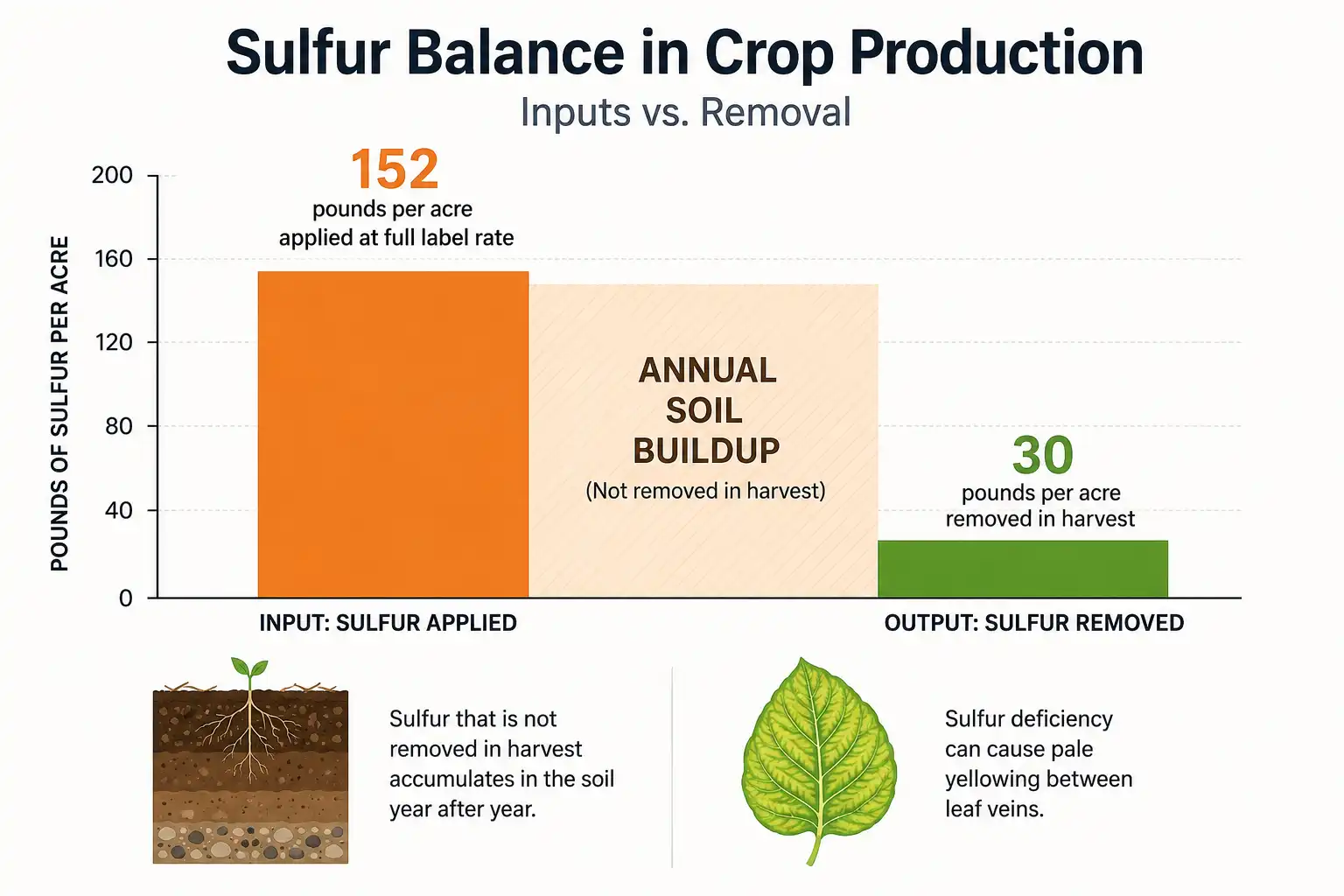
Phosphorus does not leach out the way nitrogen does. It binds to soil minerals and accumulates year after year. Alabama Extension also notes that excess phosphorus combined with pH above 6.5 induces zinc and iron deficiency. Our guide to spotting micronutrient deficiency in the field shows what those symptoms look like on leaves.
NDSU Extension makes the same point for home landscapes. Northern garden soils usually hold plenty of phosphorus already. Adding more feeds algae in nearby water rather than the crop.
Better choices in those situations:
- High phosphorus soil: use a nitrogen-only or nitrogen-plus-potash source
- Leafy greens needing a quick push: use a soluble grade
- Broadacre corn or soybeans: buy nutrients separately and match soil test rates
- Legumes with active rhizobia: cut nitrogen and lean on inoculant
FAQs about 14 14 14 Fertilizer
Will 14-14-14 burn my plants?
Is 14-14-14 the same as 13-13-13?
Can I use it on seedlings and transplants?
Does 14-14-14 work on lawns?
Can I mix it with compost or manure?
Bottom Lines
Use 14-14-14 where a single pass has to carry the whole crop. That means raised beds, transplant flats, container tomatoes, and young shrubs. Do not put it on production acres. It should also be kept off ground that already tests high in phosphorus.
Pull a soil test first. Then weigh the product instead of guessing. Work it into the top few inches. After that, let soil temperature tell you when the window closes.