When to Transplant Corn Seedlings: Soil, Frost, and Age Guide
Corn hates having its roots messed with, so timing the move outdoors matters more than it does with most crops. Knowing when to transplant corn seedlings comes down to three things: soil warmth, frost risk, and seedling age. Get those right and your plants barely notice the move.
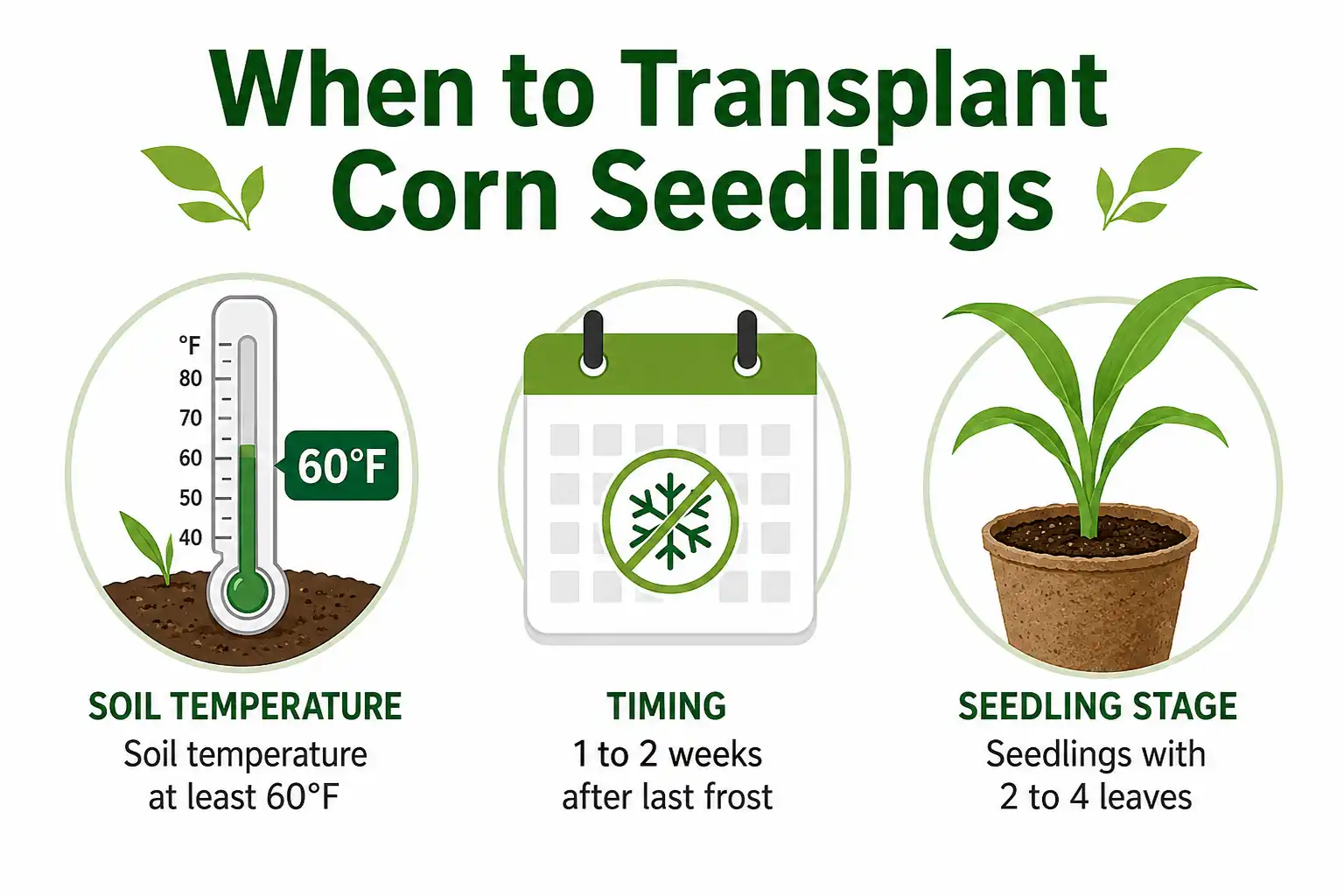
Transplant corn seedlings once the soil holds 60°F and frost has passed. That is usually one to two weeks after your last frost, when seedlings have two to four leaves. Move them before the roots bind.
When to Transplant Corn Seedlings
Transplant corn seedlings once outdoor soil sits at 60°F or warmer and frost danger has passed. That usually falls one to two weeks after your average last frost date. All three signals need to line up. Warm soil tells you the roots will grow instead of sit. A passed frost date protects tender plants raised indoors. Young seedlings move with less shock than older, root-bound ones.
In Topeka, that window lands around mid-May. Last frost runs late April, and the soil usually crosses 60°F a couple weeks after that. Do not chase the calendar alone. Check the soil and watch the seedlings, then move when both say go.
What Soil Temperature Does Corn Need Before Transplanting?
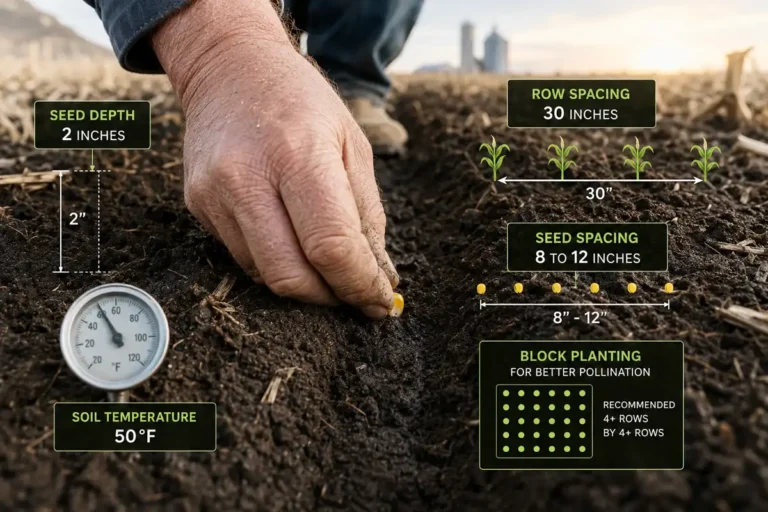
Corn needs soil at 60°F before transplanting, and supersweet (sh2) varieties want closer to 65°F. Corn will germinate at 50°F. That is the floor for seeds in the ground, not the target for tender transplants. Cold soil stalls root growth and stresses plants that came from a warm windowsill.
Check the soil yourself with a cheap soil thermometer. Push it two inches deep, take the reading in the morning, and do it for two or three days running. One warm afternoon does not mean the soil is ready. Steady mornings above 60°F should arrive before anything is set out.
How Old Should Corn Seedlings Be at Transplant?
Corn seedlings transplant best young, at about two to three weeks old with two to four leaves. Younger roots recover faster, while older plants that have circled the cell sulk for weeks or never catch up. Extension trials show corn moving cleanly when the seedlings are barely a week or two old. Do not wait for big plants.
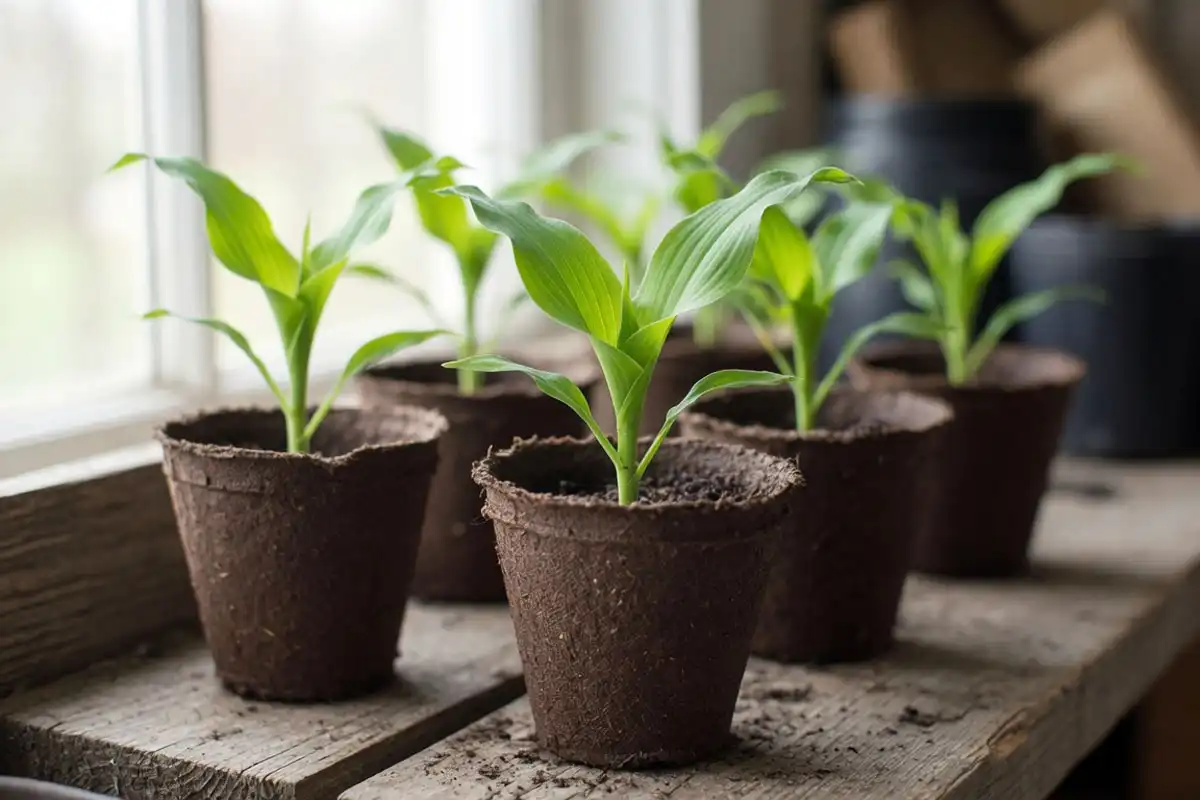
Start the seeds in peat pots or soil blocks. That way the whole root ball goes in the ground without you pulling roots apart. Keep the mix moist but never soggy, since wet trays under lights invite trouble. A light, well-drained mix helps you guard the seedlings against damping off. That rot kills young plants right at the soil line.
How Many Weeks After the Last Frost Should You Transplant Corn?
Wait one to two weeks after your last frost to transplant corn. Corn is very sensitive to frost, and a tender transplant raised indoors has no defense against a late cold snap. Field corn that germinated outside can shrug off a light frost because the growing point sits below ground. Your indoor plants have not toughened up yet, so give them clear weather.
Find your average last frost date from a USDA hardiness zone chart or your local extension office. In zone 6a, K-State Research and Extension puts the last spring frost in late April. Add a buffer instead of pushing the edge. One frosty night can wipe out a flat you babied for three weeks.
Should You Transplant Corn at All?
Most farmers direct seed corn because the roots resent disturbance, yet transplanting pays off in a few clear situations. Corn goes straight into warm soil on the vast majority of acres across the Great Plains and Corn Belt. Still, starting indoors makes sense in a few cases. It helps when you want an earlier patch for the farmers market. It also helps when spring stays cool and wet. Pests like cutworm and corn rootworm are another reason, since they hammer young stands.
Before you commit a season to flats, it helps to weigh direct seeding against transplanting for your own ground. The return on transplanting corn is lower than it is for tomatoes or melons. This is only recommended for a small early block. Raised beds make this easier because they warm faster in spring. That is one reason folks ask about growing corn in a raised bed for a head start.
How to Transplant Corn Seedlings Without Setting Them Back
Harden off the seedlings first, then set them into warm soil at the same depth they grew in the pot. Rushing either step is where most stands go wrong. Take it in order and the plants keep growing without a check.
Hardening Off Corn Seedlings
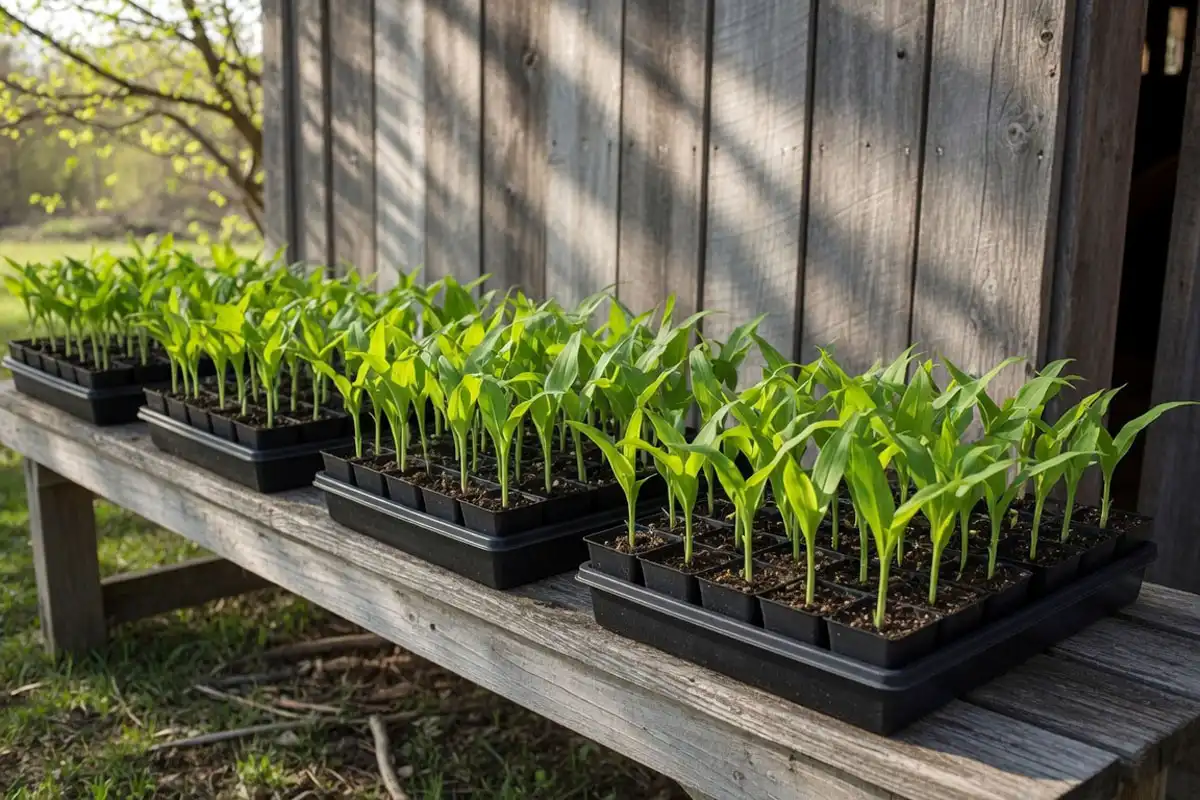
Harden off corn seedlings over about a week before they go in the ground. Set the flats outside in a shady, sheltered spot for a couple hours the first day. Then add time and sun each day until they handle full days outdoors. This step toughens the leaves and stems against wind and bright light. It works the same as the way harden off transplants for the field for other crops.
Spacing and Depth at Transplant
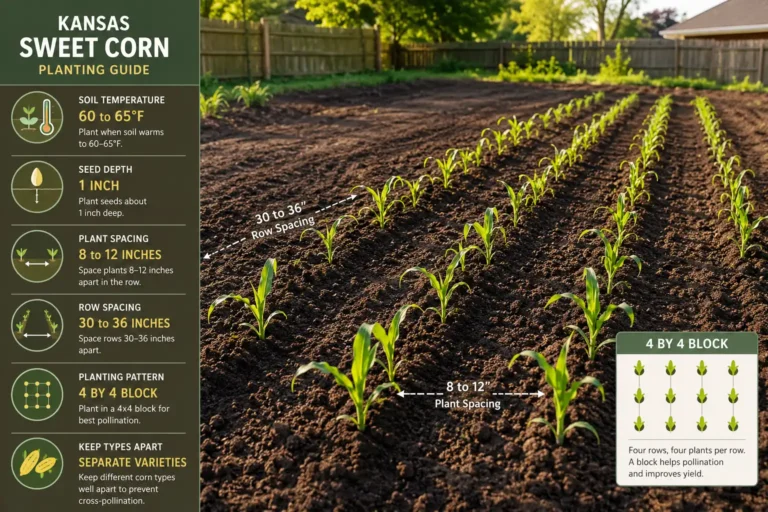
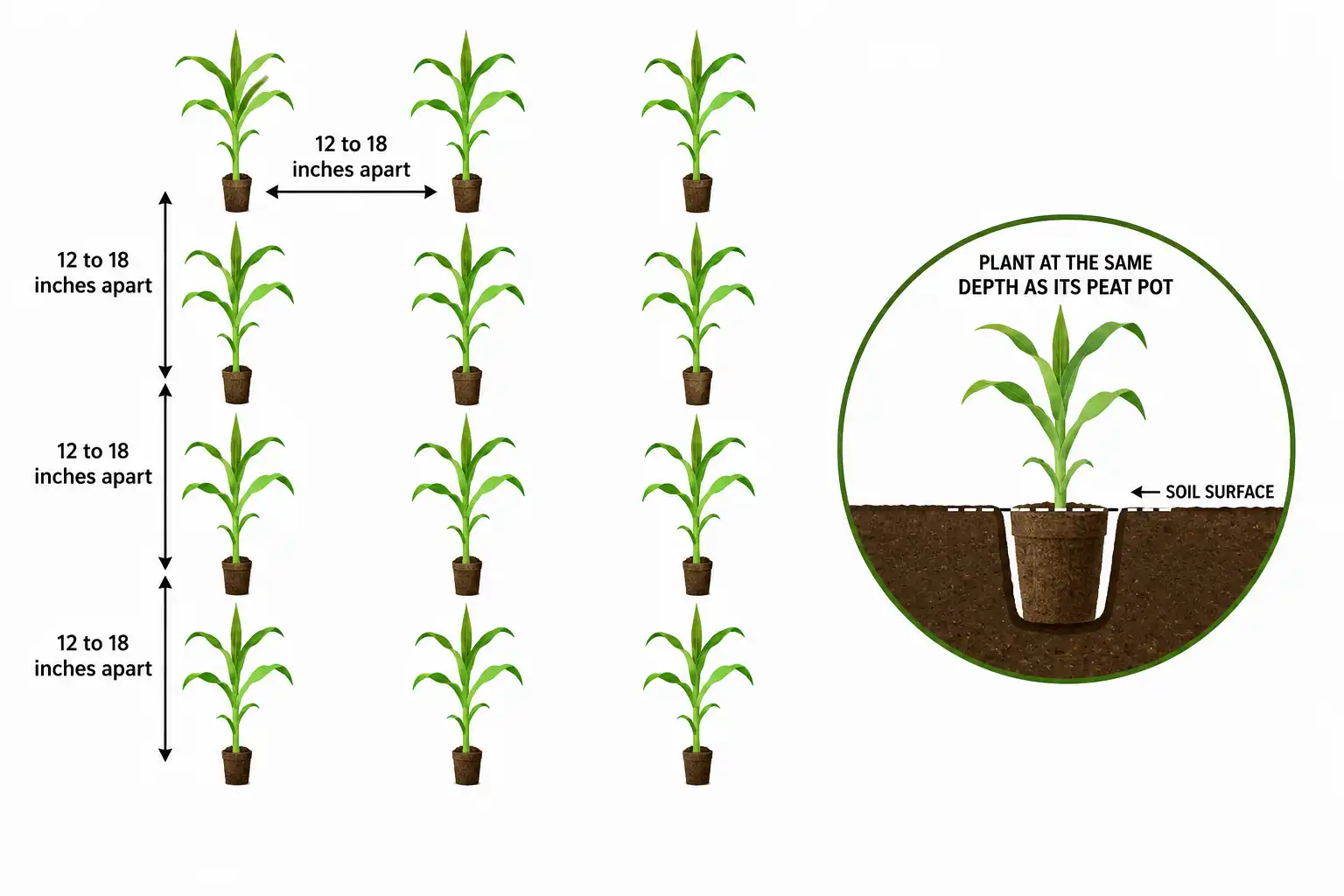
Set transplants 12 to 18 inches apart in a block, not a single long row. Corn pollinates by wind, so a square block fills out ears far better than a thin line. That is the same logic behind setting the plants in blocks for full ears. Plant each seedling at the depth it grew in the pot. Then firm the soil and water it in right away.
Watering and Protecting New Transplants
Give new corn transplants about one to two inches of water a week, more in hot or sandy conditions. Corn has shallow roots and stresses fast under drought, so steady moisture during establishment matters. Slip a cardboard or foil collar around each stem to block cutworms. They cut young plants off right at the soil line. A few minutes of protection now saves replanting later.
How Do You Know If You Transplanted Too Early or Too Late?
Yellow, stalled, or purple-tinged seedlings usually mean the soil was too cold and you moved too early. Purple leaves point to a plant that cannot pull phosphorus from chilly ground. If you see this, the fix for next time is simple: wait for warmer soil.
Leggy, root-bound plants that wilt hard after transplanting mean you waited too long indoors. Roots circling the cell tear when you plant them, and the shock shows. Move corn while it is young and the roots are still loose. That single habit prevents most transplant setbacks.
What This Looks Like in the Farm
Direct seeding into warm May soil is the approach used for almost all corn. For one early market block, though, start a flat in soil blocks. Harden them off over a week. Set them out around mid-May, once the ground holds a steady 60°F. The seedlings go in young, with three leaves and loose roots, in a tight block for good pollination. Time it this way and the corn never skips a beat. That keeps me ahead on telling when the sweet corn is ready to pick come summer.