Does Eggplant Have Seeds? What Pale vs Brown Seeds Mean
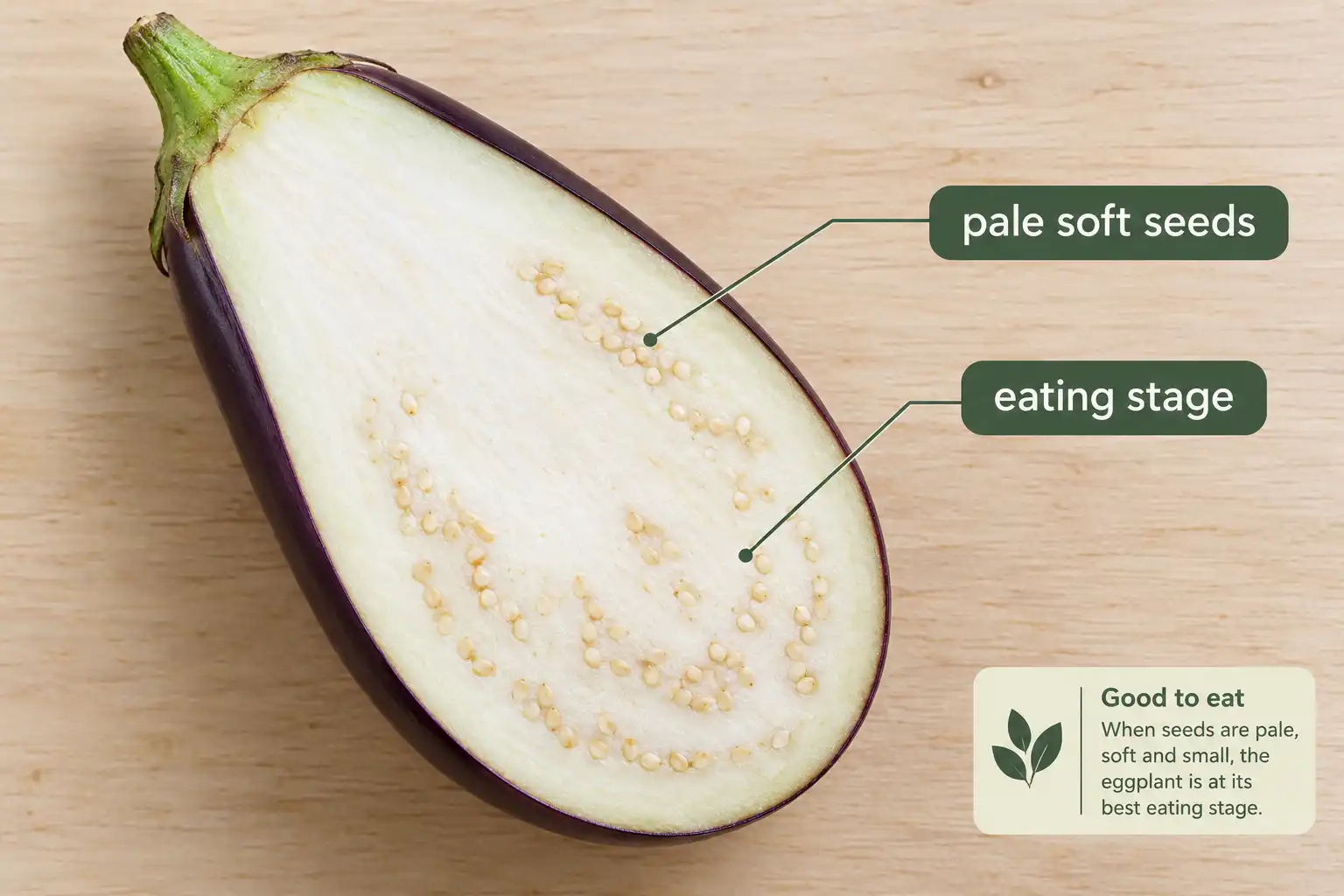
Cut an eggplant open and you will see them. Does eggplant have seeds? Yes, always. What changes is their size, color, and texture. Those three clues tell you how mature the fruit was at harvest.
Yes, eggplant does have seeds. It is botanically a berry, so every fruit carries seed set through its flesh. Fruit picked at eating stage holds small, pale, soft seeds. Brown, hard seeds mean overmature fruit.
Why Every Eggplant Has Seeds
Eggplant is a fruit, not a leaf or root crop, so seeds come with the package. University of Missouri Extension places eggplant (Solanum melongena) in the Solanaceae family, alongside tomato, pepper, and potato. All four are seedy by design.
Botanists class the fruit as a true berry. A berry grows from one ovary and holds many seeds inside soft pulp. There is no pit and no stony inner layer. That is why you never hit a hard core when slicing one.
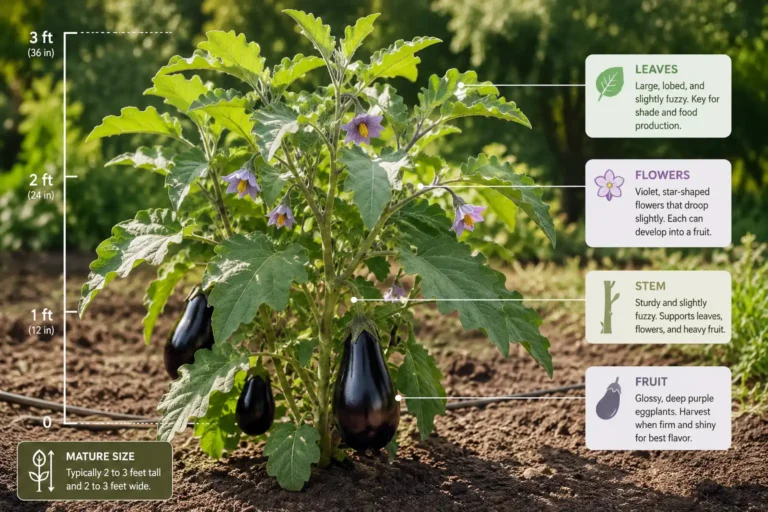
The flowers do the rest. Missouri Extension notes eggplant blooms are self-pollinated, though bees can raise both pollination and yield. Each pollinated flower sets a fruit. The ovules inside that flower then become seeds as the fruit swells.
Domestication changed fruit size and lowered bitterness over time. That shift traces back to wild Asian species, which is part of where eggplant came from.
What Eggplant Seeds Look Like at Eating Stage
At market maturity the seeds are pale cream to light tan, flat, and roughly an eighth of an inch wide. They cut without resistance. Most sit in loose rings through the white flesh, thickest toward the blossom end.
Utah State University Extension explains why they stay soft. Eggplant is harvested immature, before the seeds begin to enlarge and harden. You are eating a fruit that has not finished making seed yet.
So a good eggplant still has seeds. You simply do not notice them.
Why Some Eggplants Are Seedier Than Others
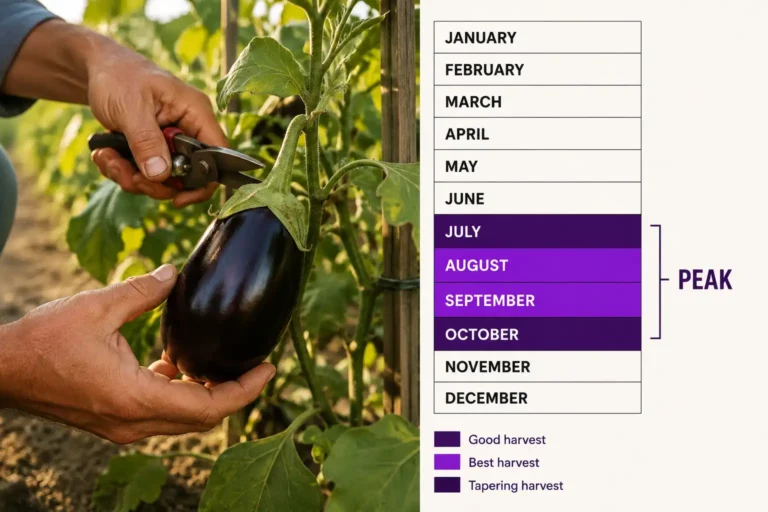
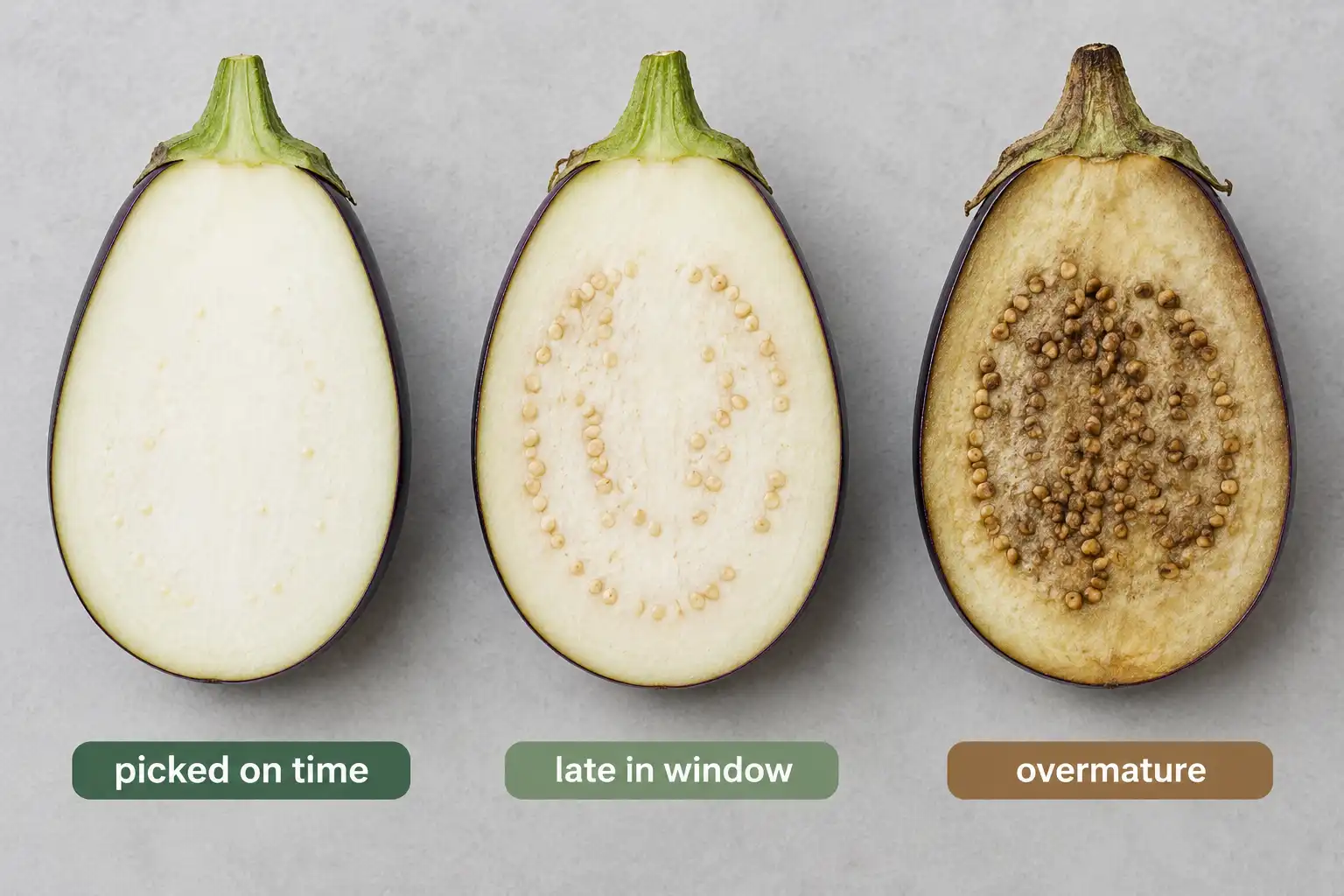
Maturity drives almost all of it. Utah State University Extension puts the harvest range at 10 to 40 days after flowering, depending on cultivar. Leave the fruit longer and the seeds keep filling, hardening, and darkening.
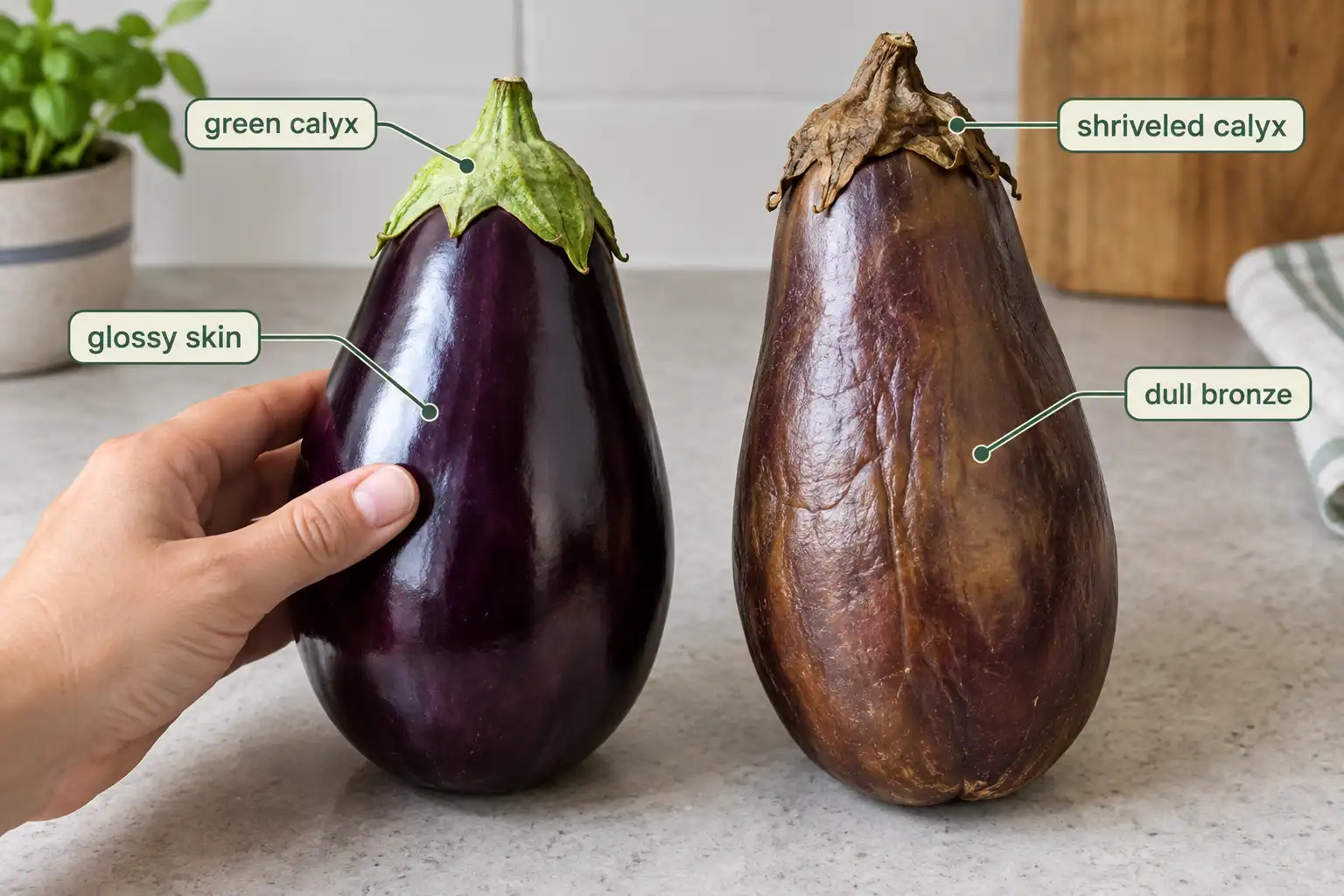
University of Missouri Extension gives the field cue directly. Pick while the skin is glossy and the flesh is tender, before the seeds turn brown. Overmature fruit takes on a dull bronze surface. By then the seeds taste bitter.
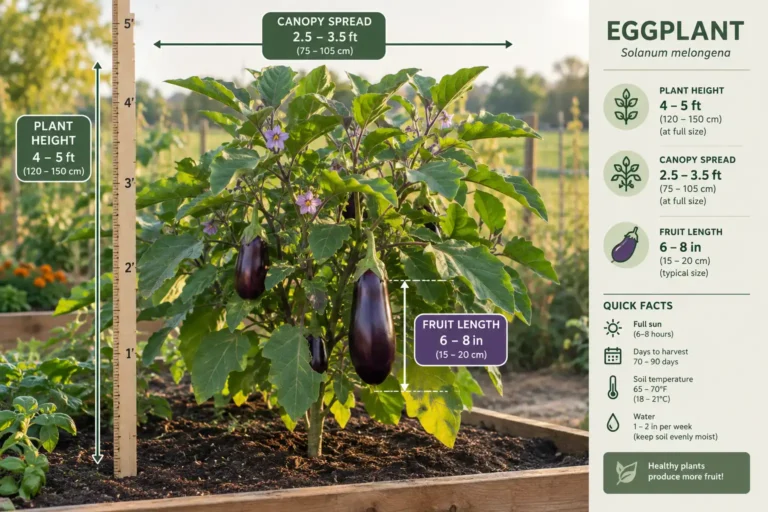
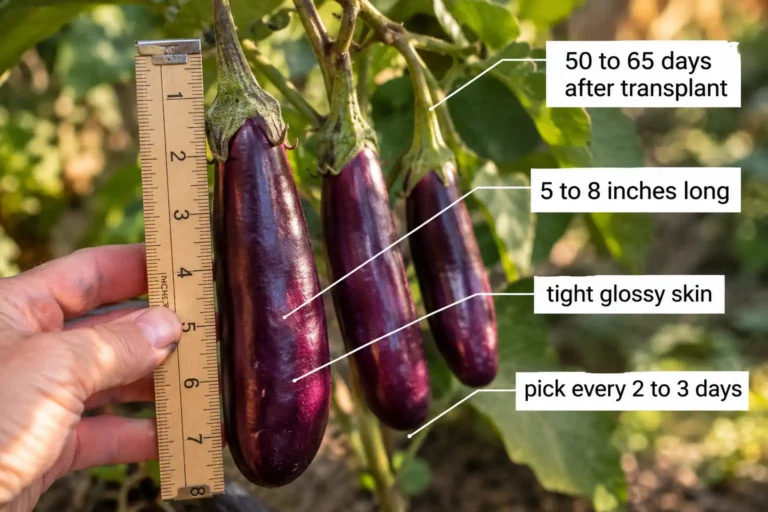
Fruit size matters too. A globe type grown to full weight carries far more developed seed. A slim Japanese type pulled at 6 to 8 inches carries much less. Asian cultivars stay ahead of the problem because growers pick them young. That is why picking Japanese eggplant depends on gloss rather than length.
Water counts as well. South Dakota State University Extension recommends about 1 inch of water per week. The same guidance warns that uneven soil moisture turns fruit bitter and cuts production.
The one lever you fully control is the harvest window for eggplant, not the cultivar printed on the tag.
Seed Appearance and What It Tells You
| Seed appearance | Fruit stage | Eating quality |
|---|---|---|
| Barely visible, cream, very soft | Early in the window | Best texture, mildest flavor |
| Pale tan, soft, clearly visible | Standard market maturity | Very good |
| Medium tan, firm to the bite | Late in the window | Usable, flavor turns sharper |
| Brown, hard, set in rings | Overmature | Bitter, flesh going spongy |
| Dark brown with dull bronze skin | Seed maturity | Not for cooking, save for seed |
Are Eggplant Seeds Safe to Eat?
Yes. Eggplant seeds are edible, and standard cooking uses the whole fruit with the seeds left in. Baba ganoush, parmigiana, and stir fries all include them. Nothing needs scooping out.
Seeds do carry a share of the bitter compounds found across the nightshade family. That share rises as the fruit passes its prime. Utah State University Extension describes overmature eggplant as pithy and bitter. So bitterness tracks maturity, not the presence of seeds.
Anyone avoiding nightshades for a diagnosed sensitivity should treat eggplant the way they treat tomato, pepper, and potato.
Why Some Eggplants Have Almost No Seeds
Cool weather during bloom is the usual reason. Eggplant pollen needs warmth. Research in the Journal of Plant Growth Regulation tested this directly. Night temperatures below roughly 59 degrees F left pollen production and viability too low for normal fruit set. Hormone treatment still produced seedless fruit under those conditions.
That effect has a name: parthenocarpy, or fruit development without fertilization. Greenhouse growers use parthenocarpic cultivars and growth regulators on purpose. Fruit still sets during stretches too cool for pollination.
For a home grower, a nearly seedless eggplant after a cool spell is normal. The fruit is fine to eat. It just cannot supply viable seed.
How to Choose an Eggplant With Fewer Seeds
Pick the smallest, glossiest, firmest fruit on offer. Gloss is the strongest single signal. University of Missouri Extension ties a dull bronze surface to overmaturity and bitter seed.
Run through four checks:
- Skin: bright and reflective, never dull or wrinkled
- Firmness: springs back from light thumb pressure, no lasting dent
- Weight: heavy for its size, since a light fruit has dried and gone pithy
- Calyx: green and fresh, not brown or shriveled
Ignore the dimple trick. A popular claim splits eggplants by the scar at the blossom end. A round scar supposedly marks a low seed fruit, and a dashed scar a seedy one. UF/IFAS states plainly that eggplants have no male or female fruit. Every eggplant grows from a flower carrying both male and female parts. The scar just marks where that flower dropped off.
Can You Grow Eggplant From Grocery Store Seeds?
No, and the reason is timing. Culinary maturity arrives well before seed maturity. Utah State University Extension notes that growers pick fruit before the seeds enlarge and harden. Those pale seeds have never finished developing. Planted, they mostly fail.
There is a second problem. Most eggplant sold in stores comes from F1 hybrid parents. Heirloom and hybrid seed behave very differently in the next generation. Even fully mature hybrid seed gives a scattered mix of plant types.
How to Save Eggplant Seeds That Actually Germinate
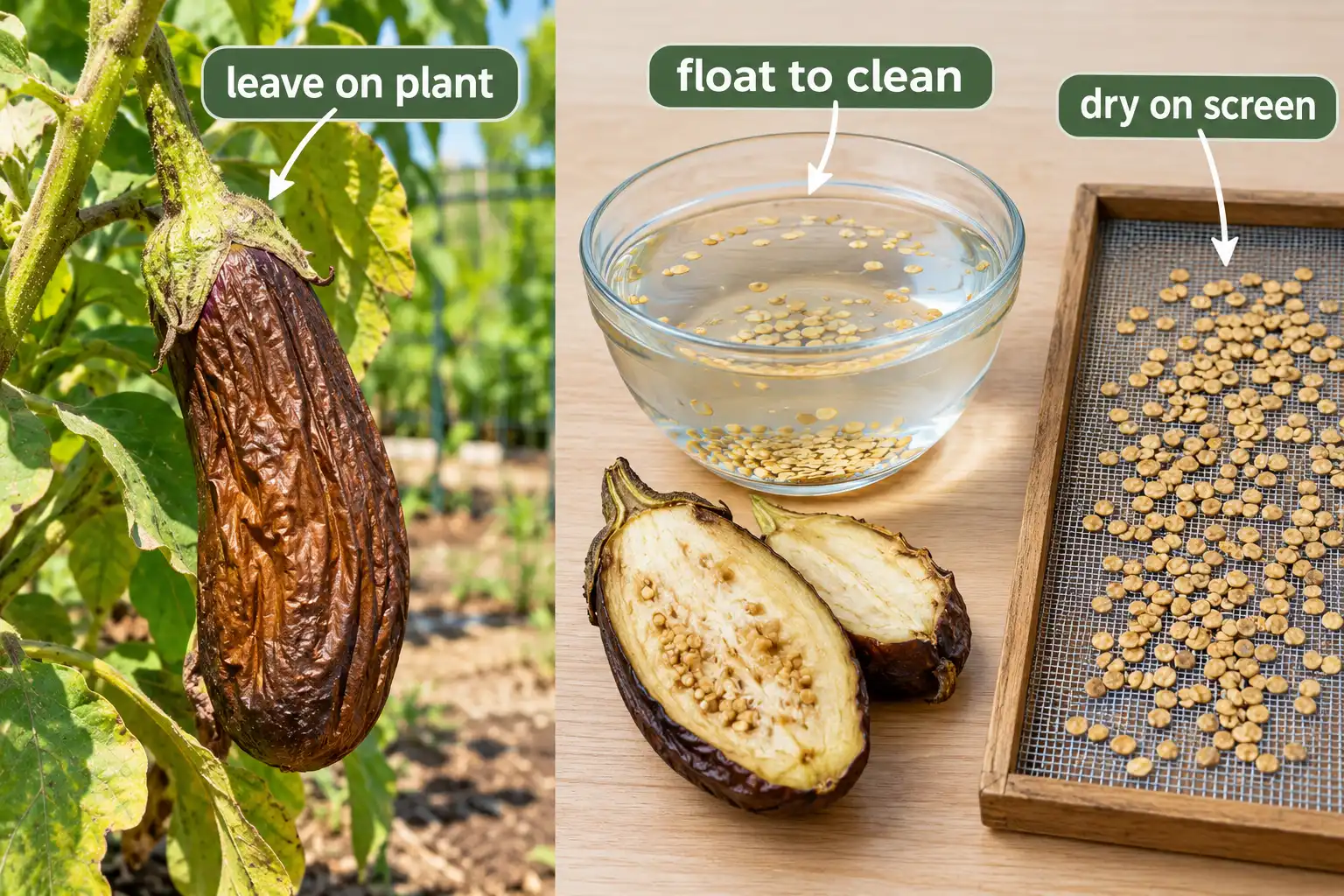
Leave a selected fruit on the plant until the skin goes dull and the flesh hardens. That single step separates viable seed from wasted effort.
- Start with an open-pollinated cultivar. Black Beauty, Rosa Bianca, and Listada de Gandia all come true from seed. Hybrids will not.
- Isolate the planting. Blooms self-pollinate, but bees still visit them, so separate cultivars by about 50 feet or cage them.
- Mark one or two fruit and stop harvesting them. Purple types fade to tan or bronze, while white and green types shift yellow.
- Wait several weeks past eating stage. The fruit turns hard, dull, and slightly shrunken.
- Extract by flotation. Grate or cube the seed end, then swirl the pulp in water. Sound seed sinks, and pulp with empty seed pours off the top.
- Dry and store cool. Spread the seed on a screen in a ventilated spot, then seal it dry. University of Illinois Extension lists eggplant seed as viable for about 4 years.
Warmth decides what happens next. South Dakota State University Extension puts optimal germination soil temperature at 85 degrees F. Below 60 degrees F, seed does not germinate at all. So plan on starting eggplant seed indoors with bottom heat rather than a warm windowsill.
Troubleshooting Seed Problems
| What you see | Likely cause | What to do |
|---|---|---|
| Hard brown seeds in most fruit | Harvest interval stretched too long | Pick 2 to 3 times weekly during peak set |
| Bitter flesh with gritty seeds | Overmature fruit or uneven watering | Harvest earlier, hold about 1 inch of water weekly |
| Hollow pockets and almost no seed | Poor pollination during cool nights | Nothing to fix, the fruit still eats well |
| Saved seed refuses to sprout | Fruit cut at eating stage | Let fruit go dull bronze before extracting |
| Seedlings look nothing like the parent | Seed saved from an F1 hybrid | Save only from open-pollinated cultivars |
Frequently Asked Questions
Do all eggplants have seeds?
Are eggplant seeds supposed to be brown?
Is it fine to eat eggplant with lots of seeds?
Should you remove seeds from eggplant before cooking?
Why does my eggplant have no seeds?
How many seeds does one eggplant hold?
Bottom Lines
Seeds are not a flaw in an eggplant. They are a maturity gauge sitting right inside the fruit. Pale and soft means you picked on time. Brown and hard means you waited too long, and the flavor will show it. Harvest on gloss, hold steady soil moisture, and save seed only from fruit you deliberately let go past eating stage.