Where Is Rice Grown in the US? The 6 States and 4 Regions
Where is rice grown in the US? Almost all of it comes from six states clustered in four regions across the South and California. Rice needs heavy soil, flat ground, and lots of water. That mix sits in specific places, not everywhere.
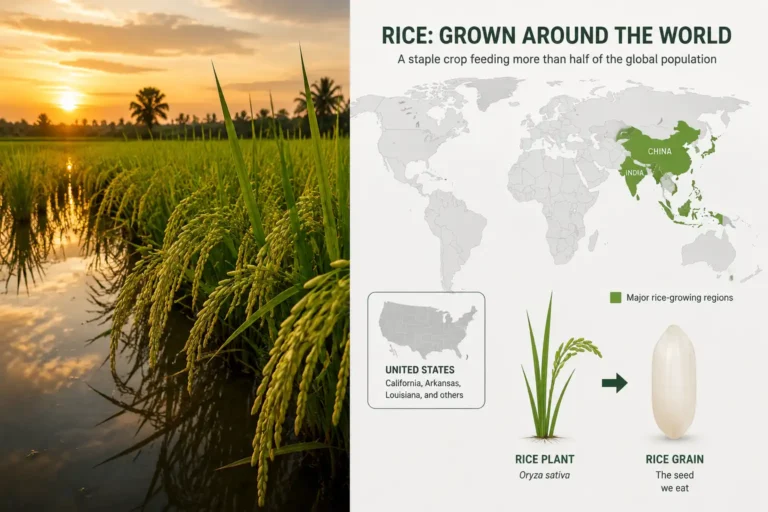
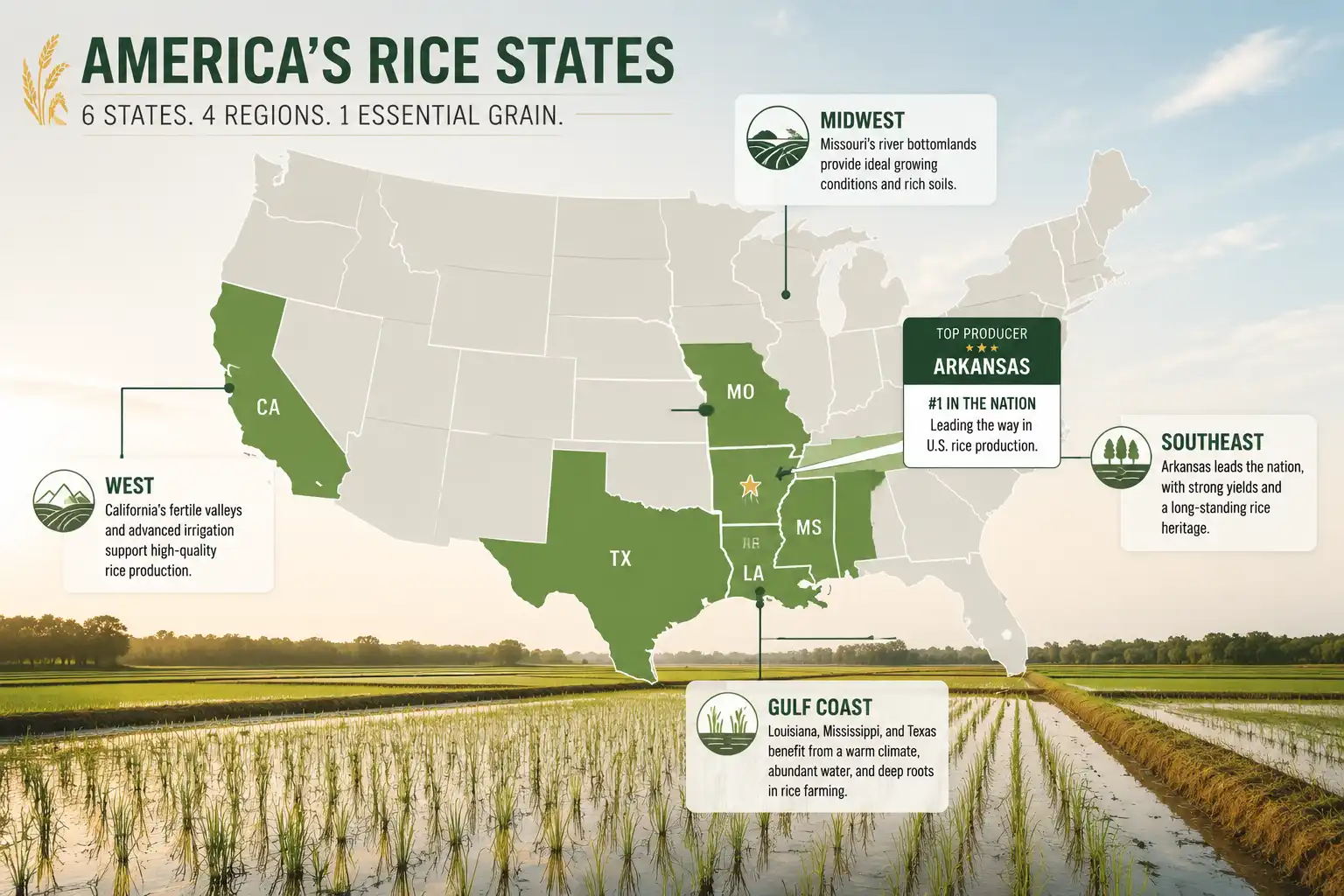
Rice is grown in the US in six states: Arkansas, California, Louisiana, Mississippi, Missouri, and Texas. Together they grow more than 99% of the crop. Arkansas leads by far, and California ranks a clear second.
Where Is Rice Grown in the US? The Six Rice States
The US grows rice in six states, and they sit in two parts of the country. Four of them line the South. One anchors the Gulf Coast. California carries the West Coast on its own. Together, these six account for almost all US rice. So the map stays tight and easy to learn.
Here is how the six stack up, biggest to smallest:
| Rank | State | Main growing area | Main grain type | Share of US rice |
|---|---|---|---|---|
| 1 | Arkansas | Grand Prairie and Delta | Long-grain | 45% |
| 2 | California | Sacramento Valley | Medium- and short-grain | 22% |
| 3 | Louisiana | Gulf Coast and Delta | Long-grain | 13% |
| 4 | Missouri | Bootheel (Delta) | Long-grain | 7% |
| 5 | Mississippi | Northwest Delta | Long-grain | 6% |
| 6 | Texas | Upper Gulf Coast | Long-grain | 5% |
Shares are approximate and based on the 2025 crop. The order of the four smaller states shifts a bit each year with weather and prices.
Learn more: Grow rice at home
Arkansas
Arkansas grows the most rice in the country, and it has for over half a century. The crop centers on the Grand Prairie and reaches into the Arkansas side of the Mississippi Delta. In 2025, growers there harvested about 1.25 million acres, down from 1.43 million a year earlier. Almost all of it is long-grain rice.
California
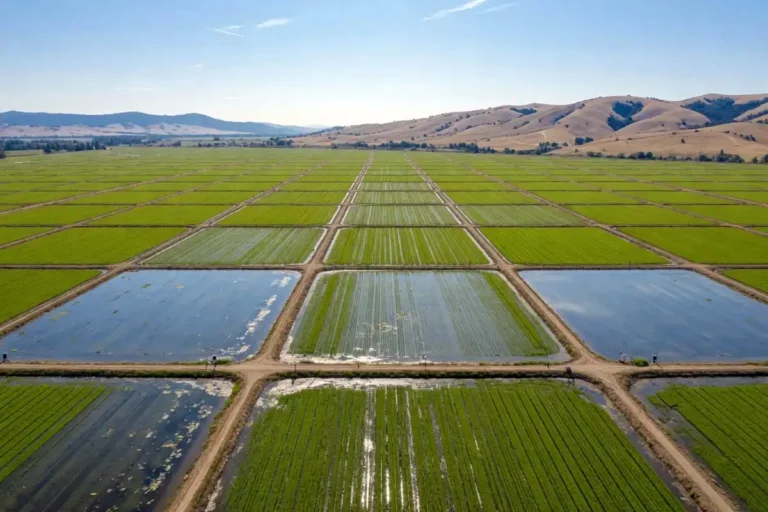
California ranks second, and it owns a different corner of the market. Nearly all of its rice grows in the Sacramento Valley, in about six counties north of the city. This is where most US medium-grain and short-grain rice comes from. California also posts the highest yields in the country, near 8,700 pounds per acre in 2025. For a closer look at how California grows its rice, we break it down separately.
Louisiana
Louisiana sits third and holds deep roots in US rice. Commercial rice farming in America took off in the 1880s, on the prairies of the southwest. Today the crop grows on the Gulf Coast and in the northeast Delta parishes. Growers raise mostly long-grain rice. Along the warm Gulf, many fields also produce a second “ratoon” crop from the same stubble.
Mississippi
Mississippi grows its rice in the northwest Delta counties. Bolivar and Tunica lead the state in acreage. Its farms raise mostly long-grain rice, the kind that fills everyday dinner plates. The state’s rice belt stays small but steady.
Missouri
Missouri’s rice comes from the Bootheel, the state’s southeast corner. That pocket sits inside the Mississippi Delta and grows mainly long-grain varieties, including jasmine. It’s a smaller producer, yet a reliable one.
Texas
Texas grows rice along its upper Gulf Coast, in the area often called the Texas Rice Belt. Like southwest Louisiana, the warm coast lets many farms take a ratoon second crop. Texas raises mostly long-grain rice too.
The Four Regions That Grow Almost All US Rice
US rice comes from four regions, and each one has its own soil and rhythm. They are the Arkansas Grand Prairie, the Mississippi Delta, the Gulf Coast, and the Sacramento Valley of California. The Delta is the largest, and it stretches across parts of Arkansas, Mississippi, Missouri, and Louisiana. The Grand Prairie sits just west of it in Arkansas. The Gulf Coast covers the Texas coast and southwest Louisiana. Out west, the Sacramento Valley stands alone as California’s rice country.
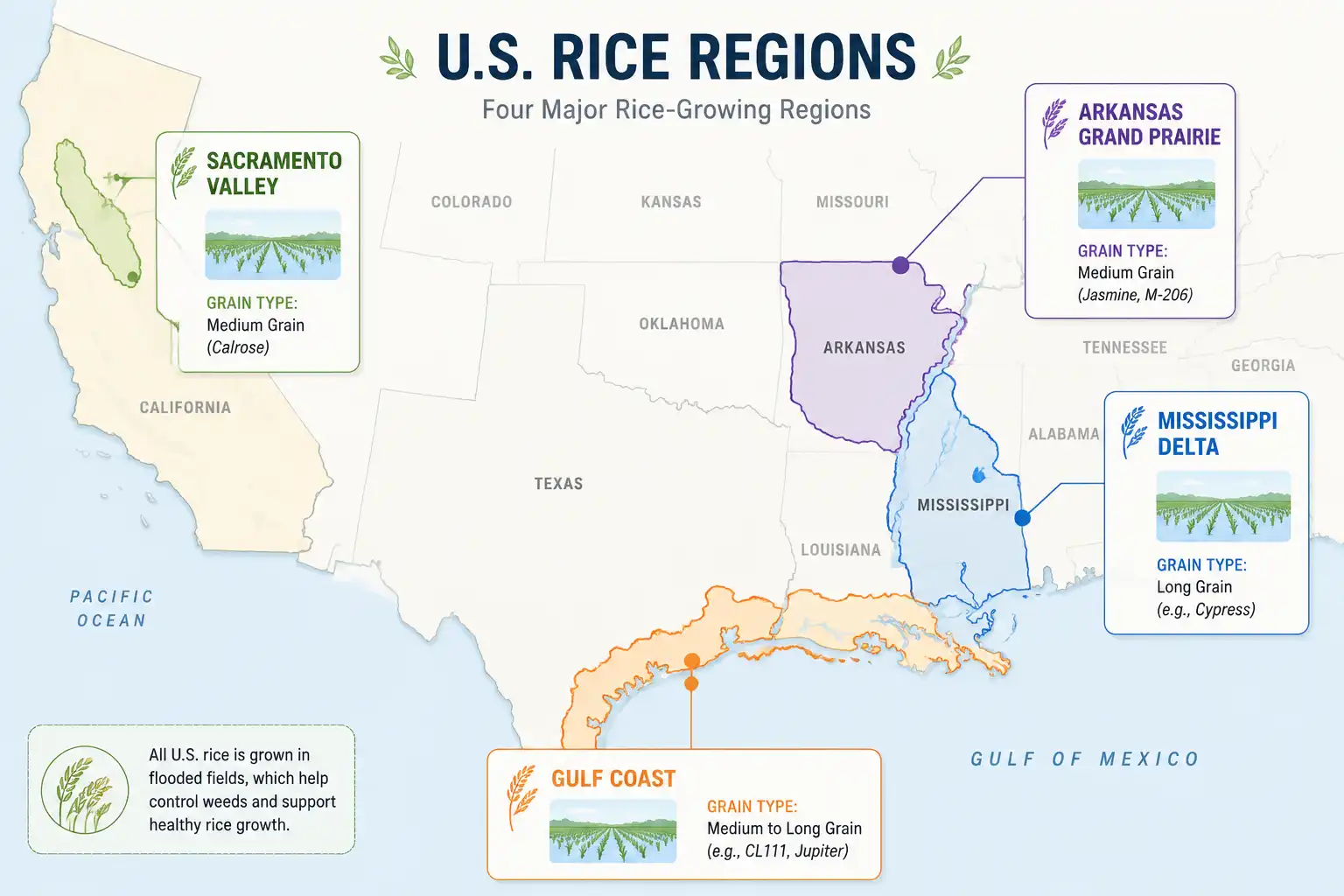
Each region tends to specialize. The three southern regions grow mostly long-grain rice. California focuses on medium-grain and short-grain instead. That split explains a lot about what shows up on store shelves.
Why Rice Grows in These Regions and Not Others
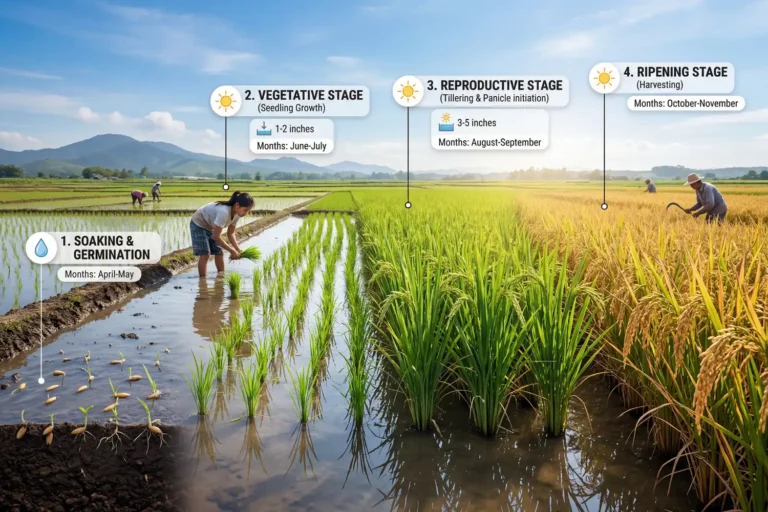
Rice grows in these regions because they share four things: flat land, heavy soil, a long warm season, and plenty of water. Rice spends much of its life standing in shallow water. So growers need ground that holds water instead of draining it fast. The clay and silt loam soils of the Delta and the Gulf Coast do exactly that. Flat fields matter too, because even flooding needs a level surface. Modern farms use laser-guided leveling to get there.
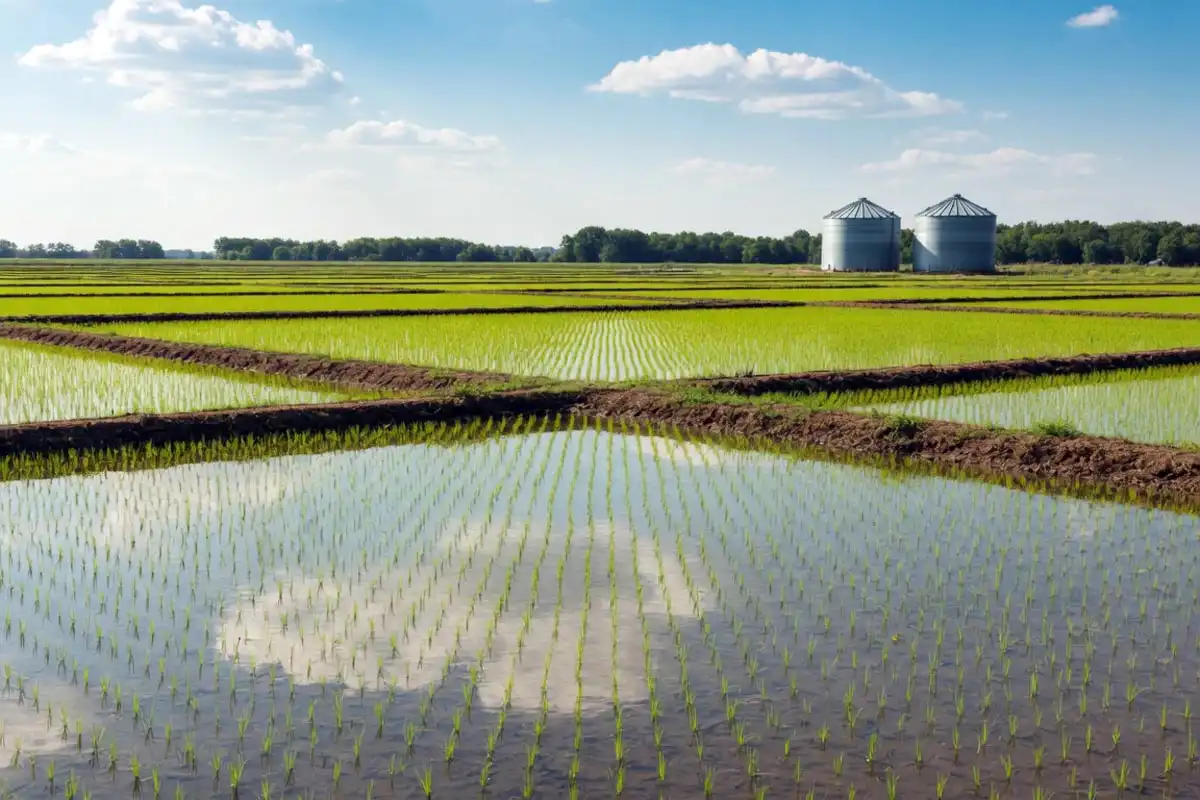
Water is the other piece. Flooding a rice field keeps the crop wet and smothers most weeds at the same time. For the full reason growers do this, our guide covers the logic behind flooded rice paddies in another guide.
Great Plains ground drains well, which is great for wheat and sorghum. Rice wants the opposite. The summers run hot. Still, water is precious on the Plains. We also lack the wet, level river-bottom country that rice needs at scale. So the crop stays south and west, where the land and water line up.
Which State Grows the Most Rice in the US?
Arkansas grows the most rice in the US, and it isn’t close. The state grows about 40% to 45% of the nation’s rice. In some years that nears half of all US rice acreage. California ranks second, and it leads the nation in medium-grain and short-grain rice. After that come Louisiana, Missouri, Mississippi, and Texas. Their exact order shifts a little each year with weather, water, and prices.
What Type of Rice Comes From Each Area
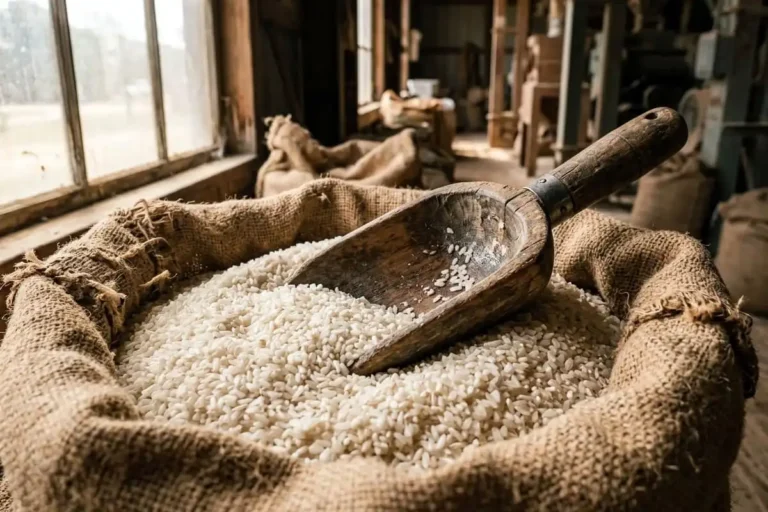
The type of rice depends heavily on where it grows. Long-grain rice makes up about 75% of US production, and the South grows nearly all of it. Medium-grain rice accounts for roughly a quarter, and California leads that class. Short-grain rice is the smallest share, close to 1%, and it comes almost entirely from California. One well-known California medium-grain is Calrose rice, a staple in sushi and everyday bowls. Missouri even grows some jasmine, a long-grain aromatic, in its Bootheel fields.
Also worth a note: wild rice is a different plant altogether. It isn’t true rice. Most of it grows in the lakes and paddies of the Upper Midwest, not the southern rice belt. our guide covers growing wild rice separately.
Is Rice Grown Anywhere Else in the US?
For commercial purposes, no. Those six states grow more than 99% of US rice. A handful of boutique farms raise heritage rice elsewhere, mostly Carolina Gold in the South Carolina Lowcountry. Still, those plantings are small and specialty, not part of the main crop.
The map wasn’t always this way. Two centuries ago, rice grew along the coasts of South Carolina and Georgia. That old Lowcountry industry faded after the Civil War and a run of hurricanes. Production then moved to the Deep South, where flat land and machinery worked better. Arkansas joined in 1904, and California followed soon after. Those shifts set the six-state map we still farm today.
How Much Rice Does the US Produce?
The US produces a large crop, but a small share of the world’s rice. In 2025/26, USDA put the harvest near 2.7 million acres and about 207 million hundredweight of rough rice. That’s less than 2% of global production. Even so, the US is a major exporter. Roughly half the crop ships overseas, and US farmers still supply more than 80% of the rice eaten at home.
One thing to watch for 2026: acreage is shrinking. USDA’s spring survey pointed to about 18% fewer rice acres than 2025. Arkansas alone is cutting long-grain to its lowest level since 1987. Low prices and high input costs drove those decisions.
For the wider picture, India and China grow more than half the world’s rice between them. India recently passed China as the top producer, and it also exports more rice than any other country. Whether rice production in Mexico adds up to much is covered in a separate piece.
What the Rice Map Comes Down To
If you’re trying to remember where US rice grows, keep it simple. Six states do nearly all of it: Arkansas, California, Louisiana, Mississippi, Missouri, and Texas. The South handles long-grain, and California handles the medium-grain and short-grain. Everything traces back to the same needs: flat ground, heavy soil that holds water, warmth, and irrigation. Find those together, and you find rice country. That’s why the crop clusters where it does, and why the field grow wheat instead.