What Is Popcorn Rice: Della Variety, Flavor, and Growing Basics
Popcorn rice is one of those names that confuses people the first time they hear it. It is not actual popcorn, and it is not a gimmick. It is a real aromatic long-grain rice variety with a strong cooking smell that explains the name.
Popcorn rice is an aromatic long-grain rice, most often the Della variety developed in Louisiana, named for the buttery popcorn smell it releases while cooking. It belongs to the same fragrant rice family as basmati and jasmine.
Why It Is Called Popcorn Rice
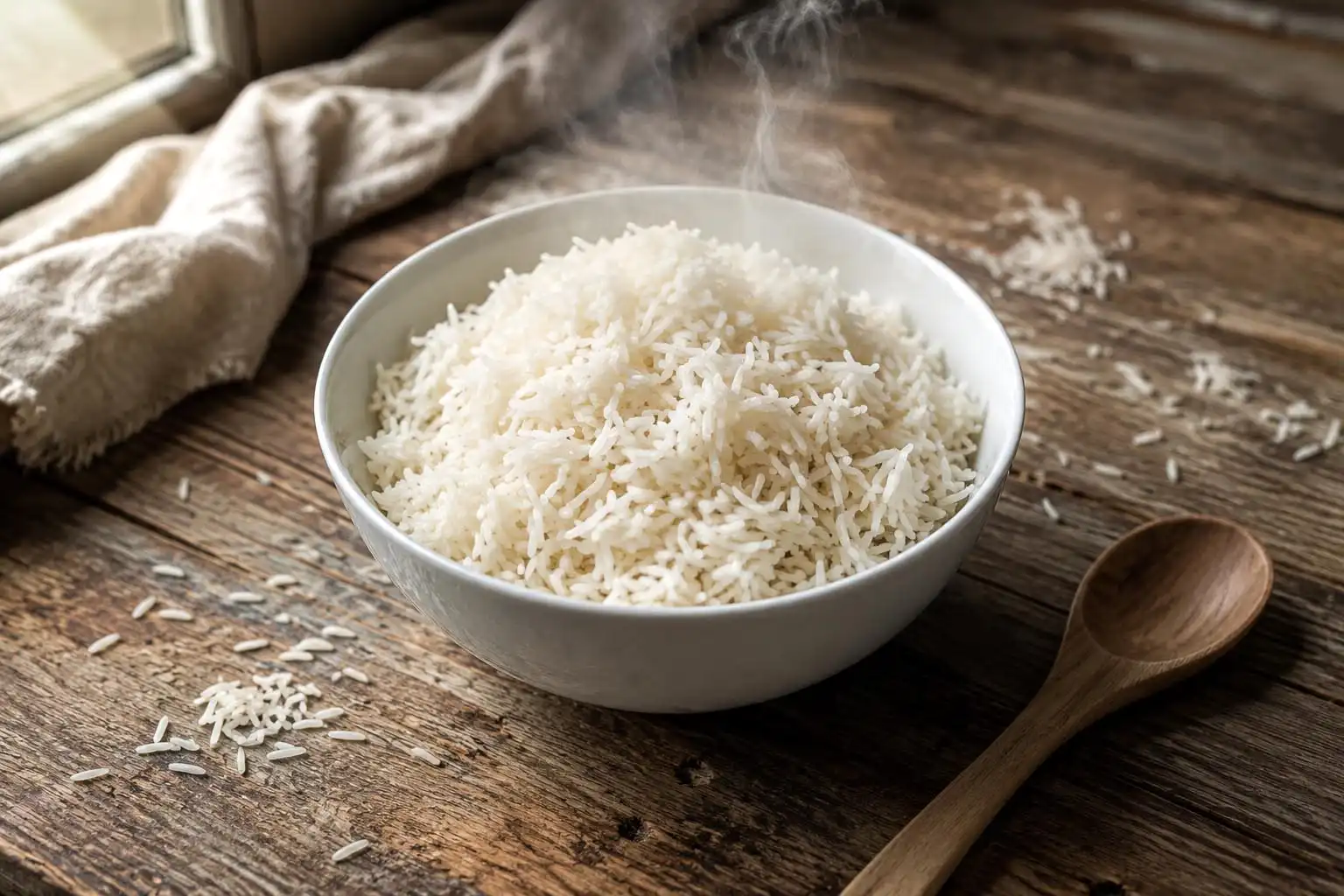
The name comes from the smell, not the shape or behavior of the grain. When popcorn rice cooks, the kitchen fills with a buttery, nutty aroma that reminds most people of a fresh bag of popcorn or roasted nuts. The compound behind that smell is 2-acetyl-1-pyrroline, often shortened to 2AP. The same compound gives basmati and jasmine rice their signature scent, but popcorn rice tends to push it harder.
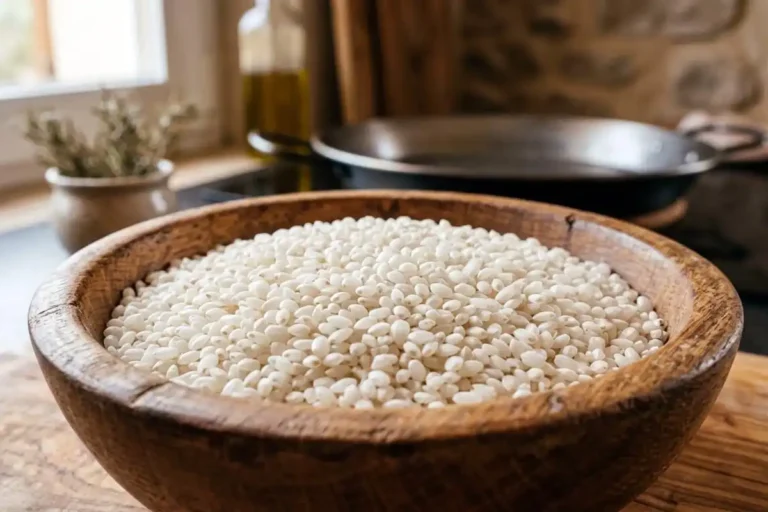
The grain itself looks like any other long-grain white or brown rice. It does not pop, puff, or change size in an unusual way. The aroma is the whole story.
Where Popcorn Rice Comes From
Popcorn rice traces back to the Della variety, released in 1973 by the LSU AgCenter in Louisiana. Researchers selected it from earlier aromatic lines, and Della became the foundation for most American popcorn rice on the market. Updated cultivars followed, including Dellrose, Della-2, Jazzman, and Jazzman-2, each tuned for better yield, disease resistance, or grain quality.
Growers and bag labels often use the term “Della rice” interchangeably with popcorn rice. Both names point to the same general type.
How Popcorn Rice Compares to Basmati and Jasmine
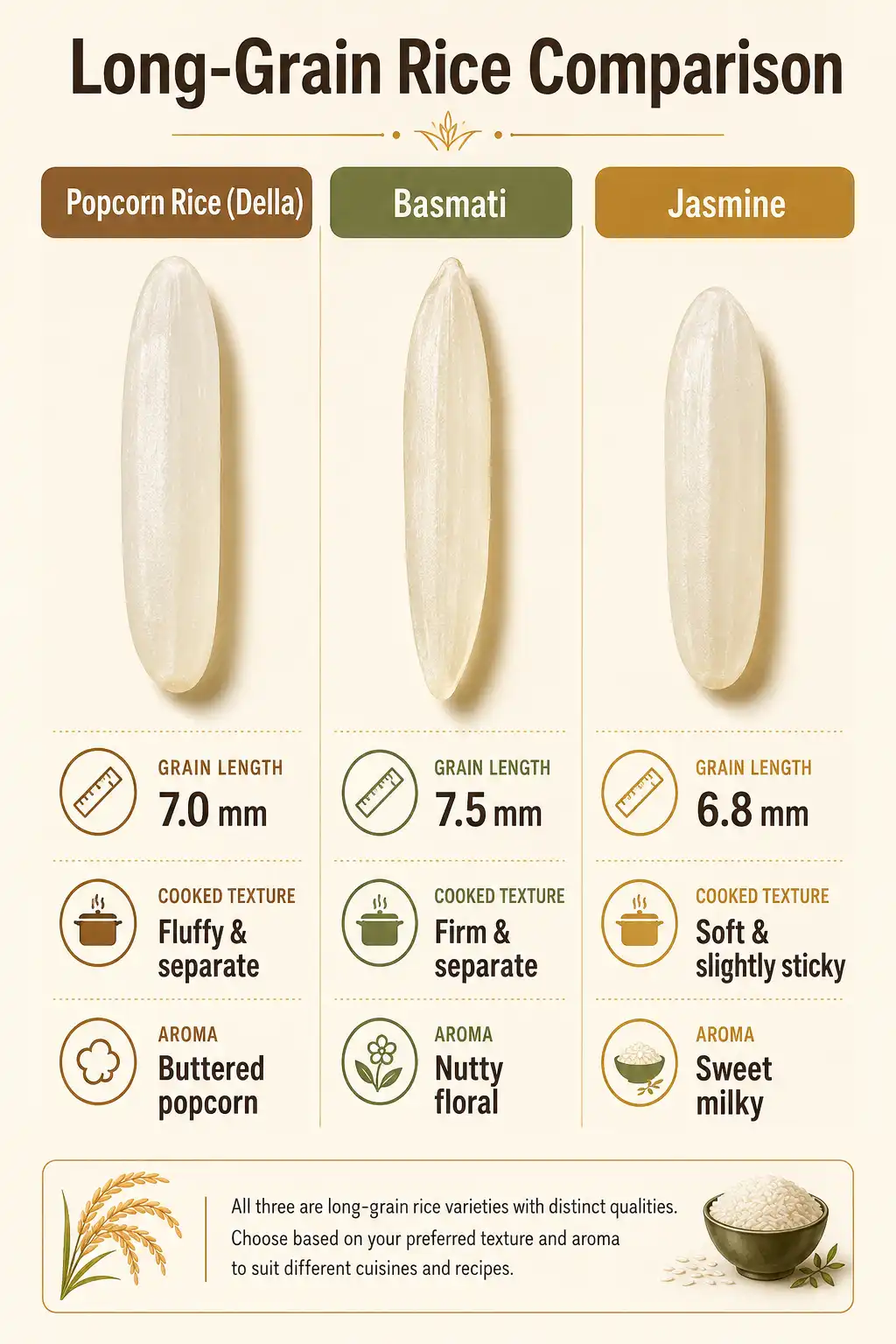
Popcorn rice sits in the same aromatic family as basmati rice and jasmine rice, but each one cooks a little differently. Basmati grains stretch long and stay firm and separate. Jasmine cooks softer and slightly sticky. Popcorn rice lands in between, with a fluffy texture and grains that hold their shape without clumping.
The aroma profile is different too. Basmati smells nutty and floral. Jasmine smells sweet and almost milky. Popcorn rice smells like buttered popcorn straight from the kettle.
Where Popcorn Rice Is Grown
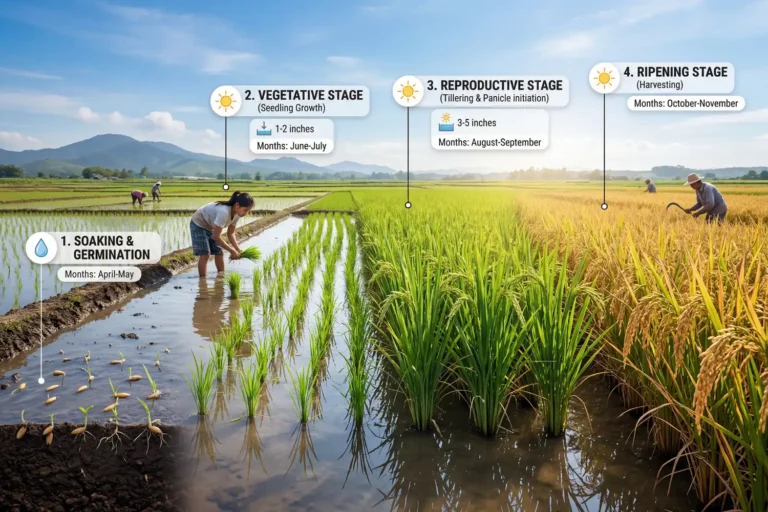
Most American popcorn rice grows in southern Louisiana, with smaller acreage in east Texas and parts of Arkansas. The Gulf Coast climate gives long, warm growing seasons and reliable irrigation water, which aromatic rice needs to set good yields. Fields are flooded the same way as conventional long-grain rice, since this is still a paddy crop. For a closer look at why those fields stay underwater, see how flooded rice paddies work as a growing system.
California grows almost no popcorn rice. That state focuses on medium-grain rice like Calrose, so the bulk of rice grown in California feeds a different supply chain than the Louisiana aromatic crop.
How Farmers Grow Popcorn Rice
Popcorn rice grows under the same general system as other long-grain rice in the South. Fields are leveled, flooded, and seeded by drill or by airplane into shallow water. Seeding rates run around 80 to 100 pounds per acre, depending on variety and method. Permanent flood goes on once seedlings are established, usually about four to five weeks after planting.
Nitrogen is the main input. Most Louisiana growers split-apply urea, with the first shot before flood and a second top-dress near panicle initiation. The crop matures in roughly 115 to 130 days, then fields are drained and harvested with a combine fitted with a grain header. Yields for modern aromatic varieties run 6,000 to 7,500 pounds per acre under good management, lower than top conventional long-grain hybrids but priced higher per bushel.
For background on aromatic rice research and the 2AP compound, the USDA Agricultural Research Service publishes work through the Dale Bumpers National Rice Research Center in Stuttgart, Arkansas.
What Popcorn Rice Tastes Like
The flavor is mild, slightly nutty, and a touch sweeter than plain white rice. The smell does most of the work. People often comment on the aroma before they take a bite. The texture is fluffy at a standard two-to-one water ratio, and the grains stay separate enough for pilafs, jambalaya, and rice salads.
Cajun and Creole cooks have used popcorn rice for decades. It pairs well with strong seasonings, smoked meats, and tomato-based sauces because the rice carries its own aroma without getting buried.
Common Varieties You Will See
A few names show up most often on bags and at mills:
- Della. The original 1973 release. Still grown and sold today.
- Dellrose. A semi-dwarf update with better lodging resistance.
- Jazzman and Jazzman-2. Newer LSU releases bred to match imported jasmine rice in cooking quality.
- Sierra and Charm. Aromatic lines used in some specialty mills.
Brown popcorn rice is also sold. It is the same grain with the bran kept on, so it cooks longer and keeps more fiber and oil. The aroma is still strong but a touch earthier.
Where to Buy Popcorn Rice
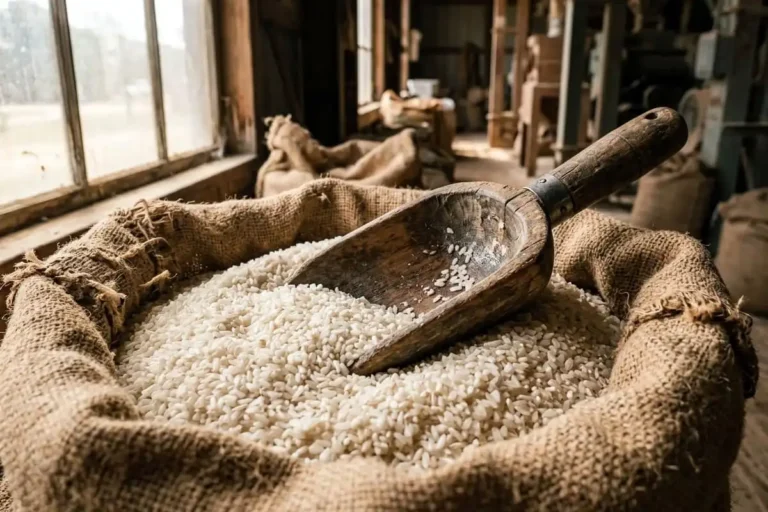
You can find popcorn rice in three main spots. Specialty grocery stores in the South stock it under the Della or popcorn rice label. Online retailers ship it nationwide, often direct from Louisiana mills like Konriko and Falcon Rice Mill. Some farmer co-ops in rice-growing states sell it in bulk.
If you want to grow popcorn rice outside the Gulf states, climate is the limit. Aromatic rice needs warm nights, consistent flood water, and a long frost-free season. Other countries grow similar aromatic types, and Mexico growing rice is a good example of a nearby producer working with different varieties.
Check the bag for organic or conventional labeling. Organic popcorn rice exists, but the price gap is real, and this breakdown of whether rice needs to be organic covers the wider tradeoff for shoppers.
What This Means for Growers and Cooks
Popcorn rice is a useful aromatic option that sits between basmati and jasmine in texture and pushes a stronger buttered-popcorn aroma than either of them. Most of it is the Della line from Louisiana, grown in flooded paddies on the Gulf Coast. If you are buying, look for fresh-milled Louisiana stock. If you are growing, plan around aromatic rice’s narrower climate window and lower yield ceiling compared to conventional long-grain.