Where Does Rice Come From? The Plant, Places, and History
Ever wondered where rice actually comes from? It depends on whether you mean the plant or the place. It’s actually a type of grass, and people have been growing it for thousands of years.
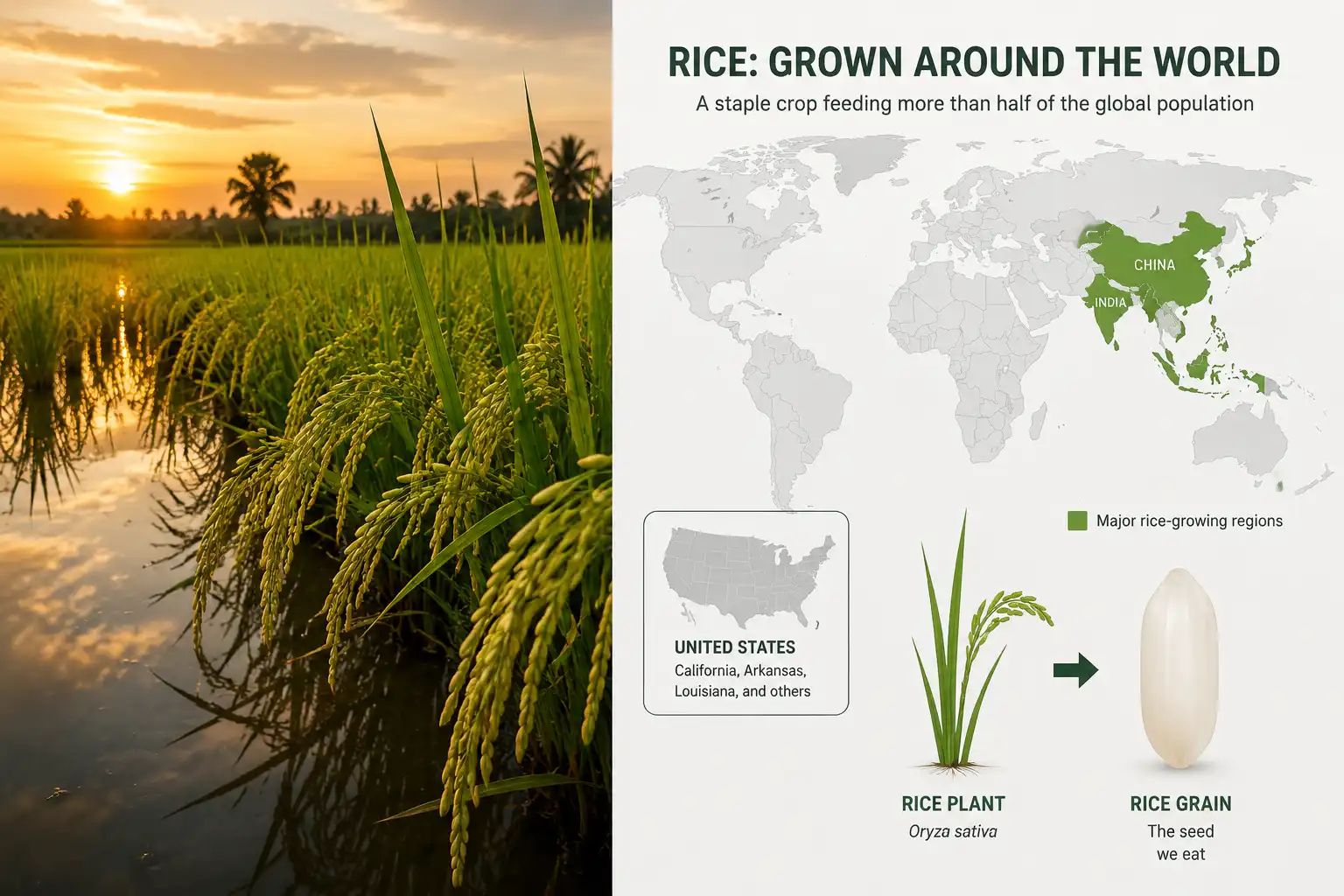
Rice comes from a grass called Oryza sativa, and most of it grows in flooded fields across Asia. So where does rice come from, country by country? India and China lead the world, and Arkansas leads the United States.
What Rice Actually Is
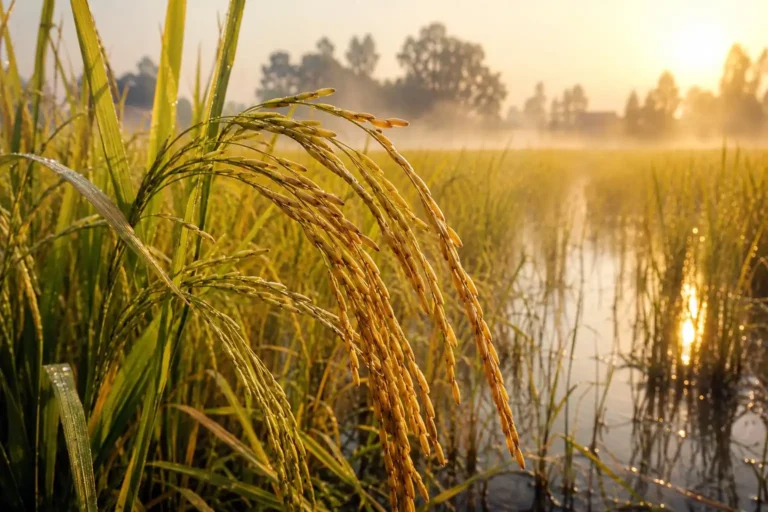
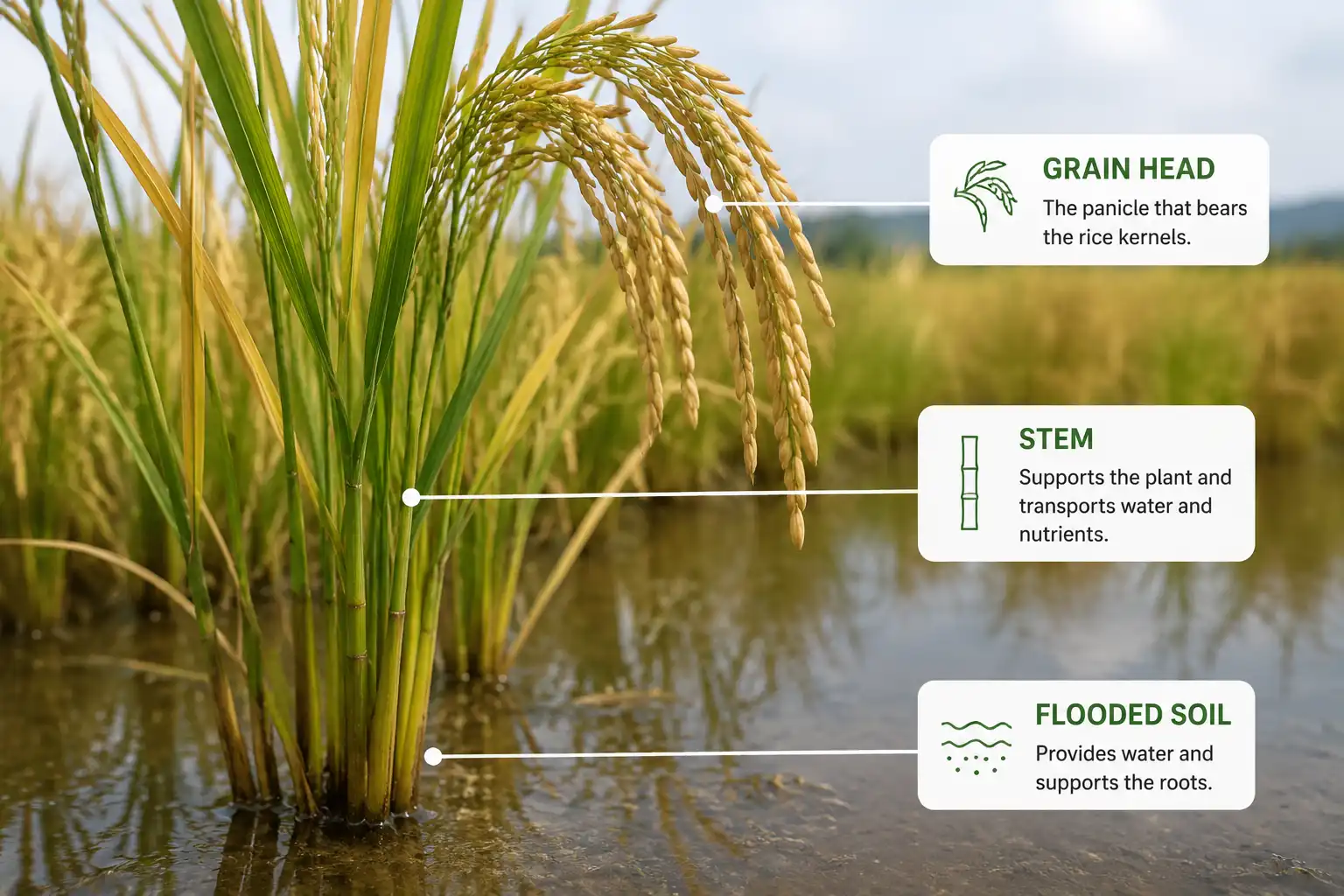
Rice is the edible seed of a grass. Its scientific name is Oryza sativa, and it belongs to the same plant family as wheat, corn, and oats. The grass grows tall and green, then pushes up grain heads at the top. Each head holds the small kernels we cook and eat.
Rice is not man-made. It is a natural grass that farmers shaped over thousands of years by saving seed from the best plants. That slow selection gave us the varieties growers grow today.
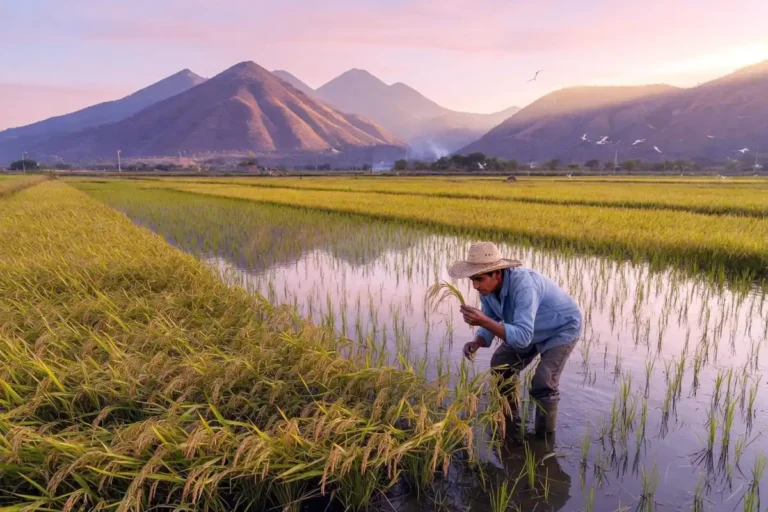
The plant is also semi-aquatic. It handles standing water better than most crops, which is why rice usually sits in flooded fields. Not all of it does, though. Upland rice grows on dry, rainfed ground in hilly regions, without any flooding at all.
Two cultivated rice species exist worldwide. Oryza sativa is Asian rice, and it feeds most of the planet. Oryza glaberrima is African rice, grown mainly in West Africa. Nearly all the rice on your grocery shelf is Oryza sativa.
Learn more: How to grow rice at home
Where Does Rice Come From Around the World?
Most of the world’s rice comes from Asia. Asian farms grow roughly 90% of the global supply. India and China sit at the top, and together they produce more than half of all rice on Earth.
India is now the largest producer. In 2025/26, India harvested a record 154 million metric tons of milled rice, extending a long streak of record years. That total keeps India ahead of China, which comes in second at around 145 million metric tons.
After the top two, the biggest producers are Bangladesh, Indonesia, Vietnam, and Thailand. Global rice production runs around 540 million metric tons a year, near record highs. Rice grows well beyond Asia too. Brazil is the largest producer in the Americas, and the United States ranks among the top exporters. Even Mexico grows a crop, though it buys far more than it raises. Here is more on the rice crop grown in Mexico if that surprises you.
Where Rice Comes From in the United States
The United States grows rice in six states. Those are Arkansas, California, Louisiana, Mississippi, Missouri, and Texas. Every one of them floods its fields, and growers irrigate every acre. American growers also hit some of the highest yields anywhere.
Arkansas leads by a wide margin. The state grows close to half of all U.S. rice and produces 56% to 58% of the long-grain crop. Most of it comes from the eastern Delta, where flat ground and heavy soil hold water well.
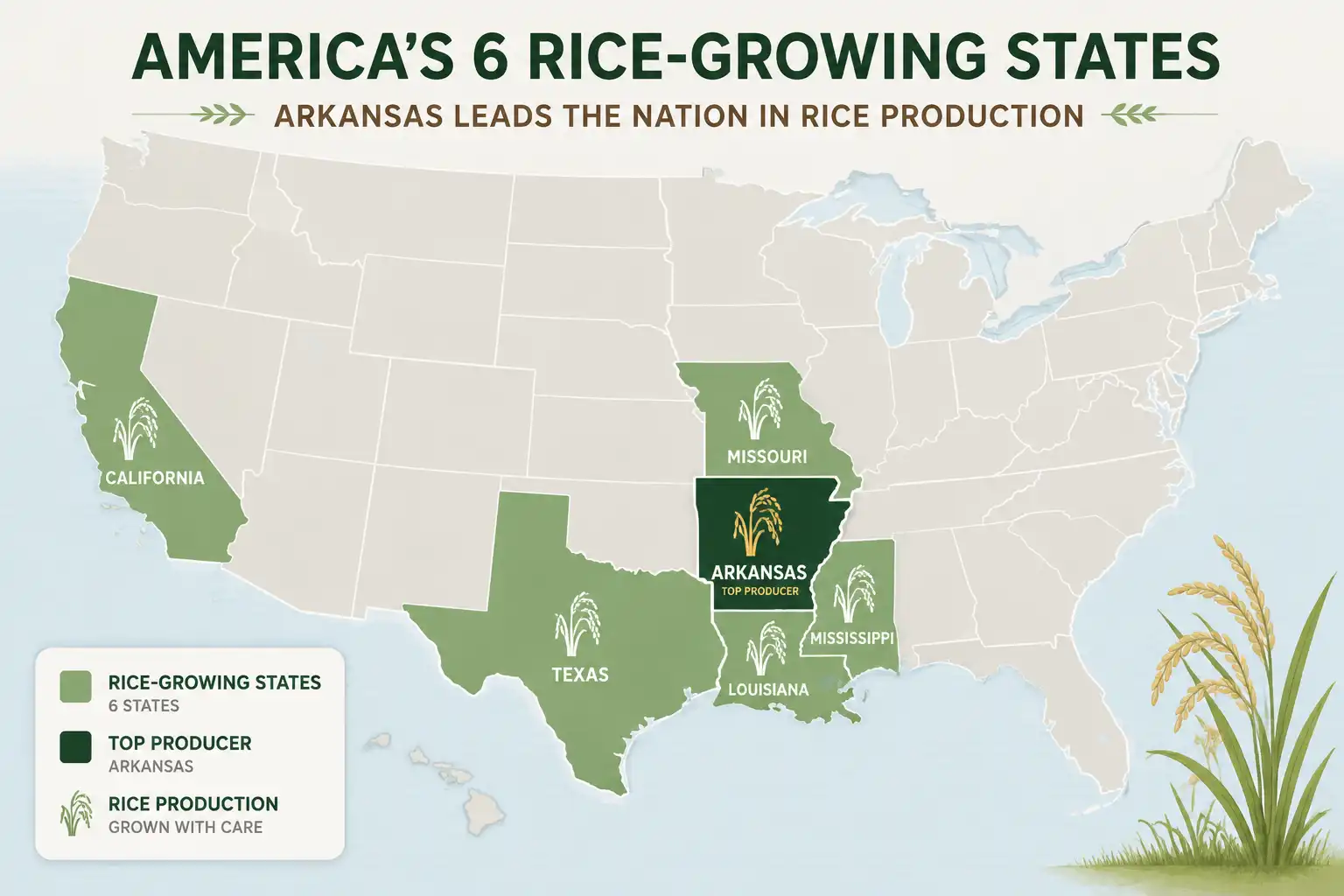
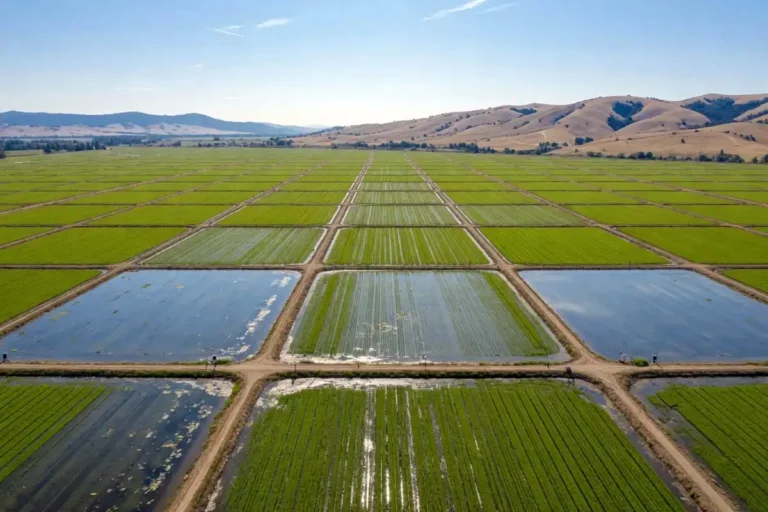
California ranks second and focuses on medium-grain and short-grain rice. The Sacramento Valley does most of that work, and growers there often seed fields by airplane. To see how rice country in California’s Sacramento Valley runs, that regional guide breaks it down.
Louisiana, Mississippi, Missouri, and Texas fill out the rest. Along the Gulf Coast, some Texas and Louisiana growers even pull a second harvest. Growers call that a ratoon crop, and it grows from the stubble left after the first cut.
Where Did Rice Originate?
Rice originated in Asia about 9,000 years ago. Early farmers in China’s Yangtze River valley domesticated it from a wild grass called Oryza rufipogon. Over many seasons, they saved seed from plants with bigger kernels and better flavor, and Oryza sativa slowly took shape.
African rice has a separate origin. Around 3,000 years ago, farmers along West Africa’s Niger River domesticated a different wild grass, Oryza barthii, into Oryza glaberrima. So farmers domesticated rice twice, on two continents, from two wild ancestors.
Asian rice then split into two main types. Indica rice traces back to the Indian subcontinent, while japonica rice traces back to China. From those roots, the crop spread across Asia, moved into the Middle East and Europe, and later reached the Americas during the Columbian exchange.
How Rice Gets From the Field to Your Plate
Getting rice from the field to your plate takes a few clear steps. It starts with planting and flooding, then runs through harvest, drying, and milling.
Growers plant the seed, then flood the field a few inches deep. That water blocks weeds, steadies soil temperature, and shields the young plants. This is the main reason why growers keep the paddies flooded through much of the season. Some farms drill seed into dry ground first, then add water later.
The crop grows for three to five months, depending on the variety. Once the heads turn golden and firm, growers drain the field and cut the rice with a combine. Growers then dry the grain to a safe moisture level before storage.
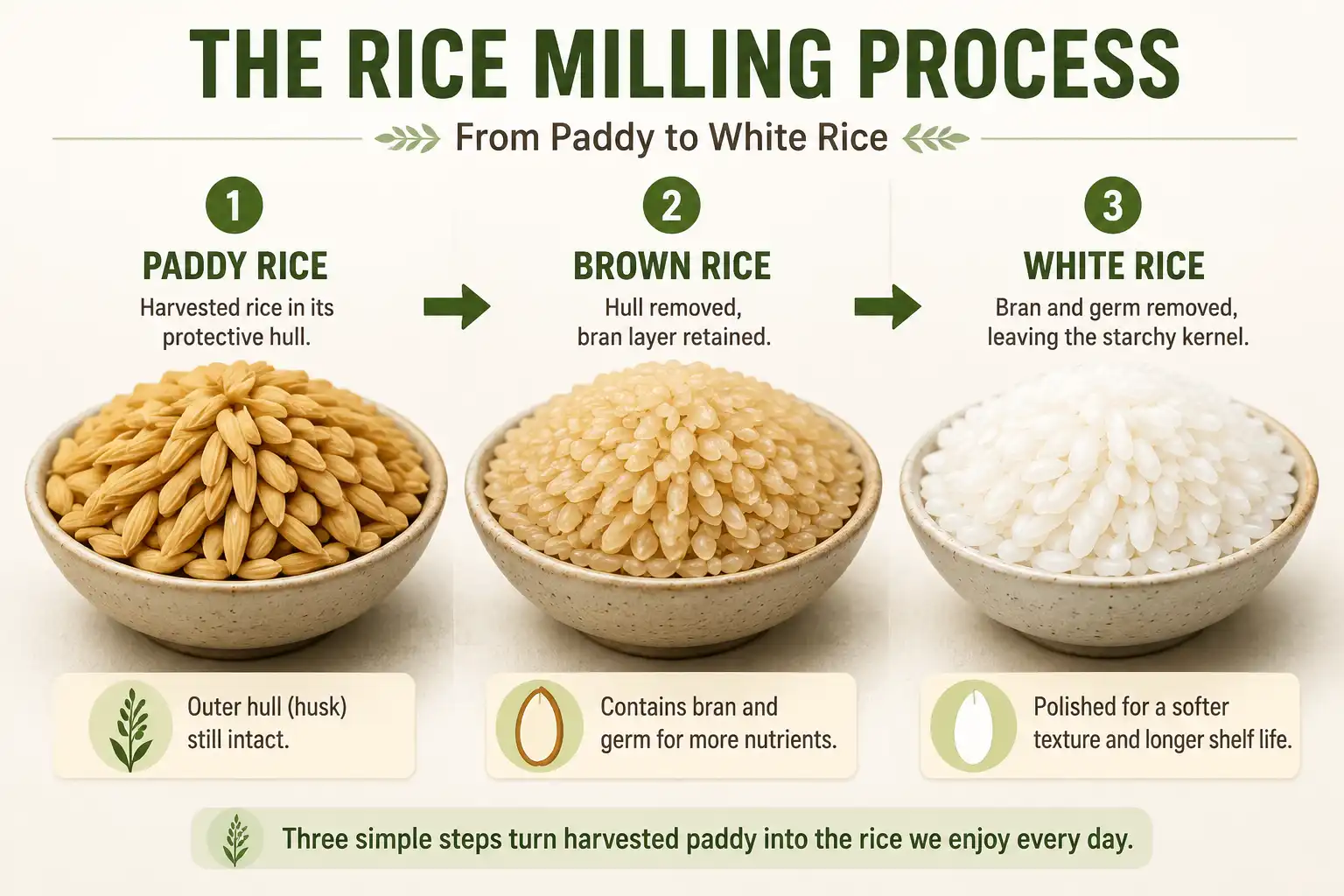
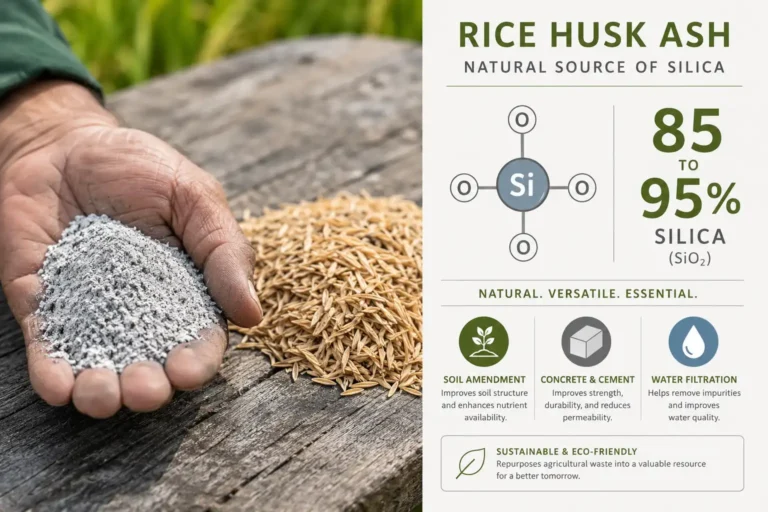
Milling comes last. First, machines strip off the tough outer hull, which leaves brown rice. It helps to know what the protective rice hull does and why growers save it. Next, mills polish away the bran layer to make white rice. That polishing step is the only real difference between brown and white rice from the same field.
Is Wild Rice the Same as Regular Rice?
No, wild rice is not the same as regular rice. Wild rice comes from a different group of grasses in the genus Zizania, and it is native to North America. True rice belongs to the genus Oryza.
Native peoples around the Great Lakes harvested wild rice for centuries. It still grows in lakes and slow rivers today. It also has a longer, darker grain and a nuttier taste. For the full picture, here is how growing wild rice works in ponds and shallow water.
So the honest answer depends on which rice someone means. Nearly all the rice we eat is Oryza sativa. Wild rice is a separate North American plant that simply shares the name.
Final Words on Global Rice Production
Rice comes from a grass, and that grass is Oryza sativa. Most of the world’s supply grows in flooded fields across Asia, and India and China lead the way. Here at home, Arkansas and California carry the load. The crop itself traces back to China’s Yangtze River valley about 9,000 years ago. Same grain, long history, and it still feeds roughly half the planet.