Where Does Sugarcane Grow? Climate, Countries, and Best Conditions
Sugarcane shows up in sugar, molasses, rum, and ethanol, but it only grows where the weather stays warm. So where does sugarcane grow, and what makes a place right for it? The answer comes down to heat, water, and a long frost-free season.
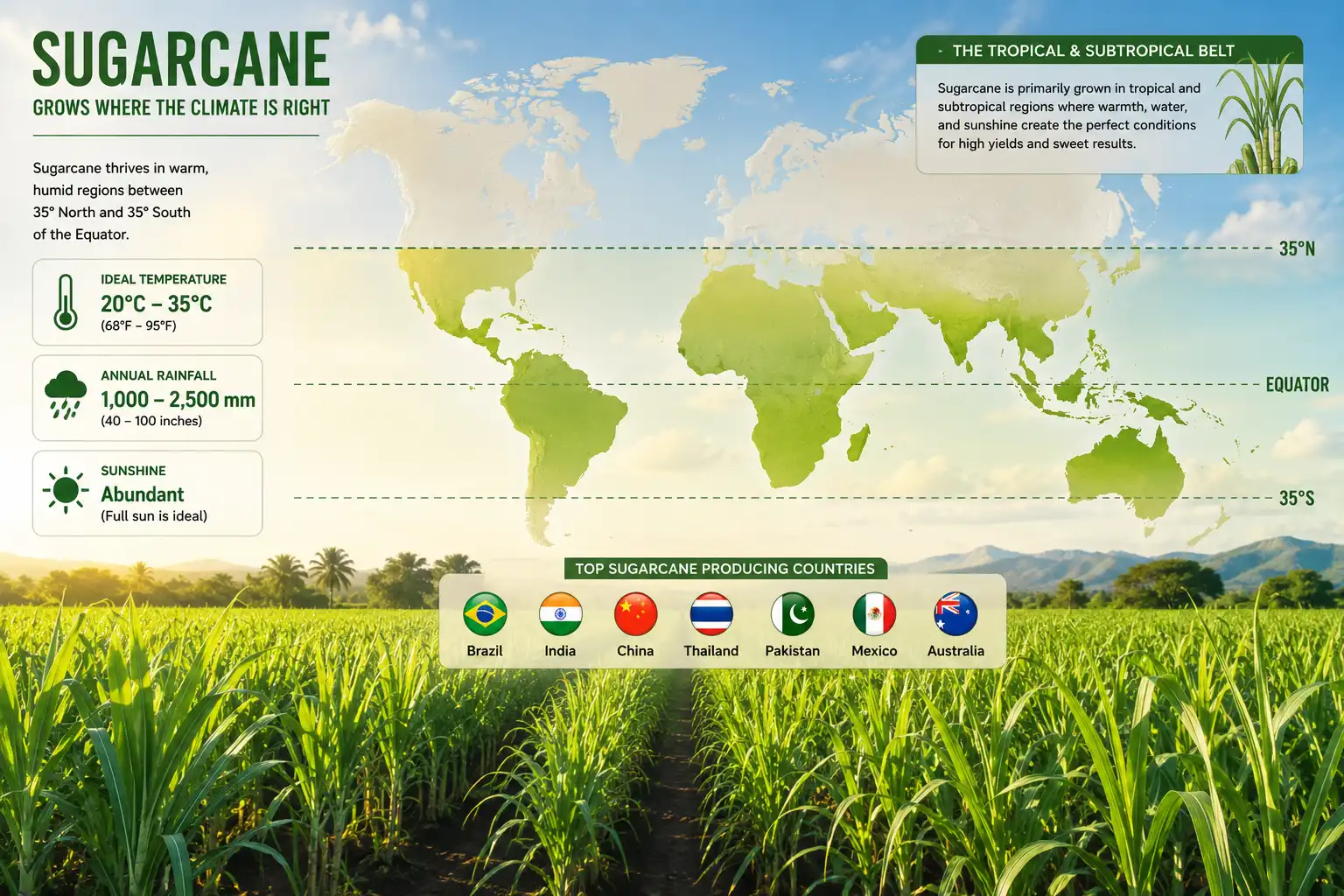
Sugarcane grows in tropical and subtropical regions, between 35°N and 35°S latitude. It needs warmth, heavy rainfall or irrigation, full sun, and a long frost-free season. Brazil and India grow the most, and more than 100 countries raise it.
Where Does Sugarcane Grow Around the World?
Sugarcane grows in a warm band that wraps the tropics and subtropics, roughly between 35°N and 35°S. That belt covers much of South America, the Caribbean, Africa, South and Southeast Asia, and parts of Oceania. Farmers in more than 100 countries grow it, which makes cane the largest crop on earth by weight.
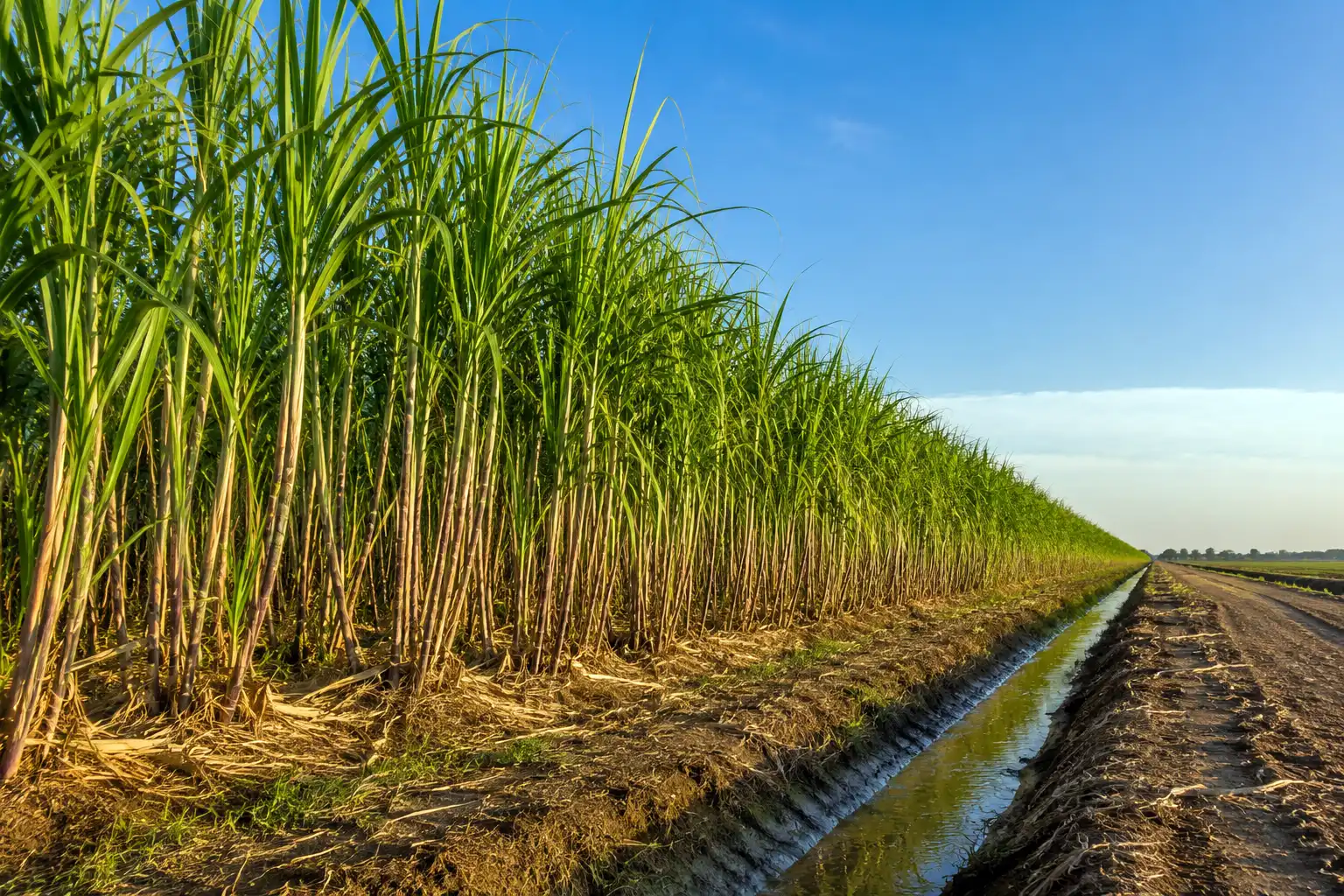
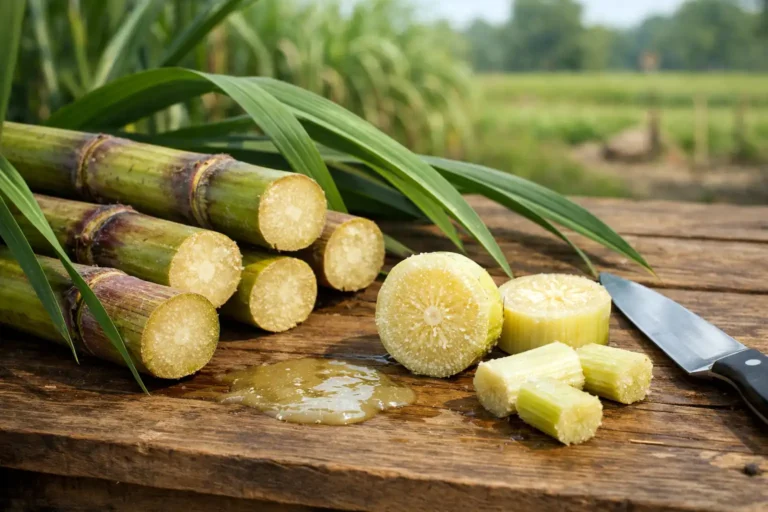
The plant itself is a tall grass. It belongs to the genus Saccharum in the grass family, Poaceae. Modern fields grow complex hybrids of Saccharum officinarum. The sugarcane plant itself started in New Guinea thousands of years ago. From there, it spread west through Asia and later to the Americas.
Most cane still clusters near the equator, where heat and rain come easy. Brazil and India alone grow well over half the global crop. Still, the belt is wide, so cane also thrives in places like Australia, Mexico, and the southern United States.
What Climate Does Sugarcane Grow In?
Sugarcane grows in a warm, frost-free climate with plenty of moisture. It is a tropical and subtropical crop, so it wants long, hot days and mild nights. Cold is its main limit. One hard freeze can end a stand, so cane stays out of cold-winter regions.
What Temperature Does Sugarcane Need?
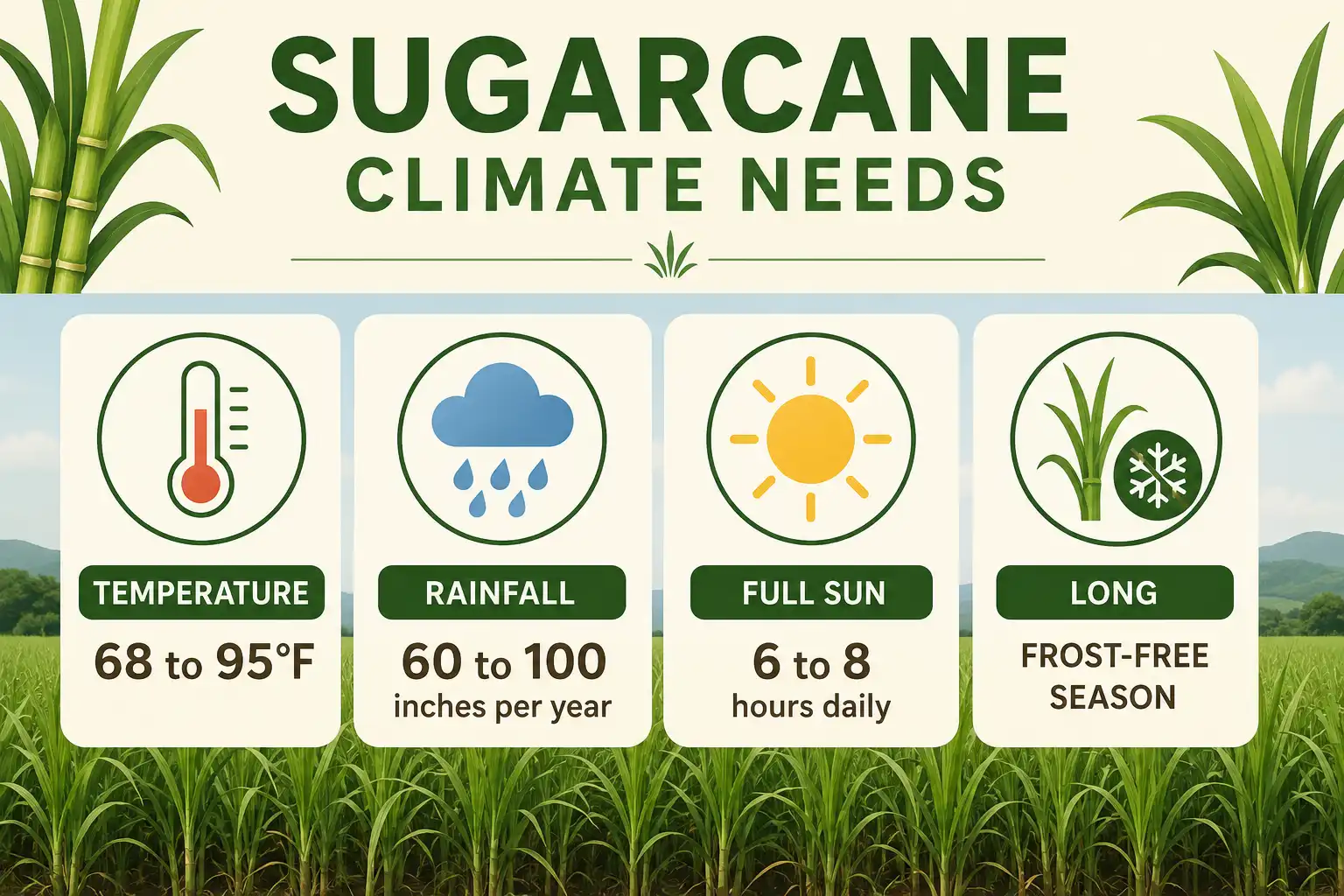
Sugarcane grows fastest when daytime temperatures sit in the 80s and low 90s°F. Growth slows once readings drop below about 68°F. Nights should stay above roughly 60°F for steady development. Frost is the real threat, because it damages young cane and can kill the crop outright.
How Much Water Does Sugarcane Need?
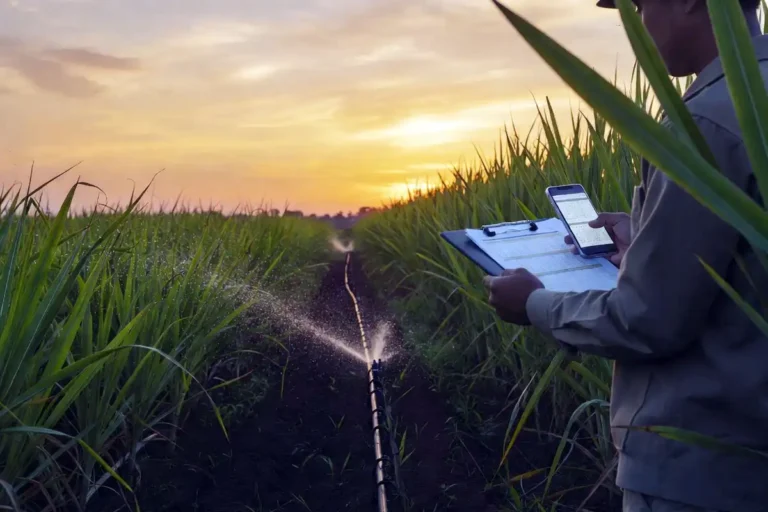
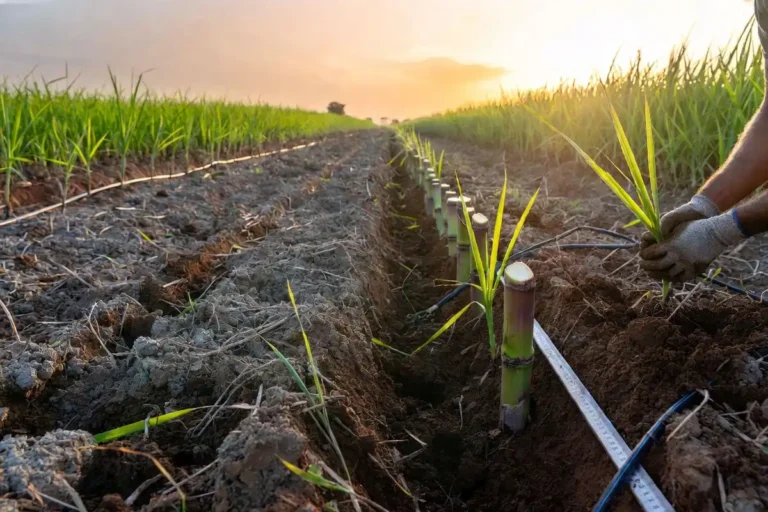
Sugarcane needs a lot of water, usually 60 to 100 inches a year. That moisture has to spread across the growing months, not arrive all at once. Where rain falls short, growers add irrigation to fill the gap. Getting an irrigation schedule that fits the crop right protects both yield and sugar. A short dry spell before harvest also helps, since it pushes the plant to store more sucrose.
How Much Sun and How Long a Season?
Sugarcane needs full sun and a long growing season. Plan on 6 to 8 hours of direct sunlight a day for strong growth. The season matters just as much. In the tropics, cane often grows 12 months or more before harvest. In cooler subtropical zones, growers take a shorter crop. Either way, the field needs many frost-free months. So how long the crop takes to grow depends heavily on the local climate.
What Kind of Soil Does Sugarcane Grow In?
Sugarcane grows best in deep, well-drained, fertile soil. A loam rich in organic matter is ideal, and the crop handles a wide pH range from about 5.0 to 8.0. Good drainage matters most, because standing water rots the roots. Cane also does well on heavy clay loam. It even grows on the muck soils of the Everglades Agricultural Area, as long as the water moves through.
Which Countries Grow the Most Sugarcane?
Brazil grows the most sugarcane by far, at roughly 40% of the world total. India ranks second, then China, Thailand, and Pakistan follow. Together, they make up more than half the world’s cane.
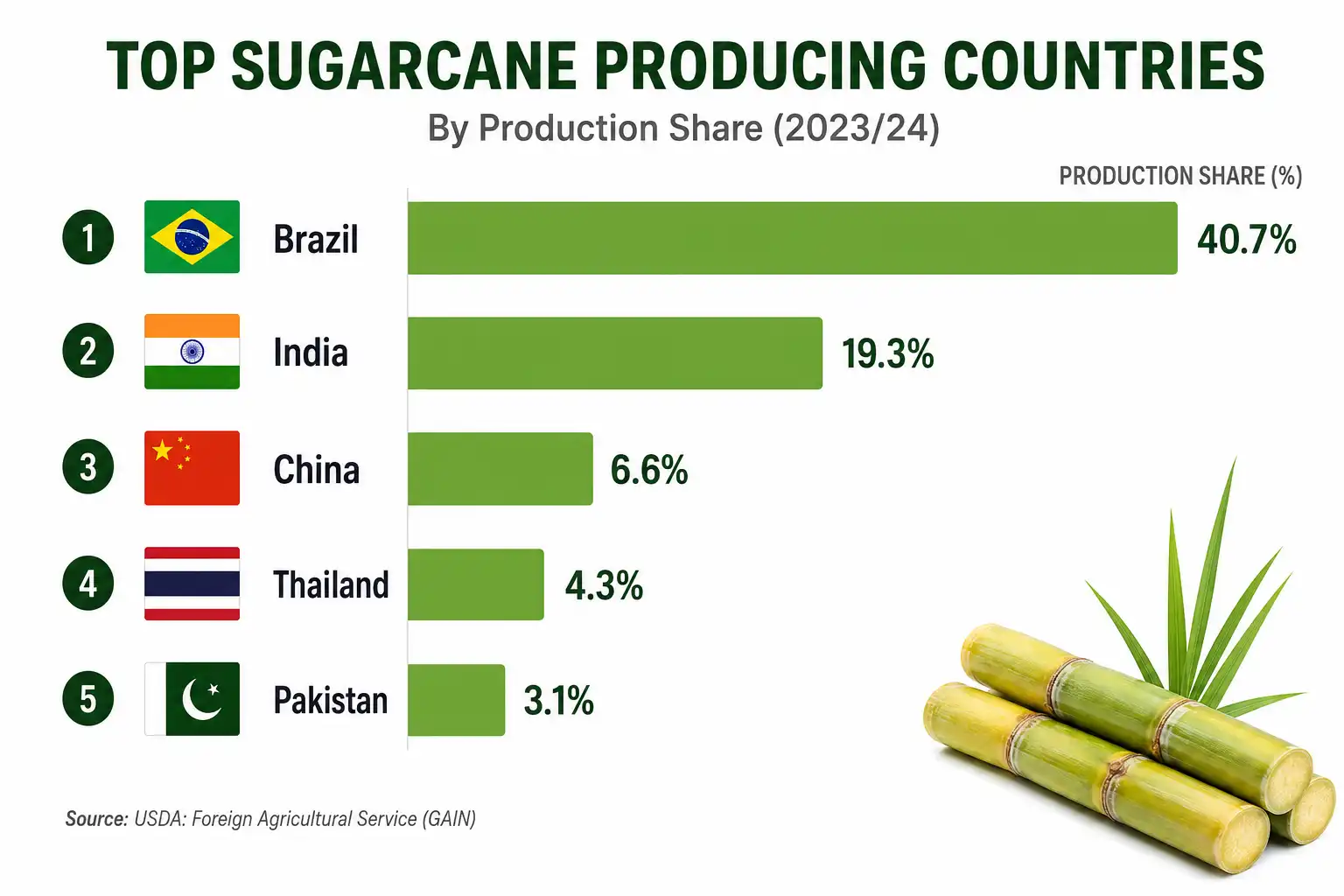
Each leader has a core region. In Brazil, most cane grows in south-central states like São Paulo. In India, Uttar Pradesh and Maharashtra lead. The FAO tracks these totals every year, and the order rarely shifts much. If you want a closer look at which country produces the most, the gap between the top two stays wide.
Where Is Sugarcane Grown in the United States?
Sugarcane grows in just two U.S. states today: Florida and Louisiana. Florida leads, with production centered south of Lake Okeechobee. Louisiana comes next, along the Mississippi River Delta, and its acreage has climbed for several years straight. Texas grew cane until 2023, when water shortages closed its last mill. Hawaii, once a major producer, ended commercial cane in 2016. You can read more about sugarcane farming in Florida and Louisiana. Those two regions carry the whole U.S. crop today.
Can You Grow Sugarcane in a Cooler Climate?
Sugarcane only survives outdoors in USDA hardiness zones 8b and warmer. It cannot take a hard freeze, so cold-winter regions are out for a standing crop. This falls within zone 6a. Cane would sprout in summer, then die at the first hard freeze. Stick with corn, soybeans, and wheat instead.
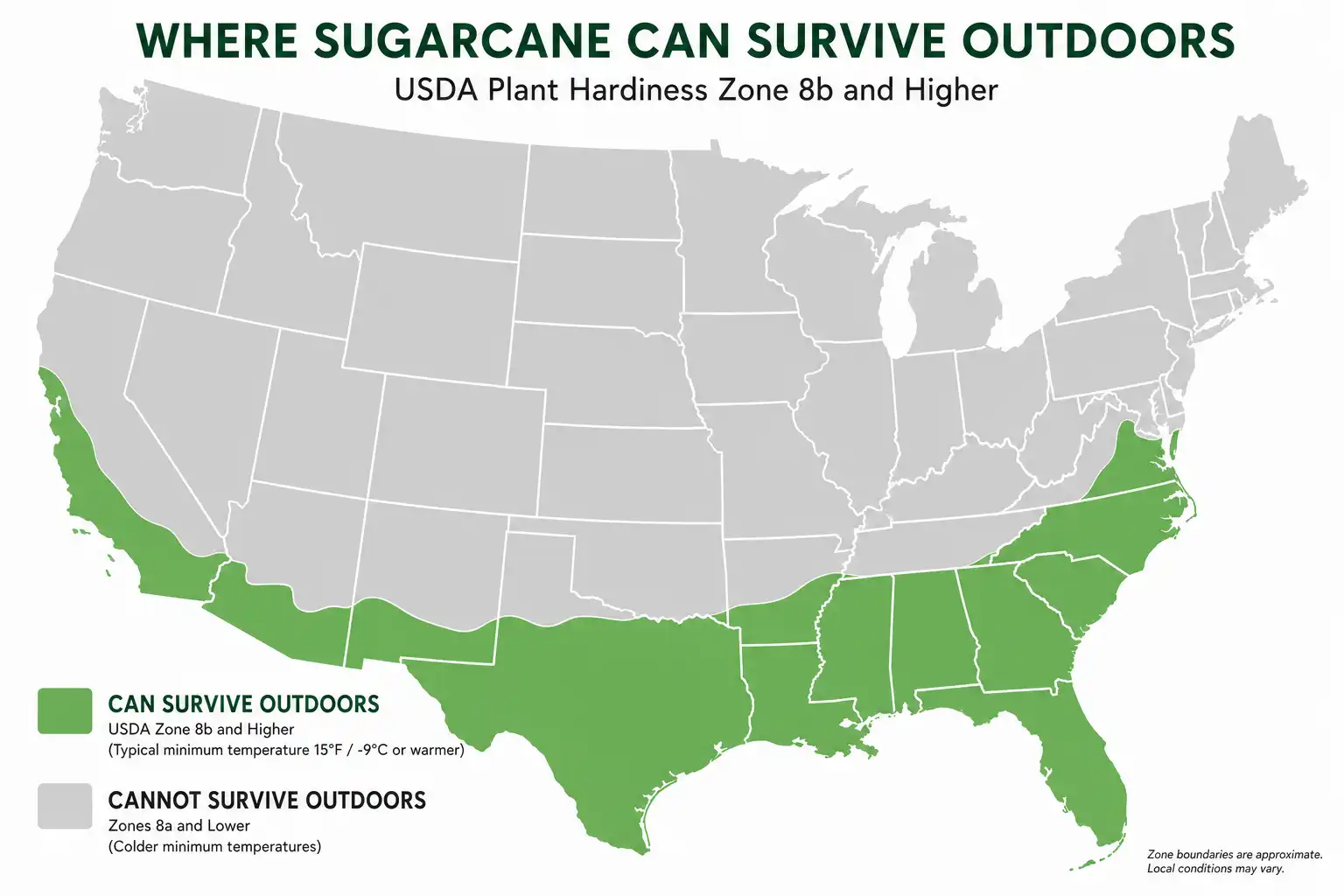
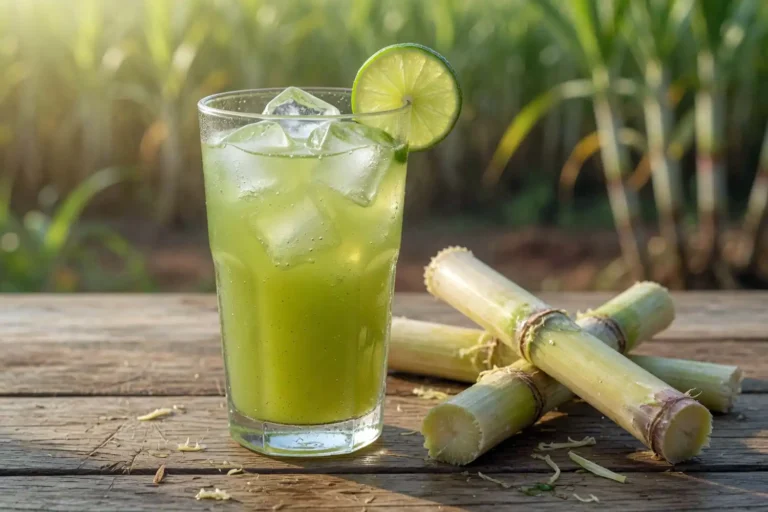
Gardeners in warm zones can still grow a few stalks for chewing or juice. Just expect lower sugar than a commercial field in the tropics. If you want a sugar crop that fits a cold climate, look at the sugar beet crop that thrives up north instead. Beets handle frost and short seasons that cane never could.
Bottom Line on Sugarcane’s Range
Sugarcane grows where the climate stays warm, wet, and frost-free, mostly in the belt between 35°N and 35°S. Give it hot days, mild nights, steady water, full sun, and a long season, and it thrives. Take away the heat, and it fails. That is exactly why the field grow grain instead of cane.