How to Grow Sugarcane Plant: 6 Soil and Water Rules That Work
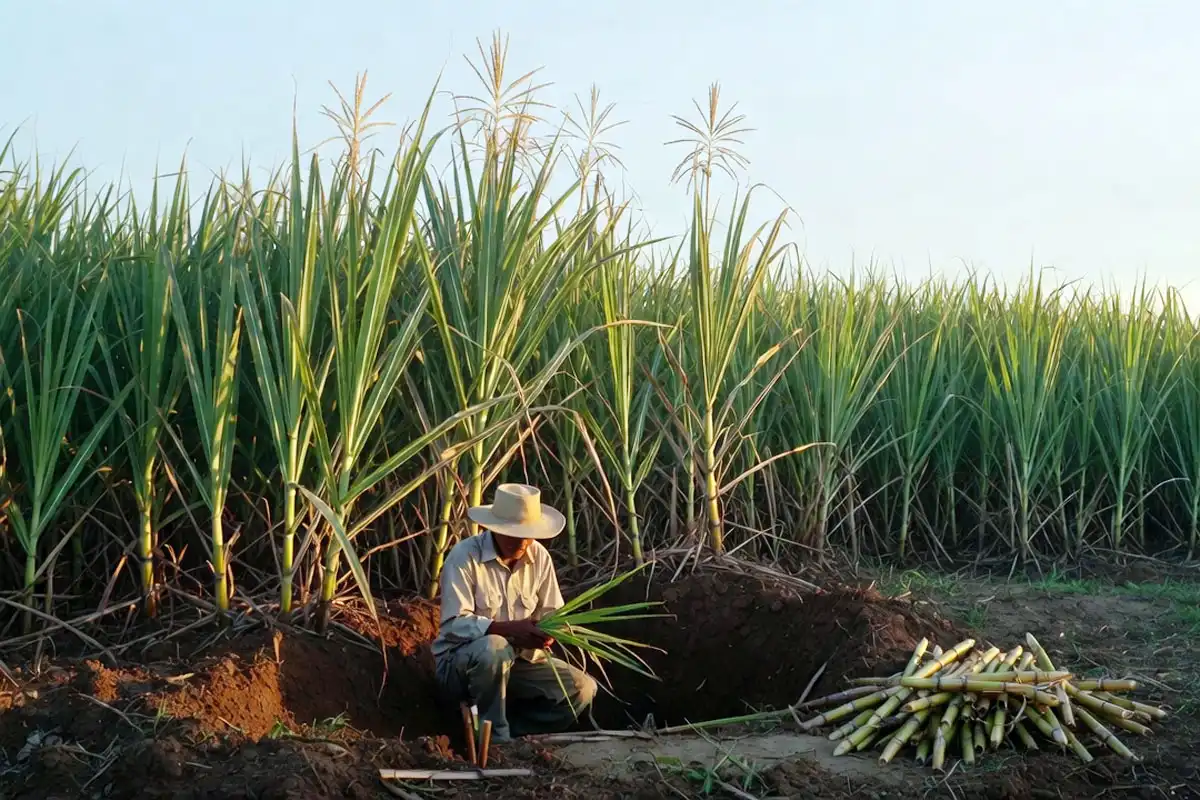
To grow sugarcane plant, plant healthy stalk cuttings (setts) in full sun and well-drained soil, keep the seed zone evenly moist until shoots emerge, control weeds early, feed during active growth, then ease nitrogen and water as the crop ripens for sweeter canes. This guide covers the full workflow from choosing planting material to furrow depth, watering, feeding, ratoon management, and harvest checks.
Plant disease-free sugarcane setts in full sun, in well-drained soil near pH 6.5. Place setts 10 to 20 cm deep in furrows and keep the bed moist until shoots emerge. Control weeds for the first 3 to 4 months. Push nitrogen early, then ease nitrogen and water late to improve sugar.
If you want a quick visual on row layout, sett depth, and spacing, read this sugarcane planting method guide before you cut and lay your first setts.
What is a sugarcane plant, and what does it need to grow?
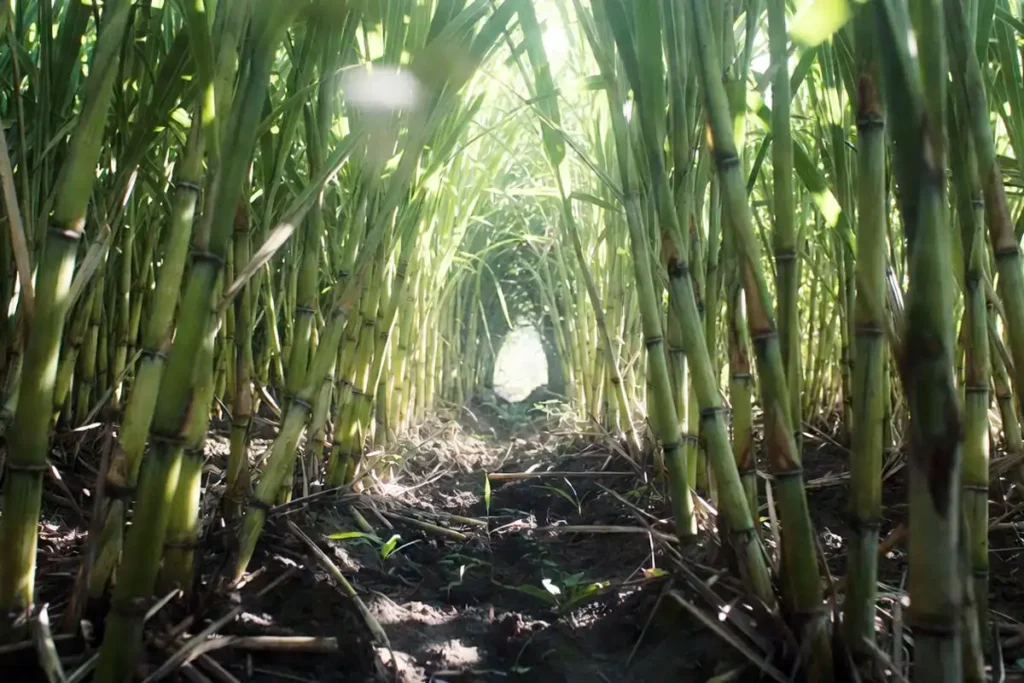
Sugarcane is a tall perennial grass that stores sucrose in thick stalks. A grower plants sugarcane from stalk cuttings (seed-cane), because true seed does not stay true to type.
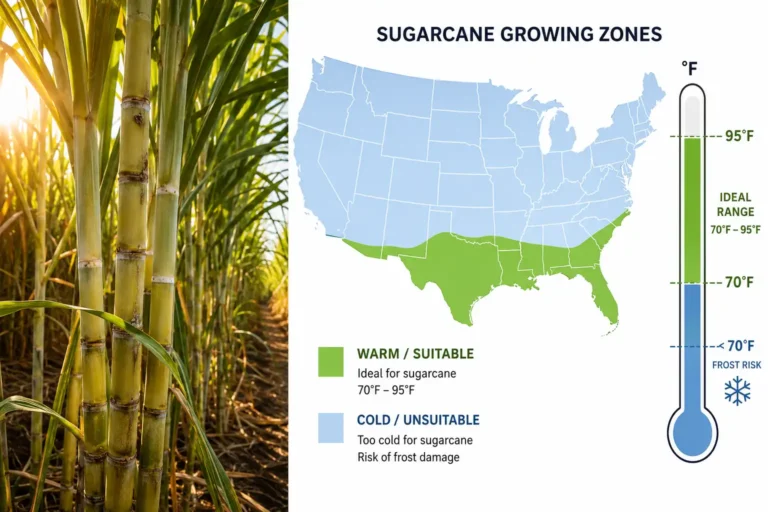
Sugarcane responds to a long warm growing season, followed by a drier, cooler ripening period without frost. FAO lists optimum growth at mean daily temperatures of 22 to 30°C, with sprouting strongest at 32 to 38°C.
Sugarcane roots explore deep soil when drainage stays open. FAO lists optimum soil pH near 6.5, with growth across pH 5 to 8.5.
When is the best time to plant sugarcane?
A grower times planting so buds sprout in warm soil and young shoots avoid frost.
- Tropics: Plant near the start of the reliable rainy period, because sugarcane yield tracks water use across the season.
- Subtropics with frost risk: Plant early enough to establish roots before frost, or plant late enough that buds stay dormant until spring.
A simple home-garden example comes from UF/IFAS Santa Rosa County: seed-cane planting runs from mid-August through November, with growth resuming in spring.
Crop length varies by climate and variety. FAO reports a total growing period from about 9 months (harvest before winter frost) to 24 months, with 15 to 16 months common in many systems.
How to grow sugarcane plant step by step
1) Pick the right site
Sugarcane uses sunlight to build stalk mass. Choose full sun, good airflow, and space for tall canes.
Give the bed drainage. Standing water rots buds and slows root growth.
2) Test the soil and set pH first
Soil pH controls nutrient availability. FAO places optimum pH around 6.5.
Run a basic soil test and correct pH before heavy fertilizing. This site’s guide on soil testing for farm and garden beds helps you pick the right sample and read the report.
LSU AgCenter (2025) also puts soil pH as the first priority in a fertility program and calls for regular soil testing.
3) Build soil structure and organic matter
Sugarcane responds to a loose, aerated seedbed.
- Add finished organic matter to improve moisture holding and rooting.
- Use steady inputs, not a single heavy dump.
If you want a simple plan, start with compost basics for farms and gardens and then move into practical ways to improve soil fertility naturally.
4) Choose planting material that starts clean
A grower starts yield at planting, not later.
- Use disease-free, mature cane for planting.
- Avoid stalks with soft rot, heavy borer damage, or distorted buds.
In commercial systems, growers plant setts or billets. UF/IFAS describes manual planting where stalks get cut into billets, often holding 3 to 5 buds per billet.
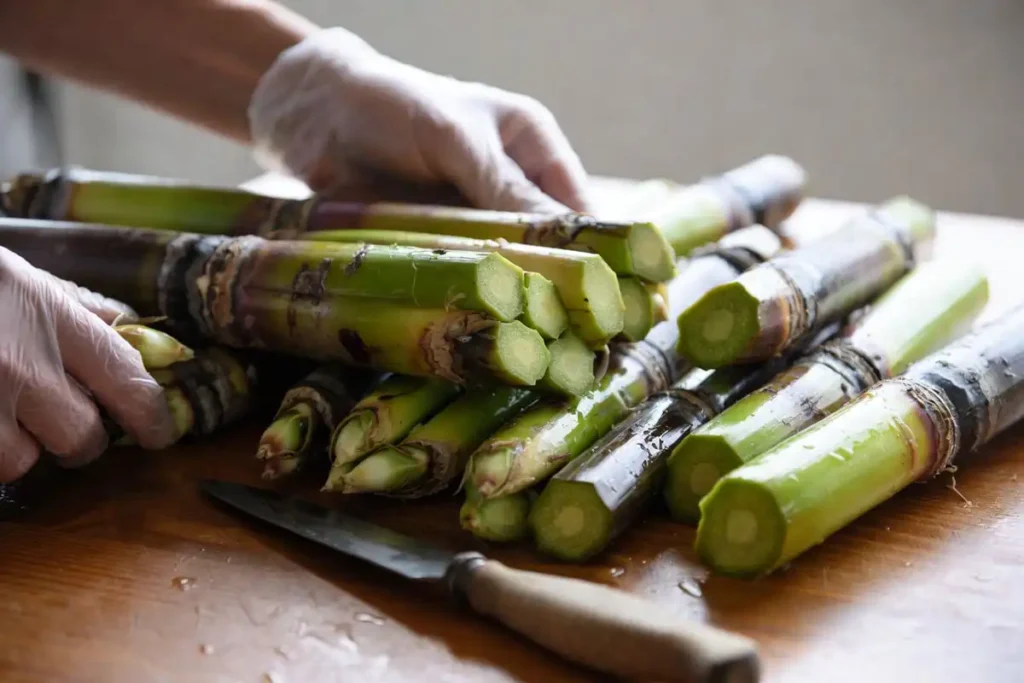
5) Cut setts and protect the buds
A sett needs live buds and moisture contact.
One industry example from Australia describes setts as pieces of stalk about 300 mm long.
That size works well for most small and mid-scale plantings because it carries multiple nodes and handles stress better than a single bud.
If disease pressure stays high, a grower uses sanitation and heat treatment rather than guessing.
Texas A&M notes hot water treatment at 50°C for two hours for prevention of certain diseases in seed cane. Use a thermometer and protect yourself from scalding.
6) Lay out rows, furrows, and spacing
Row layout controls access, light, and harvest.
FAO lists common row spacing at 1.1 to 1.4 m. A backyard grower often tightens that spacing, but still leaves room to walk and cut.
7) Set furrow and planting depth
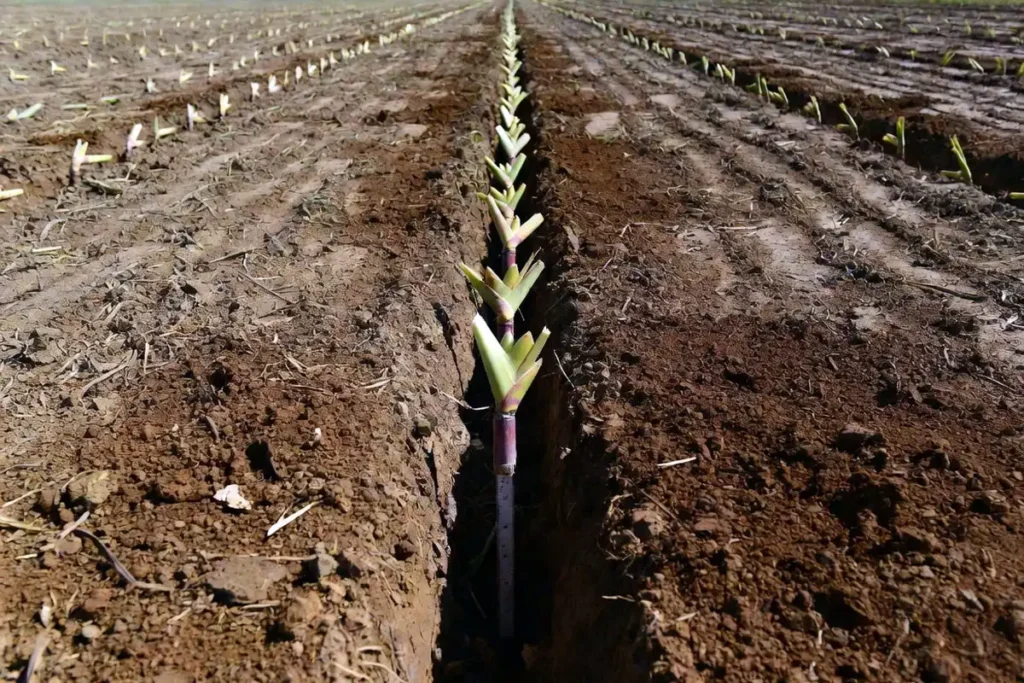
Depth drives bud temperature and emergence.
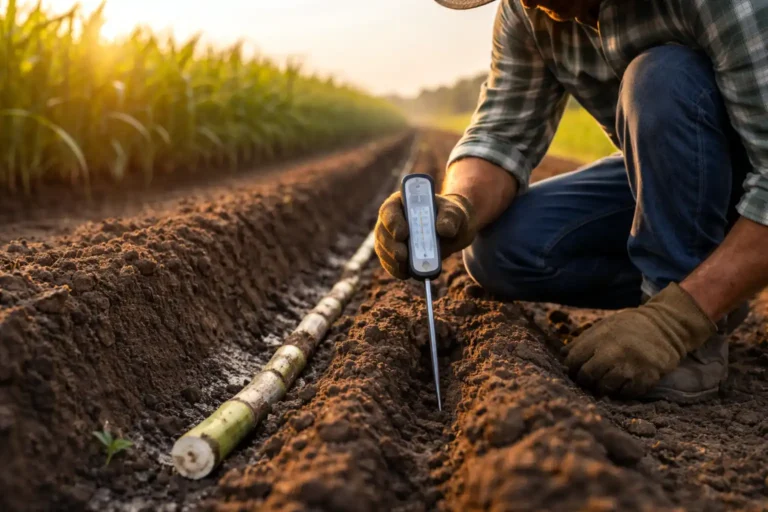
UF/IFAS lists furrow depth at 15 to 25 cm, with planting depth adjusted to the sett type.
UF/IFAS also lists 15 to 20 cm as suitable for multi-bud setts, and 10 to 15 cm for single-bud or billet planting.
Cover setts with soil soon after placement so buds do not dry in sun and wind.
8) Water for establishment, then water for growth
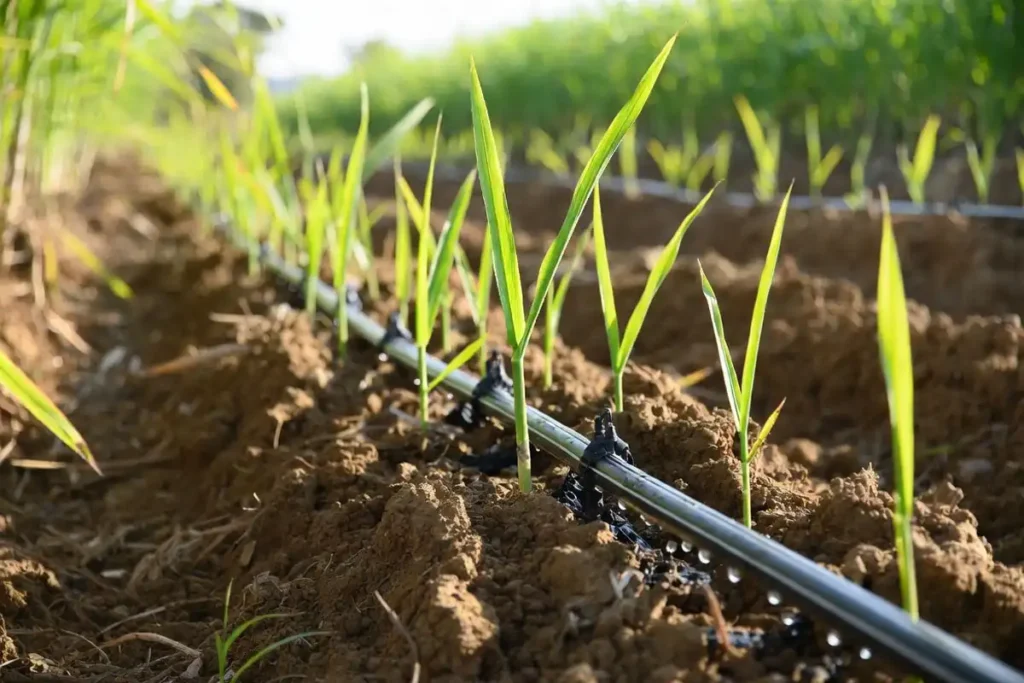
Sugarcane builds stalks when water stays available.
FAO lists seasonal crop water requirement (ETm) of 1500 to 2500 mm, depending on climate, spread across the growing season.
For practical scheduling, use your local evapotranspiration data and rainfall tracking. This guide on calculating crop water needs gives a clear method.
Field rule that holds up: keep the seed zone moist until emergence, then shift to deeper irrigations that push roots down.
9) Feed the crop in the right window
Sugarcane uses nitrogen and potassium heavily during canopy build and stalk elongation.
FAO lists nutrient needs for a 100 ton/ha cane yield at 100 to 200 kg/ha N, 20 to 90 kg/ha P, and 125 to 160 kg/ha K, while noting that real rates vary by field.
Two practical decisions make feeding safer and more effective:
- Base rates on your soil test, not guesswork.
- Front-load nitrogen into the early growth window, then taper late.
FAO also notes that low nitrogen in the soil at maturity supports sugar recovery, especially when ripening stays warm and moist.
10) Control weeds early, not late
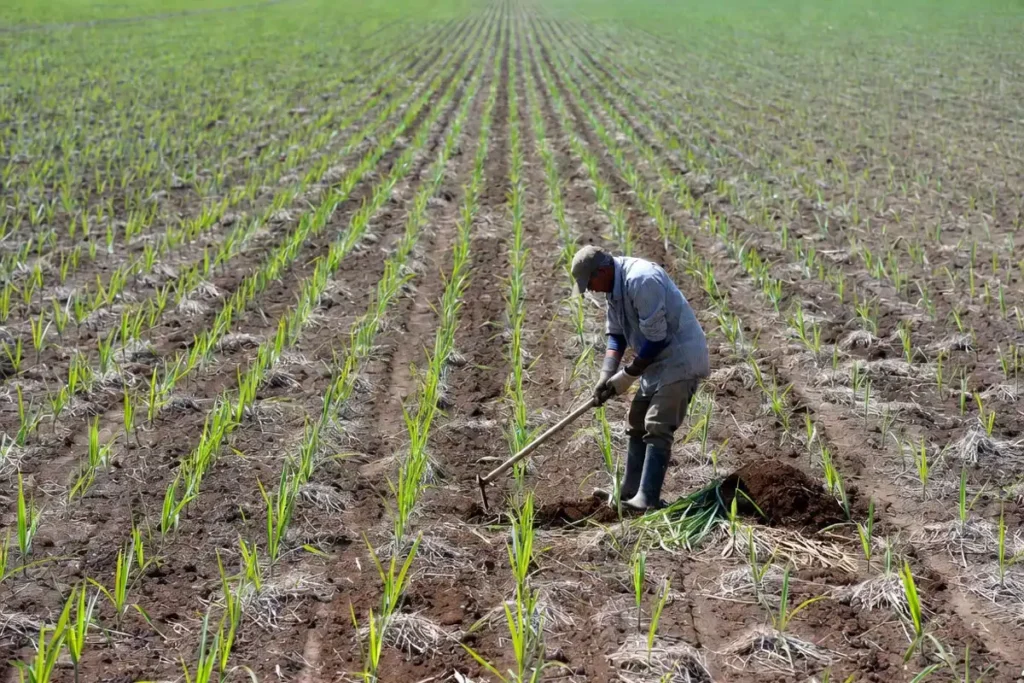
Weeds steal light and moisture while sugarcane stays small.
Texas A&M reports weeds as a major economic issue in sugarcane production and notes that growers combine cultivation and herbicides.
Even in a garden bed, the lesson stays the same: clean rows early make the rest of the season easier.
Use a simple plan from this site’s weed control guide, then match the method to your scale (mulch, hoe, shallow cultivation, or labeled herbicides).
11) Scout pests and diseases with an IPM mindset
Sugarcane fields attract borers, chewing pests, and disease complexes.
Texas A&M lists major diseases that include ratoon stunting disease, leaf scald, rust, and smut.
An effective grower does three things:
- Starts with clean planting material.
- Scouts on a schedule, not only after damage shows.
- Targets the cause, not the symptom.
If you want a workable framework, follow this site’s integrated pest management primer.
12) Harvest correctly and handle cane fast
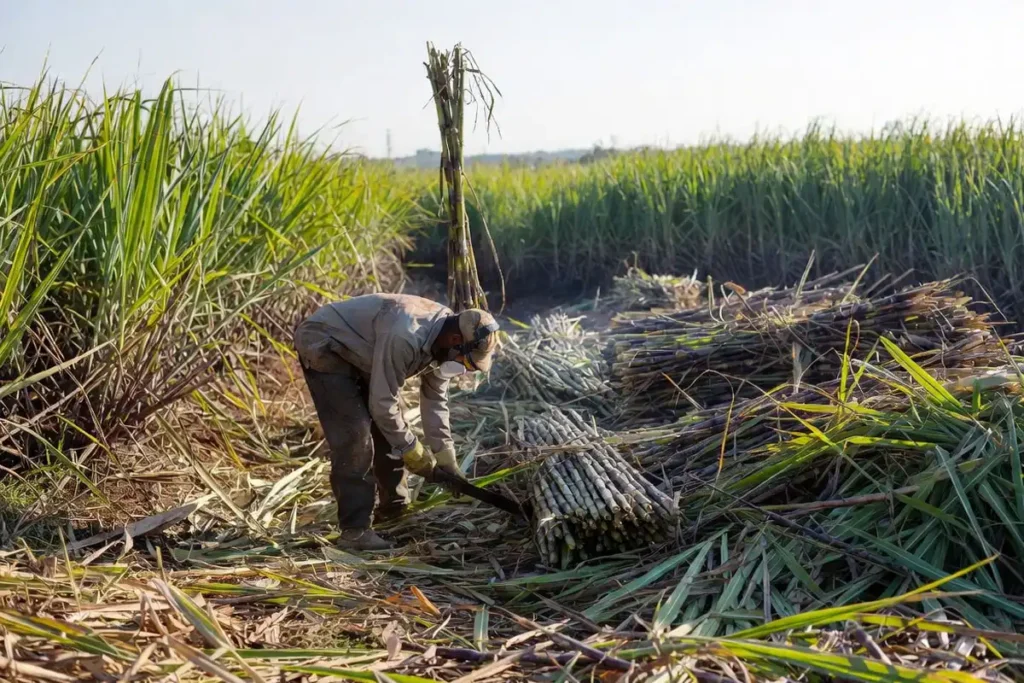
Harvest method decides ratoon strength and eating quality.
- Cut stalks close to the ground to save the stool.
- Strip leaves and tops for chewing cane or milling.
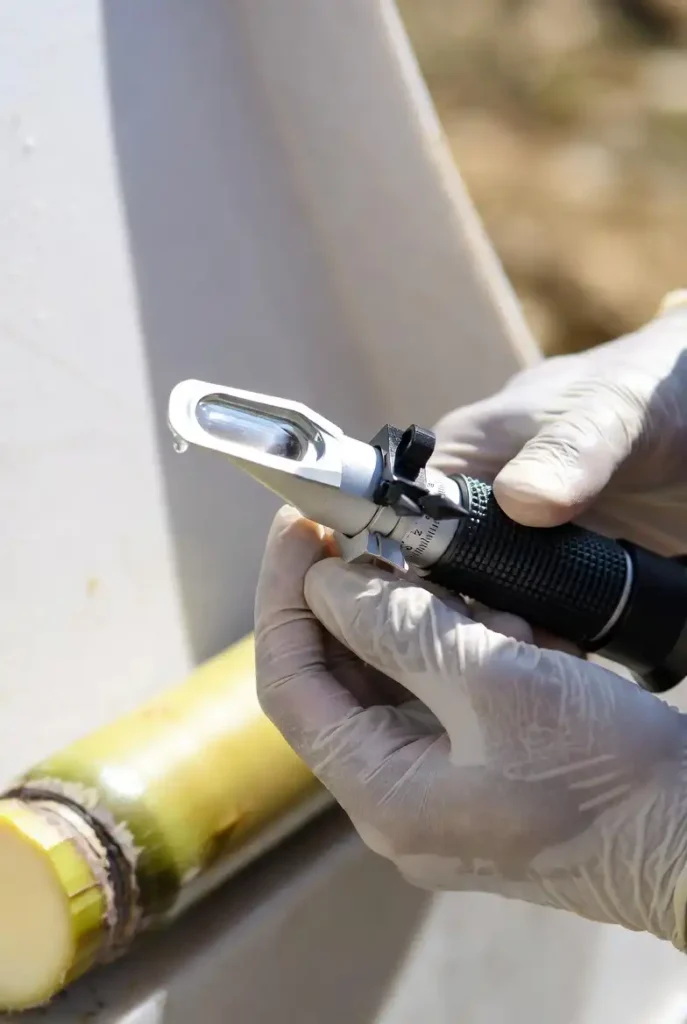
Brix testing helps time harvest. LSU AgCenter explains that many growers test standing cane in the field for Brix with a hand refractometer as an approximate measure of sucrose in juice.
How does sugarcane grow from planting to harvest?
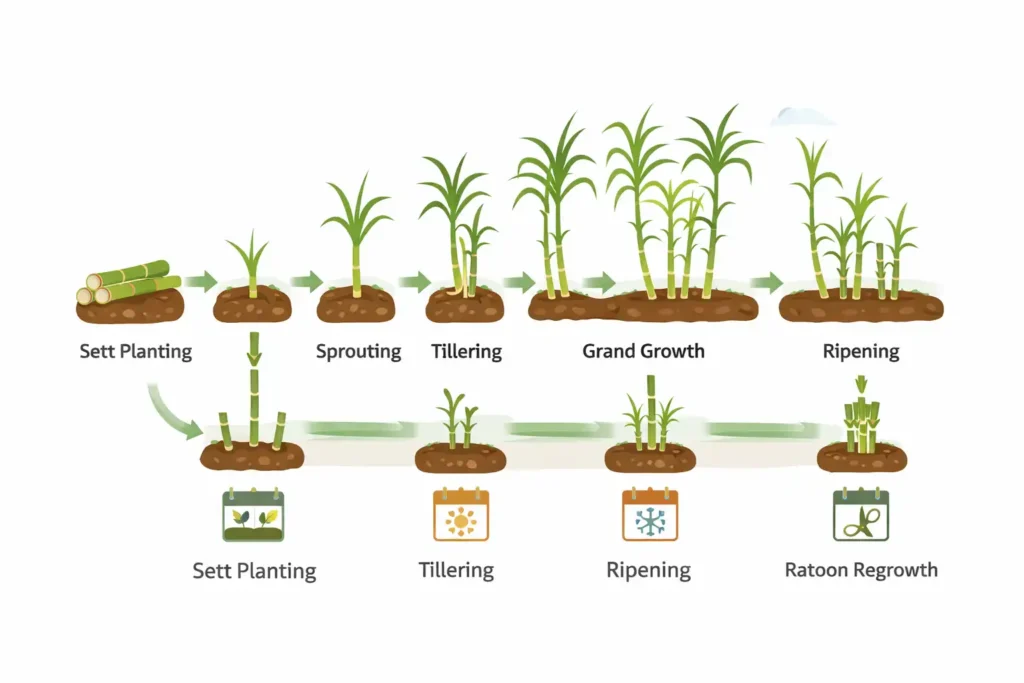
Sugarcane growth moves through clear stages.
Sprouting and establishment: Buds push shoots when soil stays warm and moist. FAO places sprouting optimum at 32 to 38°C.
Tillering: The plant forms multiple shoots from a stool. Weed control and early nitrogen support this stage.
Grand growth: Stalks elongate and thicken. Water drives biomass here, and FAO links cane growth to water transpired.
Ripening: Vegetative growth slows and sucrose concentrates. FAO notes that cooler temperatures in the 20 to 10°C range support ripening and sucrose enrichment.
Ratooning: After harvest, the stool regrows shoots. FAO states that a plant crop often gets followed by 2 to 4 ratoon crops, and in some cases up to 8.
Solutions: quick fixes that move the crop forward
Low germination and patchy stands
A grower improves stands by fixing the three big drivers: seed quality, depth, and moisture.
- Plant clean, live-budded setts.
- Keep planting depth inside the 10 to 20 cm range suited to the sett type.
- Keep the seed zone moist until shoots break through.
Thin stools with weak tillers
Thin stools come from stress during the early months.
- Remove weed pressure early.
- Feed based on soil test.
- Irrigate to avoid dry cycles during canopy build.
Tall cane with low sugar
High nitrogen late keeps cane green and delays ripening.
- Finish most nitrogen earlier in the cycle.
- Let the crop enter a drier ripening window when your climate allows.
FAO links low soil nitrogen at maturity to better sugar recovery.
Troubleshooting common sugarcane problems
Buds rot before emergence: Waterlogged soil, dirty planting material, or planting too deep. Improve drainage, plant cleaner setts, and hold depth in the UF/IFAS ranges.
Yellowing leaves in strips: Nutrient imbalance or root stress. Confirm with soil testing, then correct pH and nutrients.
Holes, frass, or dead hearts: Stalk borers or chewing pests. Scout early, remove badly infested stalks, and use IPM decisions.
Leaves cut skin during fieldwork: Sugarcane leaf edges stay sharp. UF/IFAS warns that leaves can hurt people.
Avoid these mistakes
- Planting unknown cane from a roadside pile with no disease check.
- Planting in a low spot that holds water after rain.
- Letting weeds run wild for the first 60 days.
- Pushing nitrogen late and expecting sweeter cane.
- Cutting too high at harvest and damaging the stool for ratoon regrowth.
- Working cane rows in shorts and bare hands.
Safety notes (planting, cutting, and any spraying)
Sugarcane work mixes blades, heat, and sharp leaf edges.
- Wear gloves, long sleeves, eye protection, and closed-toe boots.
- Cut setts on a stable surface and keep the off-hand clear of the blade.
- Handle hot water treatment with a thermometer, heat-safe gloves, and a steady container.
- If you apply pesticides, follow the label, keep kids and animals out, and clean equipment after use.
FAQs about Grow Sugarcane Plant
How long does sugar cane take to grow?
Can I grow sugarcane in a pot?
Do I plant sugarcane seeds?
How far apart do I plant sugarcane?
How much water does sugarcane need?
How do I know when cane is ready to harvest?
When is sugarcane ready to harvest?
Will sugarcane grow back after harvest?
Final Thoughts
Sugarcane grows best when you start with clean planting material, plant at the right depth in a well-drained bed, and protect the crop during the first months with steady water, early nutrition, and tight weed control. Once the canopy closes, your job shifts to scouting, irrigation timing, and ripening management so the stalks fill with sugar. Take harvest seriously, cut safely, and keep the stool healthy if you want strong ratoons.