How Is Sugar Made From Sugarcane? Full Process (2026 Guide)
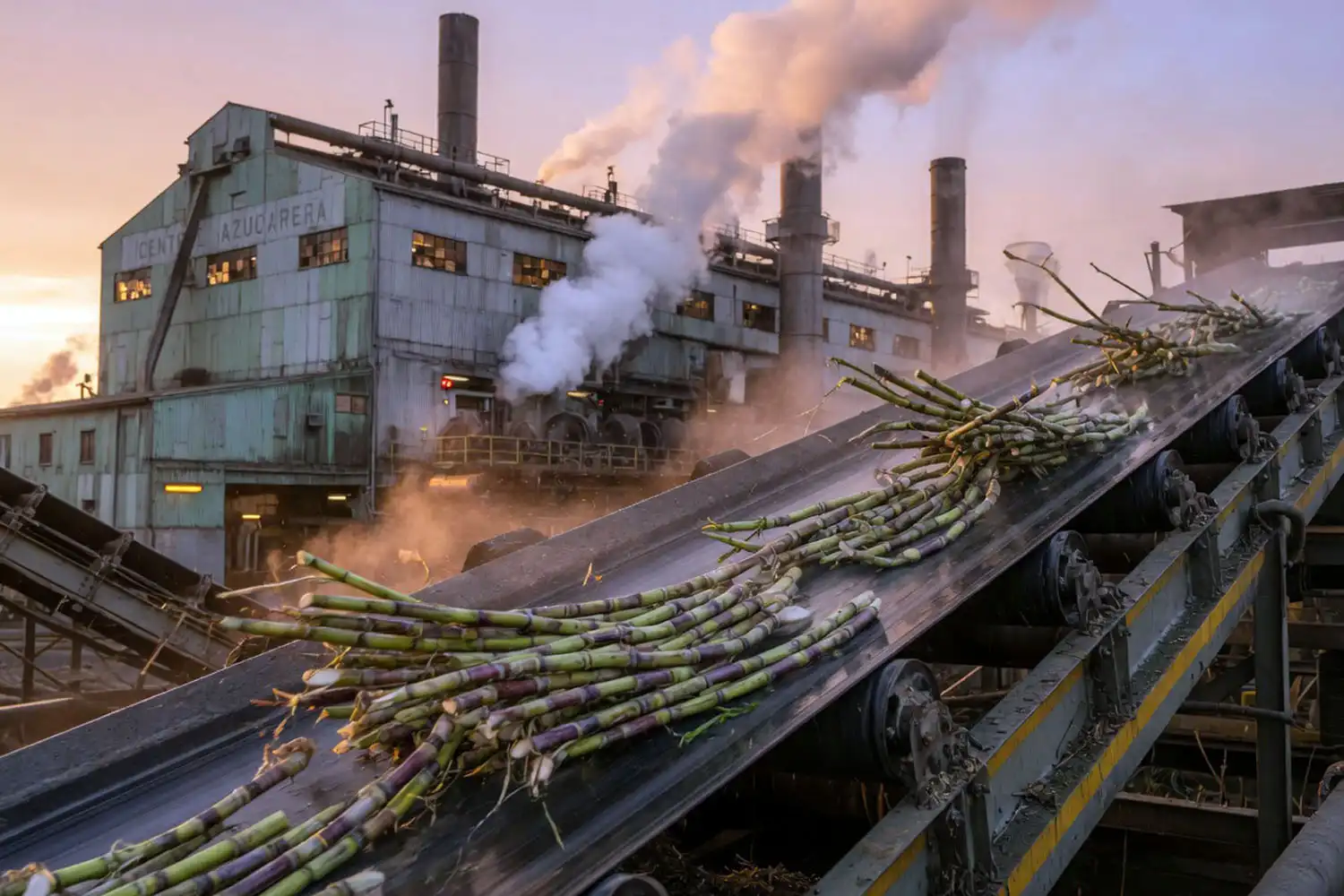
Sugar starts as juice locked inside thick green stalks, but the white granules in your pantry take a precise factory route to get there. Here is exactly how sugar is made from sugarcane, step by step, from the field cut to the finished crystal.
Sugar is made from sugarcane by crushing the stalks to extract juice, clarifying it with lime and heat, evaporating the water into syrup, crystallizing sucrose in vacuum pans, and centrifuging the crystals away from molasses to produce raw sugar.
From Field to Mill: Why Harvest Timing Drives Sugar Yield
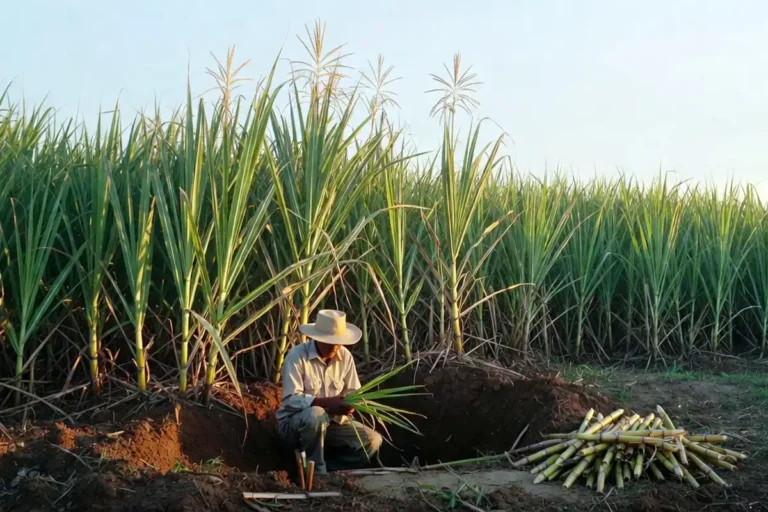
Cane is cut when sucrose content in the stalks peaks, usually late fall through early winter in the US. Sucrose starts breaking down within 24 to 48 hours of cutting, so mills run nonstop during what the industry calls the grinding season, October through January. Most US cane grows in Louisiana, Florida, and Texas, with smaller acreage in Hawaii. Growers track stalk maturity, weather, and freeze risk to decide the day to cut, which is why understanding when sugarcane is ready to harvest matters as much to the mill as it does to the farmer.
Step 1: Crushing the Stalks to Extract the Juice
Cane stalks first move through a shredder that splits the rind, then into a series of heavy roller mills called a tandem. A typical mill tandem has four to six sets of three rollers each. As the stalks pass between the rollers, juice squeezes out into collection trays beneath. Hot water sprays over the cane between rollers, a step called imbibition, to wash out the last few percent of sucrose still trapped in the fiber. What comes out the back end is dry, fibrous bagasse, which the mill burns in its boilers to produce steam and electricity for the whole operation. A well-run mill recovers about 95 percent of the sucrose in the cane this way.
Step 2: Cleaning the Juice With Lime and Heat
Raw juice leaves the mill dark green, gritty, and full of soil, wax, plant proteins, and starch. None of that can be allowed into finished sugar. Operators heat the juice to roughly 220°F and add milk of lime (calcium hydroxide) to raise the pH to about 7.5 to 8. Lime reacts with phosphates in the juice and forms a heavy precipitate that drags impurities down with it. The juice then sits in a large clarifier tank where the muck settles as a thick layer called filter cake, and a clear amber juice is drawn off the top.
Step 3: Evaporation Into Thick Syrup
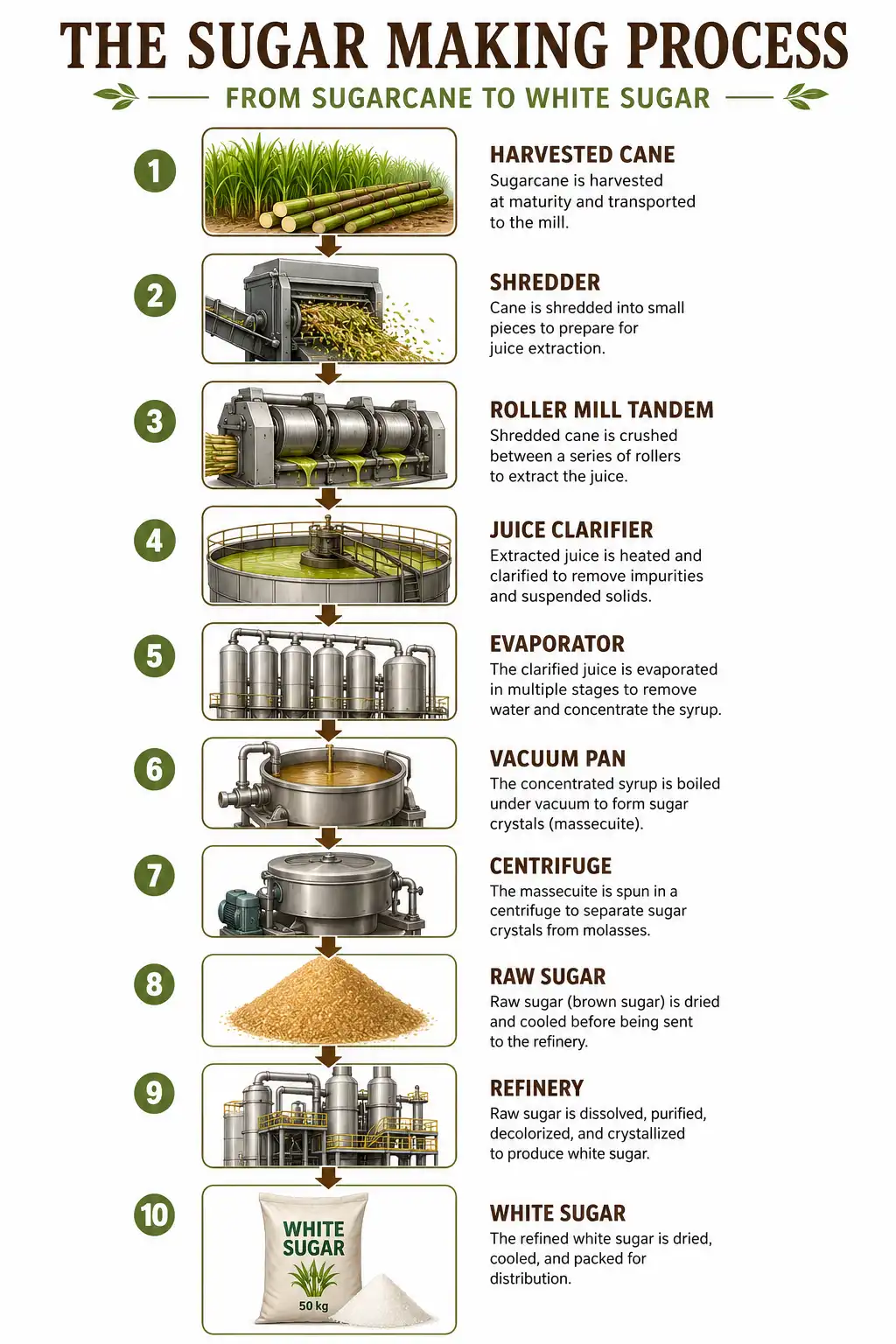
Clarified juice still holds about 85 percent water. It flows through a multi-effect evaporator, a chain of four or five vacuum vessels where each one boils at a lower pressure and lower temperature than the last. Steam from one vessel heats the next, which makes the system extremely efficient. By the time the juice exits the last evaporator, it is a thick golden syrup with about 65 percent solids and the consistency of warm honey.
Step 4: Crystallization in the Vacuum Pan
This is the step that actually makes sugar. Syrup pumps into a single-effect vacuum pan, which holds it under low pressure so sucrose does not burn. The pan operator concentrates the syrup until it is just past the saturation point, then introduces a slurry of fine sugar crystals as seed. Sucrose deposits onto those seeds and grows them into larger crystals. The mix of crystals and remaining mother liquor is called massecuite. A good pan operator can grow a uniform crystal size by controlling vacuum, temperature, and feed rate.
Step 5: Centrifuging to Separate Sugar from Molasses
Massecuite drops from the vacuum pan into a centrifuge, basically a fine-screened basket that spins at high speed. Centrifugal force throws the dark, sticky molasses out through the screen and leaves the sugar crystals behind, clinging to the basket wall. Operators run two or three boilings in sequence, called A, B, and C strikes, to recover more sugar from each round of molasses. After the last strike, what cannot be crystallized anymore becomes blackstrap molasses, sold as livestock feed or fermentation feedstock.
Step 6: Drying, Cooling, and Shipping Raw Sugar
Raw sugar leaves the centrifuge warm, damp, and tan-colored from a thin molasses film. It moves through a rotary dryer, then a cooler, before going to bulk storage. At this stage it is roughly 98 to 99 percent pure sucrose. Most US mills ship this raw sugar to coastal refineries in places like Yonkers, Crockett, and Gramercy.
Step 7: Refining Raw Sugar Into White Sugar
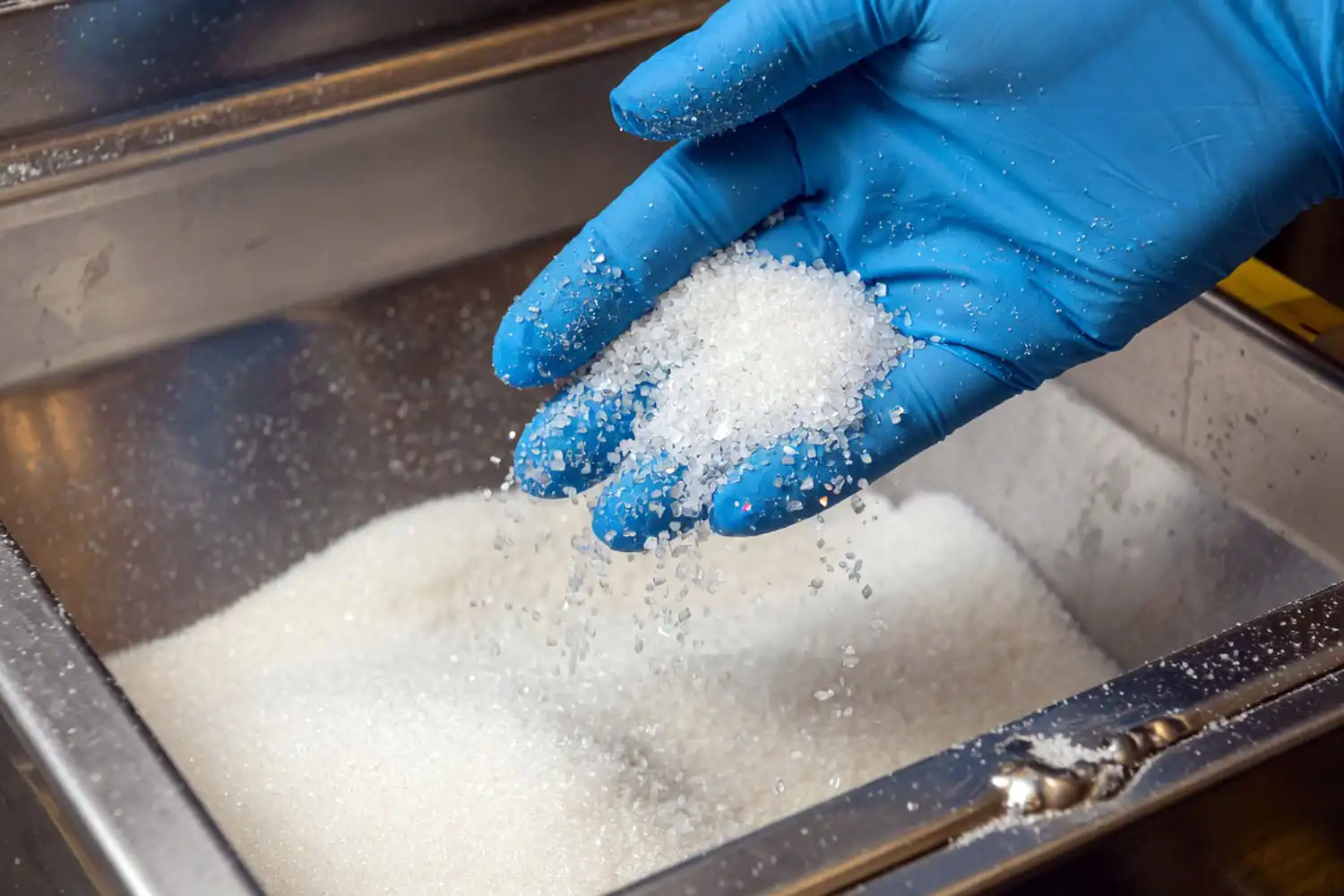
The refinery melts raw sugar back into syrup, then treats it with phosphoric acid or carbonation to flock out color bodies, runs it through bone char or activated carbon filters to strip the rest of the color, and recrystallizes it in another set of vacuum pans. After a final centrifuge spin and drying, the output is the bright white granulated sugar that fills grocery store bags.
What Mills Do With the Byproducts
A cane mill is a near zero-waste operation. Bagasse fuels the boilers and any extra is sold for paper, particleboard, or animal bedding. Filter cake from the clarifier is hauled back to the fields as a calcium-rich soil amendment. Molasses goes to feedlots, rum distilleries, ethanol plants, and the baking industry. Even the steam and condensate get reused in the process loop.
Cane Sugar vs Beet Sugar
Refined sucrose from cane and sucrose from sugar beets are chemically identical. The processing routes differ because beets are a root crop with different impurities. According to USDA Economic Research Service data, sugar beets supply roughly 55 percent of US sugar and sugarcane supplies about 30 percent, with the rest imported. If you want a closer look at the comparison, the breakdown of cane sugar versus beet sugar covers it in detail.
For the agronomic side of where this all starts, including stalk physiology and field practices, see the basics of what sugarcane actually is and the work behind growing sugarcane in the field. Mills also depend heavily on a consistent stalk moisture and sucrose profile coming in, which ties back to a well-managed sugarcane irrigation schedule during the growing season.
For deeper US production figures and policy background, the USDA Economic Research Service sugar topic page is the authority source.
Final Words
In short, cane carries sucrose, the mill pulls it out as juice, cleans it, concentrates it, and crystallizes it under vacuum. Centrifuges separate the sugar from molasses, and refineries polish the raw crystals into the white sugar you buy. Every step is built around protecting sucrose from heat damage and recovering as much of it as the chemistry allows. That is why a sugar mill runs around the clock during grinding season, and why timing the harvest is the single biggest decision in the whole chain.