What Is Sugarcane? Plant Basics and the Conditions It Needs to Grow Well
Sugarcane is a tall, perennial grass in the genus Saccharum that growers raise for sweet stalk juice that mills turn into sugar and other products. This guide explains what sugarcane is, how the plant grows, and the climate, soil, water, and nutrient conditions that help it produce strong cane and good sugar. You will also get a practical, start-to-finish growing workflow, plus common mistakes and fixes so you can plan a crop with fewer surprises.
What is sugarcane?
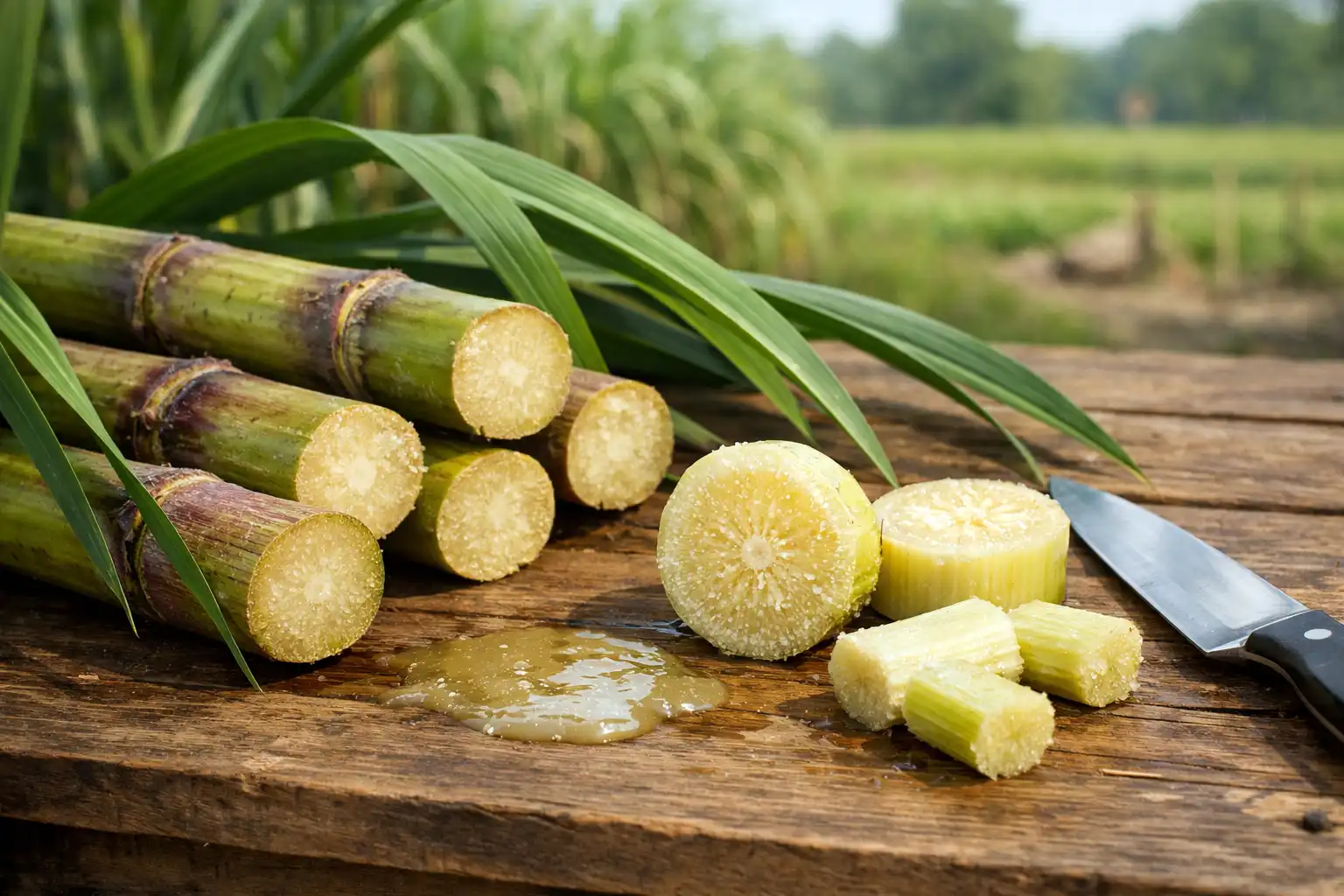
Sugarcane is a tall, perennial grass grown for its sweet, juice-filled stalks that are processed into sugar and other products. People grow it mainly for sugar, but the same stalk also supports syrup, ethanol, and fiber products. Most commercial cane comes from Saccharum species and hybrids selected for high sucrose and strong yields.
What does a sugarcane plant look like, and how does it grow?
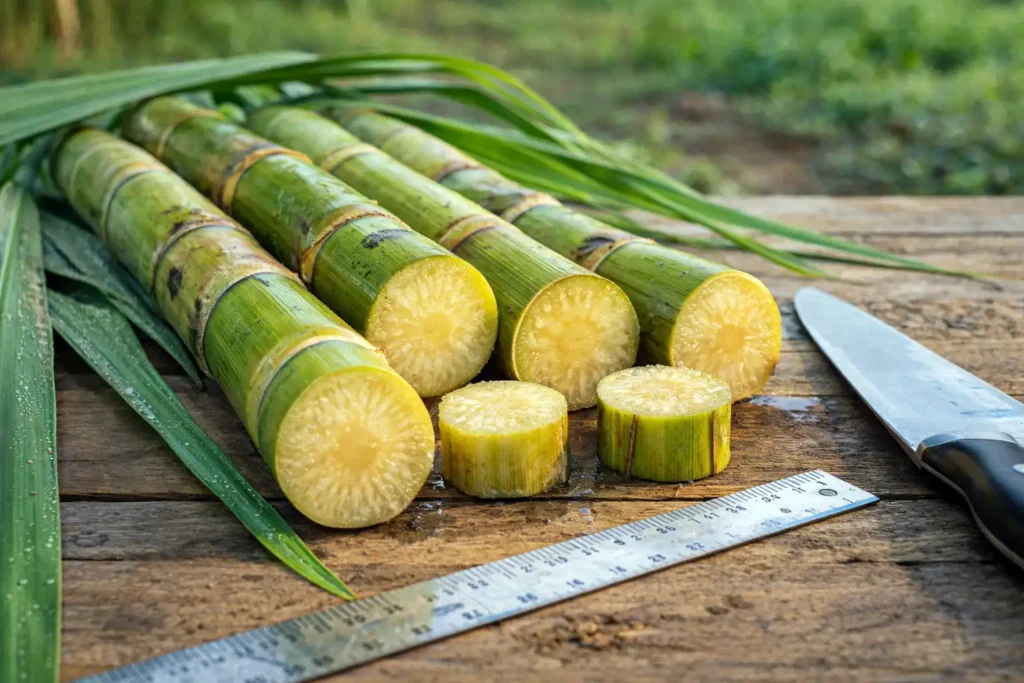
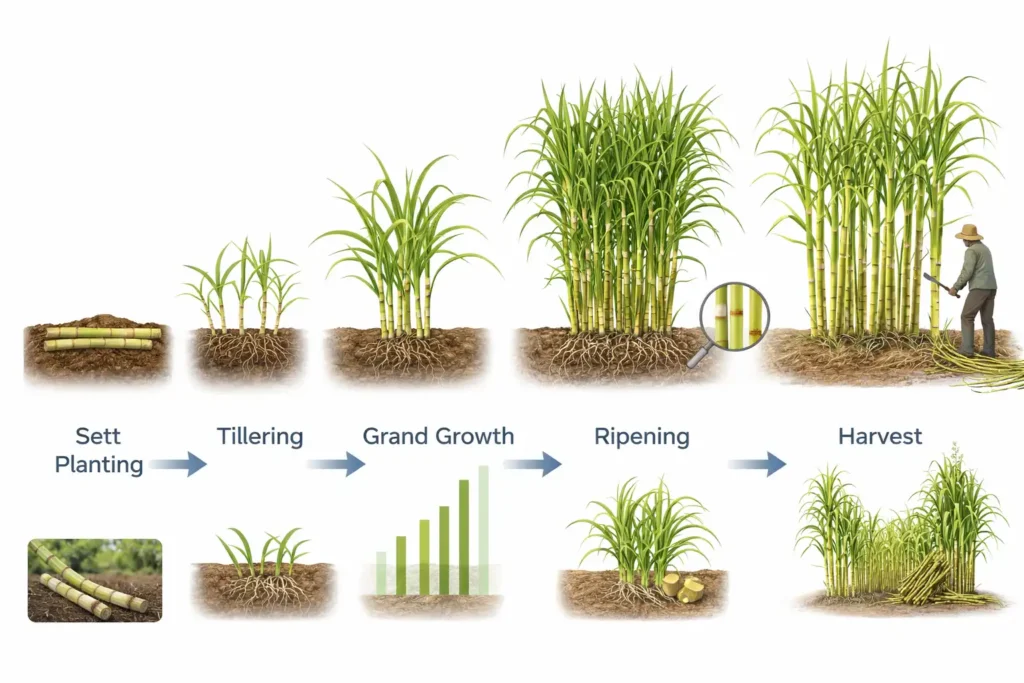
A sugarcane plant builds a clump of stalks from buds at the nodes of planted stalk pieces. Each stalk has nodes and internodes, and the internodes hold the juice and sucrose that processing plants target. The crop grows through germination, tillering, rapid “grand growth,” then ripening as sucrose concentrates in mature joints.
What products come from sugarcane?
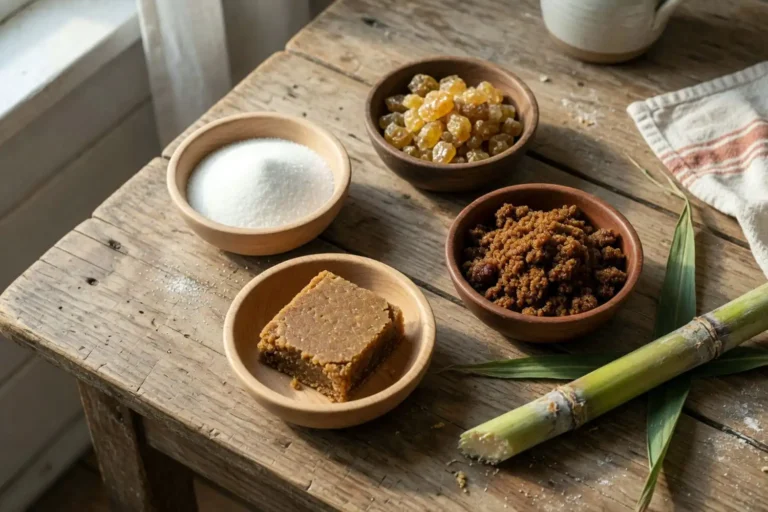
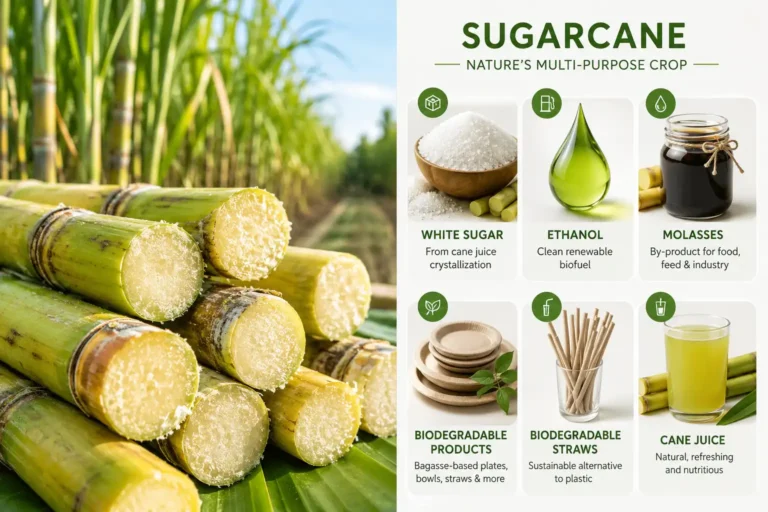
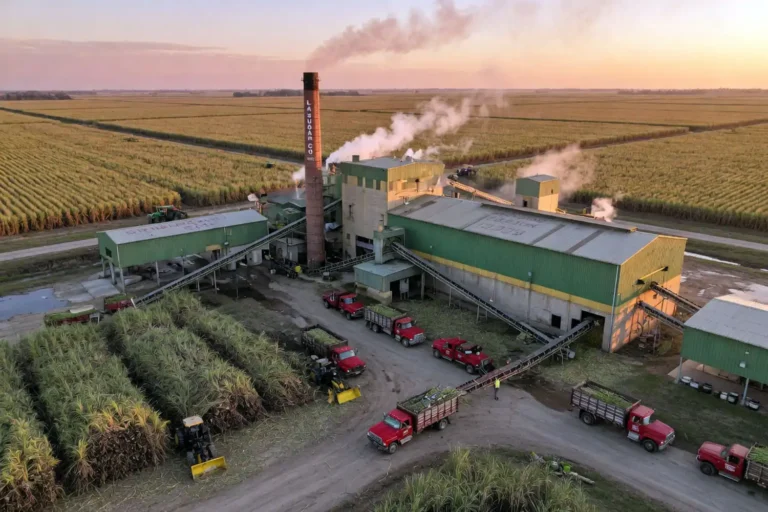
Sugarcane supports food, fuel, and fiber supply chains because the stalk, juice, and processing leftovers all have value.
- Crystal sugar comes from clarified juice and crystallization.
- Syrup and traditional sweeteners come from boiling juice down.
- Ethanol comes from fermenting sugars for fuel or industrial use.
- Bagasse (fibrous residue) supports boiler fuel, paper products, and building materials.
- Filter cake and vinasse sometimes return to fields as soil amendments where regulations and nutrient plans allow.
Where does sugarcane grow best?
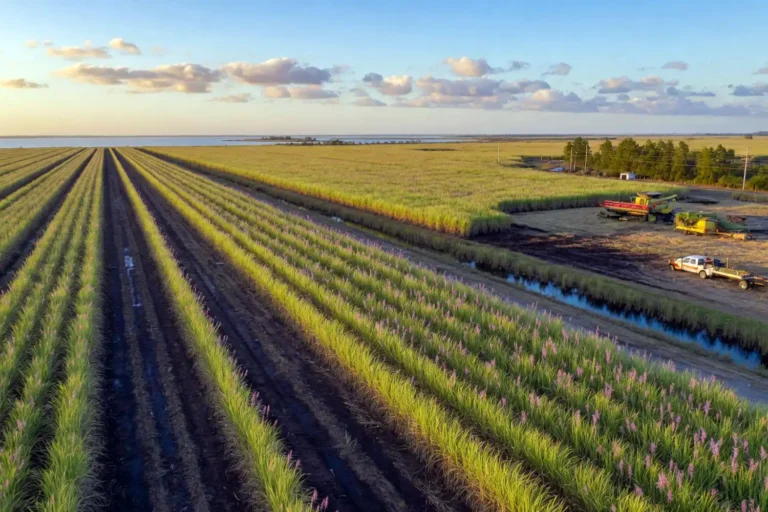
Sugarcane grows best in tropical and subtropical regions with a long, warm season and low frost risk. Cool weather slows growth and freezes damage stalk tissue and buds, which cuts yield and sugar quality. In marginal climates, growers lean on variety choice, planting date, and harvest timing to avoid the cold edge.
If you are still building your operation, start with a solid foundation in understanding crop farming basics.
What temperature conditions help sugarcane grow well?
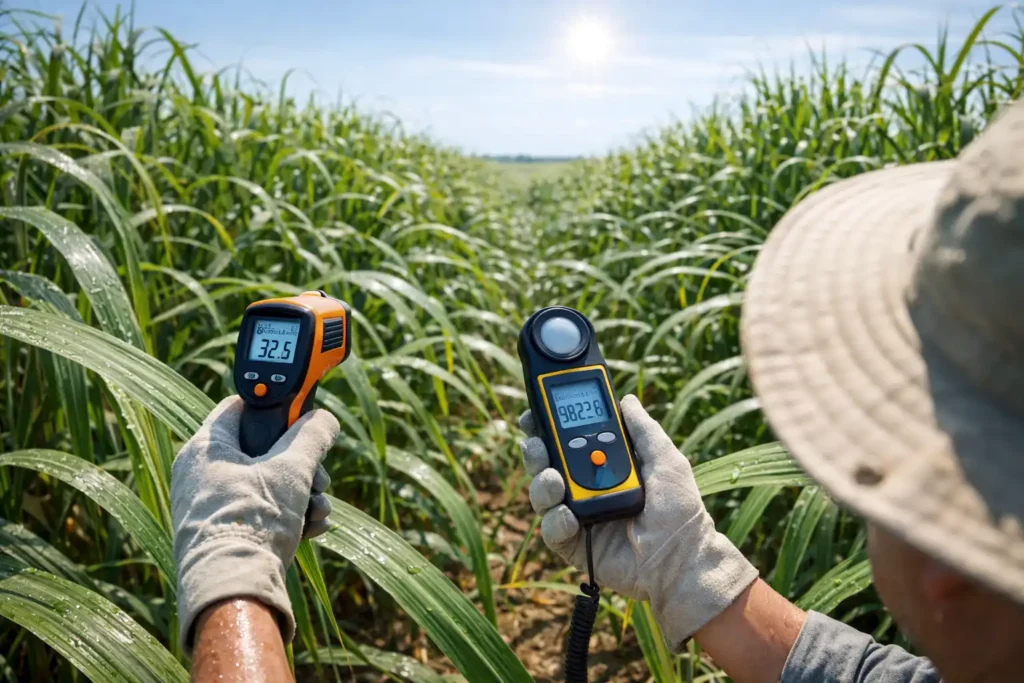
Sugarcane performs best when days stay warm and nights stay mild through most of the season. Controlled research often treats about 27°C as an “optimal” growth temperature benchmark, while low temperatures reduce growth and sugar movement.
On the cold end, freezing temperatures damage leaves and stalk tissue, and one industry guide reports growing-point death around below -2°C in frost events.
On the hot end, a Sugar Research Australia climate guide notes photosynthesis declines above 34°C, which is one reason heat plus drought can flatten yield.
How much sunlight does sugarcane need?
Sugarcane yields best in full sun because the crop runs on leaf area and daily photosynthesis. Shade lowers stalk growth and reduces sucrose loading into internodes. A healthy canopy also helps the crop compete with weeds once rows close.
What rainfall and irrigation conditions help sugarcane yield well?
Sugarcane uses a lot of water over a full season because it builds large biomass and keeps a broad leaf canopy working. A research review reports total seasonal crop water use (ETc) in the range of about 1100 to 1800 mm, with peak daily rates around 6 to 15 mm/day during high demand.
UF/IFAS also reports large water input per unit of biomass and sugar production in Florida experiments, which lines up with sugarcane’s reputation as a heavy water user.
Practical water rules that keep crops steady:
- Keep soil moisture stable during tillering and grand growth.
- Avoid long drought cycles that stop growth, then force a hard recovery.
- Avoid waterlogging that cuts oxygen in the root zone and invites disease.
For planning, use this water-needs guide and compare delivery options in drip vs sprinkler irrigation.
What soil does sugarcane need?
Sugarcane grows best in deep, fertile, well-drained soils that hold moisture without staying saturated. The crop forms a large root system and needs oxygen in the root zone to keep tillers and stalk growth moving.
FAO notes an optimum soil pH around 6.5, and reports sugarcane tolerates roughly pH 5 to 8.5. FAO also notes a shallow water table increases risk, recommending groundwater more than 1.5 to 2.0 m below the surface where relevant.
Before you spend money on lime or fertilizer, run a proper test. This walkthrough helps: soil testing for farming guide.
What nutrients does sugarcane need?
Sugarcane pulls hard on nitrogen and potassium because it builds stalk mass, leaf area, and sucrose transport capacity. FAO describes sugarcane as having high N and K needs with comparatively lower phosphate needs, and provides example nutrient ranges tied to a target yield.
UF/IFAS also lists a full set of essential elements and explains that nutrient imbalance can trigger deficiency or toxicity symptoms.
How to manage fertility without guesswork:
- Correct pH first so applied nutrients stay available.
- Base N, P, and K rates on soil test results, yield target, and local recommendations.
- Split nitrogen where leaching risk runs high, especially on sandy soils.
- Watch for micronutrient issues if you push yields or farm high-pH ground.
How do farmers grow sugarcane from start to harvest?
This workflow covers the full cycle: site prep → planting → crop care → harvest → post-harvest handling. Steps stay in order because timing mistakes cost stand, sugar, and ratoon health.
- Confirm your season length and freeze risk
Sugarcane needs a long warm window. If your area sees hard frost, plan planting and harvest to avoid damaged cane and weak ratoons. - Test soil and fix the big limits first
Correct pH, drainage, and compaction before planting. Sugarcane responds fast when roots can breathe and explore. - Prepare seedbed and drainage
Level where you need uniform irrigation. Shape rows or beds where heavy rain or irrigation can pond. Keep traffic lanes planned so equipment passes do not crush stools. - Source clean seed cane
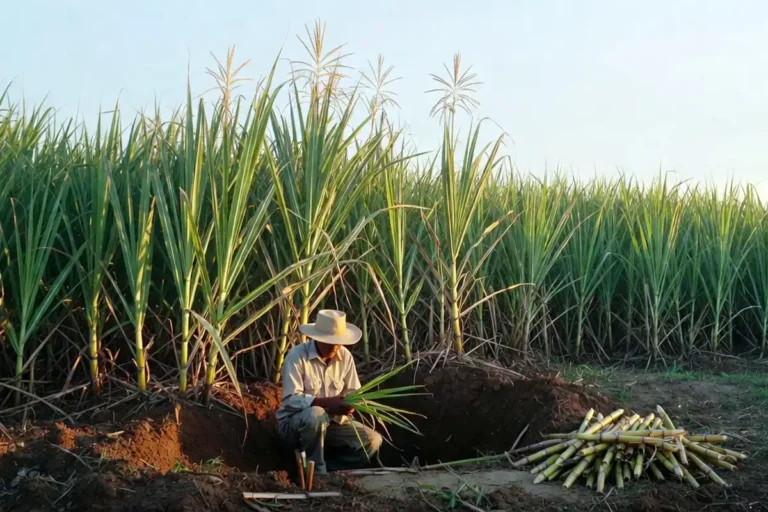
Sugarcane is planted from stalk cuttings, not true seed, and diseases can move with infected planting material. Start with healthy, known-source cane. - Cut and handle planting pieces correctly
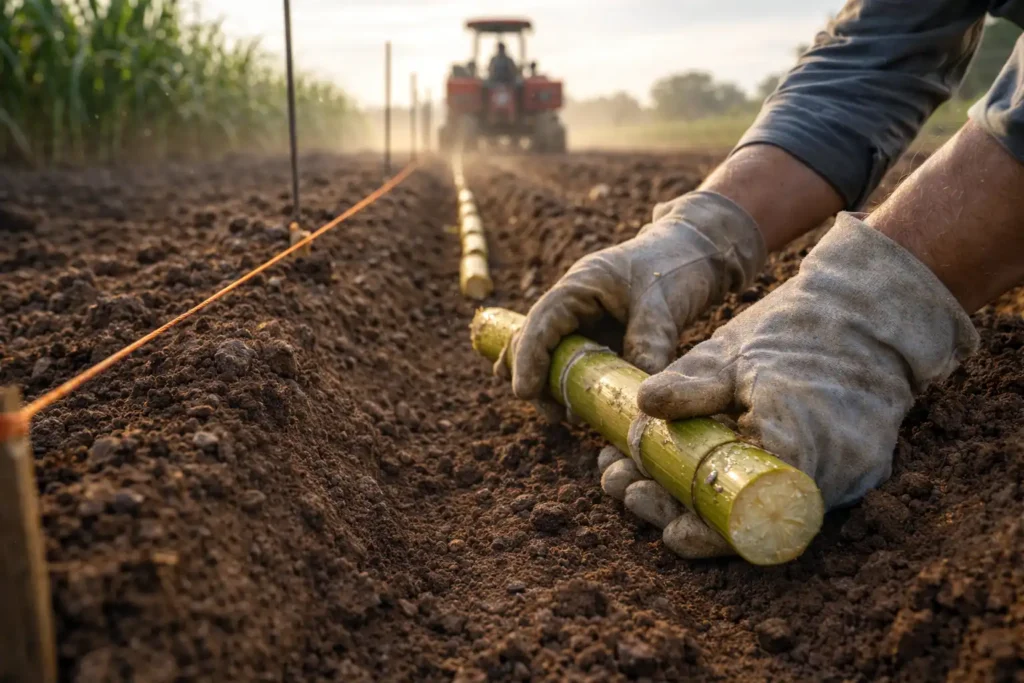
UF/IFAS notes “seed-cane” sections contain buds at nodes, and commercial cane is commonly propagated with cuttings containing two or more nodes with buds. Keep pieces fresh and shaded until planting. - Plant at the right depth for moisture and emergence
Place setts in moist soil, cover well, and firm soil contact so buds sprout evenly. Industry guidance also describes planting from stalk pieces (“setts”) and managing weeds during establishment. - Manage early weeds aggressively
Cane starts slow, and weeds steal light, water, and nutrients in the first weeks. Use cultivation, mulch, herbicide programs, or combinations that fit your system and rules.
If you need a framework, follow guide to weed control in farming. - Feed the crop to match growth stage
Support tillering and grand growth with nitrogen and potassium, then avoid late-season excess nitrogen that delays ripening in some systems. UF/IFAS notes nitrogen influences ripening and sucrose storage timing. - Irrigate for steady growth, then tighten late if your system uses “drying off”
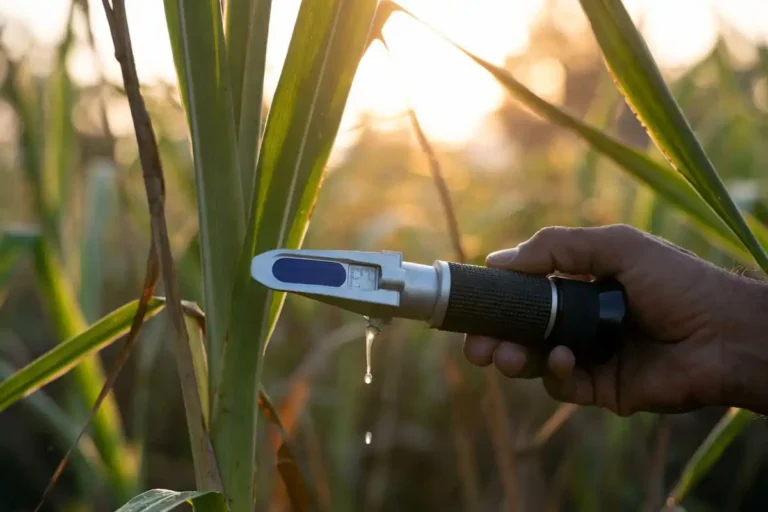
Sugarcane yield tracks water use closely in many regions, so keep stress low in peak growth. Then follow local practice to support ripening and harvest quality. - Harvest at maturity and protect the next ratoon
Cut clean, avoid stool damage, and manage residue to protect buds that drive regrowth. Harvest timing affects sugar recovery and stand life. Read the guide to know when to harvest crops for maturity signals, then protect quality with post-harvest handling.
Safety note for planting and harvest
Sugarcane work includes knives, machetes, harvesters, traffic, and sometimes chemical applications. Use cut-resistant gloves, eye protection, and stable footing. Keep hands clear of rollers and conveyors. If you spray, follow label directions and wear the right PPE.
What are the most common sugarcane problems, and what fixes them?
Poor sprouting and uneven stand
Poor stands usually trace back to dry soil at planting, poor sett-to-soil contact, weak seed cane, or disease in planting material. UF/IFAS explains each planted bud can form a primary shoot, which sets the stand density early.
Fixes: plant into moisture, cover evenly, use healthy seed cane, and avoid storing cut pieces in heat and sun.
Yellow leaves and slow growth
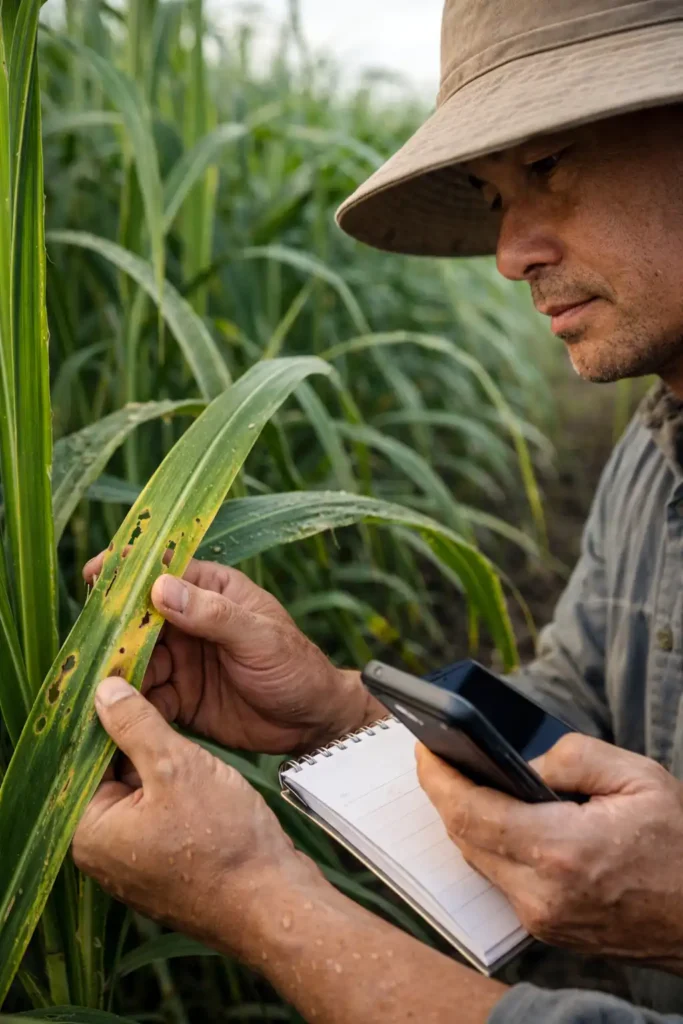
Yellowing often comes from nitrogen shortage, poor root function from waterlogging, or pH-driven nutrient lockup. FAO’s pH range shows how far soils can drift before availability falls off.
Fixes: test soil, correct drainage, adjust fertility, and check for micronutrient deficiencies if symptoms persist.
Lodging and stalk breakage
Lodging follows tall top growth plus wind, excess nitrogen, shallow rooting, or borer damage. Keep nitrogen balanced, keep irrigation uniform, and avoid compaction that traps roots in the top layer.
Frost or freeze damage
Freeze damage depends on how low temperatures fall and how long they stay there. Some guidance notes growing-point death below about -2°C in frost events.
Fixes: harvest damaged cane early where quality drops fast, and avoid planting frost-damaged seed cane where bud death is likely.
Disease and pest pressure
Sugarcane faces fungal, bacterial, and viral diseases, and systemic pathogens can spread through seed cane.
Fixes: start with clean planting material, rotate chemistry where used, scout often, and use an IPM plan. A simple starting point is integrated pest management for beginners.
What conditions matter most for “growing sugarcane well”?
If you remember only a few levers, remember these:
- Warm season length and low frost risk drive the ceiling on yield.
- Deep, well-drained soil keeps roots active and supports heavy water use.
- Stable water supply during peak growth protects stalk count and stalk size.
- Balanced fertility, especially N and K, supports biomass and sucrose movement.
- Clean seed cane and early weed control protect stand establishment and profit.
Final takeaway
Sugarcane is a sucrose-storing grass that rewards growers who match the crop to warm weather, full sun, deep drainage-friendly soil, steady water, and balanced nutrition. Start with soil testing and clean planting material, keep weeds down early, and manage water and nitrogen by growth stage. When those basics stay tight, sugarcane usually responds with strong stands, healthy stools, and better harvest quality.