How to Harvest Sugarcane: A Field Guide From Cut to Mill
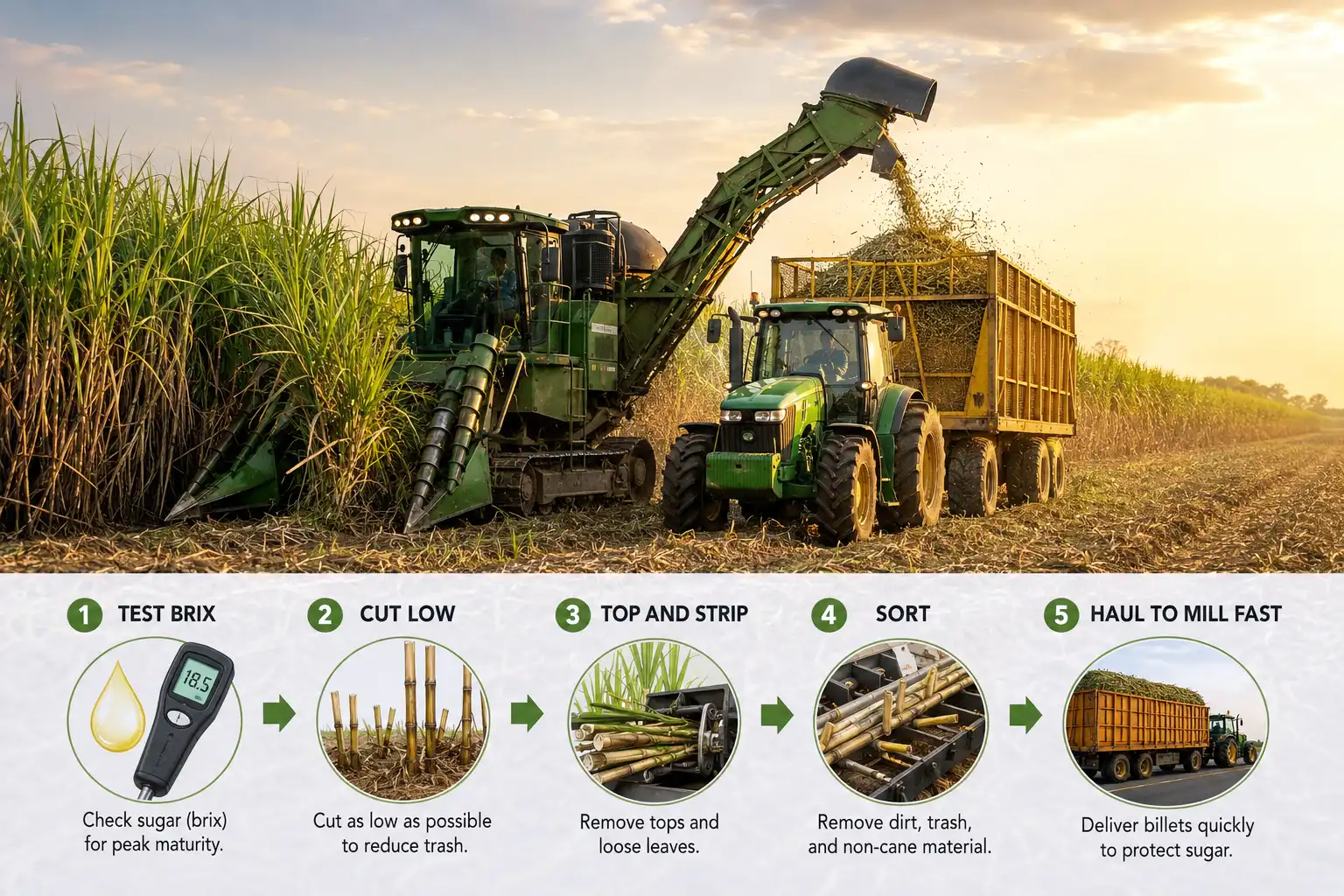
Sugarcane harvest comes down to timing, a sharp blade, and speed. Cut too early and the sugar runs thin. Wait past a killing freeze and the crop sours in the row. This guide shows how to harvest sugarcane cleanly, whether you swing a cane knife or run a chopper.
Harvest sugarcane in late fall, after the stalks mature and sugar peaks, but before a killing freeze. Cut each stalk low, top the green tip, strip the leaves, then crush or mill the cane fast.
When Should You Harvest Sugarcane?
Harvest sugarcane once the stalks hit peak sugar in late fall, usually 10 to 14 months after planting. Cool, dry weather slows growth and pushes sucrose into the stalk. Growers on the Gulf Coast call this stretch the grinding season. It runs from mid September into January. Keep the timing short here on purpose. For the full read on maturity signs and cutting dates, see our guide on knowing when your cane is ready.
Know more: Sugarcane Straws Benefits
How to Harvest Sugarcane Step by Step
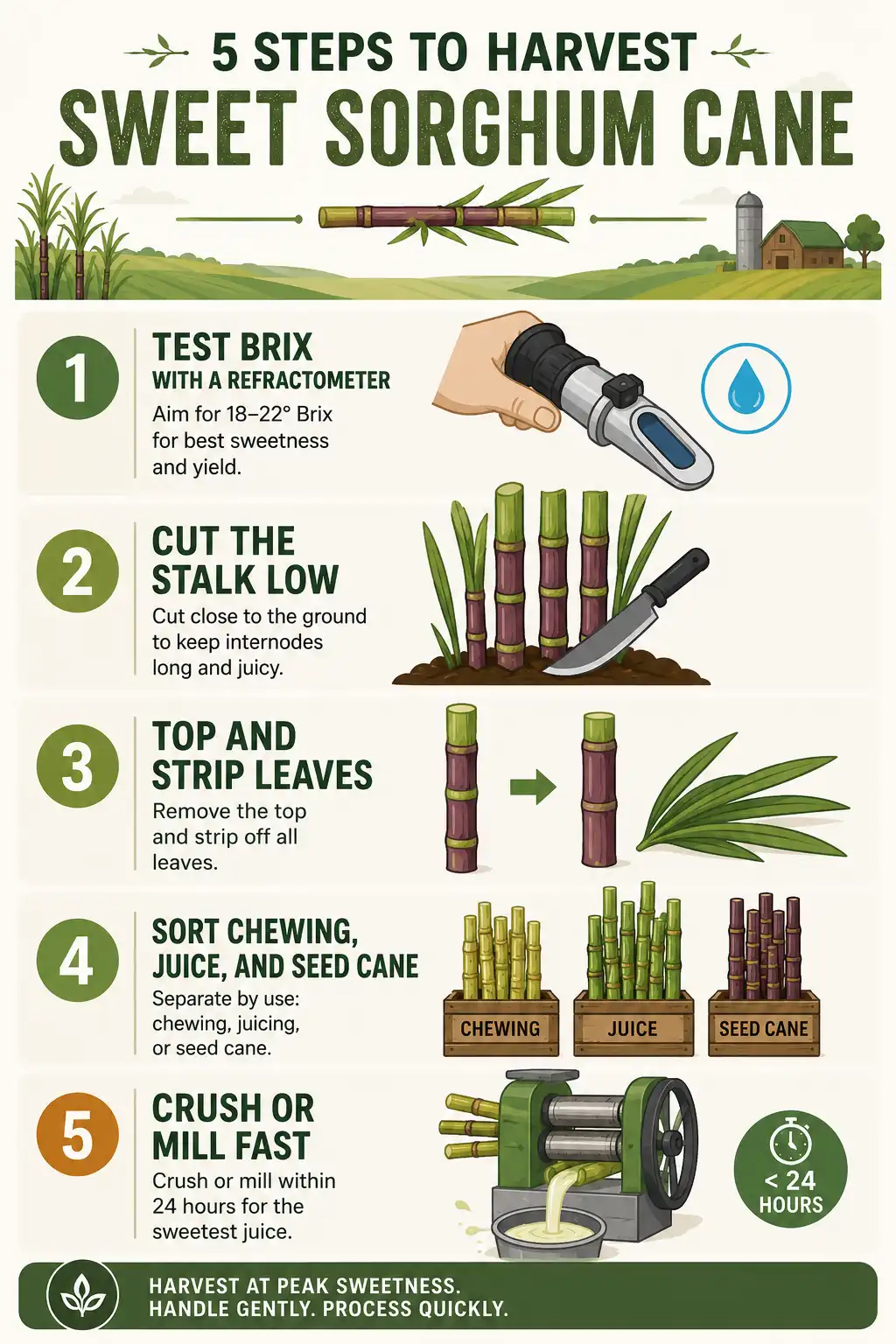
Here is the process it helps to follow, scaled for a backyard row or a small syrup patch. The same logic drives the big machines. Test, cut low, top, strip, sort, then move the cane fast.
Step 1: Test the cane and dry off the field
Start by checking sugar with a handheld refractometer. A Brix reading tells you how much sugar sits in the juice. Higher Brix means the stalk is ready. Next, dry off the field. Cutting off the irrigation ahead of harvest firms the soil and concentrates the sugar. On big acreage, some growers also spray a ripener such as glyphosate a few weeks before cutting to lift sucrose. Wet ground bogs down any cart or harvester and leaves ruts that hurt next year’s stubble.
Step 2: Cut each stalk low
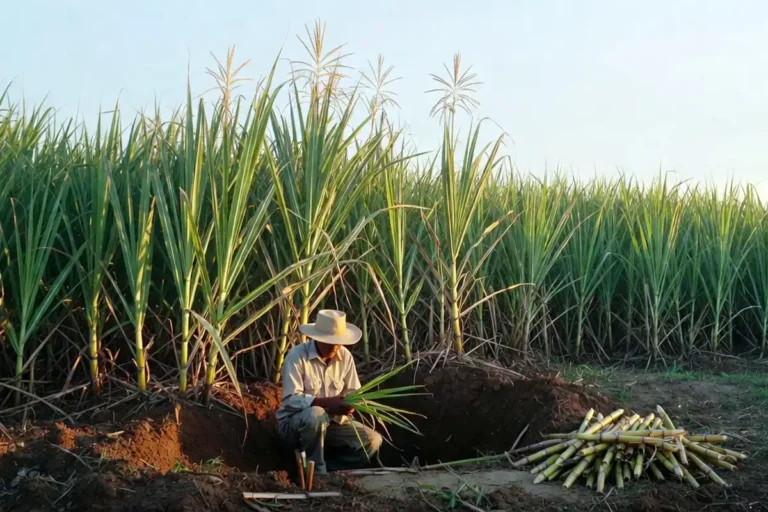
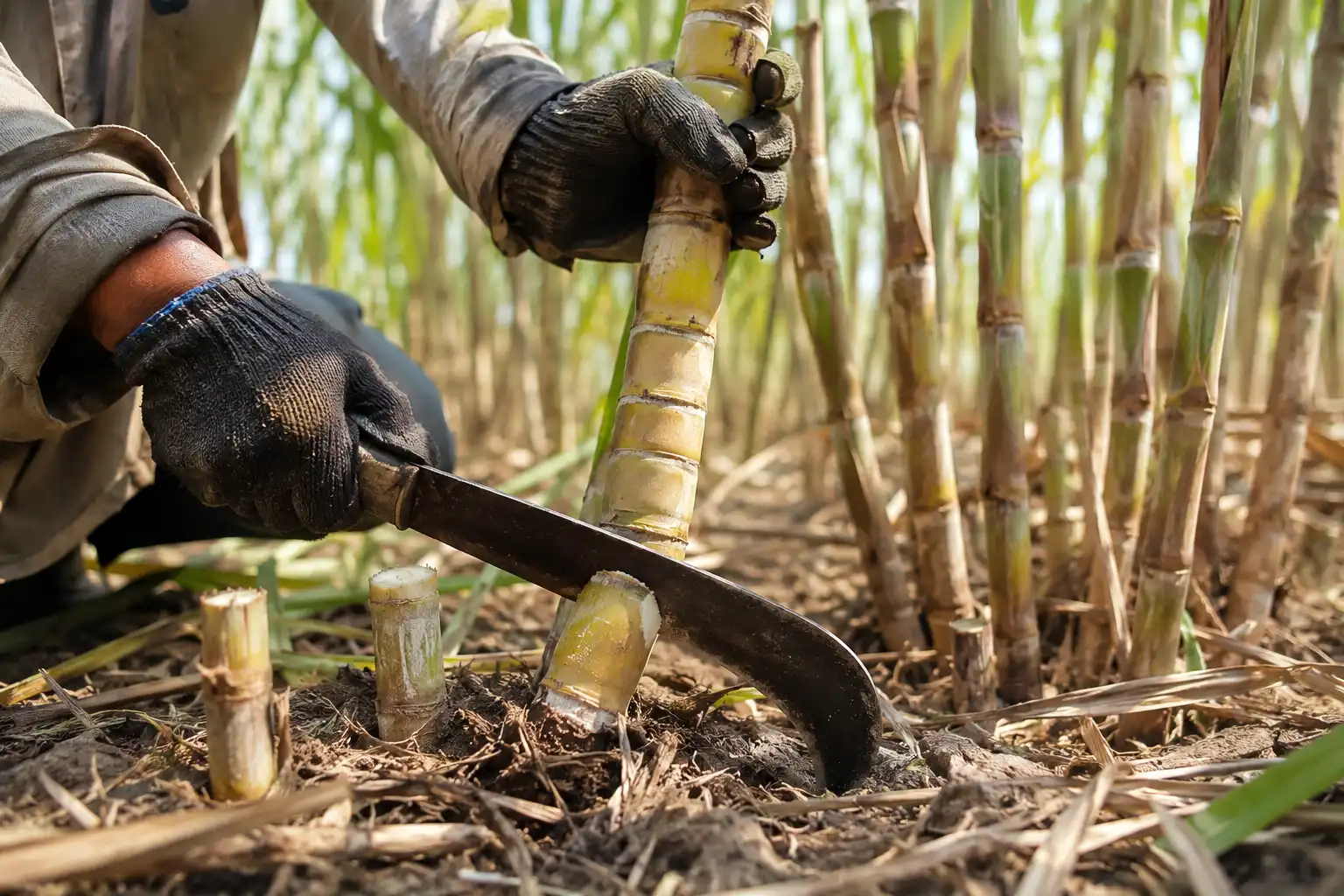
Cut every stalk as close to the ground as you can without hitting dirt. The lowest joints hold the most sugar, so a low cut saves the sweetest part. Leave about two inches of stubble. Keep the blade sharp and swing clean. A ragged cut cracks the base and invites rot into the roots.
Step 3: Top the stalk and strip the leaves
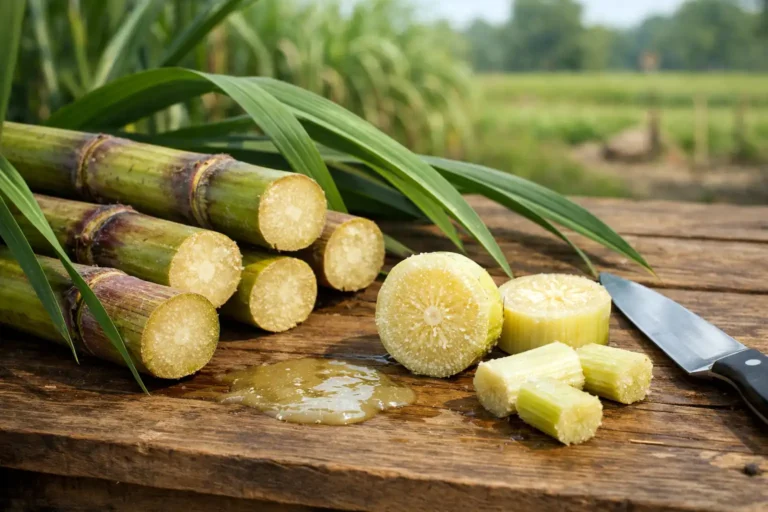
Cut off the soft green top at the last hard, mature node. That top holds little sugar and lots of water, so it drags down juice quality. After topping, strip the dry leaves from the stalk. You can hand strip them or knock them off against a post. Clean stalks press cleaner and store better.
Step 4: Sort chewing cane, juice cane, and seed cane
Split the cut cane into three piles as you work. Send the straightest, sweetest stalks to the chewing or juice pile. Set aside firm, healthy stalks for seed cane if you plan to replant. Toss any diseased or bored stalks. That way each stalk lands where it earns the most value.
Step 5: Move the cane fast
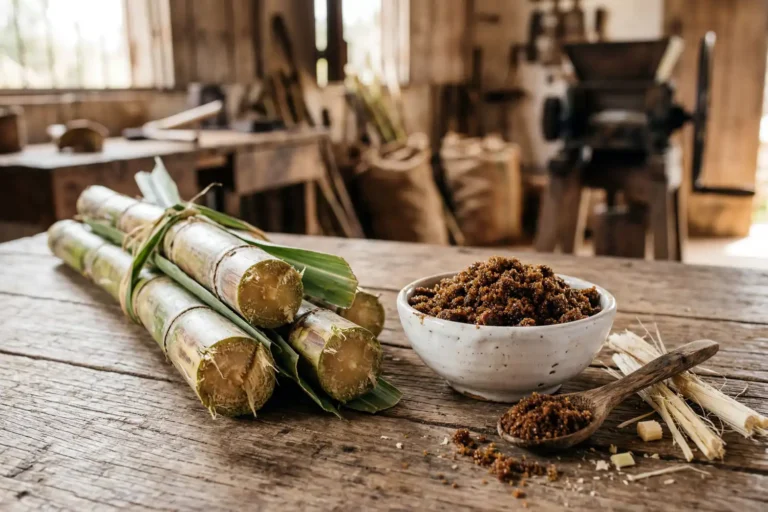
Get the cut cane processed within a day if you can. Sugar breaks down fast the moment you cut a stalk, and heat speeds the loss. A cut-to-crush delay of several days can waste a big share of the sugar. Small growers press the juice or start syrup the same day. Commercial crews haul billets straight to the mills that grind the crop. There the cane becomes raw sugar and molasses. If you want the rest of that story, here is how the mill turns cane into sugar.
How Is Sugarcane Harvested on Commercial Farms?
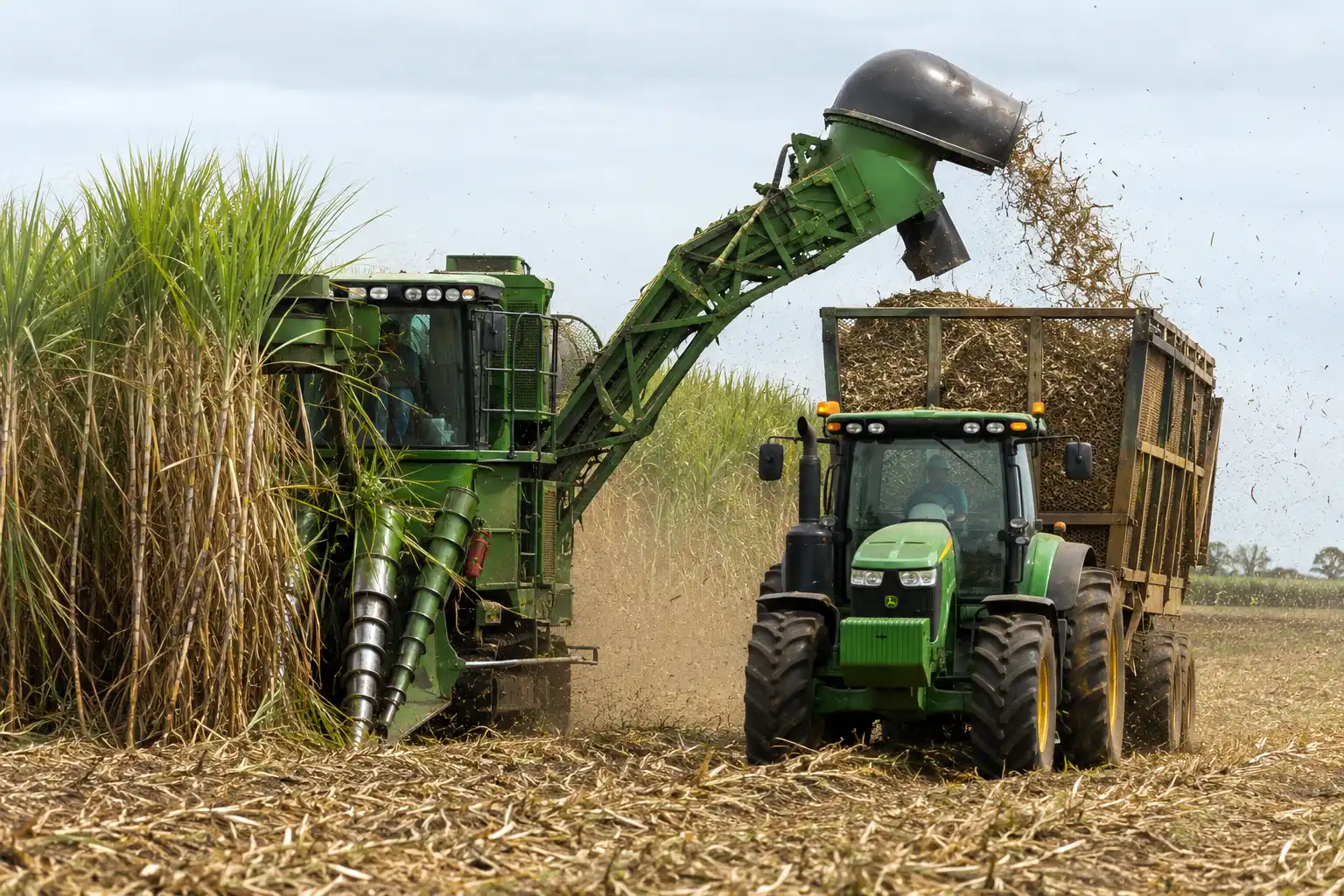
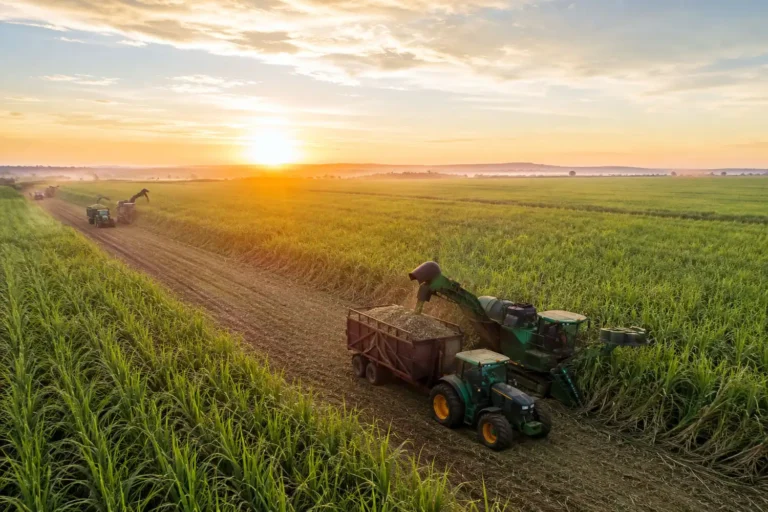
Commercial growers harvest sugarcane with chopper harvesters. These machines cut the stalk, chop it into billets, and blow off the trash in one pass. A chopper, also called a combine harvester, runs down the row on tracks or tires. It grabs lodged cane that hand crews would miss. John Deere and Case IH Austoft build the machines most Gulf growers run. Because the billets never touch the ground and skip the burn, they hold sugar better and reach the mill cleaner. Older systems still show up too. Some crews cut whole stalks with a soldier harvester. A few fields still get a pre-harvest burn to clear leaves before cutting.
What Tools Do You Need to Harvest Cane?
A sharp cane knife or machete is the one tool you cannot skip for hand harvest. It cuts the stalk low and tops it in the same motion. A handheld refractometer helps you read Brix and time the cut. A cane press or roller mill squeezes juice for syrup. On larger ground, a chopper harvester and billet wagons replace the crew. Whatever you swing, keep the edge sharp. A dull blade crushes the stalk instead of slicing it, and that opens the door to rot.
Why Does a Freeze End the Harvest?
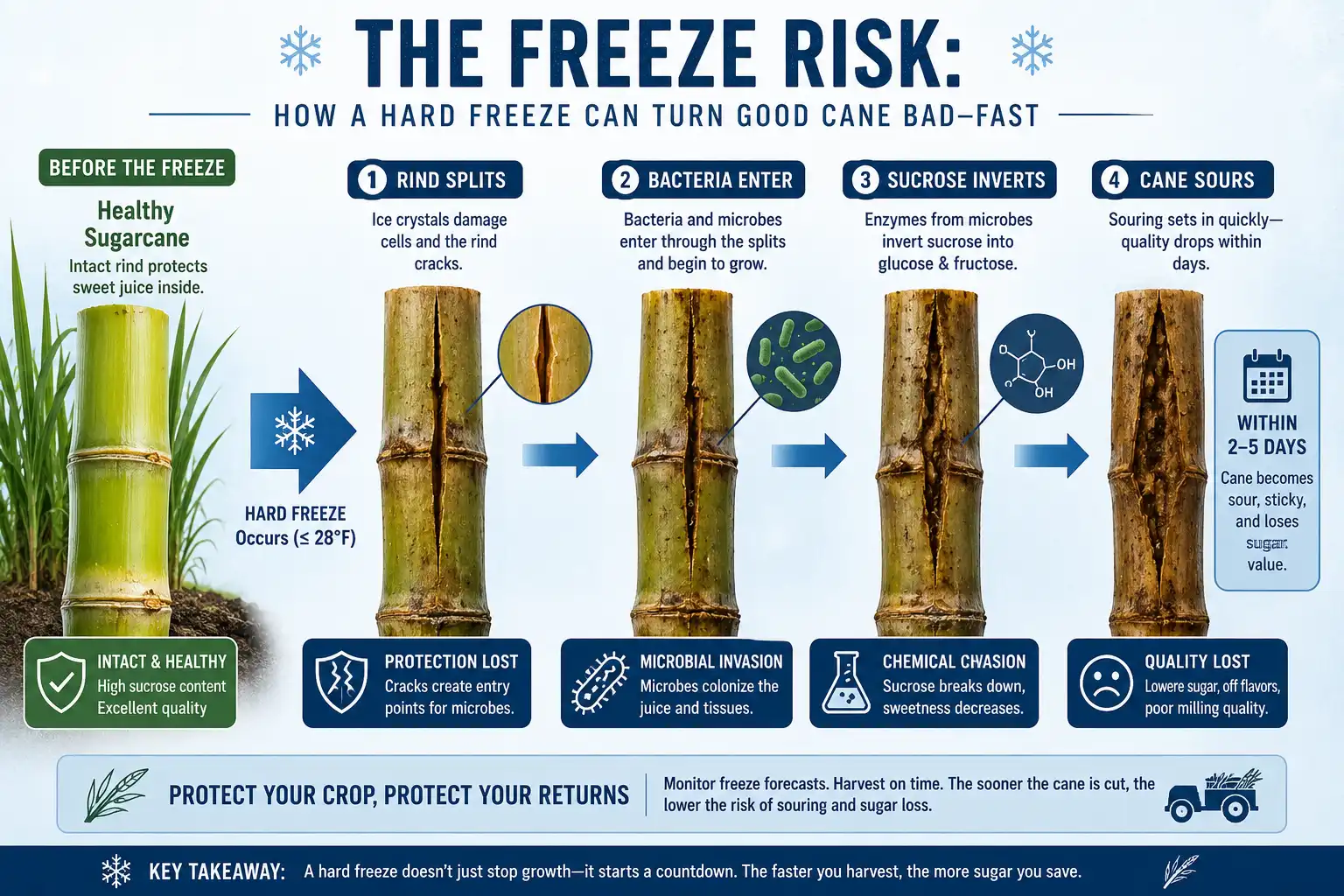
A hard freeze ends the harvest because it splits the stalk and wrecks the sugar inside. Ice cracks the rind. Bacteria move in. Sucrose then inverts into simpler sugars the mill cannot recover, and the cane starts to sour within days. A light frost that only burns the leaves is a warning shot. It tells you the cutting window is closing. So growers race to clear standing cane before a deep freeze sets in. This is the same clock used with corn in this region, just aimed at sugar instead of grain moisture.
What Happens to the Field After You Cut?
After you cut, the roots left in the ground grow next year’s crop on their own. Sugarcane is a ratoon crop, so the same planting regrows as stubble for several cuts. Most Gulf growers take three or four harvests from one planting before yields drop. Then they tear out the old stubble and start over with fresh seed cane. A quick note for cold-country and backyard growers. In a marginal zone, pile the stripped leaves and straw over the root line to shield it through winter. When you replant, it pays to plant seed cane from your best saved stalks to keep that variety going.
Bottom Lines on Harvesting Sugarcane
Harvest sugarcane the way you would run any race against the weather. Watch the Brix, cut low, and top the stalk. Then crush or mill the cane before it loses sugar or catches a freeze. Do that and you keep both the sweetness and the stubble for another season. That is the whole job, from the first cut to the mill gate.