What Is Ratooning in Sugarcane? How the Stubble Crop Works
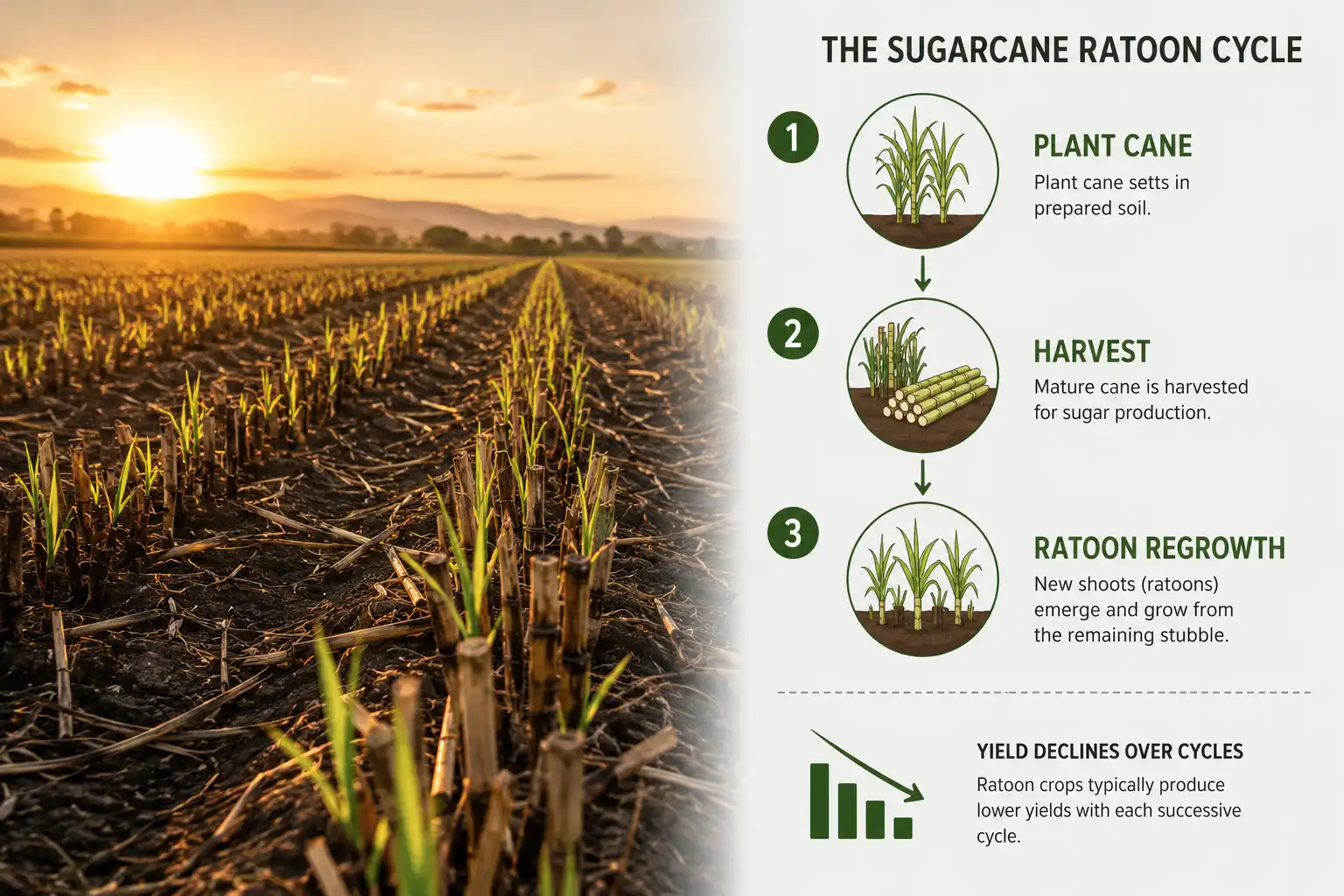
Ratooning in sugarcane means growing a new crop from the stubble left after harvest, without replanting seed cane. Growers across Louisiana, Florida, and Texas rely on it to cut costs and speed maturity.
Ratooning in sugarcane is the practice of letting the harvested stubble regrow into a fresh crop. Underground buds sprout new stalks, so growers skip replanting. Most U.S. fields yield one plant cane crop plus two to four ratoons.
What Is Ratooning in Sugarcane?
Ratooning in sugarcane is regrowing a crop from the underground stubble after you cut the stalks at harvest. You do not plant fresh seed cane. Instead, buds on the crown and root mass push up new shoots on their own.
Farmers call the first crop from planted setts the plant cane. Every crop that grows back after that is a ratoon crop, or a stubble crop. The name fits, since the new stalks rise straight from the stubble left in the ground.
Sugarcane is a perennial grass in the genus Saccharum. That trait is what makes ratooning work. Cut a corn stalk and it dies. Cut cane at ground level and the stool underground keeps living. So it pushes up a fresh stand the next season.
How Does the Ratoon Crop Grow Back?
The ratoon crop grows back from buds on the underground stool once you strip the mature stalks. Harvest at ground level takes away apical dominance. That wakes the dormant buds, and they tiller into new stalks.
Below the soil sits a network of old stem bases, roots, and buds. Growers call this the stool. After harvest, that stool still holds stored sugar and a live root system. So the new shoots feed off reserves that a fresh planting would not have yet.
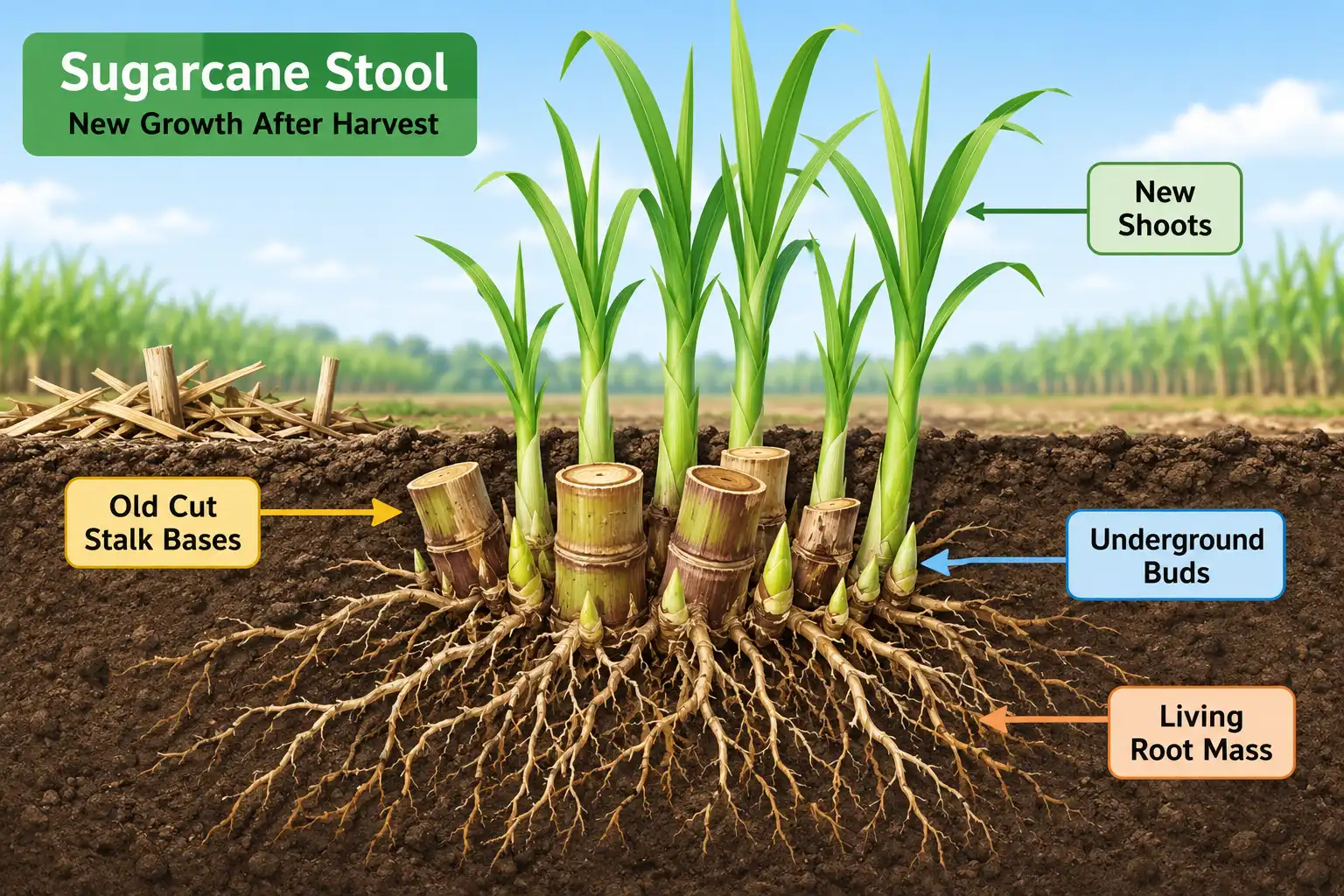
This head start matters. A ratoon stand emerges faster than plant cane. It also taps leftover fertilizer and soil moisture from the crop before it.
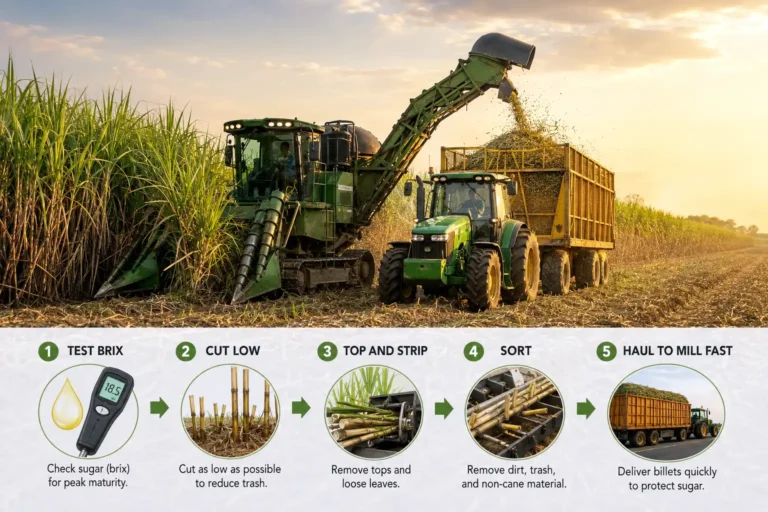
How you make the cut matters here too. Clean, low cutting protects the stool. our guide covers handling the harvest cut in a separate guide. It sets up the ratoon before regrowth even begins.
Why Do Growers Ratoon Instead of Replanting Every Year?
Growers ratoon because it saves money and time on every acre. Planting cane from setts runs slow and costs plenty. Ratooning skips the seedbed prep, the seed cane, and most of the planting labor.
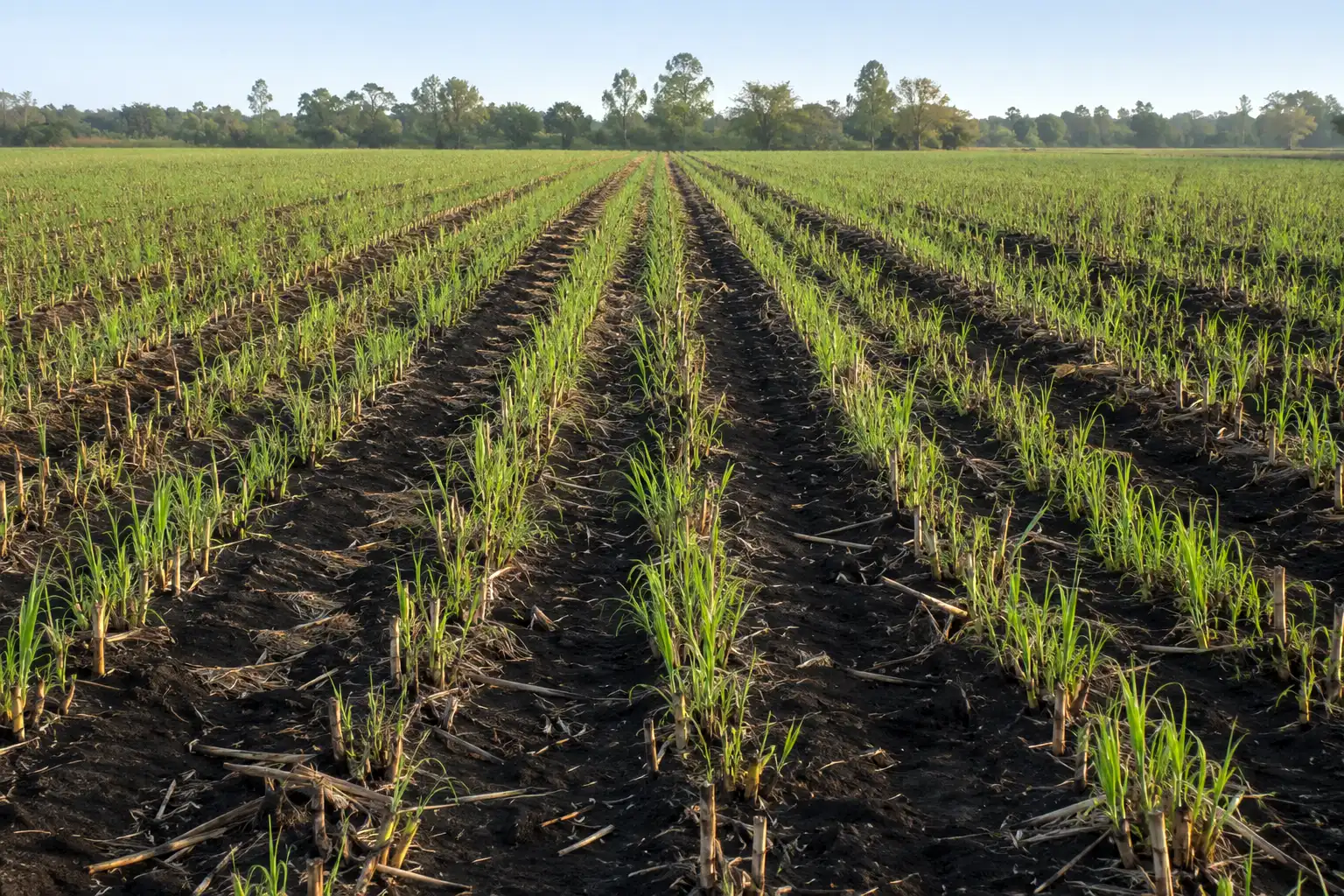
Seed cane is not cheap either. One acre of seed cane plants only about ten acres by hand, or four acres by machine. So every field you replant pulls stalks you could have sold or ground for sugar.
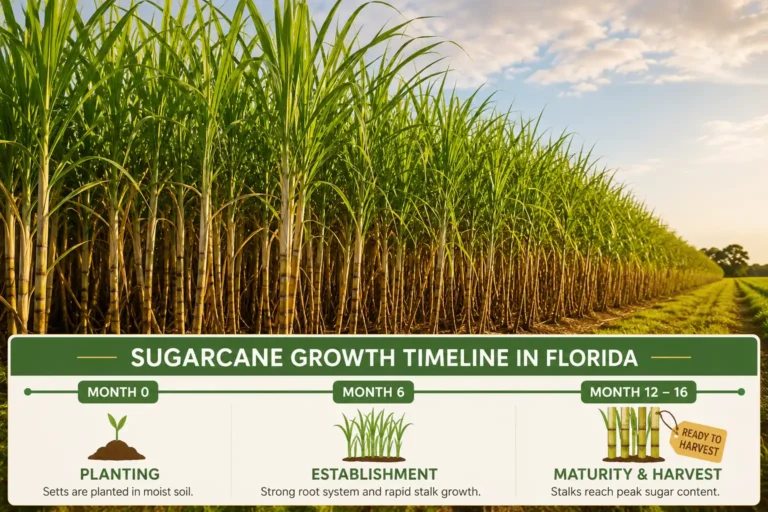
A ratoon crop also matures earlier than plant cane. It starts from a living root system, not a buried cutting. That early vigor often means a cleaner, more even stand in spring.
If you want the full rundown on planting fresh seed caneour guide covers that process on its own. Ratooning is simply how growers avoid repeating it every single year.
How Many Ratoon Crops Can You Take?
Most U.S. sugarcane fields give one plant cane crop plus two to four ratoons before a replant. The exact number rides on your variety, your climate, and how well you tend the stubble.
In Louisiana, the old standard was a plant cane crop and two stubble crops. Modern LSU AgCenter varieties changed that. The USDA-ARS unit in Houma helped breed them, so growers now cut three or four stubble crops per planting.
Florida runs a similar pattern. University of Florida figures make the split clear. In one recent season, about 71 percent of the state crop was ratoon cane. Only 29 percent was plant cane. Warmer winters in the Everglades Agricultural Area let growers hold stands longer than the Gulf Coast does.
Climate drives a lot of this. Where cane is grown regionally shapes how many ratoons pencil out. Growers run from the Louisiana Gulf Coast down to the Rio Grande Valley in Texas. Each ratoon still needs a full season to size up. So plan for how long the crop takes from cut to cut.
Why Does Ratoon Yield Decline Each Year?
Ratoon yield drops each year because pests, disease, and stand gaps build up in the stool over time. Every cutting stresses the plant. Sooner or later the field cannot match its plant cane peak. Older stubble also draws steady insect feeding, and pressure from the cane beetle is one example Gulf growers watch closely.
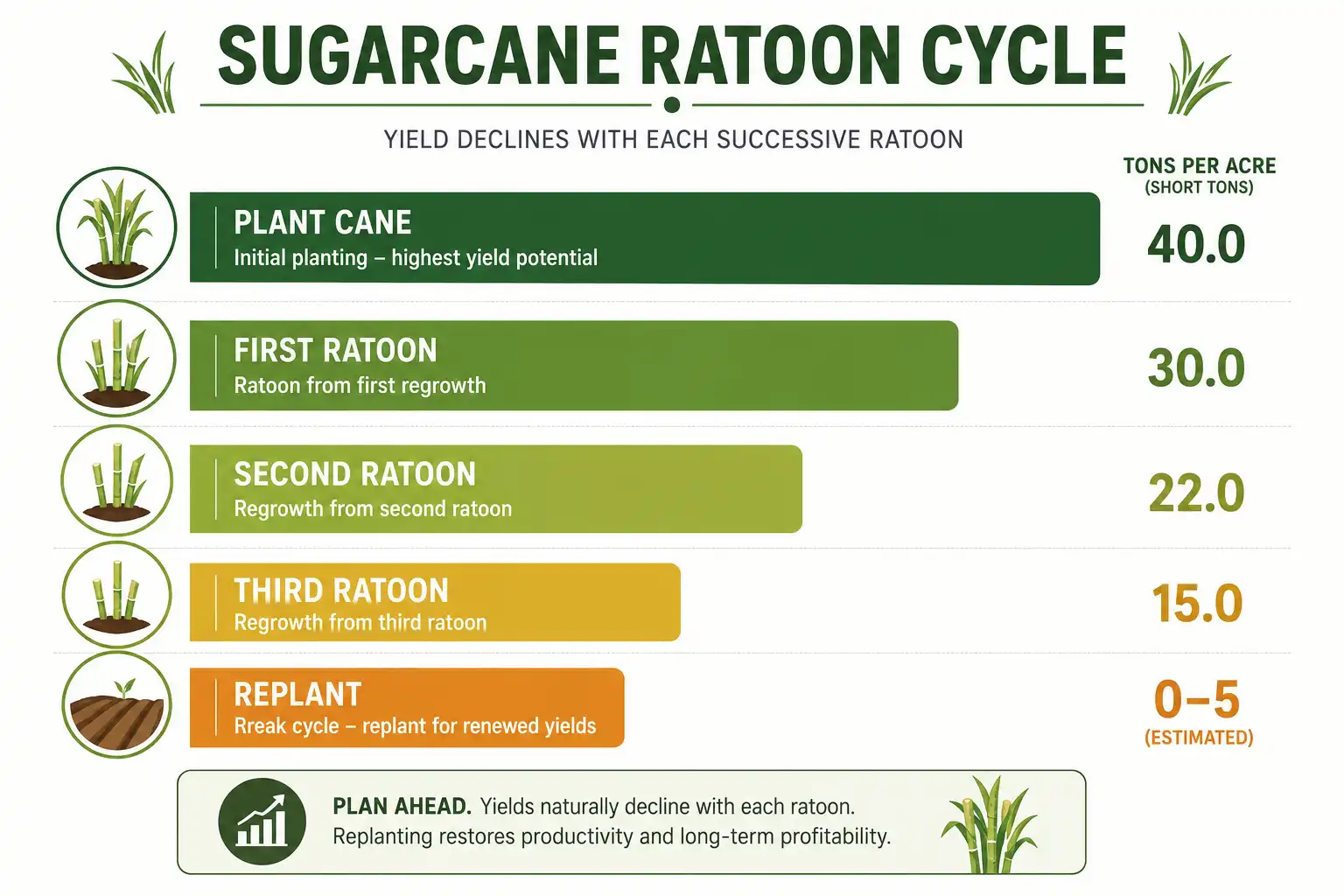
A first-year Florida field might cut close to 40 tons of cane per acre. By the third ratoon, that can slide toward 28 to 30 tons. Several things drive the drop:
- Pest and disease pressure climbs. Older stubble takes repeated hits that a fresh planting would dodge.
- Stands thin out. Buds die off from freeze, traffic, or rot, which leaves gaps in the row.
- Tillers crowd each other. Many young shoots die before they ever size up.
- Stool damage adds up. Harvest traffic and repeated cutting slowly wound the crown.
In Louisiana, a hard freeze on overwintering stubble can gut the next ratoon before it ever greens up. That cold risk is a big reason Gulf Coast growers replant sooner than Florida growers do.
What Is Ratoon Stunting Disease?
Ratoon stunting disease, or RSD, is a bacterial infection that quietly cuts sugarcane yield with no clear symptoms. Many pathologists rank it the most damaging sugarcane disease worldwide. Losses run from 5 to 15 percent.
RSD spreads through cutting tools and infected seed cane. The bacteria live in the stalk’s water-carrying tissue and choke growth. You rarely spot it. The cane just runs short and thin, and you blame the weather instead.
Resistant varieties do not stop RSD. So growers lean on clean seed cane, hot-water treatment of setts, and sanitized harvest blades. Testing labs, like the one the LSU AgCenter runs, screen stubble fields for the pathogen at no charge.
How Do You Manage a Ratoon Crop?
Manage a ratoon crop by cleaning up the stubble fast, filling gaps, feeding the stand, and controlling water. Good ratoon care starts the day after harvest. Move quick, and the stool pays you back.
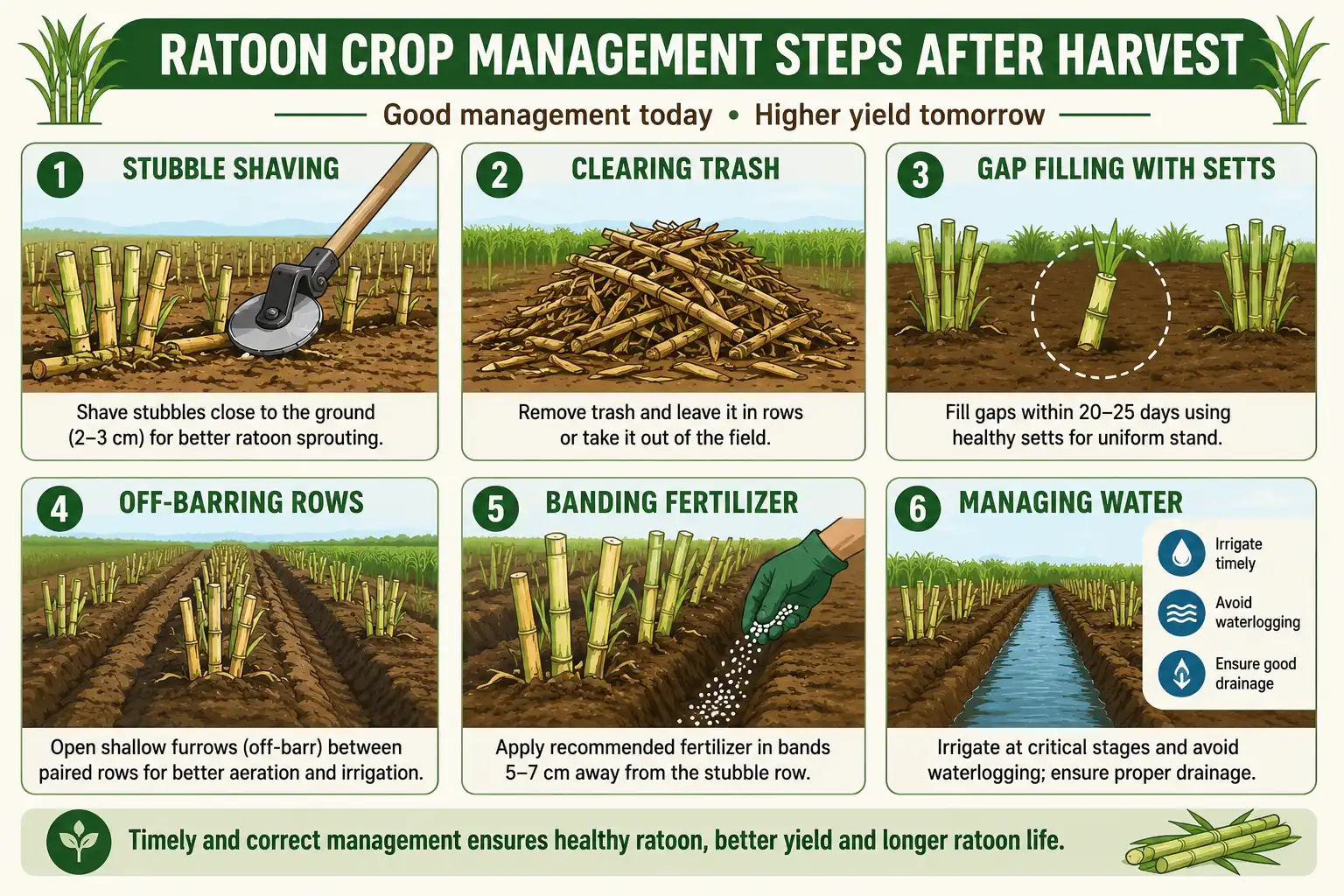
Work through these steps once the field is cut:
- Shave the stubble. Run a stubble-shaving machine to even up cutting height and trigger fresh buds.
- Clear the trash. Growers either burn the leaf litter or windrow it, so shoots reach light and warmth.
- Fill the gaps. Drop three-bud setts into thin spots within a few weeks of harvest.
- Off-bar the rows. Pull soil off the row shoulders to knock out weeds and open the stool.
- Feed early. Band nitrogen and other nutrients beside the row once regrowth starts.
- Manage water. Drain excess after heavy rain, then irrigate on the same plan as plant cane.
That last point trips up new growers. A young ratoon stand stalls when it sits wet or runs dry. So setting up an irrigation schedule early keeps the shoots moving.
When Do You Stop Ratooning and Replant?
You stop ratooning when yield falls far enough that a replant pays better than another cutting. For most U.S. growers, that point lands after the second, third, or fourth ratoon. The stool simply wears out.
At plow-out, growers kill the old stubble, usually with glyphosate, then work the ground. After that, the field either goes back to cane right away or sits in a fallow rotation. In Florida, fallow fields often run rice, sweet corn, or a cover crop for a season.
The call is part economics, part agronomy. A thin third-ratoon field costs the same to harvest as a full one. But it hauls far less cane to the mill. So that math usually decides the year.
Bottom Line for Cane Growers
Ratooning is how sugarcane earns its keep. You plant once, then harvest the same stool for several years before starting over. Do not grow cane. But the extension work out of Louisiana and Florida is clear on the practice. Tend the stubble well, test for stunting disease, and replant before the yield quits on you.