Where Is Sugarcane Grown in the US? Top States and Regions
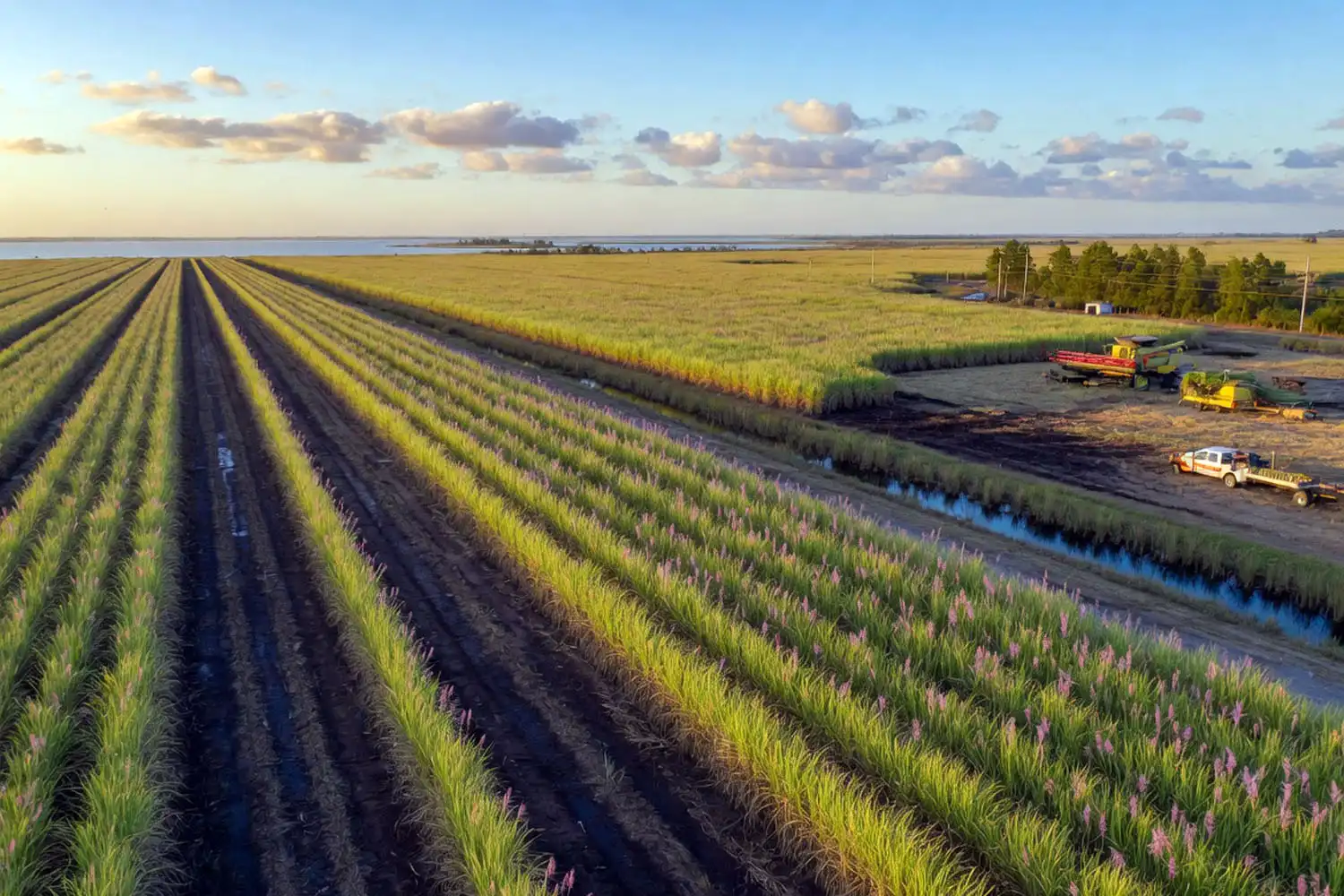
Sugarcane has a narrow growing belt in this country. Sugarcane is often assumed to grow almost anywhere warm, but where it’s actually grown in the US comes down to a few southern states with the right climate, soils, and frost-free season. Here’s the full picture.
Sugarcane is grown commercially in Florida, Louisiana, and Texas, with Hawaii ending production in 2016. Florida leads by far, producing nearly half of US sugarcane on muck soils south of Lake Okeechobee in the Everglades Agricultural Area.
The States Where Sugarcane Is Grown in the US
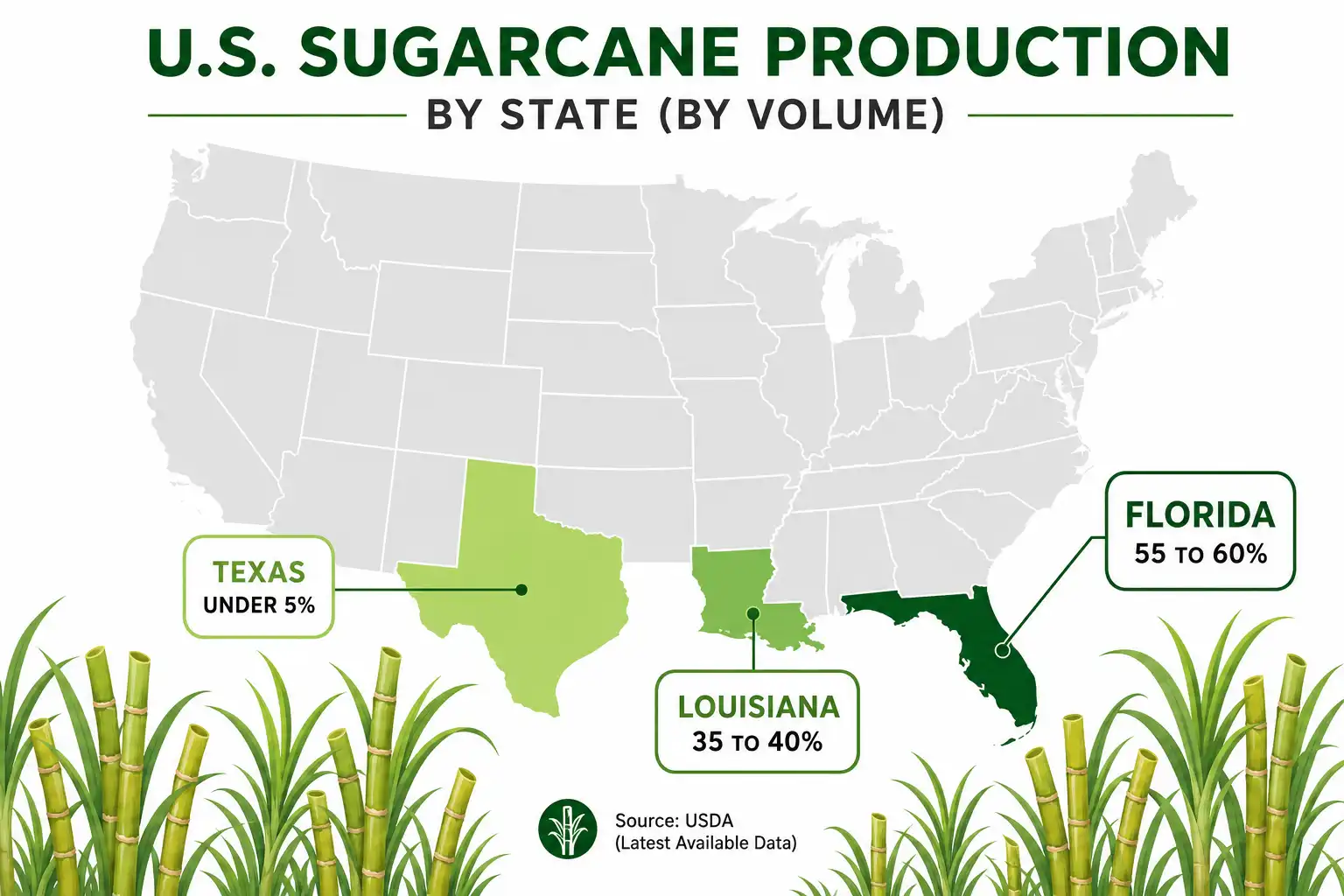
Sugarcane production in this country sits in three active states today: Florida, Louisiana, and Texas. Hawaii rounded out the list for over a century, but commercial cane farming there ended when the last mill on Maui closed in 2016. Each region grows sugarcane for one main reason: a long, warm, frost-free season that the plant needs to build sugar in its stalks.
Florida: The Top Sugarcane State
Florida grows the most sugarcane in the United States. The bulk of production sits in the Everglades Agricultural Area south of Lake Okeechobee, mostly across Palm Beach, Hendry, Glades, and Martin counties. The muck soils there are dark, fertile, and high in organic matter, which is exactly what cane wants.
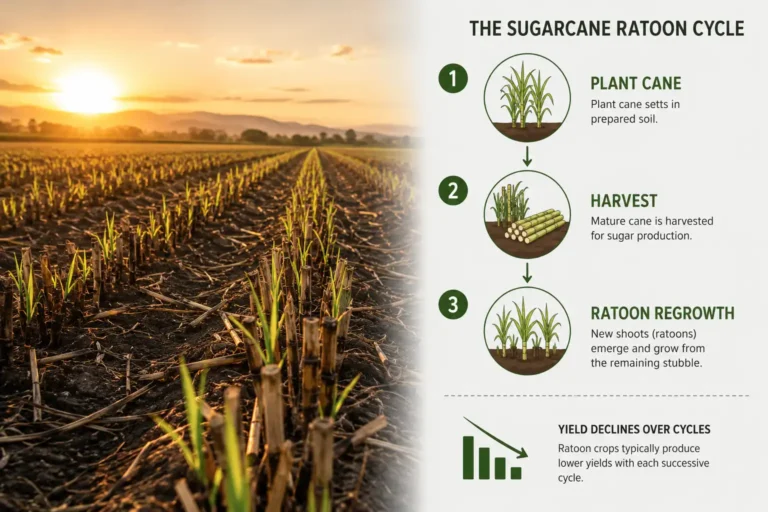
Florida farms around 400,000 acres of sugarcane every year. Mills in Belle Glade, Clewiston, and South Bay process most of the crop. The state alone supplies roughly half of all US cane sugar. The reason this sugarcane crop thrives there comes down to mild winters, steady rainfall, and a near year-round growing window for ratoon stands.
Learn more: Benefits of Sugarcane Straws
Louisiana: Second in Production
Louisiana ranks second in US sugarcane production. Growers there harvest cane across more than 20 parishes in the southern part of the state, with most acres in Iberia, Iberville, St. Mary, Assumption, and Lafourche. The state farms around 450,000 acres of sugarcane each year. That’s actually more acres than Florida, but the yield per acre is lower because of the shorter season and earlier freezes.
Louisiana mills cluster along Bayou Teche and the lower Mississippi River. The LSU AgCenter releases new cane varieties for the state each season through its research stations. Anyone serious about planting sugarcane in this region should pull their variety list from there first.
Texas: The Rio Grande Valley
Texas grows sugarcane in the Lower Rio Grande Valley, mainly in Hidalgo, Cameron, and Willacy counties. Acreage stays around 35,000 to 40,000 acres each year. The Rio Grande Valley has the warm winters and irrigation water from the Rio Grande needed to push the crop through to harvest.
Texas production is small compared to Florida and Louisiana, but the region has produced cane consistently since commercial farming restarted in the early 1970s. Tight water supplies from drought and ongoing water-sharing disputes with Mexico are putting pressure on the crop’s future there.
Hawaii: A Sugarcane Story That Ended
Hawaii once led the country in sugarcane production. At its peak, sugarcane covered over 200,000 acres across Maui, Kauai, and the Big Island. Production collapsed over decades due to high labor costs, water rights issues, and global price competition. The final mill, Hawaiian Commercial and Sugar Company on Maui, shut down in December 2016. No commercial sugarcane is grown in Hawaii today.
Know more: Sugarcane Sugar Vs Regular Sugar
Why Sugarcane Only Grows in Certain US Regions
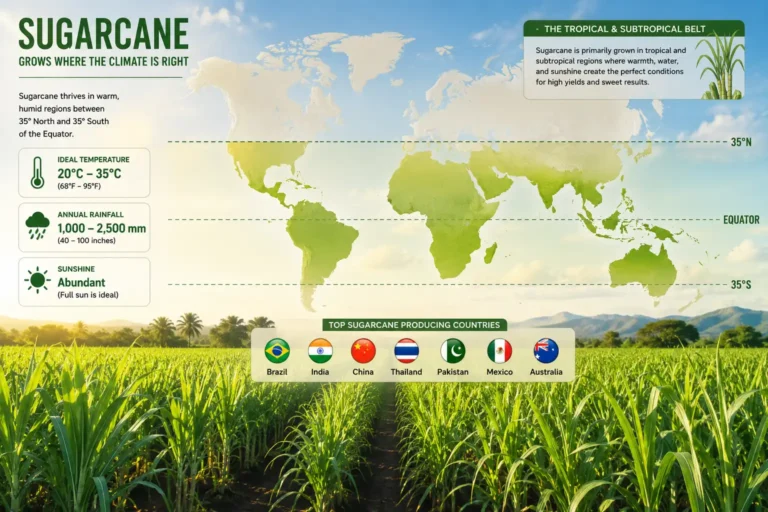
Sugarcane needs heat, time, and water. It is a tropical grass originally domesticated as Saccharum officinarum. The plant requires 10 to 12 months of frost-free conditions to produce harvestable sugar levels in its stalks. Most of the continental US sees freezes too early in the year for that.
That climate limit is why you only see commercial cane in southern Florida, southern Louisiana, and the southern tip of Texas. North of those zones, freezes kill the stalks before sugar accumulates. The crop also needs 50 to 80 inches of moisture annually, either from rainfall or irrigation. In Kansas, the area gets nowhere close to those numbers, and the winters would wipe a sugarcane field out by November. If you want a feel for growing sugarcane in your area, climate is the first filter, every time.
How Much Sugarcane Does the US Produce?
The US produces roughly 30 to 35 million tons of sugarcane each year. Florida accounts for around 55% to 60% of total production by tonnage. Louisiana brings in around 35% to 40%, and Texas contributes the remainder. Sugarcane is the source of about 45% of all sugar produced in the United States, with sugar beets covering the rest, according to USDA Economic Research Service sugar data.
Cane sugar moves through mill processing, refining at sites like the ASR Group refineries in Louisiana and Florida, and then to food manufacturers nationwide.
Where Sugarcane Is Grown Within Each State
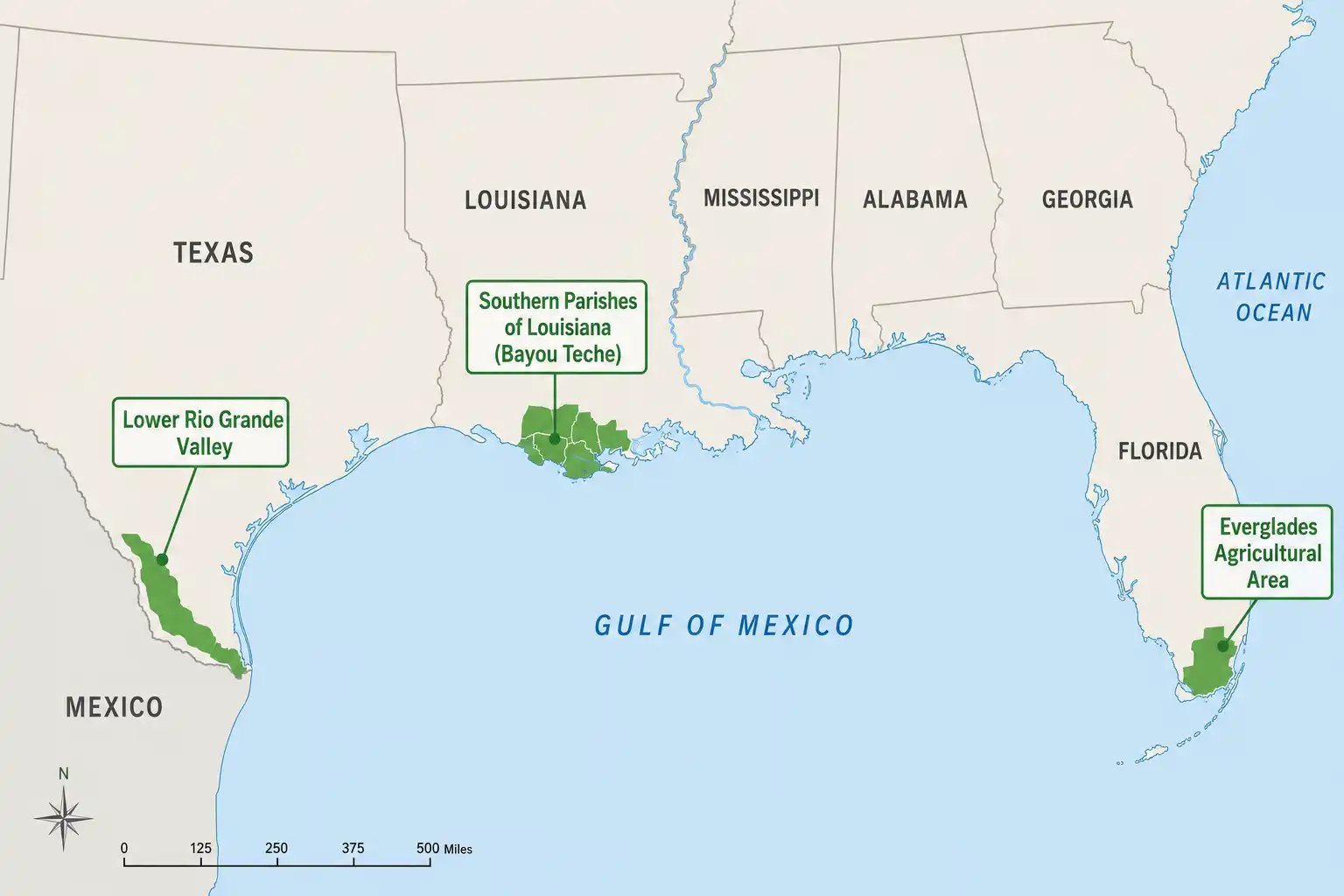
In Florida, sugarcane sits almost entirely south of Lake Okeechobee. The Everglades Agricultural Area covers roughly 700,000 acres of muck soils, with sugarcane being the dominant crop. The growing region rarely sees a hard freeze, which is what allows the long-season cane varieties to mature properly.
In Louisiana, sugarcane spreads across the southern third of the state. Iberia Parish alone harvests over 70,000 acres each year. The crop sits between the Gulf Coast and the I-10 corridor, where the climate stays warm enough through October to allow strong sugar accumulation before grinding season.
In Texas, all commercial cane is in three counties: Hidalgo, Cameron, and Willacy. The crop relies on irrigation pulled from the Rio Grande system. Smart harvest timing for sugarcane matters there because the season is shorter than Louisiana’s and far shorter than Florida’s.
Can Sugarcane Be Grown in Other US States?
Sugarcane can be grown in small amounts in other warm southern states, but not at commercial scale. Some farmers in southern Georgia, Alabama, Mississippi, and South Carolina grow cane for syrup production, mostly on small acreages tied to old-style cane syrup mills. The crop will not finish for sugar production that far north because the season runs out.
USDA hardiness zones 9 and 10 are the practical limits. Anything cooler than that risks losing the crop. Growers who want to try sugarcane on a backyard plot can do so in zones 8b and warmer, but should expect lower sugar content and skip large investments.
How US Sugarcane Compares With Sugar Beets
Sugar beets cover more acres than sugarcane in the US but yield less sugar per acre. Beets grow in northern states like Minnesota, North Dakota, Michigan, Idaho, and parts of California. Cane and beets produce identical sucrose for the consumer market, so the choice of crop depends entirely on regional climate. A side-by-side look at this sugar beets and cane comparison shows why farmers in cooler states picked beets and southern growers stayed with cane.
Bottom Line for Your Field
If you are searching for where US sugarcane grows, the answer comes down to four counties in south Florida, twenty parishes in south Louisiana, and three counties in the Rio Grande Valley of Texas. Outside those regions, the climate cuts the crop off before the sugar builds. For commercial scale, those three states are your only real options in 2026.