How Long Does Sugarcane Take to Grow? Full 2026 Timeline
Sugarcane is a slow crop by row-crop standards. If you are planning a field or a backyard patch, you want one number first: how long does sugarcane take to grow before you can cut it?
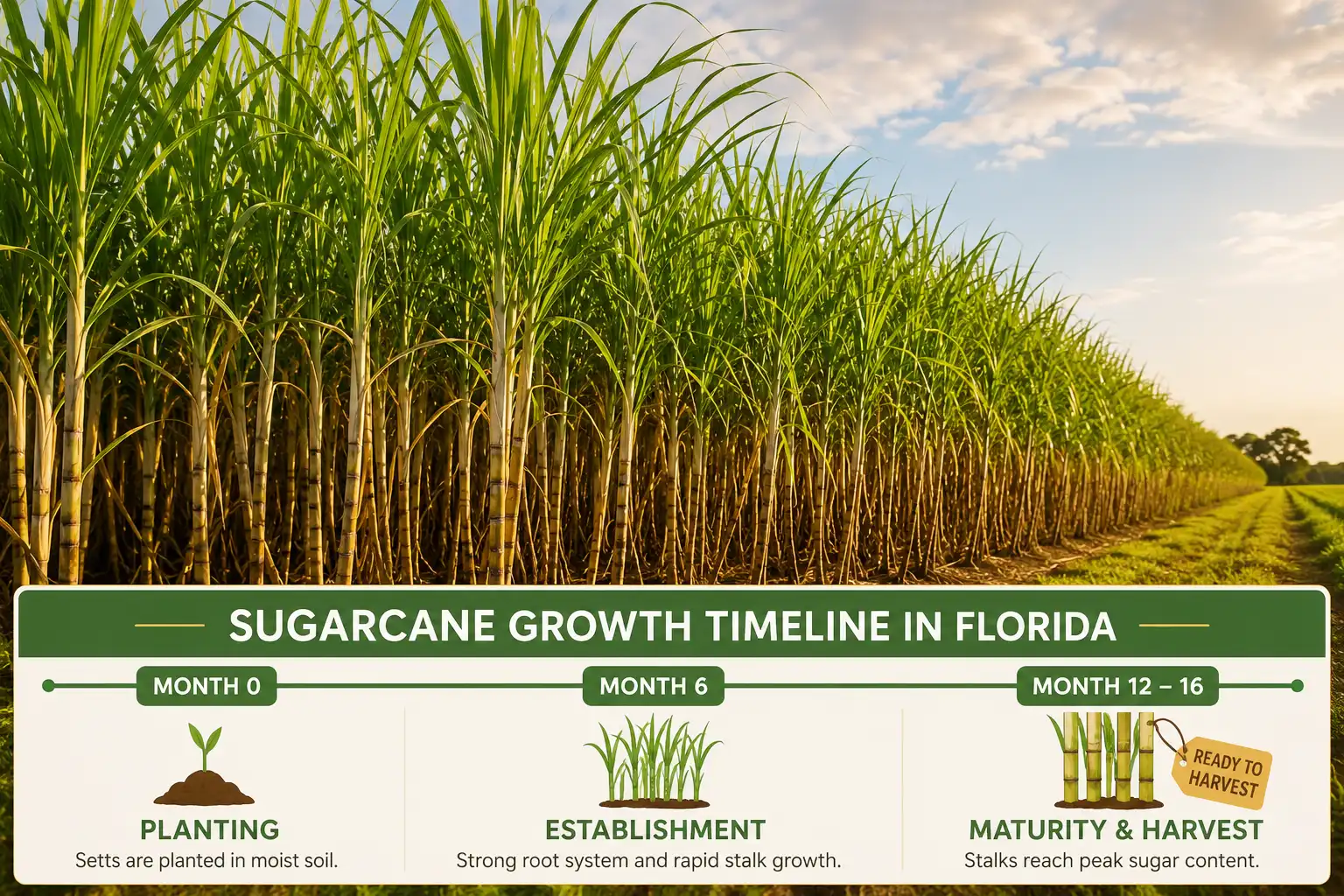
Sugarcane takes about 12 to 16 months to grow from planting to the first harvest. The crop then regrows from its stubble and is ready to cut again roughly every 12 months for years.
How Long Does Sugarcane Take to Grow From Planting to Harvest?
Plant cane takes about 12 to 16 months to reach harvest in the United States. You plant stalk cuttings, not seed. The buds sprout, the stand fills in, and the stalks climb through one warm season. Then growers cut the first crop.
Your region sets the exact clock. Only three states grow sugarcane for sugar. You can see the states where it’s grown commercially: Florida, Louisiana, and Texas. Each one runs a little differently.
| Region | Plant cane to first harvest |
|---|---|
| Florida | 12 to 14 months |
| Louisiana | 12 to 15 months |
| Texas (Rio Grande Valley) | 12 to 16 months |
So a full year is the floor. In most fields you plan on a bit more. The USDA says it plainly: after you plant the cuttings, the crop matures in one to two years. Cooler weather stretches that timeline. Steady heat shortens it.
What Are the Growth Stages of Sugarcane?
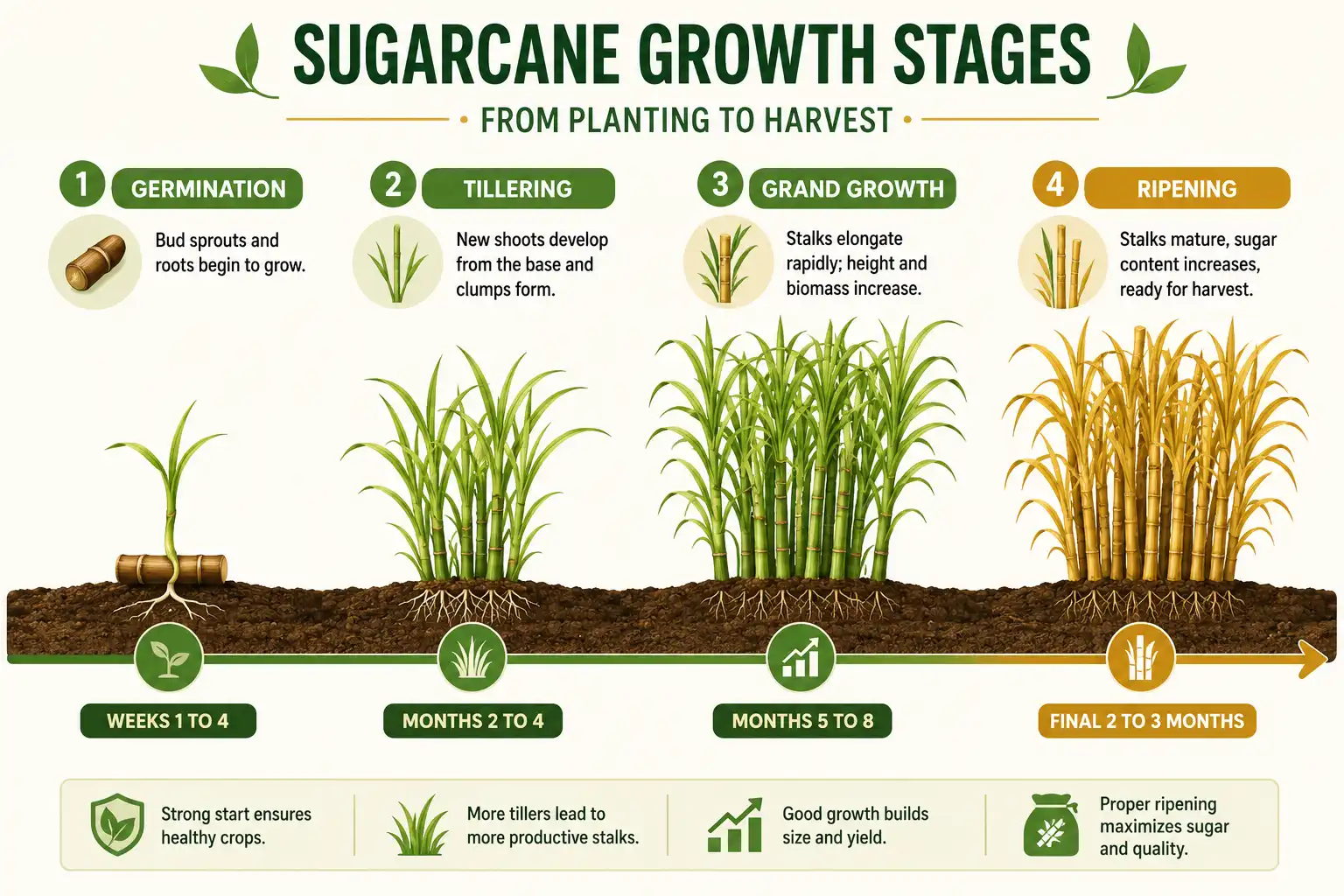
Sugarcane grows through four stages: germination, tillering, grand growth, and ripening. Each stage takes a set slice of the 12 to 16 months. Here is how the calendar breaks down.
- Germination (weeks 1 to 4). The buds on each cutting sprout and push shoots above the soil. This takes about 20 to 40 days.
- Tillering (months 2 to 4). Each plant sends up many side shoots. The stand thickens and covers the row.
- Grand growth (months 5 to 8). This is the long, fast phase. Stalks add height quickly, often 4 to 5 new joints per month. Most of the crop’s weight builds here.
- Ripening (final 2 to 3 months). Growth slows on purpose. Sugar climbs in the stalks as cool weather sets in.
The grand growth stage matters most for your timeline. A cool, dry summer here shrinks it. A hot, wet one fills it out and drives yield.
How Long Does Plant Cane Take Compared to Ratoon Crops?
Ratoon crops grow back faster than plant cane. After you cut the first crop, new shoots rise straight from the leftover roots and stubble. No replanting is needed. In Florida, the first ratoon matures in about 11 months. Later ratoons run 10 to 11 months, and old stubble can finish in 8 to 10 months.
| Crop | Approx. time to harvest |
|---|---|
| Plant cane | 12 to 14 months |
| 1st ratoon | ~11 months |
| 2nd ratoon | 10 to 11 months |
| 3rd ratoon | 10 to 11 months |
| Older ratoon | 8 to 10 months |
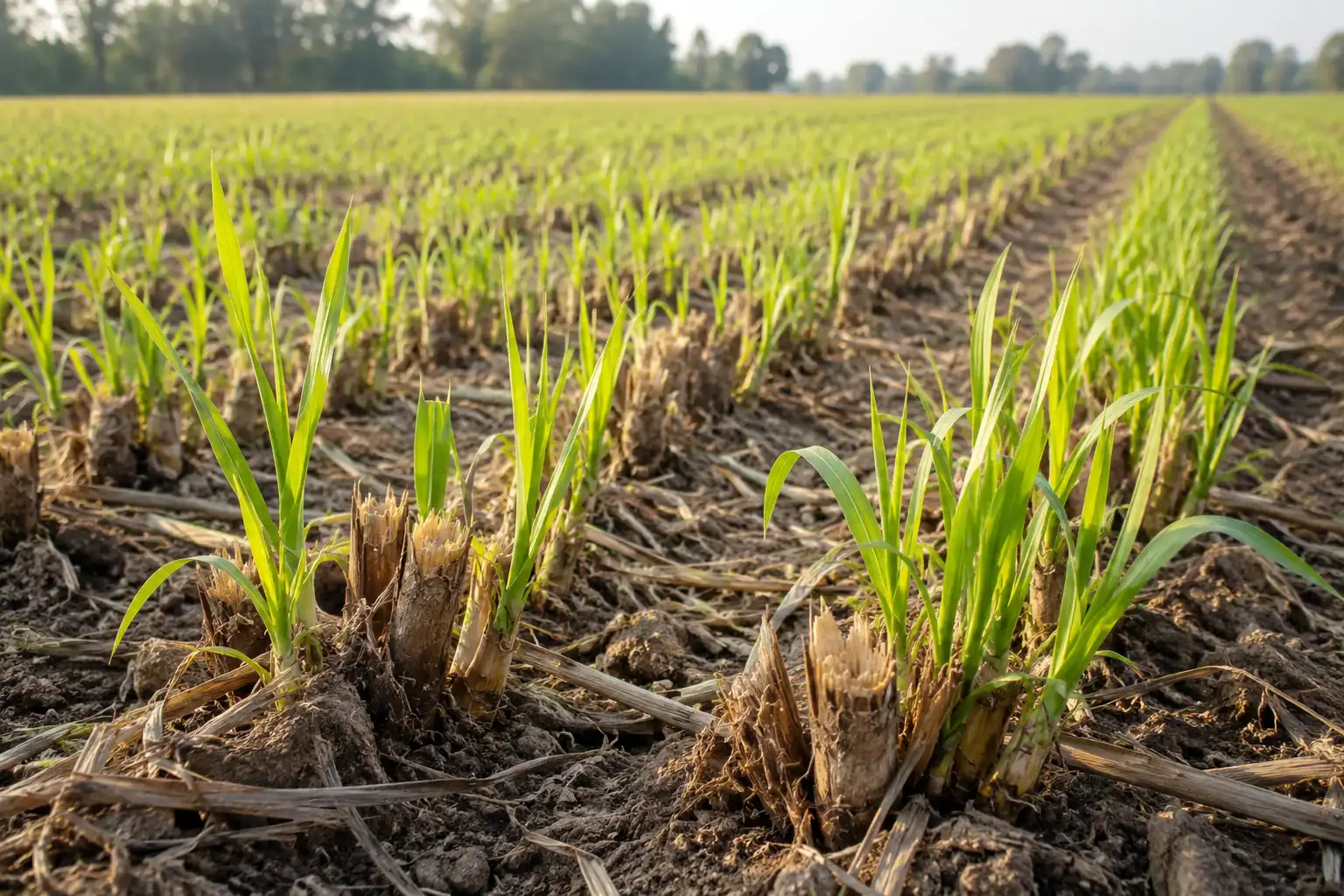
Each ratoon comes in a little quicker. But each one also yields a little less. So growers do not keep a field forever. A typical Florida field runs one plant cane crop plus two ratoons, and many push to four harvests. In Louisiana, growers take the plant cane plus two to four stubble crops. Texas fields usually last four to five years. Then the field goes to fallow or a rotation crop, and you replant.
The way the stalks get planted at the start still shapes how strong those ratoons come back.
What Affects How Fast Sugarcane Grows?
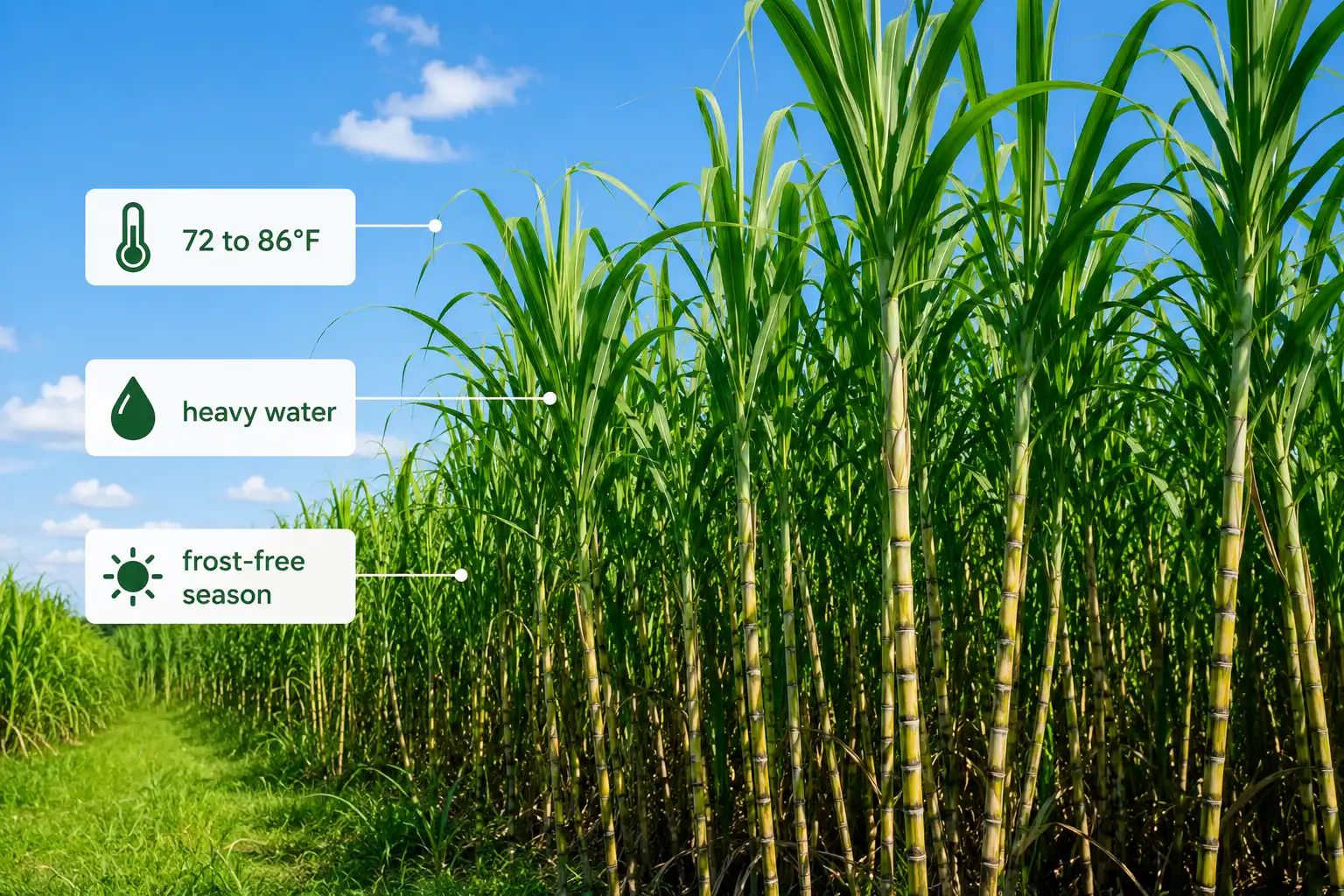
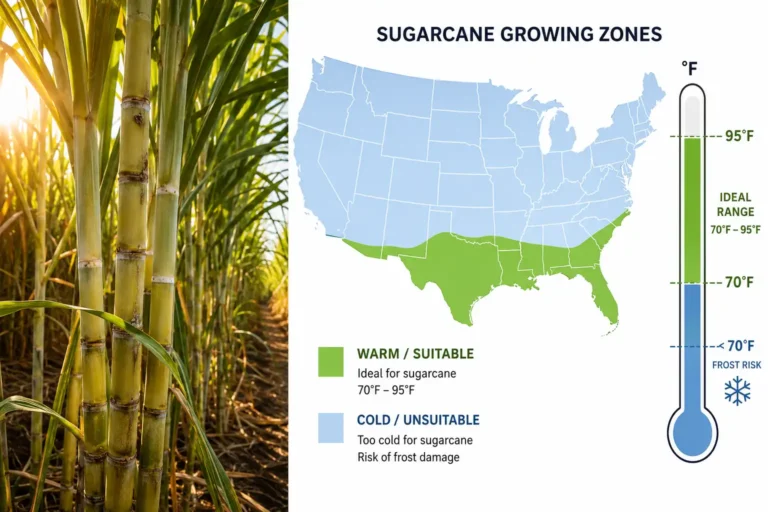
Heat, water, frost, and variety decide how fast sugarcane grows. It is a warm-season grass. It wants long, hot days and no frost.
- Temperature. The crop grows best with daily temperatures near 72°F to 86°F. Below about 68°F, growth slows down. Frost stops it cold and can end the crop before the stalks mature.
- Water. Sugarcane drinks heavily. A dry stretch stunts the stalks fast. In a hot, dry 2023, LSU AgCenter reported cane standing only 3 feet tall when it should have hit 7 to 9 feet.
- Variety. Breeders sort cane into maturity classes. Early types finish in about 9 to 12 months. Mid types run 12 to 15. Late types need 15 to 18 months or more.
- Planting time. An early, well-set stand uses the next full warm season. A late start loses growing days and pushes back the cut.
- Fertility. Nitrogen feeds early growth. But you stop feeding by mid-July in Florida, because late nitrogen delays ripening and cuts sugar.
Because frost is the hard limit, your fall planting window drives the whole schedule. A steady irrigation schedule then keeps the crop on pace through dry spells.
How Long Does It Take to Grow Sugarcane at Home?
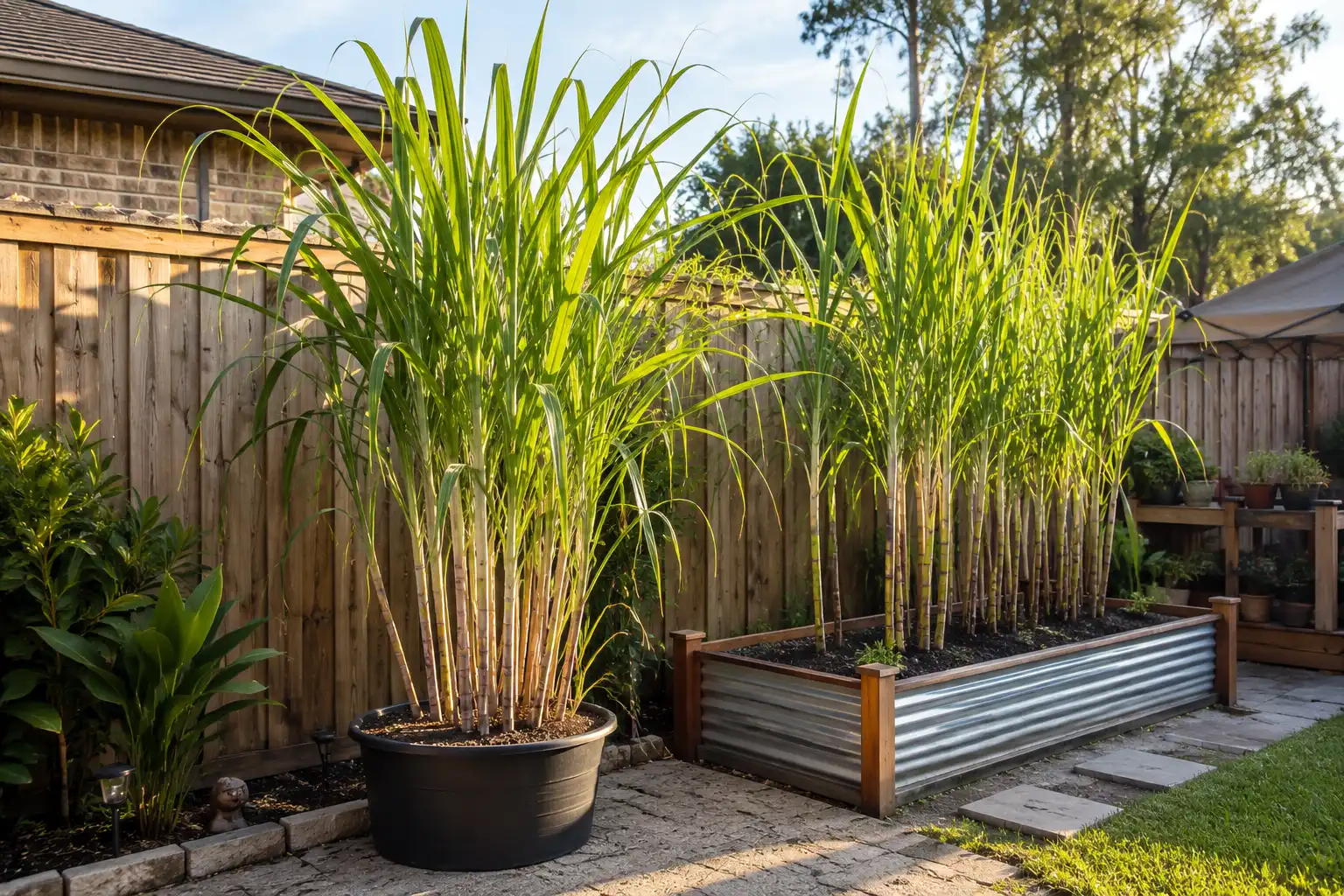
Backyard sugarcane matures in about 12 to 14 months in warm, near frost-free zones. That covers Florida, the Gulf Coast, and other USDA hardiness zone 9 and warmer spots. You plant setts in late summer or fall, and you cut the next fall.
Do not cut cane. In the winters end it long before it matures. So it helps to use the LSU AgCenter and UF/IFAS numbers and on growers down south, and the timeline holds steady across all of them.
In a cold zone, cane can still be grown as a one-season ornamental. It will not reach full height or build much sugar before frost. So treat it as a tall, leafy annual, not a sugar crop. A big container helps, since you can move it indoors when nights turn cold. If you want the full process of growing sugarcane from cutting to cut stalk, the steps do not change. Only your calendar does.
How Do You Know When Sugarcane Is Done Growing?
Sugarcane is done growing when its sugar peaks, usually as cool fall weather sets in. Vegetative growth slows first. Then sucrose climbs in the stalks. Growers check ripeness with a refractometer and simple stalk tests, then cut at the sweet point.
Keep this part short on purpose. For the full ripeness checks and the cutting window, read the signs the crop is ready to cut. That guide walks through the field tests and timing in detail.
About Sugarcane growth timeline and cultivation duration
Sugarcane rewards patience. Plan on 12 to 16 months for your first cut. Then count on a fresh harvest about every year for three to five years. Keep it warm, keep it watered, and keep frost off it. Match your planting to a long warm season. Pick a variety with the right maturity class. Then the crop hits its window. Kansas grows corn and beans, not cane. Still, the math is simple: give sugarcane a full year of heat, and it pays you back for years.