Where Is Basmati Rice From? The Origin and Growing Regions
Basmati rice is a common question from farmers and home cooks who notice it sits apart from regular long-grain rice. Basmati rice’s origin is specific enough to warrant a closer look at where it comes from and what sets it apart.
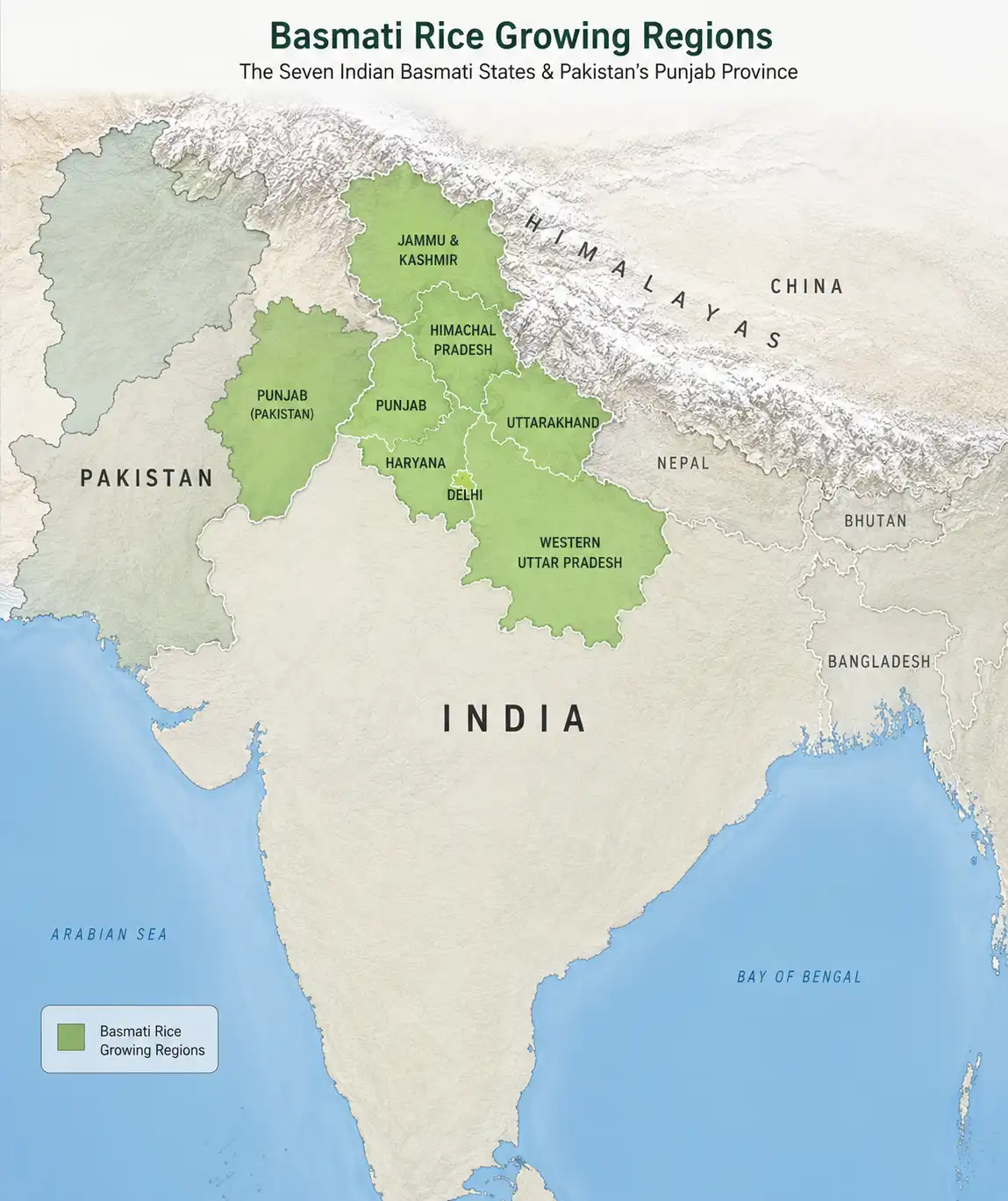
Basmati rice comes from the Indian subcontinent, specifically the foothills of the Himalayas in northern India and Pakistan. The grain is legally tied to seven Indian states and Pakistan’s Punjab province through Geographical Indication protection.
What Makes Basmati a Specific Type of Rice
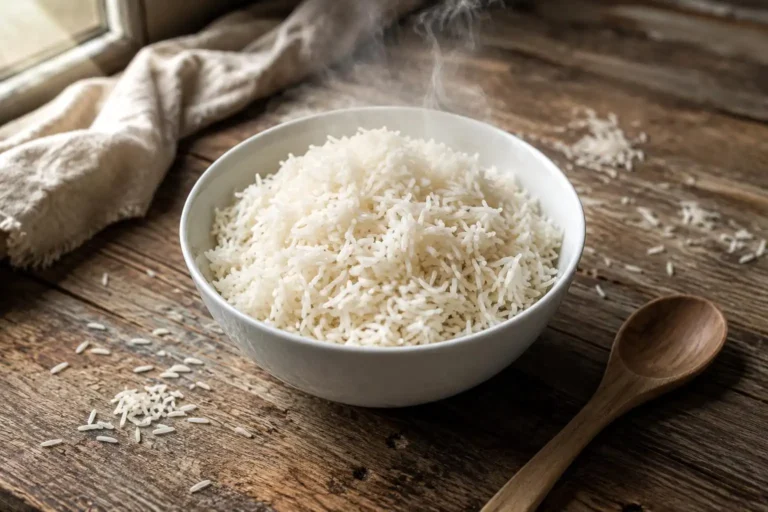
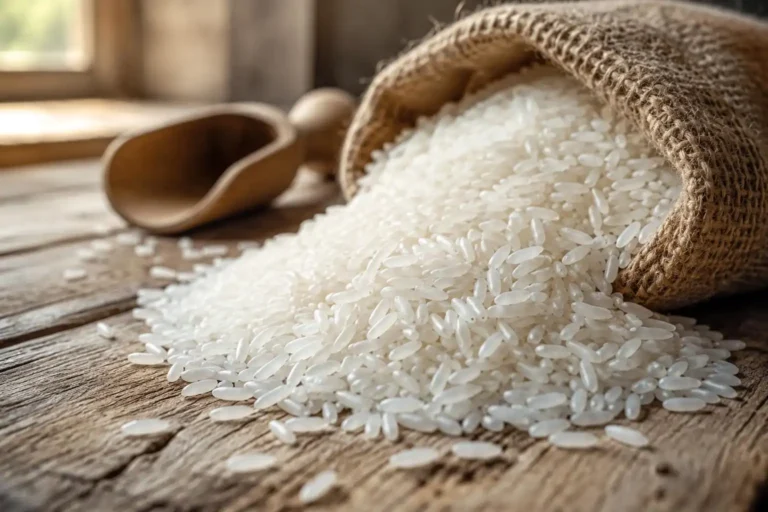
Basmati is an aromatic long-grain rice variety with a distinct genetic profile. The name comes from Sanskrit and roughly means “fragrant.” It carries a compound called 2-acetyl-1-pyrroline that gives the grain its popcorn-like smell during cooking. Grains also stretch dramatically when boiled, often doubling in length without breaking.
The USDA classifies basmati as a separate aromatic long-grain category. Not every long-grain rice qualifies. True basmati has to meet genetic, geographic, and physical standards.
The Original Home of Basmati Rice
Basmati originated in the Indian subcontinent, in the area now split between northern India and Pakistan. Farmers in the Indo-Gangetic Plain have grown it for more than 250 years, and historical texts mention aromatic rice in the region going back further.
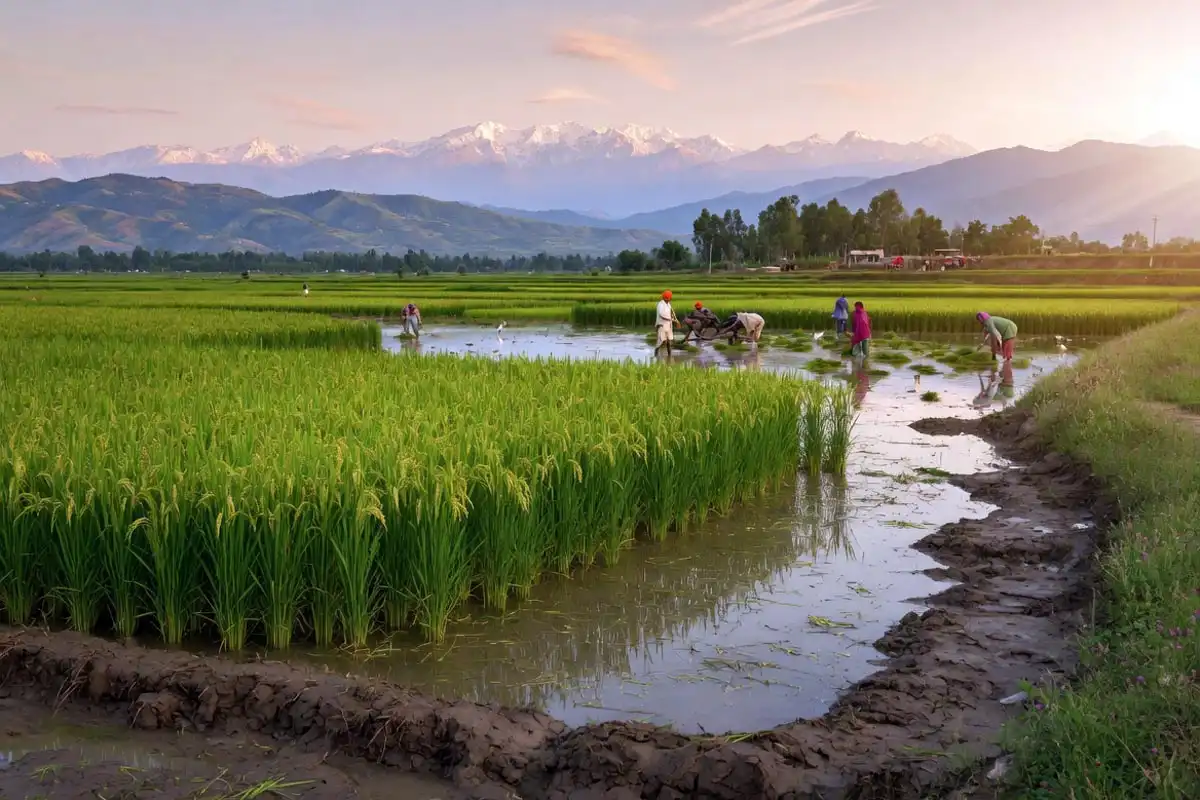
The traditional belt sits along the Himalayan foothills, where glacial meltwater feeds the rivers and fertile alluvial soil collects in the floodplains. That combination of water, soil, and climate is hard to copy anywhere else on earth.
Where Basmati Rice Is Grown in India
India is the world’s largest basmati producer, supplying roughly 70 percent of global volume. Under India’s Geographical Indication registry, basmati can only be grown in seven specific regions:
- Punjab
- Haryana
- Himachal Pradesh
- Uttarakhand
- Delhi
- Western Uttar Pradesh
- Jammu and Kashmir
These states sit in the Indo-Gangetic Plain, fed by rivers like the Yamuna, Ganga, and Ravi. APEDA (the Agricultural and Processed Food Products Export Development Authority) manages GI registration and basmati exports for India.
Popular Indian varieties include Pusa Basmati 1121, Pusa Basmati 1509, Basmati 370, and Taraori Basmati. Pusa Basmati 1121 alone makes up a major share of India’s basmati shipments overseas.
Where Basmati Rice Is Grown in Pakistan
Pakistan grows basmati mostly in its Punjab province, with the Kalar tract being the most prized region. This belt sits between the Ravi and Chenab rivers and is known for producing what many buyers consider the most aromatic basmati on the market.
Pakistan supplies roughly 30 percent of global basmati. Top varieties include Super Basmati, Kainat, and Basmati 385. Pakistan secured its own GI registration for basmati in 2021 to defend the name in international trade.
Why Basmati Only Grows in Certain Regions
Basmati depends on a climate and soil combination that does not exist outside the Himalayan foothill belt. The plant needs hot days, cool nights, monsoon rainfall, and slow-draining alluvial soil.
The day-night temperature swing during grain filling is what triggers the aroma compounds and the long-grain elongation trait. Move basmati seed to a different climate and the grains lose the length, fragrance, and texture that define them. The seed is the same. The rice is not.
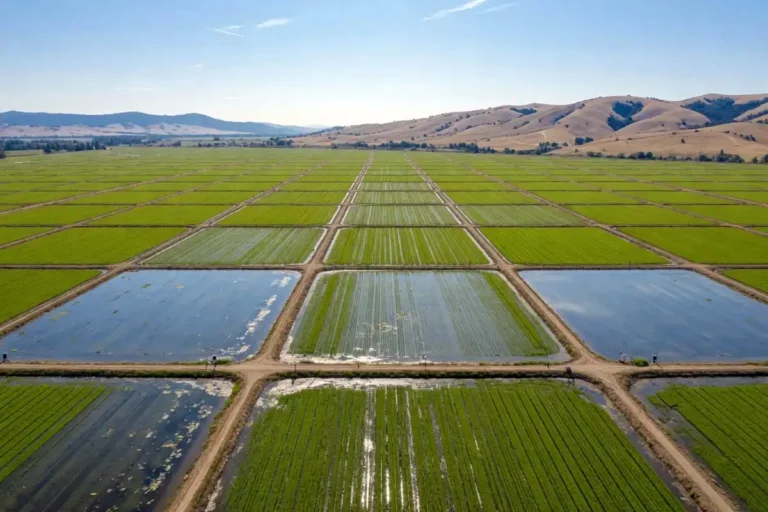
This is why flooded paddy systems are so central to basmati production. The reasons rice paddies stay flooded are broken down in another article for the agronomy behind that practice.
Can Basmati Rice Be Grown in the United States?
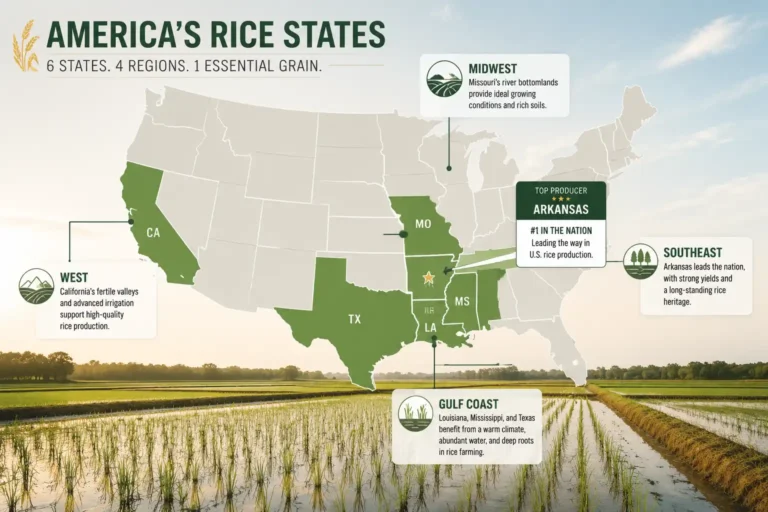
The US grows basmati-style rice in California, Texas, and Arkansas, but it cannot legally be sold as “basmati” in many international markets. American brands use names like Texmati, Kasmati, and Calmati. These are crossbreeds of basmati and US long-grain varieties.
The texture and aroma do not match the real thing. In 1997, a Texas company called RiceTec tried to patent basmati-style strains in the US. India fought the patent and won most of the claims back by 2001, which pushed India to strengthen its GI protections soon after.
In Kansas, rice is not a crop growers grow. Wheat, corn, sorghum, and soybeans dominate. The country also has rice production happening in Mexico and other parts of North America, but none of it qualifies as basmati under the GI rules.
How Basmati Got Its Geographical Indication Protection
A Geographical Indication tag is a legal label that ties a product to a specific region. Basmati received its GI in India in 2016 after years of legal back-and-forth.
The protection means only rice grown in the seven registered Indian states, or in Pakistan’s Punjab under Pakistan’s separate registration, can be sold as “basmati” in countries that honor the GI. The EU, UK, and many Middle Eastern countries enforce it strictly. The US is looser, which is why “American basmati” still appears on shelves here.
According to the USDA Foreign Agricultural Service, India remains the world’s top rice exporter, and basmati makes up a major share of its premium grain exports each year.
How to Tell Real Basmati from Imitation
Real basmati shows specific traits when you cook it. Grains are long and slender, usually 6.5 millimeters or more before cooking, and they double in length without splitting. The aroma is unmistakable once the pot opens.
Imitation rice is often shorter, stickier, or missing that popcorn smell. Checking the country of origin on the bag is the simplest test. India or Pakistan means authentic. Anywhere else means a basmati-style hybrid. Buyers who care about organic rice certification should also confirm the source, since organic claims and GI claims are separate.
FAQs about Basmati Rice
Is basmati rice grown in China?
Is American basmati real basmati?
What state in India produces the most basmati?
Is basmati the same as jasmine rice?
Why is basmati rice more expensive?
Bottom Line on Where Basmati Comes From
Basmati rice comes from the foothills of the Himalayas, grown in seven Indian states and Pakistan’s Punjab province. The soil, water, and temperature pattern of that belt are what give basmati its aroma, length, and texture. American basmati-style hybrids work fine in the kitchen, but they are not the same grain coming out of the same ground.