Where Did Sugarcane Come From? Its Origin, History, and Spread
Sugarcane feeds the world’s sweet tooth, but the crop did not start in the tropics we imagine today. Where did sugarcane originate? The answer runs back thousands of years to one stretch of the Pacific, long before this grass ever reached India or the Americas.
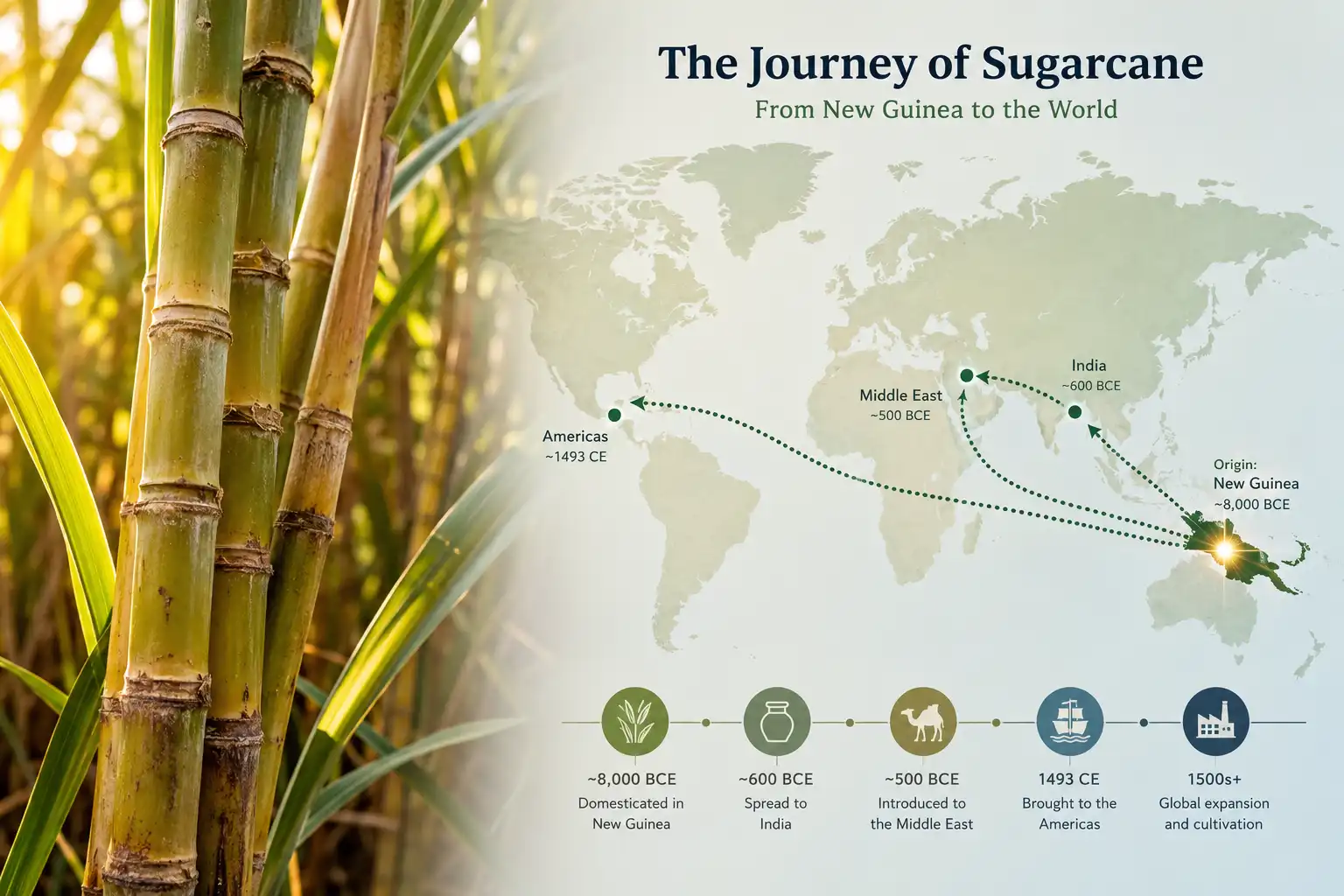
Sugarcane originated in New Guinea, where farmers domesticated it from wild cane about 8,000 to 10,000 years ago. From that Pacific home the grass spread west into Asia, reaching India and China at least 3,000 years ago.
Where Did Sugarcane Originate?
Sugarcane originated in New Guinea, a large tropical island north of Australia. Farmers there tamed it from a wild grass called Saccharum robustum, most likely 8,000 to 10,000 years ago. The sweet crop they bred is Saccharum officinarum, which we still call noble cane.
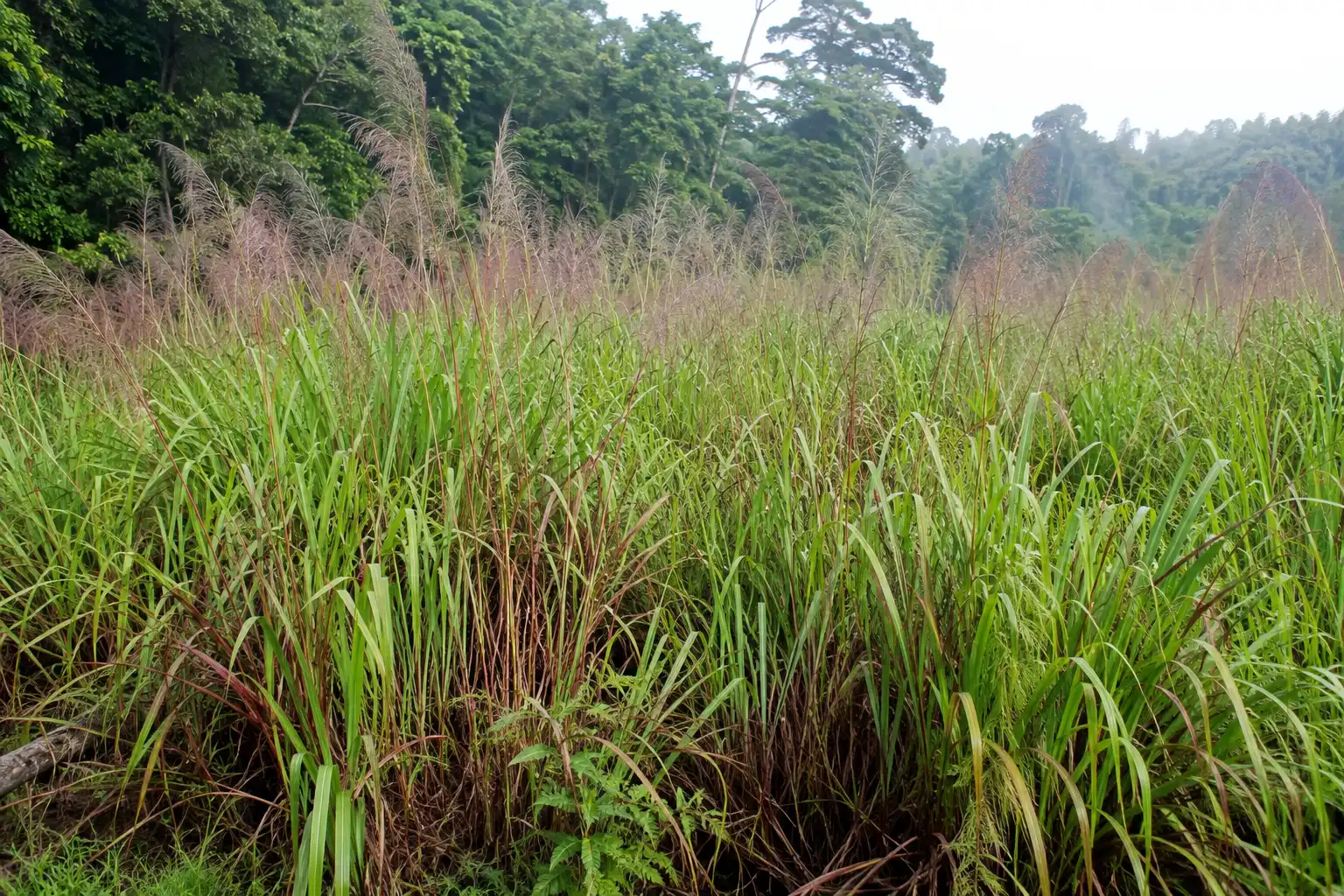
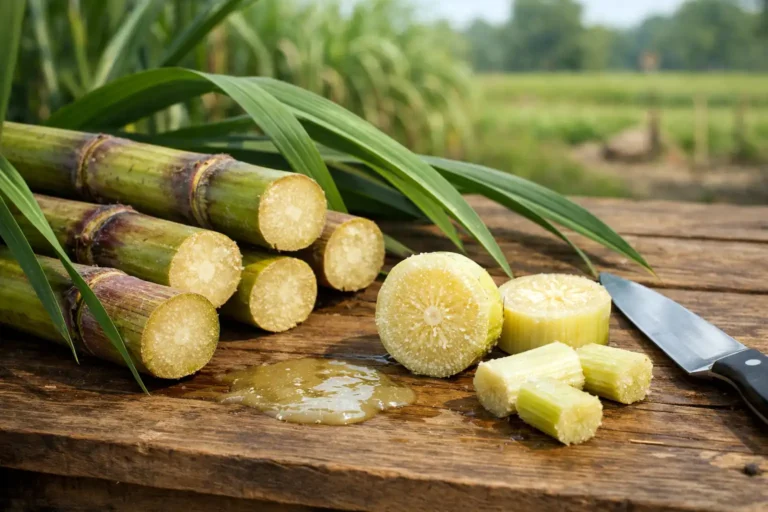
Sugarcane belongs to the grass family, Poaceae. That makes it a distant cousin of the corn, just a giant tropical version. At first, people did not make sugar from it at all. They chewed the raw stalks for the sweet juice. Early growers even fed the cane to their pigs.
Over many generations, they picked the thickest, sweetest, lowest-fiber stalks. That slow selection turned a tough wild reed into noble cane. If you want the basics on sugarcane as a crop, that plant biology is worth a read.
Learn more: Where Does Sugarcane Grow Around the World
When Was Sugarcane Discovered?
No one discovered sugarcane in a single moment. People in New Guinea domesticated it slowly, over thousands of years, starting as far back as 8,000 to 10,000 years ago. There is no single discovery date to point to.
Written records came much later. Around 326 BCE, officers in the army of Alexander the Great saw cane in India. They described a reed that made honey without bees. In India, an older text called the Atharva Veda mentioned cane as ikshu, roughly 3,000 years ago. So people knew and prized the crop long before anyone wrote it down.
Read next: Sugarcane Used For
How Did Sugarcane Spread Out of New Guinea?
Sugarcane spread out of New Guinea with Austronesian voyagers, the seafaring peoples who settled much of the Pacific. They carried cane east into Micronesia and Polynesia. They also carried it west into Island Southeast Asia.
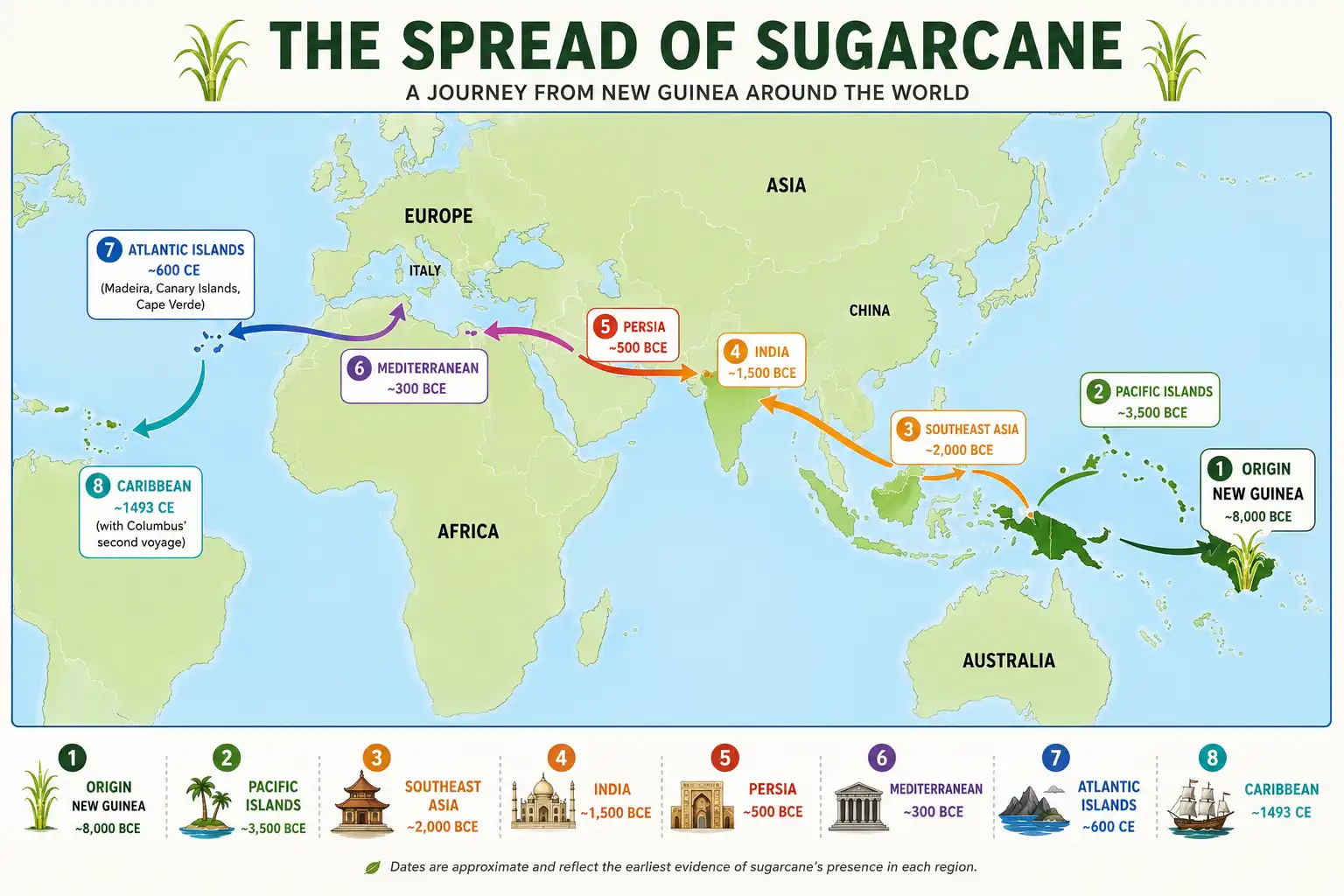
A second cane grew far to the north. In Taiwan and southern China, people cultivated a separate species, Saccharum sinense. As the lineages met and crossed, the crop reached India and China at least 3,000 years ago. Wild cane native to Asia, Saccharum spontaneum, crossed with the noble cane along the way. Those crosses gave India its own cultivated type, Saccharum barberi.
When Did Sugarcane Come to India?
Sugarcane came to India at least 3,000 years ago, carried west from Southeast Asia along old migration and trade routes. Ancient Indian texts already mention the crop, so it had settled in well by 1000 BCE.
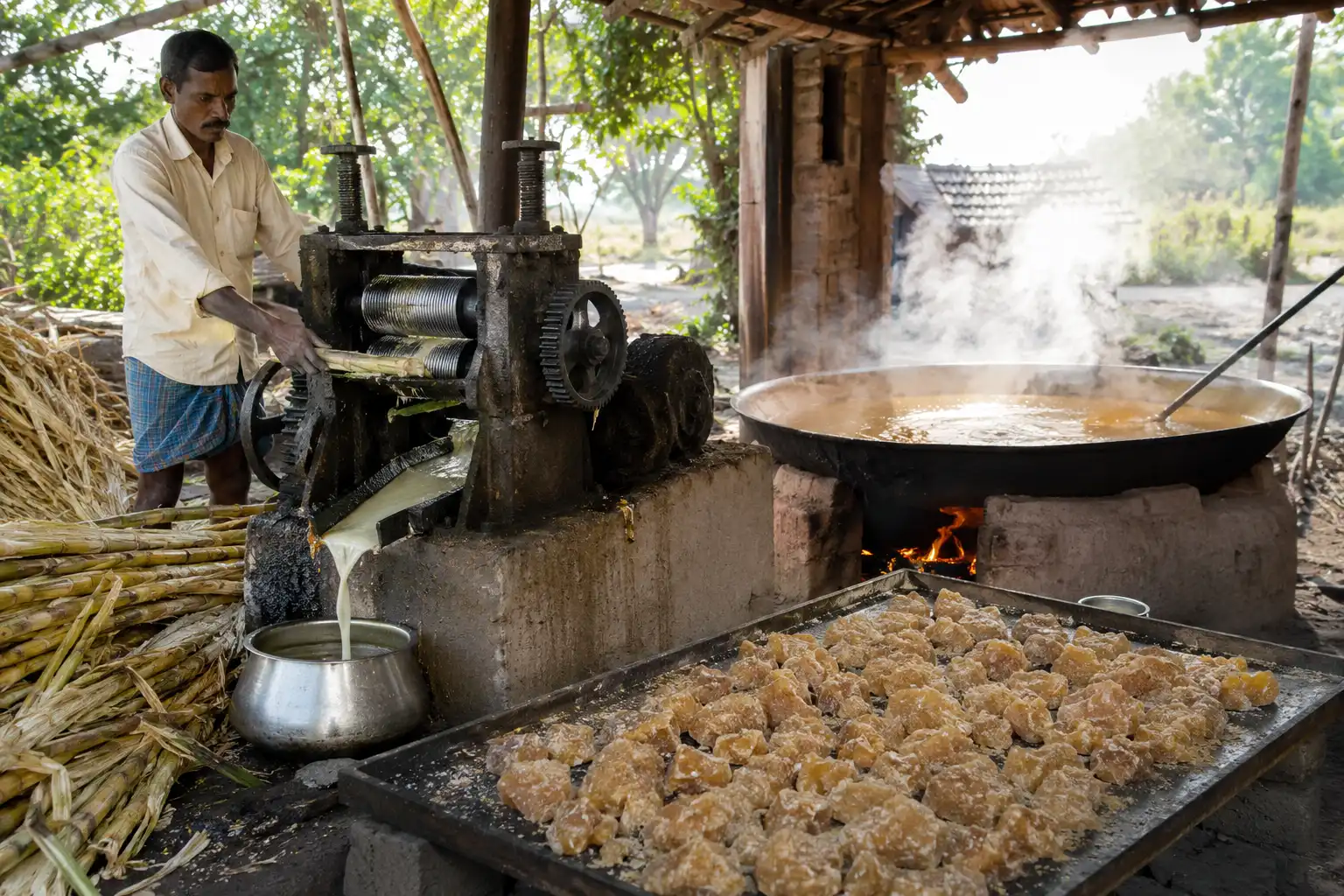
India’s real claim to fame is sugar itself. Before that, people just chewed the cane or drank the juice. Indian cooks and chemists learned to boil the juice down and crystallize it into solid sugar. They refined that craft during the Gupta era, around 350 CE. The very word sugar comes from the Sanskrit sharkara, meaning grit or gravel. The word candy traces to another Sanskrit word, khanda. From India, the skill of turning cane juice into sugar moved on to Persia and China.
Is Sugarcane Indigenous to India?
The sweet cane grown for sugar is not originally native to India. That noble cane came from New Guinea. Still, a wild cousin, Saccharum spontaneum, does grow wild across India and much of Asia. So India is not the birthplace of the sweet crop, but wild cane is native there. And India is the true home of sugar as we know it.
How Did Sugarcane Reach the Americas?
Sugarcane reached the Americas in 1493. Christopher Columbus carried cane cuttings on his second voyage and planted them on the island of Hispaniola. That first arrival came near the end of a long westward march.
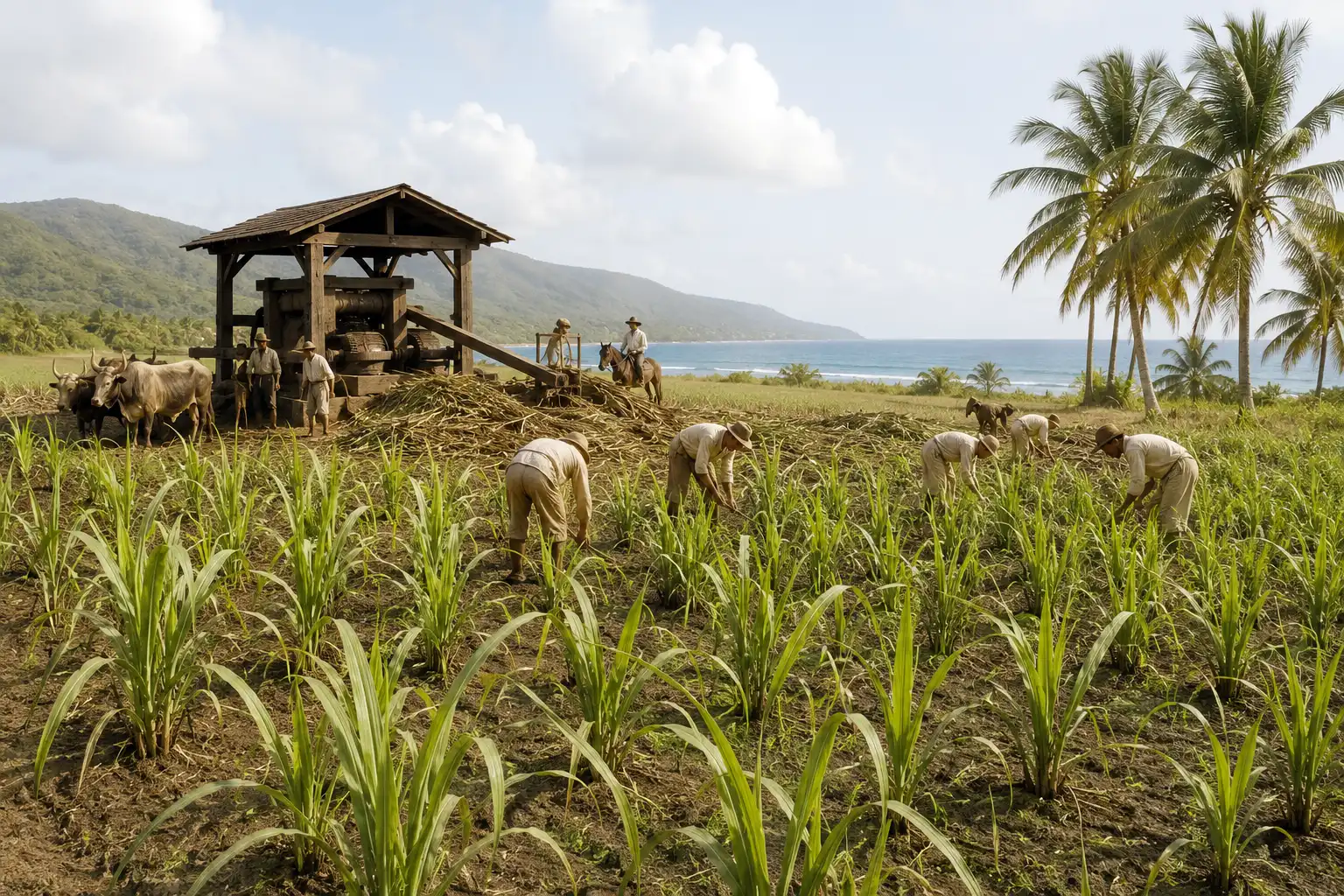
From India, sugar-making moved into Persia. After the 7th century, Arab traders carried cane and the craft westward. They took it across the Middle East, into Egypt and North Africa. From there it reached the Mediterranean, including Sicily and Cyprus. Europeans then grew cane on the Atlantic islands. Portugal planted it on Madeira from 1425, and Spain grew it on the Canary Islands. Columbus took his cuttings from the Canaries.
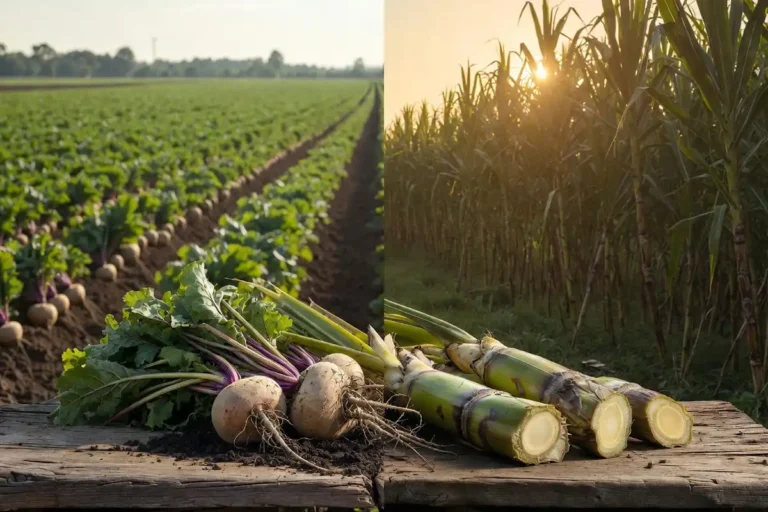
Those first Caribbean plantings struggled. Growers chased gold more than crops. Once experts arrived, cane took hold, and the first real harvest came around 1501. After that, plantations spread fast across the Caribbean and Brazil. Cane sugar is only one source of table sugar, by the way. The other, beet sugar, is a much later European idea, and how cane compares to sugar beets is a separate story.
Where Does Sugarcane Grow Now?
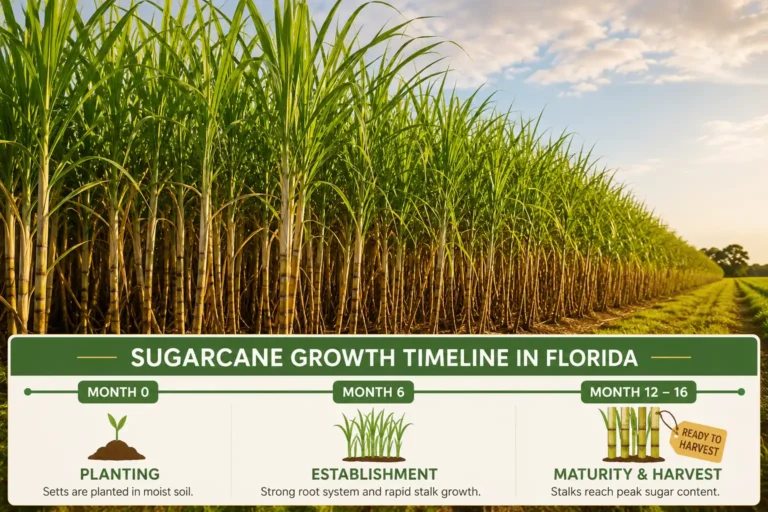
Today sugarcane grows across the world’s warm tropical and subtropical belt. Brazil and India lead global output by a wide margin. If you want the current rankings, here is which country grows the most of it today. In the United States, cane grows mainly in Florida, Louisiana, and Texas. For a closer look, see the US regions where cane is grown today.
Bottom Lines
Sugarcane began as a wild grass in New Guinea, thousands of years ago. Farmers there bred it sweet. Austronesian sailors spread it across Asia, India turned it into sugar, and ships finally carried it to the Americas. For a crop most Americans treat as ordinary, that is a long way from home. It is a good reminder that almost every plant in the fields started somewhere else.