How Many Tons of Corn Silage Per Acre? Yields and Estimates
Corn silage feeds cattle across much of the country, and the tonnage you cut per acre sets your winter feed budget. That number moves with grain yield, moisture, and hybrid. Knowing how many tons of corn silage per acre to expect helps you plan storage before harvest.
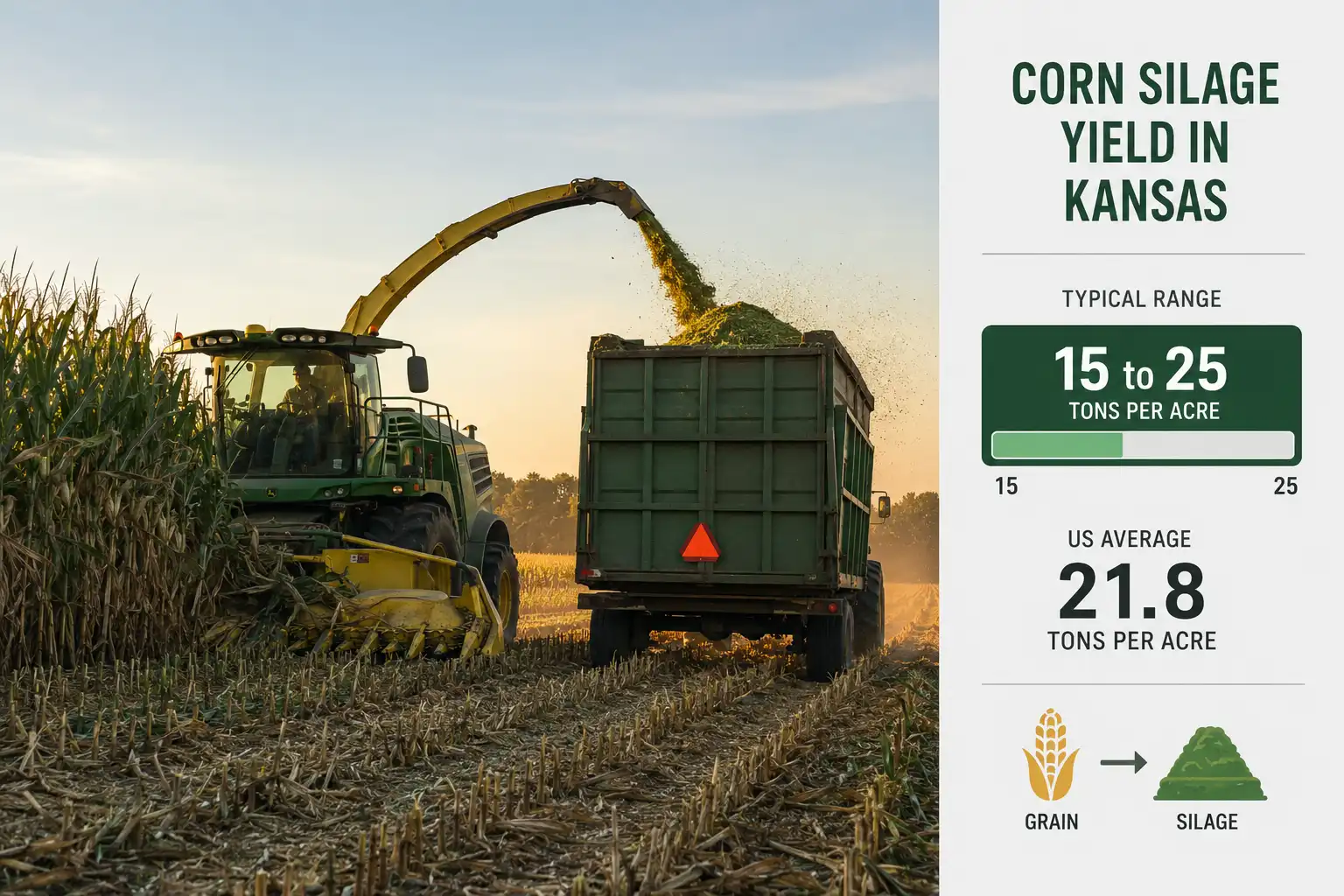
The corn silage you get per acre usually lands between 15 and 25 tons at 65% moisture. The 2025 US average was about 21.8 tons, while irrigated Western fields can top 30.
How Many Tons of Corn Silage Per Acre Can You Expect?
Most fields cut 15 to 25 tons per acre at 65% moisture. That range covers the bulk of dryland and irrigated corn across the Corn Belt and Great Plains. USDA pegged the 2025 national average near 21.8 tons per acre, up from 20.2 in 2024.
Where you farm shifts the number a lot. For instance, irrigated corn in the West runs the highest. Idaho averaged about 31 tons per acre in 2025, and Arizona came in near 29. California held around 26 to 27 tons. Wisconsin, the top silage state, averaged about 22 tons on a huge base of acres.
Here is a simple way to picture the spread:
- Drought-stressed dryland: 8 to 15 tons per acre
- Average dryland to good ground: 18 to 22 tons per acre
- Silage-specific hybrids with strong fertility: 24 to 28 tons per acre
- Full irrigation in the West: 28 to 32 tons per acre
In Kansas, dryland fields swing with July and August rain. A wet summer pushes me toward the top of that middle band. A dry one drops it fast.
What Is a Good Corn Silage Yield?
A good corn silage yield sits around 20 to 25 tons per acre at 65% moisture on solid ground. Anything above 25 tons means strong fertility, good moisture, and a hybrid bred for tonnage. Below 15 tons usually points to drought, thin stands, or short-season stress.
Do not judge your field against the national number alone. Judge it against the grain yield that same field would make. That comparison tells you if the crop performed or if you left tons in the field. Push the levers that raise crop yield and your silage tonnage climbs with them.
How Do You Estimate Silage Tonnage From Grain Yield?
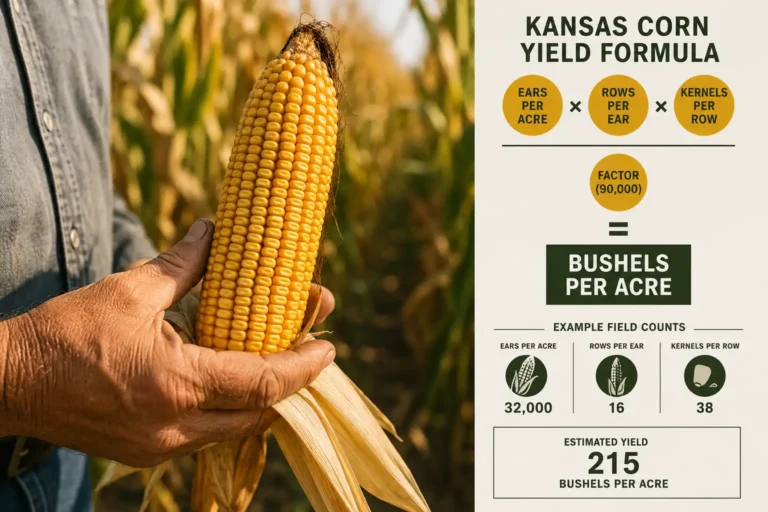
For healthy corn, figure about 0.135 tons of 65% silage for every bushel of grain that same field would make. So a field with 180-bushel grain potential should cut close to 24 tons of silage per acre. Iowa State and other land-grant programs use this rule as a field starting point.
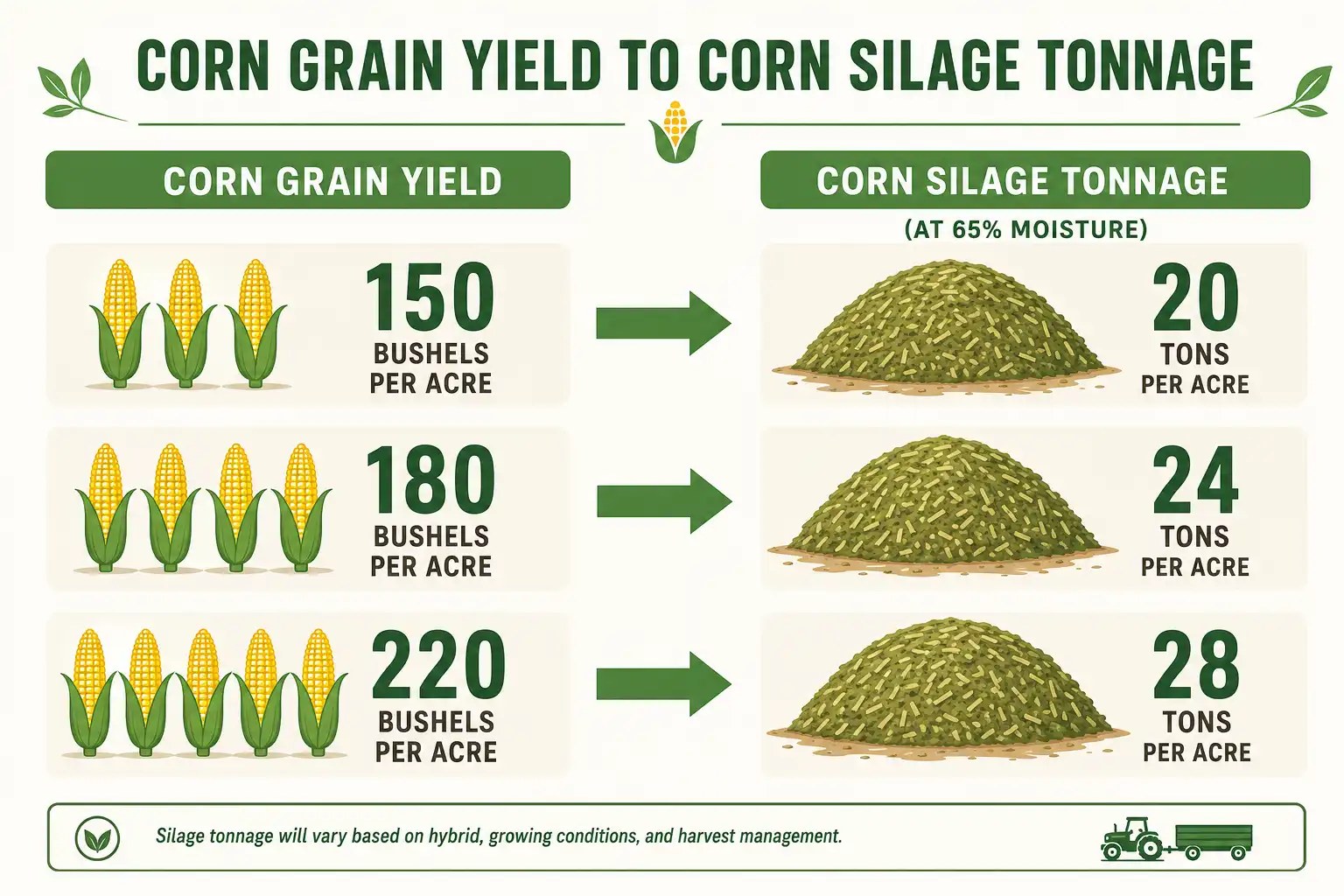
A quick worked example:
- 150-bushel grain potential: about 20 tons of silage
- 180-bushel potential: about 24 tons
- 220-bushel potential: about 28 tons
Stressed corn breaks the pattern. Drought-hit corn makes more silage per bushel, closer to 1 ton for every 5 to 6 bushels of grain. That happens because you cut a lot of stalk with little grain filling the ear. So a hail-beaten or dry field can still put up decent tonnage even when the grain number looks ugly.
Grain weight matters here too, since shelled corn is measured in 56-pound bushels. Check the weight of a bushel of corn before you run the math. That number stays standard across grades.
How Does Moisture Change the Tons Per Acre?
Moisture changes the tonnage completely, so every silage number needs a moisture reference. Standard corn silage is quoted at 65% moisture, which is 35% dry matter. Cut the same crop wetter and it weighs more per acre. Cut it drier and it weighs less, even though the feed inside is the same.
To compare fields fairly, convert to dry matter. Then multiply as-fed tons by 0.35. A 20-ton field at 65% moisture holds about 7 tons of dry matter. A 24-ton field holds about 8.4 tons of dry matter.
Always ask the moisture when someone quotes you a silage yield. A 25-ton field at 70% moisture carries less feed than a 22-ton field at 62%. Dry matter is the honest number.
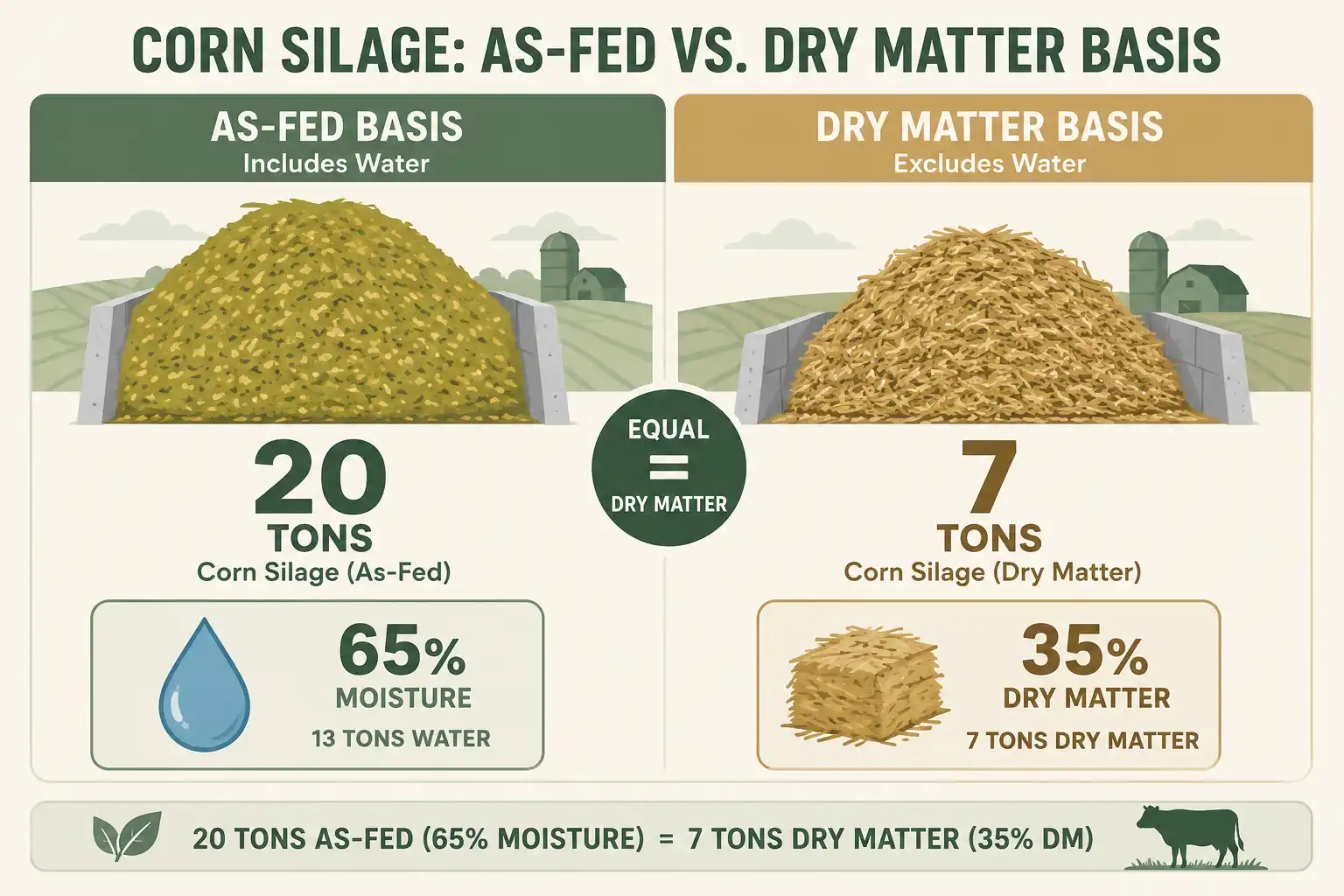
Harvest moisture also sets your tonnage on chopping day. Target 62 to 68% whole-plant moisture, with kernels around half to two-thirds milk line. Chop too late and you lose tonnage and packing quality. Chop too early and you haul water and lose dry matter to seepage.
How to Estimate Standing Silage Yield in the Field
You can estimate standing silage two ways: from plant height or from a whole-plant weight sample. Both give you tons per acre before the chopper rolls.
The Plant-Height Method
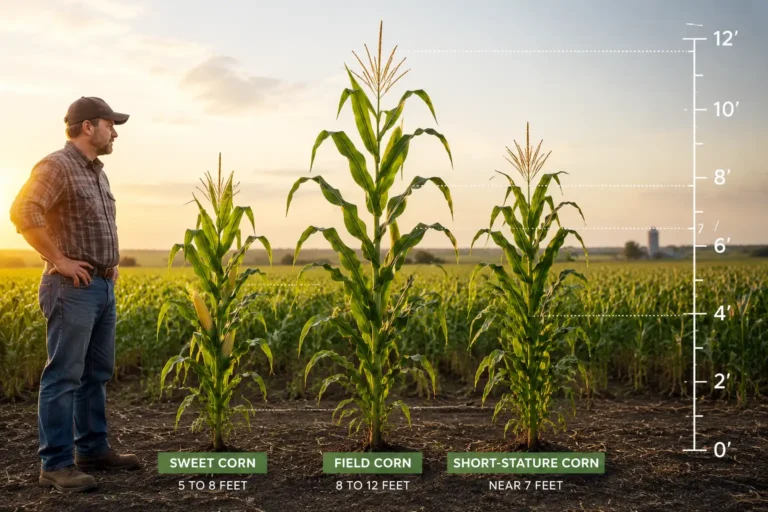
For corn with little or no grain, each foot of plant height gives about 1 ton of silage per acre. Measure the stalk but leave out the tassel. A 5-foot earless plant works out to about 5 tons per acre at 30 to 35% dry matter. This method shines on drought or hail fields where the ears never filled. How tall your corn stalks grow drives this estimate directly.
The Whole-Plant Weight Method
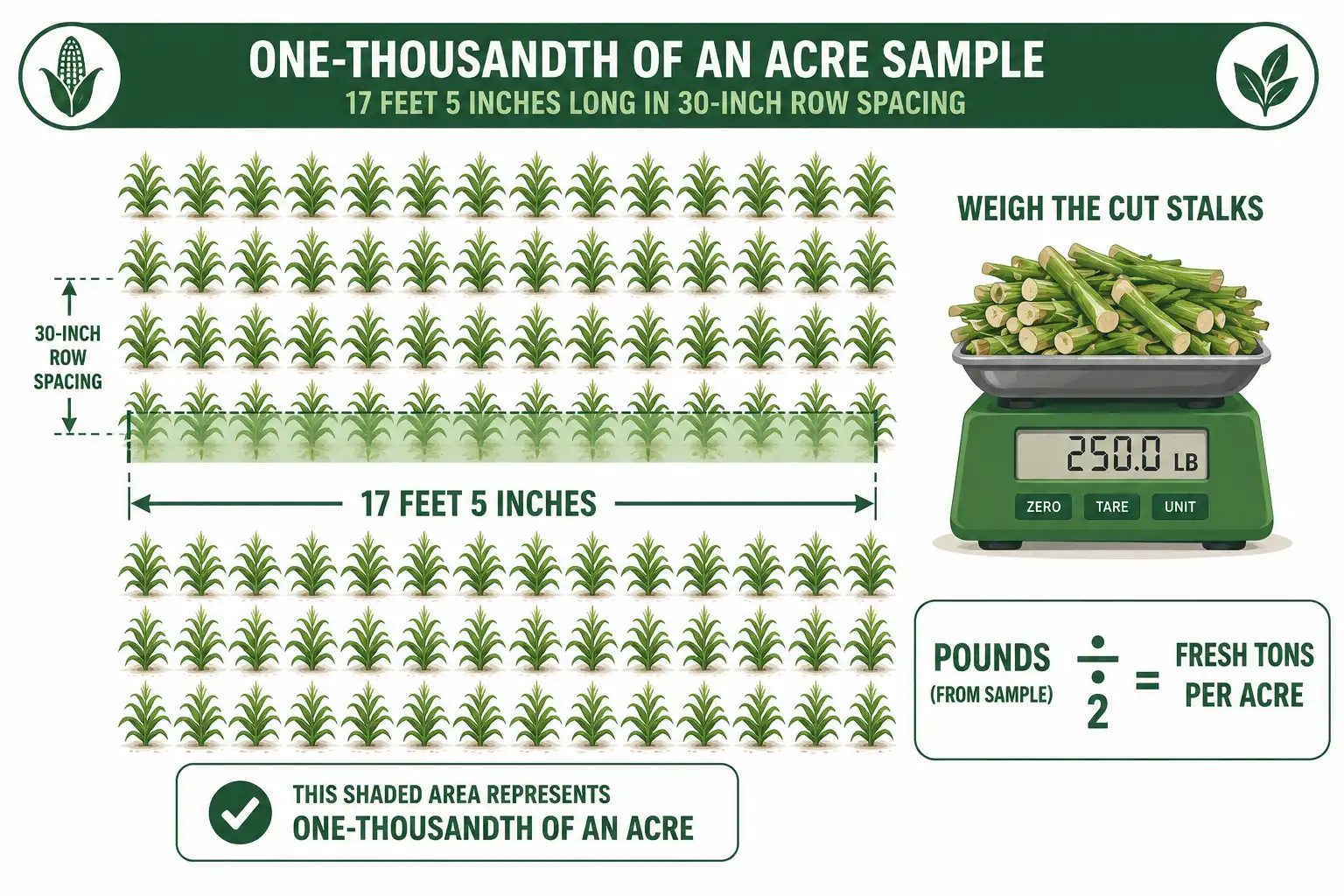
This one is the most accurate. Still, it takes only five minutes and a hanging scale. Measure off 17 feet 5 inches of a single row in 30-inch spacing. That length equals 1/1000 of an acre. Cut every plant at chopping height, weigh the whole pile in pounds, then divide by 2. The result is your fresh tons per acre.
For other row widths, adjust the length. Use 14 feet 6 inches for 36-inch rows, or 26 feet 1 inch for 20-inch rows. Sample at least three spots per field and average them. That way one thin or lush strip does not throw off the whole number.
What Affects How Many Tons You Cut Per Acre?
Five things drive your silage tonnage more than anything else: moisture, hybrid, plant population, fertility, and harvest timing. Get these right and you sit at the top of your yield range.
Moisture leads the list. Corn is a thirsty crop, and silage tonnage tracks water almost one to one in the West. That is why irrigated fields double the tonnage of stressed dryland. Working out the water needs for a crop early in the season pays off at the chopper.
Hybrid choice comes next. Silage-specific and BMR (brown midrib) hybrids are bred for whole-plant tonnage and digestibility, not just grain. So they often out-yield dual-purpose corn on both tons and feed value.
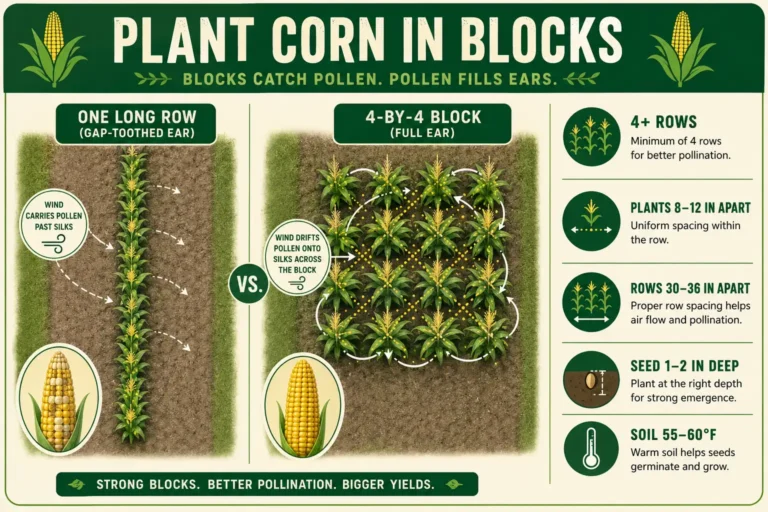
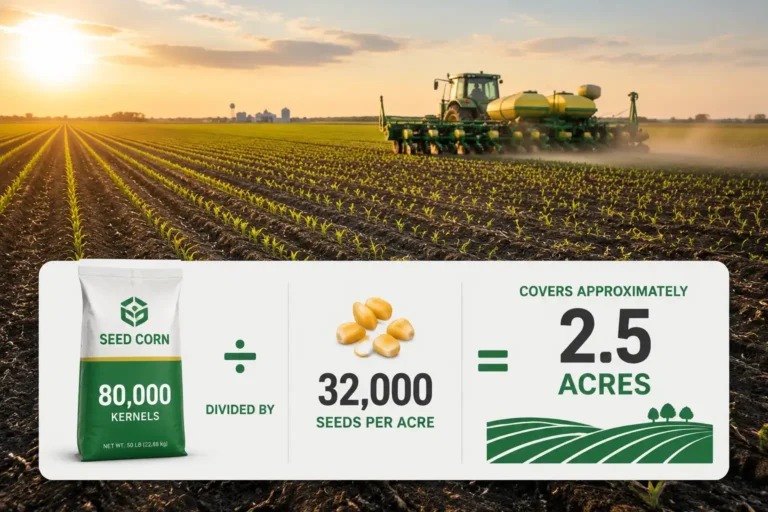
Plant population matters more for silage than for grain. Silage corn usually runs 2,000 to 4,000 seeds per acre higher than grain corn. You want stalk mass, not just ears. Dialing in your corn seeding rate per acre sets the ceiling on tonnage.
Fertility fuels the whole plant. Silage removes far more nutrients than grain harvest, because you haul off the stalk and leaves too. Matching your fertilizer rate for corn to that removal keeps next year’s ground from falling behind.
Harvest timing seals it. Chop at the right whole-plant moisture and you bank both tonnage and quality. Miss the window and you give tons back.
Bottom Line for Your Silage Pile
Plan on 15 to 25 tons of corn silage per acre at 65% moisture. Aim for 20 to 22 tons on decent ground. Estimate your own field from grain yield at about 0.135 tons per bushel. Then check it with a whole-plant weight sample before harvest. Water, hybrid, population, and fertility decide where you land in that range. Nail those, ask the moisture on every quote, and your feed budget will pencil out.