Why Are Autumn Crisp Grapes So Big? Breeding, Sprays, and Care
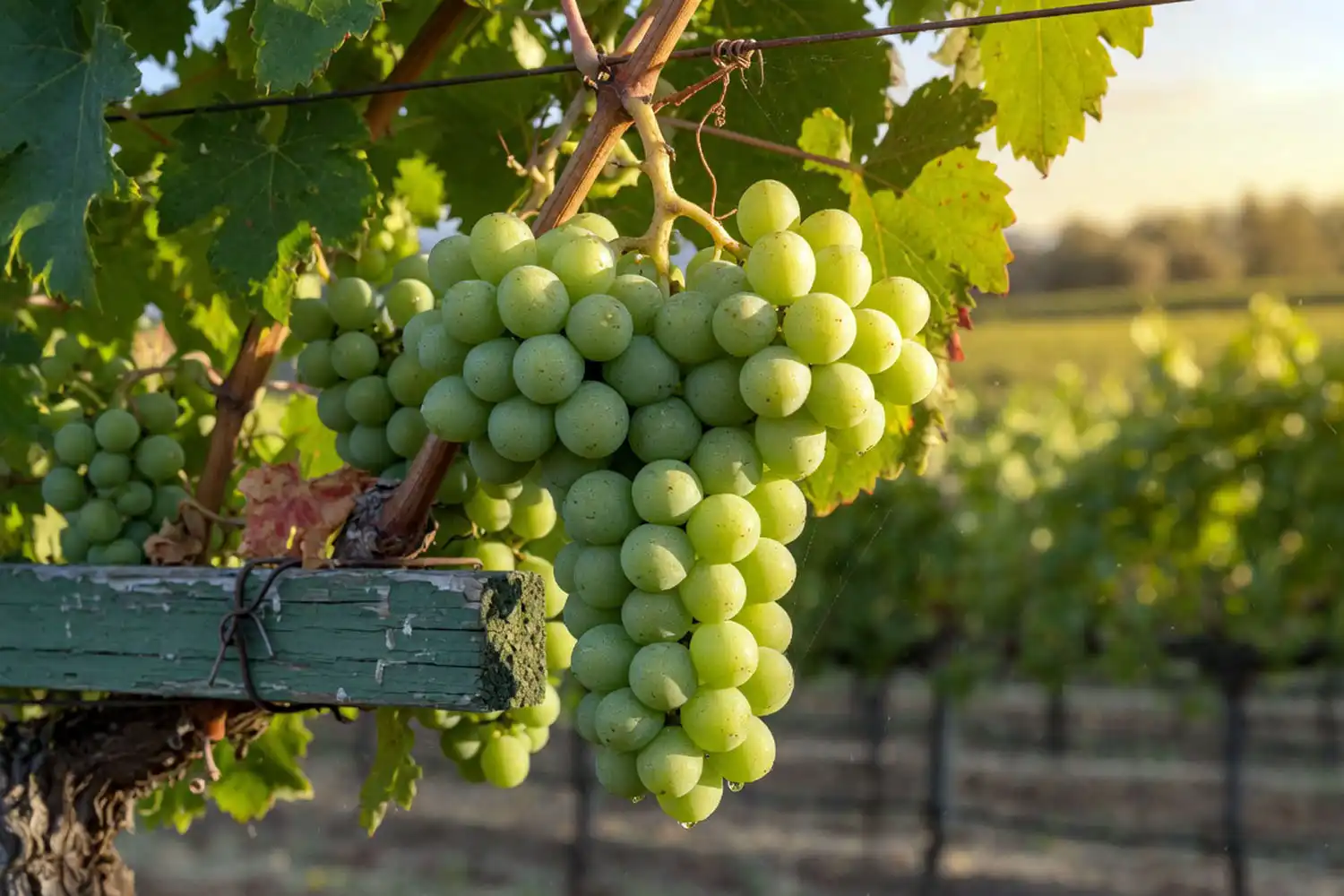
Autumn Crisp grapes stand out for their size at the grocery store. They are noticeably bigger than most common table grapes. Why are Autumn Crisp grapes so big? The answer comes down to breeding, careful growing practices, and a few techniques vineyards use to push size.
Autumn Crisp grapes are so big because Sun World bred them for large berries, then growers boost size with gibberellic acid sprays, cluster and berry thinning, trunk girdling, and precise drip irrigation that channels the vine’s energy into fewer, larger fruits.
What Are Autumn Crisp Grapes?
Autumn Crisp is a proprietary green seedless table grape variety developed and licensed by Sun World International. It’s a Vitis vinifera selection bred for crisp texture, mild sweetness, and unusually large berries. The variety goes by trade names like Sweet Globe in some markets and ripens late in the California season, usually from August into October.
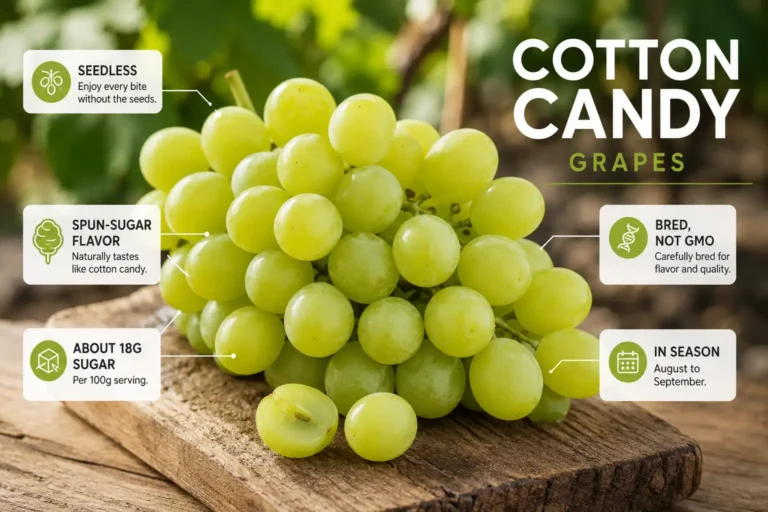
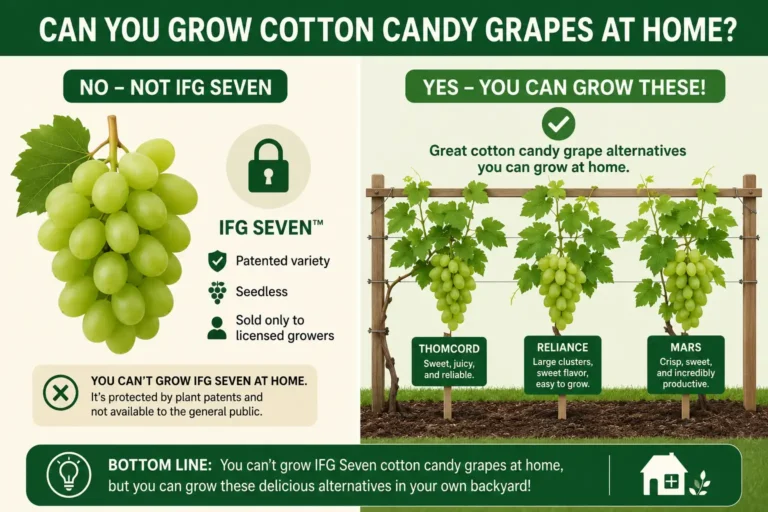
It sits in the same premium category as other Sun World varieties and competes with newer large-berry types like Cotton Candy. If you want to see how engineered flavors stack up next to size-focused varieties, our breakdown of the cotton candy grape variety covers that side of modern table grape breeding.
Why Are Autumn Crisp Grapes So Big?
Autumn Crisp grapes are so big because of a stacked set of factors: a genetic base built for size, growth regulator applications, vineyard thinning, girdling, and tight control over water and nutrients. No single thing makes the berry. It’s the whole system working together.
Genetic Breeding Behind the Variety
The size starts in the DNA. Sun World’s breeding program selected parent vines for large berry size, firm flesh, and uniform clusters. Autumn Crisp inherits a naturally bigger berry potential than older varieties like Thompson Seedless. Plant breeders measured berry weight, length, and width across thousands of seedlings before this cultivar made it to commercial release.
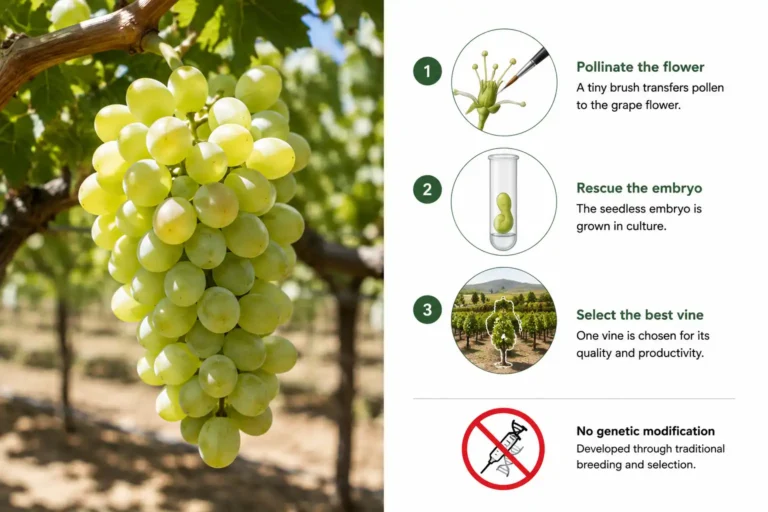
This is conventional breeding, not GMO work. Growers cross-pollinate selected parents and screen the offspring over many seasons. The same approach produced many of today’s seedless grape variety selections you find in produce aisles.
Gibberellic Acid Sprays
Gibberellic acid (GA3) is the single biggest reason commercial table grapes look as large as they do. GA3 is a natural plant hormone that stretches cells and elongates berries. California growers spray it on grape clusters at bloom and again at berry set. On Autumn Crisp, GA3 can push individual berry weight up by 30 to 50 percent compared to untreated vines.
The University of California Cooperative Extension has published timing guides on gibberellic acid use in table grapes showing that rate and timing matter as much as the spray itself. Too much GA3 thickens skins and cracks fruit. The right dose grows large, clean berries.
Cluster and Berry Thinning
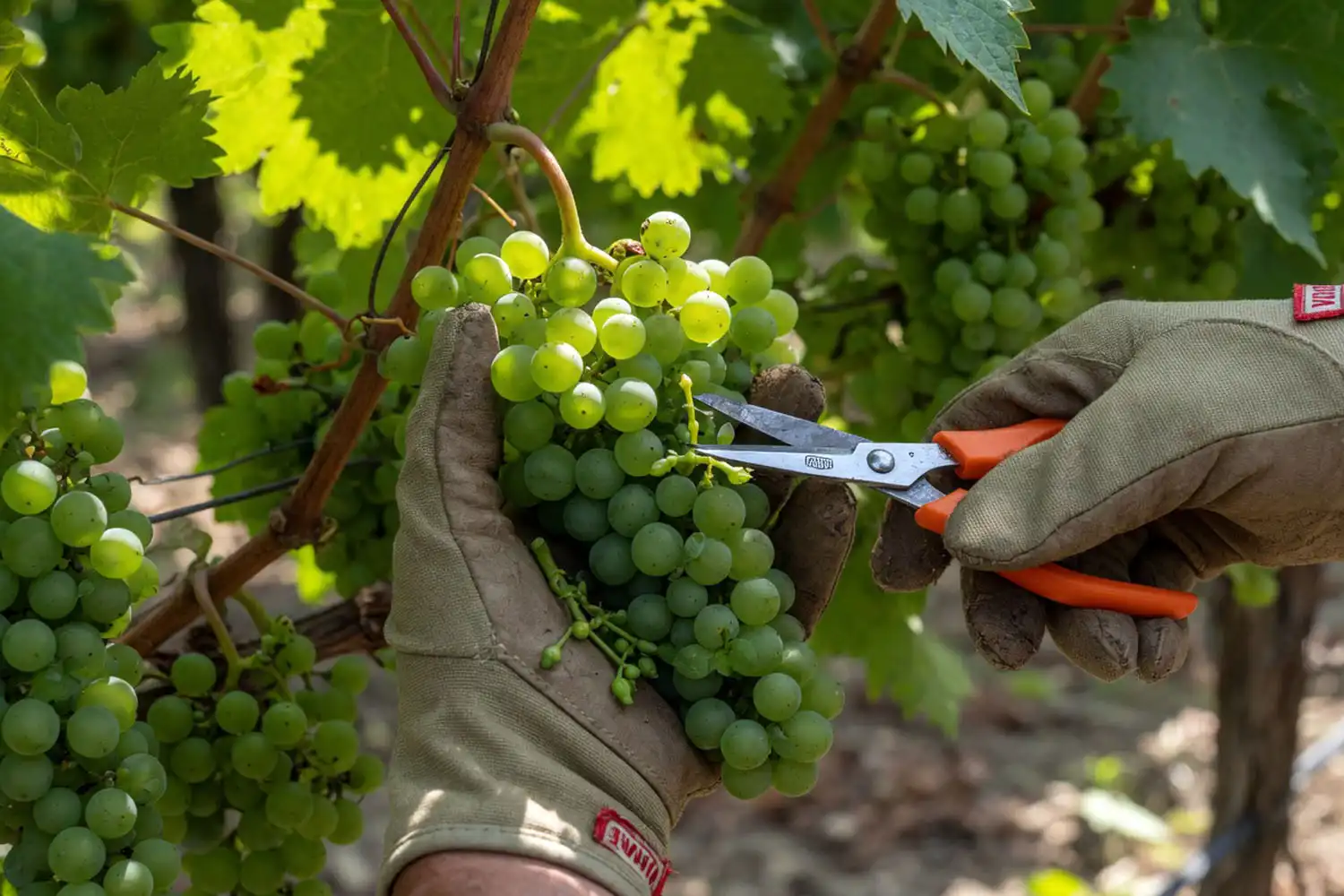
Thinning works like pruning fruit on an apple tree. Crews walk the vineyard and cut off extra clusters per shoot, then trim shoulders and tips off the clusters that stay. Some operations also pull individual berries by hand. Fewer berries on the vine means each remaining berry pulls more sugar, water, and nutrients from the plant.
On a heavy crop, an unthinned vine spreads its resources across thousands of small berries. A thinned Autumn Crisp vine drives that same energy into far fewer berries, and they swell larger as a result.
Trunk Girdling for Sugar Direction
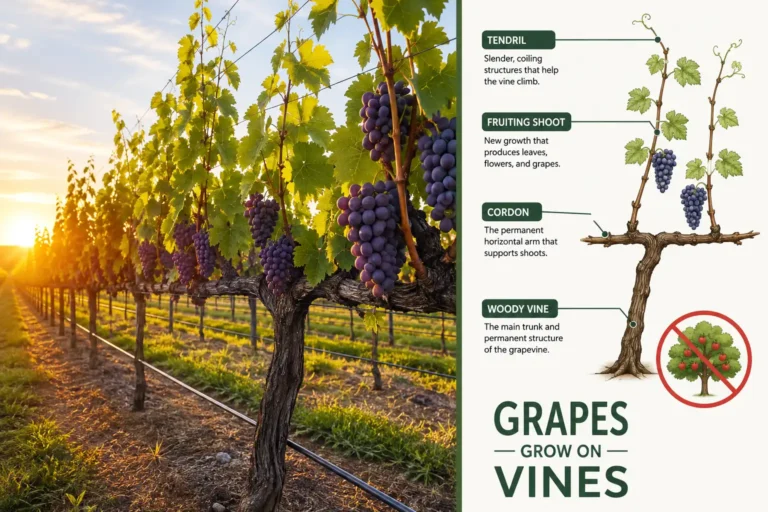
Girdling, also called cincturing, is an old vineyard practice still used on premium table grapes. A worker removes a thin ring of bark from the trunk or cordon just after berry set. The wound temporarily blocks sugars made in the leaves from moving down to the roots. Instead, those sugars stay up top and pour into the developing berries.
The result is bigger, sweeter fruit. The cut heals within a few weeks. Girdling is labor-intensive, which is part of why premium grapes like Autumn Crisp cost more at retail.
Drip Irrigation and Nutrient Management
Water control finishes the job. Autumn Crisp blocks in California’s Central Valley run on tight schedules using buried or surface drip lines. Growers feed water and fertilizer through the same lines using fertigation. Berries swell most during cell expansion, roughly four to six weeks before harvest, so growers ramp up water in that window and pull back at harvest to keep skins firm.
If you want a deeper look at how this irrigation method outperforms others for high-value crops, our comparison of drip irrigation systems walks through the trade-offs. Nutrient timing matters just as much. A vine starved of potassium during berry fill will produce small, soft fruit no matter how much GA3 you spray. A vine on a balanced fertilizer program hits target size every season.
Where Are Autumn Crisp Grapes Grown?
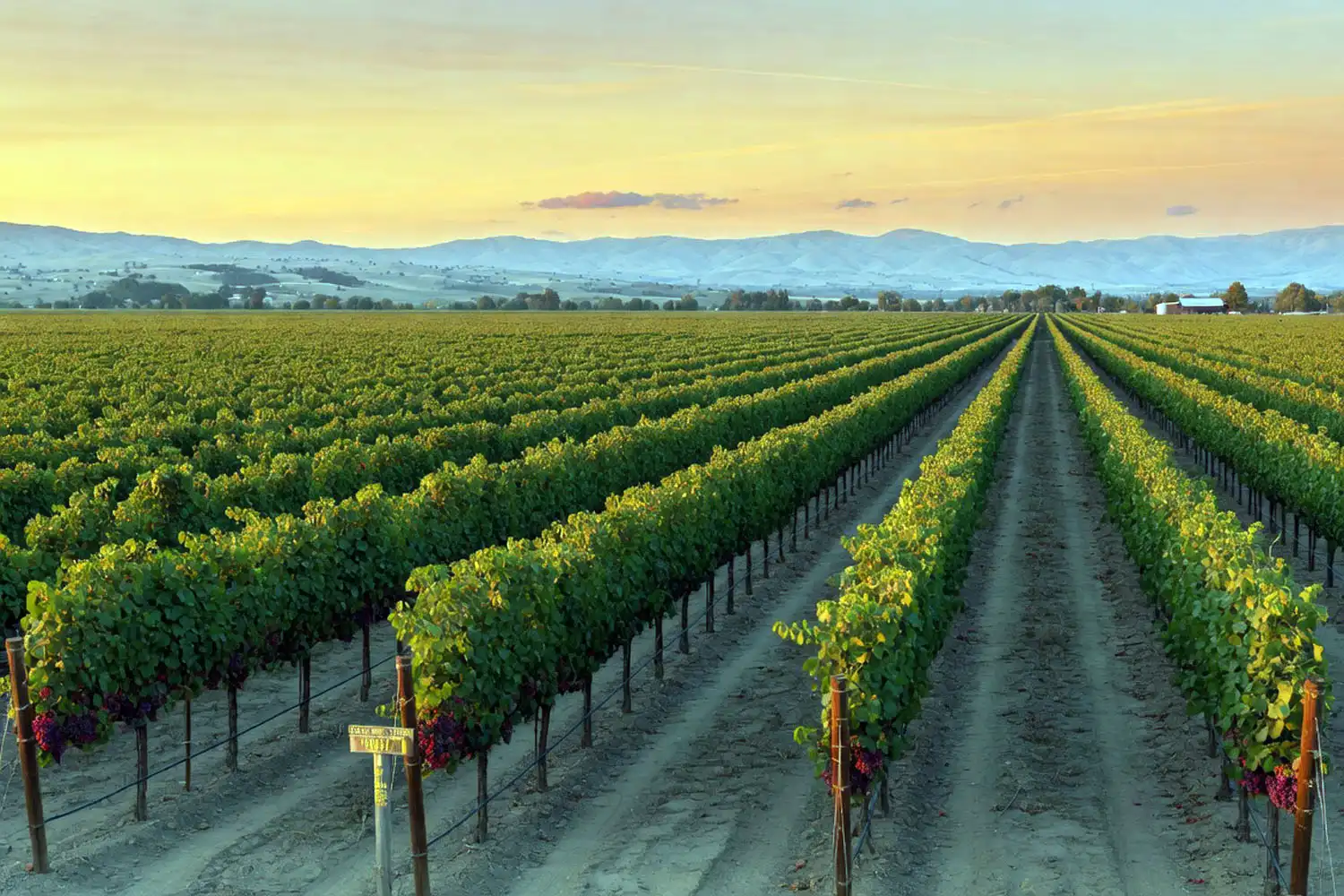
Most US-grown Autumn Crisp grapes come from California, especially the San Joaquin Valley around Bakersfield, Delano, and Arvin. The variety needs long, hot, dry summers and cool nights to develop sugar and color. California’s Mediterranean climate matches that perfectly.
Outside the US, licensed growers produce Autumn Crisp in Peru, Chile, South Africa, Spain, and Australia. That global footprint is why you find the variety in stores nearly year-round.
Are Autumn Crisp Grapes Natural or Modified?
Autumn Crisp grapes are bred through conventional cross-pollination, not genetic modification. They are a patented cultivar, which means Sun World owns the rights and licenses growers to plant them, but the breeding itself follows traditional methods. The large size comes from genetics combined with vineyard inputs, not from inserted DNA.
How Big Do Autumn Crisp Grapes Get?
A single Autumn Crisp berry typically measures 24 to 30 millimeters long, roughly the size of a small olive. Average berry weight runs 8 to 12 grams. A full retail cluster can weigh 1.5 to 2.5 pounds. Compare that to a standard Thompson Seedless berry at around 4 to 5 grams and you see why Autumn Crisp stands out in the produce display.
Do Bigger Grapes Mean Better Flavor?
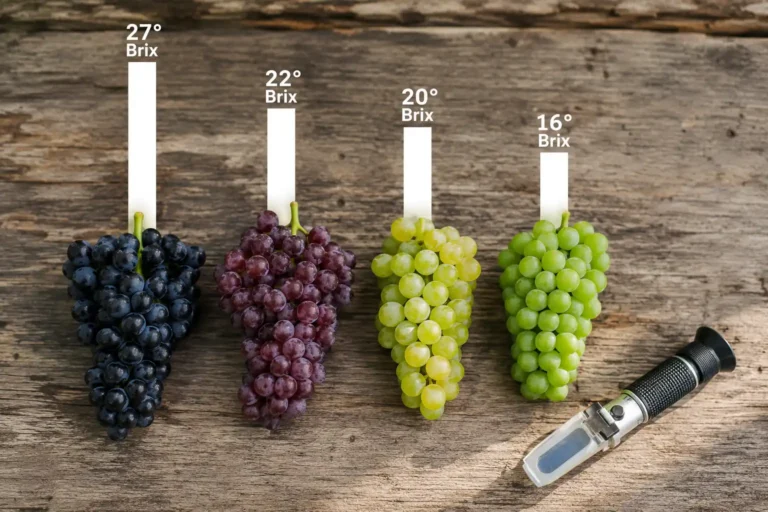
Bigger does not always mean better tasting. Autumn Crisp scores well on crunch and clean sweetness, usually around 17 to 19 Brix at harvest, but flavor depth depends on the season and the grower. Heavy GA3 use can dilute flavor if vines aren’t managed carefully. The best Autumn Crisp lots come from operations that balance size with controlled yields and proper harvest timing.
What This Means at the Grocery Aisle
Autumn Crisp grapes are big because everything in the system is engineered for size. The breeding sets the ceiling. Gibberellic acid, thinning, girdling, drip irrigation, and tight nutrition push the berry up to that ceiling. None of that is shady or unsafe. It’s modern table grape farming, and it’s the same playbook used on most premium varieties you find in stores today. When you bite into one, you’re tasting decades of vineyard science.