When Are Cotton Candy Grapes in Season? Full Timing Guide
Cotton candy grapes vanish from produce aisles for months at a stretch, and that timing confuses a lot of shoppers. Supply now comes from licensed growers on three continents. So when are cotton candy grapes in season, and which months actually deserve a trip to the store?
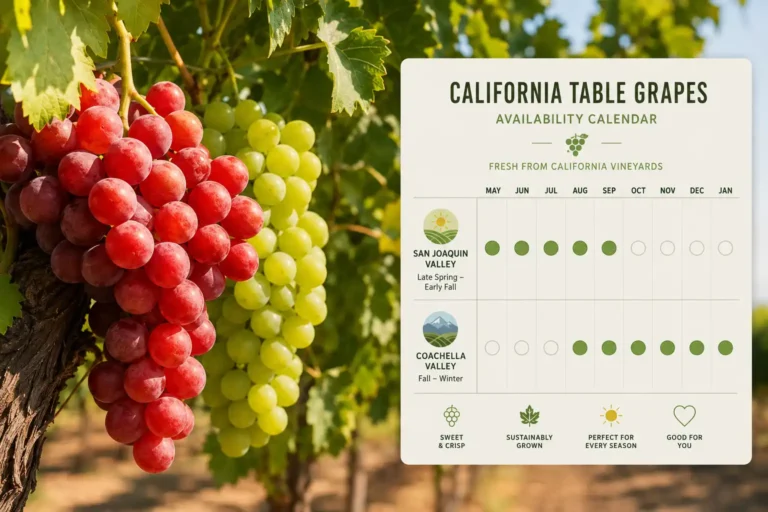
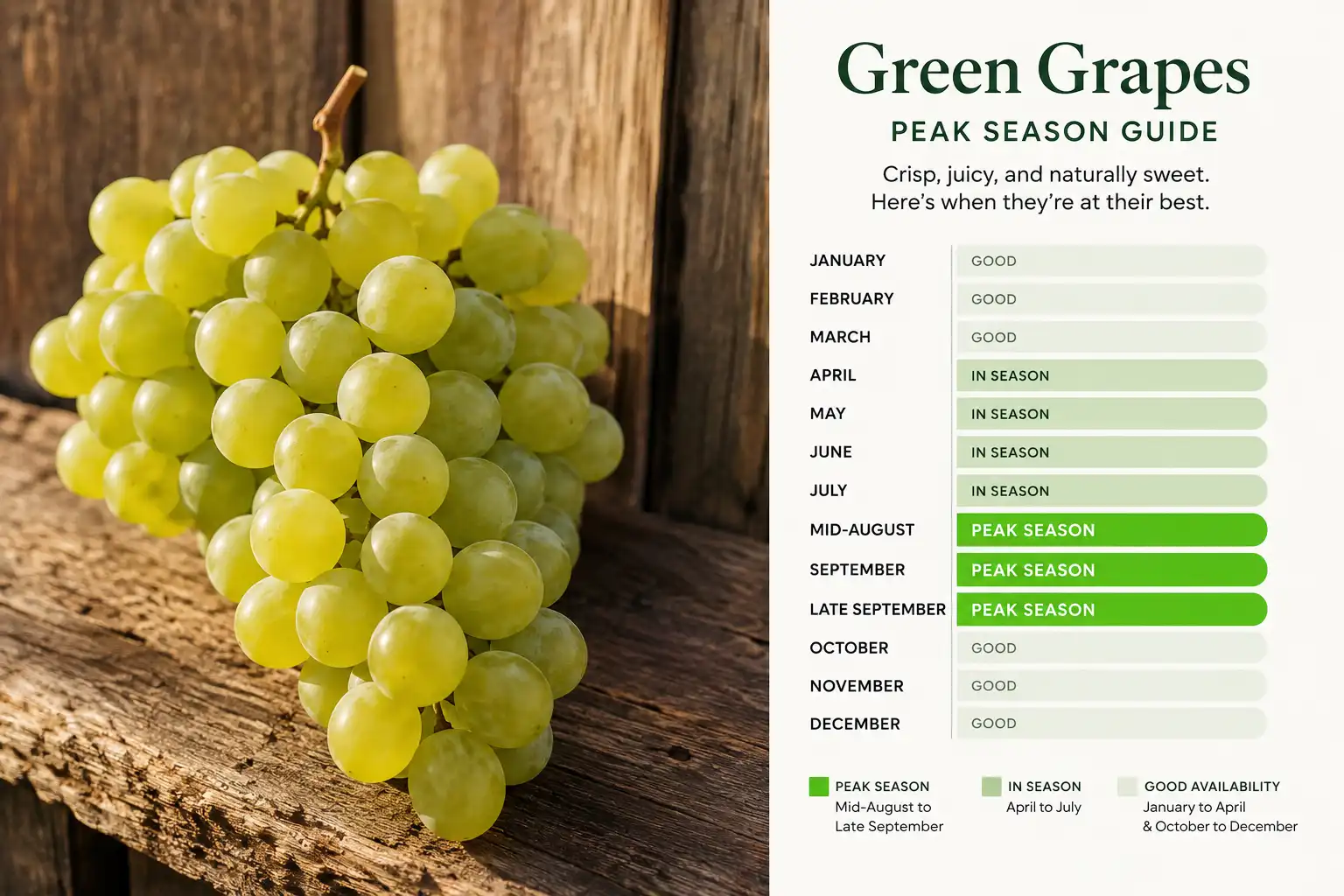
Cotton candy grapes are in season from mid-August through late September in California, which is the peak flavor window. Mexico covers April through July. Peru and Chile fill a scattered second window from January into April.
When Are Cotton Candy Grapes in Season by Growing Region?
Peak season runs mid-August through late September, and that fruit comes out of California. Four separate sourcing windows now stretch availability across roughly eight months. Only about six weeks of it delivers full flavor.
| Source region | Typical window | What to expect |
|---|---|---|
| California (San Joaquin Valley) | Mid-August to late September | Best flavor, freshest fruit, widest distribution |
| Sonora and Jalisco, Mexico | April to late July | Good volume, quality varies by ranch |
| Peru | January to April | Most common winter label, flavor varies |
| Chile and Brazil | December to March | Small scattered lots |
| Spain, Egypt, South Africa | Late July to September | Rarely reaches US shelves |
Retailers also do not restock these on a fixed schedule. Supply arrives in waves, so a store can carry them one week and sell out the next.
Why Cotton Candy Grapes Have Such a Short Season
Three things keep the window narrow. First, this is a single grape variety, not a color category like red or green seedless. Second, a patent limits who can plant it. Third, the flavor itself fades fast after picking.
That last point matters more than most shoppers realize. The aromatic compounds behind the taste turn volatile in heat. Sugar holds up in cold storage, but the candy note does not. So growers pick within a tight ripeness band and move the fruit quickly.
The Variety Behind the Flavor
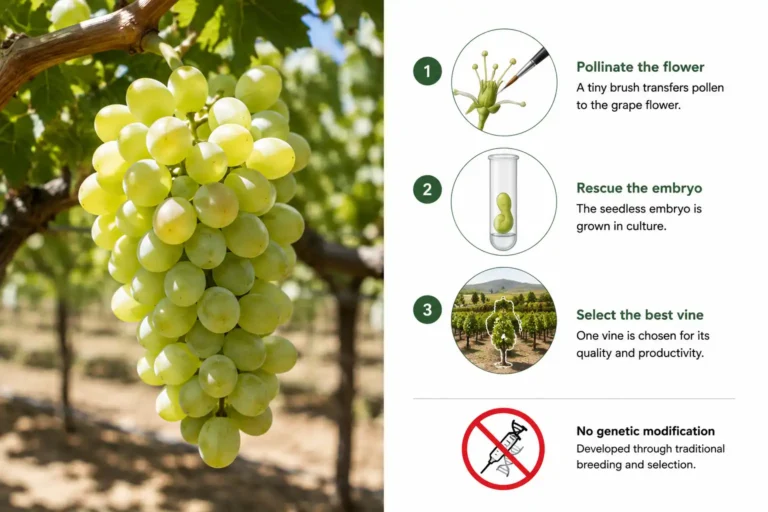
Horticulturist David Cain bred the variety at International Fruit Genetics in Bakersfield, California. The trade name covers a patented selection called IFG Seven, protected under US Plant Patent PP23399. Its parents include an unnamed interspecific Vitis selection from the University of Arkansas crossed with Princess, a standard green seedless.
That Arkansas parent carries the aromatic character. American grape species bring strong perfume, which ordinary table grapes lack entirely. The patent notes berries ripening around mid-August near Delano in Kern County, and that date still anchors the whole season. For more on the cotton candy grape flavor itself, the variety history covers where that taste came from.
The California Window Runs Mid-August Through Late September
Grapery, a grower in Bakersfield, holds the license to grow them in the US. Its published window runs mid-August through late September. Volume usually peaks in early September. A few stores stretch into early October on cold-storage fruit, though flavor drops noticeably by then.
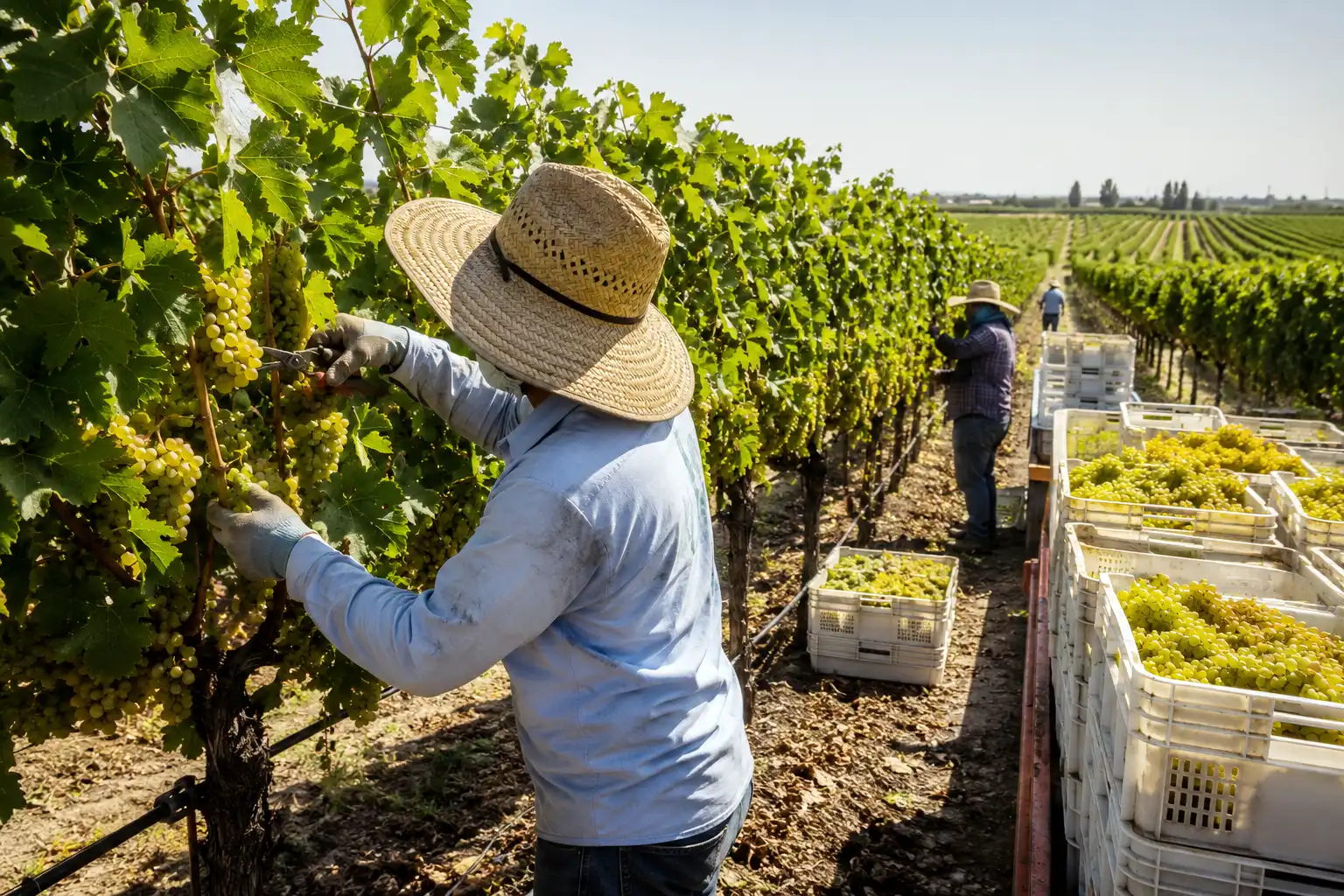
California fruit reaches most of the country within days of cutting. That short haul is exactly why the late-summer batch tastes strongest.
Why 2026 Timing Runs Early
Warm February and March weather pushed the 2026 California table grape crop two to three weeks ahead of normal. The California Table Grape Commission flagged that early start back in April. Coachella Valley growers started harvest in early May. San Joaquin Valley districts followed in mid to late June. Industry estimates put the statewide crop near 96 million boxes.
For 2026, then, watch for cotton candy grapes in late July rather than mid-August. Early bloom moves every variety forward, and this one shifts with the rest. The broader California grape season shows the same early pattern across all table types this year.
Mexico Extends the Season From April Into July
Mexican fruit gives shoppers a spring and early-summer window. Licensed growers in Jalisco start in April and run into May, and Divine Flavor markets most of that fruit. Sonora then takes over from mid-May through July, with the Caborca district finishing the deal in late July. Mexico’s 2026 crop sits near 20 million cartons.
Quality here swings more than California fruit does. Cooler springs delay sugar accumulation, and rushed lots taste flat. Still, a good Sonoran batch in June holds its own. Warehouse clubs and specialty chains usually carry this fruit.
South America Fills the Winter Gap
Peru, Chile, and Brazil ship counter-season fruit from roughly December through April. Peru dominates that window, and produce distributor Melissa’s lists January through April as its standard import period. Chilean and Brazilian lots show up in smaller volumes.
Winter fruit travels the farthest, which shows up in the eating. Ocean freight plus storage time strips out much of the aroma. Taste one before you commit to a three-pound clamshell if the store puts out samples.
Which Months Are Worth Watching
Late August and September win every year. Here is a practical ranking by month.
- Best: mid-August through late September, from California
- Solid: June and July, from Sonora, Mexico
- Fair: April and May from Jalisco, plus January through March from Peru
- Usually empty: October, November, and early December
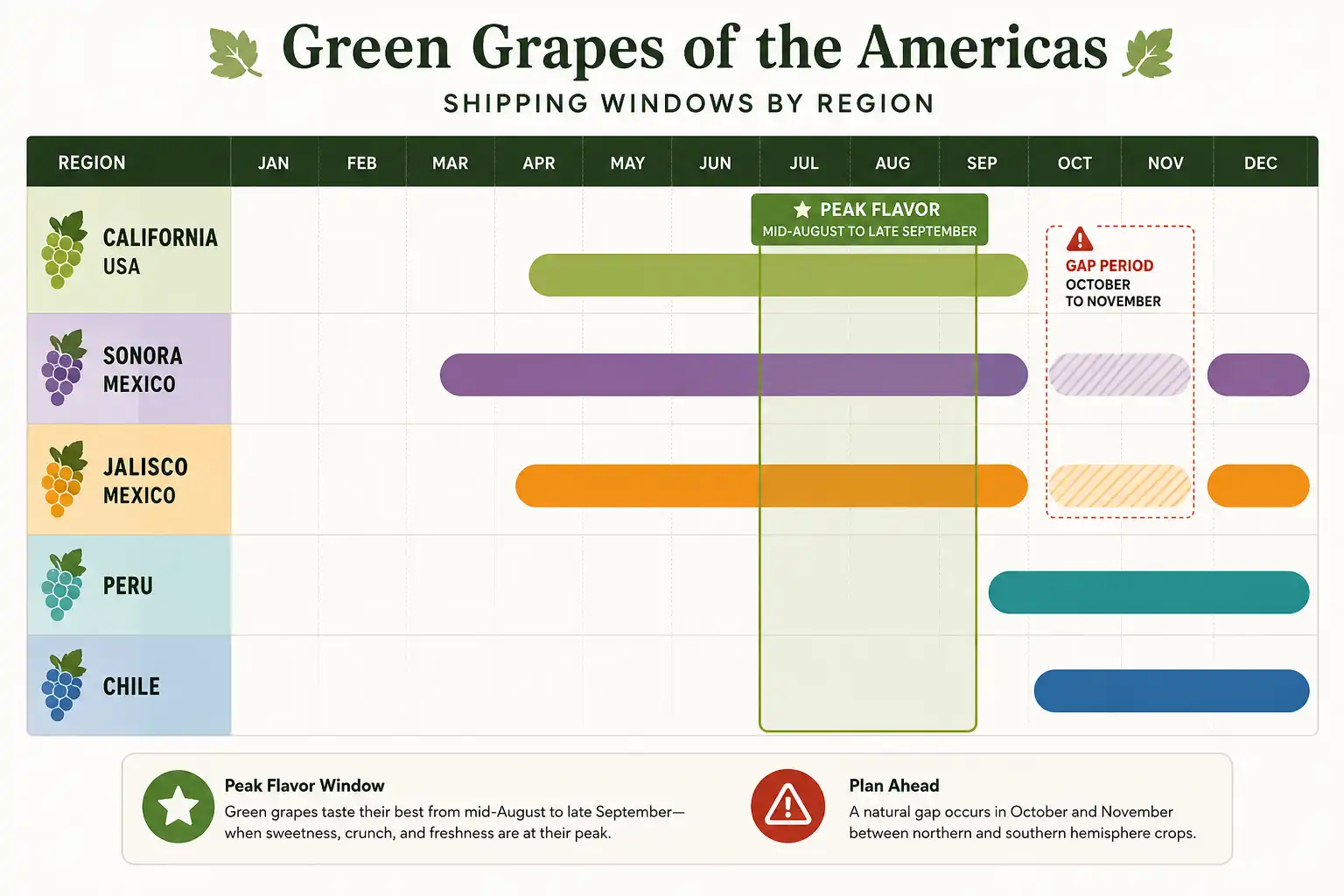
October through early December is the true gap. California finishes, and South America has not started. Produce clerks often say the season ended for good, which is where a lot of the confusion starts.
How to Tell If Cotton Candy Grapes Are at Peak Flavor
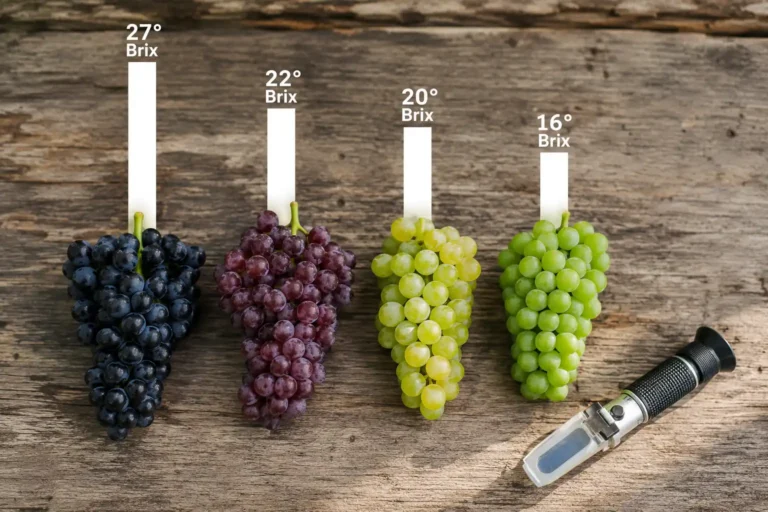
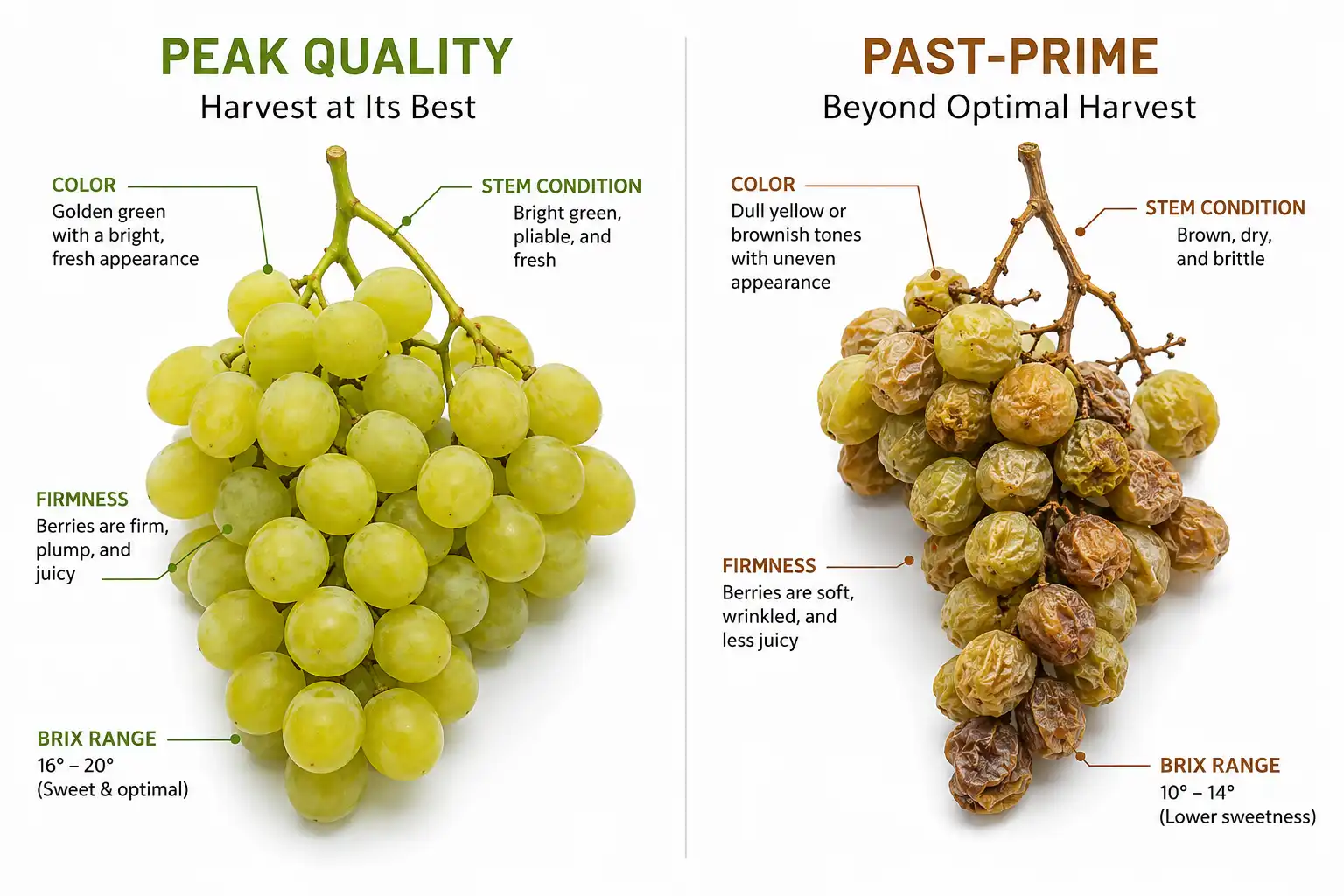
Taste one before you buy, because sugar and aroma both peak inside a narrow band. Growers target 18 to 22 Brix on this variety, and the candy note only reads clearly above roughly 18. For comparison, standard California table grapes ship at about 14 to 17.5 percent soluble solids.
Beyond a taste test, check four things:
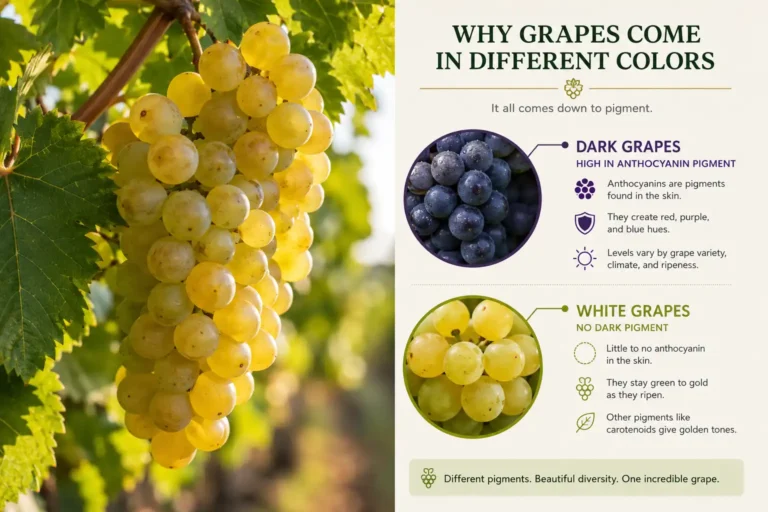
- Color. Peak berries run golden yellow with a pale green cast. Deep green means growers picked early.
- Stems. Look for green, pliable stems. Brown, brittle stems point to poor temperature handling, a signal UC Davis postharvest specialists rely on.
- Berry feel. Plump and firm, with a slight crunch. Soft berries have lost water.
- Bloom. That dusty wax film should still coat the skin. Rough handling rubs it off.
Chill them before the taste test too. Cold fruit reads unmistakably like spun sugar, while room-temperature fruit tastes more like toffee or caramel. Growers who track maturity in the field use a refractometer for checking grape sugar rather than guessing by eye.
One more thing worth knowing: grapes are non-climacteric. Sugar stops accumulating the moment the cluster leaves the vine, so a flat bag never improves on your counter. That rule holds for ripening off the vine across every table grape variety.
How to Store Cotton Candy Grapes After You Buy Them
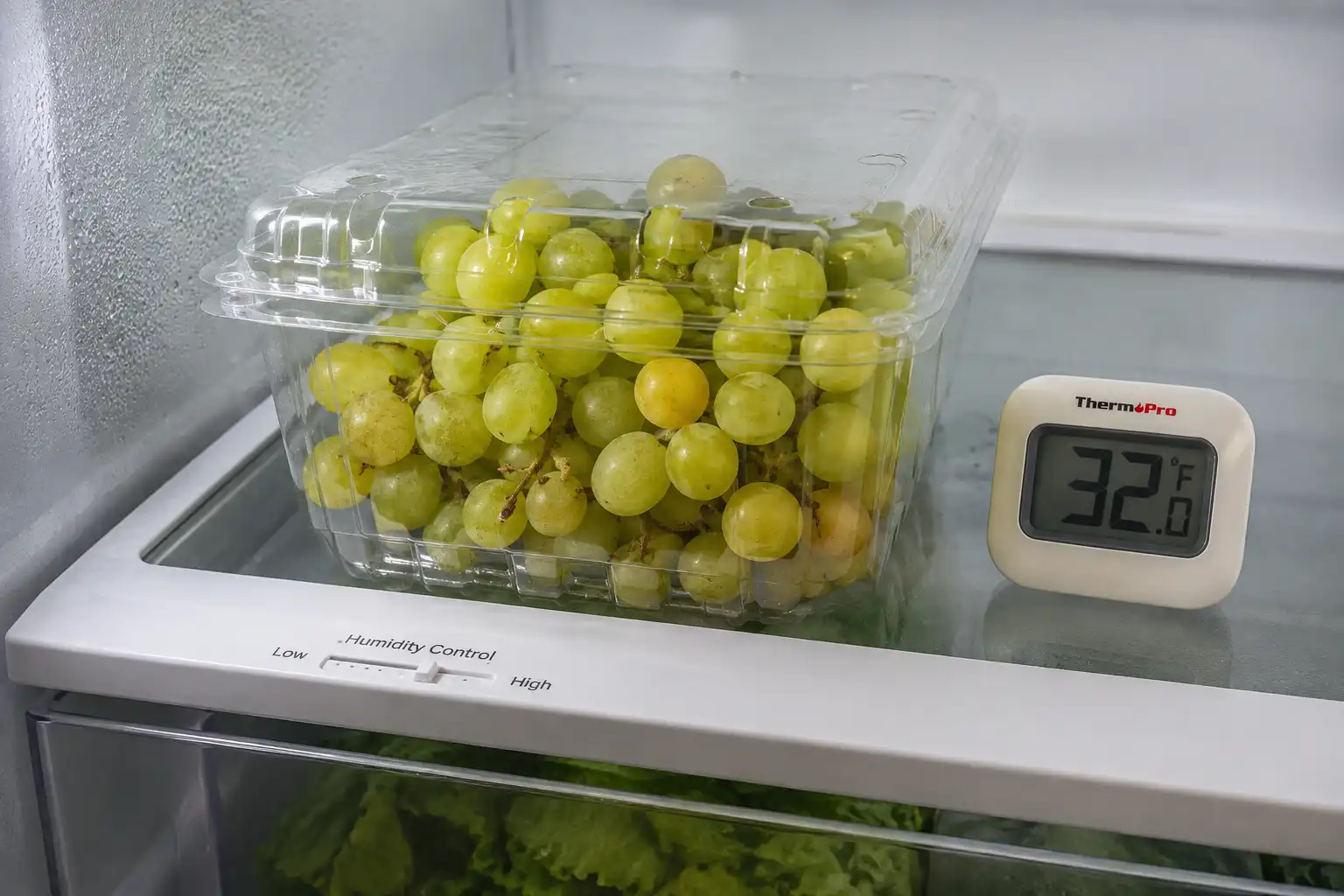
Get them cold fast, then leave them alone. Commercial coolers hold table grapes at 30 to 32 degrees F with 90 to 95 percent relative humidity. Your crisper drawer comes closest to that at home.
- Keep the clusters in the vented clamshell they came in. The vents balance airflow against moisture loss.
- Skip washing until you actually eat them. Surface water speeds up gray mold.
- Keep the container away from the direct cold-air vent, which dries stems out quickly.
- Eat within about a week. Sugar holds longer than aroma, so the candy note fades first.
Where to Find Cotton Candy Grapes During the Season
Warehouse clubs move the most volume, so start there. Costco and Sam’s Club carry large clamshells during both the Mexican and California windows. Trader Joe’s, Whole Foods, Sprouts, Kroger, Safeway, Publix, Aldi, and Walmart also stock them in season. Distribution shifts region by region, though.
Read the bag before you buy. Growers print the variety name and the country of origin on the label. That tells you which window you are buying from. Generic bags marked only “green seedless” hold something else entirely.
If your store never carries them, ask the produce manager to check the order guide. Chains also post arrivals on social media, which beats driving over on a guess.
Can You Grow Cotton Candy Grapes Yourself?
No, and that surprises people every season. The variety sits under an active US plant patent, and only licensed growers can plant it commercially. No nursery sells vines to home gardeners, and propagating cuttings would infringe the patent. Sellers advertising cotton candy grape vines online are almost always shipping something else.
Nobody outside that license grows these, myself included. Own rows run Concord-type labrusca instead. That aromatic punch is similar, and the vine survives a Great Plains winter. For anyone still curious about growing cotton candy grapes in a backyard, that guide covers what is realistic. For that grape-soda aroma off your own vines, the Concord grape season runs September into October across the Midwest.
Key Dates for Cotton Candy Grapes
Mark mid-August through late September as the window that matters. Shift it a week or two earlier in a warm year like 2026. Treat June and July Mexican fruit as a solid backup, and treat winter Peruvian fruit as hit or miss on flavor. Then taste before you buy, chill what you bring home, and eat it inside a week.