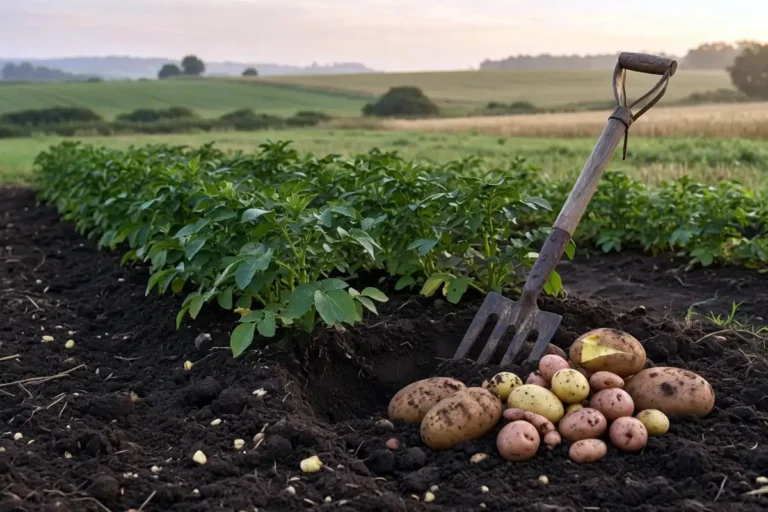
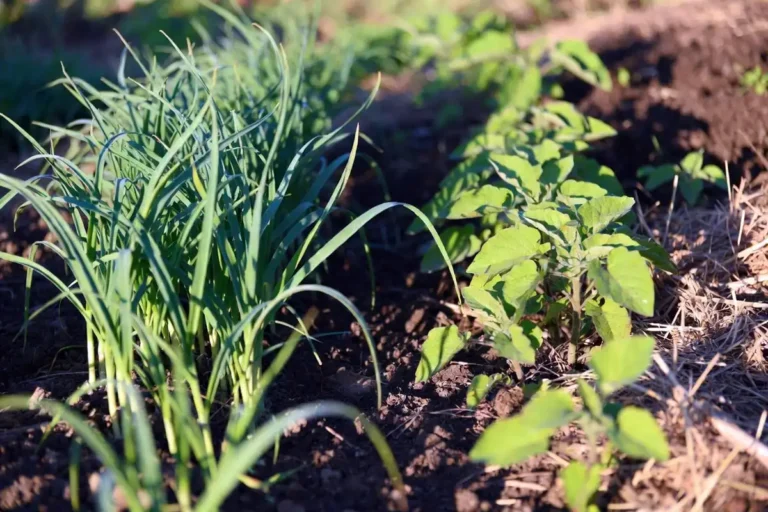
Will Frost Kill Potatoes? 5 Easy Steps to Save Your Harvest
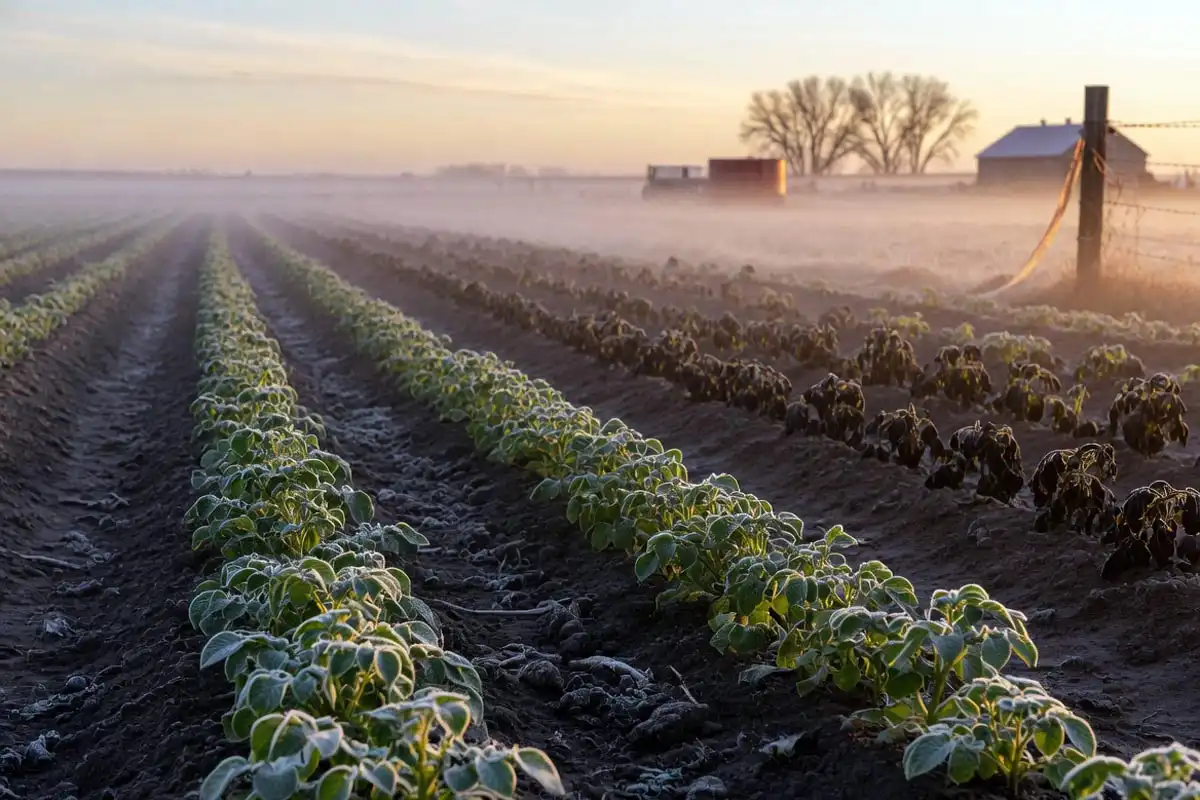
Frost kills potato foliage at 32°F (0°C), and a hard freeze below 28°F damages shallow tubers. Underground tubers often survive a light frost when soil stays warm. This guide covers frost impact on potatoes, damage signs, and the protection steps.
Yes, frost kills potato plants. Foliage dies at 32°F (0°C). Tubers below ground usually survive a light frost but rot after a hard freeze below 28°F. Cover plants with row covers, straw mulch, or hilled soil before frost hits to protect the crop.
What Happens When Frost Hits Potatoes?
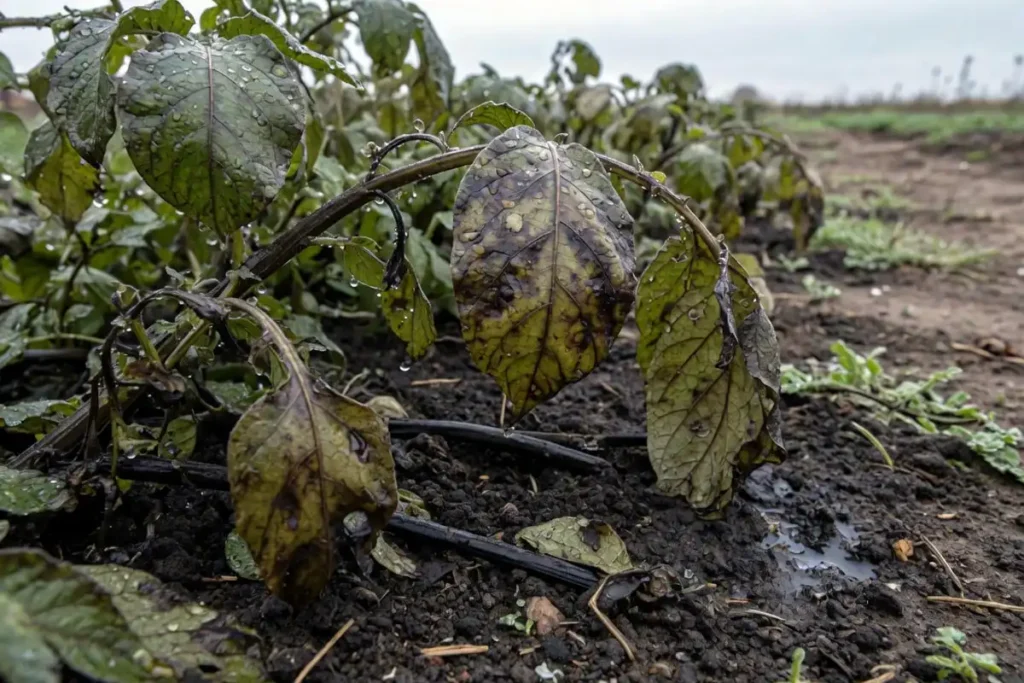
Frost damages potato leaves and stems at 32°F (0°C). Ice crystals form inside plant cells and break them open. The foliage turns black within hours. New growth can return from healthy stems if the roots and tubers stay intact.
Hard freezes below 28°F (-2°C) kill the whole plant. Cold air also reaches shallow tubers when soil is bare. Frosted tubers develop dark spots, soft rot, and a sweet taste from sugar buildup inside the flesh.
When Are Potatoes Most at Risk from Frost?
Spring frost hits young shoots after emergence. Fall frost damages mature plants before harvest. Both windows put the crop in danger.
Spring risk runs from the last frost date through early May in most zones. Track local frost dates with these potato planting calendar notes before placing seed pieces in the ground.
Fall risk begins with the first light frost in September or October. A light frost (28 to 32°F) kills tops but spares buried tubers. A hard freeze below 28°F reaches shallow tubers near the row edge. More on timing is covered in this guide on knowing when to dig potatoes.
Where Frost Damage Shows Up First
Low-lying fields collect cold air and frost first. Cold pools settle at the bottom of slopes overnight. Open ground without mulch loses heat faster than covered soil.
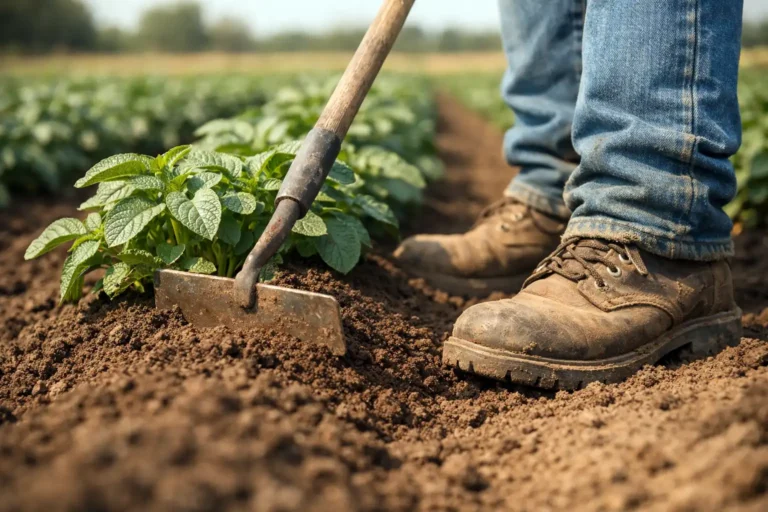
Exposed tubers at the soil surface also take damage early. Hilled rows give tubers an insulation layer of 4 to 6 inches. Our earlier article on covers thishow hilling works for potatoes.
How to Protect Potato Plants from Frost
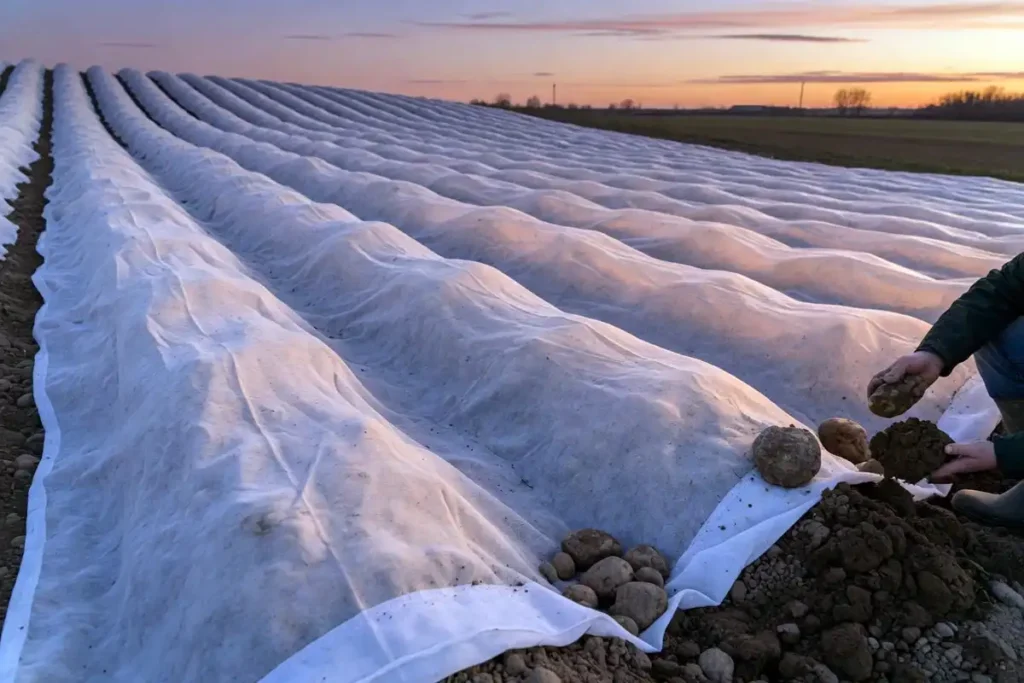
Follow these steps when a frost warning comes in:
- Check the forecast. Watch for temperatures near 33°F and clear, calm nights. Radiation frost forms on still, cloudless evenings.
- Water the soil. Moist soil holds heat better than dry soil. Irrigate 24 hours before the frost event.
- Hill the rows. Pull soil up around stems to cover low growth and shallow tubers. Add 3 to 4 inches of soil per pass.
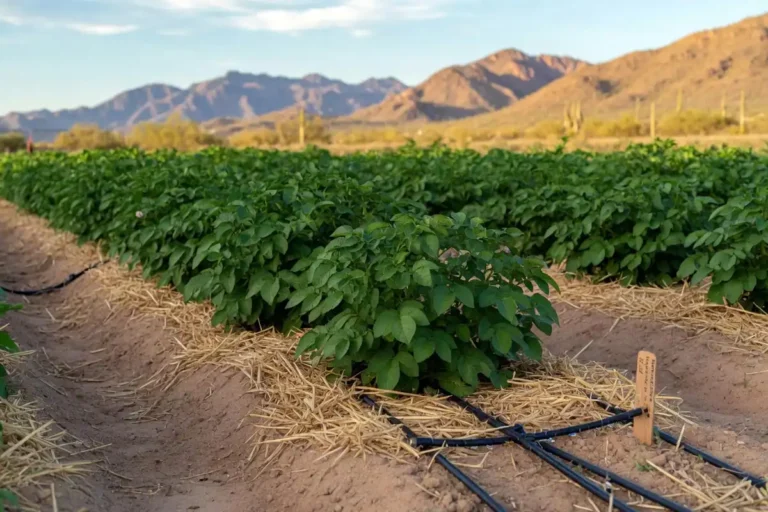
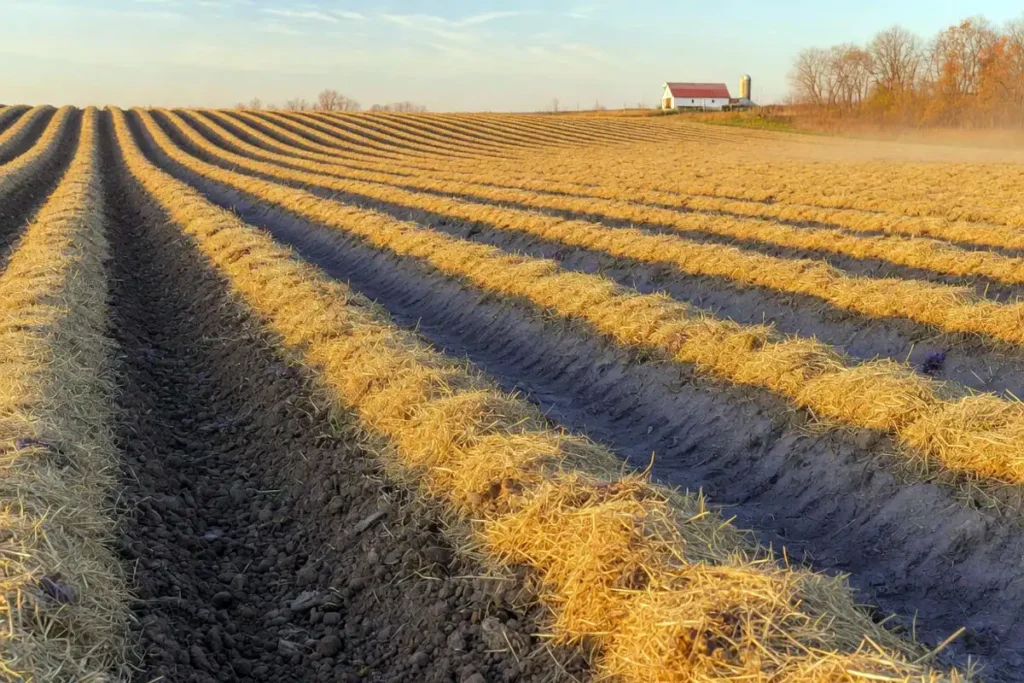
- Apply mulch. Spread 4 to 6 inches of straw, leaves, or grass clippings over rows. Mulch traps ground heat overnight. More is covered in our guide on mulching crops.
- Use row covers. Lay frost cloth or old bedsheets over the canopy. Anchor edges with soil or rocks so wind cannot lift them.
- Remove covers in the morning. Pull off cloth after sunrise so plants can breathe and warm up in the light.
For small plots, flipping 5-gallon buckets over individual plants at dusk is a useful trick. This traps warmth and blocks wind.
According to Penn State Extension, floating row covers raise air temperature under the fabric by 2 to 5°F, which prevents most light frost damage.
Signs of Frost Damage on Potatoes
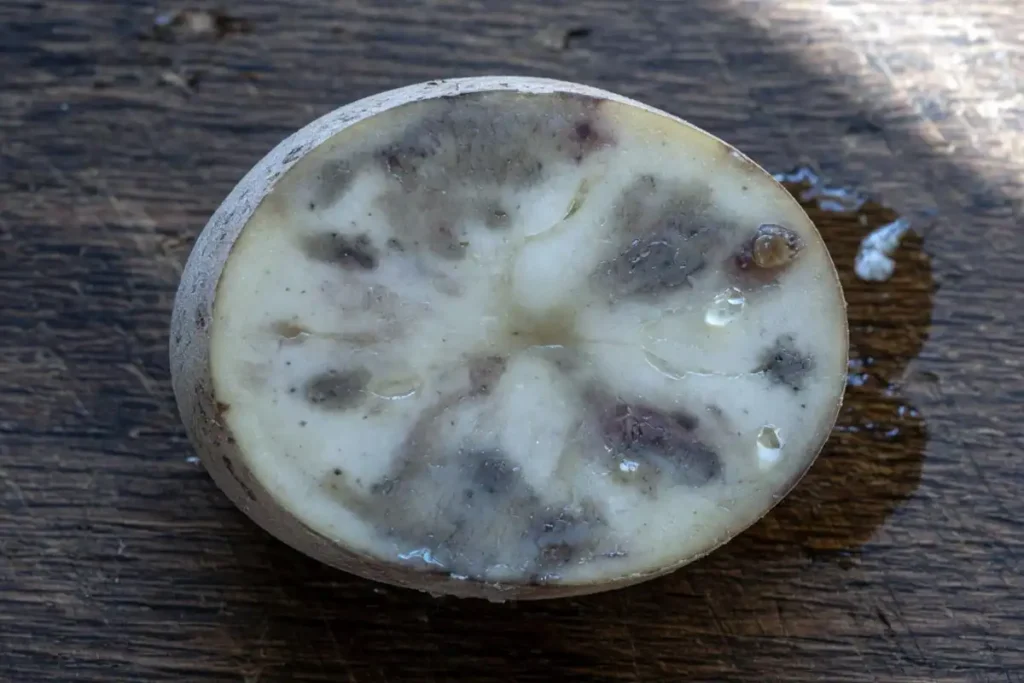
Damaged leaves turn black or water-soaked within 12 hours. Stems collapse and feel limp. A burnt smell rises from the canopy after the sun comes up.
Damaged tubers show gray or dark brown patches under the skin. The flesh feels soft. Some tubers taste sweeter because starch converts to sugar in the cold. Skin peels off in patches where freezing reached the surface.
How to Save Frost-Damaged Potatoes
Healthy plants can regrow from the crown if the stem base stays green. Wait 3 to 5 days before pulling anything. New shoots often push up from buried stems within a week.
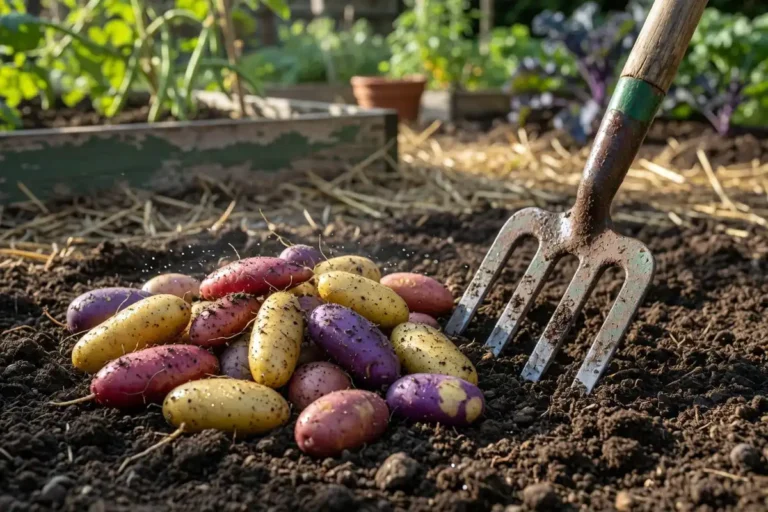
For tubers, dig them within 24 hours of a hard freeze. Cold damage spreads once the plant dies. Sort out soft, blackened tubers. Cure undamaged ones in a dark, ventilated space at 50 to 60°F for two weeks before storage.
The University of Maine Cooperative Extension reports that frosted tubers store poorly and often rot within weeks.
Common Mistakes to Avoid
- Planting too early. Seed potatoes in cold soil rot before emerging. Wait until soil reaches 45°F. Prep work is covered in our seed potato handling guide.
- Ignoring the forecast. Clear, still nights with dew points below freezing cause the worst damage.
- Leaving tubers exposed. Shallow tubers at the row edge freeze first during a hard freeze.
- Using plastic sheeting on plants. Plastic conducts cold to leaves it touches. Use cloth covers instead.
- Watering during the frost event. Cold water stresses plants. Irrigate the day before, not during the freeze.
Safety Notes for Frost-Damaged Potatoes
Do not eat tubers with dark, soft patches or a strong off-smell. Rot bacteria grow fast in damaged tissue. Green tubers exposed to sun contain solanine, a natural toxin. Compost any questionable potatoes rather than risking stored food.
Handle row covers with clean hands to avoid spreading soil-borne pathogens between beds.
FAQs about Frost Kill Potatoes
At what temperature does frost kill potato plants?
Can potato plants recover from frost damage?
Should I harvest potatoes before the first frost?
Does mulch prevent frost damage on potatoes?
Will a light frost hurt potato tubers underground?
Final Thoughts
Frost kills potato plants above ground but often spares tubers below the soil line. Watch the forecast, hill rows early, mulch heavily, and cover plants on cold nights. Dig tubers within a day of a hard freeze to save the crop. With a few careful steps, you can carry potatoes through cold weather and into clean storage.