How Many Pounds of Corn Is in a Bushel? 5 Weight Rules
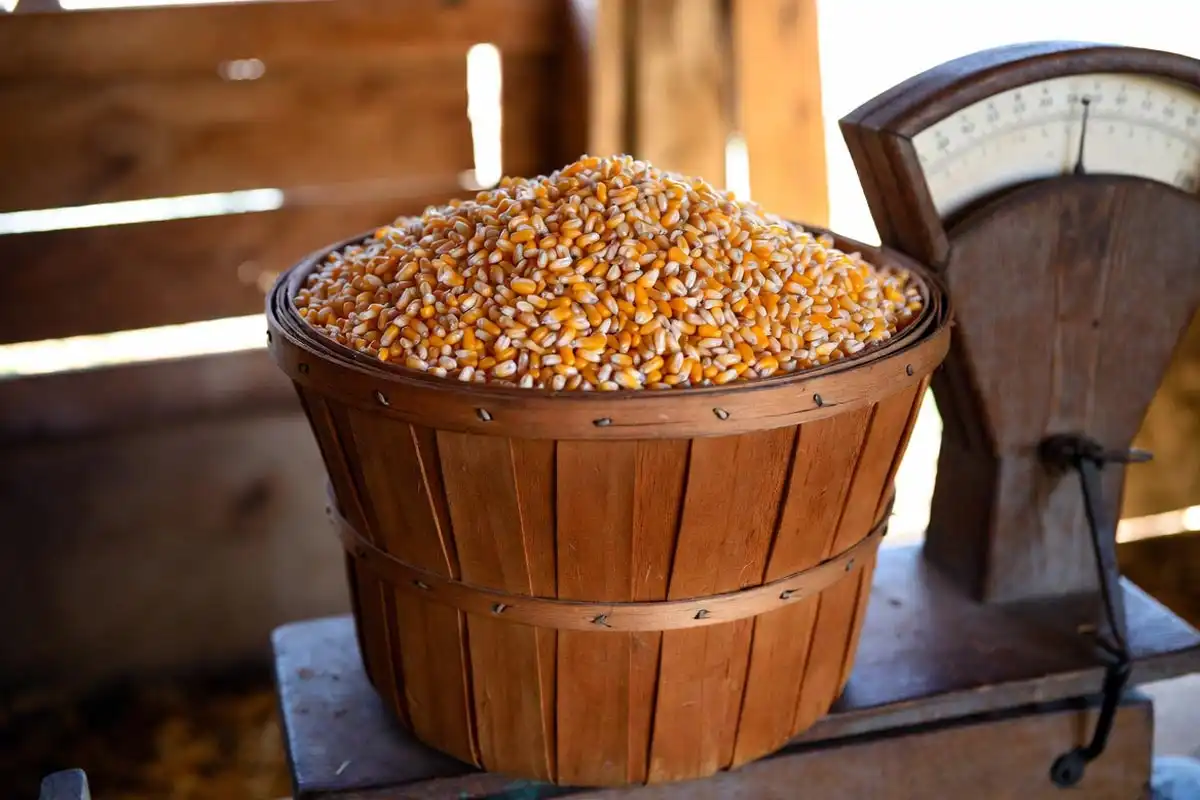
A bushel of shelled corn weighs 56 pounds at the standard 15.5% moisture set by the USDA. That single number runs almost every corn sale, storage check, and yield report in the country. This guide covers what the 56-pound rule means, how moisture changes it, and how to apply it.
One bushel of shelled corn weighs 56 pounds at 15.5% moisture. Ear corn with the cob weighs about 70 pounds per bushel at the same moisture. Elevators pay on net pounds divided by 56, then adjusted for moisture shrink.
What is a bushel of corn?
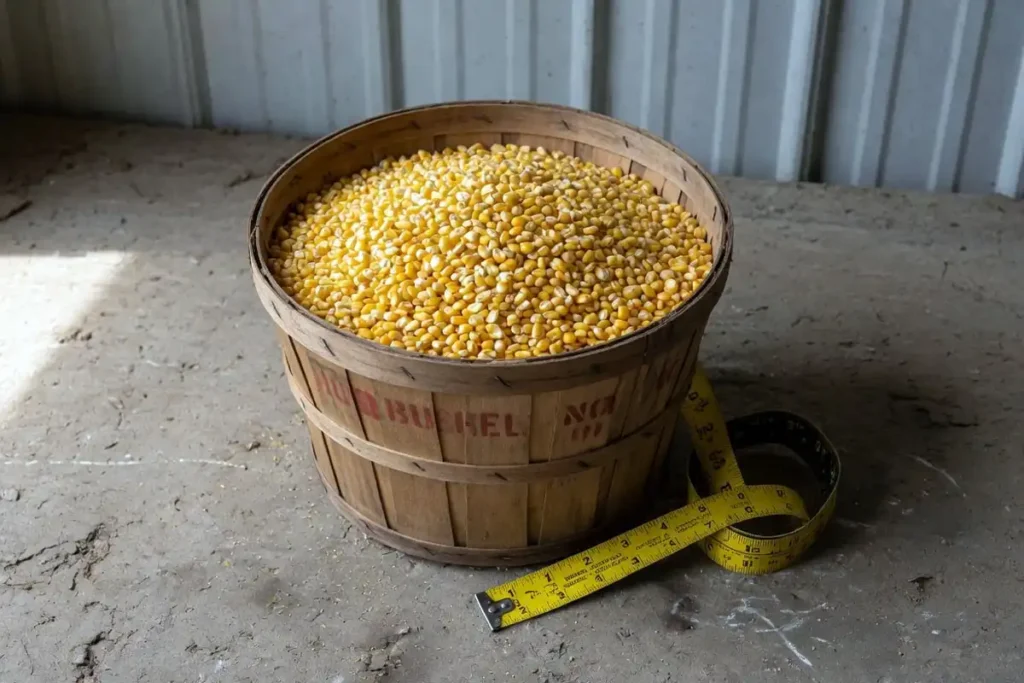
A bushel is both a volume measure and a weight standard. The volume bushel holds 1.244 cubic feet, or about 35.24 liters. For corn, the USDA fixed the trade bushel at 56 pounds of shelled grain at 15.5% moisture. Every grain elevator, yield monitor, and market report in the United States runs on that same figure.
When a yield report says a farm cut 200 bushels per acre, that means 200 times 56 pounds, or 11,200 pounds of shelled grain per acre at dry standard.
Also know: Kernels Are on a Cob of Corn
How many pounds of corn are in a bushel?
A bushel of shelled corn weighs 56 pounds at 15.5% moisture. The number comes from the U.S. Department of Agriculture and covers field corn sold through elevators, coops, and contracts. It does not change by state or hybrid when grain sits at standard moisture.
Two bushel values matter for corn:
- Shelled corn: 56 lbs per bushel
- Ear corn with cob: 70 lbs per bushel
Both use 15.5% moisture as the reference point. The extra 14 pounds on ear corn is the dry cob, which carries weight but no sellable grain.
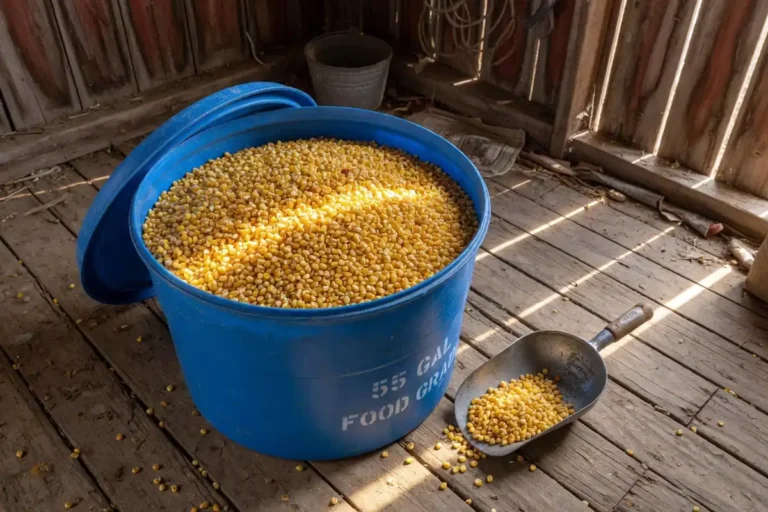
Know more: 5 Gallon Bucket of Corn Weight
Shelled corn vs ear corn per bushel
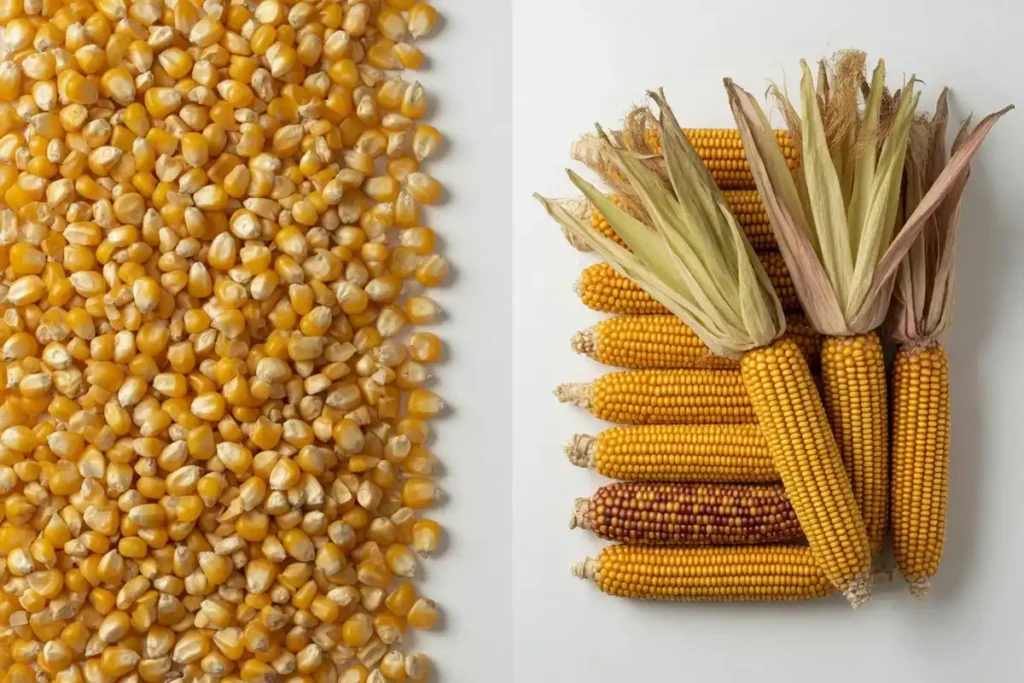
Shelled corn is clean kernels only. Ear corn still has the cob attached. One 70-pound bushel of ear corn shells out to roughly 56 pounds of grain, because the cob runs close to 20% of total ear weight.
This split matters for livestock operations. Price ear corn stored in a crib using the 70-pound figure. Once it runs through the sheller, the same pile switches to the 56-pound bushel for sale or ration math.
Read more: 6 Steps to Can Sweet Corn Safely
Why is a bushel of corn 56 pounds?
The 56-pound rule traces back to early U.S. grain trade, when clean dent corn averaged about 56 pounds per volume bushel. Congress and the USDA locked that value into federal rules so buyers and sellers could price corn the same way across states. You can read the rule directly in the USDA corn grading standards.
Test weight still varies in the field. U.S. No. 1 Yellow corn needs a minimum of 56 lbs per volume bushel. U.S. No. 2 Yellow can drop to 54 before it gets discounted further. Grade shifts the price, but the trade bushel stays at 56 pounds.
How moisture changes bushel weight
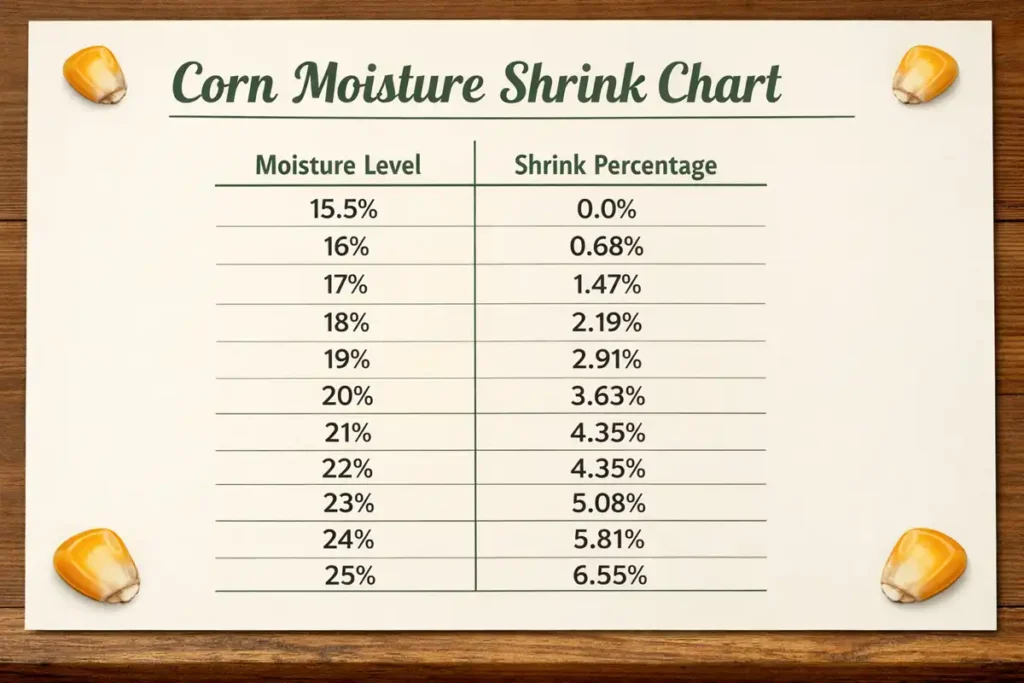
Corn leaves the field wet, often between 18% and 25% moisture. A 56-pound scoop of 22% corn is not one dry bushel. It weighs more because of the extra water. Elevators correct this with a shrink calculation to bring the load back to the 15.5% standard.
The moisture shrink formula looks like this:
Dry bushels = Wet bushels × (100 − wet moisture) ÷ (100 − 15.5)
Example: 1,000 bushels delivered at 20% moisture become 1,000 × (80 ÷ 84.5) = 946.7 dry bushels after shrink.
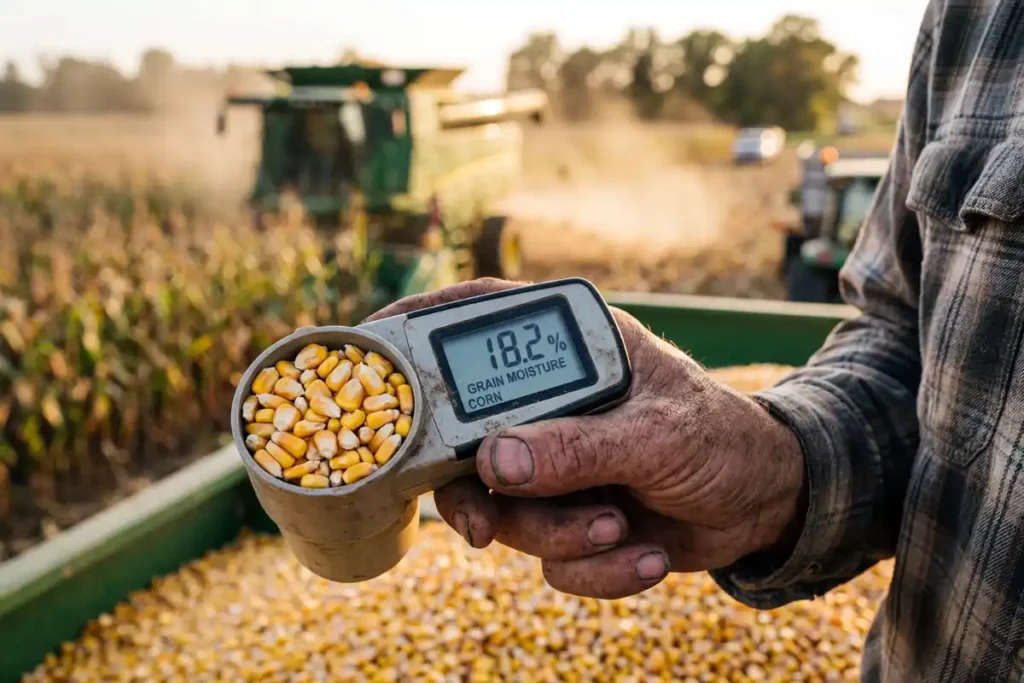
A reliable grain moisture tester gives me that reading before the truck rolls to town. It cuts the surprise at the scale ticket and lines up with good post-harvest handling so the load you haul matches the load you get paid for.
Bushels to pounds, tons, and kilograms
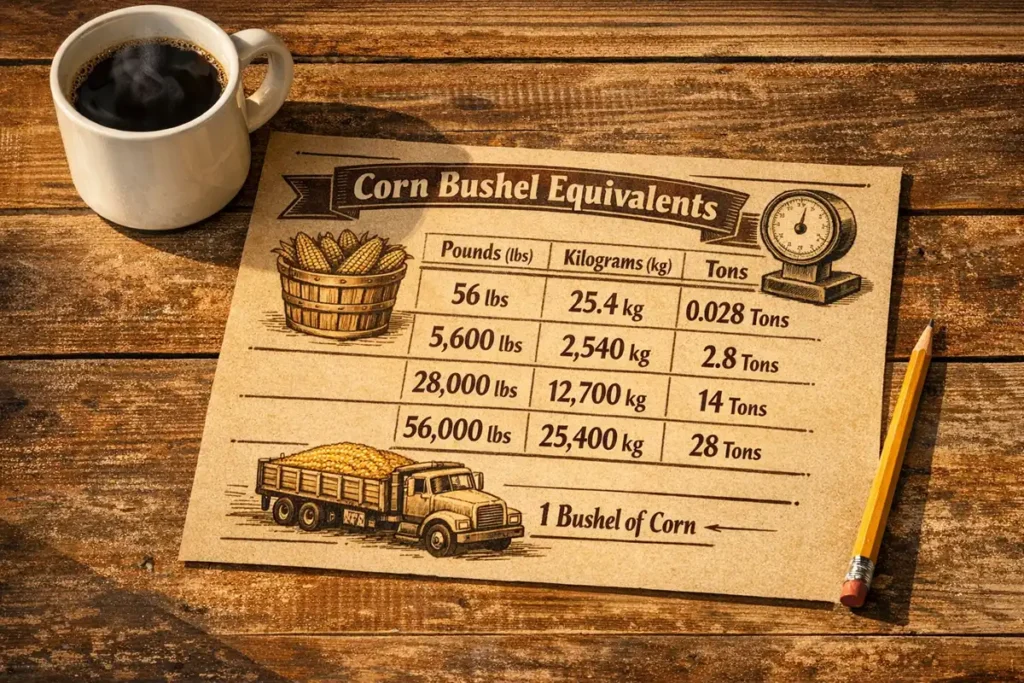
Useful corn conversions at 15.5% moisture:
- 1 bushel = 56 lbs = 25.40 kg
- 1 short ton (2,000 lbs) = 35.71 bushels
- 1 metric ton (2,204.62 lbs) = 39.37 bushels
- 100 bushels = 5,600 lbs = 2.80 short tons
For yield work, multiply bushels per acre by 56 for pounds per acre. A 220 bu/ac field puts out 12,320 lbs of shelled corn per acre.
How elevators calculate what you get paid
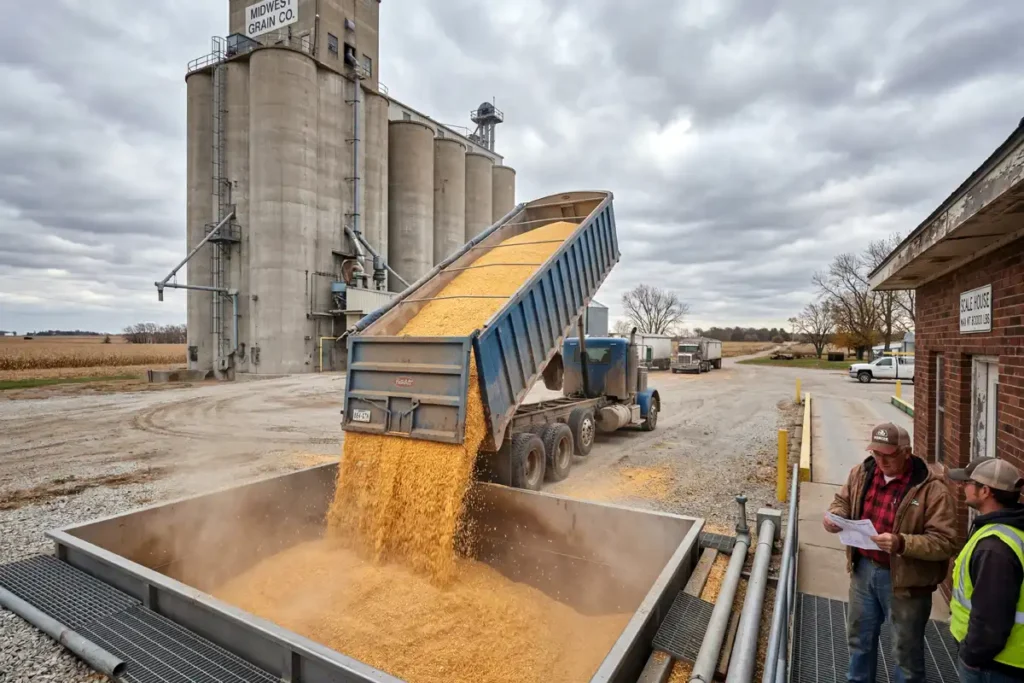
The elevator weighs the full load, subtracts the truck tare, and divides net pounds by 56 to get raw bushels. It then applies moisture shrink plus any deductions for foreign material, damage, or low test weight. Posted cash price times adjusted bushels gives the check.
Drying charges come next. Most elevators charge per point of moisture above 15.5%, often a few cents per bushel per point. Timing when to harvest corn at a moisture you can manage keeps those fees in check.
Common mistakes to avoid
- Mixing up test weight and bushel weight. Test weight describes grain density per volume bushel. The trade bushel is always 56 pounds.
- Forgetting moisture shrink. Wet corn weighs more, but elevators pay you on the dry equivalent.
- Using shelled math for ear corn. Ear corn runs on 70 lbs per bushel, not 56.
- Treating sweet corn the same. Sweet corn sells by the dozen, sack, or crate in most markets, not by the dry bushel.
- Trusting wagon volume alone. A full gravity wagon shifts in bushel count as moisture and trash levels change.
Safety and handling notes
Handle grain loads with care. Wet corn can bridge in bins and create engulfment risk during unloading. Use lockout procedures before entering any bin and never walk on grain that is moving. The Purdue Extension keeps a useful write-up on grain moisture measurement and shrink that pairs well with standard bin management. Clean grain storage setups protect both quality and the bottom line.
FAQs about Pounds of Corn in a Bushel
How many pounds of corn are in a 5-gallon bucket?
Is a bushel of corn always 56 pounds?
How many bushels of corn are in a ton?
How many ears of corn make a bushel?
Does sweet corn use the same bushel weight?
Conclusion
The 56-pound bushel keeps corn trade clean and fair across the country. Learn the moisture shrink math, know the split between shelled and ear corn, and track your own test weights through harvest. Those habits turn a yield number into a steady scale ticket and support better farm profit planning year after year.