Where Are Vidalia Onions Grown? The 20-County Georgia Zone
Vidalia onions come from one small corner of the country, and where Vidalia onions are grown is written into law. No other state can use that name.
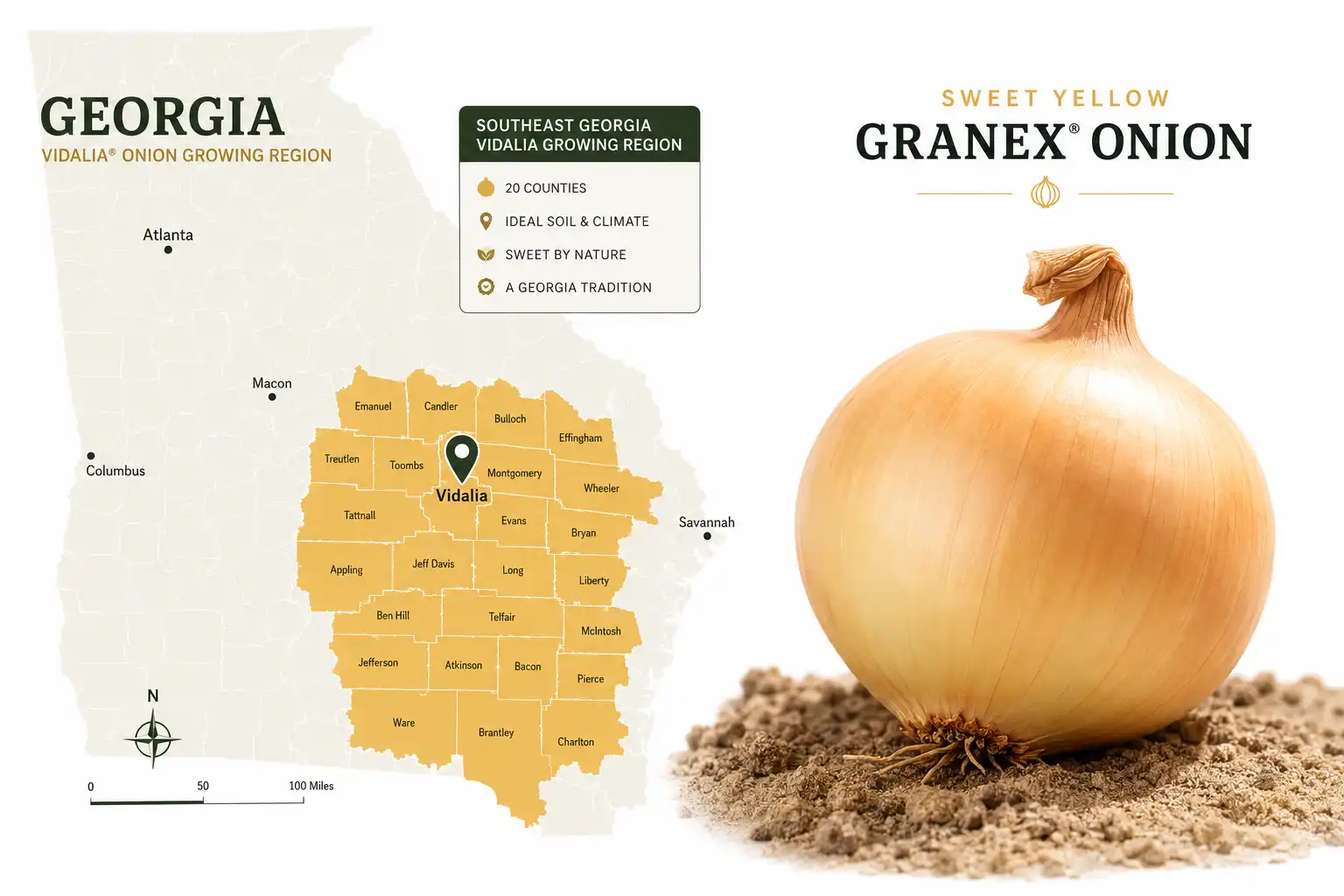
Vidalia onions are grown only in a legally defined region of southeast Georgia. That zone spans 13 full counties and parts of 7 more near the town of Vidalia. Low-sulfur soil keeps them mild.
Where Are Vidalia Onions Grown in the United States?
Vidalia onions are grown only in southeast Georgia, inside a production region set by state and federal law. The area sits around the town of Vidalia and the city of Glennville. Thirteen counties sit fully inside: Appling, Bacon, Bulloch, Candler, Emanuel, Evans, Jeff Davis, Montgomery, Tattnall, Telfair, Toombs, Treutlen, and Wheeler. Parts of seven more count too: Dodge, Jenkins, Laurens, Long, Pierce, Screven, and Wayne. That makes 20 counties in all.
Tattnall County pulls more than half the crop by itself. Toombs County, home to the town of Vidalia, is where the whole thing started back in the 1930s. So when you spot Georgia Grown sweet onions in spring, they trace back here. It all comes from this patch of sandy ground.
Why Can Vidalia Onions Only Grow in That Part of Georgia?
The soil is the reason. Fields across that stretch of southeast Georgia hold very little sulfur. Sulfur is what gives a normal onion its sharp bite. Low sulfur means low pungency, so the natural sugars come through instead. That is the whole reason behind the mild, sweet taste.
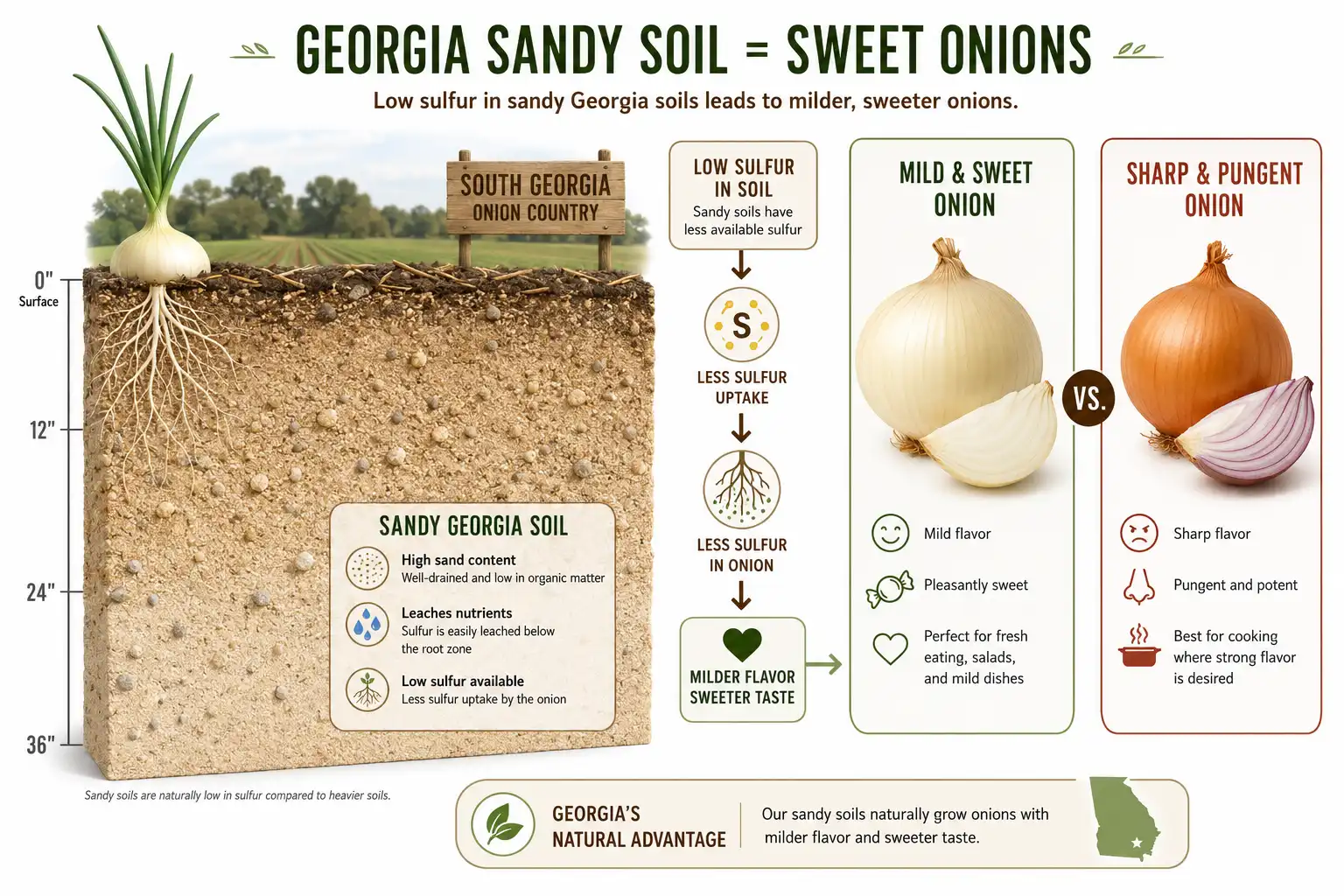
Soil is only part of it, though. The mild winters, the sandy loam, and the steady rainfall all line up in this region. The Georgia Department of Agriculture calls it a mix of weather, water, and soil that no other place can copy. Latitude matters as well. These are short-day onions, and they bulb when winter days stretch past about 11 hours of light. That daylength fits south Georgia far better than the North.
What Makes an Onion Legally a Vidalia?
Two things decide it: the variety and the ground it grows in. A true Vidalia has to be a yellow Granex type onion. It also has to be grown inside that defined Georgia region. Miss either one and it cannot carry the name.
The rules trace back to the Vidalia Onion Act of 1986. Georgia passed it to trademark the name and set the borders of the growing area. The state Department of Agriculture owns that trademark today. Then in 1989 the USDA added Federal Marketing Order No. 955, which put federal weight behind the same borders. The Vidalia Onion Committee runs that order and funds research and promotion. Selling a plain sweet onion as a Vidalia is a felony under Georgia law. Fines climb into the thousands. So the name stays guarded closely.
How Are Vidalia Onions Grown in Georgia?
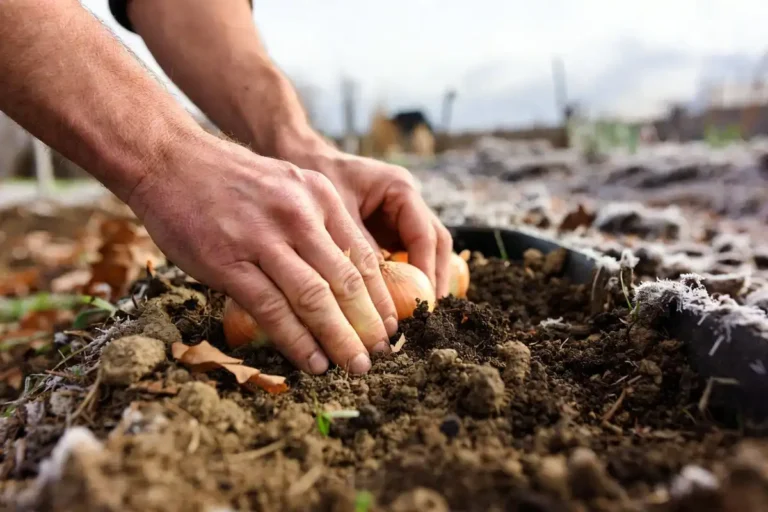
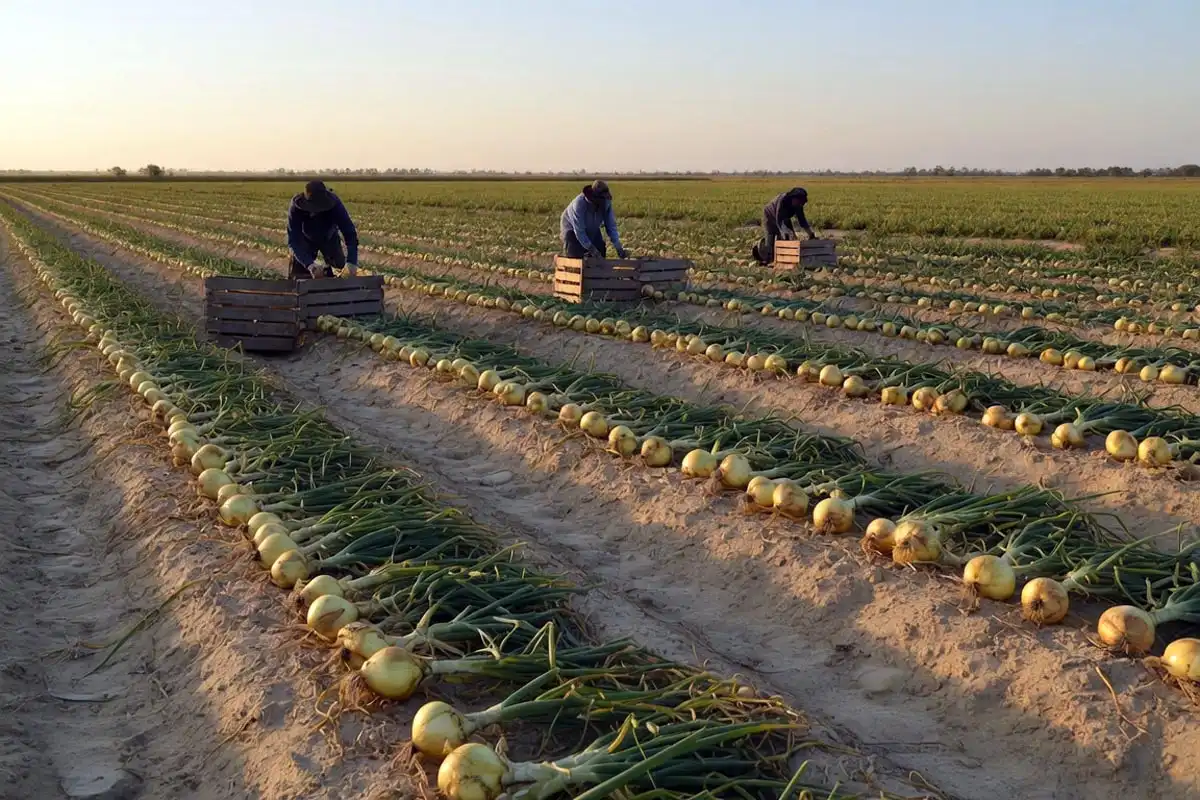
Growers there plant in the fall and harvest the next spring. Seedbeds go in during September, usually the second or third week. Crews then pull those young plants and reset them as onion transplants across the fields through November and December. Harvest lands in April and May. The crop runs on hand labor from start to finish, which is why it costs so much to bring in.
Do you farm cooler ground and want to mimic the timing? Then study how growers handle setting onions in the fall before you commit a bed. Your exact window shifts with your zone. So use the onion planting dates across Georgia as a warm-climate benchmark, then adjust from there.
When Are Vidalia Onions in Season?
Vidalia onions reach stores in mid-April and run through early September most years. Georgia sets an official pack date each season, and nothing ships under the name before it. For 2026 that pack date is April 13. Growers and the state advisory panel pick the date based on how the crop matured over winter.
Fresh Vidalias will not keep forever, so the tail end of the season leans on controlled atmosphere storage. That cold, sealed method (borrowed years ago from Georgia’s apple industry) holds quality for months. By late summer you are eating stored onions rather than field-fresh ones, yet they still carry the flavor. From that one small region, they ship to all 50 states and much of Canada.
Can You Grow Vidalia Onions Outside Georgia?
You can grow the onion, but you cannot call it a Vidalia. The Granex sweet onion seed sells widely, and it grows fine in plenty of southern gardens. Legally, though, only bulbs raised in that Georgia region earn the Vidalia name. Everything else is simply a sweet onion.
Your location also decides whether the variety even works. Granex is a short-day type, so it suits the South. Gardeners in Kansas and farther north do better with intermediate-day or long-day sweet onions instead. If you want to try, starting sweet onions from seed gives you the widest choice of varieties. In colder zones, some folks get a head start by planting onions through the winter under cover. Either route hands you a sweet onion of your own, just not a true Vidalia.
Bottom Line on Where Vidalias Come From
So the answer stays simple. Vidalia onions grow in one defined stretch of southeast Georgia. The low-sulfur soil there does the heavy lifting on flavor. You can buy the same Granex seed and raise a sweet onion in your own dirt. But the Vidalia name belongs to that region alone. If sweet onions are your goal, match the variety to your daylength and plant on time. That gets you close to the real thing, wherever you farm.