Can You Plant Onions Next to Cucumbers? Spacing Tips
Bed space runs short by May, and cucumber hills always want more room than planned. So the question comes up fast: can you plant onions next to cucumbers without shrinking your bulbs? The answer turns on spacing, sun angle, and one pest most companion charts skip.
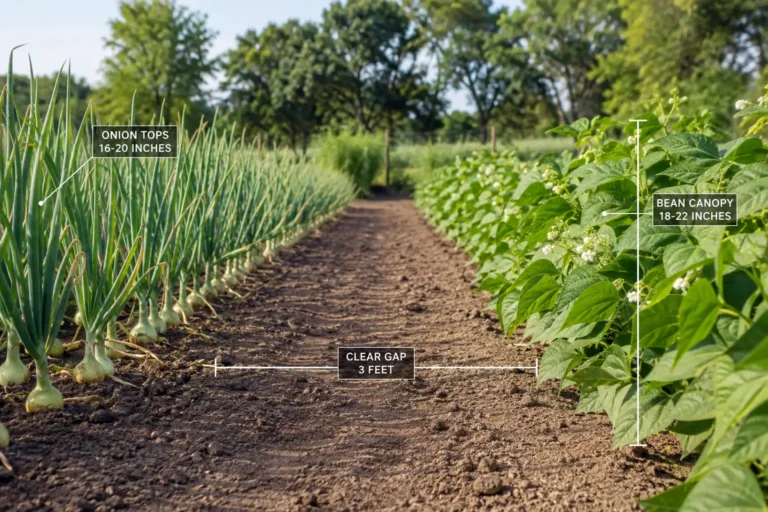
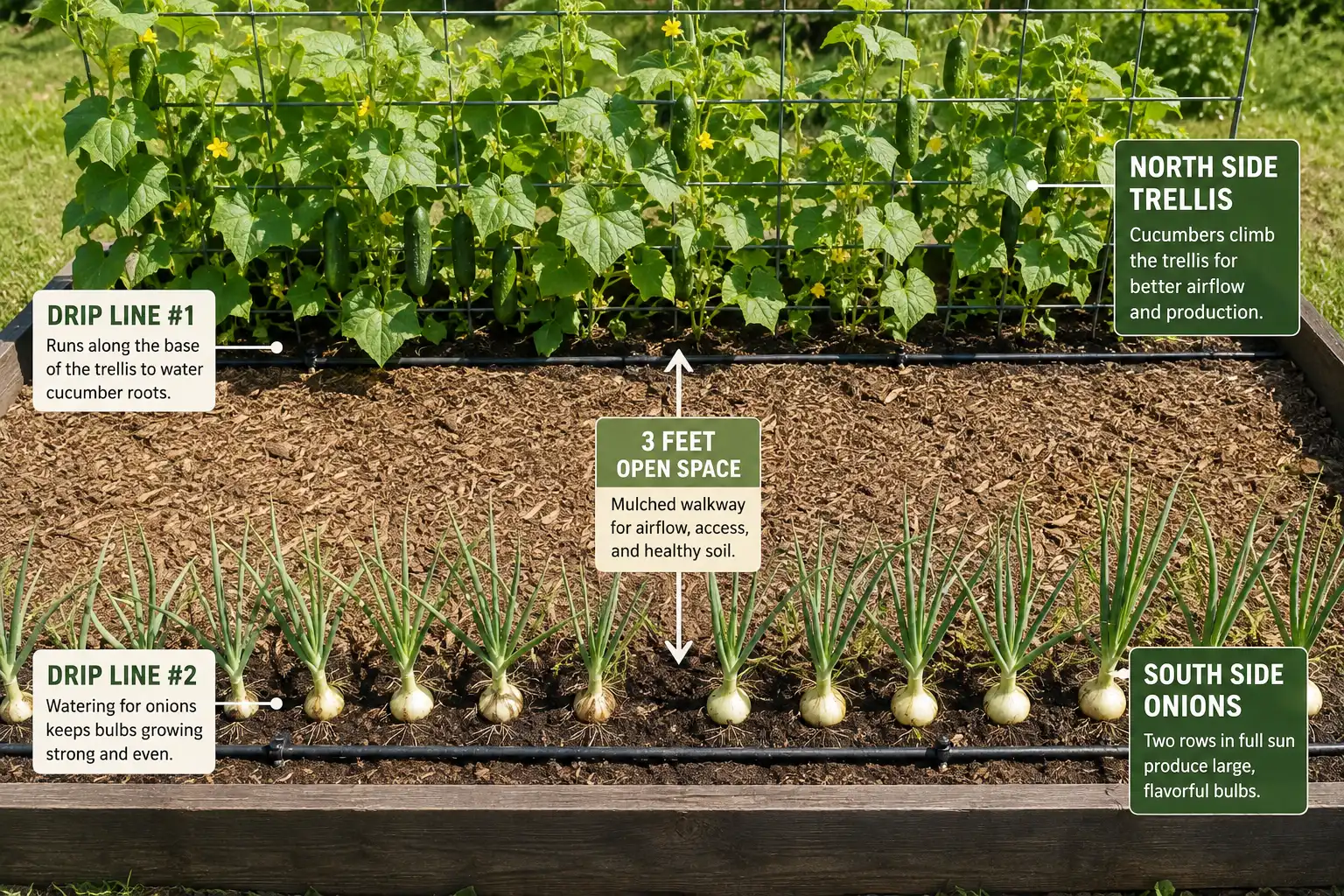
Yes, you can plant onions next to cucumbers. Keep the onion row about 3 feet from the vines. Trellis cucumbers on the north side, then scout onion thrips weekly. Shade and shared water lines cause most failures.
Also Learn: How to Plant Turnips With Onions in the Same Bed
Can You Plant Onions Next to Cucumbers in the Same Bed?
Yes, and the two crops carry no chemical conflict. Onion tissue releases sulfur compounds when damaged, but nothing in that chemistry holds back a cucumber vine. Old allium warnings point at peas and beans, not cucurbits.
The trouble sits elsewhere. Three things go wrong in shared beds: shade, water timing, and onion thrips. Each one has a fix, and none of them shows up on a typical companion chart.
Grow both crops in the same ground most seasons. Onions size up fine when treated as a separate block sharing a fence line with the cucumbers. They come out small and thick-necked when tucked between cucumber hills to save space.
What Each Crop Needs Side by Side
These numbers come from the K-State Research and Extension vegetable planting guide. It helps to use it for every bed plan.
| Item | Onions (sets or plants) | Cucumbers |
|---|---|---|
| In-row spacing | 3 to 4 inches | 24 inches |
| Between-row spacing | 12 to 24 inches | 48 to 72 inches |
| Planting depth | 1.5 to 2 inches | 0.5 to 1 inch |
| Days to first harvest | 90 to 120 | 45 to 65 |
| Best soil temp at planting | 50°F and warmer | 75 to 85°F |
| Frost tolerance | Hardy | Very tender |
| Feeder root zone | Top 12 inches, sparse | Top 12 to 18 inches |
Read the row spacing line twice. Onions run 12 to 24 inches between rows. Cucumbers want 48 to 72 inches. Most gardeners split the difference, and then both crops lose.
Root depth actually works in your favor. Onion roots stay shallow and sparsely branched, so they draw from the top foot. Cucumber feeder roots reach deeper and can push past 3 feet in loose ground. Surface moisture is still shared, though, and that matters in July.
Our article on onions per square foot show how tight a bulb block can get before size drops off.
Three Problems That Show Up in a Shared Bed
Cucumber Vines Shade the Onion Tops
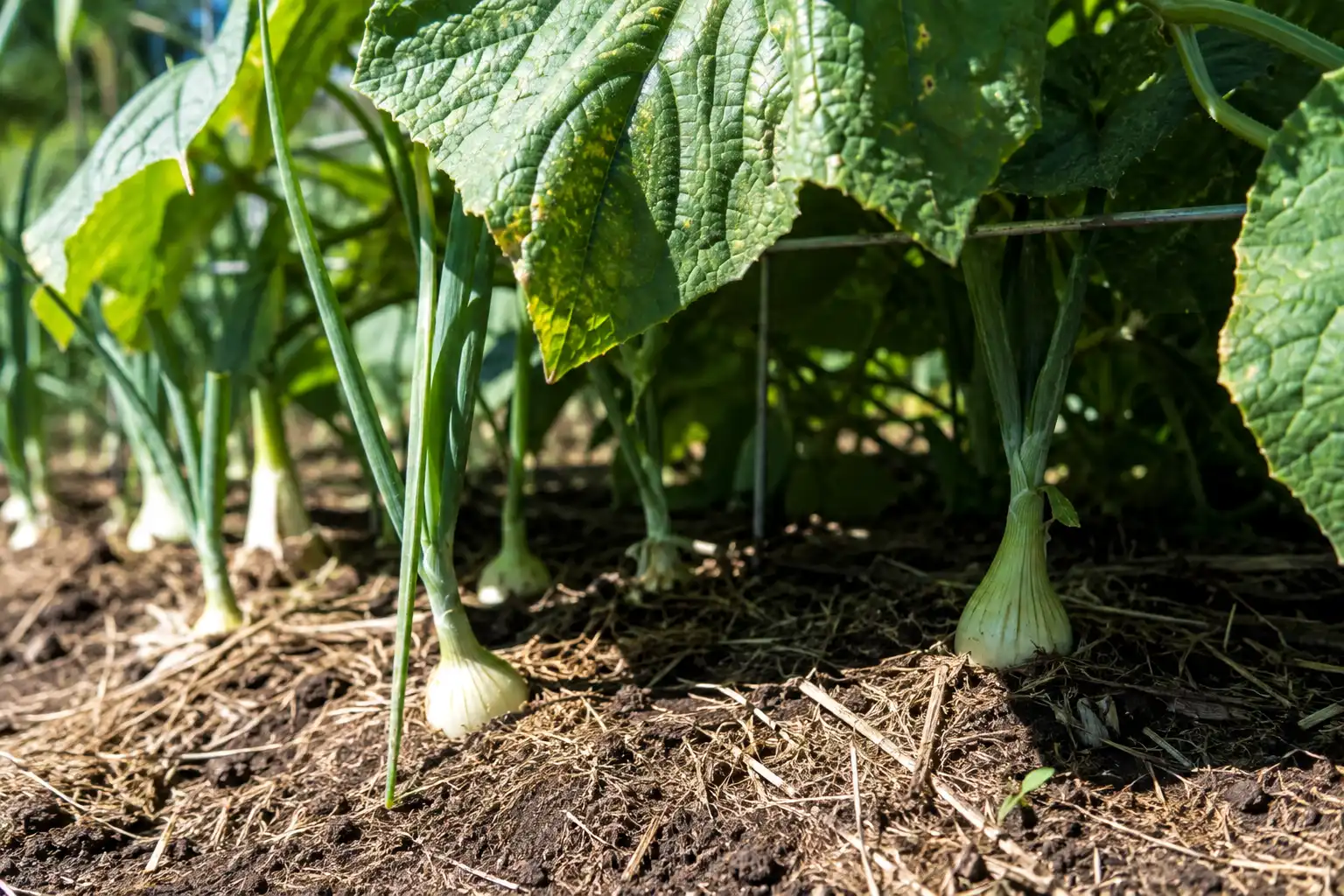
Shade costs you bulb size directly. Onion bulb size tracks leaf count, and every leaf needs sun to build. A mature cucumber leaf spans 6 to 8 inches across. Ground-run vines spread 4 to 6 feet in every direction. So by early July, one sprawling hill can bury an onion row it started 2 feet away from.
Sun angle gives you the fix. In Kansas, shadows fall to the north of the plant. Put the cucumber trellis along the north edge of the bed. Then the shade lands on the path instead of your onions.
Water Schedules Split Right at Bulbing
The two crops want opposite things in July. Cucumbers need 1 to 2 inches of water per week, and more once fruit sets. Onions want steady moisture through bulb enlargement, then a dry finish. University of Maryland Extension ties onion bulb size directly to season-long water supply. Even so, once the tops start to fall, the water has to stop.
One valve cannot serve both crops. Run two drip zones off a single header, one per crop. Our comparison of drip and sprinkler methods covers the hardware side.
Straw mulch helps on the onion side. Lay it 2 inches deep over the bulb rows, and keep it clear of cucumber stems. Our notes on mulching to hold soil moisture explain the depth choices. One caution while you work around the vines: never hill soil onto onion necks. That habit invites neck rot and shrinks storage life.
Cucurbits Build Onion Thrips Populations
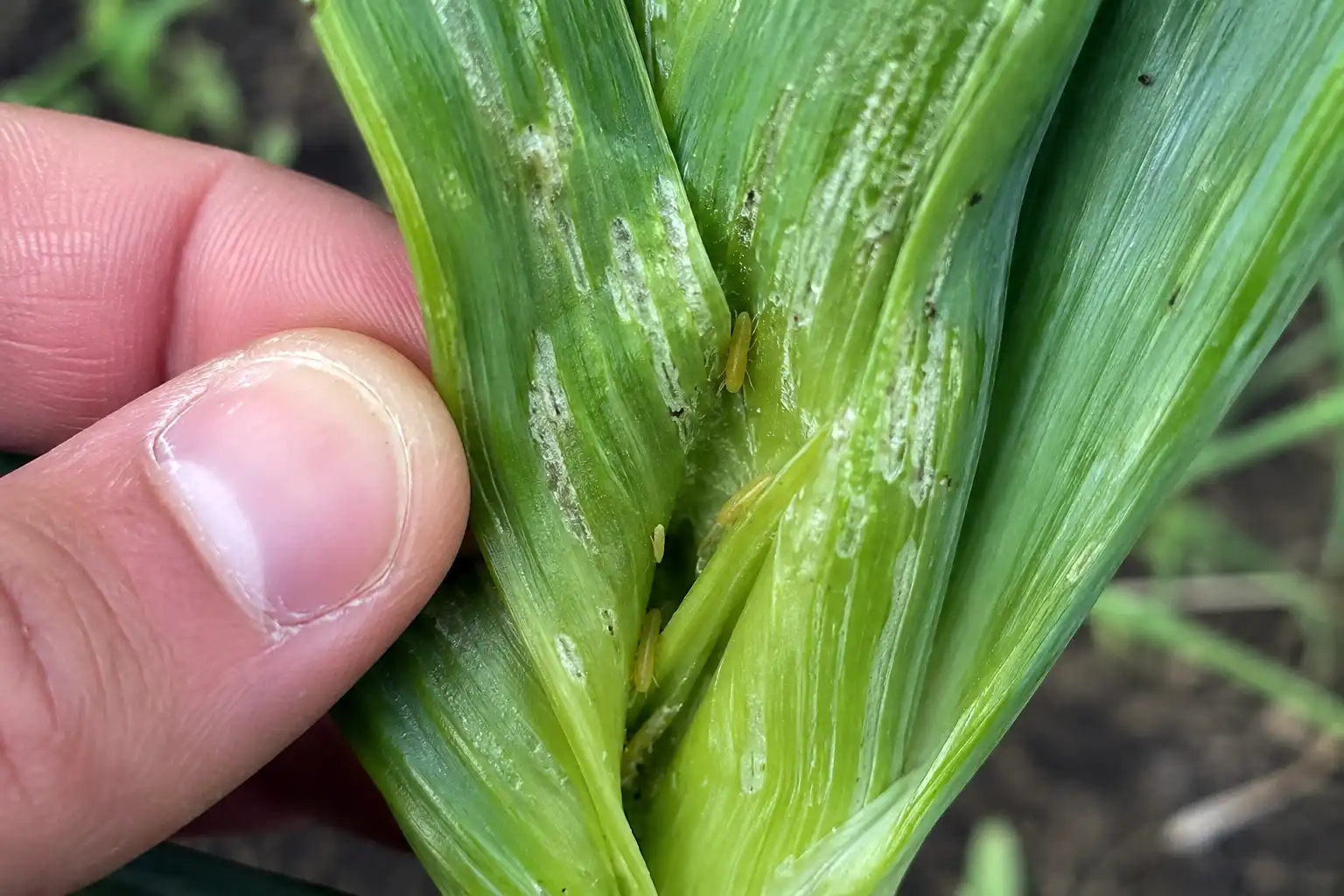
This is the problem that matters most, and almost no companion chart mentions it. Onion thrips populations build fast on cucurbits. NC State Extension says plainly that cucurbits, crucifers, and strawberries do not belong near onions. The same guidance covers rotation.
Thrips hurt onions two ways. First, feeding scars silver the leaves and cut photosynthesis, which shrinks bulbs. Second, onion thrips carry Iris yellow spot virus, which puts straw-colored lesions on leaves and seed stalks.
So scout weekly from late May. Pull back the newest leaves in the center of the plant and count what moves. NC State sets a treatment threshold near 10 thrips per plant on bulb onions. Utah State University research also shows that overhead sprinkler irrigation washes thrips off onion leaves. That hands you a non-chemical tool.
Watch the tradeoff there. Wet cucumber foliage feeds powdery and downy mildew. So sprinkle in the morning, and only over the onion block.
Seedcorn maggot deserves a line too. Both onion sets and cucumber seedlings host it in cool, wet spring soil. Fresh manure and heavy green residue make it worse, so finish your compost before it goes in.
How to Plant Onions Next to Cucumbers the Right Way
Work in this order, and both crops hold their yield.
- Set the cucumber support first. Run a cattle panel or wire trellis along the north edge in March, before the onions go in. Later post-driving tears up shallow onion roots.
- Plant onion sets or plants in mid-March. Space them 3 to 4 inches apart and 1.5 to 2 inches deep. Run the rows 12 to 18 inches apart along the south side.
- Leave a clear buffer. Hold 3 feet of open ground between the last onion row and the cucumber base for trellised vines. Give 5 feet if the vines will run on the ground.
- Seed cucumbers in early to mid May. Wait for 70°F soil at the 1-inch depth. Set seeds 0.5 to 1 inch deep, then thin to 12 inches apart on a trellis.
- Split the irrigation. Two drip lines, two valves. Onions get shut off at tip-over, while the cucumbers keep running into September.
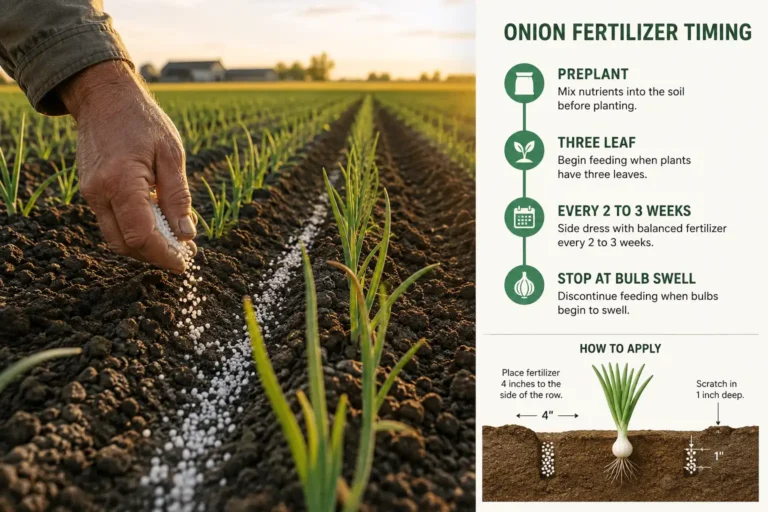
- Feed on separate schedules. Onions take their nitrogen early, before bulbing starts. Cucumbers want a side-dress at first fruit set. Our guide to fertilizer choices for onions breaks down the rates.
- Train vines up once a week. Tuck any runner heading toward the onions back onto the panel. Ten minutes a week keeps the sun clear.
Bed Layout That Works in Zone 6a
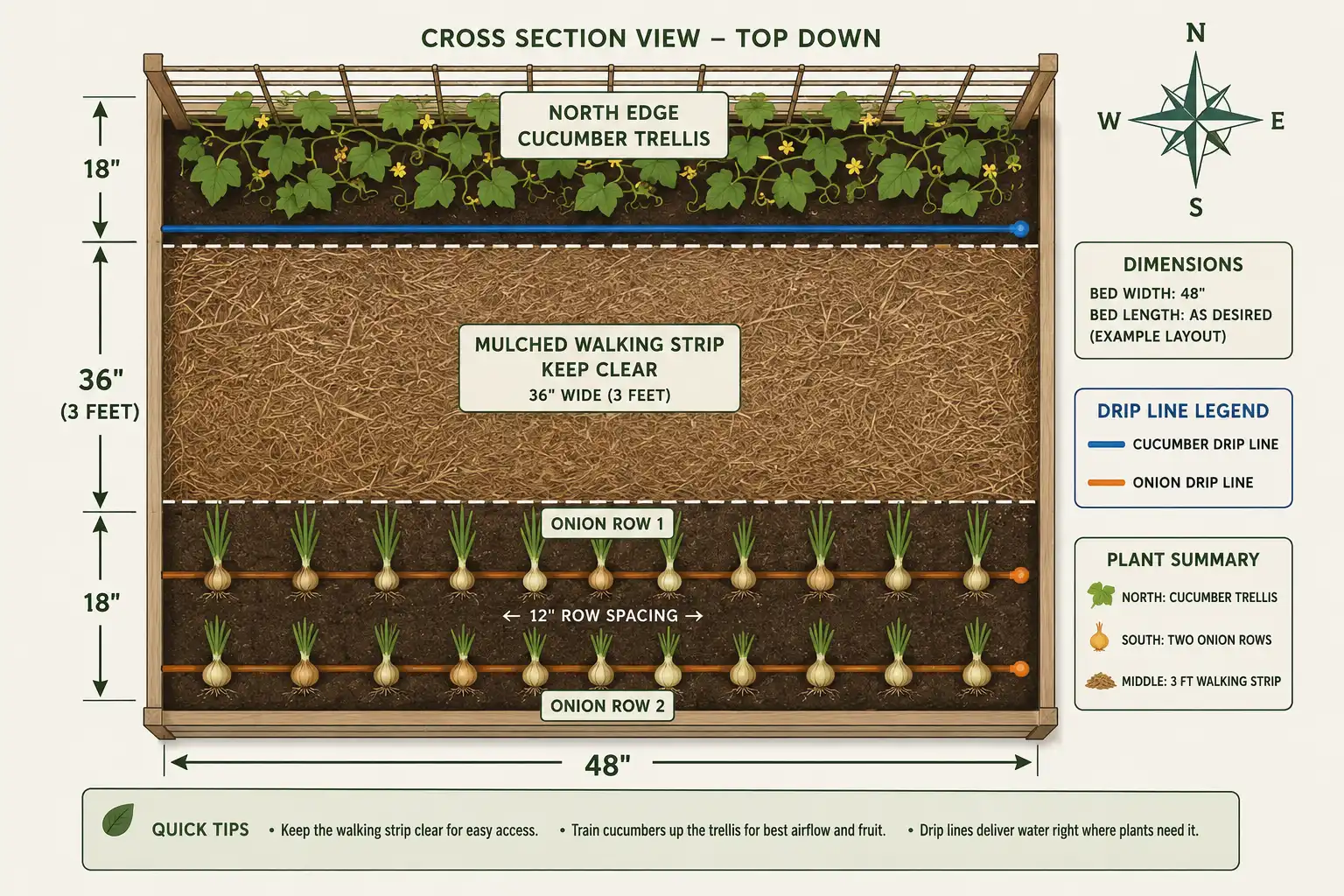
Here is the plan to work from on a 5-foot by 20-foot ground bed.
- North 6 inches: cattle panel trellis with cucumbers at 12 inches, one drip line at the base
- Middle 36 inches: open mulched strip that doubles as a picking path
- South 18 inches: two onion rows 12 inches apart, own drip line, straw mulch
That layout holds 20 cucumber plants and roughly 120 onions. Both crops get sun all day, and the buffer stays walkable in July when you pick cucumbers every other day. Foot traffic stays off the shallow onion roots too, which keeps the surface from packing.
Planting and Harvest Timeline for Zone 6a
| Window | Onions | Cucumbers |
|---|---|---|
| Mid-March | Set plants or sets | Soil far too cold |
| Mid-April | Leaf growth, first nitrogen | Still waiting |
| Early to mid May | Leaf growth continues | Direct seed at 70°F soil |
| Early June | Bulbing starts | Vines climbing, first flowers |
| Late June to mid July | Tops fall, water off, lift and cure | Peak picking |
| Mid-July | Onion side of the bed clears | Second seeding possible |
| August to September | Curing and storage | Picking until frost |
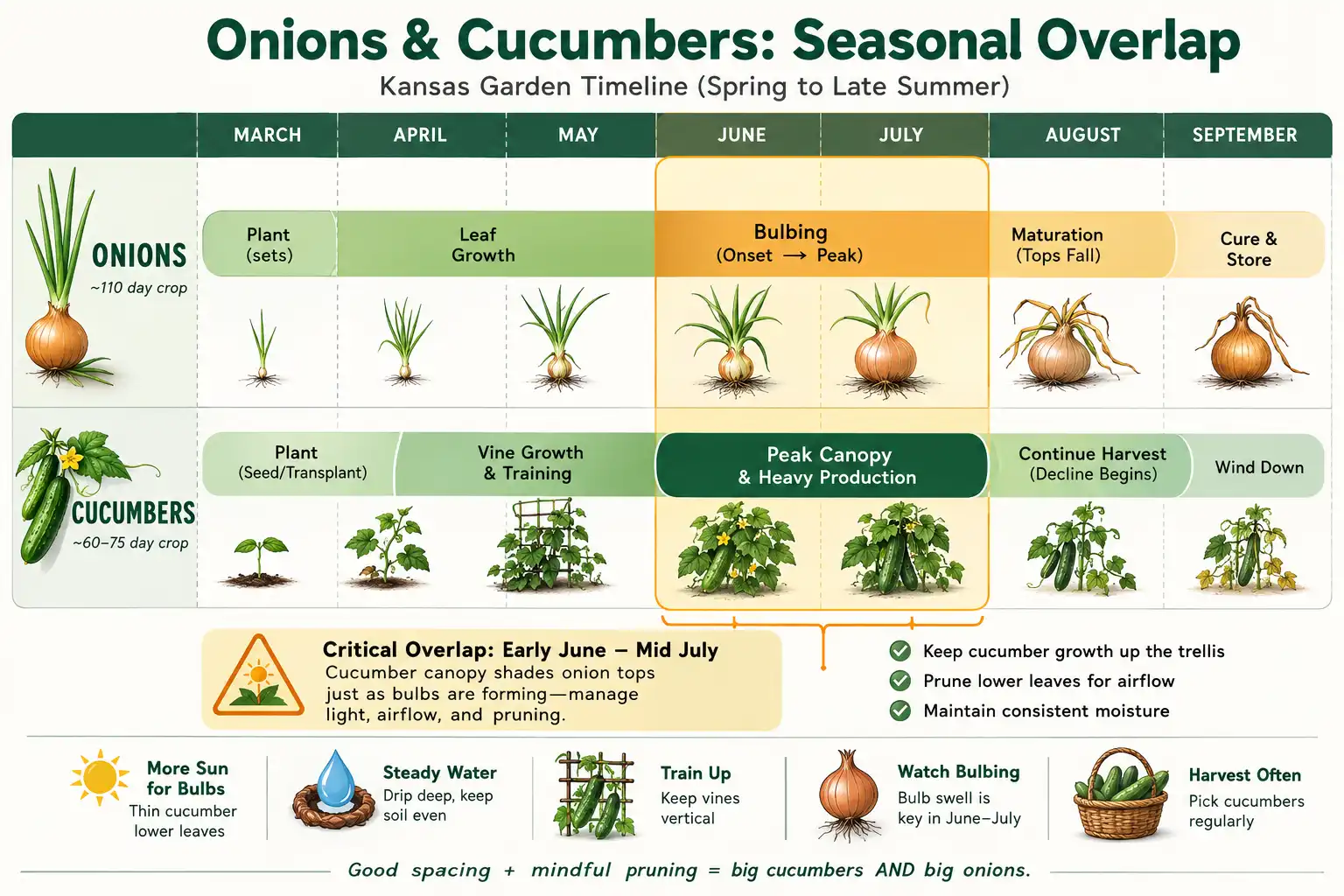
The overlap window runs about five weeks, from early June to mid-July. That stretch is exactly when onions build their bulbs and cucumbers hit peak canopy. So size the buffer for that window, not for planting day.
One upside comes in July. Onions clear out. Then you have an open, weed-free strip for a second cucumber seeding or a fall crop.
Do Onions Keep Bugs Off Cucumbers?
Partly, and only for a few pests. Allium sulfur volatiles mask host plant odor, which makes a cucumber vine harder for aphids to locate. A 2017 review in the journal Insects documented that effect across several allium and aphid pairings.
Cucumber beetles are another matter. No extension program credits onions with deterring striped or spotted cucumber beetles. Those beetles carry bacterial wilt, and a wilted vine dies within days. So use floating row cover from seeding until the first flowers open, then pull the cover so bees can work.
Net effect: onions give a small aphid benefit and no beetle protection, while the cucumbers raise your thrips pressure. The exchange runs against the onions, which is why the buffer matters more than the pairing.
Mistakes That Cost Bulb Size
- Tucking onions between cucumber hills instead of giving them their own block
- Trellising cucumbers along the south edge, which throws shade onto the onions
- Running one drip valve for both crops through July
- Hilling soil onto onion necks while cultivating around the vines
- Side-dressing nitrogen in July, which thickens necks and cuts storage life
- Waiting to scout thrips until the leaves already show silvering
Better Neighbors If Room Is Tight
Carrots pair better with onions than cucumbers do. Intercropping trials in England cut onion thrips numbers by roughly half in mixed carrot and onion plantings. Carrots also shrug off thrips feeding without much loss. Our notes on pairing onions with carrots cover the row layout.
On the cucumber side, lettuce fits well as a low understory crop before the canopy closes over. Our guide to lettuce and cucumbers in one bed walks through the timing.
Last Words
Give each crop its own block and its own water line. Put the cucumber trellis on the north edge. Then hold 3 feet of open ground and set the onions south of it. Then scout thrips weekly from late May through onion harvest. Those four moves carry the pairing.