Are Onions Tubers? What an Onion Really Is
Onions grow underground and store food, so people often lump them in with potatoes. That mix-up is where the tuber question starts. Are onions tubers, or are they something else?
No. An onion is a bulb, made of layered leaf scales around a short stem base. A tuber, like a potato, is a swollen stem. Onions and tubers store food in different structures.
Are Onions Tubers or Bulbs?
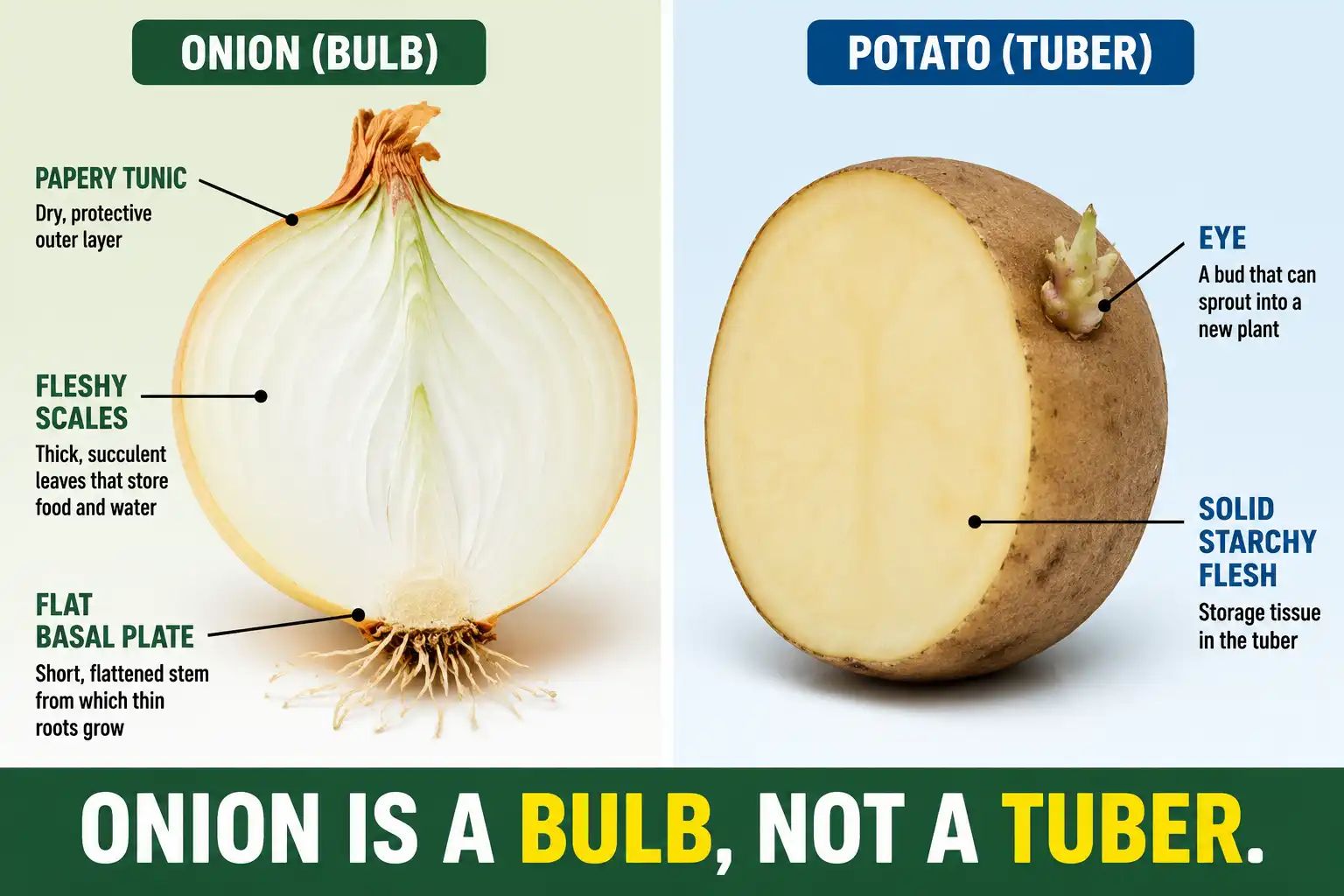
Onions are bulbs, not tubers. A bulb stores energy in fleshy leaf layers wrapped around a short, flat stem called the basal plate. A tuber stores energy inside a swollen stem, and the potato is the classic example. Both sit underground, and both swell up, so folks group them together. Still, their anatomy is not the same.
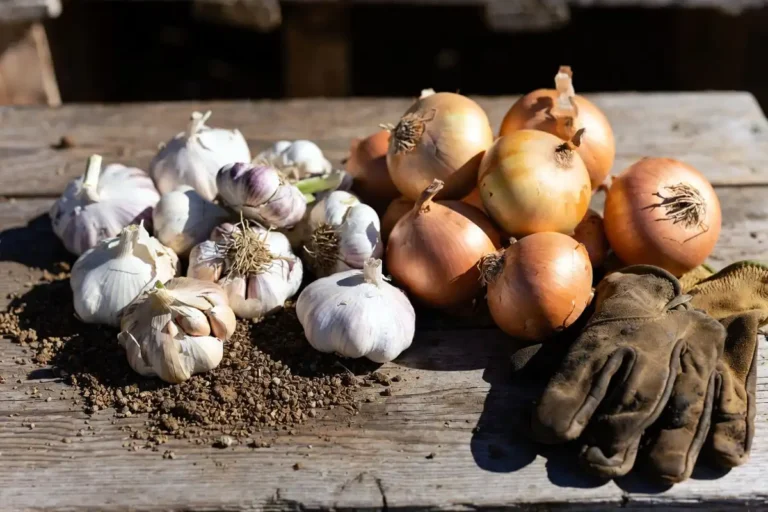
The onion (Allium cepa) sits in the same group as garlic and shallots, and each of those crops forms a true bulb. So when you slice an onion and see rings, you are looking at leaf tissue, not stem tissue. That one fact answers the question for good.
What Is the Difference Between a Bulb and a Tuber?
A bulb is made of modified leaves, while a tuber is made of modified stem. That one difference separates onions from potatoes.
A bulb has three working parts. The basal plate is the compressed stem at the bottom. The fleshy scales are swollen leaf bases that hold sugar and water. Thin roots grow down from the plate, and a new shoot pushes up from the center. Onion, garlic, tulip, and daffodil all follow this build.
A tuber works differently. It is a length of stem that fattens underground and stores starch. The small dents on a potato, the eyes, are actually buds that sprout into new plants. Because a tuber carries buds across its surface, you can cut it into pieces and grow several plants from one potato. You cannot do that with an onion.
What Is the Structure of an Onion?
An onion has three parts: a basal plate, fleshy scales, and a papery tunic.
The basal plate is a short, hard stem. Roots grow down from it, and leaves grow up from it. When you trim the hairy end off an onion, that is the basal plate under your knife.
The fleshy scales are the thick rings in a cross section. Each ring is the swollen base of a leaf. These scales hold the sugar and water that carry the plant through dormancy.
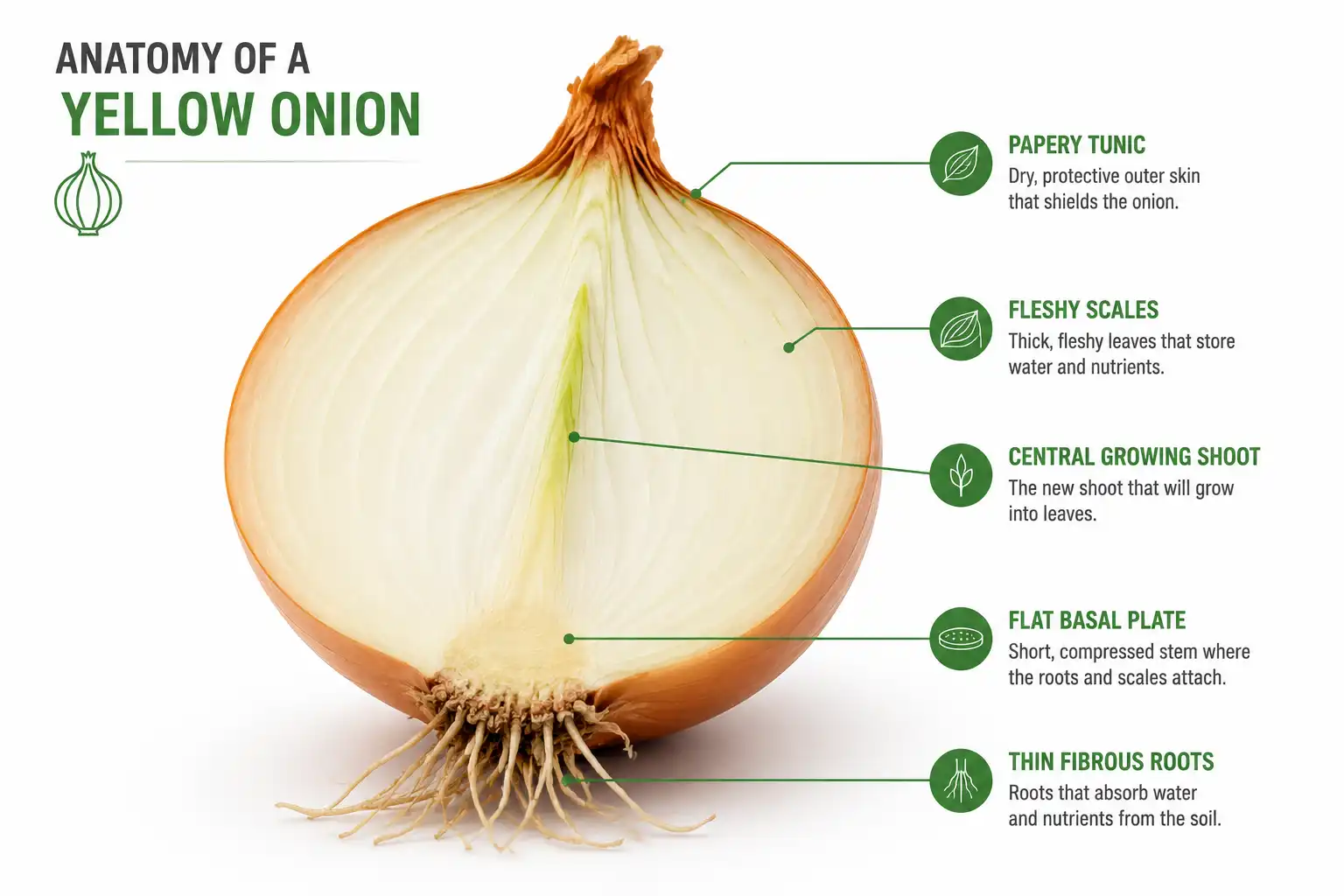
The tunic is the brown, papery skin on the outside. It guards the bulb against drying and rot. Because of that papery wrap, botanists call the onion a tunicate bulb. University extension guides, including the ornamental bulb resources from UF/IFAS, place the onion in the true bulb group for the same reason. Tulips and daffodils share this tunic style, while lilies do not.
Why Do People Think Onions Are Tubers?
People think onions are tubers because both grow underground and both store energy for the plant. The mix-up is about what they do, not what they are.
Underground storage organs get grouped together in everyday talk. A potato, an onion, a ginger rhizome, and a gladiolus corm all bank food below the soil. Yet each one uses a different plant part to do it. Function does not equal form. So an onion can act like a potato in the pantry and still be built nothing like one.
Are Onions Roots?
No, onions are not roots either. The bulb grows above the true roots, and those roots hang down from the basal plate as thin, fibrous strands.
What you eat is leaf tissue, not root tissue. So an onion is nothing like a carrot or a beet, which are swollen taproots. It also differs from a sweet potato, which stores food in a fleshy root rather than a bulb or a stem. Let a bulb mature and save your own onion seed. The plant then sends a flower stalk straight up from that basal plate. That stalk is more proof the bulb is a stem and leaf system, not a root.
How Do Onions Compare to Garlic and Potatoes?
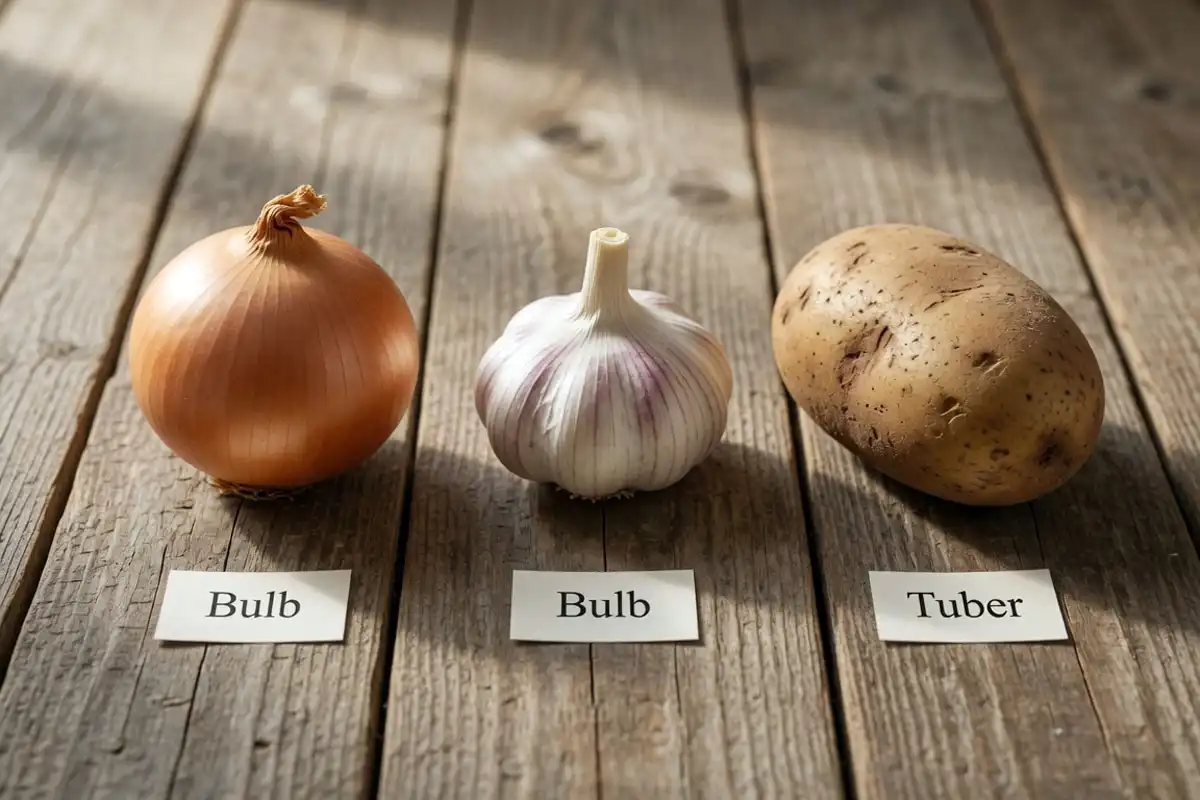
Garlic is a bulb like the onion, while a potato is a tuber. So an onion has far more in common with garlic than with a potato.
Garlic (Allium sativum) forms a bulb split into cloves, and each clove is a small bulblet that grows its own plant. The potato (Solanum tuberosum) belongs to the nightshade family and stores starch in a stem tuber. Onions, garlic, leeks, and chives all sit in the Allium group, and every one of them forms a bulb. Here is how the three crops line up.
| Crop | Storage organ | What you eat |
|---|---|---|
| Onion | True bulb | Fleshy leaf scales |
| Garlic | True bulb (cloves) | Clove leaf tissue |
| Potato | Stem tuber | Swollen stem |
That table makes the split plain. Onions and garlic store food in leaf tissue. Potatoes store it in stem tissue. So when you are planting garlic and onions together, you are really setting two bulbs on one schedule.
Does It Matter Whether an Onion Is a Bulb or a Tuber?
Yes, it matters for how you plant, grow, and store the crop. Bulbs and tubers spread and cure in different ways.
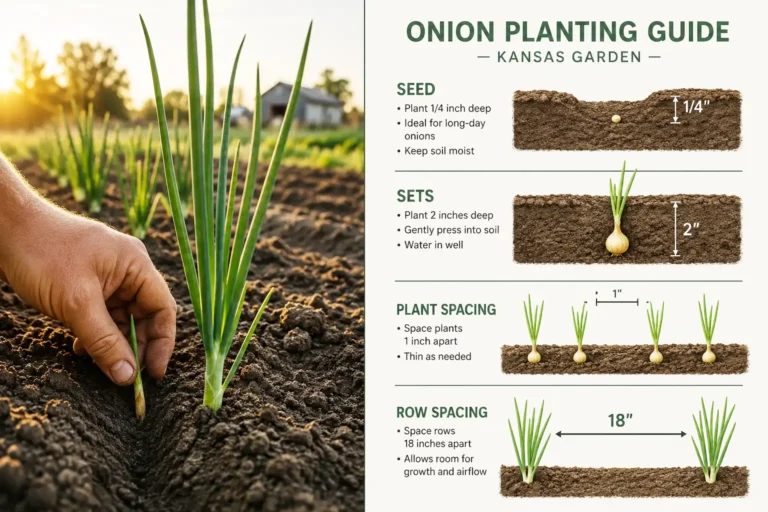
You start onions three ways: from seed, from sets (small dormant bulbs), or from transplants. Each method plants a whole bulb or a single seed, never a cut piece. Starting onions from seed gives you the widest choice of varieties and the lowest cost per plant. Sets are the fastest route for a first-time grower. Your planting window depends on your zone, and in mild regions, fall onion planting sets you up for an early summer crop.
Potatoes go in as seed pieces instead. You cut a seed potato so each chunk carries at least one eye, then let the cuts callus before planting. Cutting and curing seed potatoes the right way keeps rot down in cool spring soil. You cannot handle an onion this way, because an onion has no eyes to cut around.
Storage differs too. Onions need curing after harvest so the necks and papery tunic dry down. Iowa State University Extension notes that onions cure best once the tops fall and the necks tighten. After that, they hold for months in a cool, dry spot. Potatoes want cool, dark, and slightly humid storage, with no light, or they turn green. Two organs, two playbooks.
Final Words
An onion is a bulb, and a potato is a tuber. That is the whole answer. The onion keeps its food in leaf scales around a basal plate, while the potato keeps it in swollen stem tissue. Knowing which is which tells you how to plant each crop and how to store it. It also explains why you can cut a potato into pieces but never an onion. Get that straight, and the rest of your onion growing gets simpler.