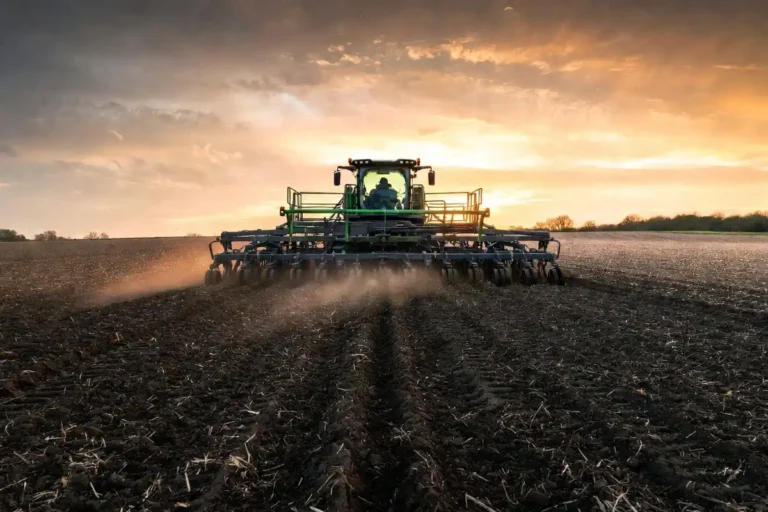
How to Plant Sugar Beets: Depth, Spacing, and Stand Tips
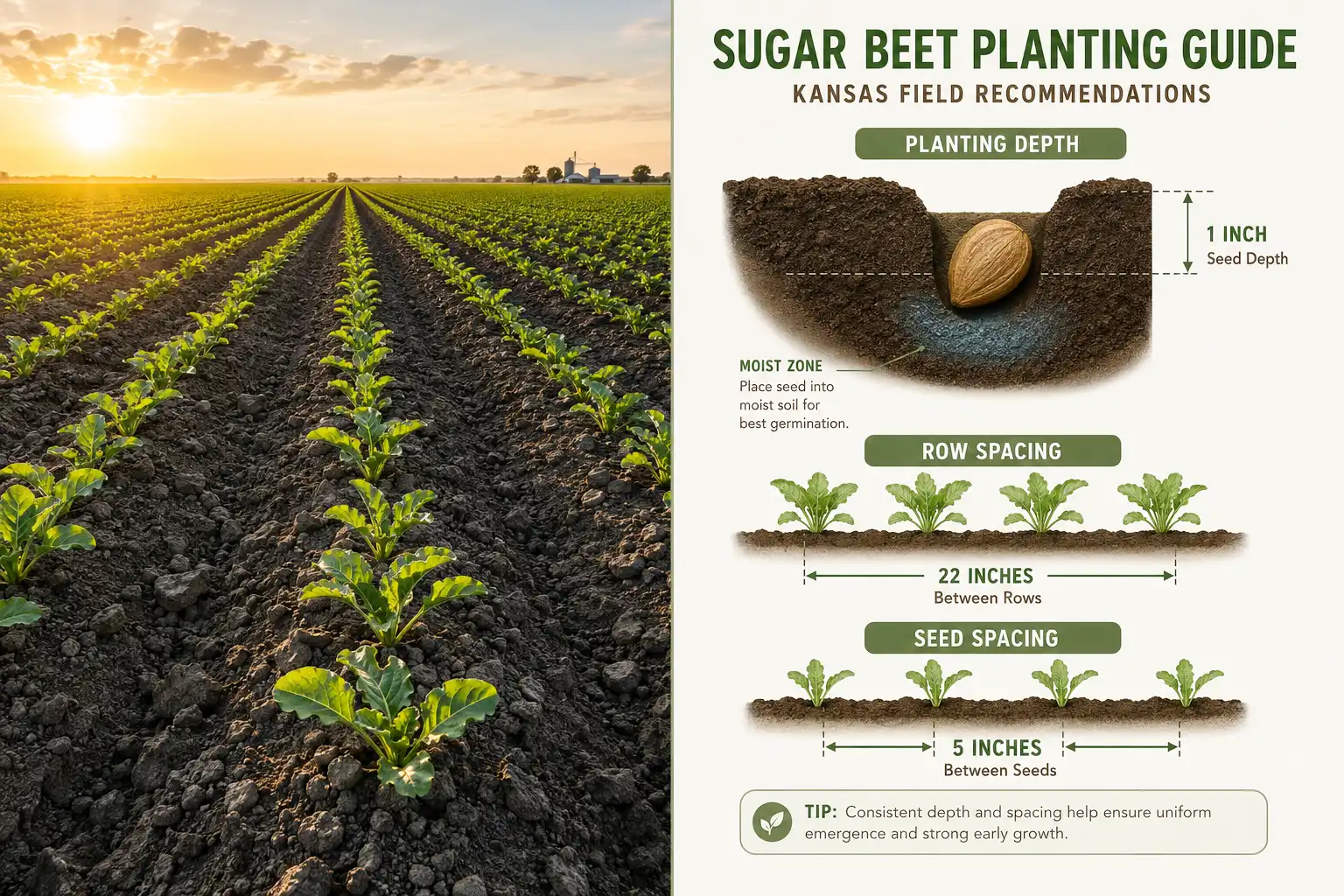
Sugar beets reward growers who get the small details right at planting. Seed goes in shallow, into moisture, on a firm bed. Miss the depth by a quarter inch and your stand thins fast.
Plant sugar beets shallow, 0.75 to 1.25 inches deep, into moist soil on a firm, level seedbed. Space seeds about 4 to 5 inches apart in 22 inch rows. Plant early, once soil reaches 40 to 50°F.
What Sugar Beets Need to Start Well
Sugar beets are a cool-season root crop grown from seed, not transplants. The plant, Beta vulgaris, sends down a deep taproot, so it hates being moved. That is why growers direct-sow beets right where they will grow. New to the crop? It helps to know what a sugar beet is before you open a seed bag.
Three things decide your stand: a firm seedbed, correct depth, and steady moisture. Get those right and beets come up even. Miss one and you get gaps. Sugar beet seedlings are weak next to corn or soybeans. They cannot push through a crust or deep soil, so the seedbed matters more here than with most field crops.
Also know: How Sugar Beets Harvested
When Do You Plant Sugar Beets?
Plant sugar beets as early as the soil is workable and warm enough to sprout seed. In Kansas and across the Great Plains, that usually means early spring. Sugar beet seed starts to germinate near 40°F, but it moves faster and more evenly closer to 50°F.
Early planting carries some frost risk, and most growers accept it. The extra weeks of spring sunlight build bigger roots and more sugar. Young beets handle a light frost in the upper 20s°F for a short spell. The riskiest window comes right after the seed sprouts, before it breaks the surface. A hard freeze then can thin the stand.
Soil warms at its own pace each year. The seed zone should be checked with a good a good soil thermometer before rolling. our guide covers sugar beet planting time by region, with cold thresholds, in a separate guide.
How to Prepare Soil for Sugar Beets
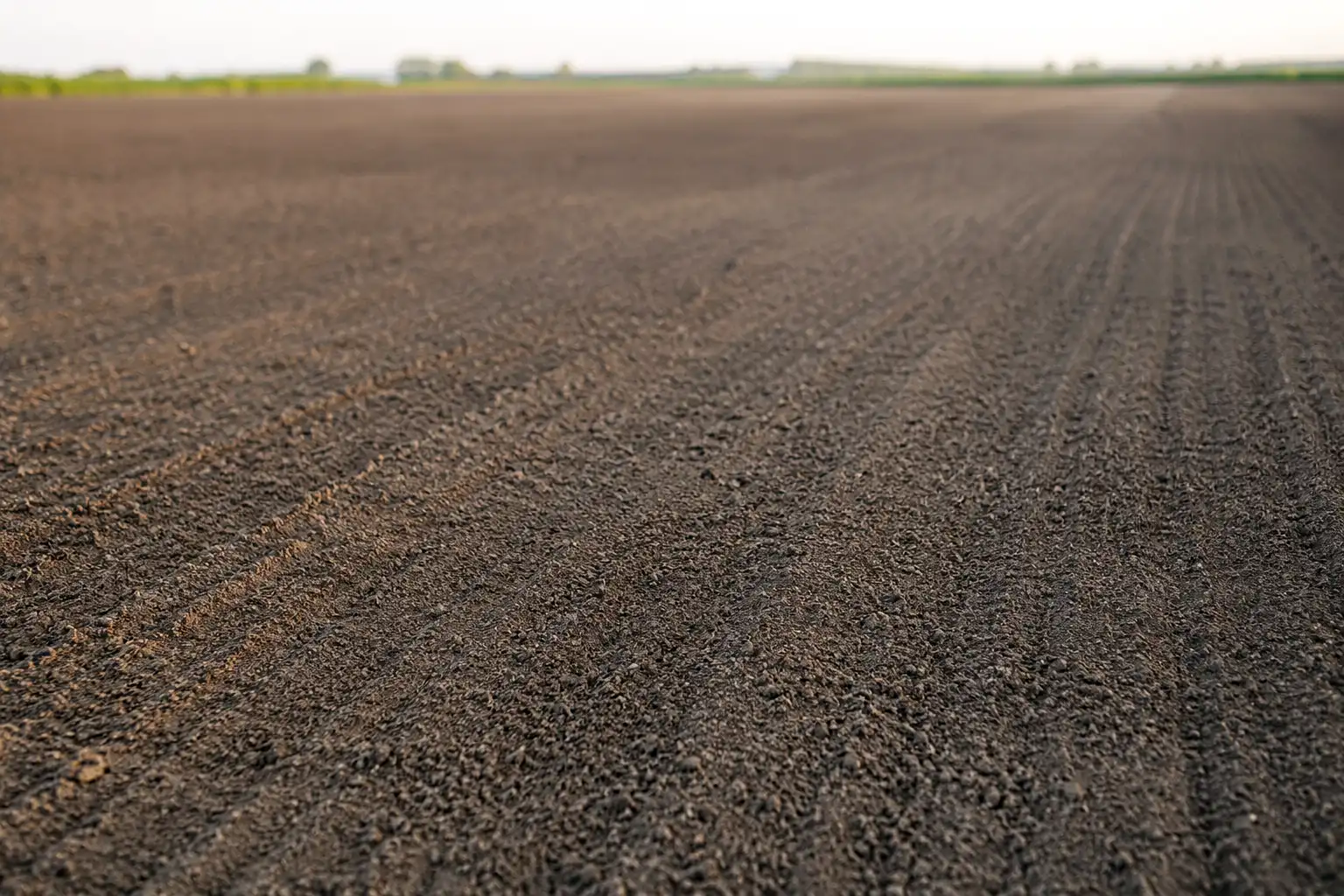
Prepare a firm, level seedbed that holds moisture near the surface. Sugar beets do best in deep, well-drained loam with good structure. Start seedbed work in the fall with primary tillage that leaves the ground level. Then, in spring, make one shallow pass, about 1 to 2 inches deep, right before planting.
Keep spring tillage to a minimum. Every extra pass dries the seed zone. Working too deep also creates loose, fluffy soil, and seed sinks after the first rain. A firm bed gives good seed-to-soil contact, which drives even germination. Many growers now run a stale seedbed and plant with almost no spring tillage at all.
Soil pH matters too. Sugar beets tolerate a wide range, roughly 6.0 to 8.0, and they handle mildly alkaline ground better than most crops. Below 6.0, growth slows. A sample gets pulled every couple of years with a soil test kit. That way, pH and nutrients are set from numbers, not guesses. Deep, loose, well-drained soil also prevents forked roots, which come from compaction and clods.
Which Sugar Beet Seed Should You Plant?
Plant monogerm sugar beet seed for a clean, single-plant stand. Each monogerm seed grows one seedling, so you skip the heavy thinning that older seed types demand. Most commercial seed today is monogerm, pelleted, and treated. The pellet gives a round, uniform shape that planters meter accurately.
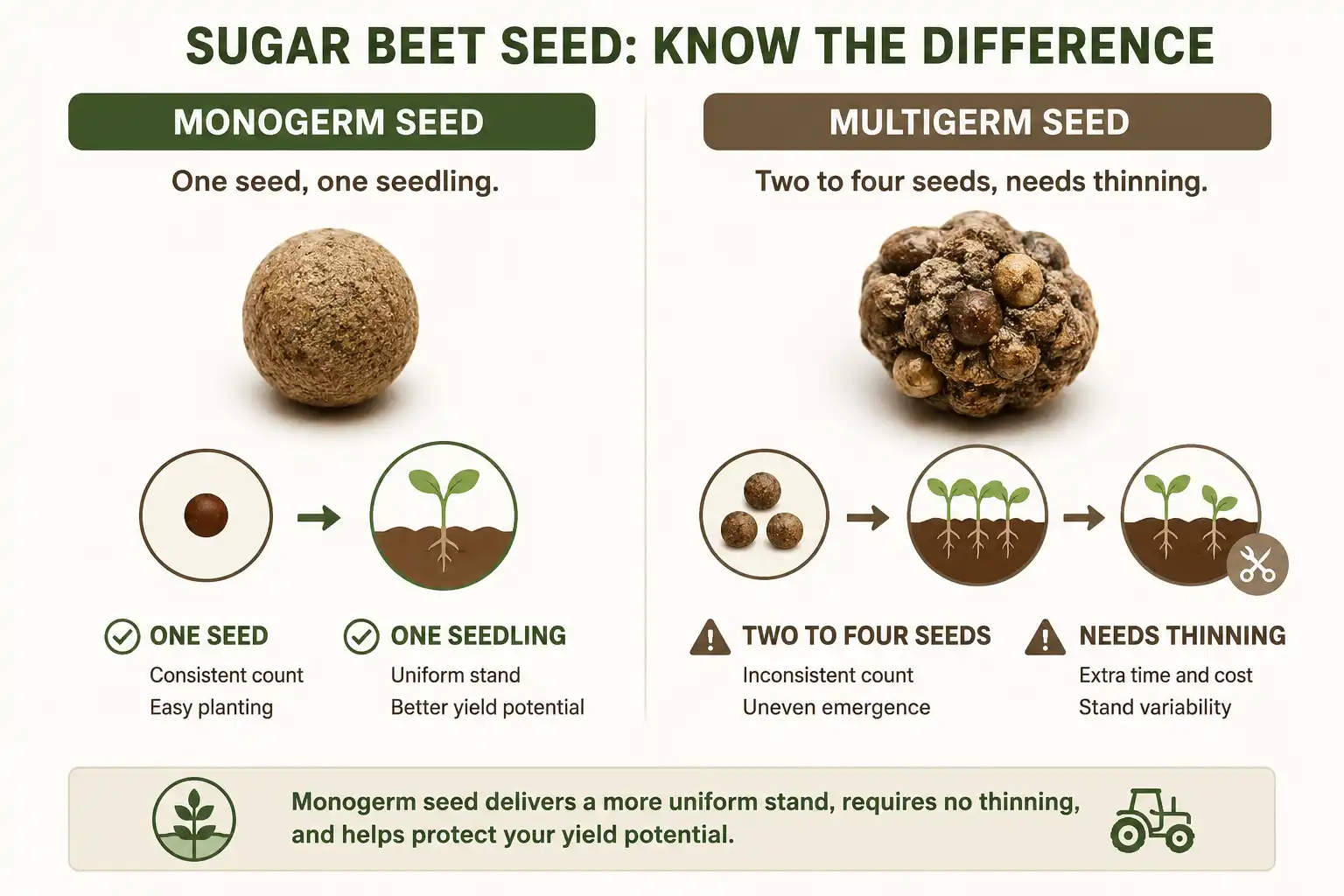
Garden and homestead packets sometimes sell multigerm seed balls. Each ball holds two to four seeds. Seedlings come up in clumps and need thinning later. Either type works. Just match your spacing plan to the seed you buy.
Seed treatments matter at planting. Most modern sugar beet seed comes coated with fungicide, and often insecticide, to protect the weak seedling. In fields with past insect pressure, growers add an at-plant insecticide. For a garden, soak plain seed in water for 12 to 24 hours before sowing to speed germination.
How Deep Do You Plant Sugar Beet Seeds?
Plant sugar beet seeds 0.75 to 1.25 inches deep, and aim for about 1 inch. North Dakota State University guidance puts the range at 1 to 1.25 inches for strong germination. Depth is the single biggest factor in a good stand. Sugar beet seedlings are small and weak, so they cannot climb out of deep soil.
Set depth to reach moisture, not a fixed number. A change of just a quarter inch can put seed into moist soil or leave it in dry dust. Walk the seed zone before you plant. If the top crust powders and the layer under it feels dry, wait for rain or irrigate first. Never plant deeper than 1.5 inches. Deeper seed comes up late and uneven, and some never makes it.
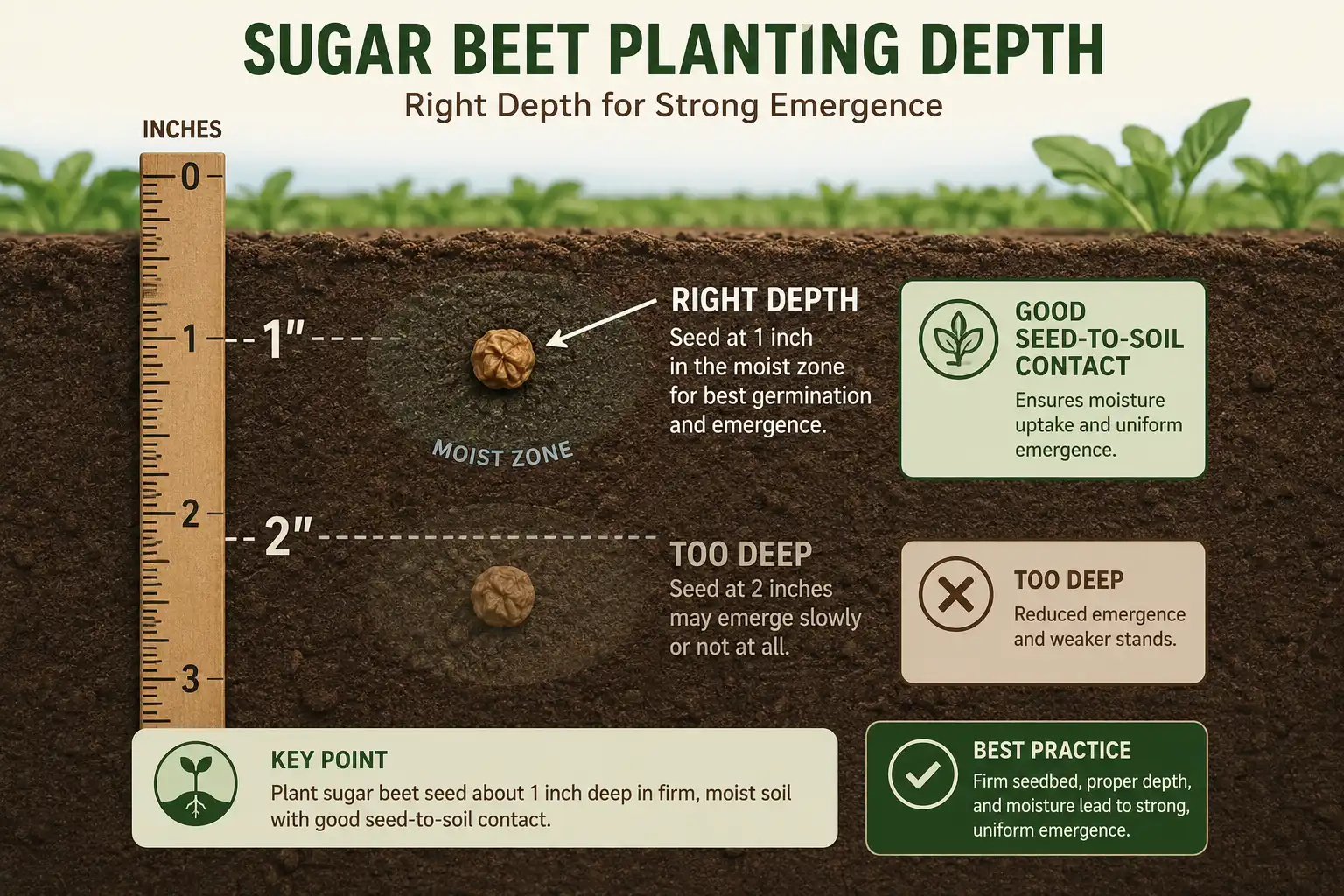
In a home garden, 0.5 to 1 inch works well in loose beds. Cover lightly and firm the soil over the seed for contact.
Row and Seed Spacing for Sugar Beets
Space sugar beet rows 22 inches apart for field plantings. That is the standard across the Red River Valley of Minnesota and North Dakota. Narrow rows give higher, more even plant populations, better weed shading, and better use of summer sunlight. Rows from 20 to 30 inches all work, but yield tends to slip as rows get wider.
Within the row, drop seed about 4 to 5 inches apart. With monogerm seed, you plant to a final stand and skip thinning. Field emergence usually runs 60 to 70%, according to Michigan State Extension research, so growers plan spacing around that. A common target is 175 to 225 beets per 100 feet of row. In 22 inch rows, that lands near 45,000 plants per acre. In 30 inch rows, aim closer to 35,000.
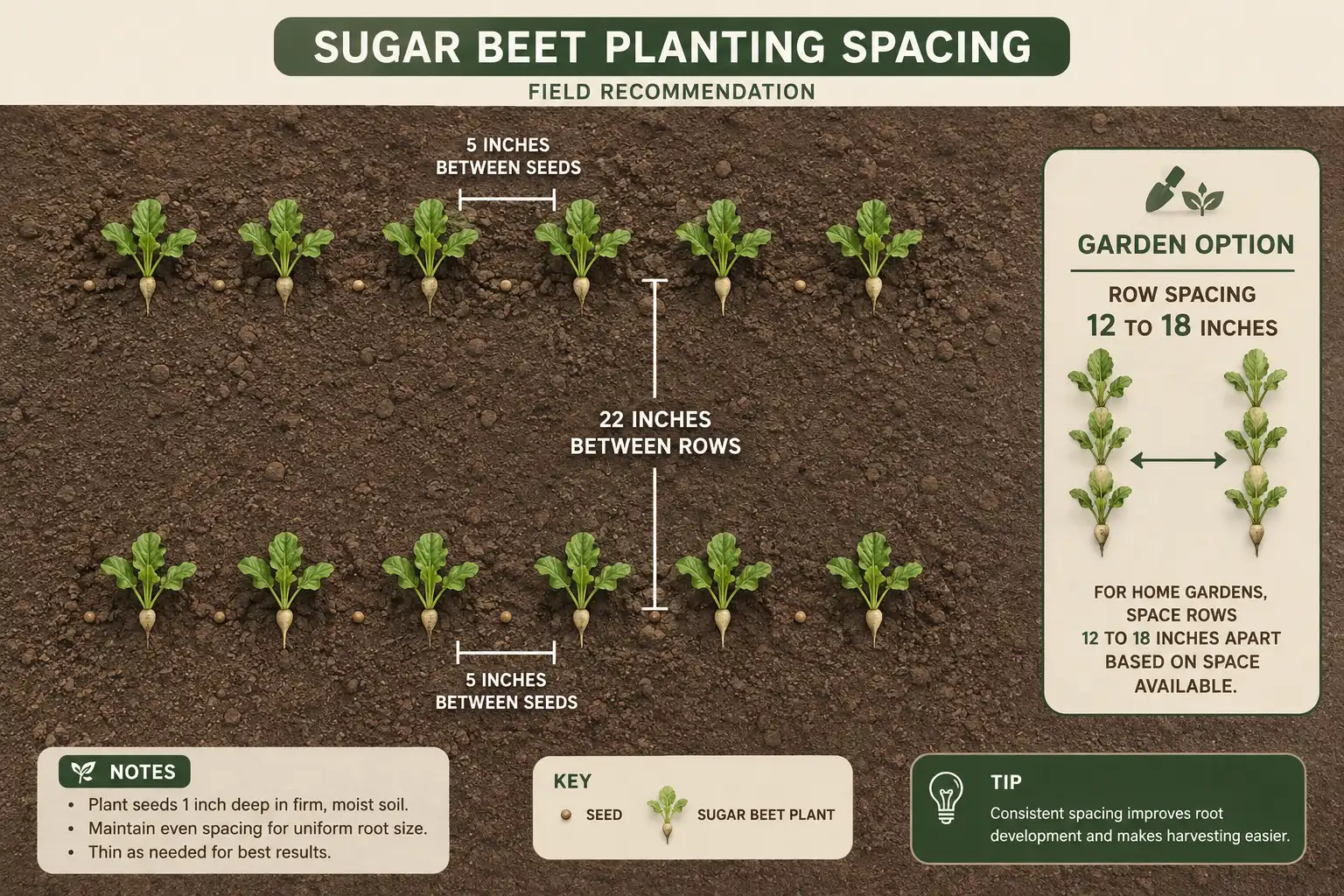
Garden rows can sit 12 to 18 inches apart. Sow seed 1 to 2 inches apart, then thin. The same logic behind getting plant spacing right in any row crop applies to beets. You want enough plants for yield and enough room for each root to size up.
How to Plant Sugar Beets Step by Step
Follow the same core steps whether you run a planter or a garden hoe. The scale changes; the fundamentals do not.
For field-scale planting:
- Prep a firm, level seedbed the fall before, then make one shallow spring pass.
- Check soil temperature and moisture in the seed zone before you roll.
- Set your planter to place seed 0.75 to 1.25 inches deep, into moisture.
- Meter monogerm seed at 4 to 5 inch spacing in 22 inch rows.
- Keep starter fertilizer off the seed. Sugar beets are salt-sensitive, so hold in-furrow rates very low, near 5 pounds per acre or less.
- Make sure the seed trench closes fully behind the planter.
- Inspect your planter units before the season. Worn plates and vacuum leaks cause skips and doubles.
For a home garden:
- Loosen the bed 8 to 12 inches deep, then rake it level and firm.
- Soak seed 12 to 24 hours if it is plain, untreated seed.
- Open shallow furrows 0.5 to 1 inch deep, 12 to 18 inches apart.
- Sow seed 1 to 2 inches apart and cover lightly.
- Firm the soil over the seed and water gently.
- Keep the surface evenly moist until seedlings emerge.
What Happens After You Plant?
Sugar beet seedlings usually emerge in 5 to 14 days, depending on soil temperature and moisture. Cold soil slows things down. In warm, moist soil near 60 to 70°F, you may see cotyledons in about a week. The first leaves to show are the two seed leaves, or cotyledons, and true leaves follow.

Watch for crusting after a hard rain. A crust can trap weak seedlings underground. If a crust forms before beets break through, a light irrigation can soften it. In a garden, thin multigerm clumps once seedlings reach a few inches tall. Pull or snip the extras so plants stand 3 to 4 inches apart. With monogerm field seed planted to stand, you skip this step.
Start weed control early. Small beets lose fast to weeds for sunlight and water. Keep the row zone clean until the canopy closes over the middles.
Planting Mistakes That Thin Your Stand
A few avoidable errors cause most poor sugar beet stands. Fix these and emergence takes care of itself.
- Planting too deep. Anything past 1.5 inches leaves weak seedlings stuck below the surface.
- Seeding into dry soil. Seed out of the moisture zone waits, then comes up ragged.
- A loose, fluffy seedbed. Poor seed-to-soil contact means slow, patchy germination, and seed sinks after rain.
- Ignoring crust. A hard crust after rain blocks emergence, so break it with light water.
- Compaction and clods. Both fork the taproot and cut root quality.
- Planting into cold, wet soil. Seed sits, rots, and invites seedling disease.
What This Looks Like in Practice
Sugar beet planting comes down to patience and a firm bed. Prep is done in the fall, then planting happens shallow into moisture once the seed zone warms. It is better to wait three days for the right conditions than chase a date and lose a stand. Once the stand is up, the job changes. Growing sugar beets through the season brings a different set of decisions, from fertility to harvest.