When to Cut Sorghum-Sudan Grass for Hay: Height and Stage Guide
Thick stems and fast growth make this forage easy to grow and hard to cure. Knowing when to cut sorghum-sudan grass for hay protects protein, regrowth, and animal safety at the same time. Height and growth stage set the date, not the calendar.
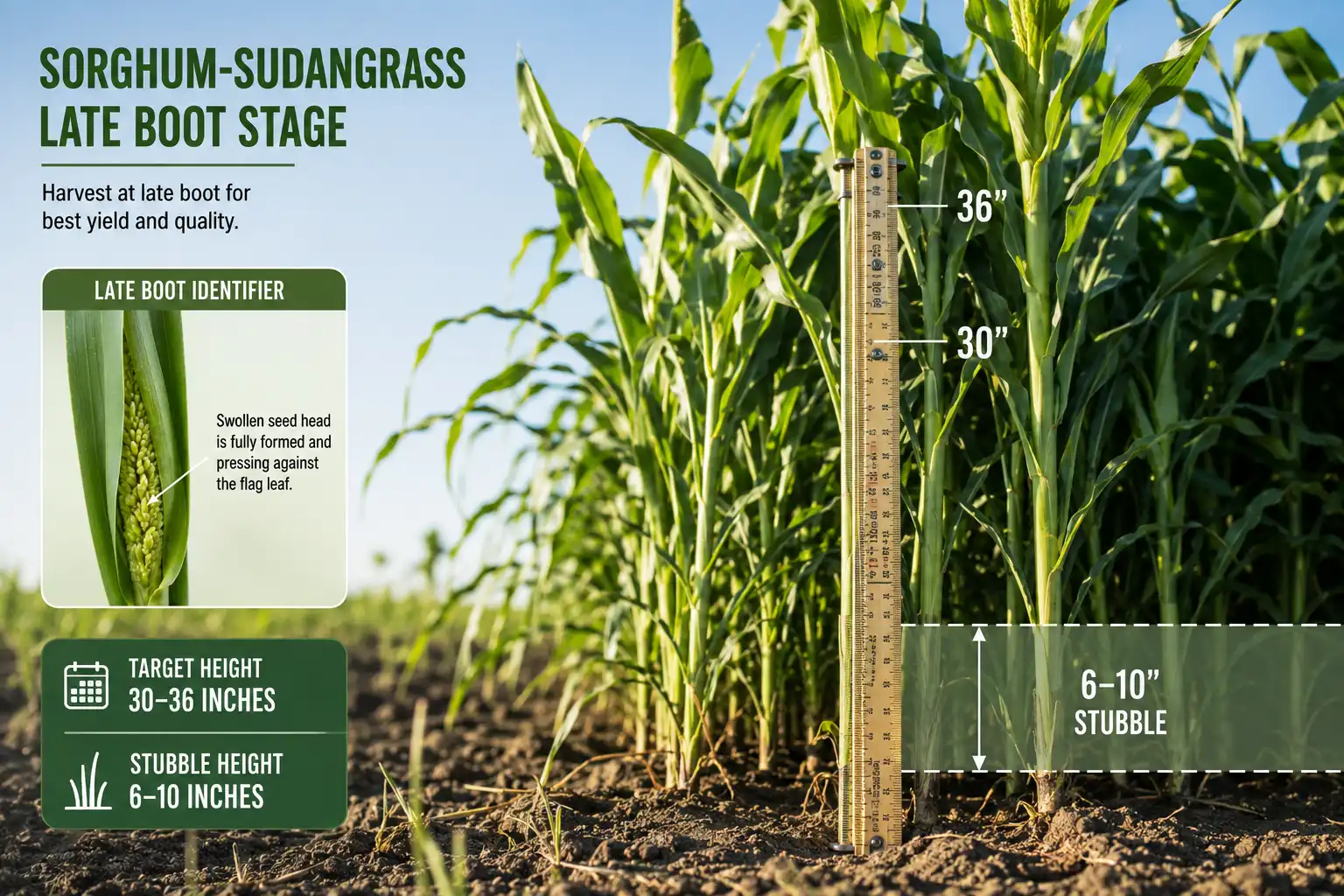
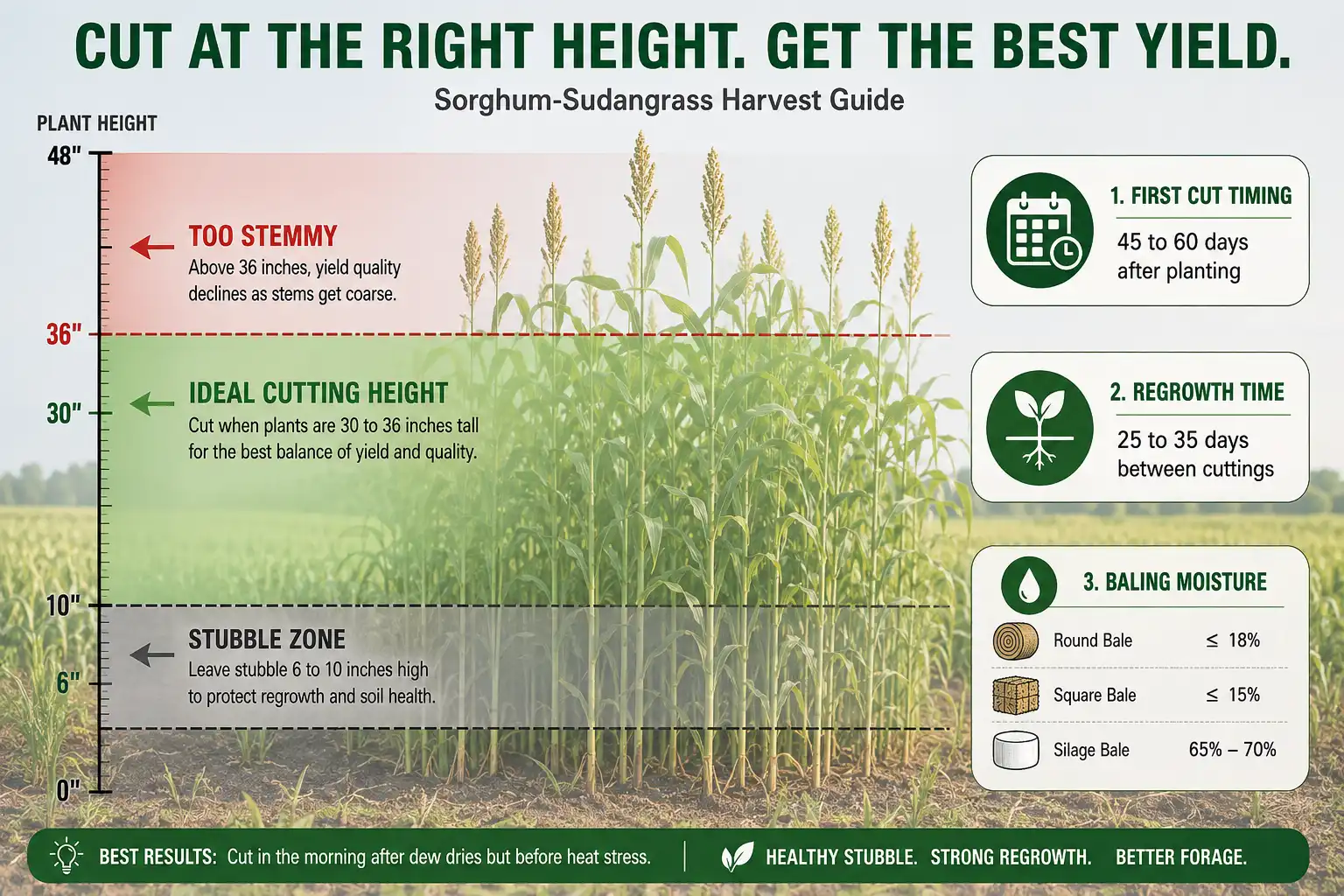
Cut sorghum-sudan grass for hay once accumulated growth reaches 30 to 36 inches, at late boot before heads show. University of Missouri Extension sets that height target. Then leave 6 to 10 inches of stubble and crush the stems hard.
What Is Sorghum-Sudan Grass?
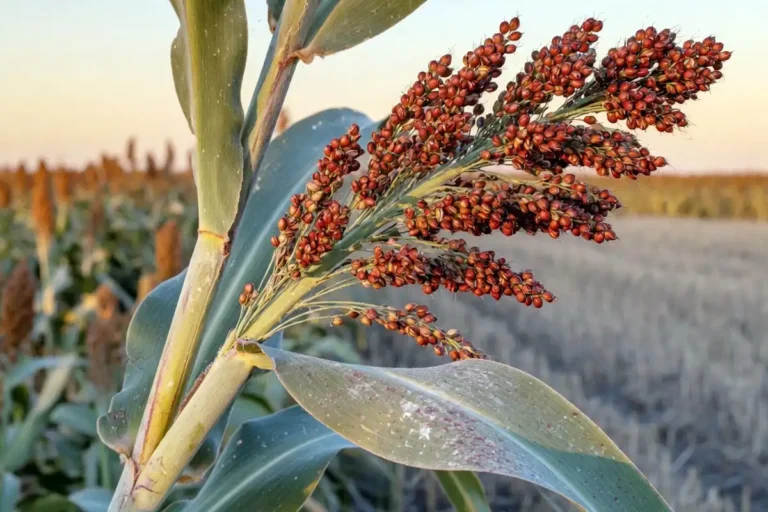
Sorghum-sudan grass is a warm-season hybrid forage bred from grain sorghum and sudangrass. It grows fast in hot weather, handles drought better than corn, and delivers two to three cuttings per season. Farmers use it for hay, haylage, silage, and summer grazing.
The stems grow thick and the leaves stay broad. That combination gives high tonnage but slows drying compared to most grasses.
When to Cut Sorghum-Sudan Grass for Hay
Cut at 30 to 36 inches of accumulated growth, while the head still sits inside the flag leaf. University of Missouri Extension gives that height as the hay trigger. Growth past 36 inches turns stemmy and low in quality, per the same publication. University of Georgia Extension allows a slightly wider window, 30 to 40 inches at early head. Penn State Extension takes the tightest line. Start at 30 inches, and do not delay. These stands can reach 4 feet in a hurry.
So the working rule stays simple. Measure the tallest stems, not the average canopy. Then cut before heads break out. This crop earns its keep as forage rather than grain, which is why the target sits before heading. The broader split in uses for sorghum follows that same line.
| Source | Cut for hay at | Stubble to leave |
|---|---|---|
| University of Missouri Extension | 30 to 36 inches, before heads emerge | 6 to 10 inches, 10 for top yield |
| University of Georgia Extension | 30 to 40 inches, early head | 6 to 8 inches |
| Penn State Extension | Begin at 30 inches, do not delay | 6 to 8 inches |
First Cutting Timing
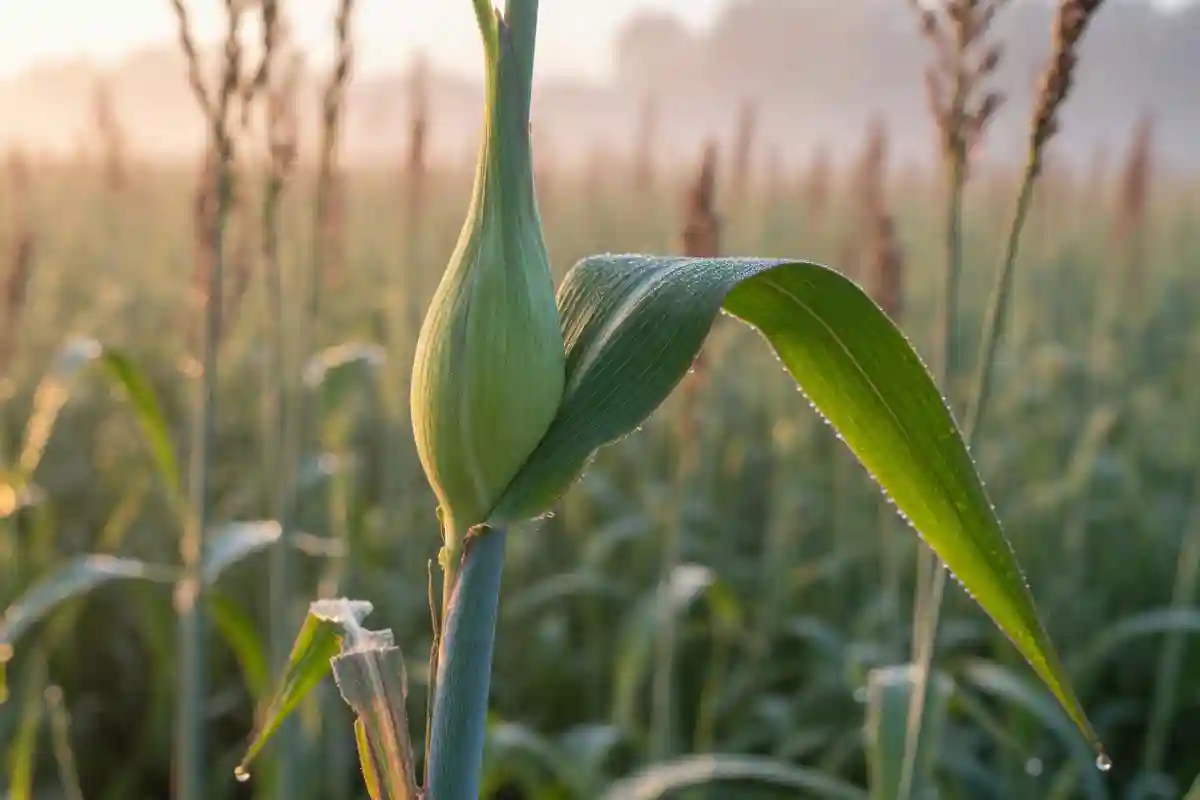
Expect the first cutting 45 to 60 days after seeding. Missouri Extension uses that same range for first grazing. Heat drives the pace, so a hot June shortens it. Also, 90 percent of production lands in June, July, and August. An early stand can therefore hit cutting height well before the calendar suggests.
Warm nights push growth faster than most growers expect. This crop can add several inches in a week. So scout twice weekly once stems pass 24 inches. For a sense of how far these plants run, see how tall sorghum gets by type.
Regrowth Cuttings
Regrowth can be ready fast. Penn State Extension reports second cutting in as little as 25 days. That pace needs good growing conditions. When moisture tightens, 30 to 45 days is more typical. Missouri Extension advises cutting whenever accumulated growth reaches 24 to 36 inches.
| Cutting | Typical timing | Height trigger |
|---|---|---|
| First | 45 to 60 days after seeding | 30 to 36 inches |
| Second | 25 to 45 days after first cut | 24 to 36 inches |
| Third | 30 to 45 days after second cut | 24 to 36 inches |
Nitrogen drives that regrowth. Missouri Extension recommends 40 to 60 pounds of nitrogen per acre after each cutting. Split applications also cut nitrate risk. One heavy shot at planting feeds accumulation later instead.
Stubble Height Changes Your Yield
Stubble height matters as much as cutting date. University of Georgia Extension puts the floor at 6 to 8 inches. Below that, regrowth comes back poorly or not at all. University of Missouri Extension goes higher and recommends 10 inches for maximum yield. At that height, regrowth starts from terminal buds instead of buds at the plant base. The same publication reports 4 to 8 tons of forage per acre at a 6 to 10 inch stubble.
Set the cutterbar high, then check it after the first pass. Wheel tracks and soft ground pull the bar lower than the gauge shows.
How Much Quality You Lose by Waiting
Waiting costs protein quickly. Missouri Extension tracks the drop. Crude protein falls from 12 to 14 percent in vegetative growth to 6 to 7 percent at dough stage. Fiber climbs while digestibility slides. So a late cut feeds like straw with tonnage attached.
Brown midrib hybrids soften that penalty. Because BMR types carry less lignin, fiber digests better at the same maturity. Even so, BMR genetics do not cancel the height rule. Stemmy forage stays stemmy, whatever the seed tag says.
Anyone weighing forage against grain should compare this window with grain sorghum harvest timing. That crop waits for seed fill rather than avoiding it.
Cutting and Curing Thick Stems
Cure with a mower-conditioner, always. University of Missouri Extension states it plainly: do not attempt to make hay without one. It also notes that overcrushing these stems is impossible. So use more roller pressure than other hay crops, then drive in low gear.
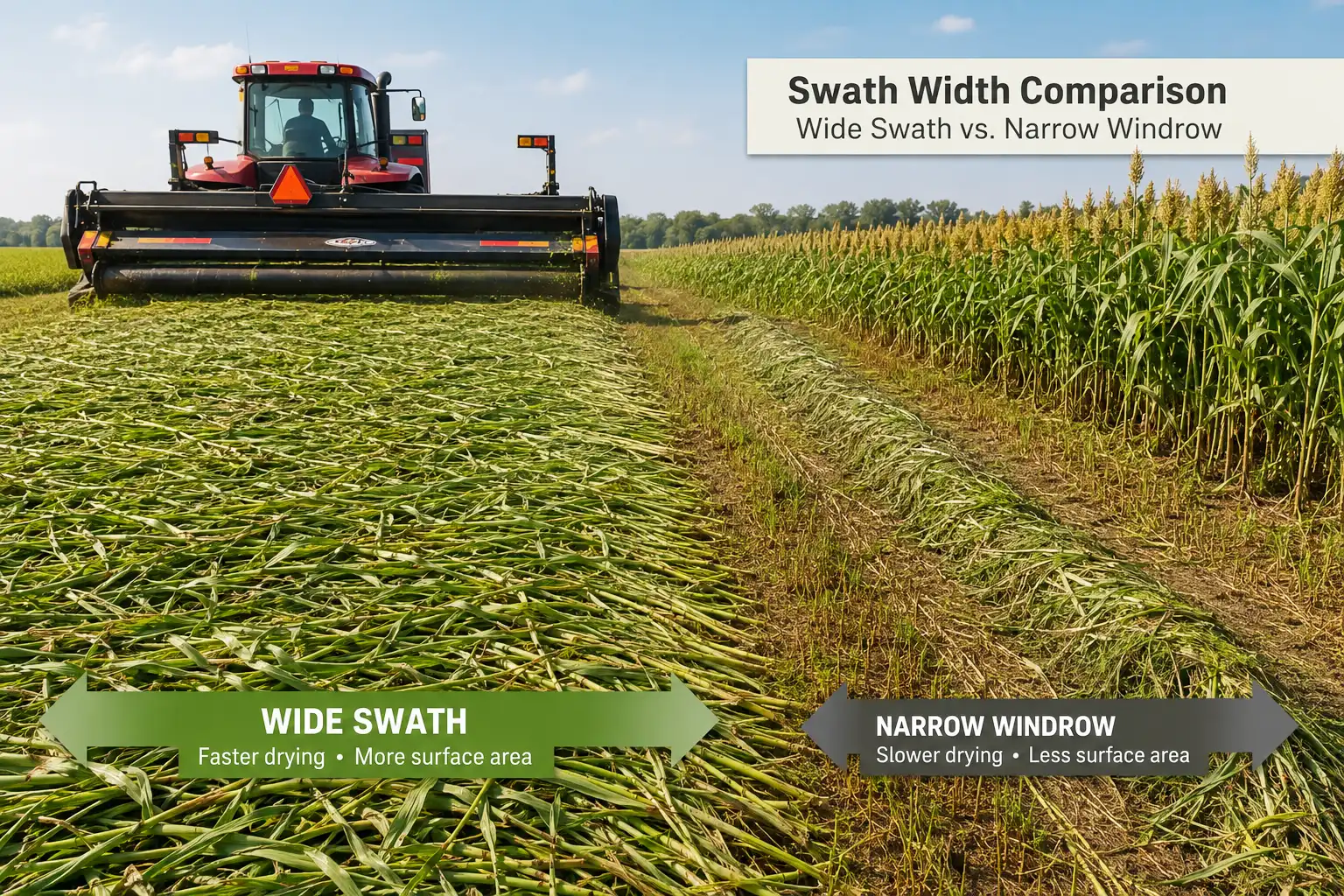
Wide swaths do the rest. Penn State Extension calls for the widest windrow the mower will lay. Surface area drives drydown on a crop this wet. Purdue Extension gives the same advice for hay in general. A wide swath catches more sun, and crimped stems release water faster.
Then wait longer than feels right. Missouri Extension says not to windrow until the swath top is dry enough to bale. That means 15 to 18 percent moisture up top. Raking early buries wet stems inside a rope of hay. Drying then stalls.
Plan on a slow cure even when everything goes right. This forage carries far more water than grass hay at the same tonnage. Stems also hold water long after leaves go brittle. If the forecast will not hold, wrapped baleage or chopped silage handles wet stems better. Both systems preserve forage at much higher moisture. Missouri Extension notes that curing trouble is why grazing often makes better use of the crop.
Baling Moisture and Bale Heat
Bale by package size, not by feel. North Dakota State University Extension caps small square bales at 20 percent moisture. Round bales top out at 18 percent, and large squares at 15 percent. Bigger packages hold heat, so they need drier hay.
| Package | Maximum moisture at baling |
|---|---|
| Small square bales | 20 percent |
| Round bales | 18 percent |
| Large square bales | 15 percent |
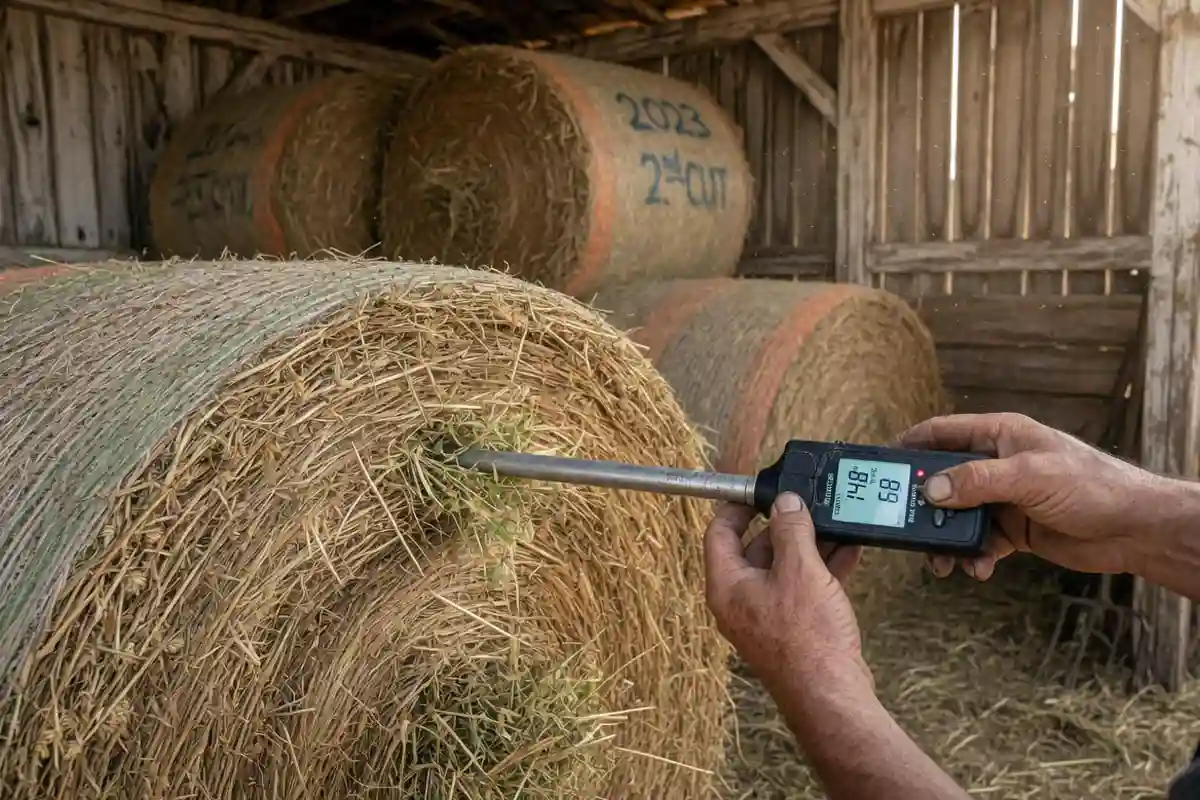
Then watch the stack. Purdue Extension warns about hay stored above 20 percent moisture. Without a preservative, bacteria release heat and drive mold growth. At roughly 150°F in the core, move bales apart for air and keep probing. Above 175°F, fire may be imminent. Call the fire department then, instead of starting the loader.
Check cores daily for the first two weeks after baling. Steam, a caramel smell, or condensation on the barn roof all point the same way. For the habits that protect a finished crop, see these notes on storing harvested crops.
Frost, Drought, Prussic Acid, and Nitrates
Hay and grazing follow different safety rules. Mixing them up causes real trouble. Nebraska Extension puts it directly. With haying, prussic acid is not the main concern, but nitrate can be worse. Prussic acid gasses off as the crop dries, while nitrate stays in the bale.
After a Frost
Wait 5 days after a frost before cutting, per Nebraska Extension. Also raise the cutterbar to 6 to 8 inches. Nitrate concentrates in the lower stem, so a higher cut leaves the worst of it standing. Grazing needs a longer pause. University of Missouri Extension advises 14 days after a severe frost. If leaves stay green longer than that, wait until they turn brown.
New shoots after a light frost carry the highest prussic acid of all. So keep animals off that regrowth until the plants die outright. Nebraska Extension sets 18 inches as the height new growth must reach before grazing resumes.
After Drought
Drought plus heavy nitrogen is the classic nitrate setup. Missouri Extension names excessive nitrogen fertilization as the main cause. Drought, shade, and cool cloudy weather all add to it. Rain that ends a dry spell also triggers high-risk regrowth. Then test suspect hay before feeding, because curing does not lower nitrate.
Purdue Extension documented a hard case. Sorghum-sudangrass there tested 13,000 and 17,300 ppm nitrate on a dry matter basis. That field got 75 pounds of nitrogen per acre, a dry stretch, then rain. Mowing happened at 40 inches with an 8 inch stubble. So a raised cutterbar alone did not make the forage safe.
| Nitrate (NO3), dry basis | Status | Feeding guidance |
|---|---|---|
| 0 to 2,500 ppm | Safe | Generally safe for all classes of livestock |
| 2,500 to 5,000 ppm | Caution | Cap at half the ration for pregnant and young animals |
| 5,000 to 15,000 ppm | Danger | Cap at one fourth of the ration, add energy, minerals, vitamin A |
| Over 15,000 ppm | Toxic | Do not feed |
Those thresholds come from University of Missouri Extension. Check which basis your laboratory used, though. Reports list either nitrate (NO3) or nitrate nitrogen (NO3-N). The two numbers differ by roughly 4.4 times. So a safe-looking figure on the wrong basis becomes a real hazard.
Horses
Never feed this hay to horses. University of Georgia Extension ties sorghum species to spinal cord damage and paralysis in horses. Sorghum x sudangrass hybrids draw the most concern. That condition, sorghum cystitis ataxia syndrome, has no effective treatment. So the standing recommendation keeps sorghum family forage out of equine rations.
Common Mistakes That Cost Quality
- Cutting by the calendar instead of measuring the tallest stems
- Letting stands pass 36 inches while waiting for tonnage
- Mowing without a conditioner, or with light roller pressure
- Raking into a narrow windrow before the swath top dries
- Baling round bales at small square moisture
- Cutting the day after a frost rather than waiting 5 days
- Feeding drought hay without a nitrate test
Small grain hay behaves differently, and the contrast helps. Timing for cutting oats at the right stage hinges on grain fill. Here, height and stem size call the shot instead.
FAQs about Cutting Sorghum-Sudan Grass for Hay
How tall should sorghum-sudan grass be before cutting for hay?
Is it safe to cut sorghum-sudan grass after a frost?
How many hay cuttings can you expect in a season?
What moisture level suits sorghum-sudan hay at baling?
Can sorghum-sudan hay be fed to horses?
Key Points to Carry Into the Field
Measure before you mow. Once the tallest stems reach 30 to 36 inches at late boot, start cutting. Then crush the stems hard and lay the widest swath your mower allows. Leave 6 to 10 inches of stubble so regrowth starts from terminal buds. Bale to the number that matches your package size. Also probe the stack daily for two weeks. Finally, treat frost and drought as testing triggers. Nitrate rides into the bale even when prussic acid does not.