When to Harvest Field Corn: Moisture, Black Layer, and Timing
Field corn is ready to harvest when the grain hits the right moisture, not when the calendar says so. Miss that window and you lose bushels to lodging, ear drop, or costly drying. Knowing when to harvest field corn keeps yield and grain quality in the bin.
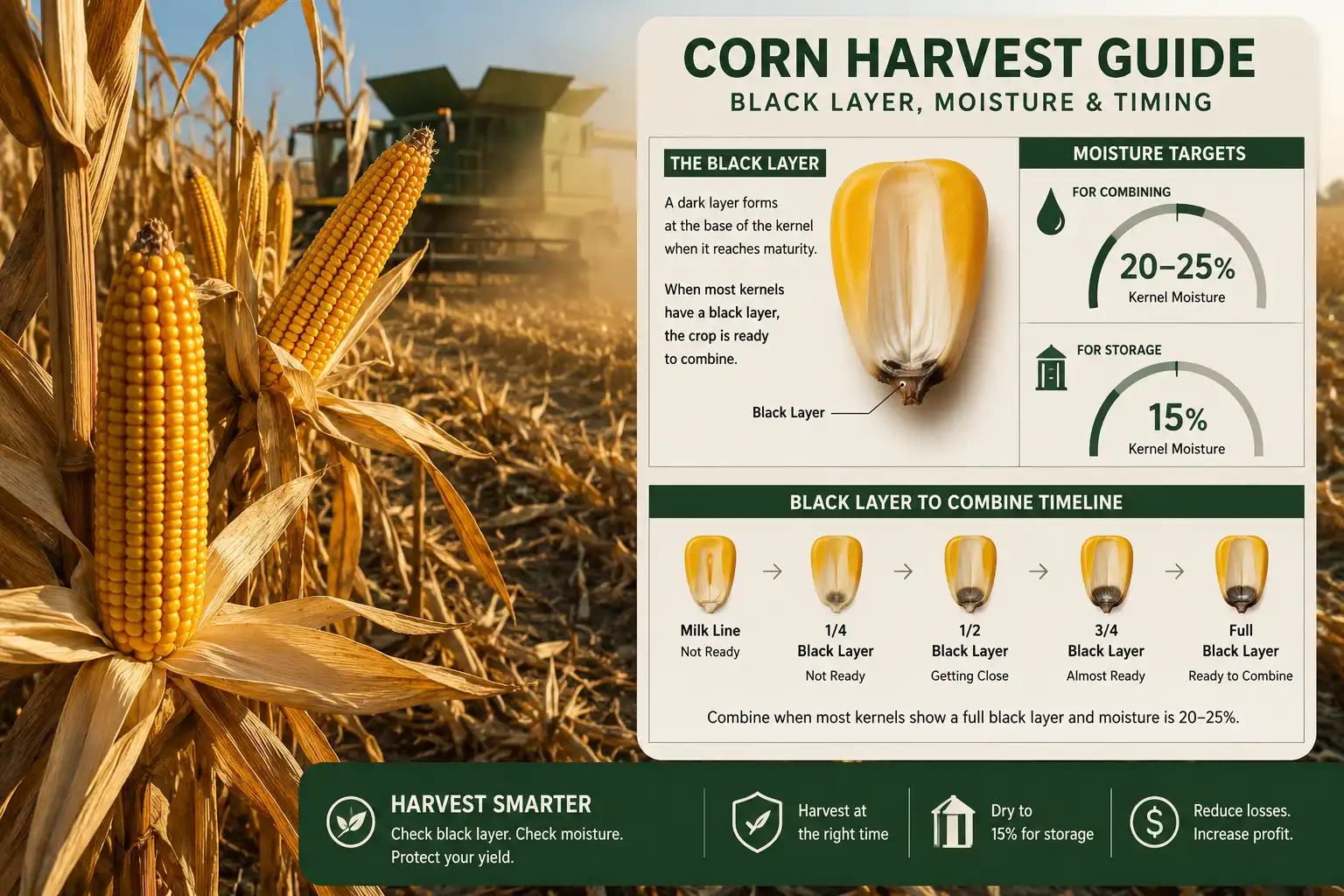
Harvest field corn once kernels reach black layer and grain moisture drops to 20 to 25 percent for combining. Then dry it to 15 percent for storage, or near 13 percent to hold it past a year.
When Is Field Corn Ready to Harvest?
Field corn is ready to harvest once it reaches black layer, then dries to a moisture you can combine cleanly. Black layer is physiological maturity. At that point the kernels have stacked all the dry weight they ever will. Frost can no longer cut your yield.
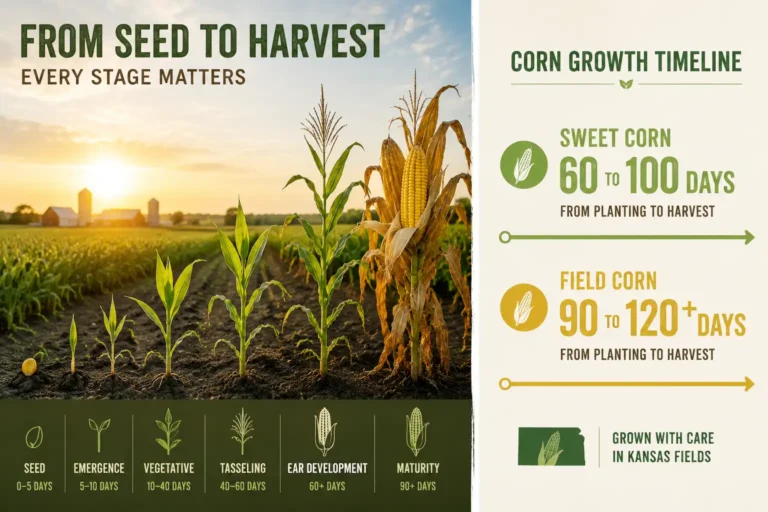
So there are really two clocks. First the crop has to mature. Then the grain has to dry down in the field. Black layer usually lands about 55 to 65 days after silking, depending on your hybrid and the heat. Growing degree units drive that pace, so a cool summer stretches it out. That window is the tail end of how long corn takes to grow, and it slides with your planting date.
At black layer the grain still sits around 30 to 35 percent moisture. That is mature, but far too wet to store. This is dent corn grown for grain, not sweet corn. That grain then needs to lose 10 to 20 more points before it belongs in the bin.
How to Spot Black Layer in the Field
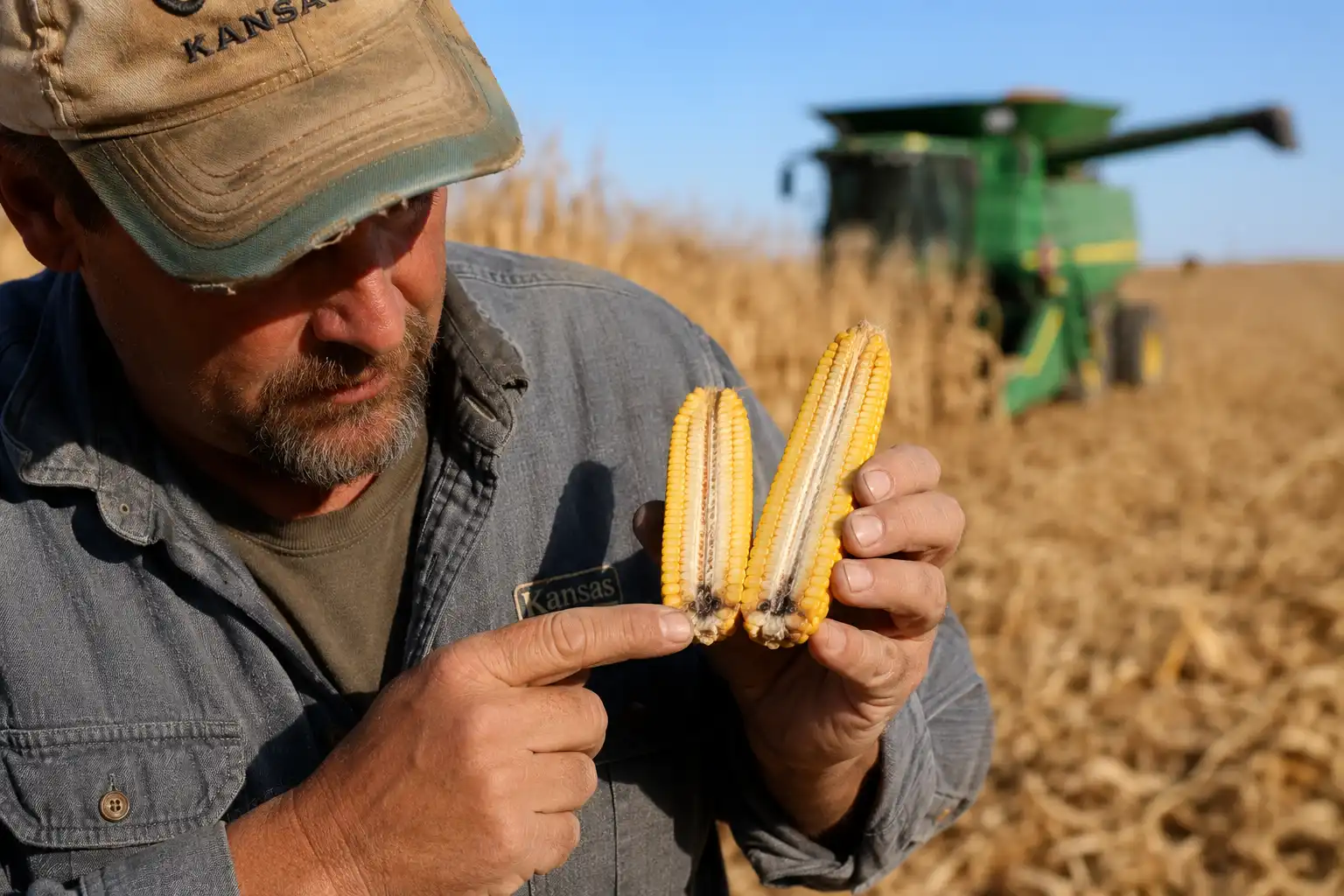
Pull an ear, snap a kernel off the cob, and look at the base where it was attached. A dark brown or black layer there means that kernel is mature. Check several ears from different spots, because one plant does not speak for the whole field.
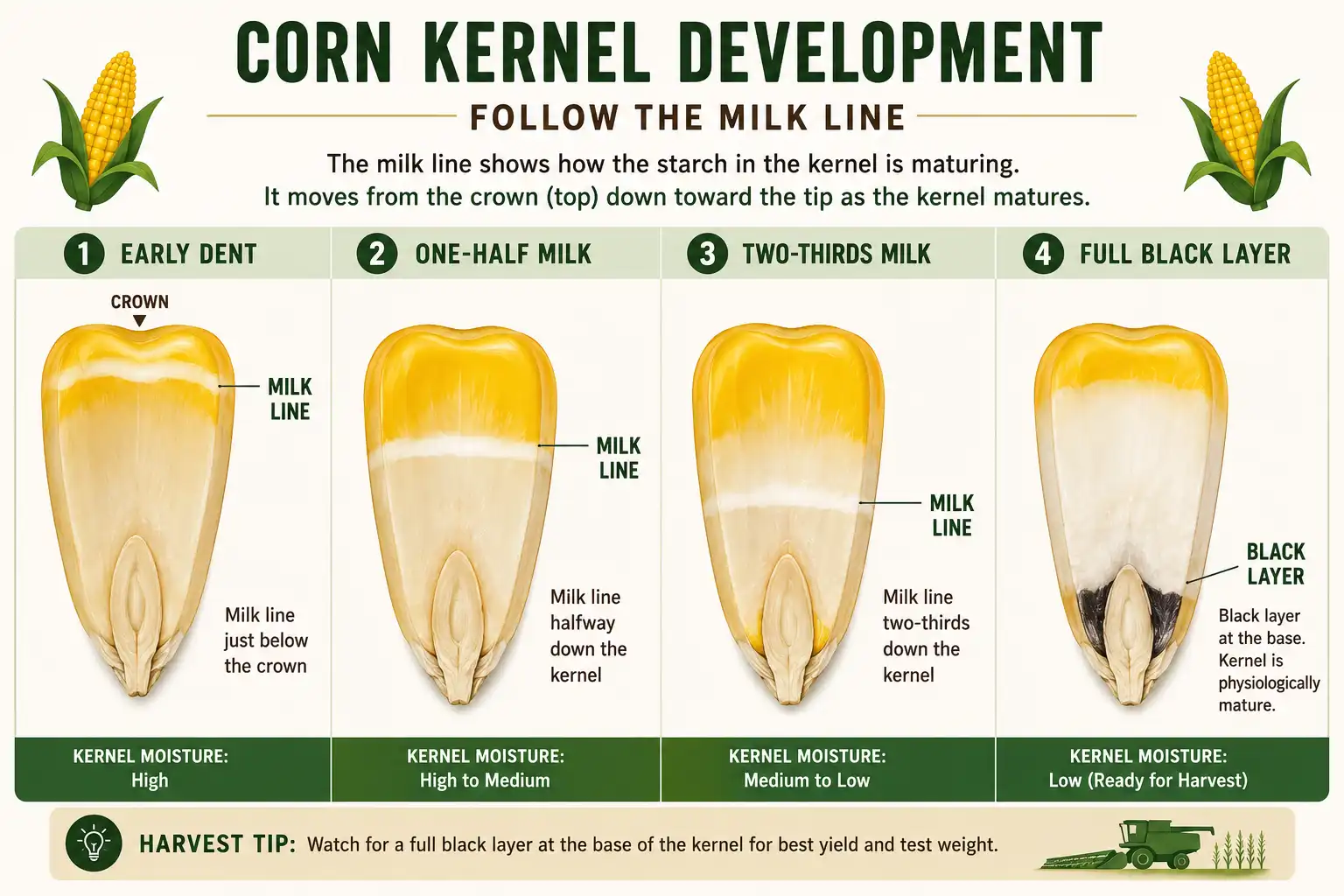
The milk line tells you how close you are before black layer forms. That line is where the hard starch meets the soft, milky starch inside the kernel. It starts near the crown at dent and moves down toward the tip. When it disappears, the black layer seals the kernel off.
Once black layer sets in and the ears dry down to around 15 to 20 percent moisture, a hand crank corn sheller handles the shelling without much hassle.
What Moisture Should Field Corn Be at Harvest?
For dry grain, start combining field corn around 20 to 25 percent moisture. You can roll earlier if you have to. Most combines shell corn cleanly at 25 percent, and rotary machines handle it wetter still.
Harvest too wet, above roughly 30 percent, and you crack kernels and break cobs through the machine. Let it field-dry too long and you trade drying cost for field loss. That is the balance every fall.
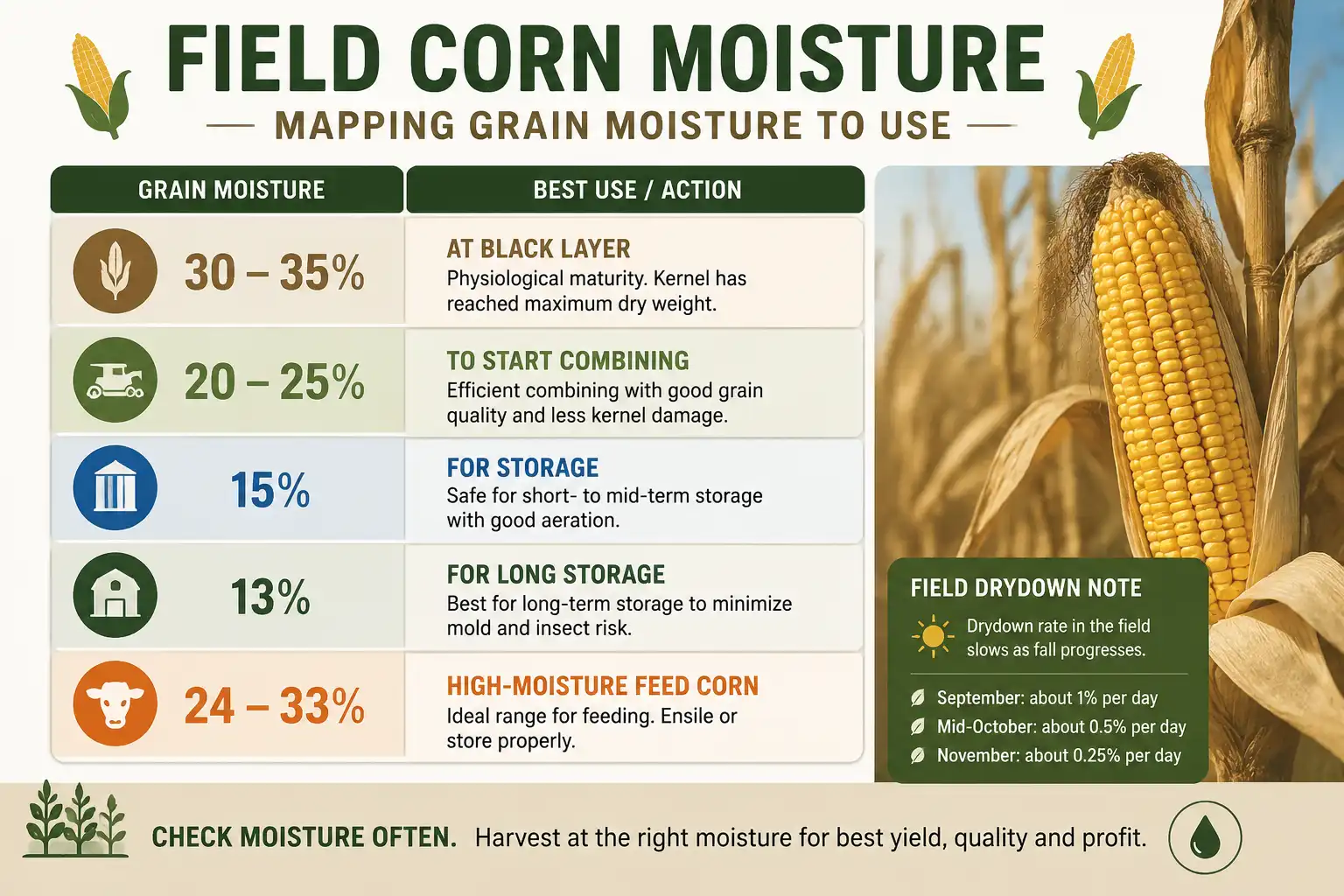
Storage moisture is a separate target. For selling by spring, 15 to 15.5 percent is the standard. The USDA trades number 2 corn at that level. For holding 6 to 12 months, pull it down to 14 percent. For longer than a year, aim for 13 percent. Any shelled corn above 15 percent needs drying before it goes to sleep in the bin.
| Stage or goal | Grain moisture |
|---|---|
| Black layer (physiological maturity) | 30 to 35% |
| Start combining for dry grain | 20 to 25% |
| Sell or store to spring | 15 to 15.5% |
| Store 6 to 12 months | 14% |
| Store over a year | 13% |
| High-moisture feed corn (ensiled) | 24 to 33% |
How Fast Does Field Corn Dry Down in the Field?
Field corn dries about half a percentage point per day in warm September weather. That rate falls off fast as fall cools down. By mid-November you get little more drying at all.
A warm, breezy day can pull a full point of moisture. A cool, cloudy day pulls almost none. Bob Nielsen at Purdue University pegs mid to late September drydown near 0.4 points per day. At that pace, dropping 10 points takes about 25 days.
So you choose. Let the sun dry it for free and risk weather and standability. Or combine wetter and pay for propane at the dryer. On these fields, taking corn a little wet and drying it is favored once the stalks start to weaken.
When Should You Stop Waiting and Start Combining?
Stop banking on field drying by early to mid-November. After that the grain barely dries, and the risks pile up. Nearly all of the yield loss from a late corn harvest shows up once you push past mid-November.
Standing corn is exposed corn. Stalk rot climbs from October into November. Stalk lodging jumps after mid-November. Ear drop, ear rots, and wildlife all take their cut the longer ears hang out there.
So walk your fields and grade the stalks. Push a handful of plants to about a 30 degree lean, or pinch the lower stalk between your fingers. If they crush or snap, that field has stalk rot and needs to come out first. In Kansas, the harvest window runs through fall. our guide covers that corn harvest timing in Kansas in a separate guide.
When to Harvest Field Corn for Silage
For silage, harvest field corn earlier, while the whole plant sits at 62 to 68 percent moisture. That is well before black layer. Chopping at the right moisture matters more than any calendar date.
Use the kernel milk line as your trigger, not your final answer. At one-half to two-thirds milk line, whole-plant moisture often sits at 60 to 70 percent. But it is only a signal to start testing. A Wisconsin study found hybrids at 50 percent milk line ranging anywhere from 50 to 74 percent plant moisture. So chop a sample, then check moisture with a microwave or a Koster tester before you commit the chopper.
Match moisture to your storage. Bunkers do best at 65 to 70 percent. Bags run 60 to 70 percent. Upright stave silos want 60 to 65 percent. Sealed oxygen-limiting silos go drier, near 50 to 60 percent. Chop too wet and you get seepage and a sour pile. Too dry and it will not pack, so air and mold move in. Your corn silage yield per acre also swings with moisture and chop height.
When to Harvest High-Moisture Field Corn
Harvest high-moisture feed corn at 24 to 33 percent, then ensile it. This is grain corn stored wet for cattle, not dry grain for the elevator. It lets you start earlier and dodge bad weather.
Grind or roll it before storage so it packs and pushes the air out. Aim for no more than about 5 percent whole kernels and 5 percent fines. Wetter than 40 percent is too much even for this.
What Happens If Frost Hits Before Maturity?
Frost before black layer costs yield, and the earlier the stage, the deeper the cut. Once corn hits black layer, frost does not touch your yield at all.
A killing freeze at soft dough can shave roughly half your yield. At full dent, figure around 40 percent. By half milk line it drops to about 12 percent. At black layer it is zero. A light frost that only burns leaves does less damage at each stage.
A killing freeze means 32 degrees for a few hours, or 28 degrees for a few minutes. Yield loss stays small once grain moisture falls below 35 percent. So if frost catches corn at dent, get in and harvest soon. Frost-hit ears mold faster and can carry mycotoxins, so scout light test-weight grain before you feed it.
How to Check Your Field Before You Combine
Walk the field and confirm the crop is mature and standing before you roll. A few minutes of scouting saves bushels.
- Split several ears across the field and confirm the black layer has formed on the kernels.
- Shell a handful from a few spots and run it through a moisture tester. Do not trust one reading.
- Push or pinch stalks to grade standability, then mark weak fields to harvest first.
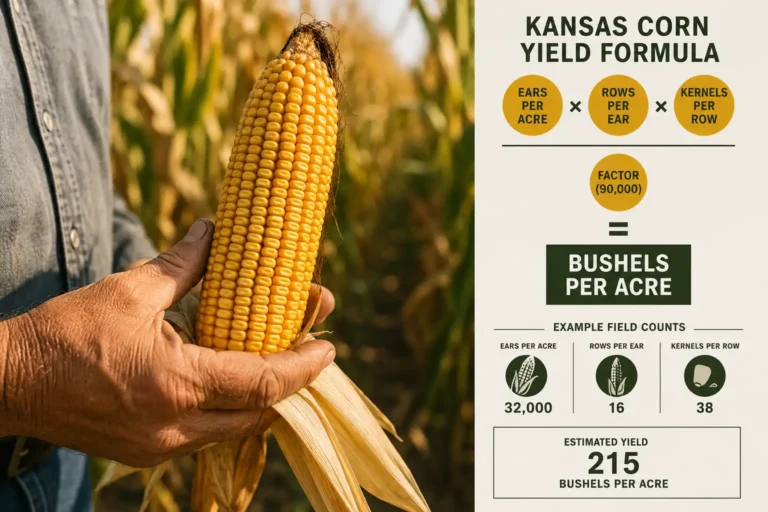
- Estimate yield off the ear so you know what each field owes you. our guide covers how to estimate corn yield by ear before harvest.
Bottom Lines
Do not chase a date. Watch the kernels. Once black layer forms across a field, the yield is set. From there it is all about moisture and standability. Let corn field-dry toward 20 to 25 percent when stalks stay strong. When stalk rot shows up or November closes in, combining wetter and drying it down is the recommended approach. Silage comes off earlier, at milk line, on plant moisture. So check your own ears, test your own grain, and let the field tell you when to go.