What Do Carrots Look Like When They First Come Up? A Field Guide
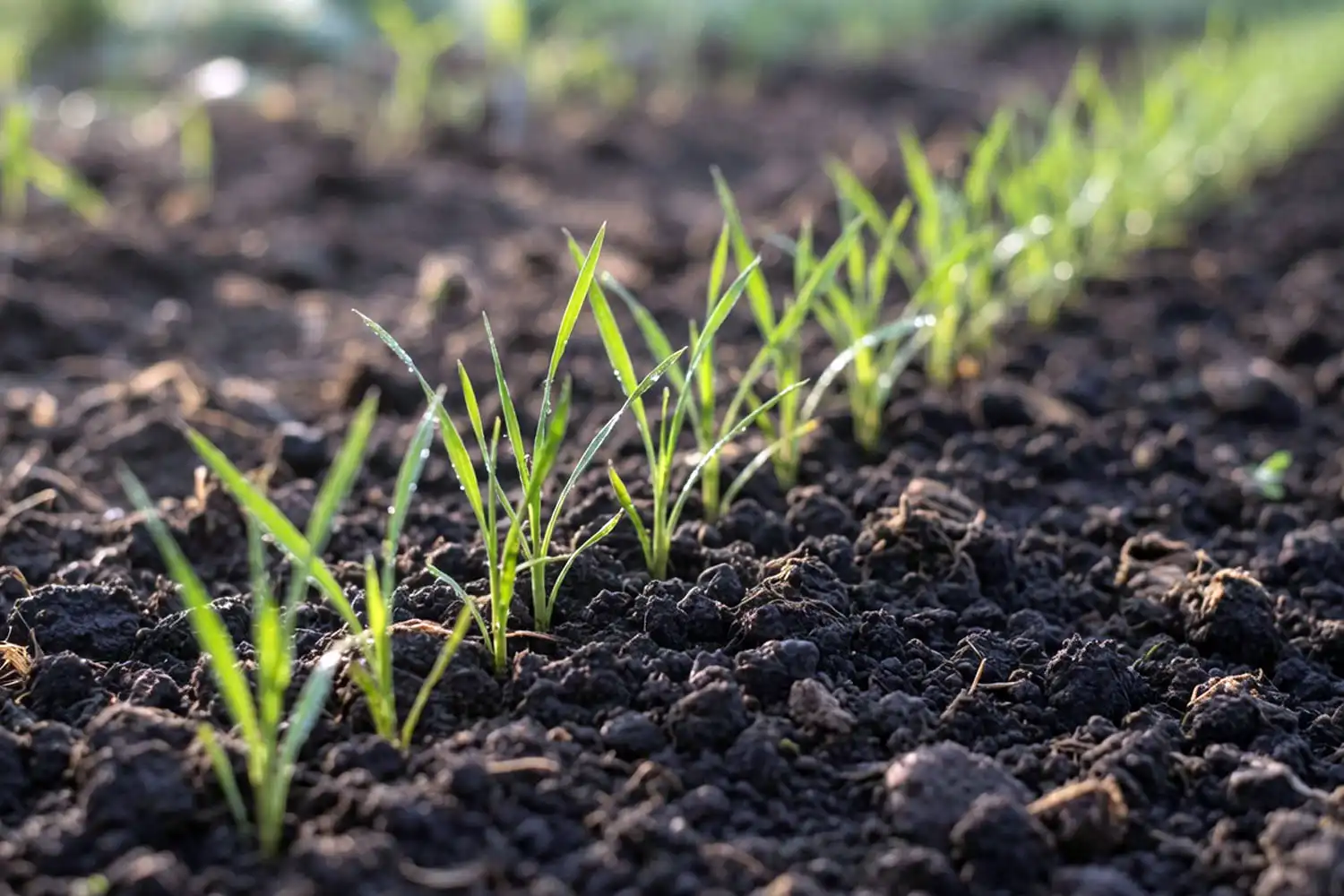
Plenty of new growers panic when their carrot bed sprouts what looks like grass. That thin green blade is exactly what carrots look like when they first come up. Knowing the early stages keeps you from pulling a good crop by mistake.
When carrots first come up, you see two slim, grass-like seed leaves called cotyledons, not the feathery foliage. The lacy true leaves follow about one to three weeks later and confirm you really have carrots.
What Do Carrots Look Like When They First Come Up?
The first thing above ground is a pair of thin, upright seed leaves that look a lot like blades of grass. They are smooth and narrow, with a bright green color and no frilly edges at all. Botanists call these starter leaves cotyledons. Every carrot begins this way. So if your row looks like a faint line of grass, that is a healthy start, not a weed problem.
Each seedling pushes up one slim stem, then splits into two narrow leaves at the tip. They sit close to the soil at first, often under an inch tall. The color runs from a clear green to a slightly blue-green tint, depending on the variety and the light. Whether you grow Nantes, Danvers, or a long Imperator type, the seedlings look the same at this point.
Carrots share a plant family with dill, parsley, and Queen Anne’s lace (Daucus carota). That family tie shows up later in the feathery leaves, not in these first blades. Getting the depth and spacing right when planting carrots is what sets up a clean, even row before any of this appears.
A Closer Look at the Two Seed Leaves
The two seed leaves are the carrot’s built-in fuel tank. They make a little energy until the real leaves take over. On a carrot, they show up as two long, skinny straps joined at the base. Most run about half an inch to an inch long. They feel smooth, with one straight edge and no teeth or lobes.
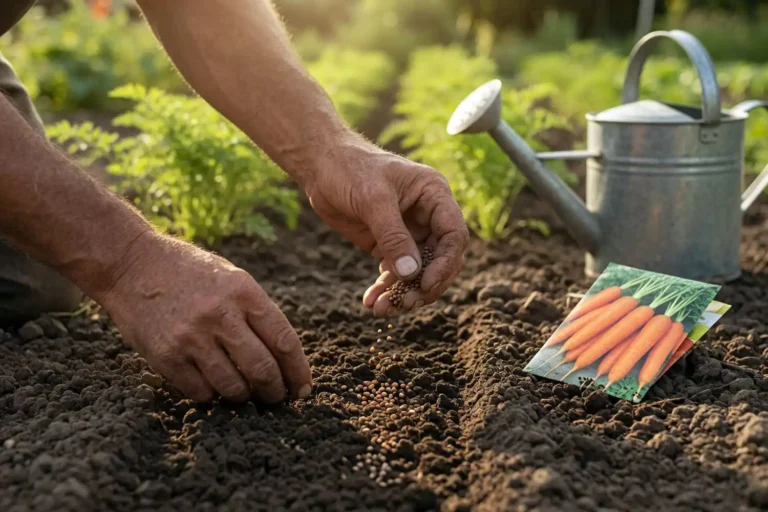
People mix them up with grass for one simple reason. The shape is nearly identical. The fix is patience. Grass keeps making more flat blades. A carrot makes its first feathery leaf within a couple of weeks. If your stand looks thin or clumped, that usually traces back to seed placement, so sowing your carrot seed evenly pays off right here.
When Do the Feathery True Leaves Show Up?
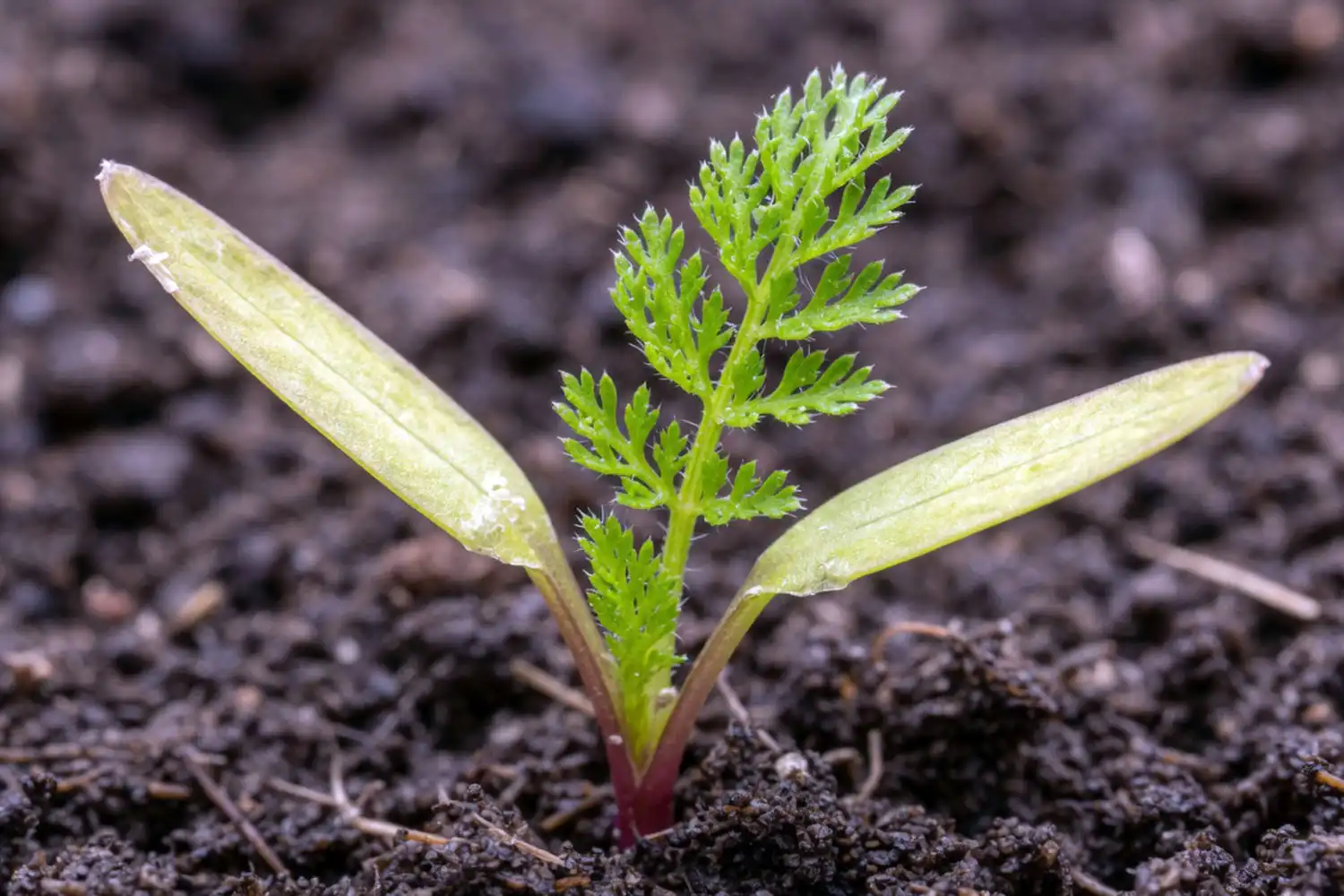
The feathery true leaves usually appear one and a half to three weeks after the cotyledons. The first true leaf pushes up from right between the two seed leaves. It is tiny but already frilly and clearly carrot-like. After that, more divided, lacy leaves follow, each on its own short stalk.
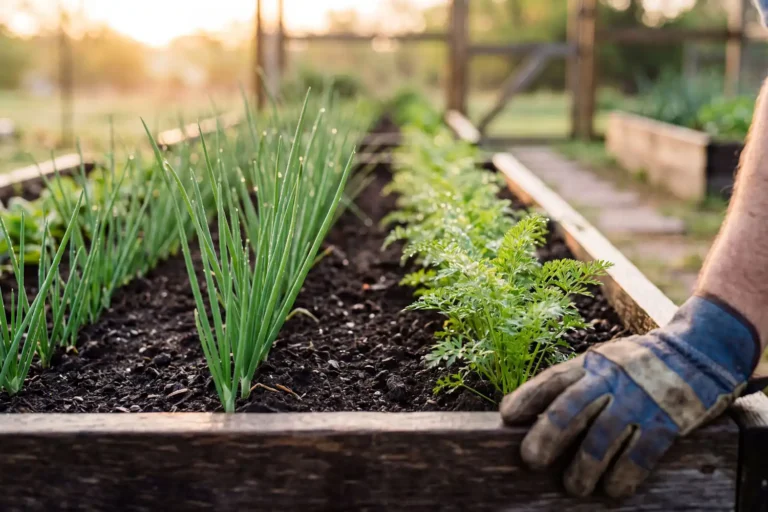
These true leaves are what most folks picture as carrot tops. They are finely cut, soft, and a fresh green. They grow in a small rosette from the center of the plant. Once two or three true leaves are out, the old seed leaves turn yellow and drop. That is normal. The plant simply does not need them anymore.
Early on, the true leaves can look like parsley or dill. A quick crush-and-sniff settles it. Carrot leaves smell like carrots.
Early Carrot Seedling Stages, Week by Week
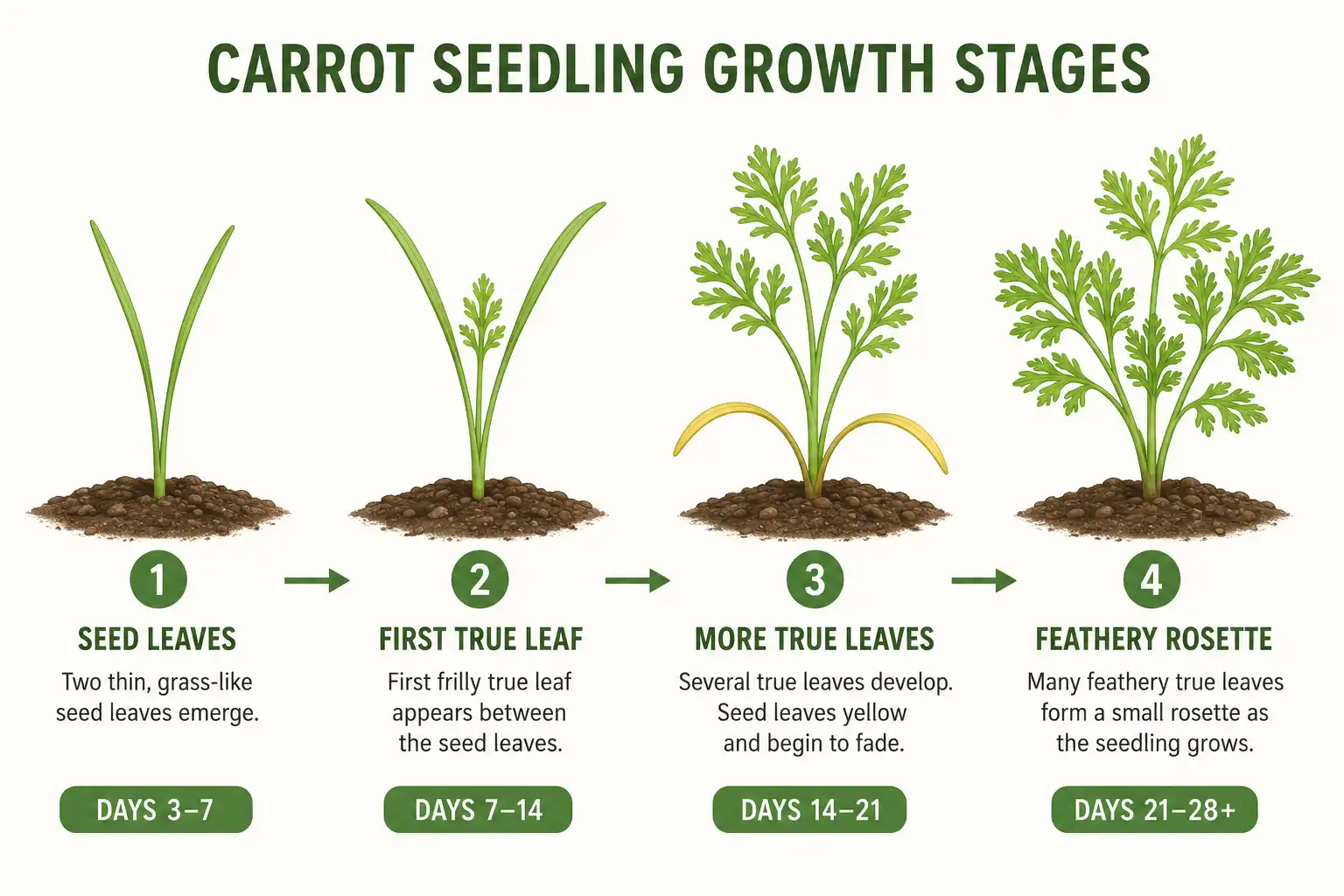
Here is the early sequence to watch in the rows. For the first few days after emergence, you get two thin seed-leaf straps sitting low to the ground. Around the end of week one or into week two, the first true leaf shows up between them, small and frilly. By week two or three, two or three true leaves are out and the seed leaves start to yellow. By week three or four, you have a little fern-like rosette, the seed leaves are gone, and the plant clearly reads as a carrot. While the tops still look small, the taproot below is already pushing down.
How Long Until Carrots Come Up After Planting?
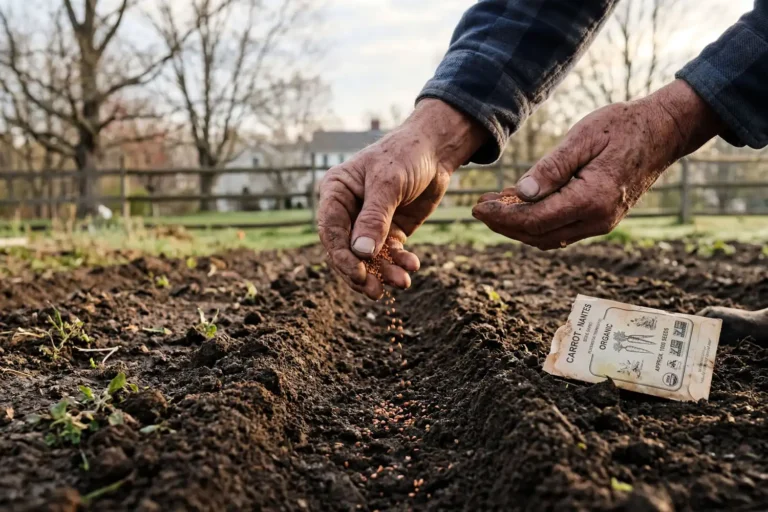
Carrots usually break the surface 14 to 21 days after sowing. Warm soil speeds that up. Cool soil slows it down, sometimes past three weeks. Carrot seed needs soil at least 40°F to sprout, and it germinates best between 55°F and 65°F. In warm ground near 70°F, you might see sprouts in about a week. Below 50°F, emergence can drag out badly. Heat above 80°F hurts germination too.
Slow emergence is normal for carrots. It is not a sign you did anything wrong. It helps to use K-State Research and Extension timing and aim for soil in that 55 to 65 degree window before seeding. Planting windows shift with USDA hardiness zone, so a grower in the Deep South sows far earlier than one farther north. For a deeper look at timing and what speeds it up, when carrots germinate is broken down in its own guide.
How Do I Tell Carrot Seedlings From Grass and Weeds?
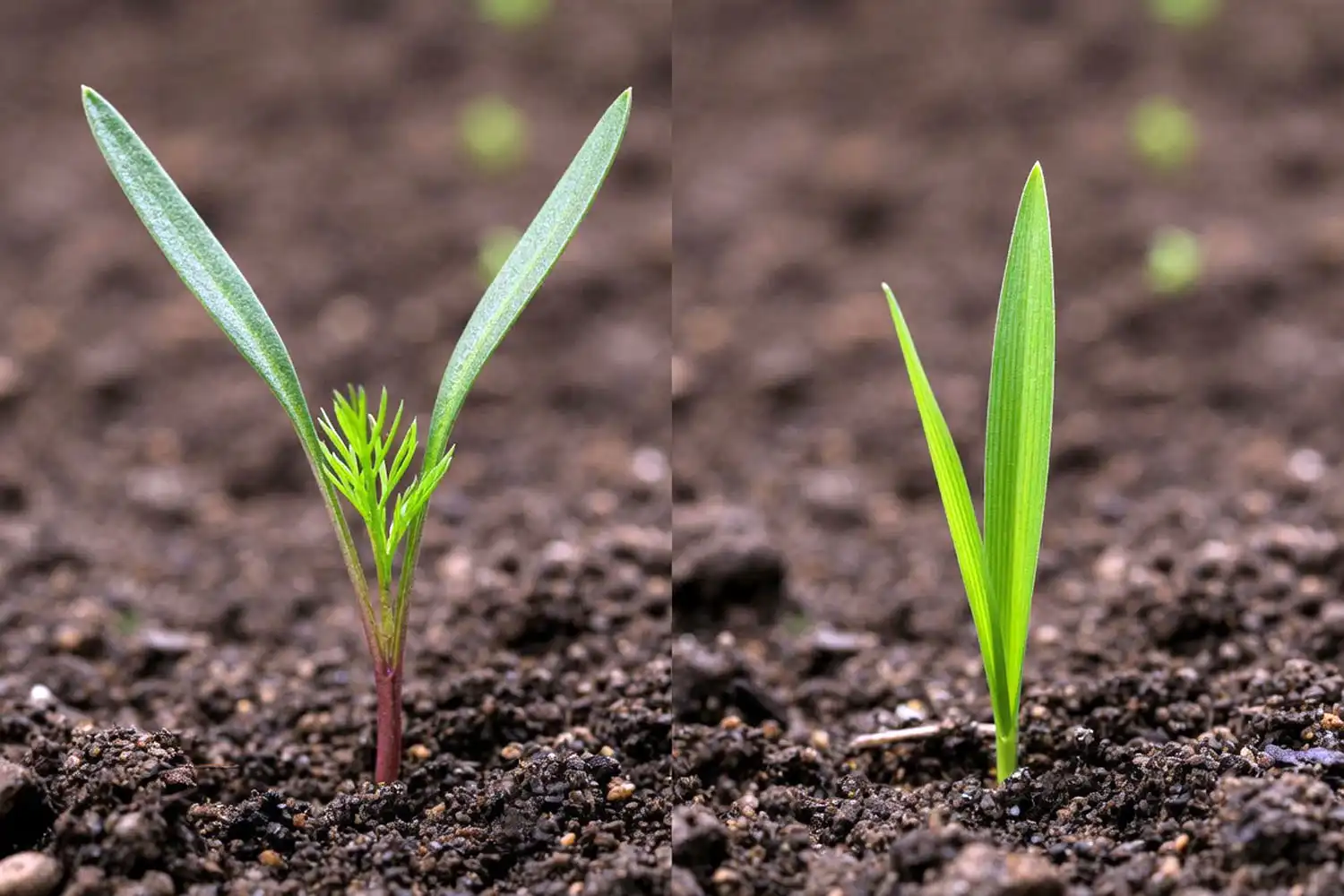
Check the leaf shape and give it a sniff. Carrot seed leaves are two smooth straps, while most grasses come up as a single blade. The surest sign is the true leaves, which are feathery and unmistakable. Grass never makes a frilly, divided leaf.
Use three quick checks in the field. First, the row. Direct-seeded carrots come up in the straight line where you sowed them, so random green between rows is usually a weed. Second, the smell. Pinch a leaf and rub it. Carrot foliage gives off a clear carrot scent, and grass does not. Third, the wait. If you are unsure, give it a week. A carrot grows its feathery true leaf, while a weed keeps doing its own thing.
Common look-alikes early on include young grasses and the seed leaves of broadleaf weeds like lambsquarters or pigweed. Broadleaf weeds show wider, rounded seed leaves, not thin straps, so they are easier to rule out than grass.
Why Are Carrots Not Coming Up Evenly?
Patchy carrot rows almost always come down to soil crust, a dry surface, or old seed. Carrot seed is tiny and sits shallow, so the top half inch of soil controls nearly everything.
Soil crusting is the big one. A hard crust forms when the surface dries and bakes after rain or watering, and the little seedlings cannot punch through it. To stop it, cover the seed with a thin layer of fine sand, vermiculite, or sifted compost instead of heavy soil. Keep that surface damp with light, frequent watering until the seedlings are up. Watering twice a day in warm spells is a common approach. The same idea behind watering early to prevent crusting is what gets me an even stand.
Soil texture matters too. Loose, sandy loam lets seedlings rise and roots run straight. Heavy clay crusts fast and forks the roots. If your ground is tight, work in compost and aim for the soil texture that grows straight carrots.
Old seed is the quiet culprit. Carrot seed loses vigor after two to three years, so use fresh seed for a reliable row. A marker crop helps you read the bed early. Radish seed sprouts in a few days and lines out the row while you wait on the carrots. Even moisture matters past sprouting too, so it helps to know how much water carrots need as they grow.
Final Words
When carrots first come up, expect grass-like seed leaves, not feathery tops. Give them one to three weeks and the true, lacy leaves will prove the crop. Keep the surface moist, watch the row line, and do the sniff test before you pull anything. That little bit of patience saves a lot of good carrots every season.