How to Store Carrots From the Garden So They Last All Winter
To store carrots from the garden comes down to two things: cold and moisture. Get those right and your fall crop keeps for months. Get them wrong and you end up with limp, rubbery roots by Thanksgiving. Here is exactly what works.
Store garden carrots cold and humid, right at 32°F with about 95 percent humidity. Trim the tops, skip the wash, and pack them in damp sand or a perforated bag. Done right, they keep four to six months.
Get the Harvest Right Before You Store Anything
Carrots store only as well as they come out of the ground. Bruised, cracked, or broken roots rot first, so your storage clock starts at harvest. Because of that, treat digging day as the first step of storage, not the last step of growing.
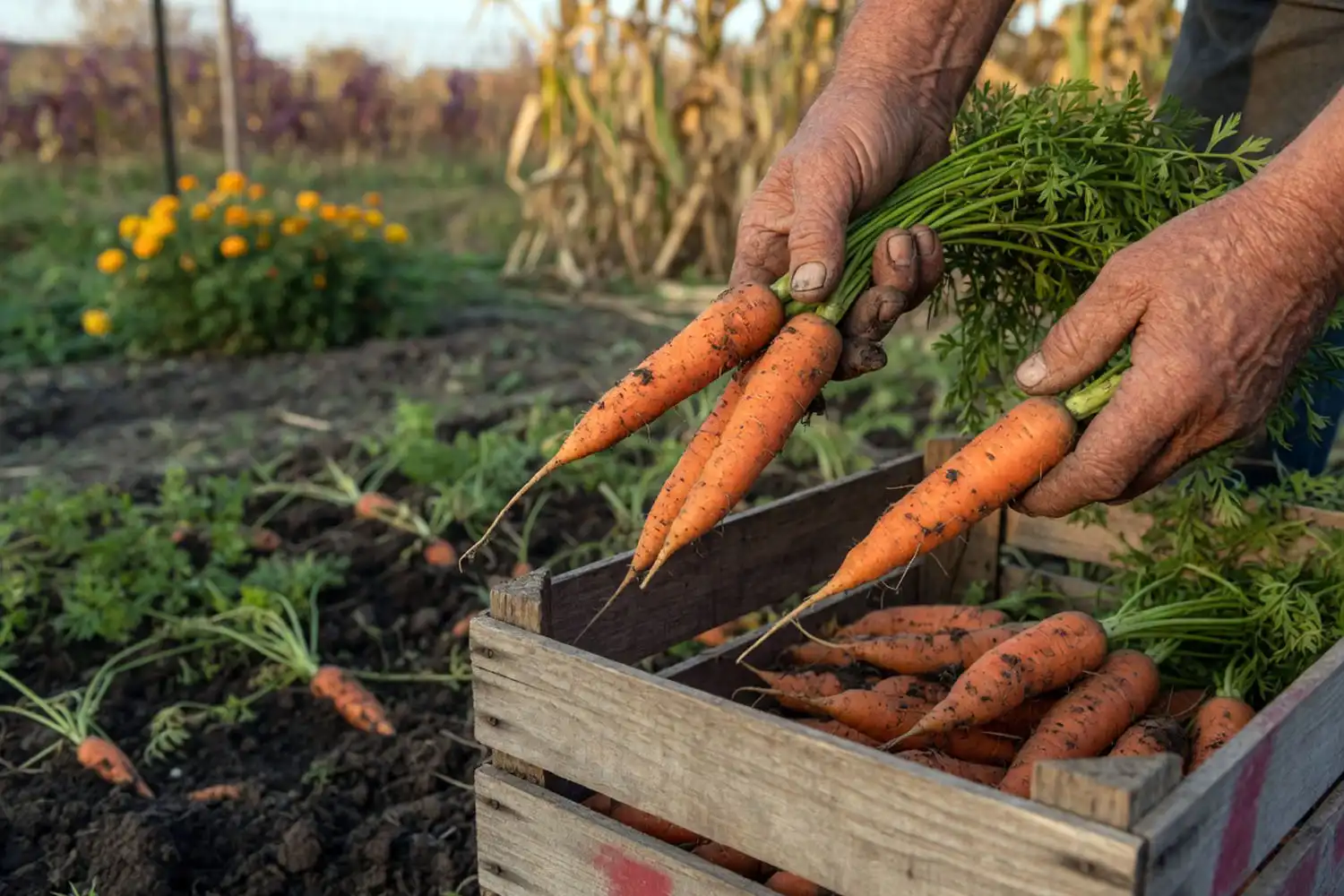
Pull carrots once they reach full size but before the soil freezes solid. A few cool nights first actually help, since cold weather pushes the roots to convert starch into sugar. That is why fall carrots taste sweeter than summer ones.
Loosen the soil with a digging fork before you lift each root. Never yank them by the tops. Gentle, careful post-harvest handling keeps the skins intact, and intact skins are what hold rot out. If you are still dialing in your dig date, our notes on knowing the right time to harvest your crop cover the signs.
How Do You Prepare Carrots for Storage?
Trim the green tops down to about half an inch, brush off loose soil, and leave the carrots unwashed. Those three steps decide how long the crop holds.
The tops matter most. Left on, the greens keep pulling moisture out of the root, and the carrot turns soft within days. Cut them back right after digging, every single time.
Skip the wash for anything you plan to keep more than a week. Wet skins invite rot in storage. Brush the dirt off by hand instead, then let the roots air-dry in a cool, shaded spot for a day or two so the skins firm up. Sort as you go and set aside any carrot that is split, nicked, or soft. Those go to the kitchen first, not into the storage box.
What Temperature and Humidity Do Carrots Need?
Carrots want it cold and damp, ideally 32°F to 40°F with 95 to 98 percent humidity. That combination is the whole secret behind every method below.
Cold slows the decay and keeps the roots dormant. High humidity keeps them crisp, because a carrot is mostly water and dry air pulls that water right out. Too little moisture and you get the rubbery, bendy carrots nobody wants.
There is a floor, though. Carrots freeze at roughly 29°F, a touch below water because of their natural sugars. Let them actually freeze and they turn bitter and mushy once they thaw. One more rule: keep carrots away from apples, pears, and bananas. Those give off ethylene gas, and ethylene turns stored carrots bitter fast.
How Do You Store Carrots in a Root Cellar or Cold Space?
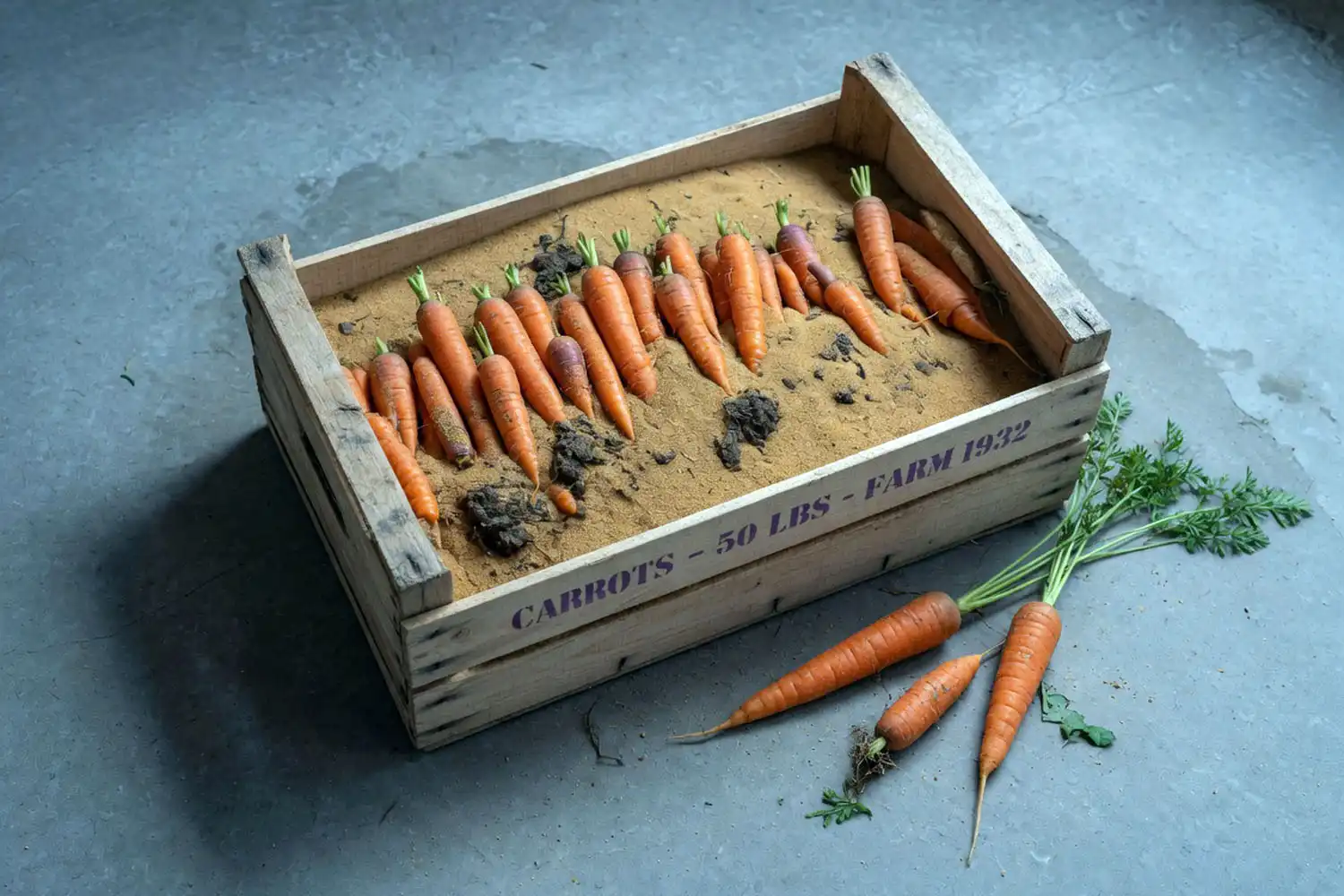
Pack the unwashed carrots upright in a bucket or box of damp sand or sawdust, then hold the container at 32°F to 40°F. This old method is still the best way to keep a big crop crisp through winter.
Here is how to set Stand the carrots vertically in the container so they are not touching each other. Cover each layer with damp, not soggy, sand or sawdust. Leave the lid loose or use a perforated container, because the roots still need a little air movement. Sealing them up tight traps moisture and breeds rot.
A true root cellar is ideal, but most folks do not have one. An unheated basement, an attached garage, or an insulated shed works just as well, as long as it stays cold and does not freeze. Stored this way, carrots hold four to six months. Check the box once a month and pull any root that has gone soft before it spoils its neighbors.
Can You Store Carrots in the Refrigerator?
Yes, the crisper drawer keeps garden carrots for a few weeks to a couple of months if you trap the humidity. The catch is that a fridge runs cold but dry, and dry is the enemy of a crisp carrot.
So toss them in loose. Instead, trimmed carrots go into a perforated plastic bag, or a sealed container with a damp paper towel laid on top. That holds the moisture against the roots while still letting them breathe. Stored loose and uncovered, they go limp in under a week.
Keep them in the drawer away from your fruit, for the same ethylene reason as before. Handled this way, garden carrots stay good three to four weeks easily, and up to about two months if your fridge holds a steady temperature.
Can You Leave Carrots in the Ground Over Winter?
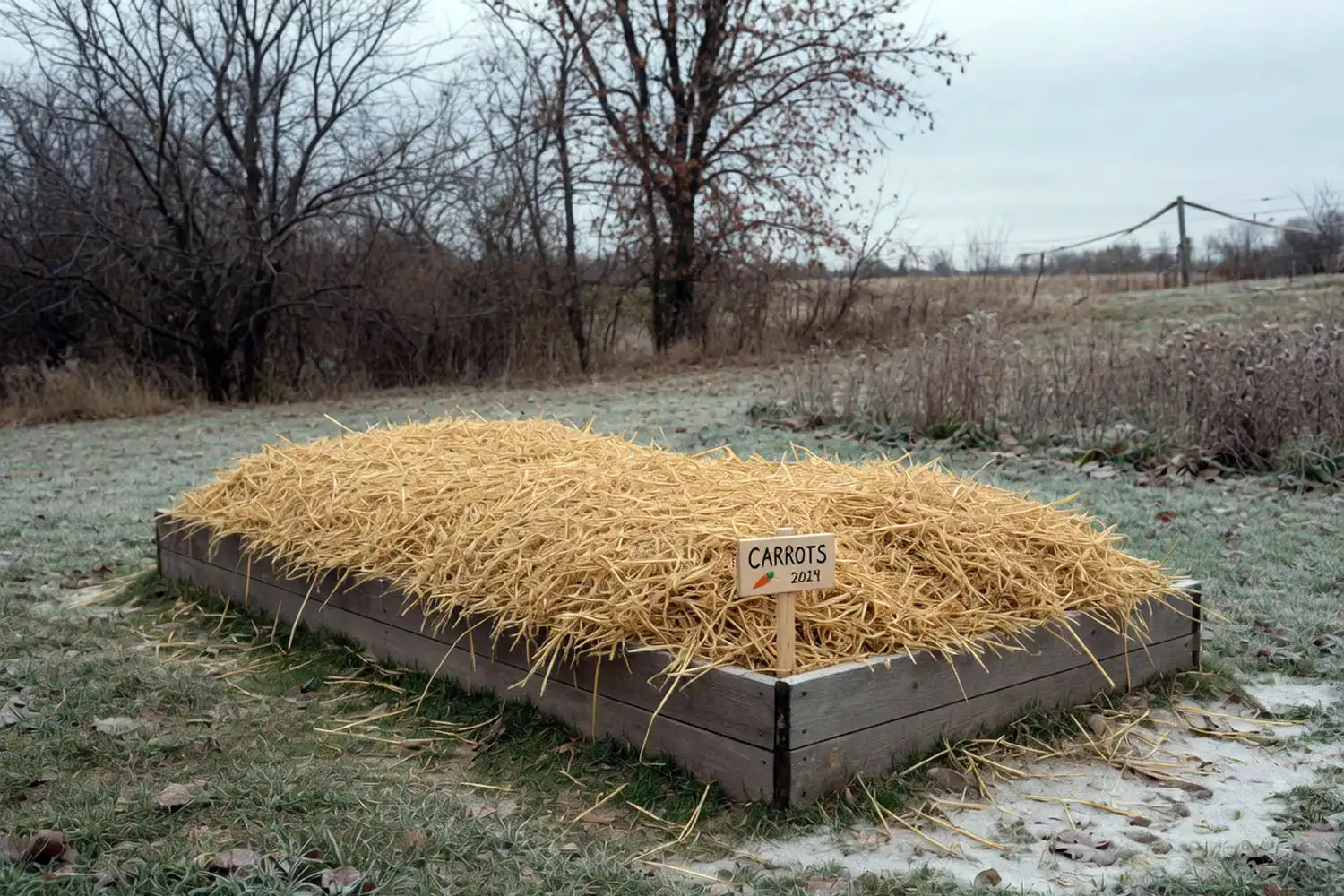
Yes, in many regions you can leave carrots in the ground under heavy mulch and dig them through winter as you need them. The soil itself becomes your storage box. This method lets a fresh, sweet carrot come out of frozen ground even in January.
The setup is simple. Wait for the first few hard freezes, then pile 8 to 12 inches of straw or shredded leaves over the bed. Water the soil deeply before that first hard freeze, since moist soil holds heat better than dry soil and protects the roots. Mark the row with a stake so you can find it under snow.
This works well in USDA hardiness zone 5 and warmer. Colder zones can still pull it off with extra-heavy mulch, though a brutal cold snap is always a risk. Light frost is a bonus, not a problem, because it sweetens the roots even more. If you want to push the limits, see the breakdown of how much cold carrots can tolerate explains where the line sits.
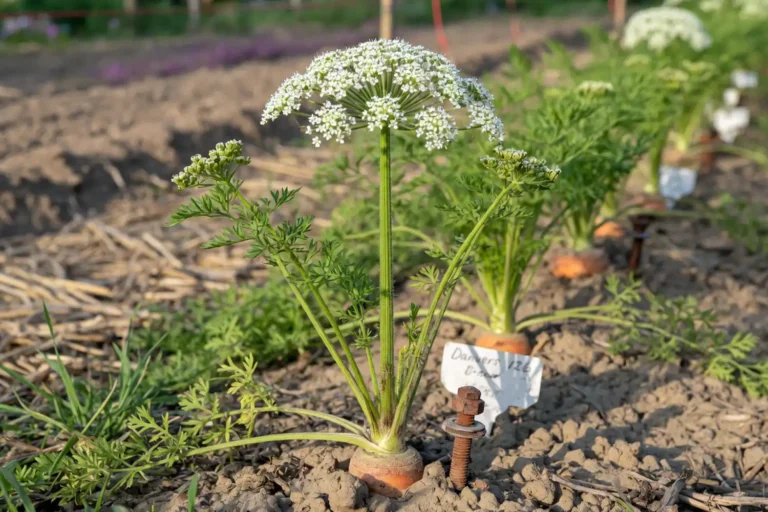
One warning. Harvest your overwintered carrots in late winter or very early spring, before the ground warms up. Once a carrot wakes up in its second year it bolts, sends up a flower stalk, and turns woody and fibrous. After that point, it is done.
How Do You Freeze Carrots From the Garden?
Blanch them first, then freeze. Raw carrots tossed straight into the freezer turn mushy and lose their flavor, so blanching is not optional here.
The steps are quick. Wash, peel, and cut the carrots to the size you want. Blanch sliced or diced pieces for 2 minutes, and small whole carrots for 5 minutes, in boiling water. Drop them straight into an ice bath for the same length of time to stop the cooking, then drain and pat them dry. For loose pieces instead of one frozen clump, spread them on a tray and flash-freeze for an hour or two before bagging.
Blanching stops the enzymes that would otherwise wreck the texture and taste over time. The National Center for Home Food Preservation backs the 2-minute and 5-minute timings, and follow them to the second. Frozen carrots keep up to about a year, with the best quality in the first 8 to 10 months. They will not stay crunchy, but they are perfect for soups, stews, and roasts.
How Long Do Stored Carrots Last by Method?
It depends on the method, ranging from about five days on the counter to a full year in the freezer. Picking the right one comes down to how soon you plan to eat the crop.
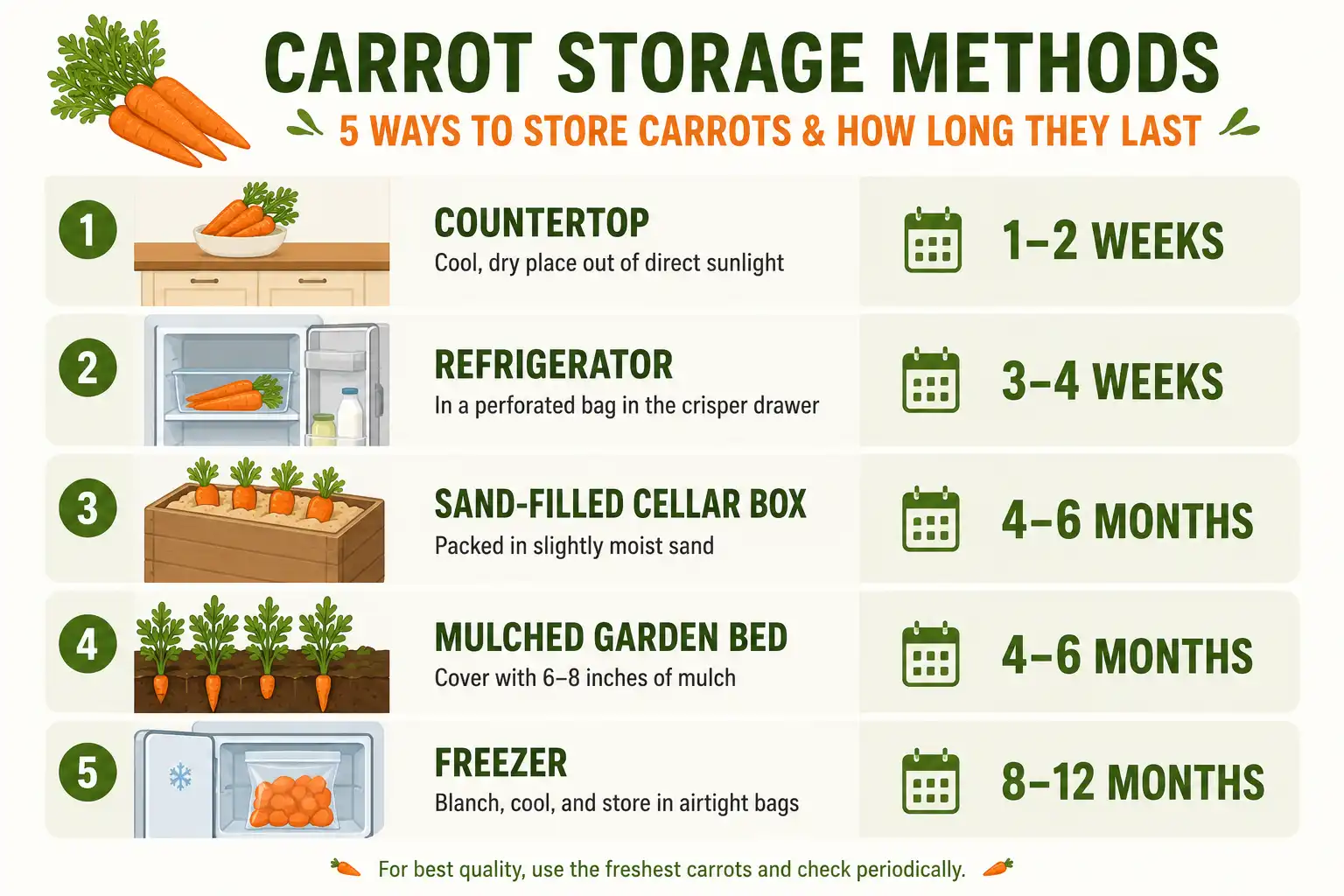
On the counter at room temperature, expect only about five days. In the fridge crisper with humidity trapped, three to four weeks, sometimes two months. Packed in damp sand in a cold cellar, four to six months. Left in the ground under mulch, all winter until spring. Blanched and frozen, up to a year. Leaning on a mix of these methods keeps carrots on hand without crowding any one spot, the same way storage methods get staggered for other crops.
How to Store Carrots
For me it breaks down by timing. Whatever is wanted that month goes in the fridge crisper, humidity trapped. The big crop gets packed in damp sand in the cold corner of the garage, or left right in the ground under a foot of straw. The overflow gets blanched and frozen for soups.
Cold and moisture run the whole show. Hold the temperature near freezing, keep the humidity high, trim the tops, and skip the wash. Do that and your fall carrots will outlast the snow. When you plant your next round of carrots in spring, you will already know exactly how to keep that harvest too.