What Climate Does Rice Grow In? Temperatures and Regions
Rice is a warm-season crop with tight climate limits. Knowing what climate does rice grow in helps you match a variety and a planting window to your ground. It wants heat, a long frost-free stretch, and steady water.
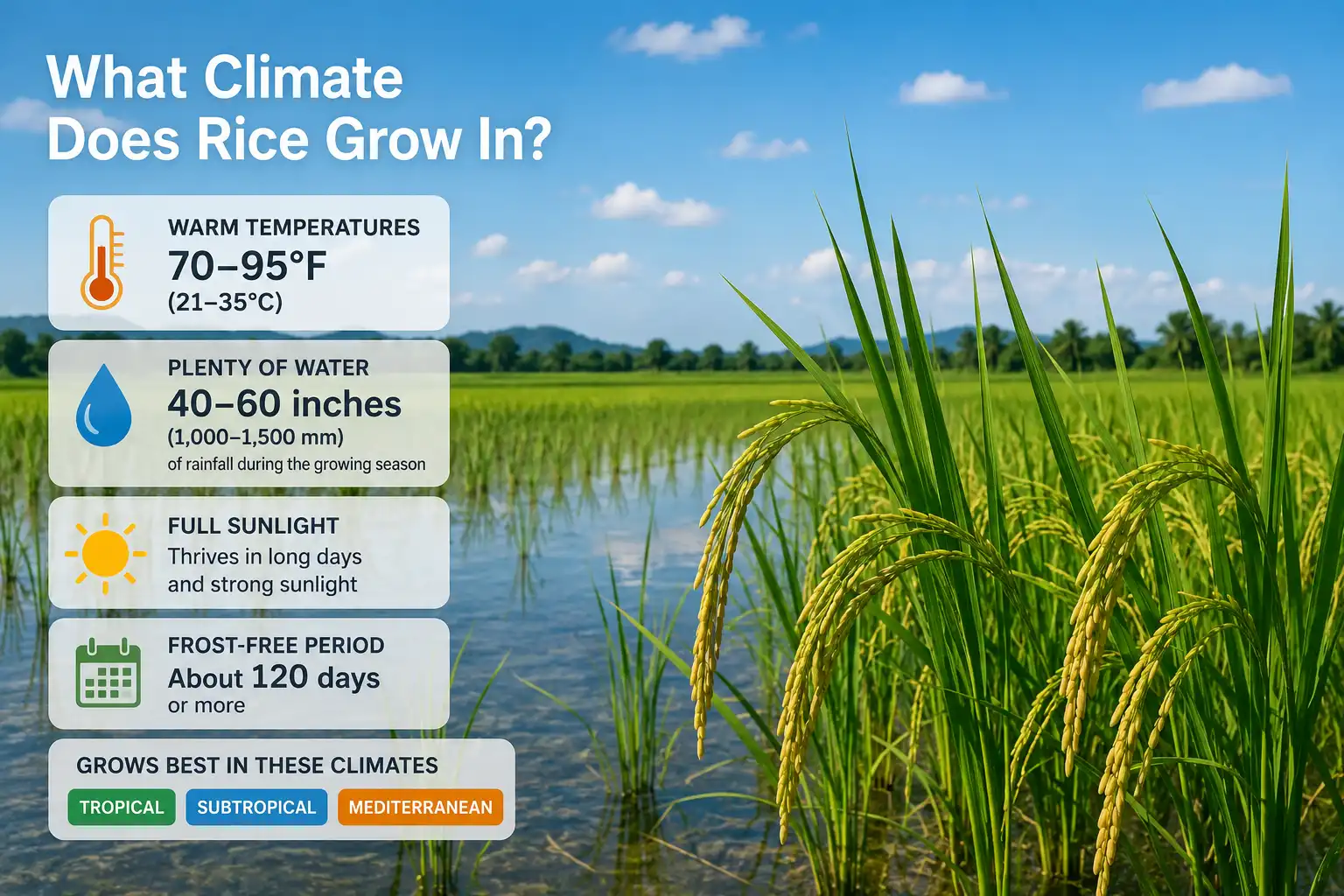
Rice grows in warm, wet climates with daytime highs near 70°F to 95°F and no frost for about four months. This warm-season crop suits tropical, subtropical, and Mediterranean zones, which places US rice in the South and California.
What Temperature Does Rice Need to Grow?
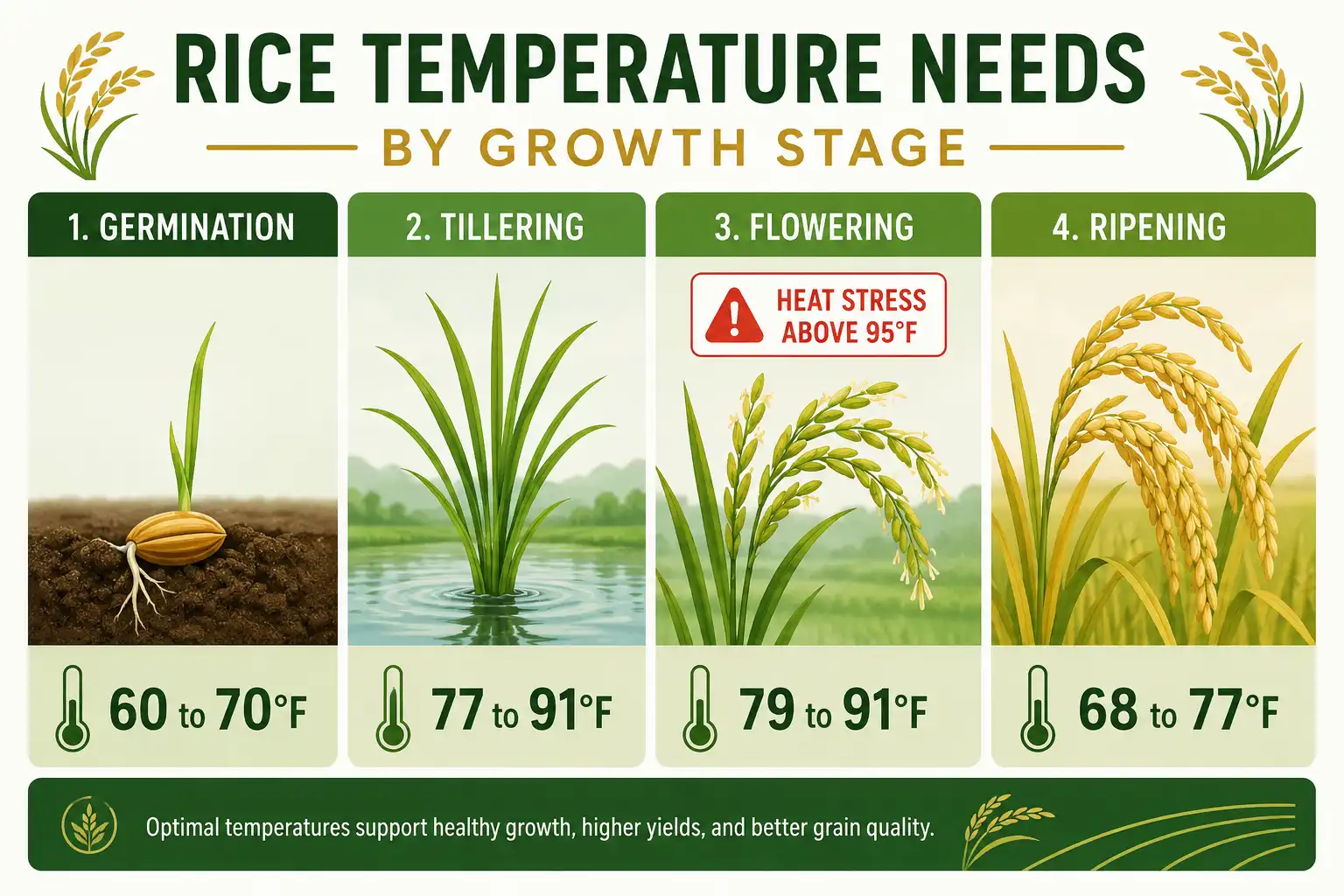
Rice needs daytime temperatures between 70°F and 95°F through a season of four to five months. It is a tropical grass, Oryza sativa, so it runs on heat. Nighttime lows matter too. For a solid crop, lows should stay at 60°F or higher for at least three months. Temperature sits at the center of growing rice, so most planting decisions start right here. Cold air slows tillering and shoot growth. Sustained heat causes its own trouble. When daytime highs hold above 95°F at flowering, pollen dies and grains fail to fill. Soil that climbs past 99°F stresses the plant as well.
What Temperature Do Rice Seeds Need to Germinate?
Rice seeds need warm soil to sprout, roughly 60°F to 70°F. Below that, germination slows or stalls out. So US growers wait for spring soil to warm before they plant. In Arkansas and the Mississippi Delta, most rice goes in from late March through May. A cool, wet spell right after planting thins the stand fast.
How Does Heat Hurt Rice at Flowering?
Flowering is the stage most sensitive to heat. A few days above 95°F during flowering can blank the heads and cut yield sharply. Warm nights pile on because the plant never gets to cool down. That is why growers watch the forecast closely once rice starts to head out.
How Much Rainfall and Water Does Rice Need?
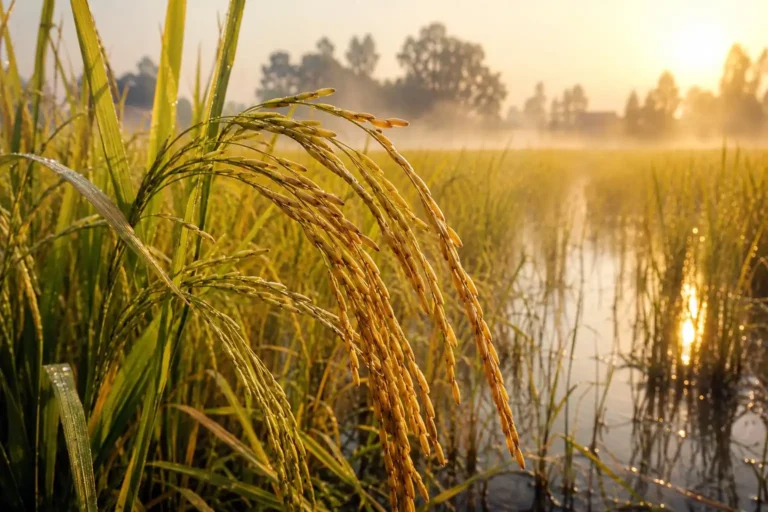
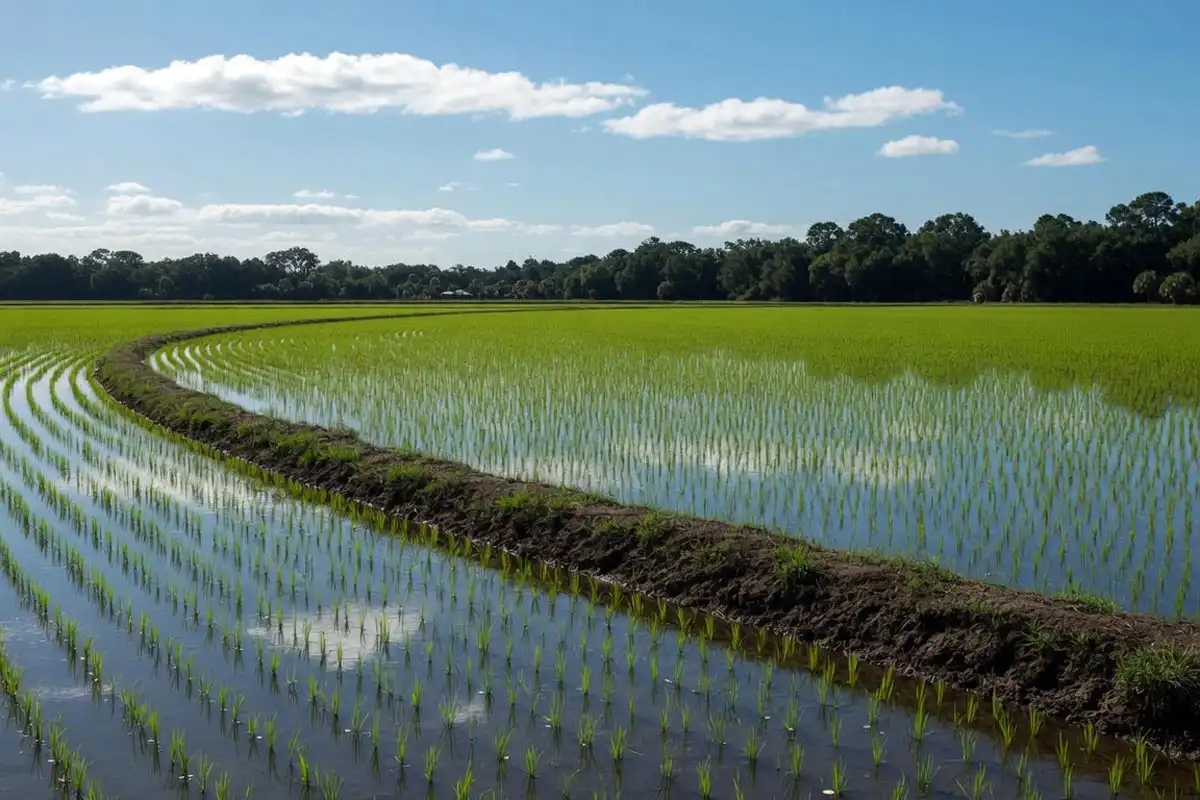
Rice needs more water than any common field crop. Rainfed rice wants at least 40 to 45 inches across the season, and many regions get far more. Because rice is semi-aquatic, growers usually flood the field. They hold two to four inches of standing water in leveed basins called checks. That flood does double duty. It waters the crop and smothers most weeds, which is the main reason flooded rice paddies work so well. In the US, every acre of rice runs on irrigation, even in wet states. Timing counts most at flowering and grain fill, when a water shortage does the most damage.
Does Rice Need a Long, Frost-Free Season?
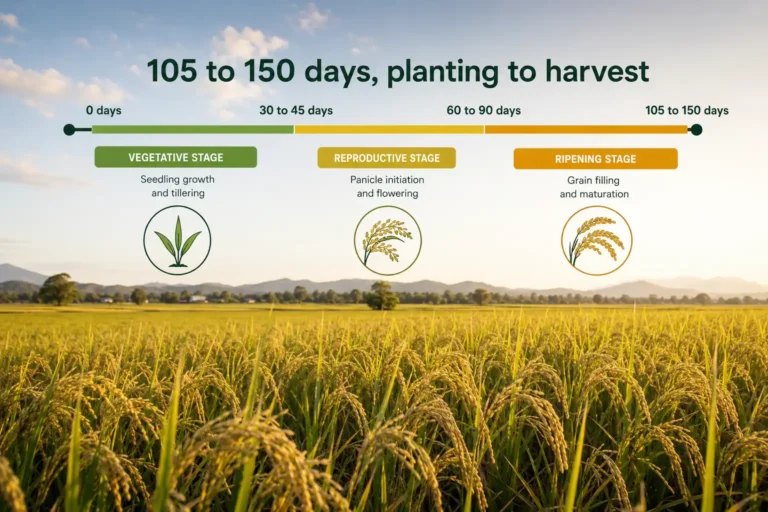
Yes. Rice needs a frost-free season of about 120 days or more, start to finish. From planting to a mature crop, most varieties take around 120 days and reach three to four feet tall. Frost kills young seedlings and ruins a standing crop, so the whole season has to hold above freezing. Rice also wants full sun for strong photosynthesis. To track progress, many growers lean on growing degree days. The University of Arkansas built the DD50 program for exactly this. It still times more than two dozen rice decisions in the 2026 season. For the stage-by-stage picture, see how long rice takes to mature and plan your planting date around it.
What Climate Does Rice Grow In Around the World?
Rice grows in tropical, subtropical, and warm temperate climates, plus dry Mediterranean zones under irrigation. Farmers plant it from about 8°N near the equator up to 44°N in cooler regions. Two broad patterns cover most of the crop. The first is hot and humid, like the monsoon belts of Asia and the US South. The second is warm and dry with heavy irrigation, like California and parts of southern Europe. Both work because rice cares more about heat, water, and a long season than about rainfall alone.
Where Is Rice Grown in the US, and in What Climate?
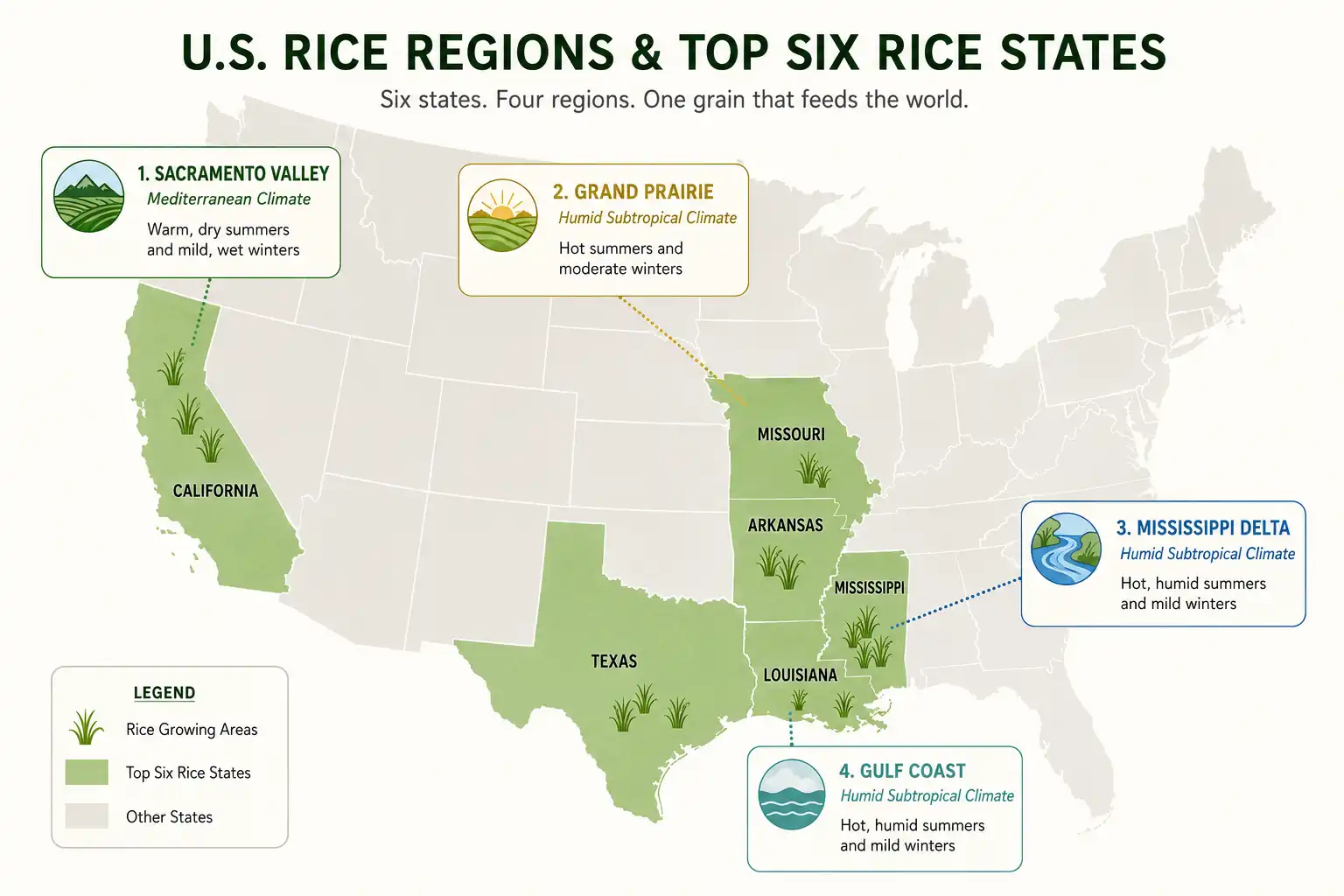
US rice grows in six states across four regions, all with hot, frost-free summers and full irrigation. The six states are Arkansas, California, Louisiana, Mississippi, Missouri, and Texas. Arkansas leads by a wide margin and grows more than 40 percent of the crop, per USDA figures. Each region carries its own climate story, so a quick look at where rice is grown across the country helps.
| Region | States | Climate | Main grain type |
|---|---|---|---|
| Grand Prairie | Arkansas | Humid subtropical | Long grain |
| Mississippi Delta | Arkansas, Mississippi, Missouri, Louisiana | Humid subtropical | Long and medium grain |
| Gulf Coast | Texas, SW Louisiana | Humid subtropical, mild | Long grain |
| Sacramento Valley | California | Dry Mediterranean | Medium and short grain |
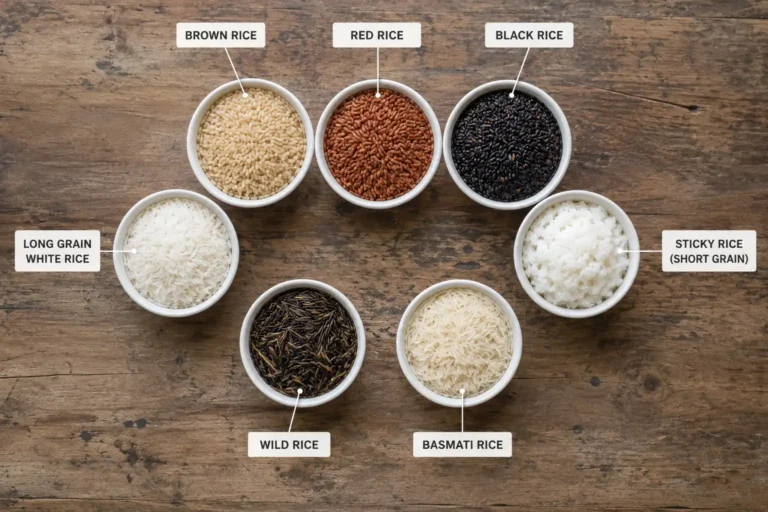
California stands apart. Its dry Mediterranean climate brings hot, sunny days and cool nights, which suit medium and short grain japonica types like Calrose. The warm days push growth while the cool nights protect grain quality. If that mix interests you, the story of rice grown in California shows how the Sacramento Valley became a rice powerhouse. The southern regions run humid and subtropical instead, which favors long grain rice and, along the Gulf, sometimes a second ratoon crop.
Can Rice Grow in a Cold or Dry Climate?
Rice struggles in cold climates, but short-season and upland varieties stretch the range a little. In cool ground, seeds germinate poorly and heads blank at flowering, so yields drop fast. Short-season cultivars and upland or aerobic rice handle cooler, drier fields better than flooded paddy types. Wild rice is a different plant entirely. It is a cool-climate native aquatic grass of the northern lakes, and growing wild rice follows its own rules. Dry climates can still grow paddy rice, but only with steady irrigation, as California proves every year. Home gardeners in cooler zones sometimes grow short-season rice in tubs or a warm greenhouse.
Bottom Line
Match the variety to your frost-free days and your water first. If you farm the South or a California valley, the climate does most of the work, and you just pick the right grain type. Zone 6a, do not grow paddy rice, since the season and water supply do not line up with it easily. Still, the same climate math applies to any crop you plant. Give rice heat, a long open season, and plenty of water, and it pays you back.