How Long Does It Take for Rice to Grow? Days by Stage and State
Rice is one of the longer crops you can plant, taking months rather than weeks to finish. How long does it take for rice to grow depends on the variety, the weather, and your region.
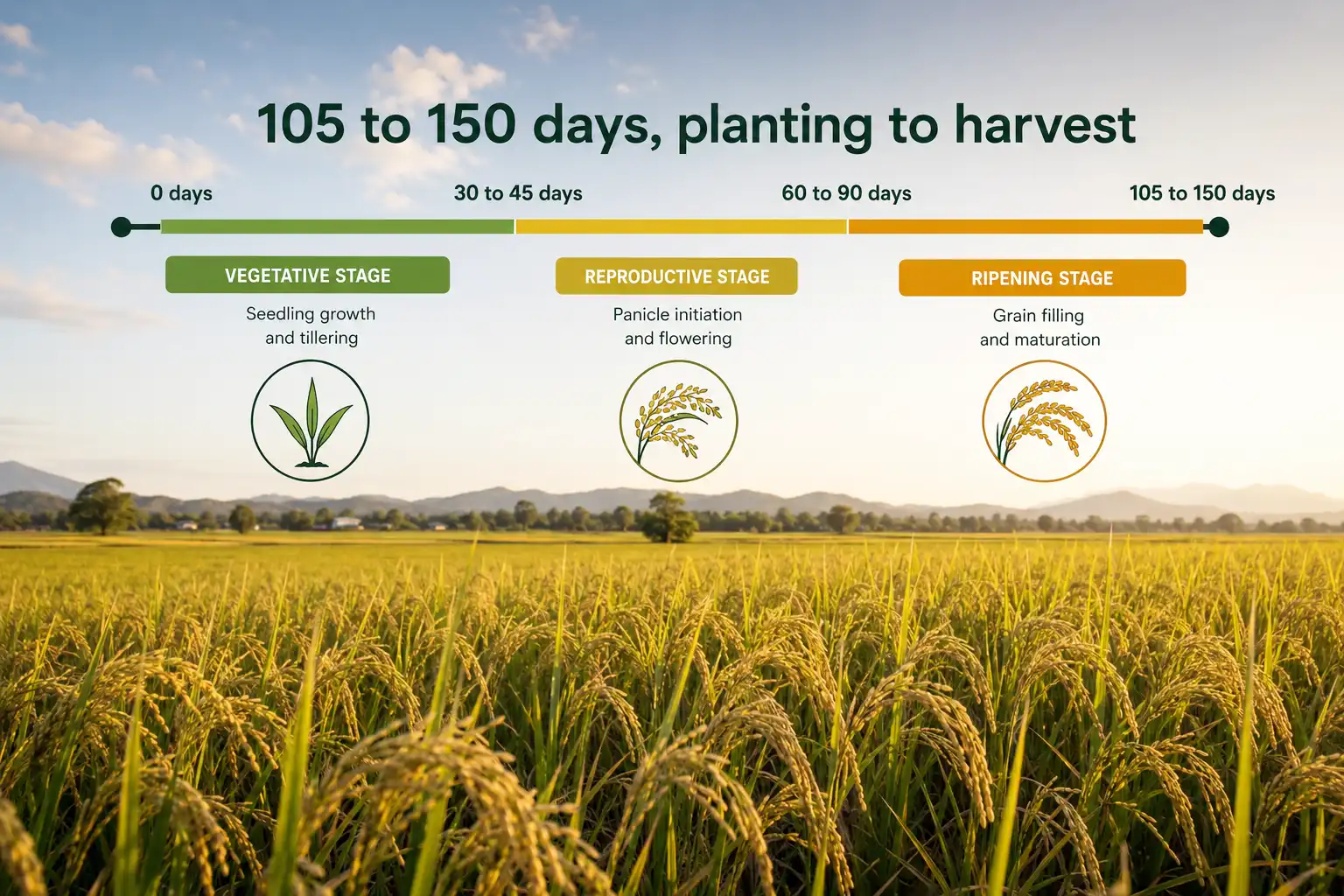
Rice takes 105 to 150 days from planting to harvest, or 3 to 5 months. How long it takes for rice to grow comes down to the variety. Early types finish near 100 days, late types 150 or more.
How Long Does It Take for Rice to Grow From Seed to Harvest?
Rice takes about 105 to 150 days to grow from seed to harvest. That works out to roughly 3 to 5 months for most types grown in the US. The US average sits near 120 days after planting.
Agronomists call that full window field duration. It runs from the day you plant to the day the grain is dry enough to cut.
Rice isn’t a Kansas crop. It needs flooded ground and a longer warm season than the Great Plains gives us. But the timing works like corn and wheat: it runs on heat, not the calendar. Warm seasons finish faster, and cool ones drag. So the same variety, planted the same day, can mature on different dates.
The 3 Rice Growth Stages and How Long Each Takes
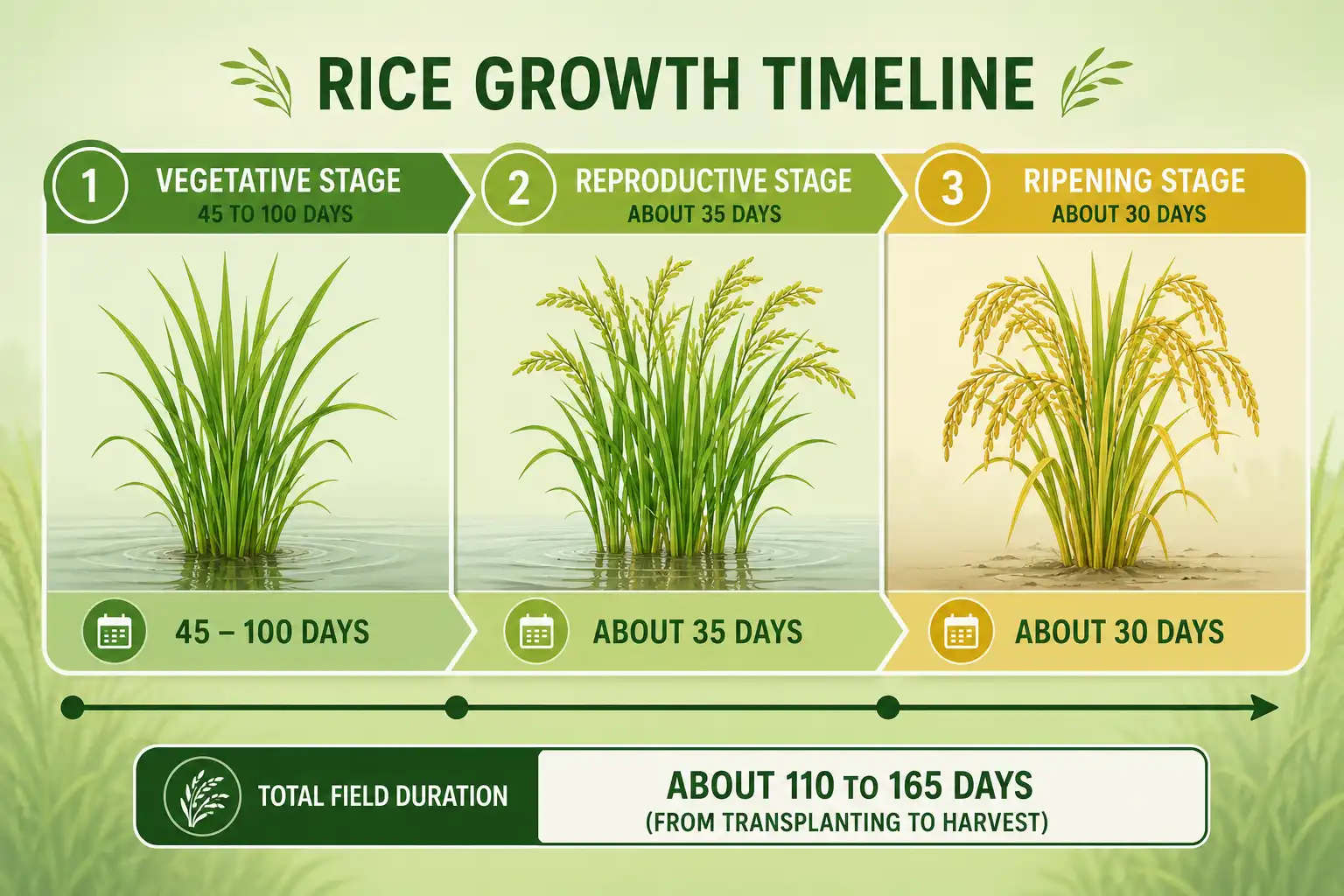
Rice moves through three growth stages: vegetative, reproductive, and ripening. The vegetative stage varies the most. The last two stages stay fairly steady, usually about 60 to 65 days combined, no matter the variety.
When one variety finishes faster than another, the difference almost always comes from the vegetative stage. The reproductive and ripening stages run on a tighter, more fixed clock.
Vegetative Stage: 45 to 100 Days
The vegetative stage lasts about 45 to 100 days. It begins at germination and ends when the plant starts building its grain head, a point called panicle initiation. The seed sprouts in about 5 to 10 days once the soil is warm and wet. From there the seedling roots in and the plant tillers. Tillering is when a single plant sends up extra stems. More tillers usually means more grain heads later. Early varieties keep this stage short, while late varieties stretch it out.
For most US rice the vegetative stage runs closer to 45 to 65 days. Research from the International Rice Research Institute shows the same pattern worldwide. A 110-day variety might spend 45 days here, while a 130-day variety spends 65. The extra time is almost all vegetative growth.
Reproductive Stage: About 35 Days
The reproductive stage lasts roughly 35 days. It runs from panicle initiation through booting, heading, and flowering. The grain head forms inside the stem, pushes out, and then flowers. This is the most weather-sensitive window of the whole crop. Cold nights or extreme heat during flowering can cut yield fast. So growers watch the forecast closely through this stretch.
Ripening Stage: About 30 Days
The ripening stage lasts about 30 days. It starts at flowering and ends at full maturity. The grain fills and hardens through three steps: milk, soft dough, and hard dough. Moisture in the kernel drops the whole time. Once most kernels turn from green to straw-colored, the crop is close to harvest.
How Rice Variety Changes the Growing Time
Variety is the biggest factor in how long rice takes to grow. Breeders sort rice into maturity classes, and each class runs on its own clock. There are many types of rice, but they group cleanly by season length:
- Short-duration rice: about 100 to 120 days. These early varieties suit short seasons and cooler regions.
- Medium-duration rice: about 120 to 140 days. This is the middle of the road for US fields.
- Long-duration rice: 150 days or more. Some tropical and specialty types push past 180 days.
Grain type ties into this too. Southern states grow mostly long-grain rice. California grows mostly medium-grain. The gap between long-grain and short-grain rice shows up in the kitchen. But it also tracks with where and how long each crop grows.
How Long Does Rice Take to Grow in the United States?
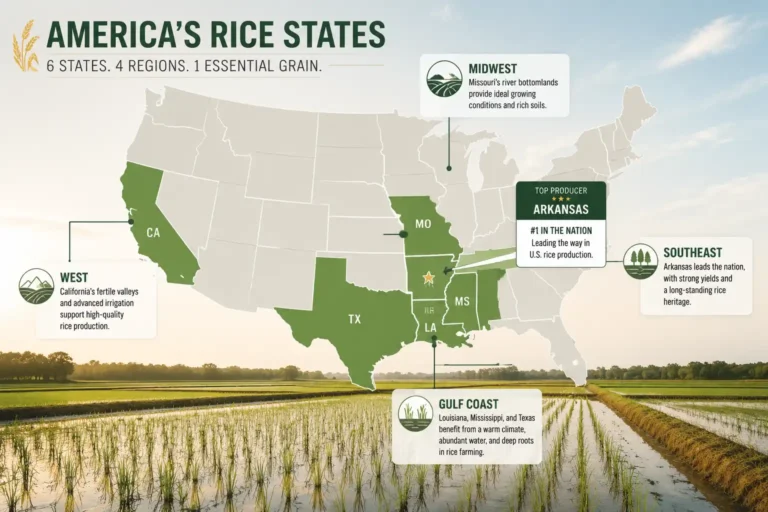
In the US, that same 105 to 150 day window holds, and it lands differently by state. The USDA counts six rice-growing states: Arkansas, California, Louisiana, Mississippi, Missouri, and Texas. Arkansas leads the country by a wide margin.
Most southern rice goes in the ground in April and May. Harvest then runs from late August through October. California plants a little later in the Sacramento Valley and cuts in September and October. The Gulf states plant earliest, so they can often squeeze in a second crop. our guide covers the US rice-growing regions in more detail in a separate breakdown.
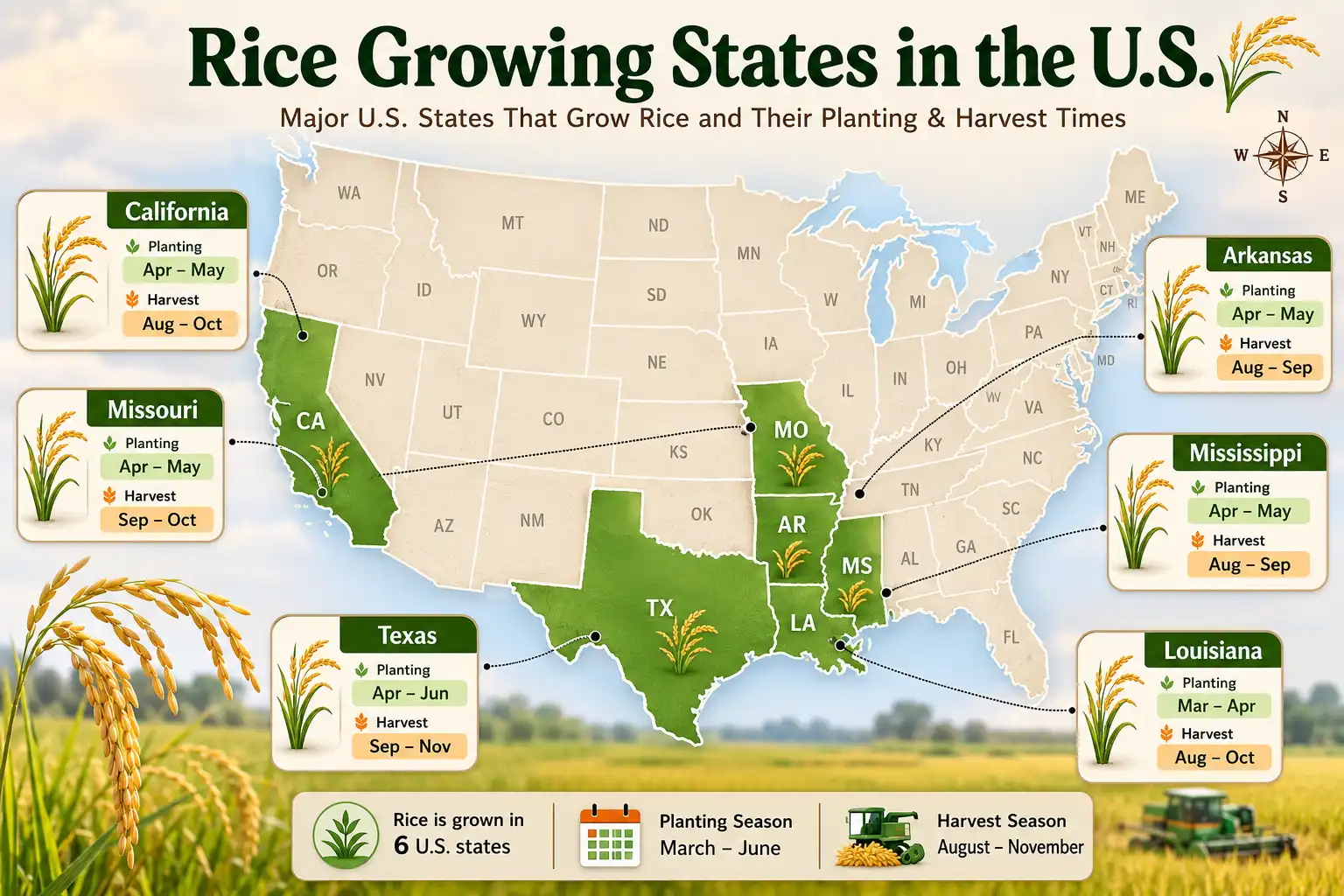
Here is the rough schedule by state:
| State | Typical Planting | Typical Harvest | Main Grain Type |
|---|---|---|---|
| Arkansas | April to May | Sept to Oct | Long-grain |
| California | Late April to May | Sept to Oct | Medium-grain |
| Louisiana | March to April | July to Aug (plus ratoon) | Long-grain |
| Texas | March to April | July to Aug (plus ratoon) | Long-grain |
| Mississippi | April to May | September | Long-grain |
| Missouri | April to May | September | Long-grain |
What Is a Ratoon Crop?
A ratoon crop is a second rice harvest grown from the stubble of the first. After the main cut in Louisiana and Texas, growers leave the roots in place. The plant regrows and produces a smaller crop, usually ready in fall. That ratoon matures faster than the main crop, because the root system is already built.
What Affects How Long Rice Takes to Grow?
Several things push the timeline up or down. Variety sets the baseline, but weather and management move it from there:
- Temperature. Heat drives rice growth. Arkansas farmers track this with the DD50 program from the University of Arkansas, which counts heat units instead of calendar days. Warmer seasons finish faster.
- Planting date. A later planting often means warmer weather ahead. That can shorten the crop by a couple of weeks.
- Region. Northern and southern fields run on different clocks. Cool nights in some areas stretch the crop out.
- Seeding method. Growers either drill seed into the soil or drop it by plane into flooded fields. Transplanted rice, common in Asia, spends less time in the main field.
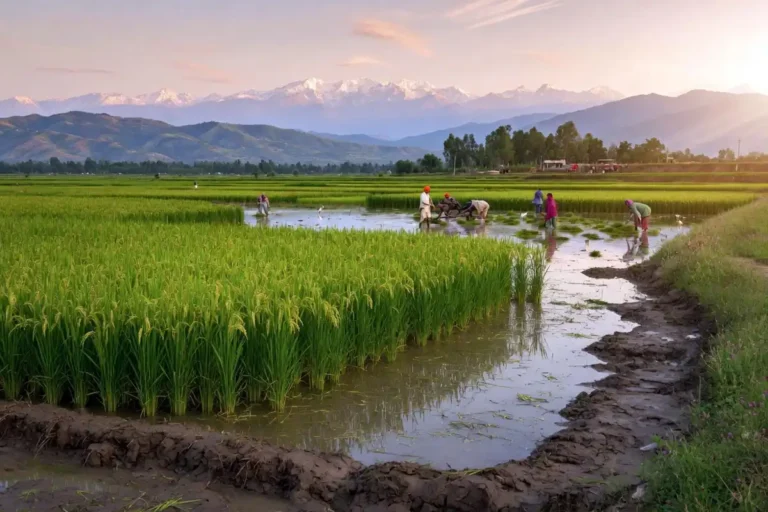
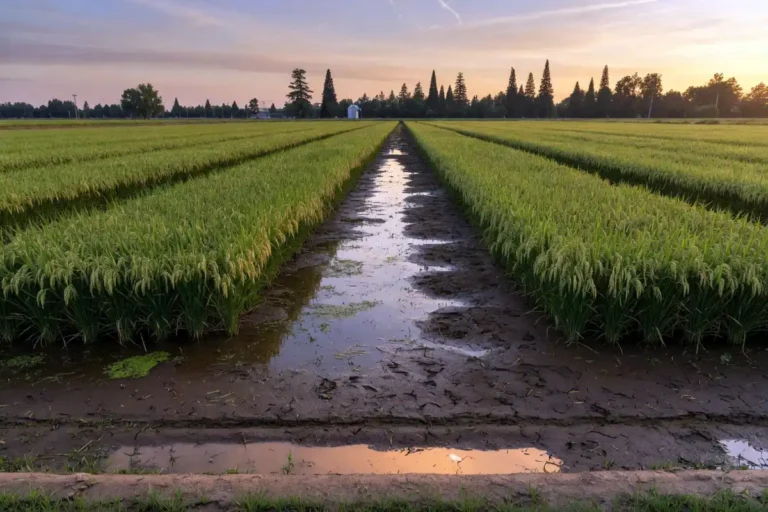
- Water. Rice grows in standing water for much of the season. That steady flood holds heat and feeds the crop. It is one reason paddies stay flooded through most of the growth cycle.
- Daylength. Some varieties are photoperiod-sensitive and wait for shorter days to flower. Most US commercial rice is not, but older and tropical types can be.
How Do You Know When Rice Is Ready to Harvest?
Rice is ready to harvest when the grain moisture drops to about 18 to 22 percent. By then, roughly 80 to 85 percent of the kernels have turned straw-colored. At that point the heads bend over under the weight of full grain. Growers drain the field first, so the ground firms up and the combine can run.
Timing here is tight. Cut too early and you get chalky, immature grain. Cut too late and the crop shatters or cracks, which hurts milling quality. So most farmers check grain moisture in the paddy with a meter rather than guessing by eye.
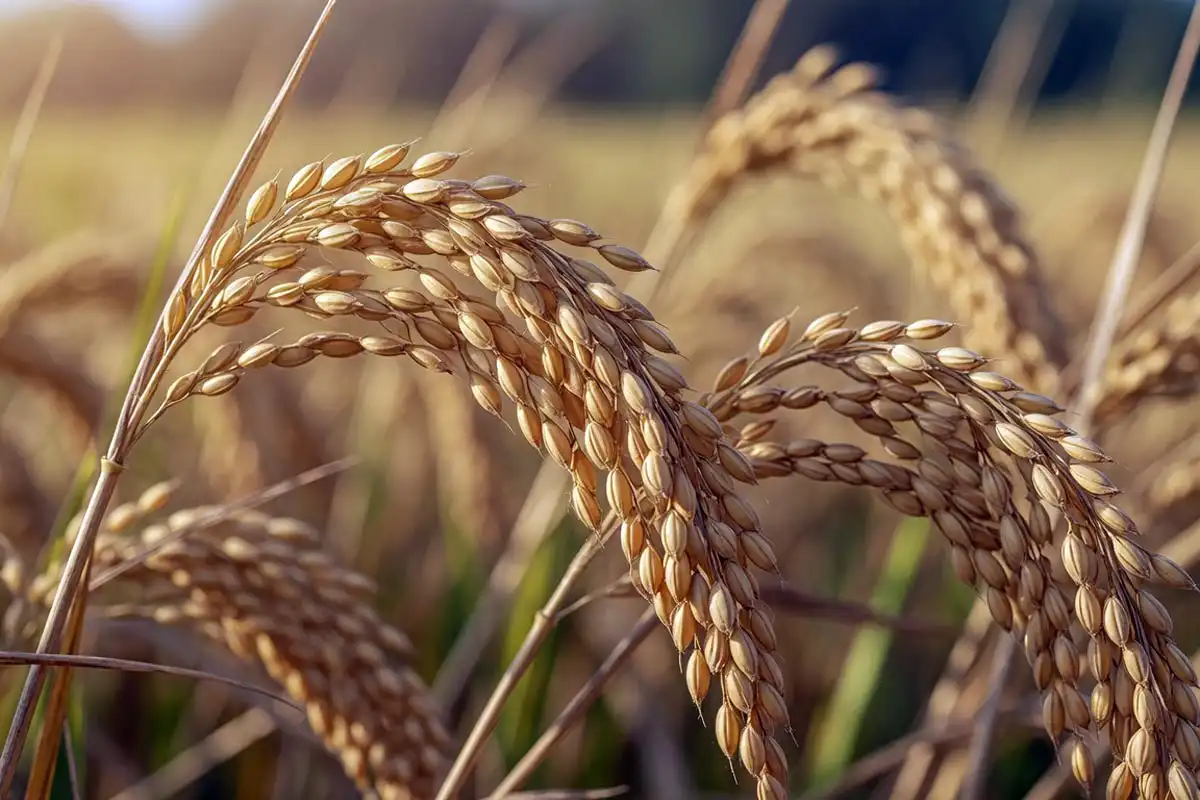
Arkansas extension gives a handy rule. For long-grain rice, the crop usually hits about 20 percent moisture around 40 days after half the field has headed. Medium-grain runs a few days longer. Those are guides, not guarantees, so a field check still wins.
Can You Grow Rice at Home, and How Long Does It Take?
Yes, you can grow rice at home, and it takes about 4 to 6 months from seed to harvest. Home growers use buckets, tubs, or a small flooded bed. Rice needs steady warmth above 70°F and a long frost-free stretch. So most US gardeners start seed indoors and grow through summer. For the full method, here is how to grow rice from seed step by step. Expect a small yield from a home patch. But the plant is easy to keep once the water and heat are right.
FAQs on Rice Growth Timeline and Cultivation Duration
What is the fastest-growing rice?
Does rice grow back after you harvest it?
How many months does it take to grow rice?
Bottom Line
Rice runs on heat, not the calendar. Plan on 105 to 150 days for most varieties, with the back 60 to 65 days fairly fixed once flowering starts. Pick a maturity class that fits your season. Then watch the weather through flowering, and let grain moisture, not a date on the wall, tell you when to cut. Get those three things right, and the timeline takes care of itself.