Long Grain vs Short Grain Rice: What Sets Them Apart
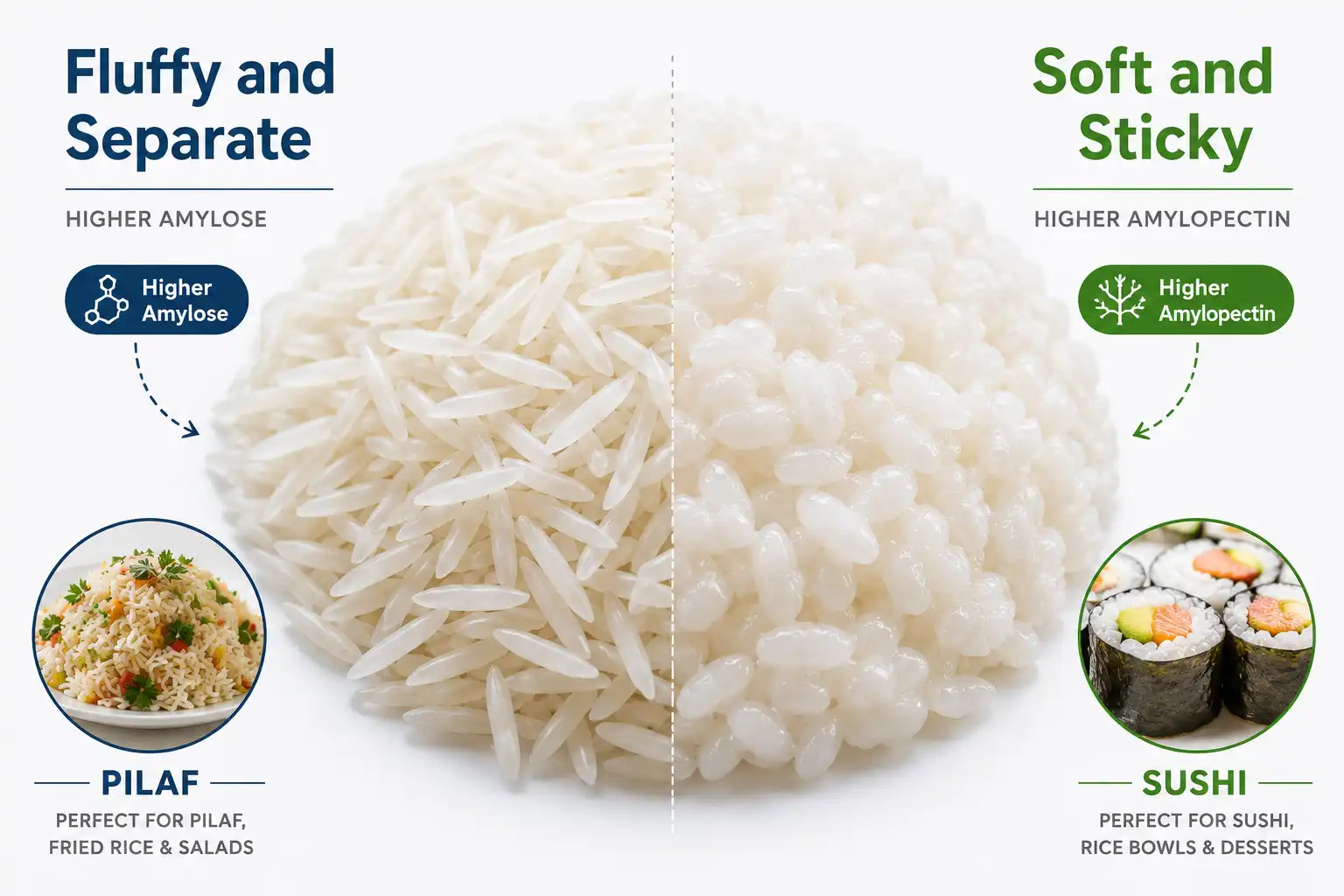
Two bags of rice, one big difference on your plate. Long grain vs short grain rice decides whether dinner turns out fluffy and separate or soft and sticky. The gap comes from grain shape and starch.
The difference in long grain vs short grain rice is shape and texture. Long grain is slim and cooks light and separate, ideal for pilaf and curry. Short grain is plump and cooks soft and sticky, ideal for sushi.
Long Grain vs Short Grain Rice: The Main Differences
The main difference is grain shape and starch, and together they set the texture. Long grain is slim and high in amylose, so it stays fluffy and separate. Short grain is plump and high in amylopectin, so it turns soft and sticky. Everything else, from water ratio to best dish, follows that one gap.
| Feature | Long grain | Short grain |
|---|---|---|
| Shape | Slim, 3-4x longer than wide | Plump, almost round |
| Amylose | Higher (about 20-23%) | Lower (about 15-19%) |
| Cooked texture | Fluffy, dry, separate | Soft, moist, sticky |
| Water needed | More (about 1.75:1) | Less (about 1 to 1.25:1) |
| Cooks in | About 18-20 min | About 15-18 min |
| Best for | Pilaf, fried rice, curry, salads | Sushi, pudding, porridge, bowls |
| Common types | American long grain, basmati, jasmine | Sushi rice, Koshihikari, sweet rice |
| Main US region | Mid-South (Arkansas, Louisiana, Texas) | California |
Learn more: How to grow rice in containers
What Is Long Grain Rice?
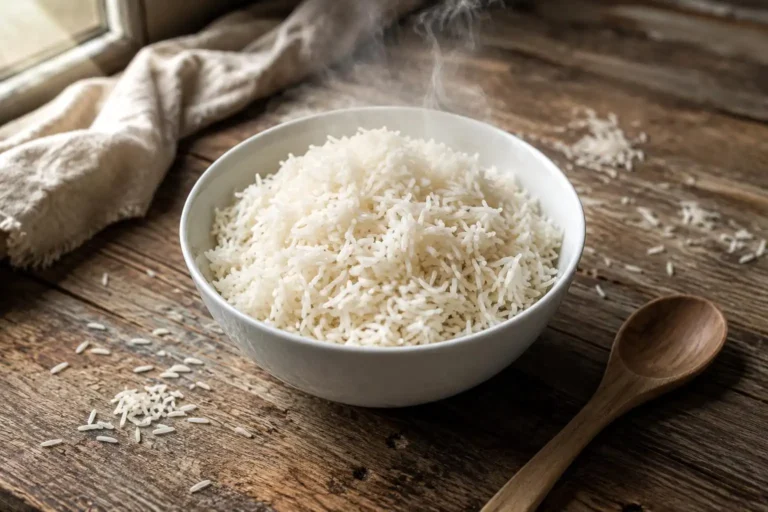
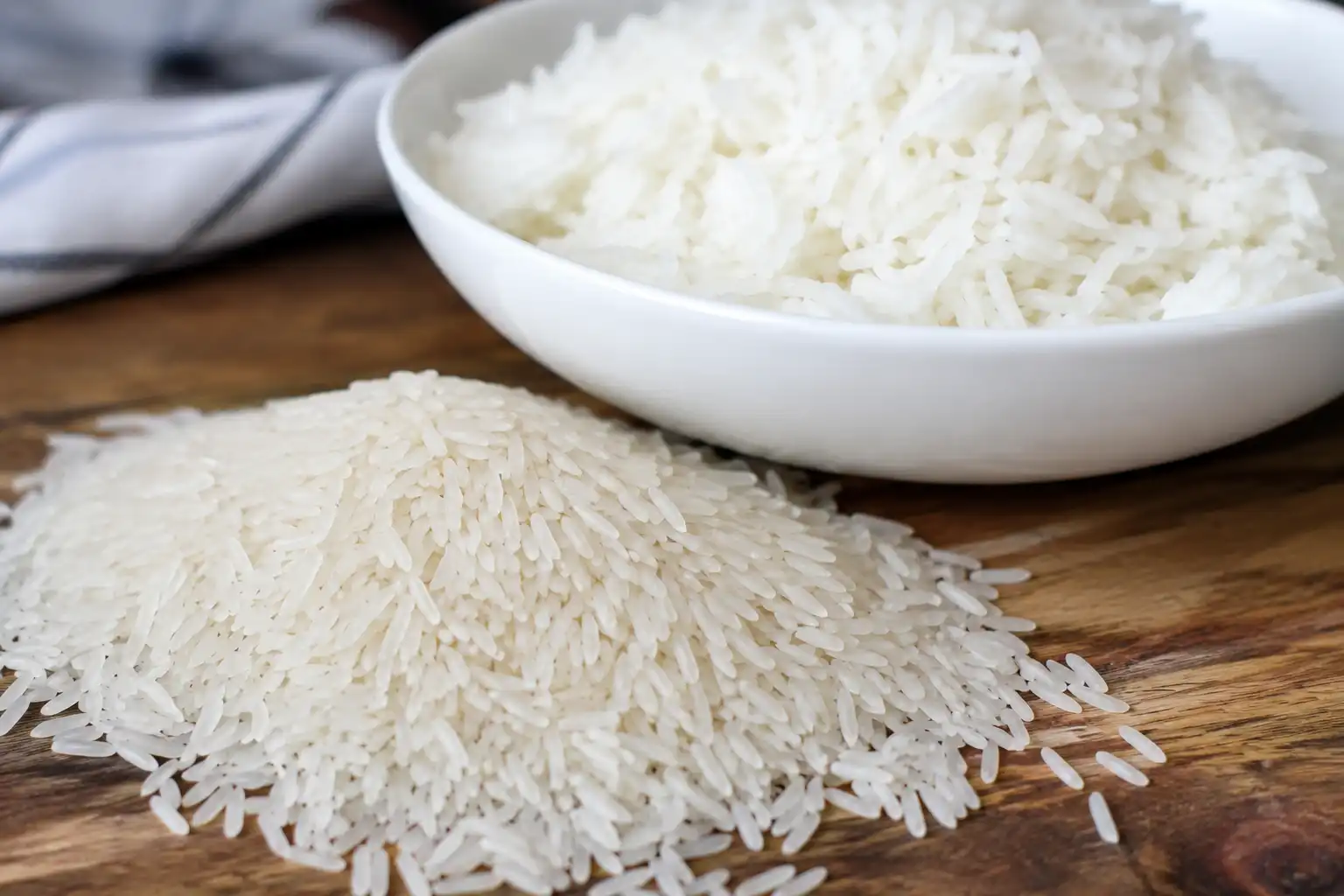
Long grain rice is a slim kernel three to four times longer than it is wide. It holds more amylose starch, so cooked grains stay light and separate instead of clumping.
Key traits:
- Shape: long and slender, 3:1 to 4:1 length to width
- Amylose: higher, about 20 to 23 percent
- Cooked feel: fluffy, dry, separate
- Common types: American long grain white, basmati, jasmine
American long grain white leads US kitchens, and aromatic types round out the group. Basmati grows longer as it cooks and stays fluffy, while jasmine cooks a touch softer and clings more. If you want the wider list, this guide to the different types of rice breaks them down. Long grain is the choice when every grain should stand alone in the bowl.
What Is Short Grain Rice?
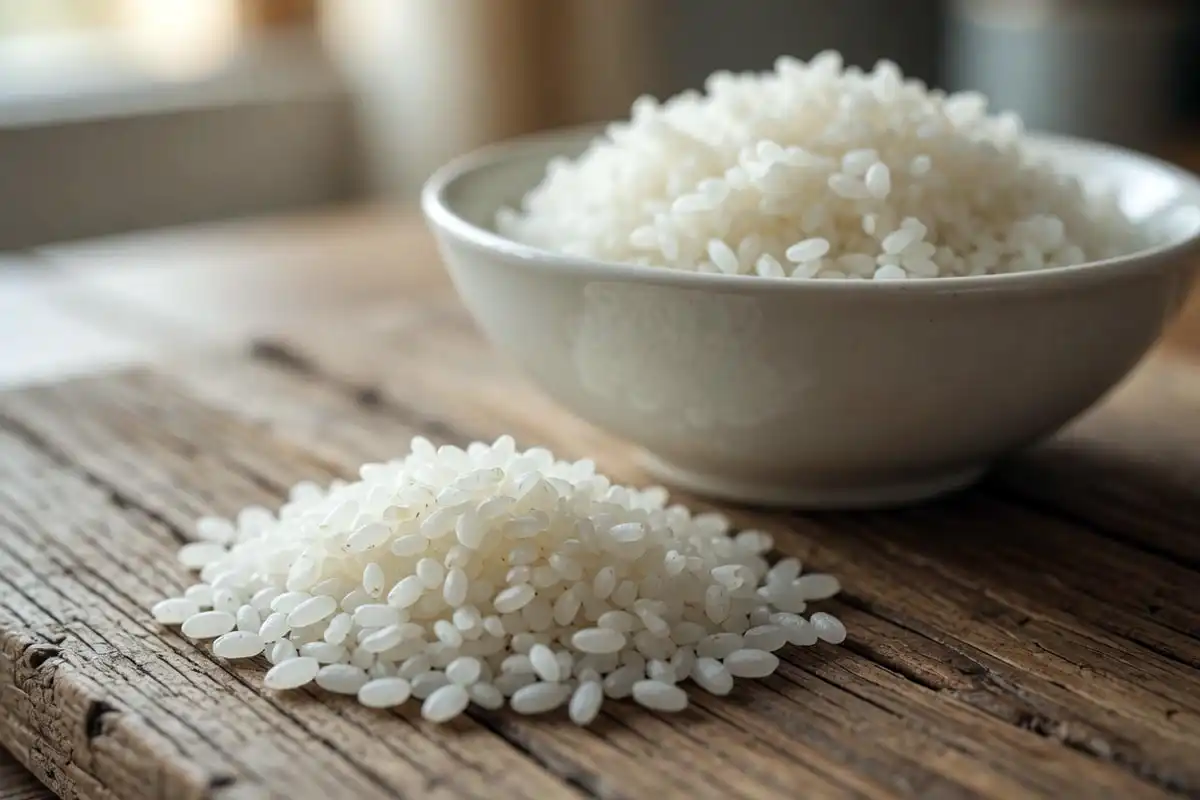
Short grain rice is a short, plump, almost round kernel, usually 4 to 5 millimeters long. It runs low in amylose and high in amylopectin, so cooked grains turn soft and sticky and cling together.
Key traits:
- Shape: short, plump, nearly round
- Amylose: lower, about 15 to 19 percent
- Cooked feel: soft, moist, sticky
- Common types: sushi rice, Koshihikari, sweet (glutinous) rice
Japanese sushi rice is the best-known short grain, along with Koshihikari and Akitakomachi. Sweet or glutinous rice sits in this camp too, and it carries the most amylopectin of any rice, which is why it clumps into a solid mass. When a dish needs grains that stick, short grain does the job.
Where Does Medium Grain Rice Fit?
Medium grain rice sits between the two, about two to three times longer than wide, with a moist, tender bite and light cling. It runs lower in amylose than long grain, so it softens and holds sauce well. California’s Calrose rice is the common example, arborio powers Italian risotto, and Spanish bomba rice drinks up paella broth without going mushy. Most cooks lump medium and short grain together, since both cook softer than long grain.
Amylose vs Amylopectin: Why the Texture Changes
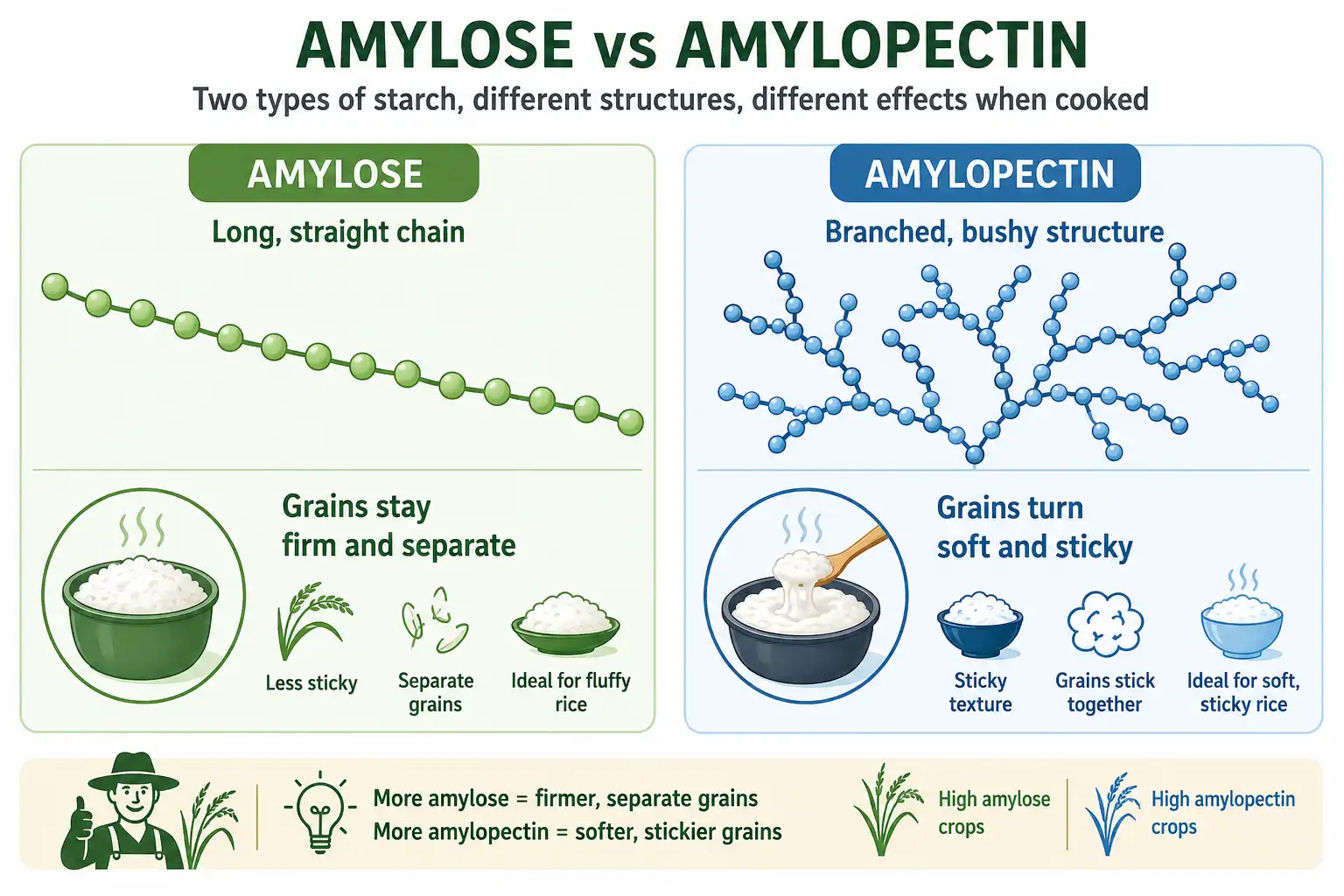
The texture changes because rice holds two starches that behave differently under heat and water. Amylose is a long, straight molecule. It packs tight, resists water, and keeps grains firm and separate. Amylopectin is branched and bushy. It swells, gels, and glues grains together. So more amylose means fluffy long grain, and more amylopectin means sticky short grain. Waxy rice takes it further with almost no amylose, which is why it clumps hardest of all.
How to Cook Long Grain and Short Grain Rice
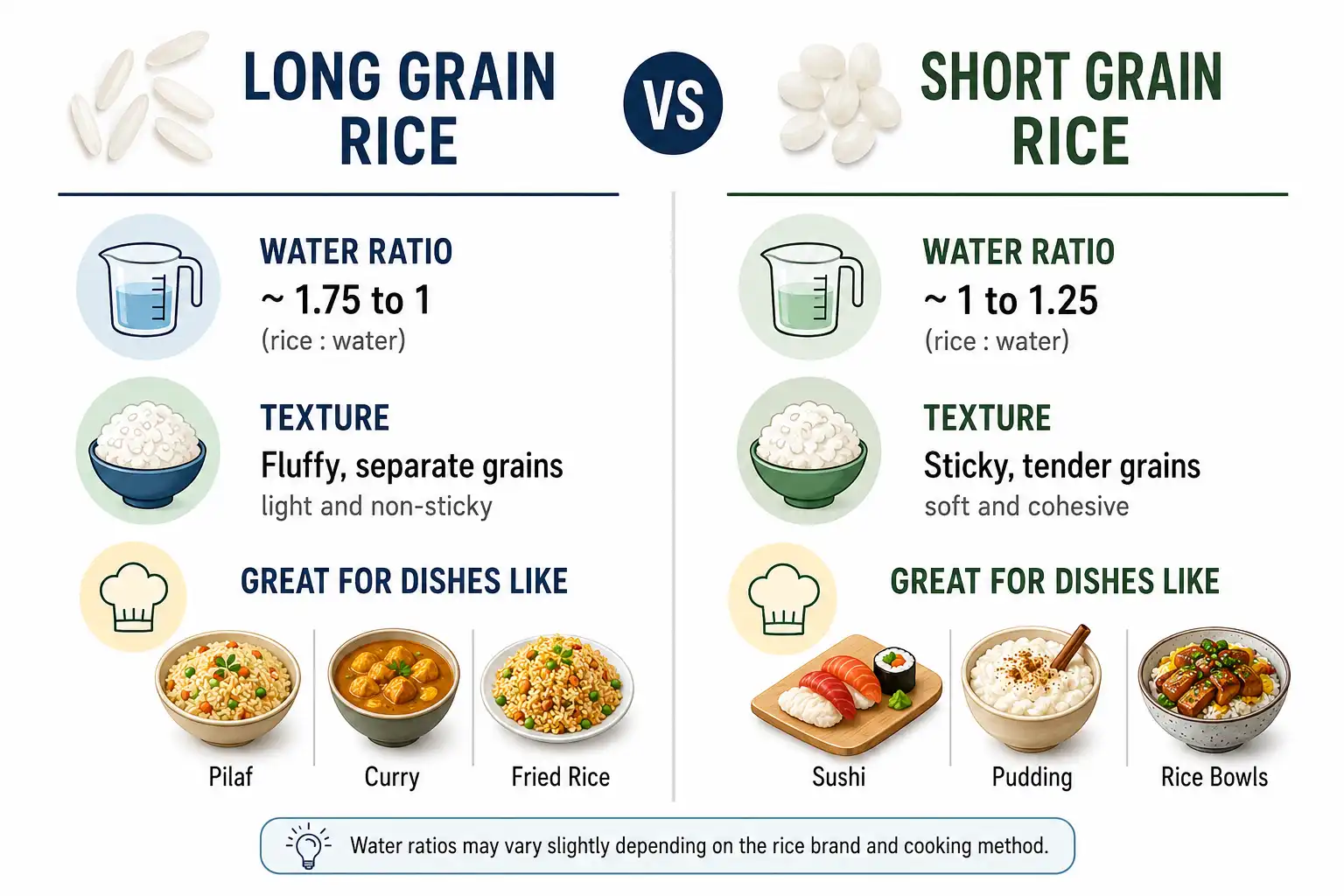
Cook long grain with more water and short grain with less, because amylose needs extra moisture to soften. Use these ratios as a starting point, then trust your package, since brands mill a little differently.
- Long grain white: about 1.75 cups water per 1 cup rice
- Short grain white: about 1 to 1.25 cups water per 1 cup rice
- Brown rice (either type): more water and 40 to 50 minutes
Simple stovetop method:
- Rinse long grain until the water runs clear for the fluffiest result. Rinse sushi rice too, though it still cooks sticky. Skip rinsing risotto and paella rice, since you want their surface starch.
- Add rice and measured water to a pot, then bring it to a boil.
- Drop the heat to low, cover the pot, and simmer without lifting the lid.
- Once the water is gone, pull the pot off the heat and rest it covered for 10 minutes.
- Fluff long grain with a fork. Leave short grain alone so it stays soft.
Here is a field note worth keeping: long grain firms up as it cools, so day-old grains separate and fry beautifully. Short grain stays soft and clumps, which is exactly what sushi and rice bowls need.
How to Tell Them Apart at Home
Look at the kernel first, then watch how it cooks. The shape gives it away before the pot does.
- Length test: long grain looks slim and rod-like, while short grain looks round and pearl-like
- Cook test: long grain dries out separate, while short grain turns soft and sticks
- Leftover test: chilled long grain hardens and separates, while chilled short grain stays soft and clumped
- Water test: long grain drinks more water, while short grain needs less
Best Uses for Each Type
Pick long grain for separate grains and short grain for cling. The dish tells you which bag to open.
Reach for long grain in:
- Pilaf and rice sides
- Fried rice and stir-fries
- Curry and biryani (basmati)
- Thai plates and saucy dishes (jasmine)
- Grain salads and soups
Reach for short and medium grain in:
- Sushi and onigiri
- Rice pudding and porridge
- Risotto (arborio) and paella (bomba)
- Rice bowls and poke
- Sticky rice desserts
Is One Healthier Than the Other?
Neither is clearly healthier, since long grain and short grain white rice carry similar calories and carbs per cooked cup. The real gap is digestion speed, because amylose breaks down slowly and amylopectin breaks down fast.
Rough glycemic index ranges:
- Basmati: about 50 to 58 (lower)
- Brown rice: about 50 to 68
- Jasmine and short grain white: high 80s to 90s (higher)
Higher-amylose long grain tends to sit lower on the scale, and you can read more on where basmati comes from since it is the classic low-GI white pick. Jasmine surprises people, because it is a long grain that still runs high in amylopectin. One easy trick helps: chill cooked rice, then reheat it, and resistant starch forms that softens the blood sugar spike. Brown versions add fiber and slow things further. If you manage diabetes, favor basmati or parboiled rice, keep portions modest, pair rice with protein and vegetables, and follow guidance from your doctor or a dietitian.
Common Mistakes to Avoid
Most rice problems trace back to the wrong grain or the wrong water, not bad luck.
- Using long grain for sushi, so the roll will not hold its shape
- Drowning short grain in long-grain water, so it turns to paste
- Skipping the 10-minute rest, so the grains cook unevenly
- Rinsing risotto rice, so it loses the starch that makes it creamy
- Lifting the lid mid-simmer, so the steam escapes and cooking stalls
Where Is Each Type Grown in the US?
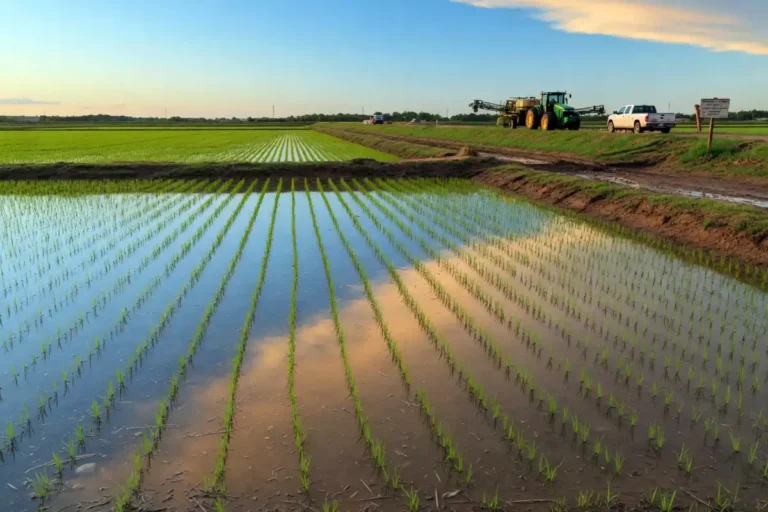
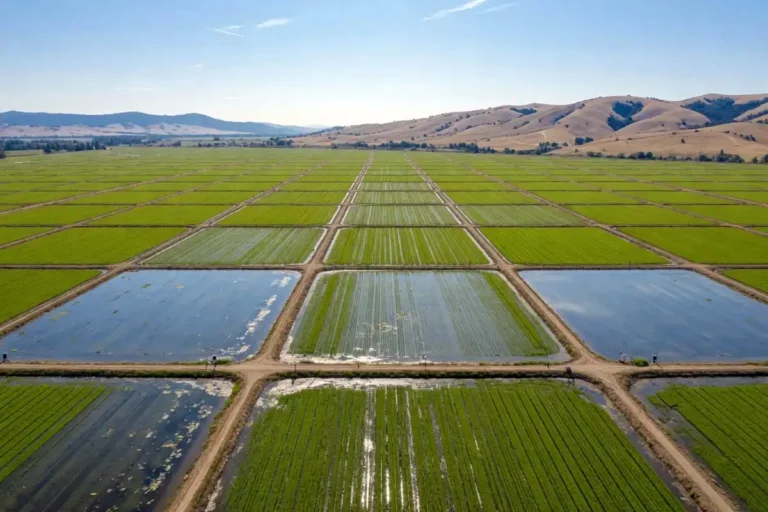
Long grain grows across the Mid-South, while short grain grows almost entirely in California. USDA data sorts the US crop by grain length, and long grain makes up roughly three-quarters of it. Arkansas leads the country, followed by Louisiana, Mississippi, Missouri, and Texas. California’s Sacramento Valley focuses on japonica types, where Calrose alone can be most of the state’s crop. Short grain sits near one percent of total production, so most of what you buy comes from California. For the full map, see the main US rice-growing regions. Still, the grain-grading habit carries over from wheat and corn: measure the kernel, check moisture, judge quality. Knowing where each type grows also helps you trust a bag label.
FAQs About Long Grain and Short Grain Rice
Can you substitute long grain for short grain?
Is basmati long grain or short grain?
Is sushi rice short grain?
Is medium grain the same as short grain?
Which cooks faster, long grain or short grain?
How to Pick Between the Two
Start with the dish, not the bag. For fluffy, separate grains in pilaf, curry, or fried rice, grab long grain. For soft, sticky grains in sushi, pudding, or a rice bowl, reach for short grain. The starch does the heavy lifting, so once you know the texture you want, the call is simple. Keeping both on the shelf makes sense, since preparations often split between the two styles.