Does Rice Need to Be Organic? 7 Facts Every Buyer Should Know
People ask me this at the co-op all the time. They see “organic” on the bag and wonder if regular rice is unsafe. Here is a straight answer on whether rice needs to be organic, based on how the crop is actually grown in this country.
No, rice does not need to be organic to be safe or healthy. Conventional rice grown in the US meets FDA and EPA standards for pesticide residues and arsenic. Organic rice is a personal preference, not a safety requirement.
Does Rice Need to Be Organic?
Rice does not need to be organic. Both organic and conventional rice grown in the US are tested, regulated, and safe to eat. The choice comes down to budget and which farming practices matter to you.
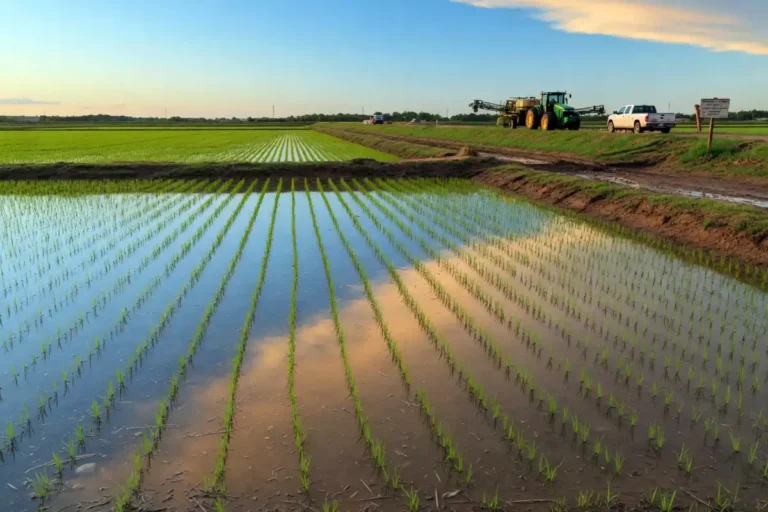
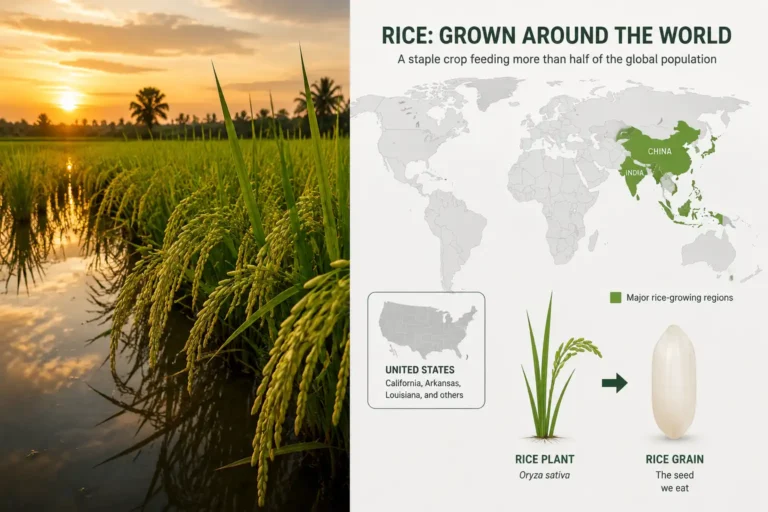
Most American rice comes from Arkansas, Louisiana, Mississippi, Missouri, Texas, and California. Every farm follows USDA and EPA rules on pesticide use, water, and harvest. Organic farms add a second layer of certification under USDA Organic standards. The rice itself is not measurably different on your plate.
Learn more: Bomba Rice Origin, Traits
What Is the Difference Between Organic and Conventional Rice?
The difference is in farm inputs and paperwork, not in the grain. Organic rice is grown without synthetic pesticides, synthetic fertilizers, GMOs, or sewage sludge. Farmers rely on compost, cover crops, and biological controls.
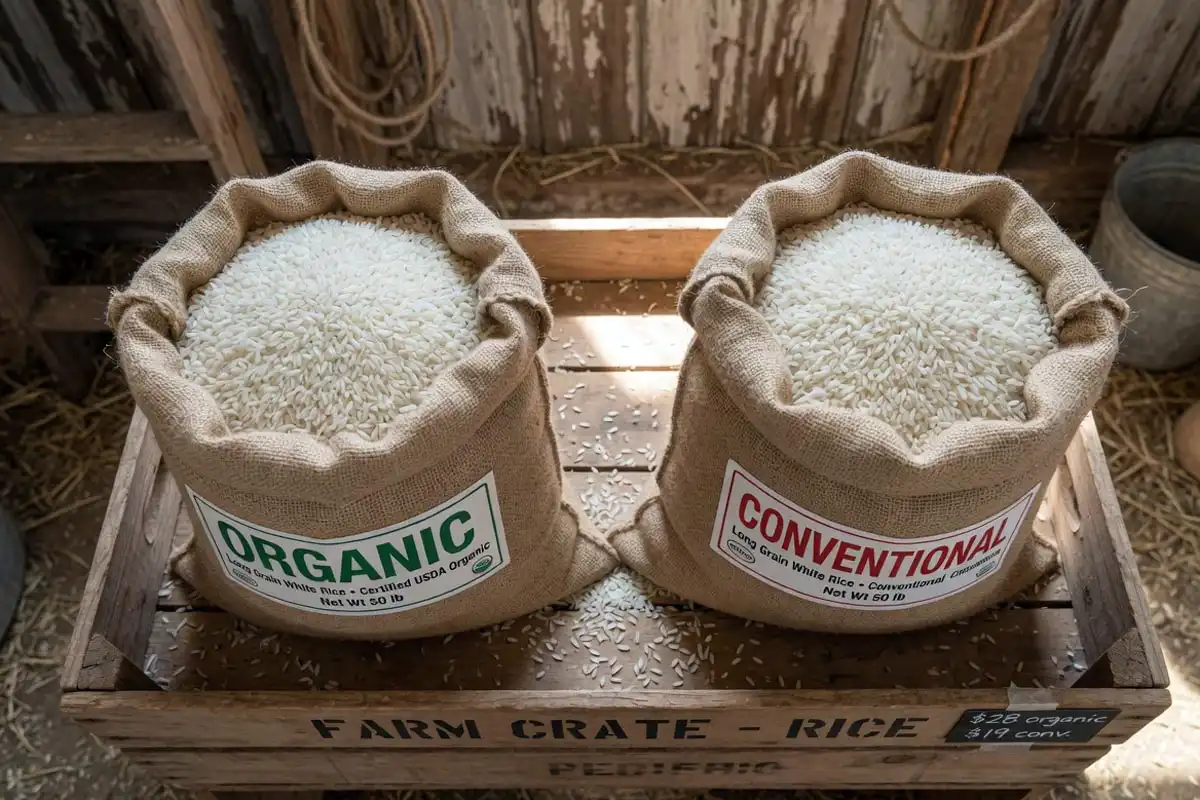
Conventional rice uses approved synthetic inputs to manage weeds, pests, and soil fertility. Some growers use a hybrid approach with reduced inputs and integrated pest management practices. The nutrition between the two is nearly identical based on USDA food composition data. What you are paying for with organic is the farming system, not a different rice.
If you want to understand input choices on the farm side, our breakdown of organic versus chemical fertilizer covers what each option does for soil and yield.
Also know: Pusa Basmati Rice
Is There Arsenic in Non-Organic Rice?
Yes, and there is arsenic in organic rice too. Rice naturally pulls arsenic from soil and water because it grows in flooded paddies. This happens whether the farm is certified organic or not.
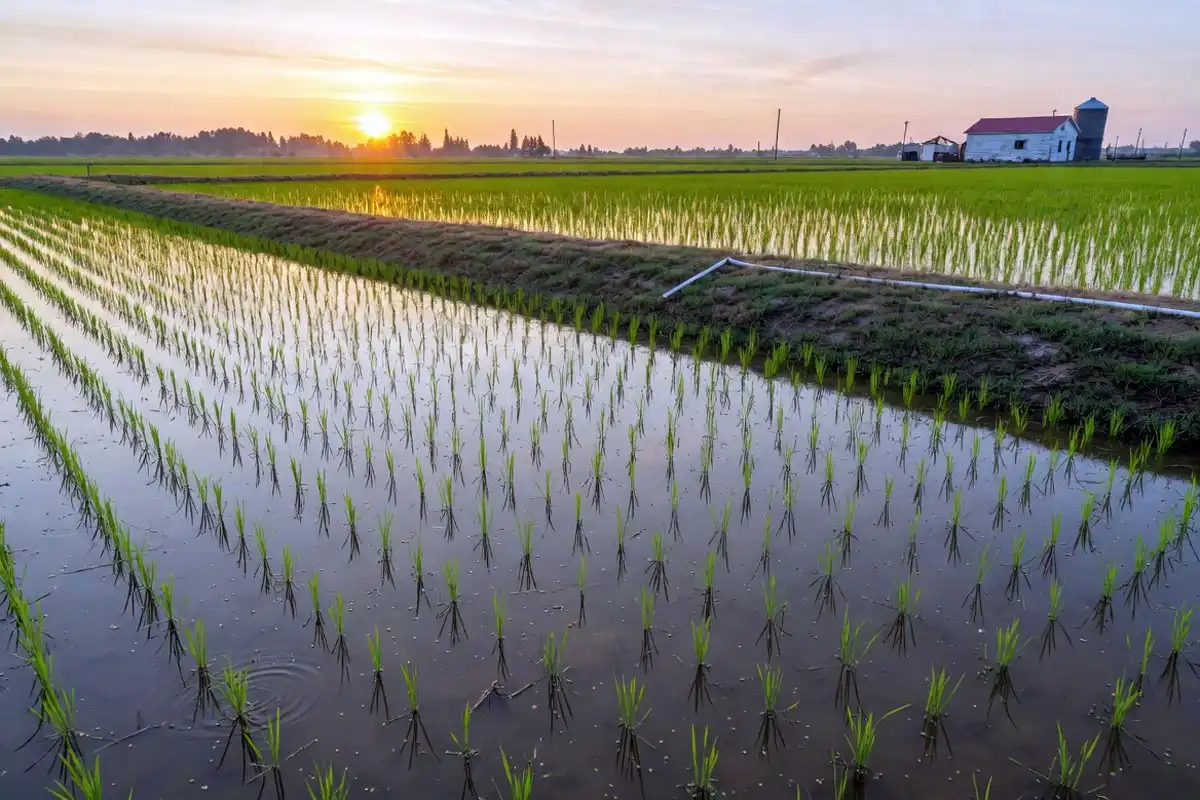
Arsenic exists in soil almost everywhere. Some areas have higher background levels from old pesticide history, mining, or natural mineral deposits. The FDA set an action level of 100 parts per billion of inorganic arsenic in infant rice cereal. Most adult rice from US producers tests well below international guidelines.
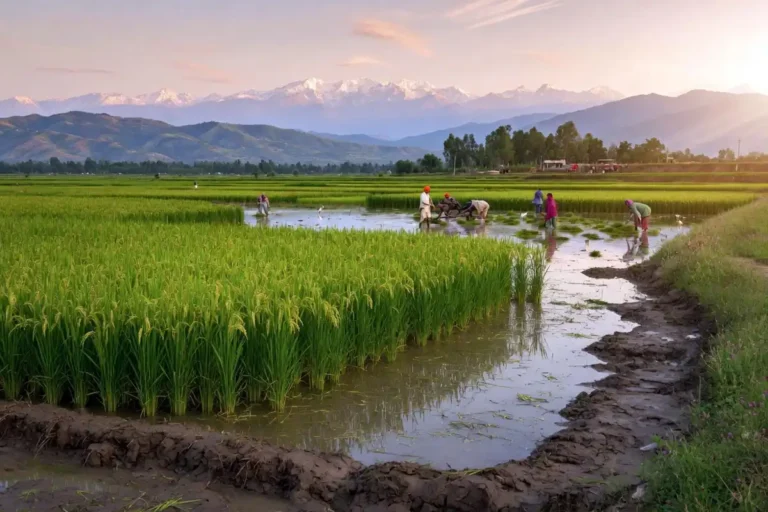
Brown rice carries more arsenic than white rice because the bran holds it. California rice from the Sacramento Valley tends to be lower in arsenic than rice from southern states. Buying organic does not change this. You can read more about why rice paddies are flooded and how that water management ties into arsenic uptake.
For the official guidance on this, the FDA arsenic in food page lays out current limits and recommendations.
Are Pesticide Residues a Real Concern in Rice?
Pesticide residues in US rice are very low. The USDA Pesticide Data Program tests rice every year. Most samples show no detectable residues, and the few that do come in far below EPA tolerance levels.
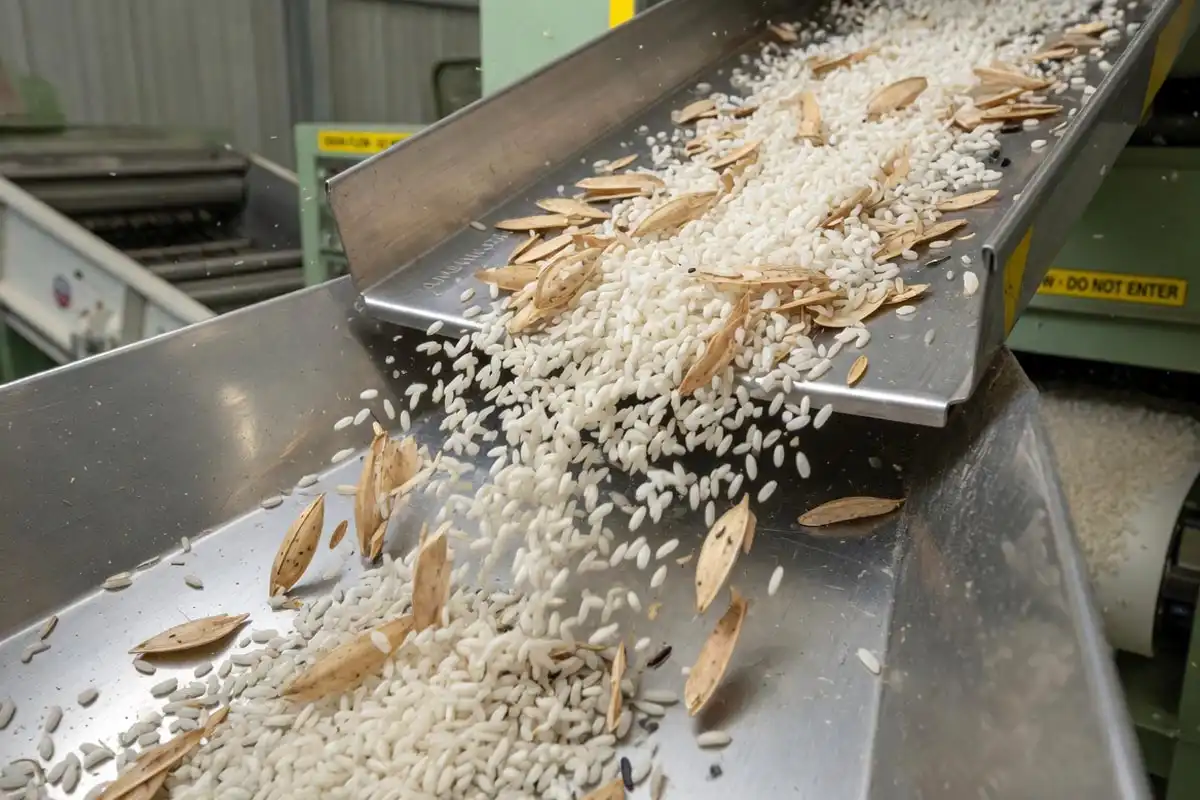
Rice also has built-in protection. The hull is removed during milling, which strips most surface residues. White rice loses the bran layer too, which removes even more. Glyphosate is sometimes used as a pre-harvest aid on grains like wheat and oats, but it is not standard practice on US rice. If you want context on that, our article on whether oats are sprayed with Roundup explains how pre-harvest desiccation works on other crops.
When Buying Organic Rice Actually Matters
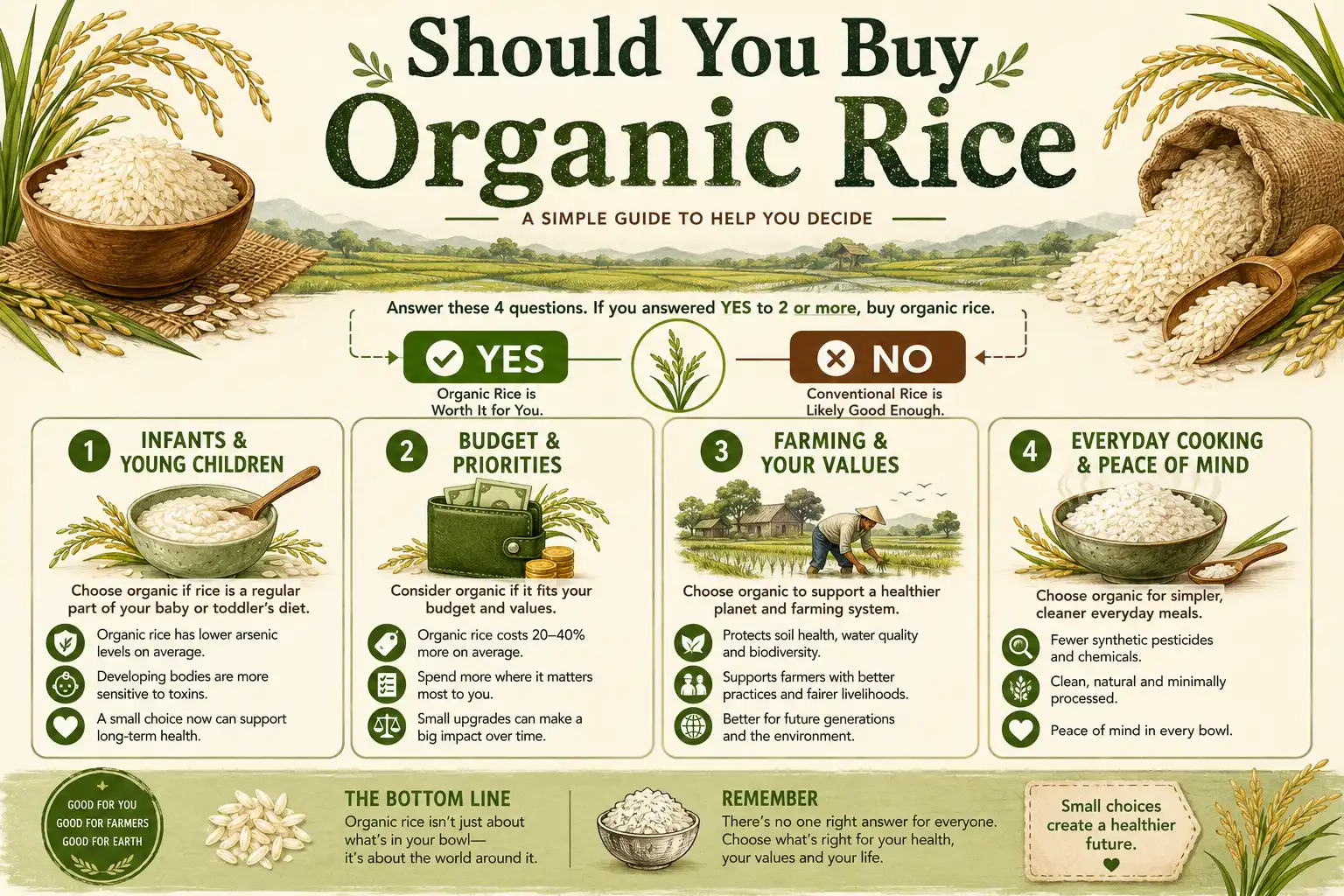
Organic rice makes sense when you care about the farming system itself. You are paying for how the field is managed, not for measurably cleaner grain.
Organic rice is a smart buy if:
- You want to support farms that avoid synthetic inputs
- You prefer USDA Organic certified supply chains
- You feed infants and want to minimize trace residues
- The price gap at your store is small
For everyday cooking, conventional rice is fine.
Does Organic Rice Taste or Cook Differently?
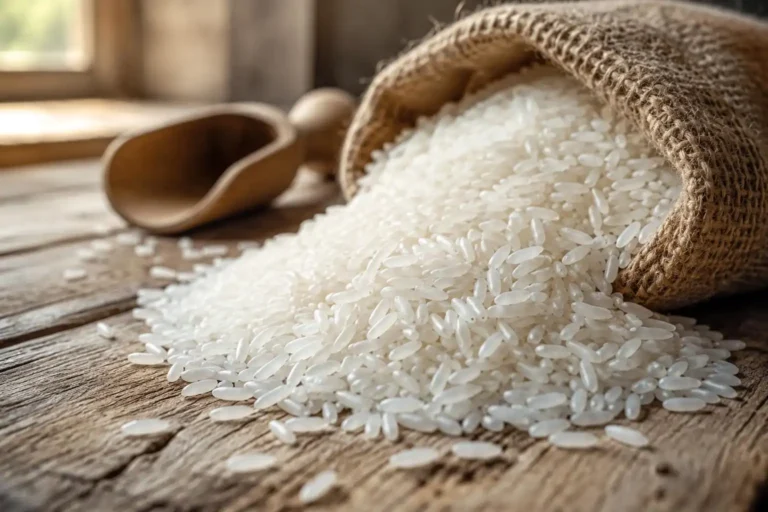
No, organic and conventional rice taste and cook the same. Variety matters far more than the certification. Long grain, medium grain, jasmine, basmati, and arborio each behave their own way in the pot.
A bag of organic jasmine and a bag of conventional jasmine will cook nearly the same. Texture, soak time, and water ratio come down to the variety, the milling, and how the rice was dried and stored after harvest.
How to Choose Rice at the Store
Look at the variety and origin first, then decide on organic. US-grown rice from California, Arkansas, or Louisiana is a solid baseline. Check the bag for the type, the milling style, and the harvest year if listed.
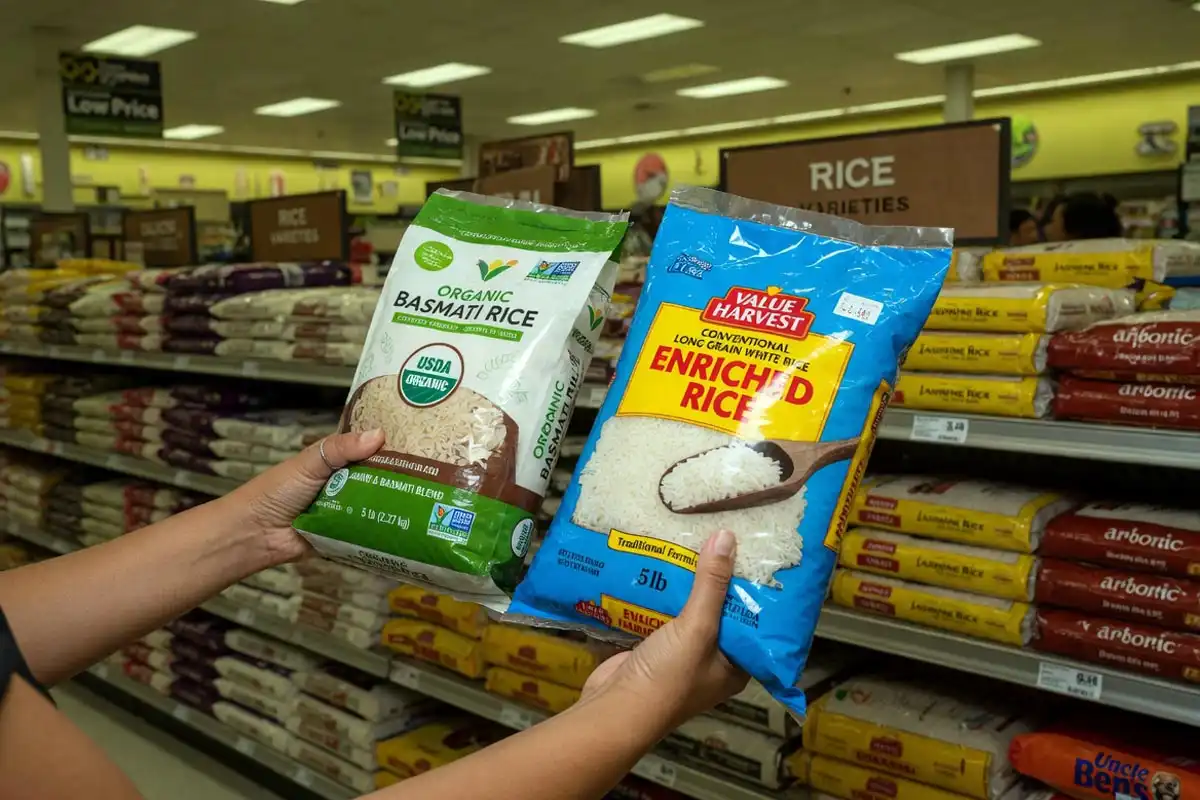
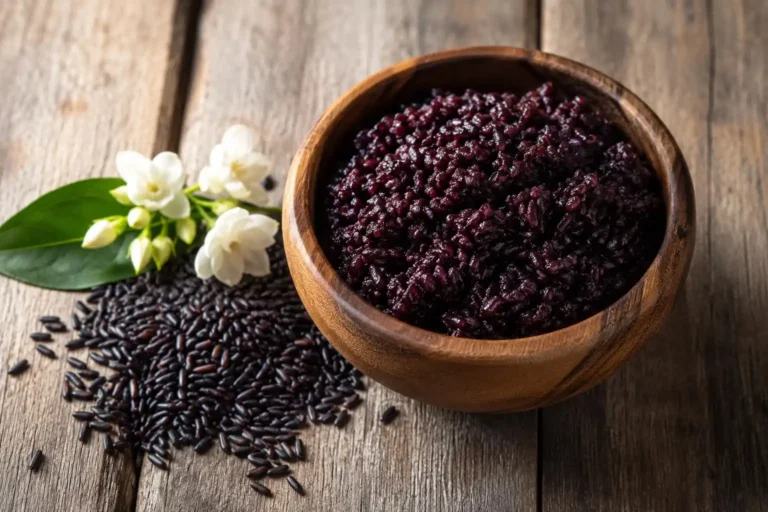
If you eat rice multiple times a week, rotating types is smarter than chasing the organic label. Mix white, brown, parboiled, and wild rice. That spreads any arsenic exposure better than eating one type every day, organic or not. Some growers are moving toward regenerative rice production that lowers water and input use, which is another angle worth knowing about.
Take on Organic Rice
After years of farming in Kansas and watching how rice is grown down in Arkansas and out in California, do not see organic rice as a must-buy. Conventional US rice is safe, tested, and well regulated. Pick organic if the farming practice matters to you. Otherwise, focus on variety, origin, and how you cook it. That makes more difference at the dinner table than the label on the bag.