What Are Concord Grapes? History, Flavor, Uses, and Growing
You have probably seen deep purple grapes labeled Concord at the store. Maybe a jar of Concord jelly sits in your pantry. So what are Concord grapes, and why do they taste so different from table grapes? They are America’s classic juice grape.
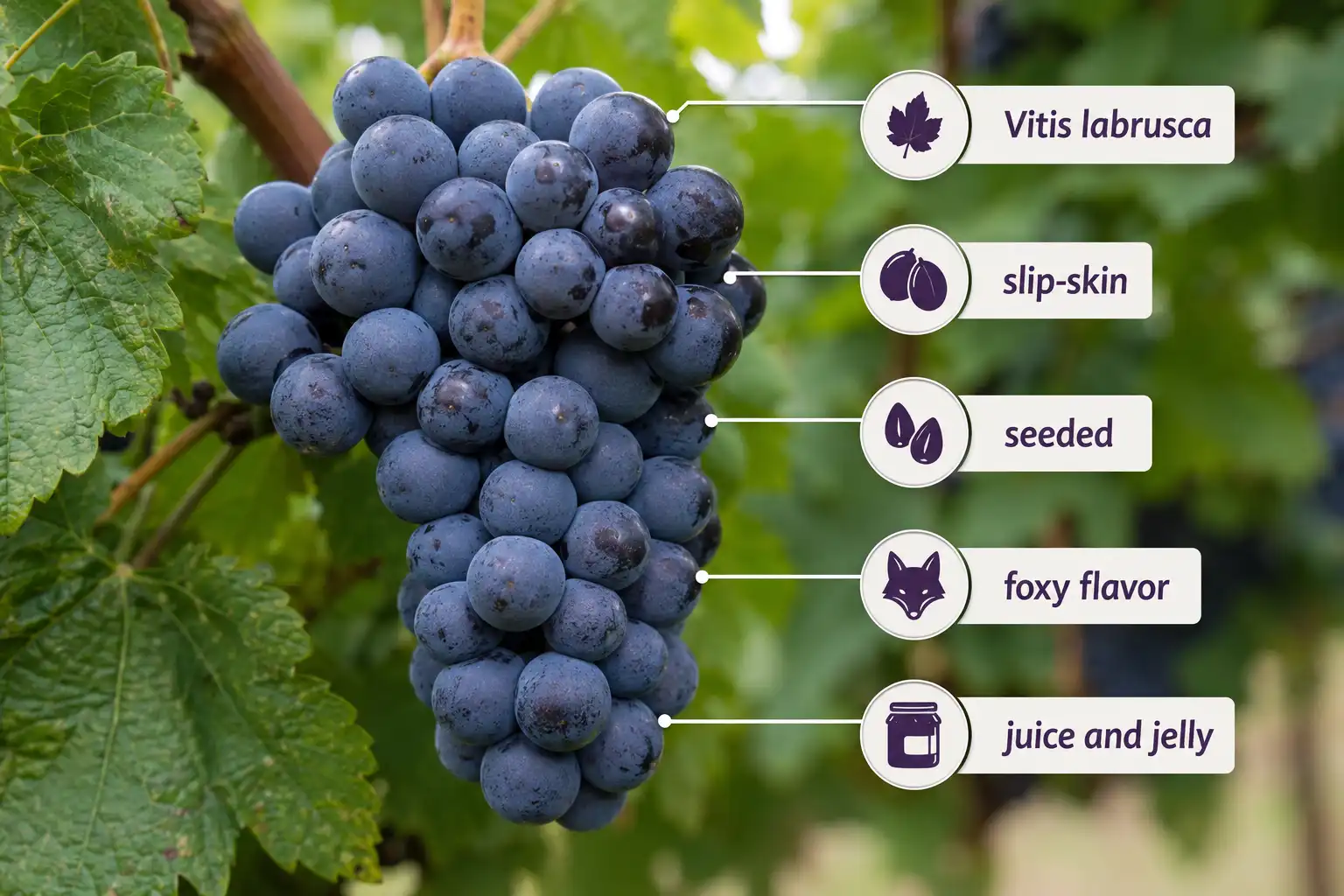
Concord grapes are a Vitis labrusca cultivar known for blue-black skin, bold foxy flavor, and easy slip-skins. Ephraim Bull bred them in Massachusetts in 1849. Today they anchor American grape juice, jelly, and jam.
What Are Concord Grapes Exactly?
Concord grapes are a dark, slip-skin American grape grown mostly for juice and jelly. They belong to the species Vitis labrusca, often called the fox grape. Genetically, Concord is a hybrid, mostly labrusca with a smaller share of Vitis vinifera in its background.
The berries are round, medium sized, and deep blue-black. A dusty white coating, called bloom, sits on the skin. That bloom is natural and harmless. Each grape carries seeds and a soft, juicy pulp inside a skin that slips off cleanly.
So Concord is more than one clever grape. It is the benchmark that most American juice and jelly grapes get measured against.
Where Did Concord Grapes Come From?
Concord grapes came from Concord, Massachusetts, where Ephraim Wales Bull bred them in the 1840s. First, he planted wild fox grape seedlings and raised them over two generations. After testing thousands of seedlings, he picked one vine with the best flavor and hardiness. Then he named it Concord and selected it in 1849.
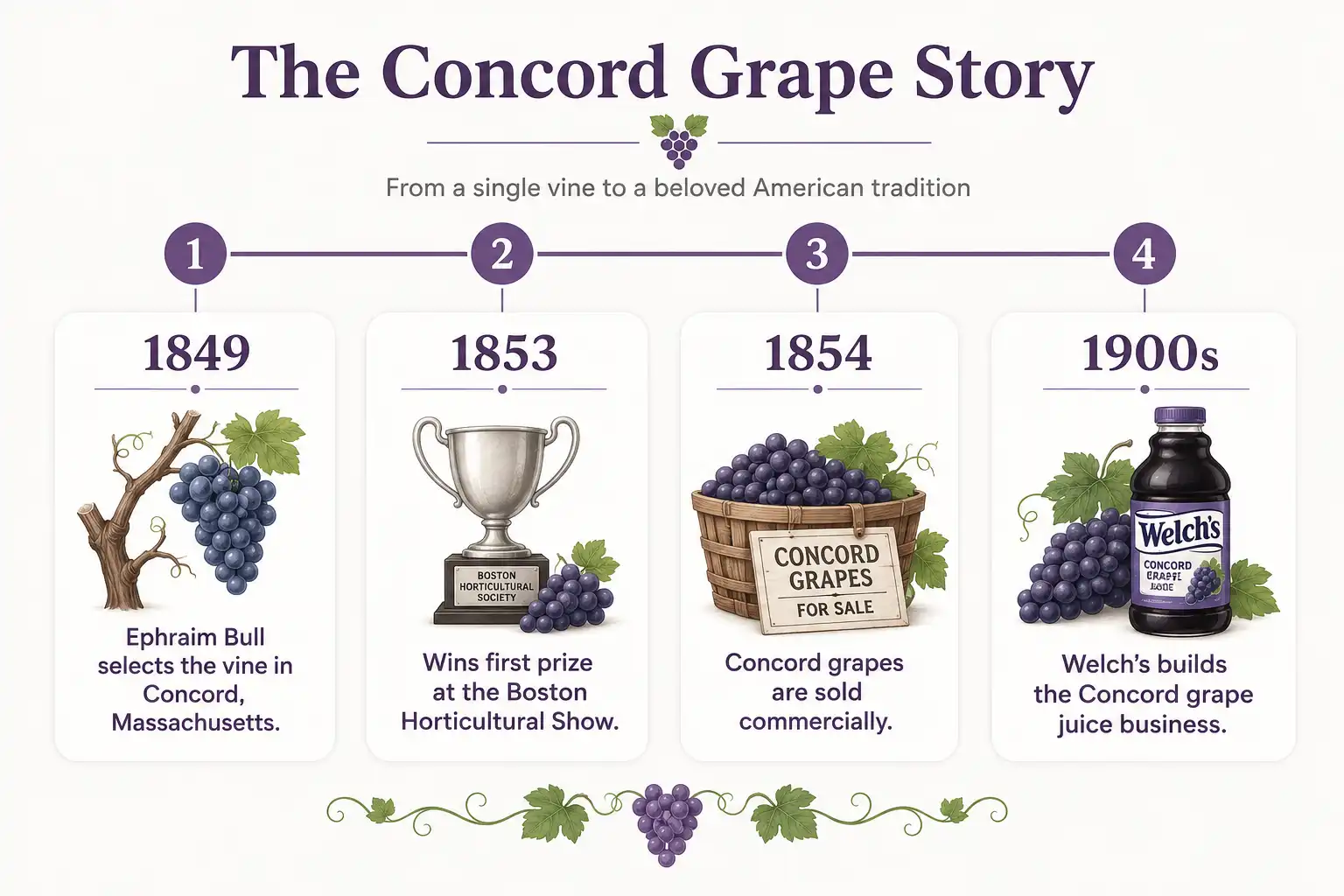
The variety went commercial in 1854 through a Boston nursery. Farmers across the country adopted it fast. By the 1870s, growers raised Concord in nearly every grape region in the United States. Later, Welch’s built the grape juice business around it, and the name stuck for good.
What Do Concord Grapes Taste Like?
Concord grapes taste bold, sweet, and musky, with the old-fashioned grape flavor you know from juice and jelly. That signature taste comes from a compound called methyl anthranilate. Wine folks call this flavor foxy, which describes the deep, musky character of labrusca grapes.
The sweetness sits alongside a bright tartness, mostly near the skin. Fresh Concord grapes taste richer and more aromatic than a mild table grape. If you have sipped real Concord juice, then you already know the flavor.
What Do Concord Grapes Look Like?
Concord grapes look deep blue to nearly black, with a frosty bloom over the skin. Clusters are medium and fairly tight. Each berry runs about three-quarters of an inch across and sits round on the vine.
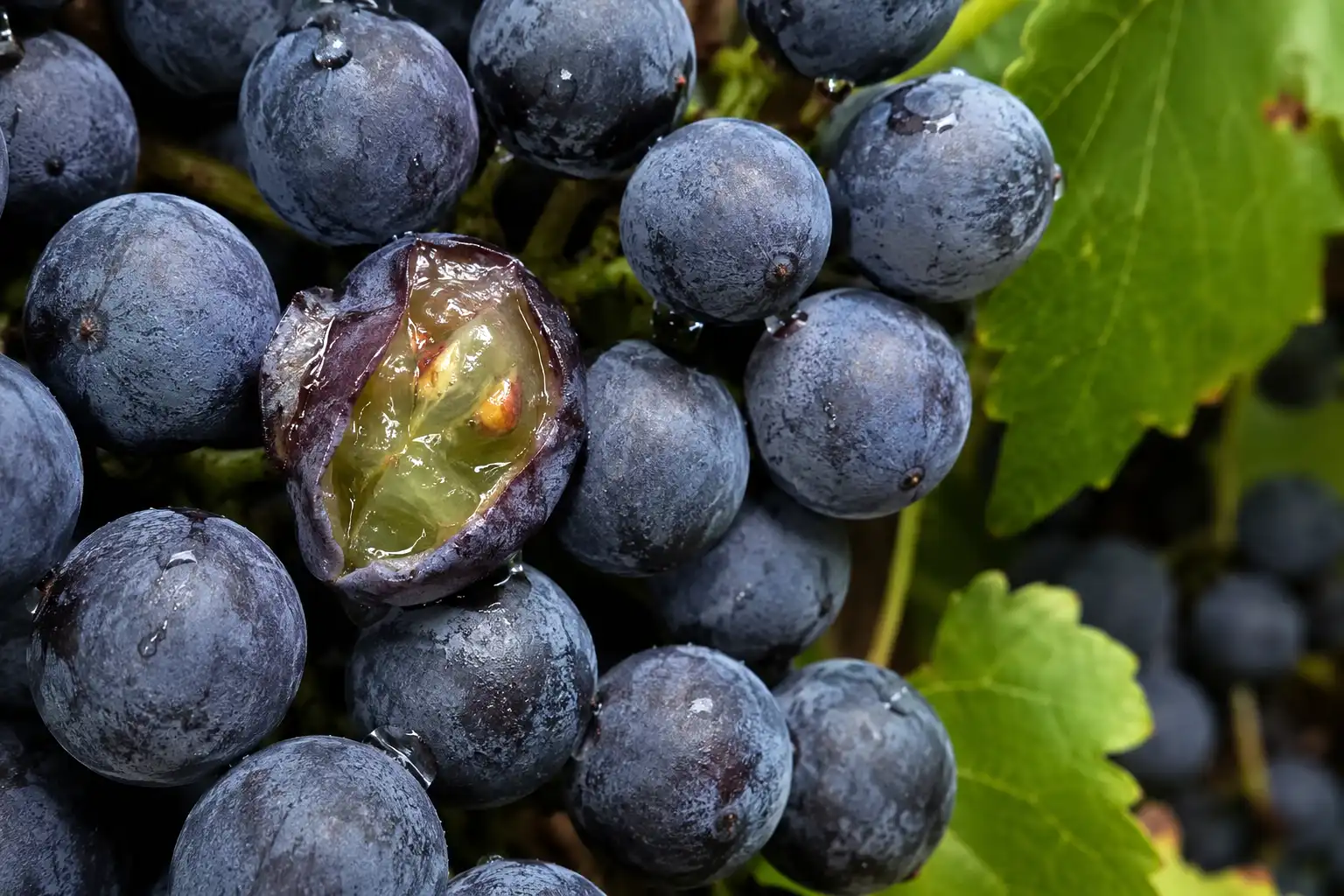
The vine itself is vigorous and woody, with large lobed leaves. In fall, the foliage turns yellow before it drops. That dusty coating on the fruit is the easiest way to spot a ripe Concord in the field.
Are Concord Grapes Seeded or Seedless?
Concord grapes carry seeds, and those seeds are one of their defining traits. Each berry holds a few small seeds inside the pulp. Because of that, many shoppers who want snacking grapes reach for seedless types instead.
Plant breeders did develop a seedless version, called Concord Seedless. It carries a similar flavor with smaller berries. Still, the classic seeded Concord stays the standard for juice and jelly. If you are curious about how seedless grapes are produced, that is a separate process worth reading about.
What Are Concord Grapes Used For?
Concord grapes go mostly into juice, jelly, jam, and preserves, plus some sweet wine and fresh eating. Juice is the headline use, since Concord built the American grape juice industry. Jelly and jam come next, and the slip-skin makes home processing simple.
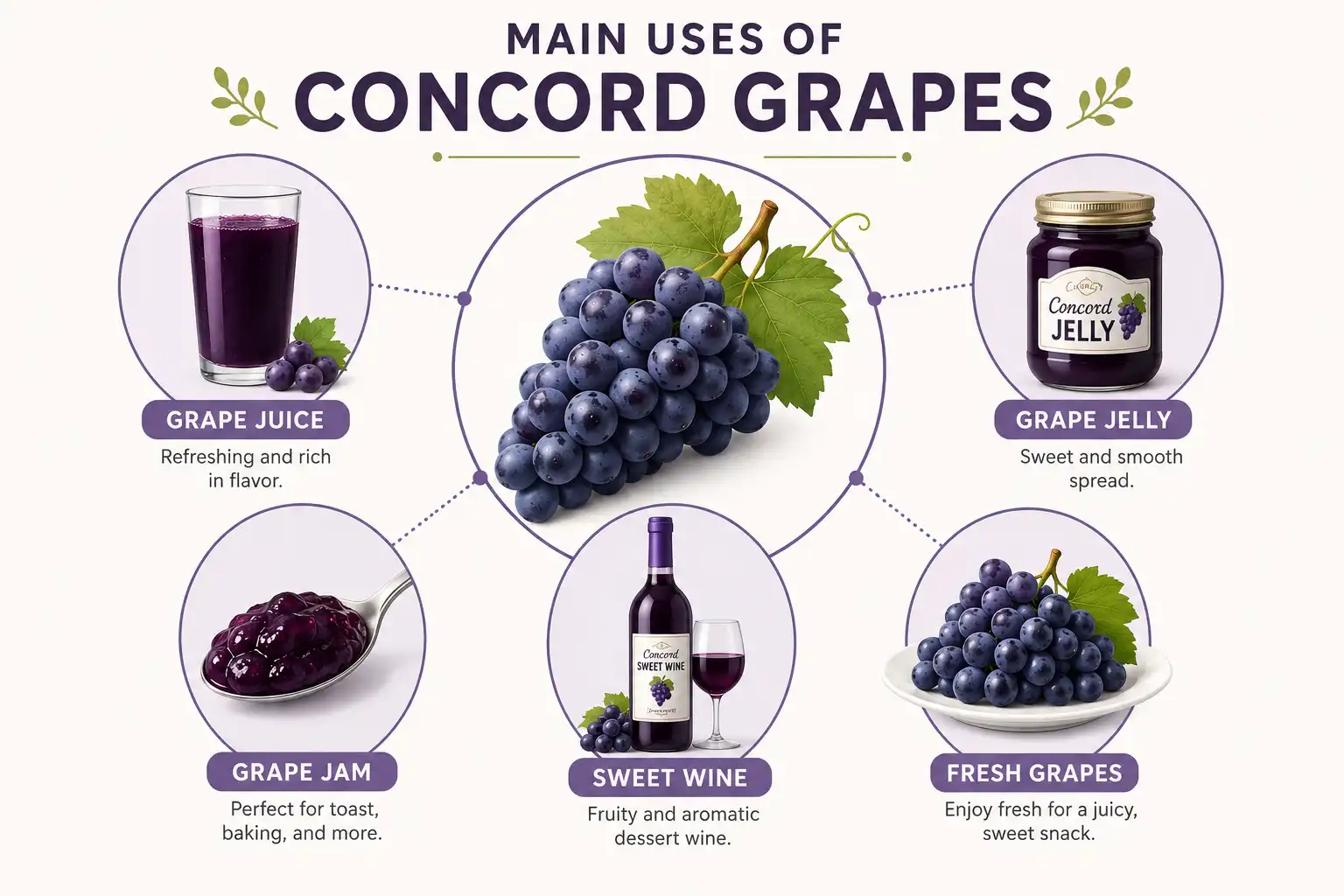
Some growers press Concord into a sweet, traditional wine, though its strong flavor does not suit every palate. You can eat them fresh too, seeds and all. For a full rundown on using concord grapes in the kitchenkeep a separate guide. It covers recipes and storage tips.
Where Do Concord Grapes Grow?
Concord grapes grow across the central and northern United States. They are also the most planted grape east of the Rocky Mountains. They handle cold far better than European wine grapes. Most sources rate them for USDA hardiness zones 4 through 9. On top of that, they take winter lows near minus 15°F without much trouble.
In Kansas, Concord fits the zone 6a winters well. K-State Research and Extension also lists it among dependable backyard grapes for the region. The vine wants full sun, well-drained soil, and a sturdy trellis. Since it is self-fertile, one vine still sets fruit on its own. If you want the planting steps, our guide on growing grapes in the backyard walks through the whole setup.
When Are Concord Grapes Ripe?
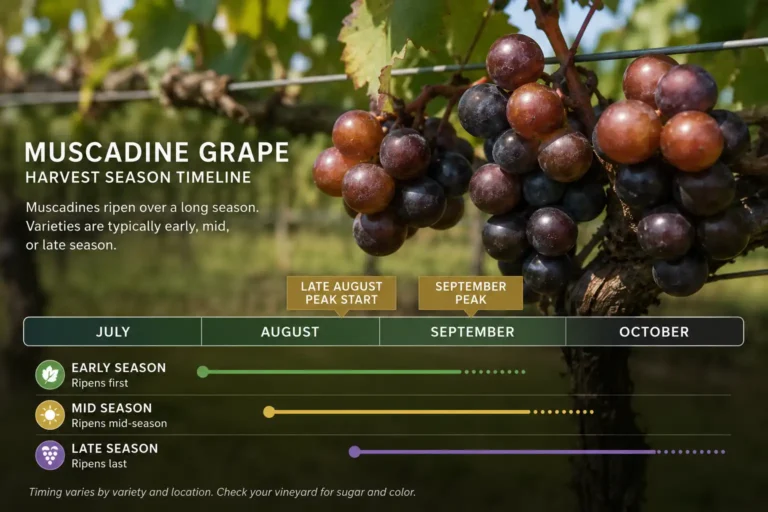
Concord grapes ripen in late season, usually from mid-September into October across most of the country. Color alone does not tell the full story, because berries turn blue-black before they finish building sugar. So taste and seed color make better ripeness cues than the calendar.
Cooler northern sites push harvest later, while warmer spots finish sooner. For a closer look at timing by region, our guide covers the concord grape season in its own article.
How Are Concord Grapes Different From Other Grapes?
Concord grapes differ from most store table grapes because they are a labrusca type, not a Vitis vinifera type. Table grapes you snack on are usually vinifera, bred to be firm, seedless, and mild. Concord, by contrast, is softer, seeded, slip-skinned, and far more aromatic.
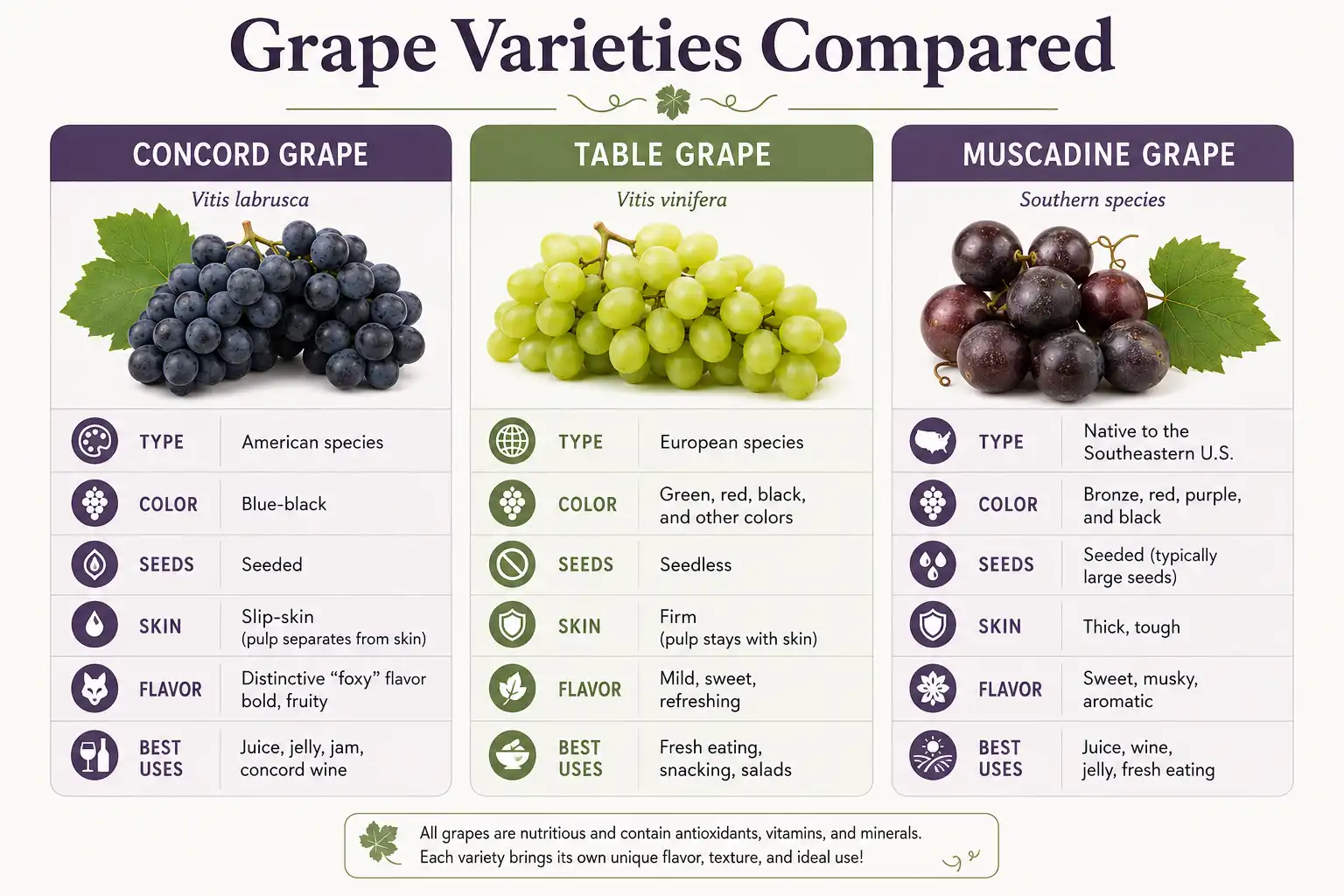
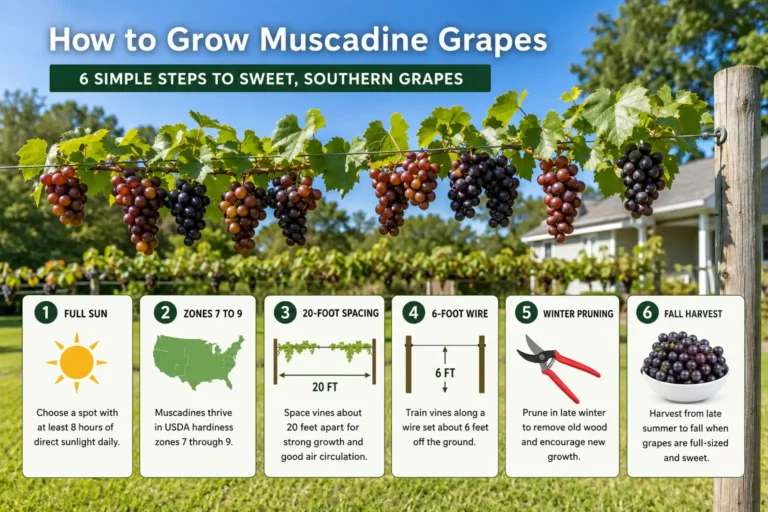
Concord also differs from Southern muscadine grapes, which are a separate species suited to hot, humid states. Muscadines have thick skins and grow in loose clusters. If you farm in the South, then muscadine grapes may suit you better than Concord. And if you are still mapping out the vineyard, it helps to know how many grape varieties exist before you plant.
Are Concord Grapes Good for You?
Concord grapes carry the same broad benefits as other dark grapes, mainly polyphenols and other antioxidants concentrated in the skin and juice. The deep color signals those plant compounds. Whole grapes also give you fiber and water.
Keep in mind that juice and jelly add sugar and drop the fiber. So fresh Concord grapes, seeds and skin included, give you the most from the fruit. Stick with modest servings and treat the juice as a sweet extra, not a health drink.
Bottom lines
Concord grapes are the classic American grape: blue-black, seeded, slip-skinned, and full of that bold grape flavor. They came from one careful breeder in Massachusetts and now anchor juice and jelly nationwide. If you farm cold country and want a tough, self-fertile vine, then Concord earns its spot on the trellis.