Upland Rice vs Paddy Rice: Water, Yield, and Soil Compared
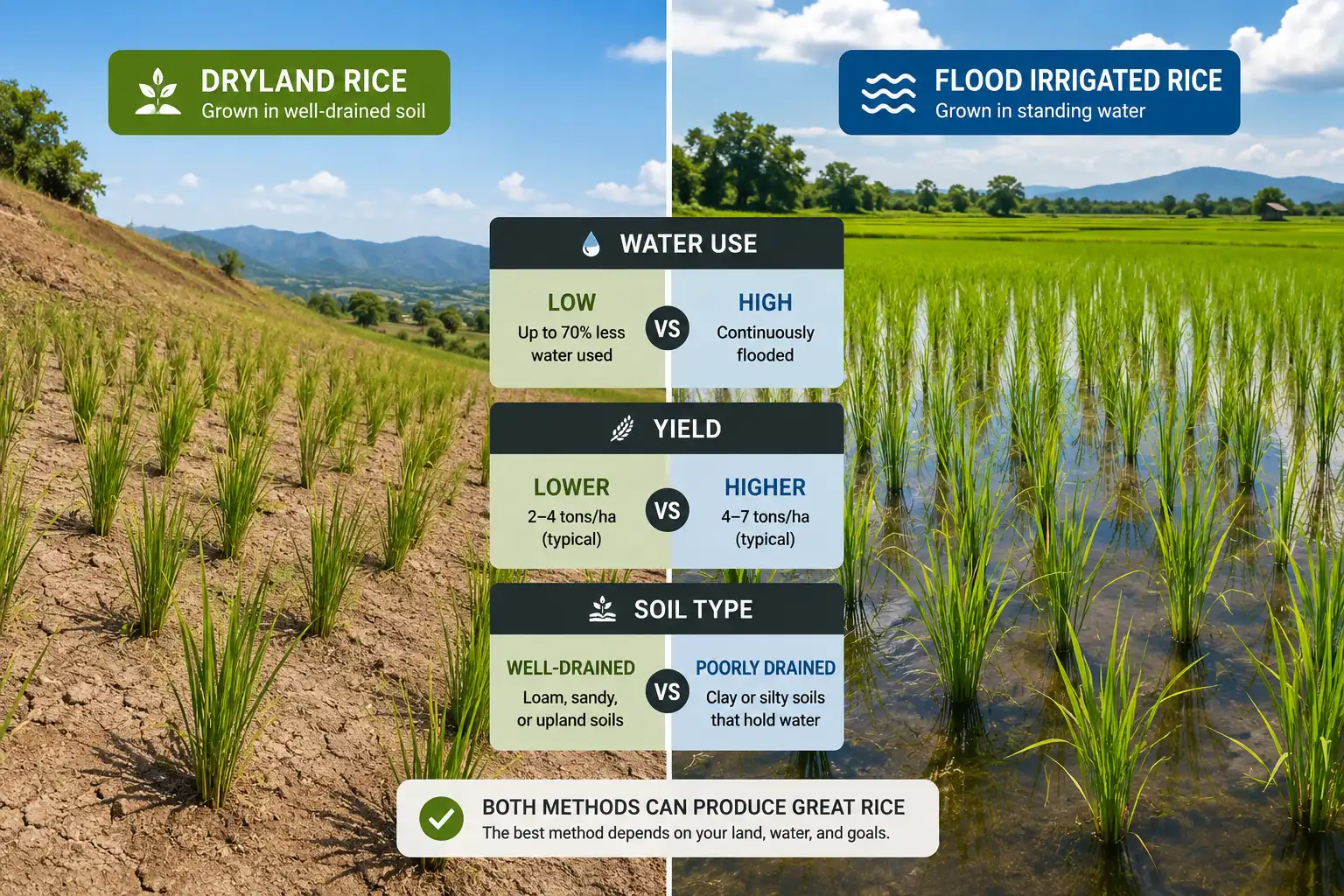
Rice grows two very different ways. One sits in standing water. But the other grows in plain dirt like corn or wheat. That gap sits at the center of the upland rice vs paddy rice question.
Upland rice vs paddy rice comes down to water. Paddy rice grows in flooded fields and yields more. Upland rice grows in dry, well-drained soil, uses far less water, and yields less per acre.
What Is Upland Rice?
Upland rice is rice grown in dry soil without flooding. Farmers also call it dryland rice. It grows in the same aerobic, well-drained ground you would use for corn or wheat. Rainfall or light irrigation supplies the water instead. No paddy, no levees, no standing water.
Most upland rice sits on sloping or hilly land in Asia, Africa, and Latin America. The varieties handle drought better than flooded types. So they push through dry spells that would stall a paddy crop. The trade-off is yield. Upland rice produces less grain per acre. All rice is the same species, Oryza sativa, so the growing system changes, not the plant.
What Is Paddy Rice?
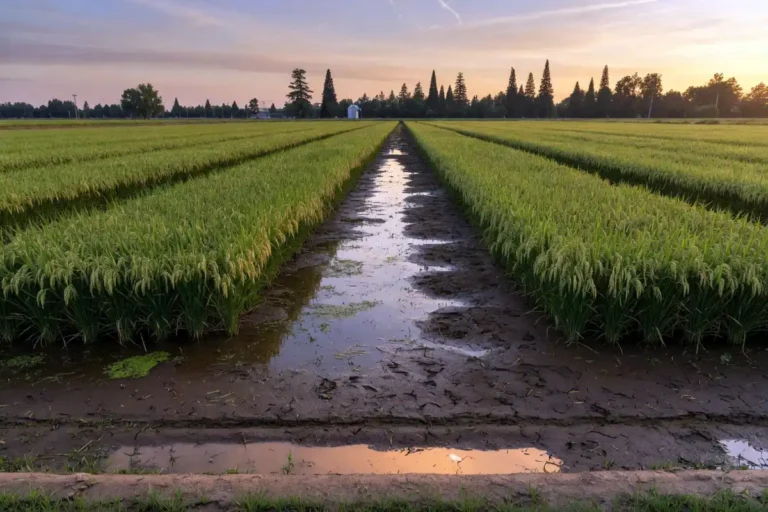
Paddy rice is rice grown in flooded fields. Growers also call it lowland or wetland rice. Water sits on the field at roughly 2 to 4 inches deep through much of the season. That standing water does real work. It feeds the crop and holds down weeds at the same time.
This is the rice most people picture. Flooded green fields, levees, and water everywhere. It carries the highest yield potential of any rice system. Because of that, most of the world’s rice grows this way, and so does nearly all US rice.
Upland Rice vs Paddy Rice: What Actually Sets Them Apart
The core split is water management. Paddy rice needs standing water. Yet upland rice does not. Every other difference grows out of that one choice. Here is a side-by-side look.
| Factor | Upland Rice | Paddy Rice |
|---|---|---|
| Water | Rainfed or light irrigation, no flooding | Flooded 2 to 4 inches deep |
| Soil | Aerobic, well-drained | Saturated, low oxygen |
| Planting | Direct dry seeding | Transplanting or seeding into beds |
| Yield | Lower | Higher, top of any rice system |
| Weeds | Heavy pressure | Suppressed by standing water |
| Water use | Low | Very high |
| Best fit | Hills, gardens, dry ground | River valleys, flat flooded fields |
How Does Water Management Differ Between the Two?
Water management is the whole ballgame. Paddy rice sits in standing water for most of the season. Meanwhile, upland rice gets watered like any dryland crop and never floods.
A flooded paddy in California can use around 5 acre-feet of water in one season. One acre-foot runs about 326,000 gallons. That is a heavy draw. Upland rice, though, runs on far less. Most upland plantings want about 1 to 1.5 inches of water a week, from rain or a drip line. If the rain keeps coming, you may not irrigate at all.
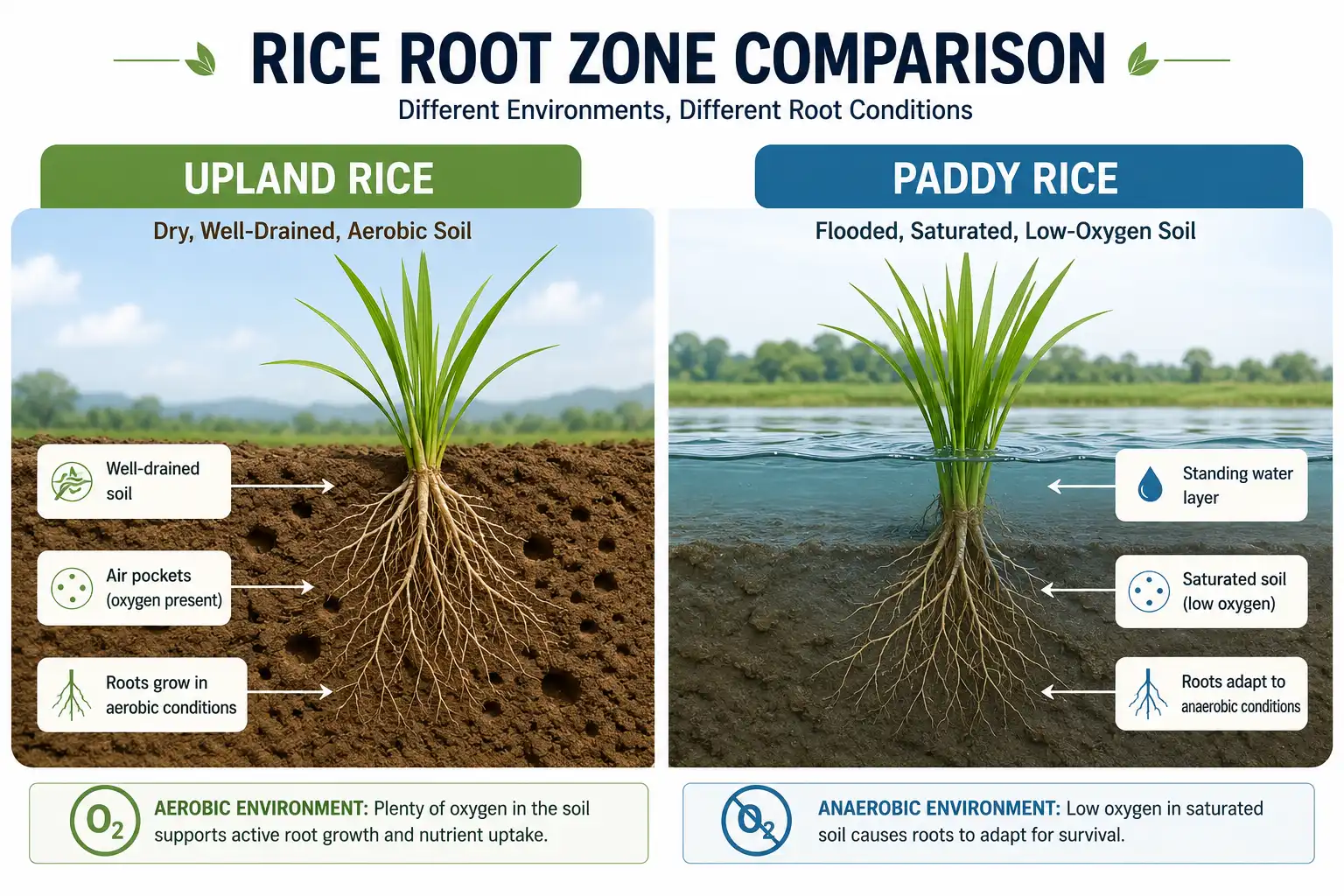
The flooding is not wasted. Standing water blocks most weeds and keeps soil nutrients available to the crop. For the full reasoning behind that, this guide breaks down why growers flood their paddies. Upland rice gives you no such shield, so you fight weeds with cultivation and mulch. Either way, working out the numbers helps, and our guide on figuring water needs for a crop walks through it.
Which One Produces a Higher Yield?
Paddy rice yields more, and it is not close. Flooded systems also carry the highest yield potential of any rice. US paddy rice commonly averages well over 7,000 pounds per acre. But traditional upland rice often lands far lower, roughly 900 to 1,800 pounds per acre in rainfed conditions.
Two things drive the gap. First, flooded rice gets steady water and strong weed control, so plants put more energy into grain. Second, upland rice fights drought stress and weeds, which pulls yield down. Improved upland varieties do better than the old ones. Even so, they rarely match a well-managed paddy.
Season length matters too. A rice crop needs time to fill and mature, usually 100 days or more depending on variety. For the details on that, see how long a rice crop takes to mature.
How Is Each Type Planted?
The two systems get planted differently. Upland rice goes in dry. Paddy rice usually starts in water or a prepared seedbed.
For upland rice, you direct seed into worked soil, much like drilling wheat. You broadcast the seed or set it in rows. In cold regions, though, growers start seedlings indoors and transplant them to beat the short season. Duborskian, a Russian dryland variety, is a common pick for northern gardens.
For paddy rice, methods split by region. Across much of Asia, farmers raise seedlings in a nursery, then transplant them into flooded fields by hand. In the US, it changes by state. California growers seed by air straight into flooded fields. Delta growers in Arkansas and Mississippi usually drill or broadcast seed into dry seedbeds, then flood later. The USDA tracks these regional methods closely.
What About Weeds, Pests, and Disease?
Weeds hit upland rice much harder. In a paddy, though, standing water drowns most weed seedlings before they take hold. Upland rice has no such cover, so you lean on tillage, mulch, and timely cultivation.
Pests differ too. Birds go after upland grain as it fills, since the field is easy to walk into. Flooded paddies draw their own crowd, including insects and disease that favor wet ground. Neither system runs trouble-free. They just trade one set of problems for another.
Which Type Is Grown in the US?
Almost all US rice is paddy rice. Growers flood their fields for the whole season across Arkansas, California, Louisiana, Texas, Mississippi, and Missouri. Arkansas leads the country by a wide margin. Upland rice, meanwhile, is rare here as a commercial crop. Instead, you mostly find it in home gardens and small trials.
For the full map of US rice country, we cover it in rice-growing regions across the country. The short version: flat land, plenty of water, and warm summers.
Can You Grow Upland Rice at Home?
Yes, you can grow upland rice at home without a pond or paddy. That is the big draw for gardeners. It grows in a regular raised bed or garden row, much like a small patch of wheat.
Give it full sun, warm weather, and about an inch of water a week. Space plants around 6 inches apart in beds. Rice is a heavy feeder, so keep it fed through the season. Ten plants yield roughly one pound of rice, so plan your plot for the harvest you want. In cold zones, start seed indoors a few weeks early. Cold-hardy types like Duborskian and Loto handle northern gardens, even up into USDA hardiness zone 4b.
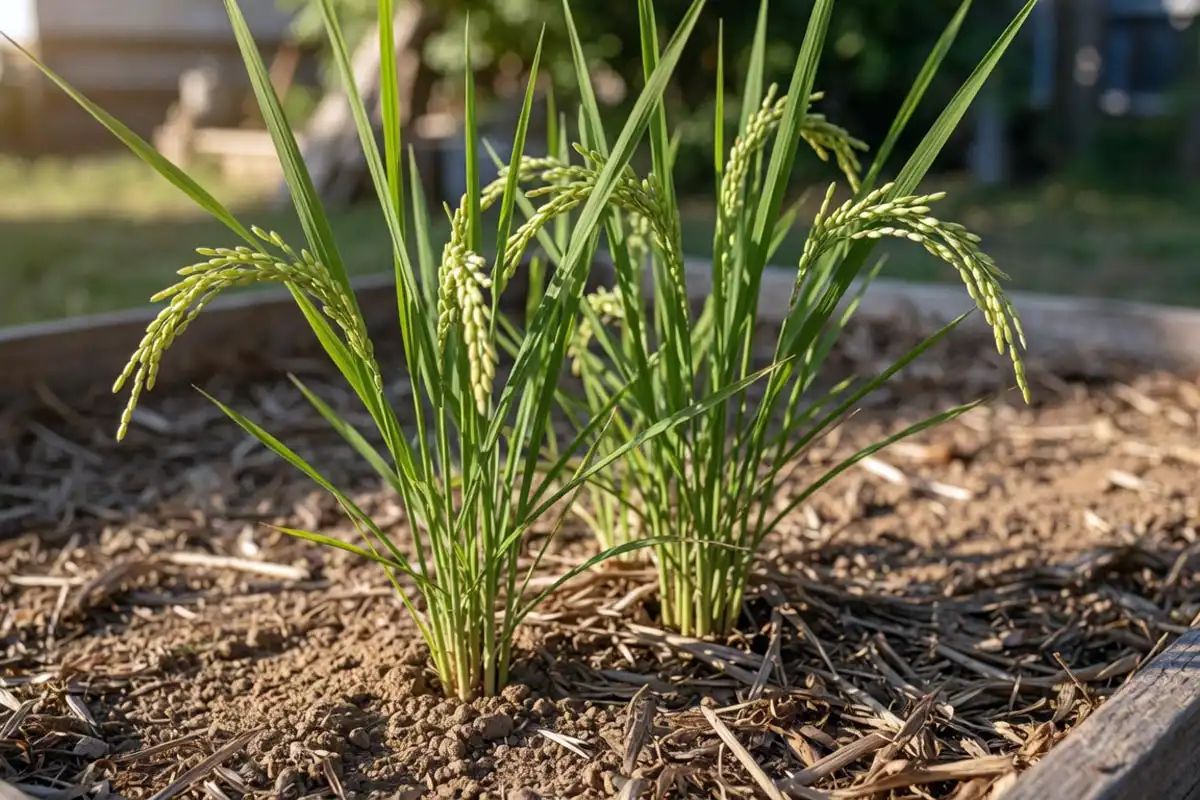
If you are new to the crop, our walkthrough on growing your own rice covers seeding, spacing, and harvest.
Which One Should You Grow?
Match the system to your land and water. If you have flat ground, reliable water, and want the highest yield, paddy rice is the play. If you have well-drained soil, limited water, or just a home garden, upland rice makes more sense.
For most Kansas ground, neither is a big commercial crop. But for a curious grower with a garden bed, upland rice is the easy entry point. No flooding, no special setup, just dirt, sun, and water.
Last Words
The choice starts and ends with water. Paddy rice trades heavy water use for top yields. Upland rice trades yield for the freedom to skip flooding. Neither one wins across the board. So pick the system that fits your ground, your water, and your goals. For a backyard, start with upland rice. For serious acres in rice country, paddy rice still rules.