How Long Does It Take Corn to Grow From Seed? (2026 Guide)
Most folks planting their first patch want one number: how long does it take corn to grow from seed. The honest answer depends on the type you plant and your weather. Grow corn every year, so let me walk you through the real timeline.
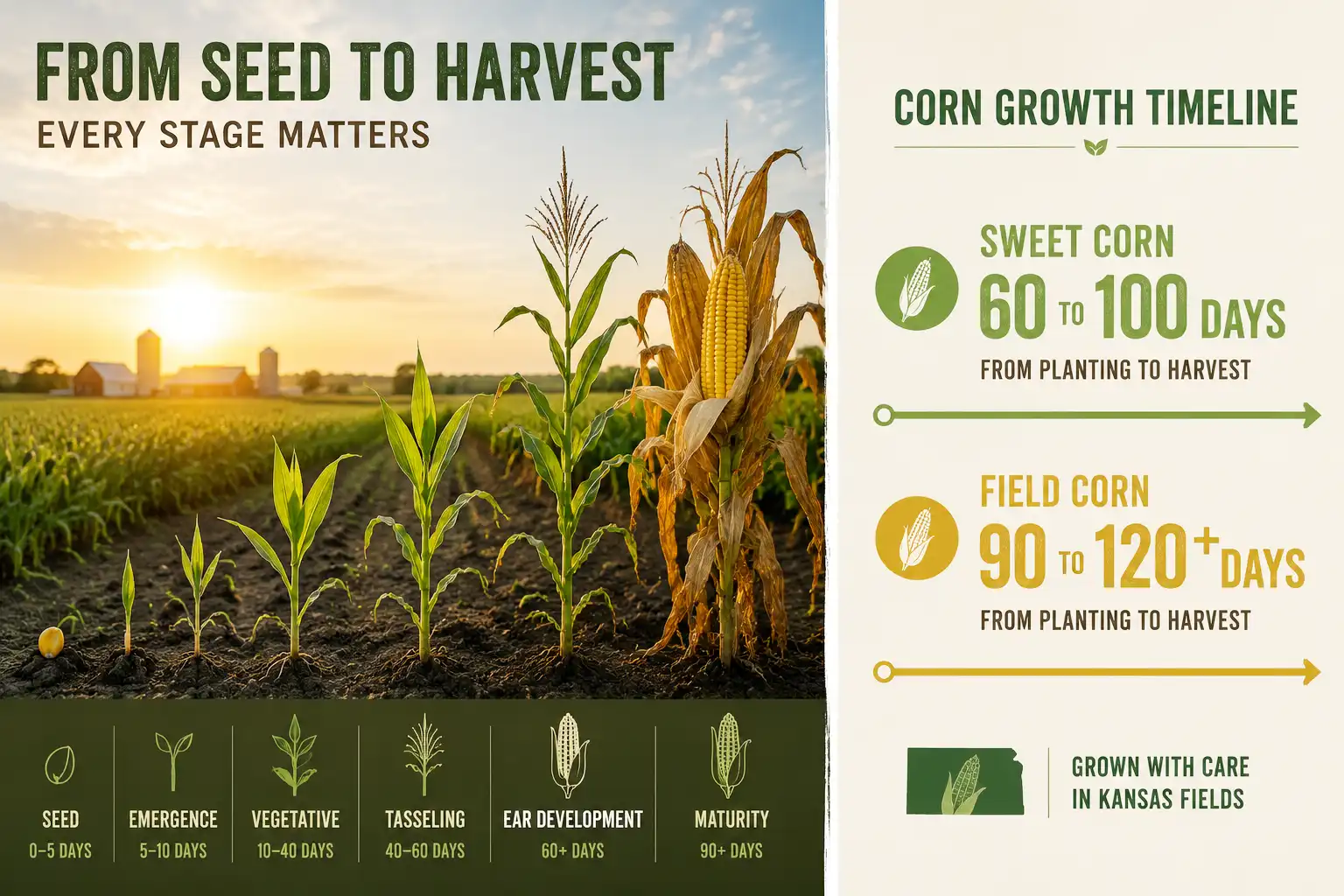
Sweet corn takes 60 to 100 days from seed to harvest. Field or grain corn runs longer, usually 90 to 120 days or more depending on the hybrid. Warm soil, steady moisture, and heat units decide where your crop lands in that range.
How Long Does It Take Corn to Grow From Seed?
Corn grows from seed to harvest in 60 to 120 days, with the exact number set by the corn type and season. Sweet corn matures fastest. Sweet corn matures in 60 to 100 days, depending on the variety. Field corn, the dent corn most of us grow for grain, needs more time. Common hybrids carry a relative maturity of roughly 100 to 117 days.
The days-to-maturity number on your seed bag is a guide, not a promise. Cool, dry weather stretches it out. Hot weather with good moisture shortens it. That is a good reason to track heat units, not just calendar days.
How Many Days Does Corn Take to Germinate?
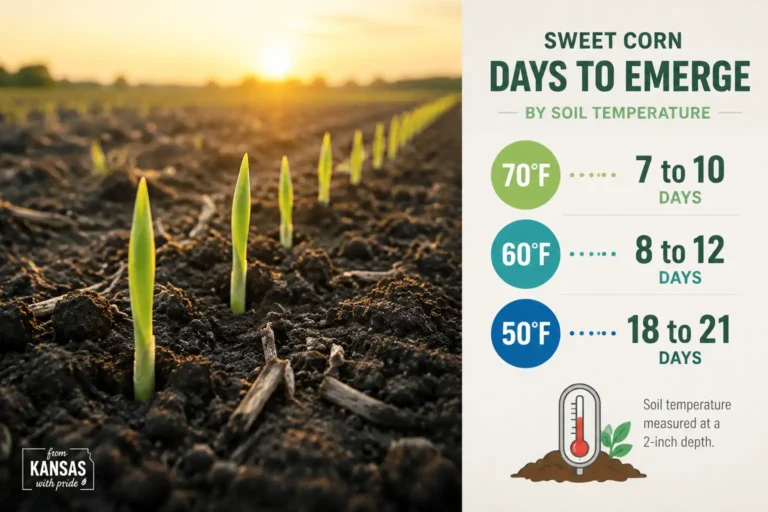
Corn germinates in about 2 to 3 days in warm soil, though cool ground can push it to a week or two. Germination starts once soil moisture and temperature line up. With adequate moisture and soil temperatures above 50°F, the radicle will begin to elongate from the corn seed.
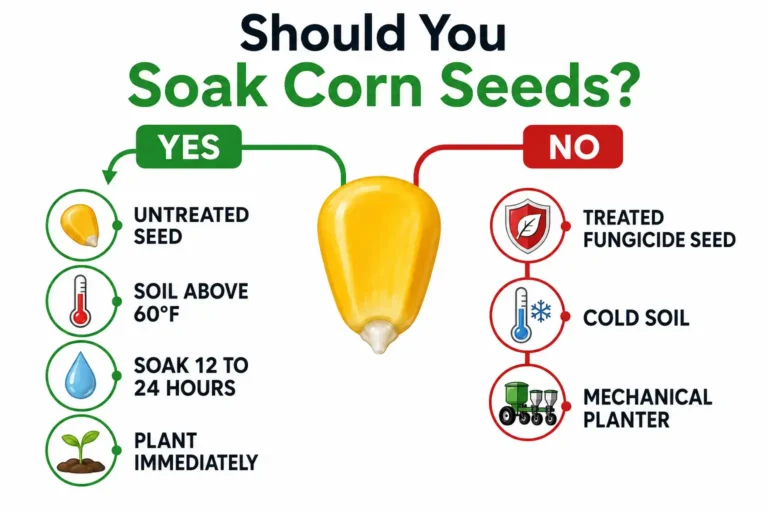
Emergence, when the shoot breaks the surface, follows shortly after. Normally corn requires approximately 100 to 120 GDUs to emerge, which under favorable conditions can be 4 to 5 days after planting. When the field sit cold and wet, emergence drags out and stands turn uneven. Soaking seed can help speed things along, and Our guide on whether you should covers when it helpssoak corn seeds before planting.
Wait for soil at 50°F or warmer before you drop seed. Planting into cold dirt is the number one reason a stand comes up spotty. If spring runs late on you, it helps to know whether it’s too late to plant corn and how much season you have left.
What Are the Growth Stages of Corn?
Corn moves through vegetative stages first, then reproductive stages, and each one takes a predictable slice of the season. Knowing the stages tells you where your crop stands and what comes next.
Vegetative Stages (VE to VT)
The vegetative phase runs from emergence to tasseling. The V1 stage typically occurs 3 to 4 days after emergence. Leaves keep stacking up through V2, V3, and beyond. The V3 stage marks the end of the seed being the main food source and the beginning of the photosynthetic process.
By VT, the tassel is fully out and the plant is done adding height. This whole stretch usually eats up the first half to two-thirds of the crop’s life.
Reproductive Stages (R1 to R6)
Reproduction starts at silking (R1) and ends at physiological maturity (R6). Pollination happens here, and it sets your kernel count. After that, the ear fills.
For sweet corn, the eating window comes fast. Sweet corn will be ready for harvest at the R3 stage, approximately 18-21 days after the initial emergence of silks depending on environmental conditions. The piece on covers reading the ear itselftelling when sweet corn is ready, and the timing after silking in how long after tassel sweet corn is ready.
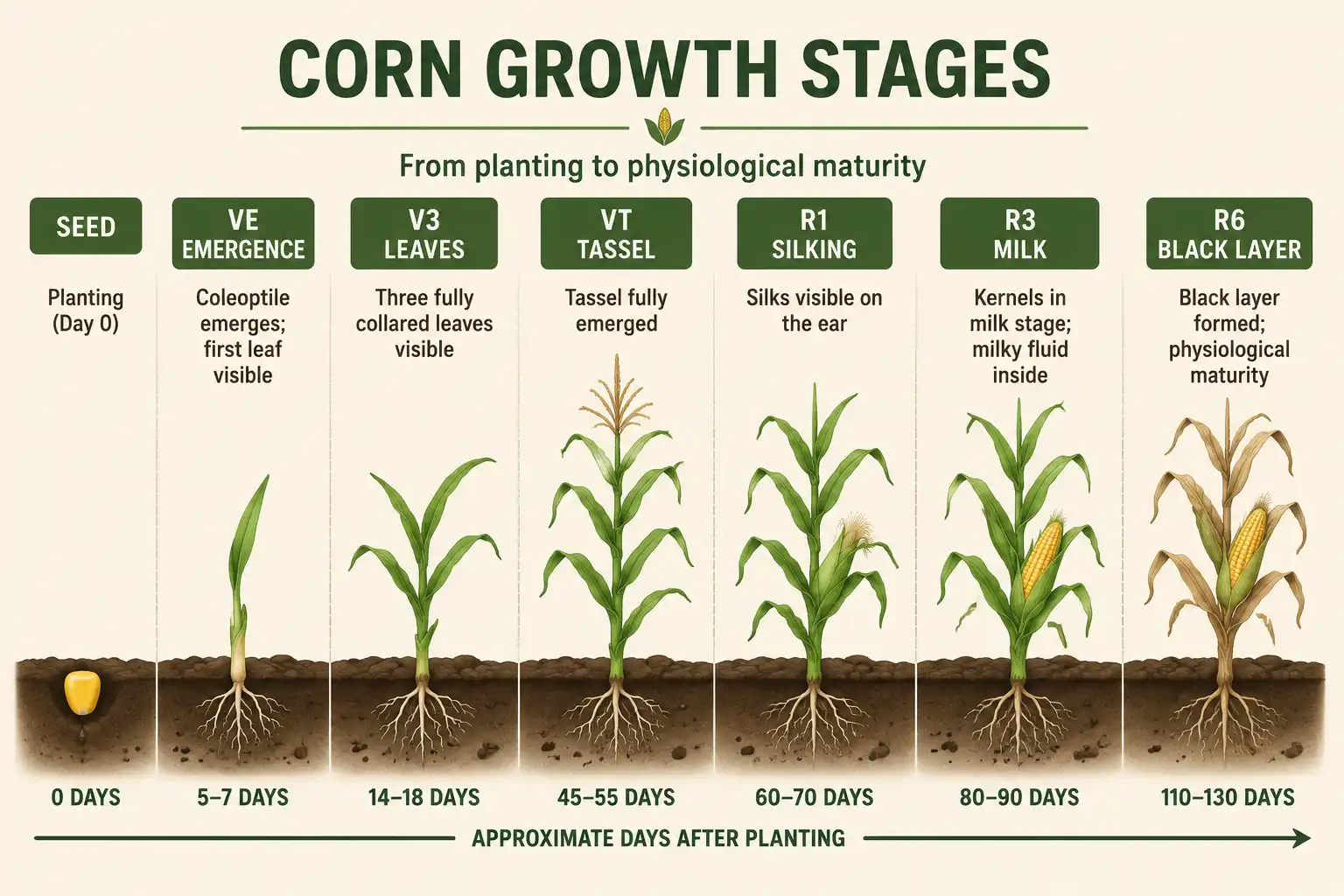
Grain corn keeps going to black layer. Physiological maturity (kernel black layer) for adapted corn hybrids occurs approximately 65 days after silking in the central Corn Belt and 55 to 60 days after silking in the northern Corn Belt.
Why Does Sweet Corn Grow Faster Than Field Corn?
Sweet corn matures faster because it’s harvested at an immature, milky stage rather than fully dried down. You pick sweet corn while the kernels are soft and full of sugar. Grain corn has to reach black layer and then dry in the field.
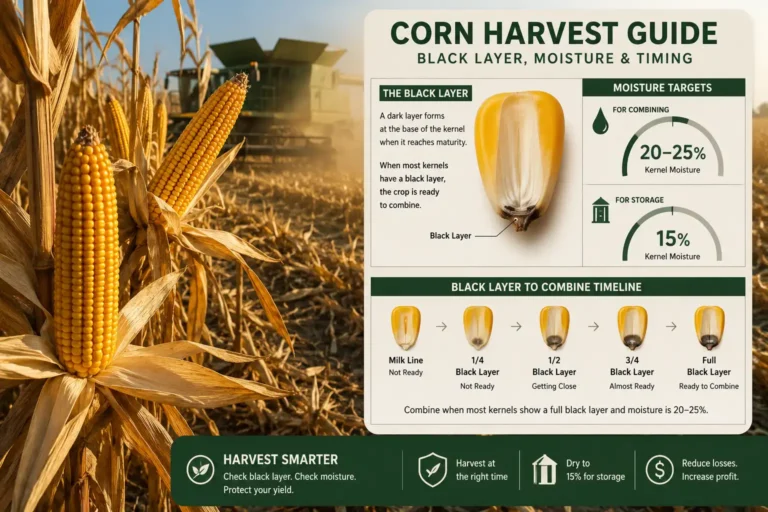
That drydown adds weeks. Corn field dry down to 15.5% moisture may take up to 35 days when kernel moisture at maturity is high while when it is low it may take about 25 days. So even after grain corn “finishes” growing, it isn’t ready for the bin until moisture drops. Harvest usually starts a little above 25% moisture to limit field losses.
What Slows Down or Speeds Up Corn Growth?
Soil temperature, moisture, and accumulated heat units control how fast corn grows. This is why the same seed can hit maturity two weeks apart in different years.
Heat units are the real driver. Growing Degree Units (GDUs) represent the daily accumulation of heat needed for corn growth and development. Corn uses a base temperature of 50°F, so warm days pile up GDUs and push the crop along faster. Cool stretches stall it.
Water matters just as much. Sweet corn needs steady moisture from germination through harvest, and the two weeks before silking are the most critical. Drought stress during pollination shrinks ears and slows fill. Planting date, hybrid choice, and Great Plains weather swings all shift the timeline too. If you’re setting up your patch, planting in blocks helps pollination, which is covered in planting corn in blocks.
How Long Does Corn Take Compared to Other Crops?
Corn sits in the middle of the pack among row crops, faster than a full-season soybean but slower than quick greens. For reference, soybeans take about the same window from seed to harvest, often 3 to 5 months depending on maturity group. Grain sorghum, or milo, runs a similar course, and how long sorghum takes to grow is laid out in its own guide.
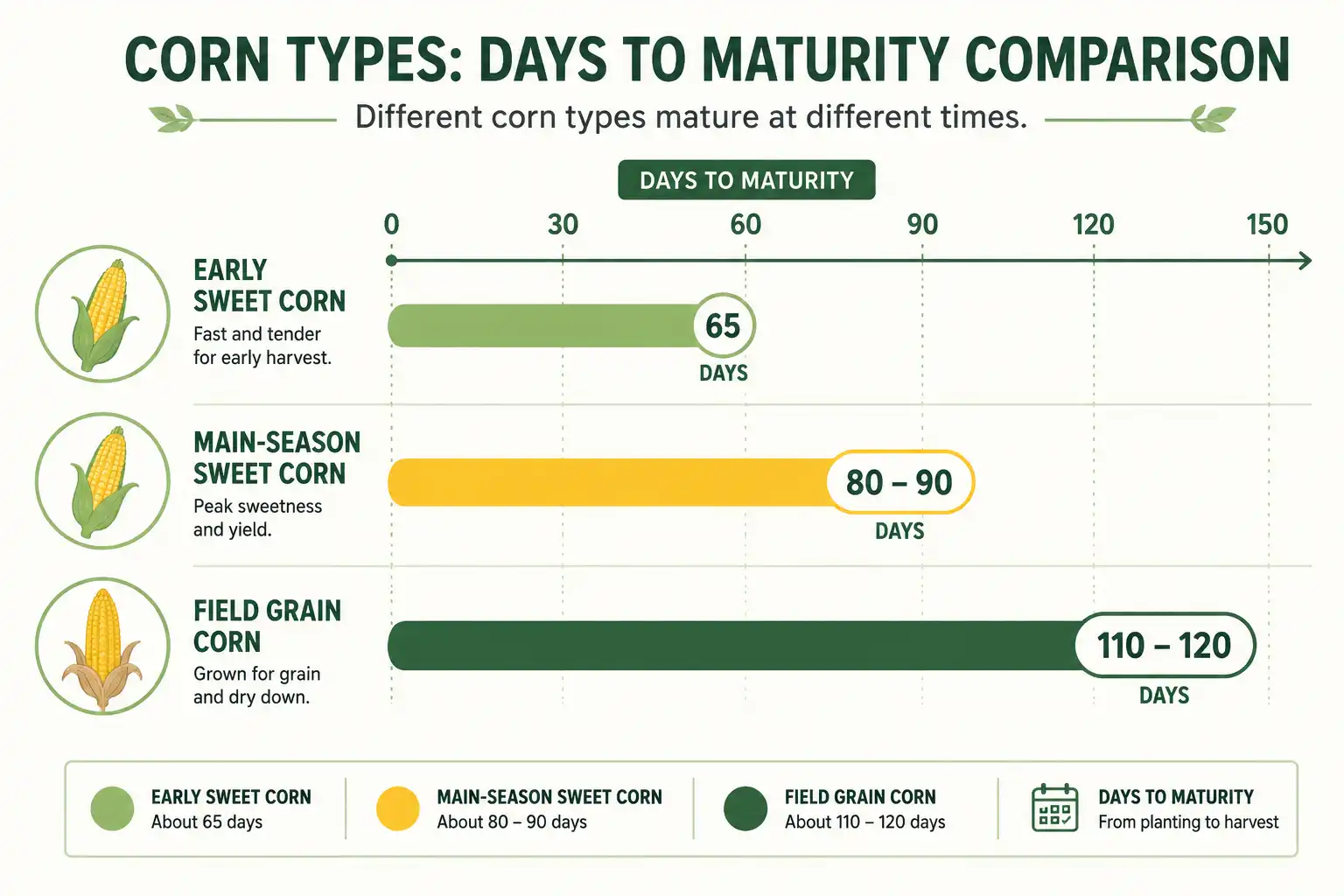
Here’s the short version by type:
- Early sweet corn: about 60 to 70 days
- Main-season sweet corn: about 75 to 90 days
- Field or grain corn: about 100 to 120+ days, plus drydown
What This Looks Like in Practice
Plant field corn once soil hits 50°F, usually late April into May. From there, roughly four months to black layer is typical, then the crop dries in the field before the combine runs. Sweet corn should be staggered every couple weeks to avoid being swamped at harvest. Track your soil temp, watch your heat units, and treat the seed bag number as a starting point, not gospel. Your weather writes the final timeline.