Is It Too Late to Plant Corn? How to Know for Your Area
Wondering if it’s too late to plant corn? The answer depends on two things: your first fall frost date and the days your variety needs to mature. Count back from frost, leave a buffer, and you’ll know fast. Here’s how to figure it.
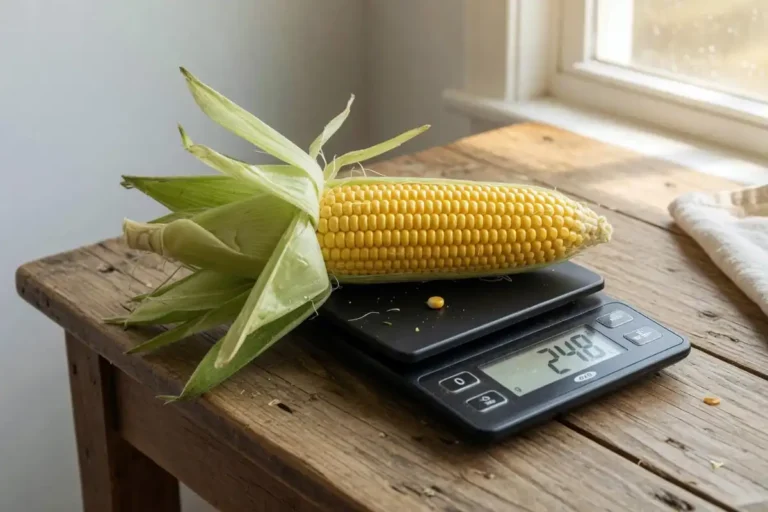
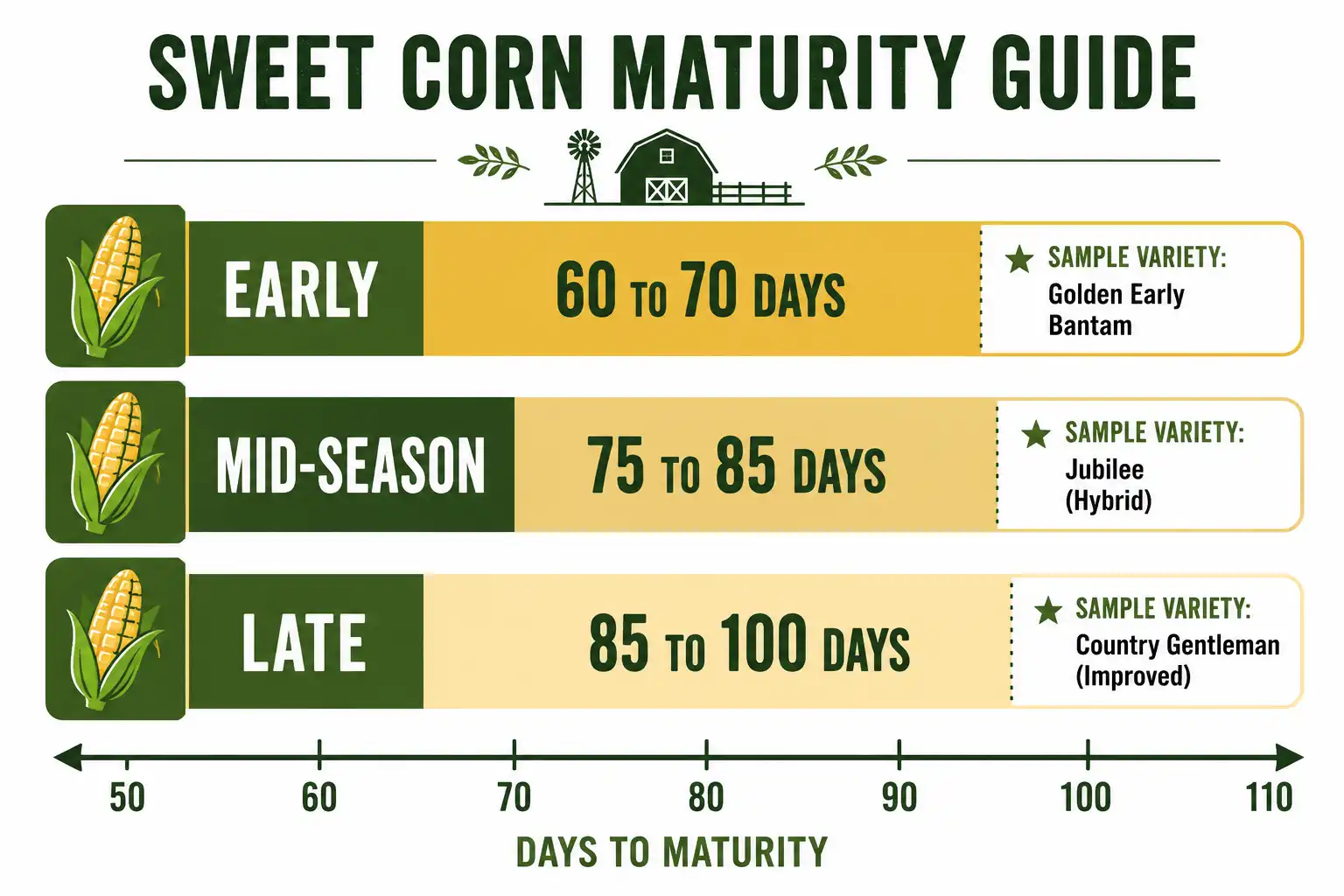
It’s not too late if your first fall frost is still 70 or more days away. Count back from that date, add a two-week buffer, then plant an early variety. Sweet corn matures in 60 to 70 days.
How Do You Know If It’s Too Late to Plant Corn?
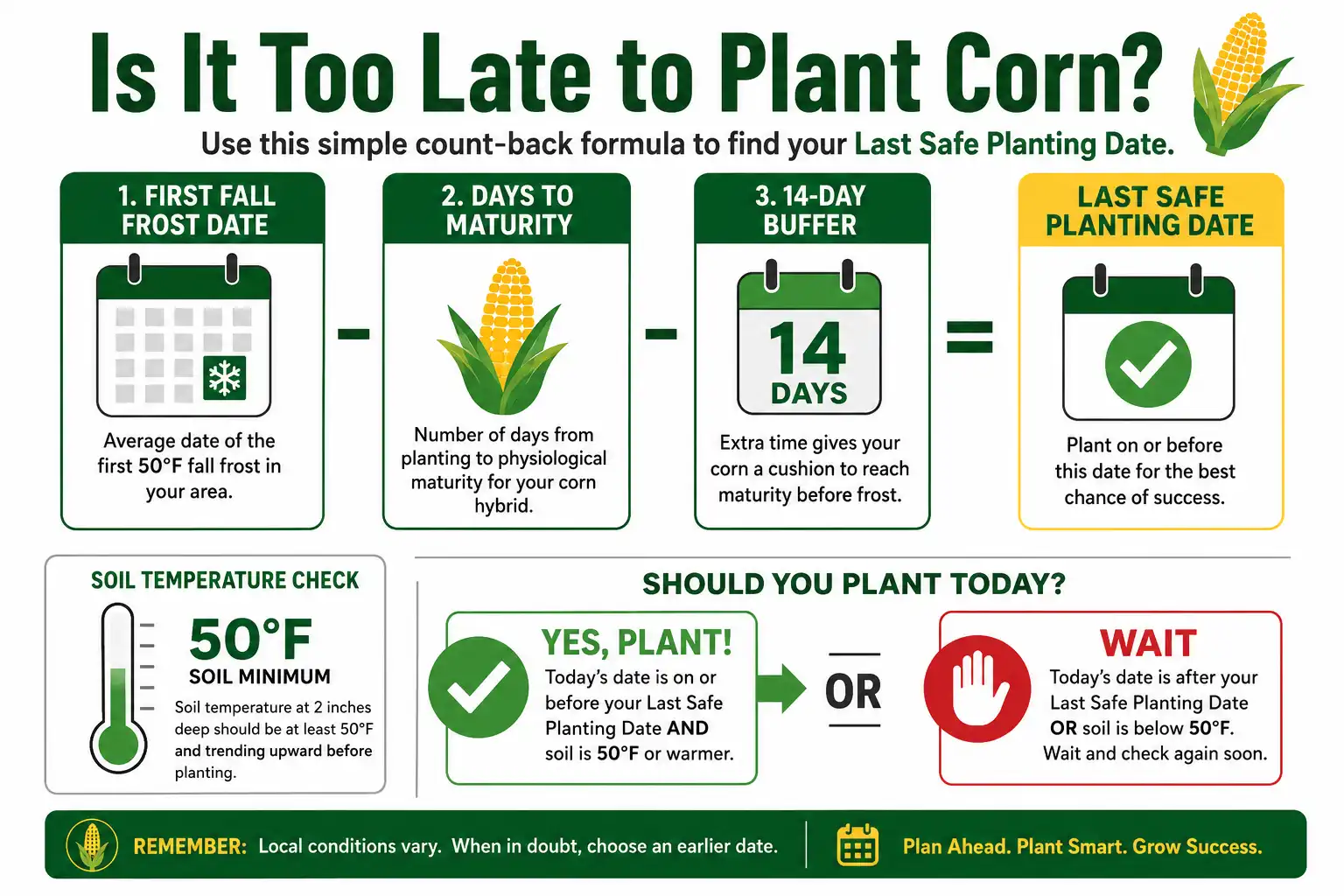
You know by counting backward from your first fall frost date. That one date sets your deadline. Corn dies at a hard freeze, so the crop has to finish before then.
Here’s the math. First, find your average first fall frost. Your USDA hardiness zone gives you a rough idea, and your local extension office gives you the exact window. For me, that’s K-State Research and Extension in Kansas. A free planting calendar for your region helps too.
Next, check the days to maturity on the seed packet. Then add a 10 to 14 day buffer. Fall days grow shorter and cooler, so corn slows down late in the season. That stretches the listed maturity by a week or more.
Now do the subtraction. Take the days between today and your frost date. If that number beats your variety’s days to maturity plus the buffer, you can plant. If it falls short, you’re out of room.
A quick example from Topeka. Average first fall frost lands around mid-October. A 65-day sweet corn planted on July 1 silks in August and fills out by early September. That clears frost with weeks to spare. Even a mid-July planting works in zone 6a with an early variety.
What’s the Latest You Can Plant Sweet Corn?
For most home gardens, the latest safe sweet corn planting is 75 to 90 days before your first fall frost. That window covers the crop plus a buffer for slow fall growth.
Variety choice changes everything here. Sweet corn ranges from 63 to 100 days to maturity. Early types finish in 60 to 70 days. Mid and late types need 80 to 100 days. When time is tight, pick the shortest-season variety you can find.
Type also matters for cold tolerance. Standard sugary (su) and sugary-enhanced (se) varieties germinate in cooler soil. Supersweet (sh2) types need warmer soil and slower handling. In warm summer soil, any type germinates fast. So flavor and days to maturity should drive your pick.
Keep an eye on the timeline once plants tassel. Pollination and ear fill take a set number of days. Knowing how long after tasseling the ears fill out tells you whether the crop beats frost. If tassels show in early September up north, you’re cutting it close.
Can You Plant Corn in July?
Yes, you can plant corn in July across much of the country, as long as your frost date leaves room. July planting is normal in warm regions and risky in cold ones.
In the South, July is easy. Many growers plant a full fall crop of sweet corn in July and harvest in fall. Long frost-free seasons give plenty of time.
In the Great Plains, early to mid-July works with a short-season variety. Zone 6a frost date leaves 90-plus days, which is enough for a 65-day type plus a buffer.
Up north, July gets tight fast. Cold-climate growers who watch sweet corn planting dates in Minnesota know the window closes early. In zones 3 and 4, only the earliest varieties planted in the first days of July stand a chance. By late July, it’s usually too late in the far north.
How Late Can You Plant Field Corn?
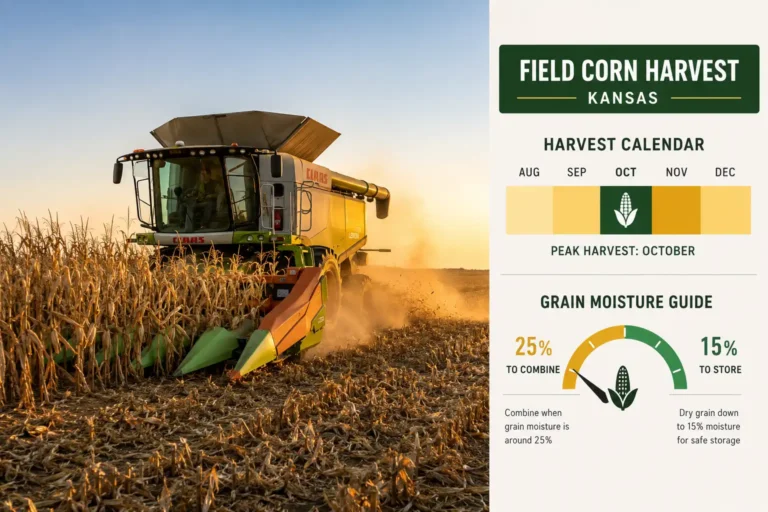
Field corn can go in through about the first week of June in the Corn Belt before yield really drops. Past that point, the math turns against you.
The yield hit adds up daily. Corn planted outside the ideal window loses roughly 1 to 2 bushels per acre per day. Plant after June 1 in much of the Corn Belt, and you can lose 50 bushels per acre or more.
When planting slides past June 1, switch to a lower relative maturity (RM) hybrid. A shorter-season hybrid finishes before the first killing freeze, which protects the crop and lowers grain moisture at harvest. Iowa State research found that planting date drives yield more than relative maturity does. The catch is that the crop must reach full maturity before frost. Silking date turns out to be the best predictor of yield.
Late planting also shifts the heat math in your favor a bit. Corn planted in early June needs fewer growing degree days (GDD) than May-planted corn. The gap runs 200 to 300 GDD to reach black layer. The plant adjusts. Still, fall frost risk climbs sharply with June planting, so the shorter hybrid is the safer call.
There’s a fork in the road past mid-June. Many growers weigh corn against soybeans at that point. In a wet spring, how late soybeans can still go in gives more flexibility. Check your crop insurance dates and any herbicide restrictions before you switch.
Does Soil Temperature Matter for Late Corn?
Soil temperature matters as much as the calendar. Corn needs warm soil to germinate, and cold soil rots seed.
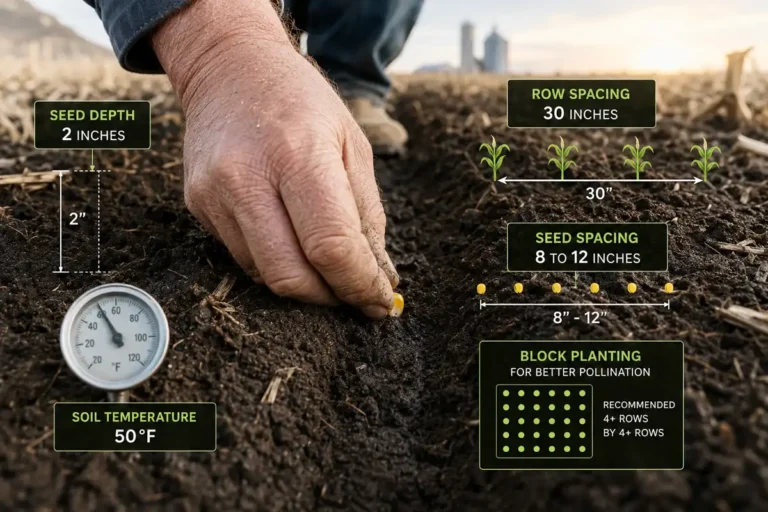
The threshold is 50°F at planting depth, and 60 to 65°F is better. Supersweet (sh2) sweet corn wants 60 to 65°F to come up clean. Below 50°F, corn sits, sulks, and often rots before it sprouts.
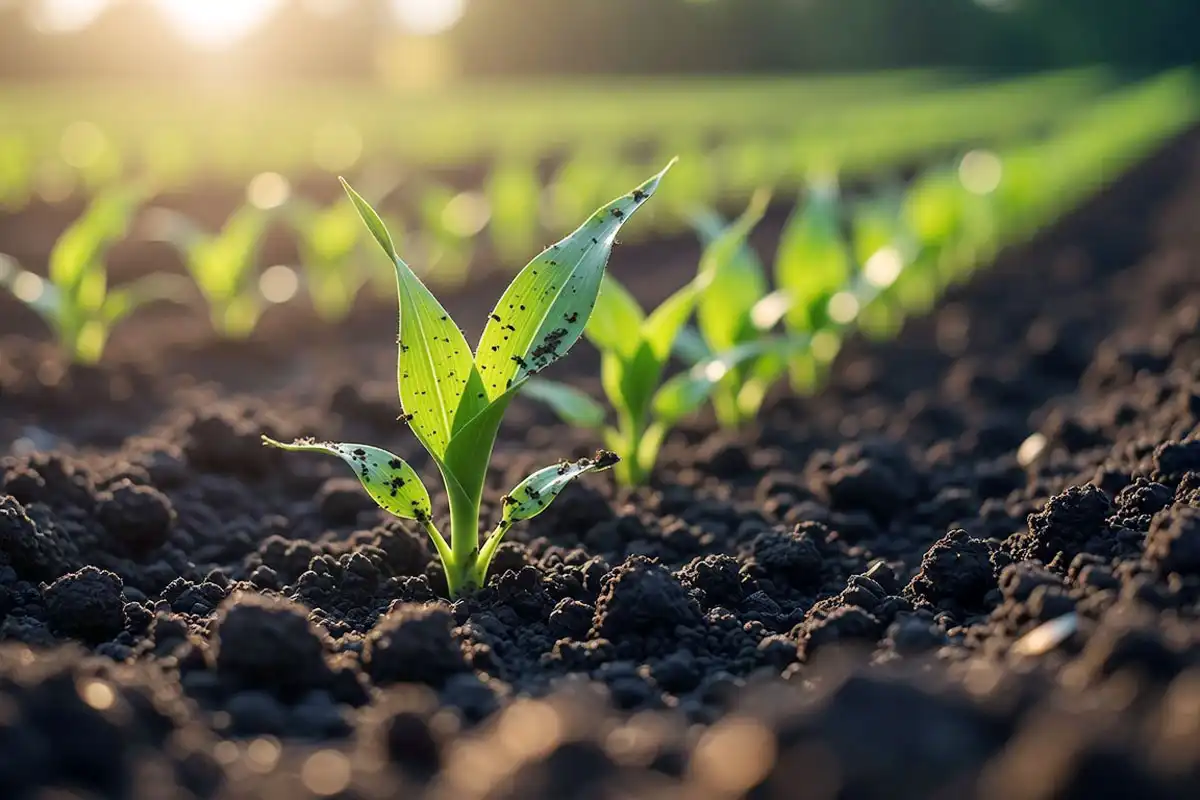
Late planting hands you an advantage here. Summer soil runs warm. At 50 to 55°F, corn takes 18 to 21 days to emerge. At 60 to 65°F, it pops in 8 to 10 days. So a July planting in warm ground emerges fast and catches up quicker than spring corn ever does.
How Do You Help Late-Planted Corn Catch Up?
Pick the shortest-season variety first, then push warmth and pollination. A few moves shave days off a late crop and protect the ears.
Warm the soil if your nights are cool. Black plastic over the bed lifts soil temperature and speeds emergence. Growing corn in a raised bed helps for the same reason, since raised soil heats up earlier and drains better.
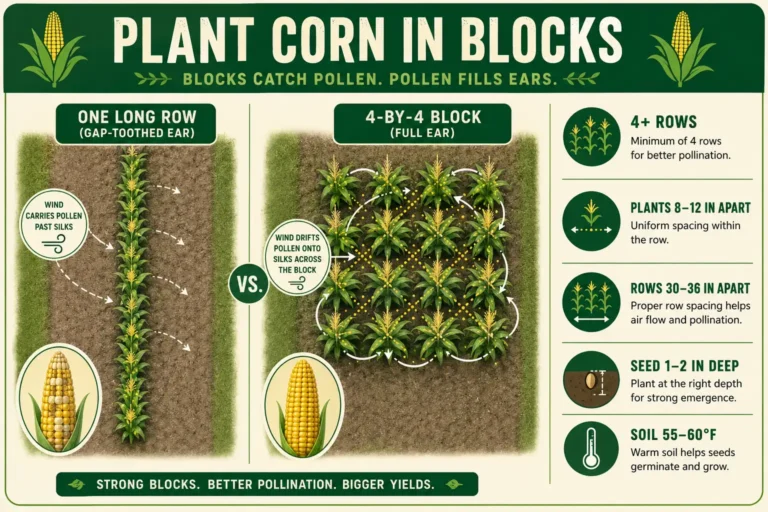
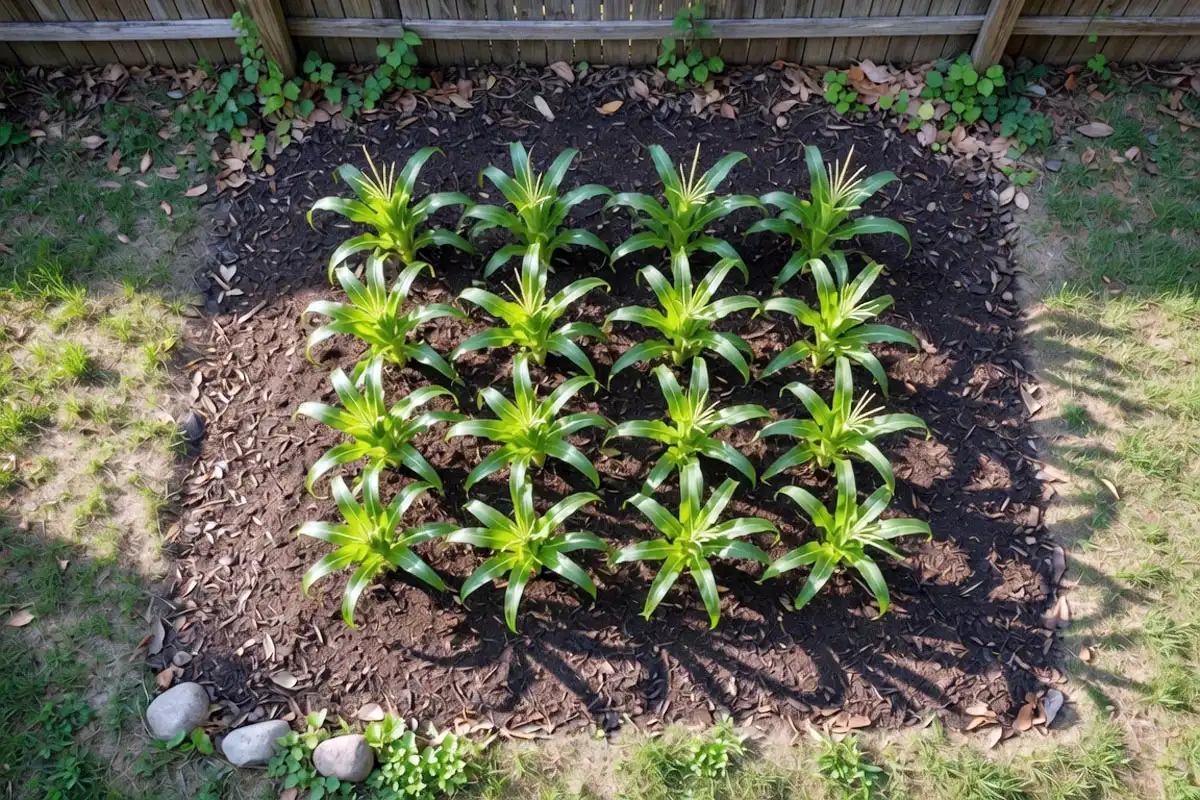
Plant for pollination, not just spacing. Corn pollinates by wind, so a single long row fills poorly. Planting corn in blocks for better pollination packs the pollen where it needs to land. Use at least three or four short rows side by side, never one lonely strip.
Feed and water through silking. Side-dress nitrogen when plants reach knee high, then again at tassel. Keep water steady from tassel through ear fill, because drought at silking shrinks the ears. Also avoid timing a crop to silk during peak heat. Sweet corn pollinates poorly when temperatures top 90°F during silking. That’s why a very late spring crop in the South can disappoint.
Bottom line
Plant late corn whenever the frost math says yes. The rule is simple. Count the frost-free days you have left. Subtract your variety’s days to maturity. Then subtract a two-week buffer. If the number stays positive, go. If it goes negative, wait for next season and save your seed. Warm summer soil and a short-season variety cover a lot of lost time. So don’t assume you’ve missed it until you run the numbers.